


6925 Results
Form:
events
events

Title:
Learning from… São Paulo
Learning from… São Paulo
Actions:
Description:
Angelo Bucci, architect and professor at the University of São Paulo, Brazil, addresses the violence and changing environment of São Paulo in search of new urban forms. São Paulo’s urban violence can be understood as ruining the experience of the city and, as a result, the purpose of the architect’s work. The lecture examines São Paulo not as a static object, but as an(...)
Angelo Bucci, architect and professor at the University of São Paulo, Brazil, addresses the violence and changing environment of São Paulo in search of new urban forms. São Paulo’s urban violence can be understood as ruining the experience of the city and, as a result, the purpose of the architect’s work. The lecture examines São Paulo not as a static object, but as an(...)
Date:
22 April 2010
22 April 2010
Title:
Learning from… São Paulo
Actions:
Description:
Angelo Bucci, architect and professor at the University of São Paulo, Brazil, addresses the violence and changing environment of São Paulo in search of new urban forms. São Paulo’s urban violence can be understood as ruining the experience of the city and, as a result, the purpose of the architect’s work. The lecture examines São Paulo not as a static object, but as an(...)
Learning from… São Paulo
Actions:
Description:
Angelo Bucci, architect and professor at the University of São Paulo, Brazil, addresses the violence and changing environment of São Paulo in search of new urban forms. São Paulo’s urban violence can be understood as ruining the experience of the city and, as a result, the purpose of the architect’s work. The lecture examines São Paulo not as a static object, but as an(...)
Form:
events
events
Date:
22 April 2010
22 April 2010
Form:
articles
articles
Title:
Escalation of Commitment
Escalation of Commitment
Actions:
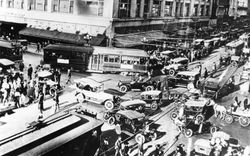
Shane Reiner-Roth traces the development of Los Angeles's freeway infrastructure
Title:
Escalation of Commitment
Shane Reiner-Roth traces the development of Los Angeles's freeway infrastructure
Actions:
Escalation of Commitment
Shane Reiner-Roth traces the development of Los Angeles's freeway infrastructure
Actions:
Issue:
Keep Safe
Keep Safe
Form:
archives
Level of archival description:
Collection
archives
Level of archival description:
Collection
Actions:
Reference number:
CD033
Synopsis:
The Aldo Cibic Microrealities project collection primarily consists of presentation materials, publications and born digital materials, like videos and photographs, by Aldo Cibic produced between 2003 and 2008 for the project “Microrealities”.
CD033
Synopsis:
The Aldo Cibic Microrealities project collection primarily consists of presentation materials, publications and born digital materials, like videos and photographs, by Aldo Cibic produced between 2003 and 2008 for the project “Microrealities”.
People:
Date:
2003-2008
2003-2008
Title:
Aldo Cibic Microrealities project collection
Actions:
CD033
Synopsis:
The Aldo Cibic Microrealities project collection primarily consists of presentation materials, publications and born digital materials, like videos and photographs, by Aldo Cibic produced between 2003 and 2008 for the project “Microrealities”.
Aldo Cibic Microrealities project collection
Actions:
CD033
Synopsis:
The Aldo Cibic Microrealities project collection primarily consists of presentation materials, publications and born digital materials, like videos and photographs, by Aldo Cibic produced between 2003 and 2008 for the project “Microrealities”.
Form:
archives
Level of archival description:
collection
archives
Level of archival description:
collection
Date:
2003-2008
2003-2008
People:
Level of archival description:
Series
Series
Reference number:
AP181.S1
Description:
Series 1, BMW Welt development and construction records, 1994-2015, documents the design development and construction phases of COOP HIMMELB(L)AU BMW Welt building, located nearby the BMW headquarters in Munich. This series also contains some materials from the competition phase, corresponding to less than 2000 digital files, and models from the third phase of the competition. More than half of the records were created from 2003 to 2006. Records show how COOP HIMMELB(L)AU, and the numerous consultants on the project, materialized the original concept, from Wolf Prix sketch, of this cloud-like roof emerging from a double cone suggesting an hurricane eye. To achieve this, extensive digital structural testing was done with engineers Bollinger + Grohmann. Consultants list also include: - Hans Lechner ZT GmbH for in-house project management; - Schmitt, Stumpf, Frühauf + Partner for construction documents of concrete works, interior fittings, tender and construction administration; - Emmer Pfenninger + Partner AG for the facade; - Transsolar, Klima Engineering for the photovoltaic plant on the roof; - PRO, Elektroplan for electrical systems and lifts; - AG-Licht for lighting; - Büro Dr. Pfeiler for structural physics or building physics; - Theater Projekte Daberto+Kollegen for the stage and auditorium; - PBB Planungsbüro Balke for kitchen technology - realgruen Landschaftsarchitekten for lansdcape design; - Kersken & Kirchner for fire protection; - TAW Weisse for height accessibility planning, in consideration for maintenance access; - Lang & Brukhardt for traffic engineering; - Ingenieurbüro Schoenenberg for civil engineering and road construction; - Büro für Gestaltung / Wangler & Abele for signage; - And Zilch, Müller, Henneke as inspection engineers. The approximately 52,400 digital files include raster images, CAD drawings and 3D digital models, plotter files, standard office documents, databases, and scripts. Design files are predominantly in AutoCAD, but the archive also includes over 1,100 Rhinoceros files (primarily in Rhino version 2, with some files in versions 3 and 4) and a smaller number of files in Maya, 3D Studio, Microstation, form*Z, and Revit formats. Because the firm’s computing environment included Macs, the archive also includes a few AppleDouble resource forks. Often, CAD drawings were also saved as PDF files. Photographs and screen captures were most times saved as JPEG files. Finally, design files also include wireframes and renderings. Most often, design files are plans of a designated area, a complete level of the building for example, but they also often show very specific and technical details, such as a few millimetres to be corrected on a panel or a structural element. These types of corrections are frequently shown in PDF files where annotations were either made digitally, or they were handwritten on a printed version which would then be digitized. Design files document all parts of the building including the facade, the roof, the double cone (Doppelkegel), the restaurants, the shops, the exhibition areas, the auditorium, etc. Accompanying textual records are at times quite technical in their content, such as lists of construction elements required in a given room, or analysis reports from consulting engineers. They also take into account the organization and planning of the work, for example including documentation’s exchange or meeting agendas. Finally, they show the design development through presentations, either PDF or Powerpoint files, and through a portfolio of the project and the preparation of the book Dynamic Forces. The archive’s physical component includes 52 physical study models, which were used in combination with digital modeling tools to iteratively refine the building’s design. These are a selection made by the firm of study models from the later stages of the competition and the early stages of the design development. Source: Feireiss, Kristin, editor. “Dynamic Forces, BMW WELT Munich”. Munich: Prestel Verlag, 2007.
AP181.S1
Description:
Series 1, BMW Welt development and construction records, 1994-2015, documents the design development and construction phases of COOP HIMMELB(L)AU BMW Welt building, located nearby the BMW headquarters in Munich. This series also contains some materials from the competition phase, corresponding to less than 2000 digital files, and models from the third phase of the competition. More than half of the records were created from 2003 to 2006. Records show how COOP HIMMELB(L)AU, and the numerous consultants on the project, materialized the original concept, from Wolf Prix sketch, of this cloud-like roof emerging from a double cone suggesting an hurricane eye. To achieve this, extensive digital structural testing was done with engineers Bollinger + Grohmann. Consultants list also include: - Hans Lechner ZT GmbH for in-house project management; - Schmitt, Stumpf, Frühauf + Partner for construction documents of concrete works, interior fittings, tender and construction administration; - Emmer Pfenninger + Partner AG for the facade; - Transsolar, Klima Engineering for the photovoltaic plant on the roof; - PRO, Elektroplan for electrical systems and lifts; - AG-Licht for lighting; - Büro Dr. Pfeiler for structural physics or building physics; - Theater Projekte Daberto+Kollegen for the stage and auditorium; - PBB Planungsbüro Balke for kitchen technology - realgruen Landschaftsarchitekten for lansdcape design; - Kersken & Kirchner for fire protection; - TAW Weisse for height accessibility planning, in consideration for maintenance access; - Lang & Brukhardt for traffic engineering; - Ingenieurbüro Schoenenberg for civil engineering and road construction; - Büro für Gestaltung / Wangler & Abele for signage; - And Zilch, Müller, Henneke as inspection engineers. The approximately 52,400 digital files include raster images, CAD drawings and 3D digital models, plotter files, standard office documents, databases, and scripts. Design files are predominantly in AutoCAD, but the archive also includes over 1,100 Rhinoceros files (primarily in Rhino version 2, with some files in versions 3 and 4) and a smaller number of files in Maya, 3D Studio, Microstation, form*Z, and Revit formats. Because the firm’s computing environment included Macs, the archive also includes a few AppleDouble resource forks. Often, CAD drawings were also saved as PDF files. Photographs and screen captures were most times saved as JPEG files. Finally, design files also include wireframes and renderings. Most often, design files are plans of a designated area, a complete level of the building for example, but they also often show very specific and technical details, such as a few millimetres to be corrected on a panel or a structural element. These types of corrections are frequently shown in PDF files where annotations were either made digitally, or they were handwritten on a printed version which would then be digitized. Design files document all parts of the building including the facade, the roof, the double cone (Doppelkegel), the restaurants, the shops, the exhibition areas, the auditorium, etc. Accompanying textual records are at times quite technical in their content, such as lists of construction elements required in a given room, or analysis reports from consulting engineers. They also take into account the organization and planning of the work, for example including documentation’s exchange or meeting agendas. Finally, they show the design development through presentations, either PDF or Powerpoint files, and through a portfolio of the project and the preparation of the book Dynamic Forces. The archive’s physical component includes 52 physical study models, which were used in combination with digital modeling tools to iteratively refine the building’s design. These are a selection made by the firm of study models from the later stages of the competition and the early stages of the design development. Source: Feireiss, Kristin, editor. “Dynamic Forces, BMW WELT Munich”. Munich: Prestel Verlag, 2007.
People:
Date:
1994-2015
1994-2015
Title:
BMW Welt development and construction records
Actions:
AP181.S1
Description:
Series 1, BMW Welt development and construction records, 1994-2015, documents the design development and construction phases of COOP HIMMELB(L)AU BMW Welt building, located nearby the BMW headquarters in Munich. This series also contains some materials from the competition phase, corresponding to less than 2000 digital files, and models from the third phase of the competition. More than half of the records were created from 2003 to 2006. Records show how COOP HIMMELB(L)AU, and the numerous consultants on the project, materialized the original concept, from Wolf Prix sketch, of this cloud-like roof emerging from a double cone suggesting an hurricane eye. To achieve this, extensive digital structural testing was done with engineers Bollinger + Grohmann. Consultants list also include: - Hans Lechner ZT GmbH for in-house project management; - Schmitt, Stumpf, Frühauf + Partner for construction documents of concrete works, interior fittings, tender and construction administration; - Emmer Pfenninger + Partner AG for the facade; - Transsolar, Klima Engineering for the photovoltaic plant on the roof; - PRO, Elektroplan for electrical systems and lifts; - AG-Licht for lighting; - Büro Dr. Pfeiler for structural physics or building physics; - Theater Projekte Daberto+Kollegen for the stage and auditorium; - PBB Planungsbüro Balke for kitchen technology - realgruen Landschaftsarchitekten for lansdcape design; - Kersken & Kirchner for fire protection; - TAW Weisse for height accessibility planning, in consideration for maintenance access; - Lang & Brukhardt for traffic engineering; - Ingenieurbüro Schoenenberg for civil engineering and road construction; - Büro für Gestaltung / Wangler & Abele for signage; - And Zilch, Müller, Henneke as inspection engineers. The approximately 52,400 digital files include raster images, CAD drawings and 3D digital models, plotter files, standard office documents, databases, and scripts. Design files are predominantly in AutoCAD, but the archive also includes over 1,100 Rhinoceros files (primarily in Rhino version 2, with some files in versions 3 and 4) and a smaller number of files in Maya, 3D Studio, Microstation, form*Z, and Revit formats. Because the firm’s computing environment included Macs, the archive also includes a few AppleDouble resource forks. Often, CAD drawings were also saved as PDF files. Photographs and screen captures were most times saved as JPEG files. Finally, design files also include wireframes and renderings. Most often, design files are plans of a designated area, a complete level of the building for example, but they also often show very specific and technical details, such as a few millimetres to be corrected on a panel or a structural element. These types of corrections are frequently shown in PDF files where annotations were either made digitally, or they were handwritten on a printed version which would then be digitized. Design files document all parts of the building including the facade, the roof, the double cone (Doppelkegel), the restaurants, the shops, the exhibition areas, the auditorium, etc. Accompanying textual records are at times quite technical in their content, such as lists of construction elements required in a given room, or analysis reports from consulting engineers. They also take into account the organization and planning of the work, for example including documentation’s exchange or meeting agendas. Finally, they show the design development through presentations, either PDF or Powerpoint files, and through a portfolio of the project and the preparation of the book Dynamic Forces. The archive’s physical component includes 52 physical study models, which were used in combination with digital modeling tools to iteratively refine the building’s design. These are a selection made by the firm of study models from the later stages of the competition and the early stages of the design development. Source: Feireiss, Kristin, editor. “Dynamic Forces, BMW WELT Munich”. Munich: Prestel Verlag, 2007.
BMW Welt development and construction records
Actions:
AP181.S1
Description:
Series 1, BMW Welt development and construction records, 1994-2015, documents the design development and construction phases of COOP HIMMELB(L)AU BMW Welt building, located nearby the BMW headquarters in Munich. This series also contains some materials from the competition phase, corresponding to less than 2000 digital files, and models from the third phase of the competition. More than half of the records were created from 2003 to 2006. Records show how COOP HIMMELB(L)AU, and the numerous consultants on the project, materialized the original concept, from Wolf Prix sketch, of this cloud-like roof emerging from a double cone suggesting an hurricane eye. To achieve this, extensive digital structural testing was done with engineers Bollinger + Grohmann. Consultants list also include: - Hans Lechner ZT GmbH for in-house project management; - Schmitt, Stumpf, Frühauf + Partner for construction documents of concrete works, interior fittings, tender and construction administration; - Emmer Pfenninger + Partner AG for the facade; - Transsolar, Klima Engineering for the photovoltaic plant on the roof; - PRO, Elektroplan for electrical systems and lifts; - AG-Licht for lighting; - Büro Dr. Pfeiler for structural physics or building physics; - Theater Projekte Daberto+Kollegen for the stage and auditorium; - PBB Planungsbüro Balke for kitchen technology - realgruen Landschaftsarchitekten for lansdcape design; - Kersken & Kirchner for fire protection; - TAW Weisse for height accessibility planning, in consideration for maintenance access; - Lang & Brukhardt for traffic engineering; - Ingenieurbüro Schoenenberg for civil engineering and road construction; - Büro für Gestaltung / Wangler & Abele for signage; - And Zilch, Müller, Henneke as inspection engineers. The approximately 52,400 digital files include raster images, CAD drawings and 3D digital models, plotter files, standard office documents, databases, and scripts. Design files are predominantly in AutoCAD, but the archive also includes over 1,100 Rhinoceros files (primarily in Rhino version 2, with some files in versions 3 and 4) and a smaller number of files in Maya, 3D Studio, Microstation, form*Z, and Revit formats. Because the firm’s computing environment included Macs, the archive also includes a few AppleDouble resource forks. Often, CAD drawings were also saved as PDF files. Photographs and screen captures were most times saved as JPEG files. Finally, design files also include wireframes and renderings. Most often, design files are plans of a designated area, a complete level of the building for example, but they also often show very specific and technical details, such as a few millimetres to be corrected on a panel or a structural element. These types of corrections are frequently shown in PDF files where annotations were either made digitally, or they were handwritten on a printed version which would then be digitized. Design files document all parts of the building including the facade, the roof, the double cone (Doppelkegel), the restaurants, the shops, the exhibition areas, the auditorium, etc. Accompanying textual records are at times quite technical in their content, such as lists of construction elements required in a given room, or analysis reports from consulting engineers. They also take into account the organization and planning of the work, for example including documentation’s exchange or meeting agendas. Finally, they show the design development through presentations, either PDF or Powerpoint files, and through a portfolio of the project and the preparation of the book Dynamic Forces. The archive’s physical component includes 52 physical study models, which were used in combination with digital modeling tools to iteratively refine the building’s design. These are a selection made by the firm of study models from the later stages of the competition and the early stages of the design development. Source: Feireiss, Kristin, editor. “Dynamic Forces, BMW WELT Munich”. Munich: Prestel Verlag, 2007.
Level of archival description:
Series
Series
Date:
1994-2015
1994-2015
People:
Form:
events
events
Title:
Learning from... Los Angeles
Learning from... Los Angeles
Actions:
Description:
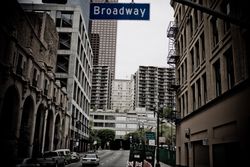
Los Angeles-based historian and tour guide Richard Schave examines developments in Los Angeles in the 35 years since the landmark urban tour film Reyner Banham Loves Los Angeles (UK,1972). Schave, a former student of Banham, elaborates on his professor’s research by showing excerpts of the film in comparison with his own documentary photography. In particular, he explores(...)
Los Angeles-based historian and tour guide Richard Schave examines developments in Los Angeles in the 35 years since the landmark urban tour film Reyner Banham Loves Los Angeles (UK,1972). Schave, a former student of Banham, elaborates on his professor’s research by showing excerpts of the film in comparison with his own documentary photography. In particular, he explores(...)
Location:
Paul Desmarais Theatre
Paul Desmarais Theatre
Date:
28 May 2009
28 May 2009
Title:
Learning from... Los Angeles
Actions:
Description:
Los Angeles-based historian and tour guide Richard Schave examines developments in Los Angeles in the 35 years since the landmark urban tour film Reyner Banham Loves Los Angeles (UK,1972). Schave, a former student of Banham, elaborates on his professor’s research by showing excerpts of the film in comparison with his own documentary photography. In particular, he explores(...)
Learning from... Los Angeles
Actions:
Description:
Los Angeles-based historian and tour guide Richard Schave examines developments in Los Angeles in the 35 years since the landmark urban tour film Reyner Banham Loves Los Angeles (UK,1972). Schave, a former student of Banham, elaborates on his professor’s research by showing excerpts of the film in comparison with his own documentary photography. In particular, he explores(...)
Form:
events
events
Date:
28 May 2009
28 May 2009
Location:
Paul Desmarais Theatre
Paul Desmarais Theatre
Form:
exhibitions
exhibitions
Actions:
Description:
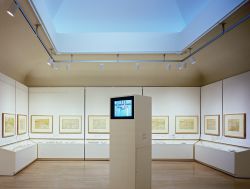
*Opening the Gates of Eighteenth-Century Montréal* explores the development of the city during the eighteenth century, when Montréal was a fortified town. The exhibition provides a unique opportunity to consider the building of the eighteenth-century military and commercial town, the nucleus from which Montréal grew. The product of nearly fifteen years of research and(...)
*Opening the Gates of Eighteenth-Century Montréal* explores the development of the city during the eighteenth century, when Montréal was a fortified town. The exhibition provides a unique opportunity to consider the building of the eighteenth-century military and commercial town, the nucleus from which Montréal grew. The product of nearly fifteen years of research and(...)
Location:
Main galleries
Main galleries
Date:
8 September 1992 to 28 February 1993
8 September 1992 to 28 February 1993
Title:
Opening the Gates of Eighteenth-Century Montréal
Actions:
Description:
*Opening the Gates of Eighteenth-Century Montréal* explores the development of the city during the eighteenth century, when Montréal was a fortified town. The exhibition provides a unique opportunity to consider the building of the eighteenth-century military and commercial town, the nucleus from which Montréal grew. The product of nearly fifteen years of research and(...)
Opening the Gates of Eighteenth-Century Montréal
Actions:
Description:
*Opening the Gates of Eighteenth-Century Montréal* explores the development of the city during the eighteenth century, when Montréal was a fortified town. The exhibition provides a unique opportunity to consider the building of the eighteenth-century military and commercial town, the nucleus from which Montréal grew. The product of nearly fifteen years of research and(...)
Form:
exhibitions
exhibitions
Date:
8 September 1992 to
28 February 1993
8 September 1992 to
28 February 1993
Location:
Main galleries
Main galleries
Form:
exhibitions
exhibitions
Title:
Learning Architecture
Learning Architecture
Actions:
Description:
As architecture acquired its modern identity as both a liberal art and a regulated profession, and as architectural theories and forms underwent radical transformations, the training of architects did not fundamentally change. The core activities of architectural students remain “Authority,” the study of treatises and theoretical works, “Observation,” the study of the(...)
As architecture acquired its modern identity as both a liberal art and a regulated profession, and as architectural theories and forms underwent radical transformations, the training of architects did not fundamentally change. The core activities of architectural students remain “Authority,” the study of treatises and theoretical works, “Observation,” the study of the(...)
Location:
Hall cases
Hall cases
Date:
5 July 1994 to 2 October 1994
5 July 1994 to 2 October 1994
Title:
Learning Architecture
Actions:
Description:
As architecture acquired its modern identity as both a liberal art and a regulated profession, and as architectural theories and forms underwent radical transformations, the training of architects did not fundamentally change. The core activities of architectural students remain “Authority,” the study of treatises and theoretical works, “Observation,” the study of the(...)
Learning Architecture
Actions:
Description:
As architecture acquired its modern identity as both a liberal art and a regulated profession, and as architectural theories and forms underwent radical transformations, the training of architects did not fundamentally change. The core activities of architectural students remain “Authority,” the study of treatises and theoretical works, “Observation,” the study of the(...)
Form:
exhibitions
exhibitions
Date:
5 July 1994 to
2 October 1994
5 July 1994 to
2 October 1994
Location:
Hall cases
Hall cases
Form:
events
events
Actions:
Description:
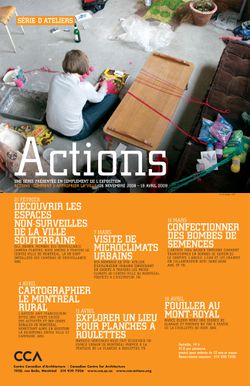
Members of the Montréal collective SYN-atelier d’exploration urbaine present a workshop investigating urban microclimates in downtown Montréal. Caused by particular conditions in urban construction, microclimates are environments that have surprising temperature variations — a building courtyard that is several degrees warmer than the street or a windy alley many degrees(...)
Members of the Montréal collective SYN-atelier d’exploration urbaine present a workshop investigating urban microclimates in downtown Montréal. Caused by particular conditions in urban construction, microclimates are environments that have surprising temperature variations — a building courtyard that is several degrees warmer than the street or a windy alley many degrees(...)
Date:
7 March 2009
7 March 2009
Title:
Exploring Urban Microclimates
Actions:
Description:
Members of the Montréal collective SYN-atelier d’exploration urbaine present a workshop investigating urban microclimates in downtown Montréal. Caused by particular conditions in urban construction, microclimates are environments that have surprising temperature variations — a building courtyard that is several degrees warmer than the street or a windy alley many degrees(...)
Exploring Urban Microclimates
Actions:
Description:
Members of the Montréal collective SYN-atelier d’exploration urbaine present a workshop investigating urban microclimates in downtown Montréal. Caused by particular conditions in urban construction, microclimates are environments that have surprising temperature variations — a building courtyard that is several degrees warmer than the street or a windy alley many degrees(...)
Form:
events
events
Date:
7 March 2009
7 March 2009
Form:
events
events

Title:
Learning from... Montréal
Learning from... Montréal
Actions:
Description:
Lance Blomgren uses his 2009 book Walkups—a novella set entirely within Montréal’s row house apartment buildings—as a springboard for an analysis of the discursive plane of fictional architecture. Looking at works by John Hejduk, Ilya Kabakov, Alice Aycock and others, Blomgren argues that contemporary modes of speculative architecture offer a vital, if ethically fraught,(...)
Lance Blomgren uses his 2009 book Walkups—a novella set entirely within Montréal’s row house apartment buildings—as a springboard for an analysis of the discursive plane of fictional architecture. Looking at works by John Hejduk, Ilya Kabakov, Alice Aycock and others, Blomgren argues that contemporary modes of speculative architecture offer a vital, if ethically fraught,(...)
Location:
Paul-Desmarais Theatre
Paul-Desmarais Theatre
Date:
2 May 2013 , 7pm
2 May 2013 , 7pm
Title:
Learning from... Montréal
Actions:
Description:
Lance Blomgren uses his 2009 book Walkups—a novella set entirely within Montréal’s row house apartment buildings—as a springboard for an analysis of the discursive plane of fictional architecture. Looking at works by John Hejduk, Ilya Kabakov, Alice Aycock and others, Blomgren argues that contemporary modes of speculative architecture offer a vital, if ethically fraught,(...)
Learning from... Montréal
Actions:
Description:
Lance Blomgren uses his 2009 book Walkups—a novella set entirely within Montréal’s row house apartment buildings—as a springboard for an analysis of the discursive plane of fictional architecture. Looking at works by John Hejduk, Ilya Kabakov, Alice Aycock and others, Blomgren argues that contemporary modes of speculative architecture offer a vital, if ethically fraught,(...)
Form:
events
events
Date:
2 May 2013
7pm
2 May 2013
7pm
Location:
Paul-Desmarais Theatre
Paul-Desmarais Theatre
Form:
exhibitions
exhibitions
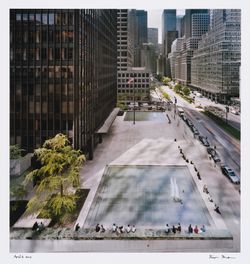
Title:
Seagram Plaza
Seagram Plaza
Actions:
Description:
The plaza at the Seagram Building in New York, designed by Ludwig Mies van der Rohe and completed in 1958, was a litmus test of what an open space in the city could be. Raised three steps above the sidewalk along Park Avenue, the plaza is an oasis of calm, distant from the commotion and turbulence of the street. The way in which the plaza has been adopted by New Yorkers(...)
The plaza at the Seagram Building in New York, designed by Ludwig Mies van der Rohe and completed in 1958, was a litmus test of what an open space in the city could be. Raised three steps above the sidewalk along Park Avenue, the plaza is an oasis of calm, distant from the commotion and turbulence of the street. The way in which the plaza has been adopted by New Yorkers(...)
Location:
Hall cases
Hall cases
Date:
1 May 2013 to 18 August 2013
1 May 2013 to 18 August 2013
Title:
Seagram Plaza
Actions:
Description:
The plaza at the Seagram Building in New York, designed by Ludwig Mies van der Rohe and completed in 1958, was a litmus test of what an open space in the city could be. Raised three steps above the sidewalk along Park Avenue, the plaza is an oasis of calm, distant from the commotion and turbulence of the street. The way in which the plaza has been adopted by New Yorkers(...)
Seagram Plaza
Actions:
Description:
The plaza at the Seagram Building in New York, designed by Ludwig Mies van der Rohe and completed in 1958, was a litmus test of what an open space in the city could be. Raised three steps above the sidewalk along Park Avenue, the plaza is an oasis of calm, distant from the commotion and turbulence of the street. The way in which the plaza has been adopted by New Yorkers(...)
Form:
exhibitions
exhibitions
Date:
1 May 2013 to
18 August 2013
1 May 2013 to
18 August 2013
Location:
Hall cases
Hall cases


