


6599 Results
Form:
archives
Level of archival description:
Fonds
archives
Level of archival description:
Fonds
Title:
Joseph Rykwert fonds
Joseph Rykwert fonds
Reference number:
AP209
Synopsis:
The Joseph Rykwert fonds, 1928-2022, documents Joseph Rykwert’s career as an architectural historian, author and professor. The fonds includes the records for over a dozen monographs written between the mid-1960s and the mid-2010s as well as edited works and articles, and details his teaching and lecturing activities from the 1960s onwards in universities in Europe and the United States. The records highlight Joseph Rykwert’s multidisciplinary approach, which involved archaeology, anthropology and psychoanalysis in his study of the history and theory of architecture and of the urban form. The fonds is composed of textual records, publications and ephemera, and of photographs including multiple albums and a large number of slides; the fonds also documents Joseph Rykwert’s career as an independent designer through drawings realized between the late 1940s and the late 1970s.
AP209
Synopsis:
The Joseph Rykwert fonds, 1928-2022, documents Joseph Rykwert’s career as an architectural historian, author and professor. The fonds includes the records for over a dozen monographs written between the mid-1960s and the mid-2010s as well as edited works and articles, and details his teaching and lecturing activities from the 1960s onwards in universities in Europe and the United States. The records highlight Joseph Rykwert’s multidisciplinary approach, which involved archaeology, anthropology and psychoanalysis in his study of the history and theory of architecture and of the urban form. The fonds is composed of textual records, publications and ephemera, and of photographs including multiple albums and a large number of slides; the fonds also documents Joseph Rykwert’s career as an independent designer through drawings realized between the late 1940s and the late 1970s.
People:
Date:
1928-2022
1928-2022
Title:
Joseph Rykwert fonds
Actions:
AP209
Synopsis:
The Joseph Rykwert fonds, 1928-2022, documents Joseph Rykwert’s career as an architectural historian, author and professor. The fonds includes the records for over a dozen monographs written between the mid-1960s and the mid-2010s as well as edited works and articles, and details his teaching and lecturing activities from the 1960s onwards in universities in Europe and the United States. The records highlight Joseph Rykwert’s multidisciplinary approach, which involved archaeology, anthropology and psychoanalysis in his study of the history and theory of architecture and of the urban form. The fonds is composed of textual records, publications and ephemera, and of photographs including multiple albums and a large number of slides; the fonds also documents Joseph Rykwert’s career as an independent designer through drawings realized between the late 1940s and the late 1970s.
Joseph Rykwert fonds
Actions:
AP209
Synopsis:
The Joseph Rykwert fonds, 1928-2022, documents Joseph Rykwert’s career as an architectural historian, author and professor. The fonds includes the records for over a dozen monographs written between the mid-1960s and the mid-2010s as well as edited works and articles, and details his teaching and lecturing activities from the 1960s onwards in universities in Europe and the United States. The records highlight Joseph Rykwert’s multidisciplinary approach, which involved archaeology, anthropology and psychoanalysis in his study of the history and theory of architecture and of the urban form. The fonds is composed of textual records, publications and ephemera, and of photographs including multiple albums and a large number of slides; the fonds also documents Joseph Rykwert’s career as an independent designer through drawings realized between the late 1940s and the late 1970s.
Form:
archives
Level of archival description:
Fonds
archives
Level of archival description:
Fonds
Date:
1928-2022
1928-2022
People:
Form:
drawings, textual records, graphic materials, photographs
drawings, textual records, graphic materials, photographs
Reference number:
AP197.S4.008
Description:
This box contains certificates and diplomas as well as prints, drawings, posters and vinyl records that Frampton received or collected. Frampton received certificates and diplomas from the following universities and associations: Architectural Association School of Architecture London (1955); the American Institiute of Architects (1993); the America Academy of Arts and Sciences, Boston (1993); Honorary Professorship, Nanjing University (2004); the University of Waterloo (1995); and the American Instititute of Architects New York State (2010). The box also includes: a poster for the Graduate School of Architecture, Planning and Preservation designed by Kenneth Frampton; a Berlin Grafik; a drawing by A. Campo Baeza; a group photograph of Kenneth Frampton at the International Symposium of "Structure, fabric and topography"; a vinyl record of "Le Corbusier"; and a vinyl record of "Conversations regarding the future of architecture."
AP197.S4.008
Description:
This box contains certificates and diplomas as well as prints, drawings, posters and vinyl records that Frampton received or collected. Frampton received certificates and diplomas from the following universities and associations: Architectural Association School of Architecture London (1955); the American Institiute of Architects (1993); the America Academy of Arts and Sciences, Boston (1993); Honorary Professorship, Nanjing University (2004); the University of Waterloo (1995); and the American Instititute of Architects New York State (2010). The box also includes: a poster for the Graduate School of Architecture, Planning and Preservation designed by Kenneth Frampton; a Berlin Grafik; a drawing by A. Campo Baeza; a group photograph of Kenneth Frampton at the International Symposium of "Structure, fabric and topography"; a vinyl record of "Le Corbusier"; and a vinyl record of "Conversations regarding the future of architecture."
People:
Date:
circa 1955- 2012
circa 1955- 2012
Title:
Kenneth Frampton certificates, diplomas, and collectables
Actions:
AP197.S4.008
Description:
This box contains certificates and diplomas as well as prints, drawings, posters and vinyl records that Frampton received or collected. Frampton received certificates and diplomas from the following universities and associations: Architectural Association School of Architecture London (1955); the American Institiute of Architects (1993); the America Academy of Arts and Sciences, Boston (1993); Honorary Professorship, Nanjing University (2004); the University of Waterloo (1995); and the American Instititute of Architects New York State (2010). The box also includes: a poster for the Graduate School of Architecture, Planning and Preservation designed by Kenneth Frampton; a Berlin Grafik; a drawing by A. Campo Baeza; a group photograph of Kenneth Frampton at the International Symposium of "Structure, fabric and topography"; a vinyl record of "Le Corbusier"; and a vinyl record of "Conversations regarding the future of architecture."
Kenneth Frampton certificates, diplomas, and collectables
Actions:
AP197.S4.008
Description:
This box contains certificates and diplomas as well as prints, drawings, posters and vinyl records that Frampton received or collected. Frampton received certificates and diplomas from the following universities and associations: Architectural Association School of Architecture London (1955); the American Institiute of Architects (1993); the America Academy of Arts and Sciences, Boston (1993); Honorary Professorship, Nanjing University (2004); the University of Waterloo (1995); and the American Instititute of Architects New York State (2010). The box also includes: a poster for the Graduate School of Architecture, Planning and Preservation designed by Kenneth Frampton; a Berlin Grafik; a drawing by A. Campo Baeza; a group photograph of Kenneth Frampton at the International Symposium of "Structure, fabric and topography"; a vinyl record of "Le Corbusier"; and a vinyl record of "Conversations regarding the future of architecture."
Form:
drawings, textual records, graphic materials, photographs
drawings, textual records, graphic materials, photographs
Date:
circa 1955- 2012
circa 1955- 2012
People:
Level of archival description:
Project
Project
Reference number:
AP018.S1.1971.PR07
Description:
This project series documents the design and construction of the Health Sciences Complex at Memorial University (MUN) in St. John’s, Newfoundland from 1971-1976. The office identified the project number as 7111. The Health Sciences Complex was built to replace the St. John’s General Hospital. Constructed on MUN’s north campus, the hospital would integrate the university’s medical school to create a teaching hospital. The design included classrooms, labs, and a library for the students. The St. John’s General Hospital and MUN medical school would retain their independence and authority while sharing the space. The proposed design called for a banal building that was always unfinished so that future expansions and changes could be easily accommodated. The project also included the construction of the Utilities Annex building, a separate building to house heating and cooling plants, generators and electrical distribution. Having these facilities in a separate building would allow them to expand the hospital without crucial systems getting in the way. The main expansion envisioned in the scope of this project was the Life Sciences Complex, a university building and hospital connected to the Health Sciences Complex. In the project materials, the project is often referred to as The Health and Life Sciences Complex, although only the Health Sciences Complex was constructed under this project number. The original budget for the project was $60 million, a figure which included the Life Sciences Complex. The project is recorded through drawings, photographic materials, boards of material samples, a painting and textual records dating from 1971-1978. The textual records include correspondence with the client and consultants, meeting minutes and reports, consultancy records, a systems report, food facilities planning records, outline specifications, product catalogues for hospital equipment, research, project proposals, financial documentation and schedules. All of the drawings issued for tender are arranged within the textual materials. There are also two presentation boards, one of a project painting and the other of a photograph of the site model. Box AP018.S1.1971.PR07.049 contains an index to the textual records, which was created by the office.
AP018.S1.1971.PR07
Description:
This project series documents the design and construction of the Health Sciences Complex at Memorial University (MUN) in St. John’s, Newfoundland from 1971-1976. The office identified the project number as 7111. The Health Sciences Complex was built to replace the St. John’s General Hospital. Constructed on MUN’s north campus, the hospital would integrate the university’s medical school to create a teaching hospital. The design included classrooms, labs, and a library for the students. The St. John’s General Hospital and MUN medical school would retain their independence and authority while sharing the space. The proposed design called for a banal building that was always unfinished so that future expansions and changes could be easily accommodated. The project also included the construction of the Utilities Annex building, a separate building to house heating and cooling plants, generators and electrical distribution. Having these facilities in a separate building would allow them to expand the hospital without crucial systems getting in the way. The main expansion envisioned in the scope of this project was the Life Sciences Complex, a university building and hospital connected to the Health Sciences Complex. In the project materials, the project is often referred to as The Health and Life Sciences Complex, although only the Health Sciences Complex was constructed under this project number. The original budget for the project was $60 million, a figure which included the Life Sciences Complex. The project is recorded through drawings, photographic materials, boards of material samples, a painting and textual records dating from 1971-1978. The textual records include correspondence with the client and consultants, meeting minutes and reports, consultancy records, a systems report, food facilities planning records, outline specifications, product catalogues for hospital equipment, research, project proposals, financial documentation and schedules. All of the drawings issued for tender are arranged within the textual materials. There are also two presentation boards, one of a project painting and the other of a photograph of the site model. Box AP018.S1.1971.PR07.049 contains an index to the textual records, which was created by the office.
People:
Date:
1970-1978
1970-1978
Title:
Memorial University of Newfoundland, Health Sciences Complex, St. Johns, Newfoundland (1971-1976)
Actions:
AP018.S1.1971.PR07
Description:
This project series documents the design and construction of the Health Sciences Complex at Memorial University (MUN) in St. John’s, Newfoundland from 1971-1976. The office identified the project number as 7111. The Health Sciences Complex was built to replace the St. John’s General Hospital. Constructed on MUN’s north campus, the hospital would integrate the university’s medical school to create a teaching hospital. The design included classrooms, labs, and a library for the students. The St. John’s General Hospital and MUN medical school would retain their independence and authority while sharing the space. The proposed design called for a banal building that was always unfinished so that future expansions and changes could be easily accommodated. The project also included the construction of the Utilities Annex building, a separate building to house heating and cooling plants, generators and electrical distribution. Having these facilities in a separate building would allow them to expand the hospital without crucial systems getting in the way. The main expansion envisioned in the scope of this project was the Life Sciences Complex, a university building and hospital connected to the Health Sciences Complex. In the project materials, the project is often referred to as The Health and Life Sciences Complex, although only the Health Sciences Complex was constructed under this project number. The original budget for the project was $60 million, a figure which included the Life Sciences Complex. The project is recorded through drawings, photographic materials, boards of material samples, a painting and textual records dating from 1971-1978. The textual records include correspondence with the client and consultants, meeting minutes and reports, consultancy records, a systems report, food facilities planning records, outline specifications, product catalogues for hospital equipment, research, project proposals, financial documentation and schedules. All of the drawings issued for tender are arranged within the textual materials. There are also two presentation boards, one of a project painting and the other of a photograph of the site model. Box AP018.S1.1971.PR07.049 contains an index to the textual records, which was created by the office.
Memorial University of Newfoundland, Health Sciences Complex, St. Johns, Newfoundland (1971-1976)
Actions:
AP018.S1.1971.PR07
Description:
This project series documents the design and construction of the Health Sciences Complex at Memorial University (MUN) in St. John’s, Newfoundland from 1971-1976. The office identified the project number as 7111. The Health Sciences Complex was built to replace the St. John’s General Hospital. Constructed on MUN’s north campus, the hospital would integrate the university’s medical school to create a teaching hospital. The design included classrooms, labs, and a library for the students. The St. John’s General Hospital and MUN medical school would retain their independence and authority while sharing the space. The proposed design called for a banal building that was always unfinished so that future expansions and changes could be easily accommodated. The project also included the construction of the Utilities Annex building, a separate building to house heating and cooling plants, generators and electrical distribution. Having these facilities in a separate building would allow them to expand the hospital without crucial systems getting in the way. The main expansion envisioned in the scope of this project was the Life Sciences Complex, a university building and hospital connected to the Health Sciences Complex. In the project materials, the project is often referred to as The Health and Life Sciences Complex, although only the Health Sciences Complex was constructed under this project number. The original budget for the project was $60 million, a figure which included the Life Sciences Complex. The project is recorded through drawings, photographic materials, boards of material samples, a painting and textual records dating from 1971-1978. The textual records include correspondence with the client and consultants, meeting minutes and reports, consultancy records, a systems report, food facilities planning records, outline specifications, product catalogues for hospital equipment, research, project proposals, financial documentation and schedules. All of the drawings issued for tender are arranged within the textual materials. There are also two presentation boards, one of a project painting and the other of a photograph of the site model. Box AP018.S1.1971.PR07.049 contains an index to the textual records, which was created by the office.
Level of archival description:
Project
Project
Date:
1970-1978
1970-1978
People:
Form:
articles
articles
Title:
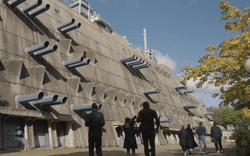
Architecting a Change
Architecting a Change
Actions:
Federica Zambeletti in conversation with Arno Brandlhuber and Olaf Grawert
Issue:
Forces of Friction
Forces of Friction
Published:
9 December 2024
9 December 2024
Title:
Architecting a Change
Federica Zambeletti in conversation with Arno Brandlhuber and Olaf Grawert
Actions:
Architecting a Change
Federica Zambeletti in conversation with Arno Brandlhuber and Olaf Grawert
Actions:
Issue:
Forces of Friction
Forces of Friction
Form:
events
events
Title:
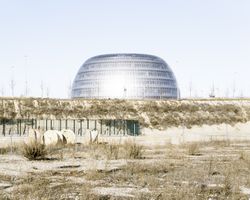
Learning from... Madrid
Learning from... Madrid
Actions:
Description:
In the aftermath of the global economic crisis, Spain is now paying for its lack of urban policy, particularly in the construction industry. The credit crunch curbed the frenzy of construction and left behind a vast territory of incomplete urban spaces. Architect, editor, and architectural curator Javier Arpa Fernández presents a lecture reflecting on how alternative(...)
In the aftermath of the global economic crisis, Spain is now paying for its lack of urban policy, particularly in the construction industry. The credit crunch curbed the frenzy of construction and left behind a vast territory of incomplete urban spaces. Architect, editor, and architectural curator Javier Arpa Fernández presents a lecture reflecting on how alternative(...)
Location:
Paul-Desmarais Theatre
Paul-Desmarais Theatre
Date:
4 December 2014 , 6pm
4 December 2014 , 6pm
Title:
Learning from... Madrid
Actions:
Description:
In the aftermath of the global economic crisis, Spain is now paying for its lack of urban policy, particularly in the construction industry. The credit crunch curbed the frenzy of construction and left behind a vast territory of incomplete urban spaces. Architect, editor, and architectural curator Javier Arpa Fernández presents a lecture reflecting on how alternative(...)
Learning from... Madrid
Actions:
Description:
In the aftermath of the global economic crisis, Spain is now paying for its lack of urban policy, particularly in the construction industry. The credit crunch curbed the frenzy of construction and left behind a vast territory of incomplete urban spaces. Architect, editor, and architectural curator Javier Arpa Fernández presents a lecture reflecting on how alternative(...)
Form:
events
events
Date:
4 December 2014
6pm
4 December 2014
6pm
Location:
Paul-Desmarais Theatre
Paul-Desmarais Theatre
Actions:
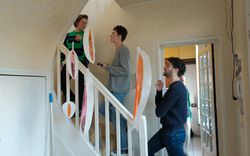
Bui Quy Son and Paul-Antoine Lucas of Exutoire speak with Mahé Cordier-Jouanne and Jean Makhlouta about queer methodologies and the notion of decentring in architecture
Keyword(s):
queer, queer architecture, queer practice, Paris, conversation, future of architectural practice, Bui Quy Son, Paul-Antoine Lucas, Exutoire, Mahé Cordier-Jouanne, Jean Makhlouta
queer, queer architecture, queer practice, Paris, conversation, future of architectural practice, Bui Quy Son, Paul-Antoine Lucas, Exutoire, Mahé Cordier-Jouanne, Jean Makhlouta
Published:
1 May 2023
1 May 2023
Title:
Paris: Between Collective Practices and Searching for Queer Spatialities in the City
Bui Quy Son and Paul-Antoine Lucas of Exutoire speak with Mahé Cordier-Jouanne and Jean Makhlouta about queer methodologies and the notion of decentring in architecture
Actions:
Paris: Between Collective Practices and Searching for Queer Spatialities in the City
Bui Quy Son and Paul-Antoine Lucas of Exutoire speak with Mahé Cordier-Jouanne and Jean Makhlouta about queer methodologies and the notion of decentring in architecture
Actions:
Form:
articles
articles
Published:
1 May 2023
1 May 2023
Level of archival description:
Project
Project
Reference number:
AP206.S1.1975.PR01
Description:
This project series documents Aditya Prakash's proposal for an alternative plan for Chandigarh, India, which came to be known as the Linear City. Prakash began developing and advocating for this idea around the early 1970s. The Linear City had two fundamental ideas at its core. The first was to raise the roadways in Chandigarh (or any future city) 10-12 feet from ground level. This, he proposed, would separate vehicular traffic from pedestrians, eliminating all the hazardous impacts of traffic on daily life. The large part of the drawings for this project show sector plans and city blocks with evenly dispersed roundabout roadways as major transit hubs, wrapping around but high above centres of pedestrian activity that included shops, markets and green spaces. The sale of the land below the roadways would pay for the upheaval. He also recommended building this city only a few sectors deep, but endlessly expanding it length-wise, with a raised canal along one side to provide an additional transportation network and irrigation. The second fundamental idea of this city was the creation of self-sustaining sectors in the city plan, advocating that each neighbourhood should have the infrastructure to provide food and recycling for its residents. He fervently argued for the reimagination of modernist Chandigarh by incorporating sustainable, local traditions - the rural should exist in harmony with the urban. In opposition to Le Corbusier and Pierre Jeanneret, he believed areas for recycling, animal husbandry, and growing food should be incorporated into the fabric of the city.[1] This project is recorded largely through original drawings of city plans, perspectives and axonometric views detailing Prakash's new vision for the city. It seems that many of the perspectives were drawn by family friend Sandeep Virmani, after listening to Prakash's ideas.[2] The project is also recorded through photographs, negatives and slides showing plans and the project model. A small amount of notes and an article on the project are also included. [1]Vikramaditya Prakash, One Continuous Line: Art, Architecture and Urbanism of Aditya Prakash (Ahmedabad, India: Mapin Publishing Pvt. Ltd., 2019), 164-181. [2]Prakash, One Continuous Line, 169.
AP206.S1.1975.PR01
Description:
This project series documents Aditya Prakash's proposal for an alternative plan for Chandigarh, India, which came to be known as the Linear City. Prakash began developing and advocating for this idea around the early 1970s. The Linear City had two fundamental ideas at its core. The first was to raise the roadways in Chandigarh (or any future city) 10-12 feet from ground level. This, he proposed, would separate vehicular traffic from pedestrians, eliminating all the hazardous impacts of traffic on daily life. The large part of the drawings for this project show sector plans and city blocks with evenly dispersed roundabout roadways as major transit hubs, wrapping around but high above centres of pedestrian activity that included shops, markets and green spaces. The sale of the land below the roadways would pay for the upheaval. He also recommended building this city only a few sectors deep, but endlessly expanding it length-wise, with a raised canal along one side to provide an additional transportation network and irrigation. The second fundamental idea of this city was the creation of self-sustaining sectors in the city plan, advocating that each neighbourhood should have the infrastructure to provide food and recycling for its residents. He fervently argued for the reimagination of modernist Chandigarh by incorporating sustainable, local traditions - the rural should exist in harmony with the urban. In opposition to Le Corbusier and Pierre Jeanneret, he believed areas for recycling, animal husbandry, and growing food should be incorporated into the fabric of the city.[1] This project is recorded largely through original drawings of city plans, perspectives and axonometric views detailing Prakash's new vision for the city. It seems that many of the perspectives were drawn by family friend Sandeep Virmani, after listening to Prakash's ideas.[2] The project is also recorded through photographs, negatives and slides showing plans and the project model. A small amount of notes and an article on the project are also included. [1]Vikramaditya Prakash, One Continuous Line: Art, Architecture and Urbanism of Aditya Prakash (Ahmedabad, India: Mapin Publishing Pvt. Ltd., 2019), 164-181. [2]Prakash, One Continuous Line, 169.
People:
Date:
circa 1975-2003
circa 1975-2003
Title:
Linear city, Chandigarh, India (circa 1975-1987)
Actions:
AP206.S1.1975.PR01
Description:
This project series documents Aditya Prakash's proposal for an alternative plan for Chandigarh, India, which came to be known as the Linear City. Prakash began developing and advocating for this idea around the early 1970s. The Linear City had two fundamental ideas at its core. The first was to raise the roadways in Chandigarh (or any future city) 10-12 feet from ground level. This, he proposed, would separate vehicular traffic from pedestrians, eliminating all the hazardous impacts of traffic on daily life. The large part of the drawings for this project show sector plans and city blocks with evenly dispersed roundabout roadways as major transit hubs, wrapping around but high above centres of pedestrian activity that included shops, markets and green spaces. The sale of the land below the roadways would pay for the upheaval. He also recommended building this city only a few sectors deep, but endlessly expanding it length-wise, with a raised canal along one side to provide an additional transportation network and irrigation. The second fundamental idea of this city was the creation of self-sustaining sectors in the city plan, advocating that each neighbourhood should have the infrastructure to provide food and recycling for its residents. He fervently argued for the reimagination of modernist Chandigarh by incorporating sustainable, local traditions - the rural should exist in harmony with the urban. In opposition to Le Corbusier and Pierre Jeanneret, he believed areas for recycling, animal husbandry, and growing food should be incorporated into the fabric of the city.[1] This project is recorded largely through original drawings of city plans, perspectives and axonometric views detailing Prakash's new vision for the city. It seems that many of the perspectives were drawn by family friend Sandeep Virmani, after listening to Prakash's ideas.[2] The project is also recorded through photographs, negatives and slides showing plans and the project model. A small amount of notes and an article on the project are also included. [1]Vikramaditya Prakash, One Continuous Line: Art, Architecture and Urbanism of Aditya Prakash (Ahmedabad, India: Mapin Publishing Pvt. Ltd., 2019), 164-181. [2]Prakash, One Continuous Line, 169.
Linear city, Chandigarh, India (circa 1975-1987)
Actions:
AP206.S1.1975.PR01
Description:
This project series documents Aditya Prakash's proposal for an alternative plan for Chandigarh, India, which came to be known as the Linear City. Prakash began developing and advocating for this idea around the early 1970s. The Linear City had two fundamental ideas at its core. The first was to raise the roadways in Chandigarh (or any future city) 10-12 feet from ground level. This, he proposed, would separate vehicular traffic from pedestrians, eliminating all the hazardous impacts of traffic on daily life. The large part of the drawings for this project show sector plans and city blocks with evenly dispersed roundabout roadways as major transit hubs, wrapping around but high above centres of pedestrian activity that included shops, markets and green spaces. The sale of the land below the roadways would pay for the upheaval. He also recommended building this city only a few sectors deep, but endlessly expanding it length-wise, with a raised canal along one side to provide an additional transportation network and irrigation. The second fundamental idea of this city was the creation of self-sustaining sectors in the city plan, advocating that each neighbourhood should have the infrastructure to provide food and recycling for its residents. He fervently argued for the reimagination of modernist Chandigarh by incorporating sustainable, local traditions - the rural should exist in harmony with the urban. In opposition to Le Corbusier and Pierre Jeanneret, he believed areas for recycling, animal husbandry, and growing food should be incorporated into the fabric of the city.[1] This project is recorded largely through original drawings of city plans, perspectives and axonometric views detailing Prakash's new vision for the city. It seems that many of the perspectives were drawn by family friend Sandeep Virmani, after listening to Prakash's ideas.[2] The project is also recorded through photographs, negatives and slides showing plans and the project model. A small amount of notes and an article on the project are also included. [1]Vikramaditya Prakash, One Continuous Line: Art, Architecture and Urbanism of Aditya Prakash (Ahmedabad, India: Mapin Publishing Pvt. Ltd., 2019), 164-181. [2]Prakash, One Continuous Line, 169.
Level of archival description:
Project
Project
Date:
circa 1975-2003
circa 1975-2003
People:
Level of archival description:
Series
Series
Actions:
Reference number:
AP170.S2
Description:
Series 2, Software and related documentation, 1990 – 2014, contains unique iterations of the ACDC, Aegis, and HypoSurface software, and contains roughly 45,000 digital files. The bulk of the files date from approximately 2000 – 2001. This series chiefly consists of the materials received from Xavier Robitaille. This includes a virtual machine and DOS emulator for Aegis HypoSurface, as well as ACDC and Aegis Simulator software for Microsoft DOS and Win32 for Hyposurface installations. There is also a small amount of email correspondence in MBOX format between Robitaille, Mark Goulthorpe, and other project members documenting their work on the project. Additionally, there are two computer backups in this series. One is for Goulthorpe’s computer. The files from the disk image were carved out and only unique files were kept. It includes his files for the Aegis HypoSurface project and reflects his working environment. The second backup is a disk image of Paul Steenhuisen’s Mac G5 computer. The Mac G5 computer is a clone of an earlier G4, and is included with the archive to allow demonstration of the interactive logic that was developed through CeBIT, the International Manufacturers Technology Show (IMTS), and the Biotechnology Industry Organization (BIO) conference at the Boston Convention Centre, including an interactive soundscape piece executed by artist Paul Steenhuisen. The G5 has a copy of FIELD, the user interface software developed for HypoSurface 2 and HypoSurface 3. The files from this computer were processed and made available in Series 3: Projects and events, and Series 4: Promotional materials. The disk image of the internal hard drive was retained in case future emulation is necessary. Because much of this series is software, roughly 42,000 files are or relate to executable programs. Formats for these materials are largely Java source code and Java object code, but also include HTML, plain text files, Aegis pattern files, and some unidentified formats. The remaining files in this series are chiefly vector and raster images referenced in the software. Notably, the Steenhuisen disk image is approximately 250 GB, and represents the largest part of this series. This series overlaps significantly with Series 3: Projects and events. This series contains software generally, while Series 3 contains any software related to a specific project or event.
AP170.S2
Description:
Series 2, Software and related documentation, 1990 – 2014, contains unique iterations of the ACDC, Aegis, and HypoSurface software, and contains roughly 45,000 digital files. The bulk of the files date from approximately 2000 – 2001. This series chiefly consists of the materials received from Xavier Robitaille. This includes a virtual machine and DOS emulator for Aegis HypoSurface, as well as ACDC and Aegis Simulator software for Microsoft DOS and Win32 for Hyposurface installations. There is also a small amount of email correspondence in MBOX format between Robitaille, Mark Goulthorpe, and other project members documenting their work on the project. Additionally, there are two computer backups in this series. One is for Goulthorpe’s computer. The files from the disk image were carved out and only unique files were kept. It includes his files for the Aegis HypoSurface project and reflects his working environment. The second backup is a disk image of Paul Steenhuisen’s Mac G5 computer. The Mac G5 computer is a clone of an earlier G4, and is included with the archive to allow demonstration of the interactive logic that was developed through CeBIT, the International Manufacturers Technology Show (IMTS), and the Biotechnology Industry Organization (BIO) conference at the Boston Convention Centre, including an interactive soundscape piece executed by artist Paul Steenhuisen. The G5 has a copy of FIELD, the user interface software developed for HypoSurface 2 and HypoSurface 3. The files from this computer were processed and made available in Series 3: Projects and events, and Series 4: Promotional materials. The disk image of the internal hard drive was retained in case future emulation is necessary. Because much of this series is software, roughly 42,000 files are or relate to executable programs. Formats for these materials are largely Java source code and Java object code, but also include HTML, plain text files, Aegis pattern files, and some unidentified formats. The remaining files in this series are chiefly vector and raster images referenced in the software. Notably, the Steenhuisen disk image is approximately 250 GB, and represents the largest part of this series. This series overlaps significantly with Series 3: Projects and events. This series contains software generally, while Series 3 contains any software related to a specific project or event.
People:
Date:
1990 - 2014
1990 - 2014
Title:
Software and related documentation
Actions:
AP170.S2
Description:
Series 2, Software and related documentation, 1990 – 2014, contains unique iterations of the ACDC, Aegis, and HypoSurface software, and contains roughly 45,000 digital files. The bulk of the files date from approximately 2000 – 2001. This series chiefly consists of the materials received from Xavier Robitaille. This includes a virtual machine and DOS emulator for Aegis HypoSurface, as well as ACDC and Aegis Simulator software for Microsoft DOS and Win32 for Hyposurface installations. There is also a small amount of email correspondence in MBOX format between Robitaille, Mark Goulthorpe, and other project members documenting their work on the project. Additionally, there are two computer backups in this series. One is for Goulthorpe’s computer. The files from the disk image were carved out and only unique files were kept. It includes his files for the Aegis HypoSurface project and reflects his working environment. The second backup is a disk image of Paul Steenhuisen’s Mac G5 computer. The Mac G5 computer is a clone of an earlier G4, and is included with the archive to allow demonstration of the interactive logic that was developed through CeBIT, the International Manufacturers Technology Show (IMTS), and the Biotechnology Industry Organization (BIO) conference at the Boston Convention Centre, including an interactive soundscape piece executed by artist Paul Steenhuisen. The G5 has a copy of FIELD, the user interface software developed for HypoSurface 2 and HypoSurface 3. The files from this computer were processed and made available in Series 3: Projects and events, and Series 4: Promotional materials. The disk image of the internal hard drive was retained in case future emulation is necessary. Because much of this series is software, roughly 42,000 files are or relate to executable programs. Formats for these materials are largely Java source code and Java object code, but also include HTML, plain text files, Aegis pattern files, and some unidentified formats. The remaining files in this series are chiefly vector and raster images referenced in the software. Notably, the Steenhuisen disk image is approximately 250 GB, and represents the largest part of this series. This series overlaps significantly with Series 3: Projects and events. This series contains software generally, while Series 3 contains any software related to a specific project or event.
Software and related documentation
Actions:
AP170.S2
Description:
Series 2, Software and related documentation, 1990 – 2014, contains unique iterations of the ACDC, Aegis, and HypoSurface software, and contains roughly 45,000 digital files. The bulk of the files date from approximately 2000 – 2001. This series chiefly consists of the materials received from Xavier Robitaille. This includes a virtual machine and DOS emulator for Aegis HypoSurface, as well as ACDC and Aegis Simulator software for Microsoft DOS and Win32 for Hyposurface installations. There is also a small amount of email correspondence in MBOX format between Robitaille, Mark Goulthorpe, and other project members documenting their work on the project. Additionally, there are two computer backups in this series. One is for Goulthorpe’s computer. The files from the disk image were carved out and only unique files were kept. It includes his files for the Aegis HypoSurface project and reflects his working environment. The second backup is a disk image of Paul Steenhuisen’s Mac G5 computer. The Mac G5 computer is a clone of an earlier G4, and is included with the archive to allow demonstration of the interactive logic that was developed through CeBIT, the International Manufacturers Technology Show (IMTS), and the Biotechnology Industry Organization (BIO) conference at the Boston Convention Centre, including an interactive soundscape piece executed by artist Paul Steenhuisen. The G5 has a copy of FIELD, the user interface software developed for HypoSurface 2 and HypoSurface 3. The files from this computer were processed and made available in Series 3: Projects and events, and Series 4: Promotional materials. The disk image of the internal hard drive was retained in case future emulation is necessary. Because much of this series is software, roughly 42,000 files are or relate to executable programs. Formats for these materials are largely Java source code and Java object code, but also include HTML, plain text files, Aegis pattern files, and some unidentified formats. The remaining files in this series are chiefly vector and raster images referenced in the software. Notably, the Steenhuisen disk image is approximately 250 GB, and represents the largest part of this series. This series overlaps significantly with Series 3: Projects and events. This series contains software generally, while Series 3 contains any software related to a specific project or event.
Level of archival description:
Series
Series
Date:
1990 - 2014
1990 - 2014
People:
Form:
events
events
Title:
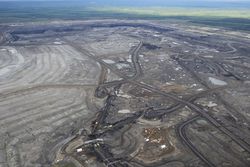
Learning from... Calgary
Learning from... Calgary
Actions:
Description:
Andrew Nikiforuk presents a talk entitled The political architecture of extreme oil, on the rapid development of bitumen in northern Alberta and its effects on the character of the region, and the country. Although the problems of oil exporting countries are well studied, Canada has yet to consider them or prepare for future oil price shocks. A journalist, Andrew(...)
Andrew Nikiforuk presents a talk entitled The political architecture of extreme oil, on the rapid development of bitumen in northern Alberta and its effects on the character of the region, and the country. Although the problems of oil exporting countries are well studied, Canada has yet to consider them or prepare for future oil price shocks. A journalist, Andrew(...)
Location:
Théâtre Paul-Desmarais
Théâtre Paul-Desmarais
Date:
17 March 2011 , 7pm
17 March 2011 , 7pm
Title:
Learning from... Calgary
Actions:
Description:
Andrew Nikiforuk presents a talk entitled The political architecture of extreme oil, on the rapid development of bitumen in northern Alberta and its effects on the character of the region, and the country. Although the problems of oil exporting countries are well studied, Canada has yet to consider them or prepare for future oil price shocks. A journalist, Andrew(...)
Learning from... Calgary
Actions:
Description:
Andrew Nikiforuk presents a talk entitled The political architecture of extreme oil, on the rapid development of bitumen in northern Alberta and its effects on the character of the region, and the country. Although the problems of oil exporting countries are well studied, Canada has yet to consider them or prepare for future oil price shocks. A journalist, Andrew(...)
Form:
events
events
Date:
17 March 2011
7pm
17 March 2011
7pm
Location:
Théâtre Paul-Desmarais
Théâtre Paul-Desmarais
Form:
events
events
Title:
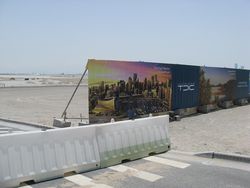
Learning from... Saadiyat
Learning from... Saadiyat
Actions:
Description:
Saadiyat Island is a “dreamscape” created by Tourism Development Investment Company just half a kilometer from downtown Abu Dhabi. It is an amalgam of luxury residential areas, 5-star resorts and golf courses crowned by a Cultural District containing a hallucinatory collection of museums designed by five Pritzker Prize winners. Is this the future of private(...)
Saadiyat Island is a “dreamscape” created by Tourism Development Investment Company just half a kilometer from downtown Abu Dhabi. It is an amalgam of luxury residential areas, 5-star resorts and golf courses crowned by a Cultural District containing a hallucinatory collection of museums designed by five Pritzker Prize winners. Is this the future of private(...)
Location:
Paul-Desmarais Theatre
Paul-Desmarais Theatre
Date:
21 August 2014 , 6pm
21 August 2014 , 6pm
Title:
Learning from... Saadiyat
Actions:
Description:
Saadiyat Island is a “dreamscape” created by Tourism Development Investment Company just half a kilometer from downtown Abu Dhabi. It is an amalgam of luxury residential areas, 5-star resorts and golf courses crowned by a Cultural District containing a hallucinatory collection of museums designed by five Pritzker Prize winners. Is this the future of private(...)
Learning from... Saadiyat
Actions:
Description:
Saadiyat Island is a “dreamscape” created by Tourism Development Investment Company just half a kilometer from downtown Abu Dhabi. It is an amalgam of luxury residential areas, 5-star resorts and golf courses crowned by a Cultural District containing a hallucinatory collection of museums designed by five Pritzker Prize winners. Is this the future of private(...)
Form:
events
events
Date:
21 August 2014
6pm
21 August 2014
6pm
Location:
Paul-Desmarais Theatre
Paul-Desmarais Theatre


