


11284 Results
Level of archival description:
Project
Project
Reference number:
AP178.S1.1983.PR03
Description:
This project series documents the Casa Mário Bahia in Gondomar, Portugal. While the records were held in the office’s archives this project was assigned the number 17/80. The office assigned the date 1983 to this project. The project files document a house comissionned by Mário Bahia. The 340 square metre home was supposed to be built on the slope of the river Douro. The design included five bedrooms and four bathrooms. An elevator and stairway were proposed to link the garage to the house. The house was not built. Documenting this project are sketches, studies, working drawings, structural drawings and technical drawings. Textual materials include project documentation and correspondence. Photographic materials document the model.
AP178.S1.1983.PR03
Description:
This project series documents the Casa Mário Bahia in Gondomar, Portugal. While the records were held in the office’s archives this project was assigned the number 17/80. The office assigned the date 1983 to this project. The project files document a house comissionned by Mário Bahia. The 340 square metre home was supposed to be built on the slope of the river Douro. The design included five bedrooms and four bathrooms. An elevator and stairway were proposed to link the garage to the house. The house was not built. Documenting this project are sketches, studies, working drawings, structural drawings and technical drawings. Textual materials include project documentation and correspondence. Photographic materials document the model.
People:
Date:
1983-1993
1983-1993
Title:
Casa Mário Bahia [Mário Bahia house], Gondomar, Portugal, 1983-1993
Actions:
AP178.S1.1983.PR03
Description:
This project series documents the Casa Mário Bahia in Gondomar, Portugal. While the records were held in the office’s archives this project was assigned the number 17/80. The office assigned the date 1983 to this project. The project files document a house comissionned by Mário Bahia. The 340 square metre home was supposed to be built on the slope of the river Douro. The design included five bedrooms and four bathrooms. An elevator and stairway were proposed to link the garage to the house. The house was not built. Documenting this project are sketches, studies, working drawings, structural drawings and technical drawings. Textual materials include project documentation and correspondence. Photographic materials document the model.
Casa Mário Bahia [Mário Bahia house], Gondomar, Portugal, 1983-1993
Actions:
AP178.S1.1983.PR03
Description:
This project series documents the Casa Mário Bahia in Gondomar, Portugal. While the records were held in the office’s archives this project was assigned the number 17/80. The office assigned the date 1983 to this project. The project files document a house comissionned by Mário Bahia. The 340 square metre home was supposed to be built on the slope of the river Douro. The design included five bedrooms and four bathrooms. An elevator and stairway were proposed to link the garage to the house. The house was not built. Documenting this project are sketches, studies, working drawings, structural drawings and technical drawings. Textual materials include project documentation and correspondence. Photographic materials document the model.
Level of archival description:
Project
Project
Date:
1983-1993
1983-1993
People:
Level of archival description:
Project
Project
Actions:
Reference number:
AP178.S1.1999.PR04
Description:
This project series documents the Estadio Municipal da Maia, Parque do Millenium in Maia, Portugal. While the records were held in the office's archives, this project was assigned the number 109/90 A. The office assigned the date 2000 to this project. This project was assigned to Álvaro Siza by Câmara Municipal da Maia as a part of the Plano de Urbanização da Nova Maia (see AP178.S1.1999.PR03). The new stadium will be built in Parque do Millenium along with hotels, restaurants, residential housing, a science and technology park, a nature park, a sports field, and a pavillion. The project is in progress. Documenting this project are a model and studies for the project site.
AP178.S1.1999.PR04
Description:
This project series documents the Estadio Municipal da Maia, Parque do Millenium in Maia, Portugal. While the records were held in the office's archives, this project was assigned the number 109/90 A. The office assigned the date 2000 to this project. This project was assigned to Álvaro Siza by Câmara Municipal da Maia as a part of the Plano de Urbanização da Nova Maia (see AP178.S1.1999.PR03). The new stadium will be built in Parque do Millenium along with hotels, restaurants, residential housing, a science and technology park, a nature park, a sports field, and a pavillion. The project is in progress. Documenting this project are a model and studies for the project site.
People:
Date:
2000
2000
Title:
Estadio Municipal da Maia, Parque do Millenium [Maia municipal stadium, Millenium Park], Maia, Portugal (2000)
Actions:
AP178.S1.1999.PR04
Description:
This project series documents the Estadio Municipal da Maia, Parque do Millenium in Maia, Portugal. While the records were held in the office's archives, this project was assigned the number 109/90 A. The office assigned the date 2000 to this project. This project was assigned to Álvaro Siza by Câmara Municipal da Maia as a part of the Plano de Urbanização da Nova Maia (see AP178.S1.1999.PR03). The new stadium will be built in Parque do Millenium along with hotels, restaurants, residential housing, a science and technology park, a nature park, a sports field, and a pavillion. The project is in progress. Documenting this project are a model and studies for the project site.
Estadio Municipal da Maia, Parque do Millenium [Maia municipal stadium, Millenium Park], Maia, Portugal (2000)
Actions:
AP178.S1.1999.PR04
Description:
This project series documents the Estadio Municipal da Maia, Parque do Millenium in Maia, Portugal. While the records were held in the office's archives, this project was assigned the number 109/90 A. The office assigned the date 2000 to this project. This project was assigned to Álvaro Siza by Câmara Municipal da Maia as a part of the Plano de Urbanização da Nova Maia (see AP178.S1.1999.PR03). The new stadium will be built in Parque do Millenium along with hotels, restaurants, residential housing, a science and technology park, a nature park, a sports field, and a pavillion. The project is in progress. Documenting this project are a model and studies for the project site.
Level of archival description:
Project
Project
Date:
2000
2000
People:
Form:
archives
Level of archival description:
Collection
archives
Level of archival description:
Collection
Title:
J.J.P. Oud Collection
J.J.P. Oud Collection
Reference number:
CI005
Synopsis:
The J.J.P. Oud Collection, 1911-1973, documents J.J.P. Oud's work as an architect between 1911 and 1973. The collection is focussed on Oud’s architectural projects, including work on major exectued and unrealized buildings in the Netherlands, Germany, Czechoslovakia, and the United States. The collection also includes Oud's designs for diverse projects on public housing, war memorials and interior design.
CI005
Synopsis:
The J.J.P. Oud Collection, 1911-1973, documents J.J.P. Oud's work as an architect between 1911 and 1973. The collection is focussed on Oud’s architectural projects, including work on major exectued and unrealized buildings in the Netherlands, Germany, Czechoslovakia, and the United States. The collection also includes Oud's designs for diverse projects on public housing, war memorials and interior design.
People:
Date:
1908-1966 (1911-1963 predominant)
1908-1966 (1911-1963 predominant)
Title:
J.J.P. Oud Collection
CI005
Synopsis:
The J.J.P. Oud Collection, 1911-1973, documents J.J.P. Oud's work as an architect between 1911 and 1973. The collection is focussed on Oud’s architectural projects, including work on major exectued and unrealized buildings in the Netherlands, Germany, Czechoslovakia, and the United States. The collection also includes Oud's designs for diverse projects on public housing, war memorials and interior design.
J.J.P. Oud Collection
CI005
Synopsis:
The J.J.P. Oud Collection, 1911-1973, documents J.J.P. Oud's work as an architect between 1911 and 1973. The collection is focussed on Oud’s architectural projects, including work on major exectued and unrealized buildings in the Netherlands, Germany, Czechoslovakia, and the United States. The collection also includes Oud's designs for diverse projects on public housing, war memorials and interior design.
Form:
archives
Level of archival description:
Collection institutionnelle
archives
Level of archival description:
Collection institutionnelle
Date:
1908-1966 (1911-1963 predominant)
1908-1966 (1911-1963 predominant)
People:
Form:
drawings
drawings
Actions:
Reference number:
PH1979:0603.04:047
Description:
- This photograph also shows in the right background the Temple of the Sea of Wisdom, the Revolving Archive and the Pavilion of Precious Clouds on Longevity Hill.
PH1979:0603.04:047
Description:
- This photograph also shows in the right background the Temple of the Sea of Wisdom, the Revolving Archive and the Pavilion of Precious Clouds on Longevity Hill.
People:
Subject:
architecture, engineering
architecture, engineering
Date:
published 1874
published 1874
Title:
View of the Seventeen-Arch Bridge with Longevity Hill [Wanshou Shan] in the background, Garden of the Clear Ripples [Qing Yi Yuan] (now known as the Summer Palace or Yihe Yuan), Peking (now Beijing), China
Actions:
PH1979:0603.04:047
Description:
- This photograph also shows in the right background the Temple of the Sea of Wisdom, the Revolving Archive and the Pavilion of Precious Clouds on Longevity Hill.
View of the Seventeen-Arch Bridge with Longevity Hill [Wanshou Shan] in the background, Garden of the Clear Ripples [Qing Yi Yuan] (now known as the Summer Palace or Yihe Yuan), Peking (now Beijing), China
Actions:
PH1979:0603.04:047
Description:
- This photograph also shows in the right background the Temple of the Sea of Wisdom, the Revolving Archive and the Pavilion of Precious Clouds on Longevity Hill.
Form:
drawings
drawings
Date:
published 1874
published 1874
People:
Subject:
architecture, engineering
architecture, engineering
Form:
archives
Level of archival description:
Fonds
archives
Level of archival description:
Fonds
Title:
Pierre Jeanneret fonds
Pierre Jeanneret fonds
Reference number:
AP156
Synopsis:
Le Fonds Pierre Jeanneret documente la pratique professionnelle et la vie personnelle de l'architect Pierre Jeanneret de ses études et ses projets professionels en Europe à ses projets architecturaux à Chandigarh, en Inde. Les documents du Fonds consistent en des photographies, des dessins et des documents textuels relatifs à plus de 100 projets, principalement son travail pour le projet de la nouvelle ville de Chandigarh, en Inde, en 1951 à 1965. *** The Pierre Jeanneret fonds documents the professional practice and the personal life of architect Pierre Jeanneret from student and professional work in Europe to architectural projects in Chandigarh, India. The documents in the fonds consist of photographs, drawings and textual records relating to over 100 projects, predominantly his work for the project of the new city of Chandigarh, in India, in 1951 to 1965.
AP156
Synopsis:
Le Fonds Pierre Jeanneret documente la pratique professionnelle et la vie personnelle de l'architect Pierre Jeanneret de ses études et ses projets professionels en Europe à ses projets architecturaux à Chandigarh, en Inde. Les documents du Fonds consistent en des photographies, des dessins et des documents textuels relatifs à plus de 100 projets, principalement son travail pour le projet de la nouvelle ville de Chandigarh, en Inde, en 1951 à 1965. *** The Pierre Jeanneret fonds documents the professional practice and the personal life of architect Pierre Jeanneret from student and professional work in Europe to architectural projects in Chandigarh, India. The documents in the fonds consist of photographs, drawings and textual records relating to over 100 projects, predominantly his work for the project of the new city of Chandigarh, in India, in 1951 to 1965.
People:
Date:
1870s-2011
1870s-2011
Title:
Pierre Jeanneret fonds
Actions:
AP156
Synopsis:
Le Fonds Pierre Jeanneret documente la pratique professionnelle et la vie personnelle de l'architect Pierre Jeanneret de ses études et ses projets professionels en Europe à ses projets architecturaux à Chandigarh, en Inde. Les documents du Fonds consistent en des photographies, des dessins et des documents textuels relatifs à plus de 100 projets, principalement son travail pour le projet de la nouvelle ville de Chandigarh, en Inde, en 1951 à 1965. *** The Pierre Jeanneret fonds documents the professional practice and the personal life of architect Pierre Jeanneret from student and professional work in Europe to architectural projects in Chandigarh, India. The documents in the fonds consist of photographs, drawings and textual records relating to over 100 projects, predominantly his work for the project of the new city of Chandigarh, in India, in 1951 to 1965.
Pierre Jeanneret fonds
Actions:
AP156
Synopsis:
Le Fonds Pierre Jeanneret documente la pratique professionnelle et la vie personnelle de l'architect Pierre Jeanneret de ses études et ses projets professionels en Europe à ses projets architecturaux à Chandigarh, en Inde. Les documents du Fonds consistent en des photographies, des dessins et des documents textuels relatifs à plus de 100 projets, principalement son travail pour le projet de la nouvelle ville de Chandigarh, en Inde, en 1951 à 1965. *** The Pierre Jeanneret fonds documents the professional practice and the personal life of architect Pierre Jeanneret from student and professional work in Europe to architectural projects in Chandigarh, India. The documents in the fonds consist of photographs, drawings and textual records relating to over 100 projects, predominantly his work for the project of the new city of Chandigarh, in India, in 1951 to 1965.
Form:
archives
Level of archival description:
Fonds
archives
Level of archival description:
Fonds
Date:
1870s-2011
1870s-2011
People:
Form:
textual records, works of art
textual records, works of art
Actions:
Reference number:
DR1974:0002:036:006:001-006
Description:
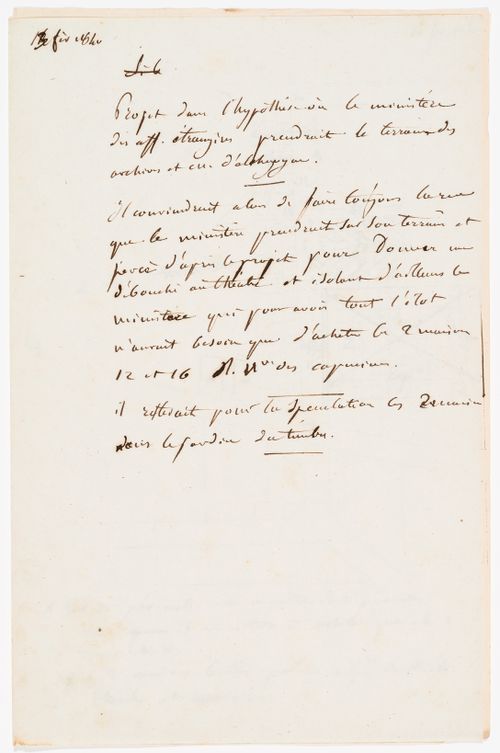
Manuscript DR1974:0002:036:006:001-006 documents a project in which the Ministère des Affaires Étrangères would apparently retain the property of its archives and the Hôtel d'Etchegoyan. The project proposes the creation of a new street to provide access to the rear of the opera house and to isolate it from the Ministère des Affaires Étrangères. The principal façade of the opera house was to be on the property of the Hôtel du Timbre facing rue de la Paix. The manuscript includes proposed construction costs and rental income for the opera house, including its boutiques and café, and the adjacent shopping arcades, apartments, and houses.
DR1974:0002:036:006:001-006
Description:
Manuscript DR1974:0002:036:006:001-006 documents a project in which the Ministère des Affaires Étrangères would apparently retain the property of its archives and the Hôtel d'Etchegoyan. The project proposes the creation of a new street to provide access to the rear of the opera house and to isolate it from the Ministère des Affaires Étrangères. The principal façade of the opera house was to be on the property of the Hôtel du Timbre facing rue de la Paix. The manuscript includes proposed construction costs and rental income for the opera house, including its boutiques and café, and the adjacent shopping arcades, apartments, and houses.
People:
Subject:
architecture
architecture
Date:
13, 14, and 16 February 1840
13, 14, and 16 February 1840
Title:
Cost estimates, projected rental incomes, and a site plan for an opera house for the Théâtre Royal Italien and surrounding infrastructure on the Ministère des Affaires Étrangères and the Hôtel du Timbre site
Actions:
DR1974:0002:036:006:001-006
Description:
Manuscript DR1974:0002:036:006:001-006 documents a project in which the Ministère des Affaires Étrangères would apparently retain the property of its archives and the Hôtel d'Etchegoyan. The project proposes the creation of a new street to provide access to the rear of the opera house and to isolate it from the Ministère des Affaires Étrangères. The principal façade of the opera house was to be on the property of the Hôtel du Timbre facing rue de la Paix. The manuscript includes proposed construction costs and rental income for the opera house, including its boutiques and café, and the adjacent shopping arcades, apartments, and houses.
Cost estimates, projected rental incomes, and a site plan for an opera house for the Théâtre Royal Italien and surrounding infrastructure on the Ministère des Affaires Étrangères and the Hôtel du Timbre site
Actions:
DR1974:0002:036:006:001-006
Description:
Manuscript DR1974:0002:036:006:001-006 documents a project in which the Ministère des Affaires Étrangères would apparently retain the property of its archives and the Hôtel d'Etchegoyan. The project proposes the creation of a new street to provide access to the rear of the opera house and to isolate it from the Ministère des Affaires Étrangères. The principal façade of the opera house was to be on the property of the Hôtel du Timbre facing rue de la Paix. The manuscript includes proposed construction costs and rental income for the opera house, including its boutiques and café, and the adjacent shopping arcades, apartments, and houses.
Form:
textual records, works of art
textual records, works of art
Date:
13, 14, and 16 February 1840
13, 14, and 16 February 1840
People:
Subject:
architecture
architecture
Level of archival description:
Project
Project
Reference number:
AP178.S1.1994.PR05
Description:
This project series documents the Plano de Pormenor do Rossio de São Brás in Évora, Portugal. While the records were held in the office’s archives this project was assigned the number 50/90. The office assigned the date 1994 to this project. The project consisted of a series of commercial and housing buildings. Buildings A, B, and C had commercial functions on the ground floor with two floors for dwellings. Buildings D and E were office buildings, and building F was a congress center. Documenting this project series are studies, site plans and working drawings. Textual materials include project documentation, notes and correspondence. Photographs and negatives document the project site and model.
AP178.S1.1994.PR05
Description:
This project series documents the Plano de Pormenor do Rossio de São Brás in Évora, Portugal. While the records were held in the office’s archives this project was assigned the number 50/90. The office assigned the date 1994 to this project. The project consisted of a series of commercial and housing buildings. Buildings A, B, and C had commercial functions on the ground floor with two floors for dwellings. Buildings D and E were office buildings, and building F was a congress center. Documenting this project series are studies, site plans and working drawings. Textual materials include project documentation, notes and correspondence. Photographs and negatives document the project site and model.
People:
Date:
1994-2001
1994-2001
Title:
Plano de Pormenor do Rossio de São Brás [Master plan for Rossio São Brás], Évora, Portugal (1994)
Actions:
AP178.S1.1994.PR05
Description:
This project series documents the Plano de Pormenor do Rossio de São Brás in Évora, Portugal. While the records were held in the office’s archives this project was assigned the number 50/90. The office assigned the date 1994 to this project. The project consisted of a series of commercial and housing buildings. Buildings A, B, and C had commercial functions on the ground floor with two floors for dwellings. Buildings D and E were office buildings, and building F was a congress center. Documenting this project series are studies, site plans and working drawings. Textual materials include project documentation, notes and correspondence. Photographs and negatives document the project site and model.
Plano de Pormenor do Rossio de São Brás [Master plan for Rossio São Brás], Évora, Portugal (1994)
Actions:
AP178.S1.1994.PR05
Description:
This project series documents the Plano de Pormenor do Rossio de São Brás in Évora, Portugal. While the records were held in the office’s archives this project was assigned the number 50/90. The office assigned the date 1994 to this project. The project consisted of a series of commercial and housing buildings. Buildings A, B, and C had commercial functions on the ground floor with two floors for dwellings. Buildings D and E were office buildings, and building F was a congress center. Documenting this project series are studies, site plans and working drawings. Textual materials include project documentation, notes and correspondence. Photographs and negatives document the project site and model.
Level of archival description:
Project
Project
Date:
1994-2001
1994-2001
People:
Form:
textual records
textual records
Title:
CCA leaflet for exhibition "Designing the Disney Theme Parks: The Architecture of Reassurance"
CCA leaflet for exhibition "Designing the Disney Theme Parks: The Architecture of Reassurance"
Actions:
Reference number:
DR2004:1525
Description:
CCA leaflet for exhibition "Designing the Disney Theme Parks: The Architecture of Reassurance", CCA correspondence and list of drawings from CP Archive to be published
DR2004:1525
Description:
CCA leaflet for exhibition "Designing the Disney Theme Parks: The Architecture of Reassurance", CCA correspondence and list of drawings from CP Archive to be published
People:
Date:
1997-2001
1997-2001
Title:
CCA leaflet for exhibition "Designing the Disney Theme Parks: The Architecture of Reassurance"
Actions:
DR2004:1525
Description:
CCA leaflet for exhibition "Designing the Disney Theme Parks: The Architecture of Reassurance", CCA correspondence and list of drawings from CP Archive to be published
CCA leaflet for exhibition "Designing the Disney Theme Parks: The Architecture of Reassurance"
Actions:
DR2004:1525
Description:
CCA leaflet for exhibition "Designing the Disney Theme Parks: The Architecture of Reassurance", CCA correspondence and list of drawings from CP Archive to be published
Form:
textual records
textual records
Date:
1997-2001
1997-2001
People:
Form:
exhibitions
exhibitions
Actions:
Description:
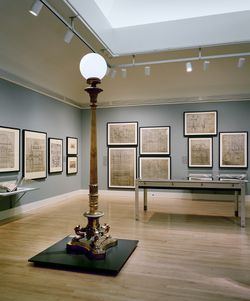
This exhibition looks at the transformation of Montréal from a nineteenth century merchant city to the metropolis of Canada. It examines the elements that made Montréal a political, social, and economic centre and explores the unique character of its architecture. The exhibition brings together some 350 objects, including drawings from the CCA collection by Montréal(...)
This exhibition looks at the transformation of Montréal from a nineteenth century merchant city to the metropolis of Canada. It examines the elements that made Montréal a political, social, and economic centre and explores the unique character of its architecture. The exhibition brings together some 350 objects, including drawings from the CCA collection by Montréal(...)
Location:
Main galleries
Main galleries
Date:
18 March 1998 to 24 May 1998
18 March 1998 to 24 May 1998
Title:
Montréal Métropole, 1880–1930
Actions:
Description:
This exhibition looks at the transformation of Montréal from a nineteenth century merchant city to the metropolis of Canada. It examines the elements that made Montréal a political, social, and economic centre and explores the unique character of its architecture. The exhibition brings together some 350 objects, including drawings from the CCA collection by Montréal(...)
Montréal Métropole, 1880–1930
Actions:
Description:
This exhibition looks at the transformation of Montréal from a nineteenth century merchant city to the metropolis of Canada. It examines the elements that made Montréal a political, social, and economic centre and explores the unique character of its architecture. The exhibition brings together some 350 objects, including drawings from the CCA collection by Montréal(...)
Form:
exhibitions
exhibitions
Date:
18 March 1998 to
24 May 1998
18 March 1998 to
24 May 1998
Location:
Main galleries
Main galleries
Form:
research
research
Description:
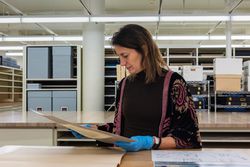
Interpreting material from the Gianni Pettena fonds, Elisabetta Trincherini traces Pettena’s ongoing dialogue with North America through observations of his travels, the examination of a selection of projects, and an exploration of his teaching syllabi.
Interpreting material from the Gianni Pettena fonds, Elisabetta Trincherini traces Pettena’s ongoing dialogue with North America through observations of his travels, the examination of a selection of projects, and an exploration of his teaching syllabi.
Date:
January 2023
January 2023
Title:
Find and Tell: Elisabetta Trincherini on Gianni Pettena
Actions:
Description:
Interpreting material from the Gianni Pettena fonds, Elisabetta Trincherini traces Pettena’s ongoing dialogue with North America through observations of his travels, the examination of a selection of projects, and an exploration of his teaching syllabi.
Find and Tell: Elisabetta Trincherini on Gianni Pettena
Actions:
Description:
Interpreting material from the Gianni Pettena fonds, Elisabetta Trincherini traces Pettena’s ongoing dialogue with North America through observations of his travels, the examination of a selection of projects, and an exploration of his teaching syllabi.
Form:
research
research
Date:
January 2023
January 2023


