


3263 Results
Level of archival description:
Project
Project
Reference number:
AP018.S1.1972.PR08
Description:
This project series documents the second stage of the expansion of the Art Gallery of Ontario (AGO) in Toronto from 1972-1977. The office identified the project number as 7208. This project consisted of the expansion of the AGO that began in 1972. It was Stage II of the expansion program, which began in 1969 with Stage I. Most prominent in this project was the extension of the gallery’s west side to reach Beverley Street. This wing housed the new Education and Extension (E&E) branch galleries and educational facilities, and a two-storey reference library. The library included a 10,000 square foot reading room and an audiovisual library. This stage also proposed an extension to the south of the main gallery, directly east of the Grange mansion, that would connect the AGO to the neighbouring Ontario College of Art. It should be noted that while AGO project contracts were originally given to John B. Parkin Associates, John C. Parkin continued the project under his new firm, Parkin Architects Planners, after parting ways with partner John B. Parkin in 1971. The project is recorded through drawings, photographs, and textual records dating from 1971-1983. The majority of the drawings are reprographic copies of detail drawings arranged with the textual records, although original drawings of details are also present within the textual records. Large drawings housed separately show both the design development and construction of the project. There are also presentation boards showing floor plan schemes. The textual records include contractor and client correspondence, meeting reports, specifications, project notebooks, tender documents, contract data, consultancy records, site reports, certificates of payment and other financial documentation, change orders, supplementary instructions, deficiency lists, detail planning records, and studies. Box AP018.S1.1972.PR08.001 contains an index to the textual records, which was created by the office.
AP018.S1.1972.PR08
Description:
This project series documents the second stage of the expansion of the Art Gallery of Ontario (AGO) in Toronto from 1972-1977. The office identified the project number as 7208. This project consisted of the expansion of the AGO that began in 1972. It was Stage II of the expansion program, which began in 1969 with Stage I. Most prominent in this project was the extension of the gallery’s west side to reach Beverley Street. This wing housed the new Education and Extension (E&E) branch galleries and educational facilities, and a two-storey reference library. The library included a 10,000 square foot reading room and an audiovisual library. This stage also proposed an extension to the south of the main gallery, directly east of the Grange mansion, that would connect the AGO to the neighbouring Ontario College of Art. It should be noted that while AGO project contracts were originally given to John B. Parkin Associates, John C. Parkin continued the project under his new firm, Parkin Architects Planners, after parting ways with partner John B. Parkin in 1971. The project is recorded through drawings, photographs, and textual records dating from 1971-1983. The majority of the drawings are reprographic copies of detail drawings arranged with the textual records, although original drawings of details are also present within the textual records. Large drawings housed separately show both the design development and construction of the project. There are also presentation boards showing floor plan schemes. The textual records include contractor and client correspondence, meeting reports, specifications, project notebooks, tender documents, contract data, consultancy records, site reports, certificates of payment and other financial documentation, change orders, supplementary instructions, deficiency lists, detail planning records, and studies. Box AP018.S1.1972.PR08.001 contains an index to the textual records, which was created by the office.
People:
Date:
1971-1983
1971-1983
Title:
Art Gallery of Ontario, Stage II Expansion, Toronto (1978)
Actions:
AP018.S1.1972.PR08
Description:
This project series documents the second stage of the expansion of the Art Gallery of Ontario (AGO) in Toronto from 1972-1977. The office identified the project number as 7208. This project consisted of the expansion of the AGO that began in 1972. It was Stage II of the expansion program, which began in 1969 with Stage I. Most prominent in this project was the extension of the gallery’s west side to reach Beverley Street. This wing housed the new Education and Extension (E&E) branch galleries and educational facilities, and a two-storey reference library. The library included a 10,000 square foot reading room and an audiovisual library. This stage also proposed an extension to the south of the main gallery, directly east of the Grange mansion, that would connect the AGO to the neighbouring Ontario College of Art. It should be noted that while AGO project contracts were originally given to John B. Parkin Associates, John C. Parkin continued the project under his new firm, Parkin Architects Planners, after parting ways with partner John B. Parkin in 1971. The project is recorded through drawings, photographs, and textual records dating from 1971-1983. The majority of the drawings are reprographic copies of detail drawings arranged with the textual records, although original drawings of details are also present within the textual records. Large drawings housed separately show both the design development and construction of the project. There are also presentation boards showing floor plan schemes. The textual records include contractor and client correspondence, meeting reports, specifications, project notebooks, tender documents, contract data, consultancy records, site reports, certificates of payment and other financial documentation, change orders, supplementary instructions, deficiency lists, detail planning records, and studies. Box AP018.S1.1972.PR08.001 contains an index to the textual records, which was created by the office.
Art Gallery of Ontario, Stage II Expansion, Toronto (1978)
Actions:
AP018.S1.1972.PR08
Description:
This project series documents the second stage of the expansion of the Art Gallery of Ontario (AGO) in Toronto from 1972-1977. The office identified the project number as 7208. This project consisted of the expansion of the AGO that began in 1972. It was Stage II of the expansion program, which began in 1969 with Stage I. Most prominent in this project was the extension of the gallery’s west side to reach Beverley Street. This wing housed the new Education and Extension (E&E) branch galleries and educational facilities, and a two-storey reference library. The library included a 10,000 square foot reading room and an audiovisual library. This stage also proposed an extension to the south of the main gallery, directly east of the Grange mansion, that would connect the AGO to the neighbouring Ontario College of Art. It should be noted that while AGO project contracts were originally given to John B. Parkin Associates, John C. Parkin continued the project under his new firm, Parkin Architects Planners, after parting ways with partner John B. Parkin in 1971. The project is recorded through drawings, photographs, and textual records dating from 1971-1983. The majority of the drawings are reprographic copies of detail drawings arranged with the textual records, although original drawings of details are also present within the textual records. Large drawings housed separately show both the design development and construction of the project. There are also presentation boards showing floor plan schemes. The textual records include contractor and client correspondence, meeting reports, specifications, project notebooks, tender documents, contract data, consultancy records, site reports, certificates of payment and other financial documentation, change orders, supplementary instructions, deficiency lists, detail planning records, and studies. Box AP018.S1.1972.PR08.001 contains an index to the textual records, which was created by the office.
Level of archival description:
Project
Project
Date:
1971-1983
1971-1983
People:
Form:
textual records
textual records
Actions:
Reference number:
AP197.S1.SS9.014
Description:
The box contains drafts, final copies, notes and correspondence for various articles, interviews, keynote addresses, and lectures by Kenneth Frampton. The materials are organized in alphabetical order, from FR- I. The largest portion of this box consists of articles, correspondence and research files on Tony Fretton; a dossier on the 1994 Mies van der Rohe Pavilion Award in which Frampton was a nominator from 1994-1996; various articles, drafts and correspondence on Steven Holl; drafts of "Homage a Finlandia: Finnish Architecture and the Unfinished Modern Project," a Nils Wickberg lecture, Aalto University; and correspondence and drafts of a Michael Hopkins essay featured in "Hopkins: the work of Michael Hopkins and Partners." Other subjects and architects explored in these texts relate to: Tony Fretton; Hiromi Fuiji; futurism; on Galfetti's Aula; Antoni Gaudí; globalism and its discontents; Giorgio Grassi; Vittorio Gregotti; the Guggenheim; Dan S. Hanganu; the work of Hariri Hariri; Herman Hertzberger; homage to Iberia; industrialization; and an introduction to "Inside Architecture" by Vittorio Gregotti.
AP197.S1.SS9.014
Description:
The box contains drafts, final copies, notes and correspondence for various articles, interviews, keynote addresses, and lectures by Kenneth Frampton. The materials are organized in alphabetical order, from FR- I. The largest portion of this box consists of articles, correspondence and research files on Tony Fretton; a dossier on the 1994 Mies van der Rohe Pavilion Award in which Frampton was a nominator from 1994-1996; various articles, drafts and correspondence on Steven Holl; drafts of "Homage a Finlandia: Finnish Architecture and the Unfinished Modern Project," a Nils Wickberg lecture, Aalto University; and correspondence and drafts of a Michael Hopkins essay featured in "Hopkins: the work of Michael Hopkins and Partners." Other subjects and architects explored in these texts relate to: Tony Fretton; Hiromi Fuiji; futurism; on Galfetti's Aula; Antoni Gaudí; globalism and its discontents; Giorgio Grassi; Vittorio Gregotti; the Guggenheim; Dan S. Hanganu; the work of Hariri Hariri; Herman Hertzberger; homage to Iberia; industrialization; and an introduction to "Inside Architecture" by Vittorio Gregotti.
People:
Date:
circa 1971-2015
circa 1971-2015
Title:
Kenneth Frampton writings (FR-I)
Actions:
AP197.S1.SS9.014
Description:
The box contains drafts, final copies, notes and correspondence for various articles, interviews, keynote addresses, and lectures by Kenneth Frampton. The materials are organized in alphabetical order, from FR- I. The largest portion of this box consists of articles, correspondence and research files on Tony Fretton; a dossier on the 1994 Mies van der Rohe Pavilion Award in which Frampton was a nominator from 1994-1996; various articles, drafts and correspondence on Steven Holl; drafts of "Homage a Finlandia: Finnish Architecture and the Unfinished Modern Project," a Nils Wickberg lecture, Aalto University; and correspondence and drafts of a Michael Hopkins essay featured in "Hopkins: the work of Michael Hopkins and Partners." Other subjects and architects explored in these texts relate to: Tony Fretton; Hiromi Fuiji; futurism; on Galfetti's Aula; Antoni Gaudí; globalism and its discontents; Giorgio Grassi; Vittorio Gregotti; the Guggenheim; Dan S. Hanganu; the work of Hariri Hariri; Herman Hertzberger; homage to Iberia; industrialization; and an introduction to "Inside Architecture" by Vittorio Gregotti.
Kenneth Frampton writings (FR-I)
Actions:
AP197.S1.SS9.014
Description:
The box contains drafts, final copies, notes and correspondence for various articles, interviews, keynote addresses, and lectures by Kenneth Frampton. The materials are organized in alphabetical order, from FR- I. The largest portion of this box consists of articles, correspondence and research files on Tony Fretton; a dossier on the 1994 Mies van der Rohe Pavilion Award in which Frampton was a nominator from 1994-1996; various articles, drafts and correspondence on Steven Holl; drafts of "Homage a Finlandia: Finnish Architecture and the Unfinished Modern Project," a Nils Wickberg lecture, Aalto University; and correspondence and drafts of a Michael Hopkins essay featured in "Hopkins: the work of Michael Hopkins and Partners." Other subjects and architects explored in these texts relate to: Tony Fretton; Hiromi Fuiji; futurism; on Galfetti's Aula; Antoni Gaudí; globalism and its discontents; Giorgio Grassi; Vittorio Gregotti; the Guggenheim; Dan S. Hanganu; the work of Hariri Hariri; Herman Hertzberger; homage to Iberia; industrialization; and an introduction to "Inside Architecture" by Vittorio Gregotti.
Form:
textual records
textual records
Date:
circa 1971-2015
circa 1971-2015
People:
Form:
archives
Level of archival description:
Fonds
archives
Level of archival description:
Fonds
Title:
Stelco fonds
Stelco fonds
Actions:
Reference number:
AP017
Synopsis:
The Stelco fonds, 1902-1982, documents the buildings of the Steel Company of Canada’s two Montréal sites, located on Notre-Dame street in Little Burgundy and in Saint-Henri. The fond is composed of drawings showing site plans and elevations.
AP017
Synopsis:
The Stelco fonds, 1902-1982, documents the buildings of the Steel Company of Canada’s two Montréal sites, located on Notre-Dame street in Little Burgundy and in Saint-Henri. The fond is composed of drawings showing site plans and elevations.
People:
Date:
1902-1982
1902-1982
Title:
Stelco fonds
Actions:
AP017
Synopsis:
The Stelco fonds, 1902-1982, documents the buildings of the Steel Company of Canada’s two Montréal sites, located on Notre-Dame street in Little Burgundy and in Saint-Henri. The fond is composed of drawings showing site plans and elevations.
Stelco fonds
Actions:
AP017
Synopsis:
The Stelco fonds, 1902-1982, documents the buildings of the Steel Company of Canada’s two Montréal sites, located on Notre-Dame street in Little Burgundy and in Saint-Henri. The fond is composed of drawings showing site plans and elevations.
Form:
archives
Level of archival description:
Fonds
archives
Level of archival description:
Fonds
Date:
1902-1982
1902-1982
People:
Level of archival description:
Project
Project
Actions:
Reference number:
AP018.S1.1973.PR02
Description:
This project series documents the design and construction of the residence of A.W. Billes and his family at 30 High Point Road in North York, Toronto from 1973-1975. The office identified the project number as 7302. This project consisted of a ten bedroom home for Toronto businessman Alfred W. Billes, who was part of the Canadian Tire founding family and part owner at this time. The extravagant home included tennis courts, a pool, an indoor atrium with gardens, staff quarters, a library, and a piano room, among others. Built in the Bridle Path neighbourhood, the home was designed in the modernist style with two terraced balconies facing the street. Following the completion of the project, A.W. Billes sued the firm of Parkin Partnership Architects Planners over dissatisfaction with the construction, a case that was appealed all the way to the Supreme Court. Parkin lost the case in 1984 and had to pay A.W. Billes approximately $125,000. The project is recorded through drawings, photographs, slides, a project painting, and textual records dating from 1973-1984. The drawings are a mix of original sketches and construction drawings. The photographs and slides show the completed project. The textual records include construction documentation, design notes, interoffice memos, correspondence, meeting and site reports, extensive lawsuit documentation, contract data, a project manual for the homeowners and consultancy records. Some of the drawings and textual records are labelled Part 7', but it is unclear from the documentation what this refers to. There are a large number of construction drawings, some sketches, and detail drawings arranged within the textual materials.
AP018.S1.1973.PR02
Description:
This project series documents the design and construction of the residence of A.W. Billes and his family at 30 High Point Road in North York, Toronto from 1973-1975. The office identified the project number as 7302. This project consisted of a ten bedroom home for Toronto businessman Alfred W. Billes, who was part of the Canadian Tire founding family and part owner at this time. The extravagant home included tennis courts, a pool, an indoor atrium with gardens, staff quarters, a library, and a piano room, among others. Built in the Bridle Path neighbourhood, the home was designed in the modernist style with two terraced balconies facing the street. Following the completion of the project, A.W. Billes sued the firm of Parkin Partnership Architects Planners over dissatisfaction with the construction, a case that was appealed all the way to the Supreme Court. Parkin lost the case in 1984 and had to pay A.W. Billes approximately $125,000. The project is recorded through drawings, photographs, slides, a project painting, and textual records dating from 1973-1984. The drawings are a mix of original sketches and construction drawings. The photographs and slides show the completed project. The textual records include construction documentation, design notes, interoffice memos, correspondence, meeting and site reports, extensive lawsuit documentation, contract data, a project manual for the homeowners and consultancy records. Some of the drawings and textual records are labelled Part 7', but it is unclear from the documentation what this refers to. There are a large number of construction drawings, some sketches, and detail drawings arranged within the textual materials.
People:
Date:
1973-1984
1973-1984
Title:
Residence of Mr. & Mrs. A.W. Billes, Toronto (1973-1975)
Actions:
AP018.S1.1973.PR02
Description:
This project series documents the design and construction of the residence of A.W. Billes and his family at 30 High Point Road in North York, Toronto from 1973-1975. The office identified the project number as 7302. This project consisted of a ten bedroom home for Toronto businessman Alfred W. Billes, who was part of the Canadian Tire founding family and part owner at this time. The extravagant home included tennis courts, a pool, an indoor atrium with gardens, staff quarters, a library, and a piano room, among others. Built in the Bridle Path neighbourhood, the home was designed in the modernist style with two terraced balconies facing the street. Following the completion of the project, A.W. Billes sued the firm of Parkin Partnership Architects Planners over dissatisfaction with the construction, a case that was appealed all the way to the Supreme Court. Parkin lost the case in 1984 and had to pay A.W. Billes approximately $125,000. The project is recorded through drawings, photographs, slides, a project painting, and textual records dating from 1973-1984. The drawings are a mix of original sketches and construction drawings. The photographs and slides show the completed project. The textual records include construction documentation, design notes, interoffice memos, correspondence, meeting and site reports, extensive lawsuit documentation, contract data, a project manual for the homeowners and consultancy records. Some of the drawings and textual records are labelled Part 7', but it is unclear from the documentation what this refers to. There are a large number of construction drawings, some sketches, and detail drawings arranged within the textual materials.
Residence of Mr. & Mrs. A.W. Billes, Toronto (1973-1975)
Actions:
AP018.S1.1973.PR02
Description:
This project series documents the design and construction of the residence of A.W. Billes and his family at 30 High Point Road in North York, Toronto from 1973-1975. The office identified the project number as 7302. This project consisted of a ten bedroom home for Toronto businessman Alfred W. Billes, who was part of the Canadian Tire founding family and part owner at this time. The extravagant home included tennis courts, a pool, an indoor atrium with gardens, staff quarters, a library, and a piano room, among others. Built in the Bridle Path neighbourhood, the home was designed in the modernist style with two terraced balconies facing the street. Following the completion of the project, A.W. Billes sued the firm of Parkin Partnership Architects Planners over dissatisfaction with the construction, a case that was appealed all the way to the Supreme Court. Parkin lost the case in 1984 and had to pay A.W. Billes approximately $125,000. The project is recorded through drawings, photographs, slides, a project painting, and textual records dating from 1973-1984. The drawings are a mix of original sketches and construction drawings. The photographs and slides show the completed project. The textual records include construction documentation, design notes, interoffice memos, correspondence, meeting and site reports, extensive lawsuit documentation, contract data, a project manual for the homeowners and consultancy records. Some of the drawings and textual records are labelled Part 7', but it is unclear from the documentation what this refers to. There are a large number of construction drawings, some sketches, and detail drawings arranged within the textual materials.
Level of archival description:
Project
Project
Date:
1973-1984
1973-1984
People:
Form:
textual records
textual records
Reference number:
AP075.S3.SS2.149
Description:
This box contains professional correspondence, organized in chronological order, from 1958-1993, with a bulk of documents dated from 1978-1993. This correspondence contains chiefly letters related to publishing in landscape architecture publications, correspondence with schools of architecture and landscape architects associations, such as the Canadian Society of Landscape Architects, about membership or attendance to events. It also comprises correspondence related to research on play and playgrounds, collaboration with organizations for children education, research and involvement in sustainable development. It also contains correspondence with city planning committees or other governmental institutions related to projects or consultation in landscape design, and letters of reference or offer of services. This correspondence also comprises a few letters related to Oberlander's projects such as Children's Creative Centre Playground at Expo '67 in Montréal, University of British Columbia Faculty Club additions (which includes correspondence with Arthur Erickson), the Museum of Anthropology. It includes mainly letters of congratulations or comments for her design.
AP075.S3.SS2.149
Description:
This box contains professional correspondence, organized in chronological order, from 1958-1993, with a bulk of documents dated from 1978-1993. This correspondence contains chiefly letters related to publishing in landscape architecture publications, correspondence with schools of architecture and landscape architects associations, such as the Canadian Society of Landscape Architects, about membership or attendance to events. It also comprises correspondence related to research on play and playgrounds, collaboration with organizations for children education, research and involvement in sustainable development. It also contains correspondence with city planning committees or other governmental institutions related to projects or consultation in landscape design, and letters of reference or offer of services. This correspondence also comprises a few letters related to Oberlander's projects such as Children's Creative Centre Playground at Expo '67 in Montréal, University of British Columbia Faculty Club additions (which includes correspondence with Arthur Erickson), the Museum of Anthropology. It includes mainly letters of congratulations or comments for her design.
People:
Date:
1958-1993
1958-1993
Title:
Professional correspondence from 1958-1993
Actions:
AP075.S3.SS2.149
Description:
This box contains professional correspondence, organized in chronological order, from 1958-1993, with a bulk of documents dated from 1978-1993. This correspondence contains chiefly letters related to publishing in landscape architecture publications, correspondence with schools of architecture and landscape architects associations, such as the Canadian Society of Landscape Architects, about membership or attendance to events. It also comprises correspondence related to research on play and playgrounds, collaboration with organizations for children education, research and involvement in sustainable development. It also contains correspondence with city planning committees or other governmental institutions related to projects or consultation in landscape design, and letters of reference or offer of services. This correspondence also comprises a few letters related to Oberlander's projects such as Children's Creative Centre Playground at Expo '67 in Montréal, University of British Columbia Faculty Club additions (which includes correspondence with Arthur Erickson), the Museum of Anthropology. It includes mainly letters of congratulations or comments for her design.
Professional correspondence from 1958-1993
Actions:
AP075.S3.SS2.149
Description:
This box contains professional correspondence, organized in chronological order, from 1958-1993, with a bulk of documents dated from 1978-1993. This correspondence contains chiefly letters related to publishing in landscape architecture publications, correspondence with schools of architecture and landscape architects associations, such as the Canadian Society of Landscape Architects, about membership or attendance to events. It also comprises correspondence related to research on play and playgrounds, collaboration with organizations for children education, research and involvement in sustainable development. It also contains correspondence with city planning committees or other governmental institutions related to projects or consultation in landscape design, and letters of reference or offer of services. This correspondence also comprises a few letters related to Oberlander's projects such as Children's Creative Centre Playground at Expo '67 in Montréal, University of British Columbia Faculty Club additions (which includes correspondence with Arthur Erickson), the Museum of Anthropology. It includes mainly letters of congratulations or comments for her design.
Form:
textual records
textual records
Date:
1958-1993
1958-1993
People:
Form:
archives
Level of archival description:
Fonds
archives
Level of archival description:
Fonds
Title:
Douglas C. Simpson fonds
Douglas C. Simpson fonds
Reference number:
AP076
Synopsis:
The Douglas C. Simpson fonds documents Simpson's 1938 graduation thesis project, residential projects from early in his career in Ottawa, furniture projects, and residential and commercial projects in British Columbia including those by the firm Semmens, Simpson. The fonds is composed primarily of drawings and photographs dating from 1938-1992, with the bulk of the documents ranging from ca. 1940 to ca. 1960.
AP076
Synopsis:
The Douglas C. Simpson fonds documents Simpson's 1938 graduation thesis project, residential projects from early in his career in Ottawa, furniture projects, and residential and commercial projects in British Columbia including those by the firm Semmens, Simpson. The fonds is composed primarily of drawings and photographs dating from 1938-1992, with the bulk of the documents ranging from ca. 1940 to ca. 1960.
People:
Date:
1938-1992, [predominant ca. 1940-ca. 1960]
1938-1992, [predominant ca. 1940-ca. 1960]
Title:
Douglas C. Simpson fonds
Actions:
AP076
Synopsis:
The Douglas C. Simpson fonds documents Simpson's 1938 graduation thesis project, residential projects from early in his career in Ottawa, furniture projects, and residential and commercial projects in British Columbia including those by the firm Semmens, Simpson. The fonds is composed primarily of drawings and photographs dating from 1938-1992, with the bulk of the documents ranging from ca. 1940 to ca. 1960.
Douglas C. Simpson fonds
Actions:
AP076
Synopsis:
The Douglas C. Simpson fonds documents Simpson's 1938 graduation thesis project, residential projects from early in his career in Ottawa, furniture projects, and residential and commercial projects in British Columbia including those by the firm Semmens, Simpson. The fonds is composed primarily of drawings and photographs dating from 1938-1992, with the bulk of the documents ranging from ca. 1940 to ca. 1960.
Form:
archives
Level of archival description:
Fonds
archives
Level of archival description:
Fonds
Date:
1938-1992, [predominant ca. 1940-ca. 1960]
1938-1992, [predominant ca. 1940-ca. 1960]
People:
Level of archival description:
Project
Project
Actions:
Reference number:
AP018.S1.1972.PR18
Description:
This project series documents the design and construction of a library and an addition to city hall in Fredericton, New Brunswick from 1972-1975. The office identified the project number as 7226. This project consisted of two distinct parts; a public library constructed at the corners of Campbell and Carleton Streets, and an addition to city hall whose original building was constructed at the corners of Queen and York Streets around 1875. These two buildings were located two blocks from one another, but a master plan for the project shows that the separating streets would be removed in favour of a pedestrian friendly landscape. Both buildings were located next to the St. John River. For this project, Parkin Architects Planners partnered with architectural firm Graham Napier Associates to form the joint venture referred to as Graham Parkin Architects Engineers Planners. The brick-clad addition to city hall nearly doubled the square footage of the ground and first floors. The original city hall was four levels and the addition was two, with a mechanical penthouse on top. The new areas included departmental offices such as planning, engineering and sewage, a drafting room, conference room, and reception, among others. The library consisted of a two-storey, brick-clad building that was approximately 24,000 square feet in size with a 16 car parking lot. The ground floor included reception and exhibit areas, stacks, administration offices, bookmobiles, and staff lockers, while the second level had stacks and reading areas, audiovisual areas and a staff work room and break room. The library also had a mechanical penthouse on top. The project is recorded through drawings, including mounted presentation boards, photographic materials and textual records dating from 1972-1978. The drawings consist of original sketches, plans, sections, elevations and details of both city hall and the library, and some drawings used for construction. There are also drawings of the original city hall, first drafted around 1875. The photographs show existing buildings and the construction progress of the project. The textual records consist of correspondence, conference reports, interoffice letters, specifications, consultancy documentation, a soil investigation, research and drawing transmittal records. File AP018.S1.1972.PR18.020 contains an index to the textual materials, which was created by the office.
AP018.S1.1972.PR18
Description:
This project series documents the design and construction of a library and an addition to city hall in Fredericton, New Brunswick from 1972-1975. The office identified the project number as 7226. This project consisted of two distinct parts; a public library constructed at the corners of Campbell and Carleton Streets, and an addition to city hall whose original building was constructed at the corners of Queen and York Streets around 1875. These two buildings were located two blocks from one another, but a master plan for the project shows that the separating streets would be removed in favour of a pedestrian friendly landscape. Both buildings were located next to the St. John River. For this project, Parkin Architects Planners partnered with architectural firm Graham Napier Associates to form the joint venture referred to as Graham Parkin Architects Engineers Planners. The brick-clad addition to city hall nearly doubled the square footage of the ground and first floors. The original city hall was four levels and the addition was two, with a mechanical penthouse on top. The new areas included departmental offices such as planning, engineering and sewage, a drafting room, conference room, and reception, among others. The library consisted of a two-storey, brick-clad building that was approximately 24,000 square feet in size with a 16 car parking lot. The ground floor included reception and exhibit areas, stacks, administration offices, bookmobiles, and staff lockers, while the second level had stacks and reading areas, audiovisual areas and a staff work room and break room. The library also had a mechanical penthouse on top. The project is recorded through drawings, including mounted presentation boards, photographic materials and textual records dating from 1972-1978. The drawings consist of original sketches, plans, sections, elevations and details of both city hall and the library, and some drawings used for construction. There are also drawings of the original city hall, first drafted around 1875. The photographs show existing buildings and the construction progress of the project. The textual records consist of correspondence, conference reports, interoffice letters, specifications, consultancy documentation, a soil investigation, research and drawing transmittal records. File AP018.S1.1972.PR18.020 contains an index to the textual materials, which was created by the office.
People:
Date:
circa 1972-1978
circa 1972-1978
Title:
City Hall and Library Facilities, Fredericton, New Brunswick (1972-1975)
Actions:
AP018.S1.1972.PR18
Description:
This project series documents the design and construction of a library and an addition to city hall in Fredericton, New Brunswick from 1972-1975. The office identified the project number as 7226. This project consisted of two distinct parts; a public library constructed at the corners of Campbell and Carleton Streets, and an addition to city hall whose original building was constructed at the corners of Queen and York Streets around 1875. These two buildings were located two blocks from one another, but a master plan for the project shows that the separating streets would be removed in favour of a pedestrian friendly landscape. Both buildings were located next to the St. John River. For this project, Parkin Architects Planners partnered with architectural firm Graham Napier Associates to form the joint venture referred to as Graham Parkin Architects Engineers Planners. The brick-clad addition to city hall nearly doubled the square footage of the ground and first floors. The original city hall was four levels and the addition was two, with a mechanical penthouse on top. The new areas included departmental offices such as planning, engineering and sewage, a drafting room, conference room, and reception, among others. The library consisted of a two-storey, brick-clad building that was approximately 24,000 square feet in size with a 16 car parking lot. The ground floor included reception and exhibit areas, stacks, administration offices, bookmobiles, and staff lockers, while the second level had stacks and reading areas, audiovisual areas and a staff work room and break room. The library also had a mechanical penthouse on top. The project is recorded through drawings, including mounted presentation boards, photographic materials and textual records dating from 1972-1978. The drawings consist of original sketches, plans, sections, elevations and details of both city hall and the library, and some drawings used for construction. There are also drawings of the original city hall, first drafted around 1875. The photographs show existing buildings and the construction progress of the project. The textual records consist of correspondence, conference reports, interoffice letters, specifications, consultancy documentation, a soil investigation, research and drawing transmittal records. File AP018.S1.1972.PR18.020 contains an index to the textual materials, which was created by the office.
City Hall and Library Facilities, Fredericton, New Brunswick (1972-1975)
Actions:
AP018.S1.1972.PR18
Description:
This project series documents the design and construction of a library and an addition to city hall in Fredericton, New Brunswick from 1972-1975. The office identified the project number as 7226. This project consisted of two distinct parts; a public library constructed at the corners of Campbell and Carleton Streets, and an addition to city hall whose original building was constructed at the corners of Queen and York Streets around 1875. These two buildings were located two blocks from one another, but a master plan for the project shows that the separating streets would be removed in favour of a pedestrian friendly landscape. Both buildings were located next to the St. John River. For this project, Parkin Architects Planners partnered with architectural firm Graham Napier Associates to form the joint venture referred to as Graham Parkin Architects Engineers Planners. The brick-clad addition to city hall nearly doubled the square footage of the ground and first floors. The original city hall was four levels and the addition was two, with a mechanical penthouse on top. The new areas included departmental offices such as planning, engineering and sewage, a drafting room, conference room, and reception, among others. The library consisted of a two-storey, brick-clad building that was approximately 24,000 square feet in size with a 16 car parking lot. The ground floor included reception and exhibit areas, stacks, administration offices, bookmobiles, and staff lockers, while the second level had stacks and reading areas, audiovisual areas and a staff work room and break room. The library also had a mechanical penthouse on top. The project is recorded through drawings, including mounted presentation boards, photographic materials and textual records dating from 1972-1978. The drawings consist of original sketches, plans, sections, elevations and details of both city hall and the library, and some drawings used for construction. There are also drawings of the original city hall, first drafted around 1875. The photographs show existing buildings and the construction progress of the project. The textual records consist of correspondence, conference reports, interoffice letters, specifications, consultancy documentation, a soil investigation, research and drawing transmittal records. File AP018.S1.1972.PR18.020 contains an index to the textual materials, which was created by the office.
Level of archival description:
Project
Project
Date:
circa 1972-1978
circa 1972-1978
People:
Form:
exhibitions
exhibitions
Actions:
Description:
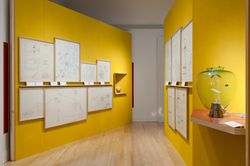
Rooms You May Have Missed reclaims the significance of inhabitation and is for that reason a collection of domestic spaces—entry porticos, kitchens, bedrooms, closets, dining rooms, courtyards, gardens, vestibules, living rooms, offices, dens, and washrooms—as reinvented in the work of two very different architects: Umberto Riva in Milan and Bijoy Jain in Mumbai. Common(...)
Rooms You May Have Missed reclaims the significance of inhabitation and is for that reason a collection of domestic spaces—entry porticos, kitchens, bedrooms, closets, dining rooms, courtyards, gardens, vestibules, living rooms, offices, dens, and washrooms—as reinvented in the work of two very different architects: Umberto Riva in Milan and Bijoy Jain in Mumbai. Common(...)
Location:
Main galleries
Main galleries
Date:
4 November 2014 to 19 April 2015
4 November 2014 to 19 April 2015
Title:
Rooms You May Have Missed
Actions:
Description:
Rooms You May Have Missed reclaims the significance of inhabitation and is for that reason a collection of domestic spaces—entry porticos, kitchens, bedrooms, closets, dining rooms, courtyards, gardens, vestibules, living rooms, offices, dens, and washrooms—as reinvented in the work of two very different architects: Umberto Riva in Milan and Bijoy Jain in Mumbai. Common(...)
Rooms You May Have Missed
Actions:
Description:
Rooms You May Have Missed reclaims the significance of inhabitation and is for that reason a collection of domestic spaces—entry porticos, kitchens, bedrooms, closets, dining rooms, courtyards, gardens, vestibules, living rooms, offices, dens, and washrooms—as reinvented in the work of two very different architects: Umberto Riva in Milan and Bijoy Jain in Mumbai. Common(...)
Form:
exhibitions
exhibitions
Date:
4 November 2014 to
19 April 2015
4 November 2014 to
19 April 2015
Location:
Main galleries
Main galleries
Form:
archives
Level of archival description:
Fonds
archives
Level of archival description:
Fonds
Title:
Myron Goldsmith fonds
Myron Goldsmith fonds
Reference number:
AP032
Synopsis:
The Myron Goldsmith fonds consists primarily of 30.4 metres of textual documents, including notebooks, research and reading notes, travel journals, documentation files, correspondence, sketchbooks and personal and office papers. There are also 2,800 original drawings and prints, 10,000 photographs and slides, and 5 architectural models. The material ranges in date from c.1933 to 1996. In shedding light on Goldsmith's student years and working career, the fonds' rich collection of documents also provides material on activities in the architectural profession, architectural education, and architectural and engineering theory and building techniques through the 1940s to the 1990s.
AP032
Synopsis:
The Myron Goldsmith fonds consists primarily of 30.4 metres of textual documents, including notebooks, research and reading notes, travel journals, documentation files, correspondence, sketchbooks and personal and office papers. There are also 2,800 original drawings and prints, 10,000 photographs and slides, and 5 architectural models. The material ranges in date from c.1933 to 1996. In shedding light on Goldsmith's student years and working career, the fonds' rich collection of documents also provides material on activities in the architectural profession, architectural education, and architectural and engineering theory and building techniques through the 1940s to the 1990s.
People:
Date:
1933-1996
1933-1996
Title:
Myron Goldsmith fonds
Actions:
AP032
Synopsis:
The Myron Goldsmith fonds consists primarily of 30.4 metres of textual documents, including notebooks, research and reading notes, travel journals, documentation files, correspondence, sketchbooks and personal and office papers. There are also 2,800 original drawings and prints, 10,000 photographs and slides, and 5 architectural models. The material ranges in date from c.1933 to 1996. In shedding light on Goldsmith's student years and working career, the fonds' rich collection of documents also provides material on activities in the architectural profession, architectural education, and architectural and engineering theory and building techniques through the 1940s to the 1990s.
Myron Goldsmith fonds
Actions:
AP032
Synopsis:
The Myron Goldsmith fonds consists primarily of 30.4 metres of textual documents, including notebooks, research and reading notes, travel journals, documentation files, correspondence, sketchbooks and personal and office papers. There are also 2,800 original drawings and prints, 10,000 photographs and slides, and 5 architectural models. The material ranges in date from c.1933 to 1996. In shedding light on Goldsmith's student years and working career, the fonds' rich collection of documents also provides material on activities in the architectural profession, architectural education, and architectural and engineering theory and building techniques through the 1940s to the 1990s.
Form:
archives
Level of archival description:
Fonds
archives
Level of archival description:
Fonds
Date:
1933-1996
1933-1996
People:
Level of archival description:
Project
Project
Title:
Royal Ottawa Regional Rehabilitation Centre, Ottawa Health Sciences Centre, Ottawa, Ontario (1974)
Royal Ottawa Regional Rehabilitation Centre, Ottawa Health Sciences Centre, Ottawa, Ontario (1974)
Actions:
Reference number:
AP018.S1.1974.PR25
Description:
This project series documents the design and construction of the Royal Ottawa Regional Rehabilitation Centre in Ottawa, Ontario from 1974-1981. The office identified the project number as 7432. The Ottawa Heath Sciences Complex, a vast hospital network encompassing institutions across the city, hired Parkin Architects Planners in 1971 to design and construct University of Ottawa buildings within the network. These campus buildings were located in the Alta Vista neighbourhood and referred to as the Health Sciences Centre. This project consists of one building in that complex, the Royal Ottawa Regional Rehabilitation Centre. The distinction between these names should be noted when viewing the materials. The two-storey rehabilitation centre was constructed directly beside the Ottawa Health Sciences Building, another hospital in the network built by Parkin (see project series AP018.S1.1974.PR01 in this fonds). The proposal conceived a 145,000 square foot hospital with 77 in-patient beds. The design included space for patient accommodation, teaching, research, administrative activities, patient care and treatment, and a concession area. Patients at the hospital would range from those with severe brain injuries, to amputees, to those with rheumatic diseases. The building was carefully designed to accommodate the specialized needs of the patients. The hospital design also included a swimming pool, sports areas, and spaces for other leisure activities thought to aid in the rehabilitation process. The project is recorded through construction photographs, drawings, and textual materials dating from 1971-1983. The textual records include correspondence, specifications, schedules, contract data, conference reports and minutes, inspection reports, predesign notes, consultancy records, financial documents, change orders, supplementary instructions, research, and deficiency lists. The majority of these textual records deal with the hospital's construction, rather than design. Most drawings are reprographic copies of detail drawings and can be found within the textual records. Box AP018.S1.1974.PR25.002 contains an index to the textual records, which was created by the office.
AP018.S1.1974.PR25
Description:
This project series documents the design and construction of the Royal Ottawa Regional Rehabilitation Centre in Ottawa, Ontario from 1974-1981. The office identified the project number as 7432. The Ottawa Heath Sciences Complex, a vast hospital network encompassing institutions across the city, hired Parkin Architects Planners in 1971 to design and construct University of Ottawa buildings within the network. These campus buildings were located in the Alta Vista neighbourhood and referred to as the Health Sciences Centre. This project consists of one building in that complex, the Royal Ottawa Regional Rehabilitation Centre. The distinction between these names should be noted when viewing the materials. The two-storey rehabilitation centre was constructed directly beside the Ottawa Health Sciences Building, another hospital in the network built by Parkin (see project series AP018.S1.1974.PR01 in this fonds). The proposal conceived a 145,000 square foot hospital with 77 in-patient beds. The design included space for patient accommodation, teaching, research, administrative activities, patient care and treatment, and a concession area. Patients at the hospital would range from those with severe brain injuries, to amputees, to those with rheumatic diseases. The building was carefully designed to accommodate the specialized needs of the patients. The hospital design also included a swimming pool, sports areas, and spaces for other leisure activities thought to aid in the rehabilitation process. The project is recorded through construction photographs, drawings, and textual materials dating from 1971-1983. The textual records include correspondence, specifications, schedules, contract data, conference reports and minutes, inspection reports, predesign notes, consultancy records, financial documents, change orders, supplementary instructions, research, and deficiency lists. The majority of these textual records deal with the hospital's construction, rather than design. Most drawings are reprographic copies of detail drawings and can be found within the textual records. Box AP018.S1.1974.PR25.002 contains an index to the textual records, which was created by the office.
People:
Date:
1971-1983
1971-1983
Title:
Royal Ottawa Regional Rehabilitation Centre, Ottawa Health Sciences Centre, Ottawa, Ontario (1974)
Actions:
AP018.S1.1974.PR25
Description:
This project series documents the design and construction of the Royal Ottawa Regional Rehabilitation Centre in Ottawa, Ontario from 1974-1981. The office identified the project number as 7432. The Ottawa Heath Sciences Complex, a vast hospital network encompassing institutions across the city, hired Parkin Architects Planners in 1971 to design and construct University of Ottawa buildings within the network. These campus buildings were located in the Alta Vista neighbourhood and referred to as the Health Sciences Centre. This project consists of one building in that complex, the Royal Ottawa Regional Rehabilitation Centre. The distinction between these names should be noted when viewing the materials. The two-storey rehabilitation centre was constructed directly beside the Ottawa Health Sciences Building, another hospital in the network built by Parkin (see project series AP018.S1.1974.PR01 in this fonds). The proposal conceived a 145,000 square foot hospital with 77 in-patient beds. The design included space for patient accommodation, teaching, research, administrative activities, patient care and treatment, and a concession area. Patients at the hospital would range from those with severe brain injuries, to amputees, to those with rheumatic diseases. The building was carefully designed to accommodate the specialized needs of the patients. The hospital design also included a swimming pool, sports areas, and spaces for other leisure activities thought to aid in the rehabilitation process. The project is recorded through construction photographs, drawings, and textual materials dating from 1971-1983. The textual records include correspondence, specifications, schedules, contract data, conference reports and minutes, inspection reports, predesign notes, consultancy records, financial documents, change orders, supplementary instructions, research, and deficiency lists. The majority of these textual records deal with the hospital's construction, rather than design. Most drawings are reprographic copies of detail drawings and can be found within the textual records. Box AP018.S1.1974.PR25.002 contains an index to the textual records, which was created by the office.
Royal Ottawa Regional Rehabilitation Centre, Ottawa Health Sciences Centre, Ottawa, Ontario (1974)
Actions:
AP018.S1.1974.PR25
Description:
This project series documents the design and construction of the Royal Ottawa Regional Rehabilitation Centre in Ottawa, Ontario from 1974-1981. The office identified the project number as 7432. The Ottawa Heath Sciences Complex, a vast hospital network encompassing institutions across the city, hired Parkin Architects Planners in 1971 to design and construct University of Ottawa buildings within the network. These campus buildings were located in the Alta Vista neighbourhood and referred to as the Health Sciences Centre. This project consists of one building in that complex, the Royal Ottawa Regional Rehabilitation Centre. The distinction between these names should be noted when viewing the materials. The two-storey rehabilitation centre was constructed directly beside the Ottawa Health Sciences Building, another hospital in the network built by Parkin (see project series AP018.S1.1974.PR01 in this fonds). The proposal conceived a 145,000 square foot hospital with 77 in-patient beds. The design included space for patient accommodation, teaching, research, administrative activities, patient care and treatment, and a concession area. Patients at the hospital would range from those with severe brain injuries, to amputees, to those with rheumatic diseases. The building was carefully designed to accommodate the specialized needs of the patients. The hospital design also included a swimming pool, sports areas, and spaces for other leisure activities thought to aid in the rehabilitation process. The project is recorded through construction photographs, drawings, and textual materials dating from 1971-1983. The textual records include correspondence, specifications, schedules, contract data, conference reports and minutes, inspection reports, predesign notes, consultancy records, financial documents, change orders, supplementary instructions, research, and deficiency lists. The majority of these textual records deal with the hospital's construction, rather than design. Most drawings are reprographic copies of detail drawings and can be found within the textual records. Box AP018.S1.1974.PR25.002 contains an index to the textual records, which was created by the office.
Level of archival description:
Project
Project
Date:
1971-1983
1971-1983
People:


