


3857 Results
Level of archival description:
Series
Series
Title:
CIAM IV, CIRPAC and London
CIAM IV, CIRPAC and London
Reference number:
AP112.S1
Description:
The series contains seven bands of negatives, divided into groups of two and three negatives a band. The first five bands document the 4th Congrès International d'Architecture Moderne (CIAM) held on board the SS Patris II from 29 July to 13 August 1933, as it travelled between Marseilles, France, and Athens, Greece, and then returned. The conference, themed "The Functional City", presented and discussed the results of an analysis of more than thirty cities, and sought to establish new principles in urban planning. Sise participated at the conference as the Canadian delegate and presented the city of Los Angeles, California. The resolutions adopted at the conference were published for the first time in November under the title "Constatations du quatrième CIAM". These findings formed the base of the Charte d'Athenès written by Le Corbusier in 1941. The negatives show some of the participants of the conference including: Le Corbusier (1887-1965), from the French delegation; László Moholy-Nagy (1895-1946), from the German delegation, who was in charge of filming the presentations; Alvar Aalto (1898-1976), representing Finland; and the painter Fernand Léger (1881-1955), also from the French delegatation, who presented on the importance of colour in architecture. The two other bands of negatives provide evidence of Sise's attendance at Comité International pour la Résolution des Problèmes d'Architecture Contemporaine (CIRPAC), held in May 1934 at the Royal Institute of British Architects in London, England, to establish the program for the next CIAM (1). They also show his meeting in London with Georges Braque during the summer of the same year. (1) Eric Mumford states in "The CIAM Discourse on Urbanism, 1928-1960" that Le Corbusier did not participate at this conference (p. 92). _____________________ La série contient des bandes de négatifs, qui contiennent soit deux, soit trois images, et sont au nombre de sept. Les cinq premières bandes documentent le IVe Congrès International d'Architecture Moderne (CIAM) tenu à bord du SS Patris II du 29 juillet au 13 août 1933, entre Marseilles, France et Athènes, Grèce, à Athènes même, et sur le même bateau de croisière durant le retour à Marseilles. Le Congrès, qui se déroulait autour du thème de "The functional city", consistait en la communication des résultats de l'analyse de plus de trente villes et l'objectif visait à établir de nouveaux principes d'urbanisme. Hazen Sise participait au Congrès à titre de délégué du Canada et présenta la ville de Los Angeles, Californie. Les résolutions prises lors du Congrès ont été publiées pour la première fois au mois de novembre suivant sous le titre de "Constatations du quatrième CIAM". Ces "Constatations" seront ensuite à la base de la Charte d'Athènes que Le Corbusier rédigea en 1941. Les clichés montrent quelques-uns des participants au Congrès, dont Le Corbusier (1887-1965), de la délégation française, alors qu'il faisait une communication; László Moholy-Nagy (1895-1946), de la délégation allemande, à qui on avait confié la tâche de filmer les exposés; Alvar Aalto (1898-1976), représentant la Finlande; et le peintre Fernand Léger (1881-1955), délégué de la France, qui présenta un discours à l'attention des architectes au sujet de l'importance de la couleur en architecture. Les deux autres bandes de négatifs témoignent de la présence de Sise au (Comité International pour la Résolution des Problèmes d'Architecture Contemporaine (CIRPAC) à Londres, Angleterre, tenu en mai 1934 au Royal Institute of British Architects pour établir le programme du prochain CIAM (1) et de sa rencontre à Londres avec Georges Braque durant l'été de la même année. (1) Eric Mumford affirme cependant dans "The CIAM Discourse on Urbanism, 1928-1960" que Le Corbusier n'a pas participé à ce congrès (p. 92).
AP112.S1
Description:
The series contains seven bands of negatives, divided into groups of two and three negatives a band. The first five bands document the 4th Congrès International d'Architecture Moderne (CIAM) held on board the SS Patris II from 29 July to 13 August 1933, as it travelled between Marseilles, France, and Athens, Greece, and then returned. The conference, themed "The Functional City", presented and discussed the results of an analysis of more than thirty cities, and sought to establish new principles in urban planning. Sise participated at the conference as the Canadian delegate and presented the city of Los Angeles, California. The resolutions adopted at the conference were published for the first time in November under the title "Constatations du quatrième CIAM". These findings formed the base of the Charte d'Athenès written by Le Corbusier in 1941. The negatives show some of the participants of the conference including: Le Corbusier (1887-1965), from the French delegation; László Moholy-Nagy (1895-1946), from the German delegation, who was in charge of filming the presentations; Alvar Aalto (1898-1976), representing Finland; and the painter Fernand Léger (1881-1955), also from the French delegatation, who presented on the importance of colour in architecture. The two other bands of negatives provide evidence of Sise's attendance at Comité International pour la Résolution des Problèmes d'Architecture Contemporaine (CIRPAC), held in May 1934 at the Royal Institute of British Architects in London, England, to establish the program for the next CIAM (1). They also show his meeting in London with Georges Braque during the summer of the same year. (1) Eric Mumford states in "The CIAM Discourse on Urbanism, 1928-1960" that Le Corbusier did not participate at this conference (p. 92). _____________________ La série contient des bandes de négatifs, qui contiennent soit deux, soit trois images, et sont au nombre de sept. Les cinq premières bandes documentent le IVe Congrès International d'Architecture Moderne (CIAM) tenu à bord du SS Patris II du 29 juillet au 13 août 1933, entre Marseilles, France et Athènes, Grèce, à Athènes même, et sur le même bateau de croisière durant le retour à Marseilles. Le Congrès, qui se déroulait autour du thème de "The functional city", consistait en la communication des résultats de l'analyse de plus de trente villes et l'objectif visait à établir de nouveaux principes d'urbanisme. Hazen Sise participait au Congrès à titre de délégué du Canada et présenta la ville de Los Angeles, Californie. Les résolutions prises lors du Congrès ont été publiées pour la première fois au mois de novembre suivant sous le titre de "Constatations du quatrième CIAM". Ces "Constatations" seront ensuite à la base de la Charte d'Athènes que Le Corbusier rédigea en 1941. Les clichés montrent quelques-uns des participants au Congrès, dont Le Corbusier (1887-1965), de la délégation française, alors qu'il faisait une communication; László Moholy-Nagy (1895-1946), de la délégation allemande, à qui on avait confié la tâche de filmer les exposés; Alvar Aalto (1898-1976), représentant la Finlande; et le peintre Fernand Léger (1881-1955), délégué de la France, qui présenta un discours à l'attention des architectes au sujet de l'importance de la couleur en architecture. Les deux autres bandes de négatifs témoignent de la présence de Sise au (Comité International pour la Résolution des Problèmes d'Architecture Contemporaine (CIRPAC) à Londres, Angleterre, tenu en mai 1934 au Royal Institute of British Architects pour établir le programme du prochain CIAM (1) et de sa rencontre à Londres avec Georges Braque durant l'été de la même année. (1) Eric Mumford affirme cependant dans "The CIAM Discourse on Urbanism, 1928-1960" que Le Corbusier n'a pas participé à ce congrès (p. 92).
People:
Date:
1933-1934
1933-1934
Title:
CIAM IV, CIRPAC and London
Actions:
AP112.S1
Description:
The series contains seven bands of negatives, divided into groups of two and three negatives a band. The first five bands document the 4th Congrès International d'Architecture Moderne (CIAM) held on board the SS Patris II from 29 July to 13 August 1933, as it travelled between Marseilles, France, and Athens, Greece, and then returned. The conference, themed "The Functional City", presented and discussed the results of an analysis of more than thirty cities, and sought to establish new principles in urban planning. Sise participated at the conference as the Canadian delegate and presented the city of Los Angeles, California. The resolutions adopted at the conference were published for the first time in November under the title "Constatations du quatrième CIAM". These findings formed the base of the Charte d'Athenès written by Le Corbusier in 1941. The negatives show some of the participants of the conference including: Le Corbusier (1887-1965), from the French delegation; László Moholy-Nagy (1895-1946), from the German delegation, who was in charge of filming the presentations; Alvar Aalto (1898-1976), representing Finland; and the painter Fernand Léger (1881-1955), also from the French delegatation, who presented on the importance of colour in architecture. The two other bands of negatives provide evidence of Sise's attendance at Comité International pour la Résolution des Problèmes d'Architecture Contemporaine (CIRPAC), held in May 1934 at the Royal Institute of British Architects in London, England, to establish the program for the next CIAM (1). They also show his meeting in London with Georges Braque during the summer of the same year. (1) Eric Mumford states in "The CIAM Discourse on Urbanism, 1928-1960" that Le Corbusier did not participate at this conference (p. 92). _____________________ La série contient des bandes de négatifs, qui contiennent soit deux, soit trois images, et sont au nombre de sept. Les cinq premières bandes documentent le IVe Congrès International d'Architecture Moderne (CIAM) tenu à bord du SS Patris II du 29 juillet au 13 août 1933, entre Marseilles, France et Athènes, Grèce, à Athènes même, et sur le même bateau de croisière durant le retour à Marseilles. Le Congrès, qui se déroulait autour du thème de "The functional city", consistait en la communication des résultats de l'analyse de plus de trente villes et l'objectif visait à établir de nouveaux principes d'urbanisme. Hazen Sise participait au Congrès à titre de délégué du Canada et présenta la ville de Los Angeles, Californie. Les résolutions prises lors du Congrès ont été publiées pour la première fois au mois de novembre suivant sous le titre de "Constatations du quatrième CIAM". Ces "Constatations" seront ensuite à la base de la Charte d'Athènes que Le Corbusier rédigea en 1941. Les clichés montrent quelques-uns des participants au Congrès, dont Le Corbusier (1887-1965), de la délégation française, alors qu'il faisait une communication; László Moholy-Nagy (1895-1946), de la délégation allemande, à qui on avait confié la tâche de filmer les exposés; Alvar Aalto (1898-1976), représentant la Finlande; et le peintre Fernand Léger (1881-1955), délégué de la France, qui présenta un discours à l'attention des architectes au sujet de l'importance de la couleur en architecture. Les deux autres bandes de négatifs témoignent de la présence de Sise au (Comité International pour la Résolution des Problèmes d'Architecture Contemporaine (CIRPAC) à Londres, Angleterre, tenu en mai 1934 au Royal Institute of British Architects pour établir le programme du prochain CIAM (1) et de sa rencontre à Londres avec Georges Braque durant l'été de la même année. (1) Eric Mumford affirme cependant dans "The CIAM Discourse on Urbanism, 1928-1960" que Le Corbusier n'a pas participé à ce congrès (p. 92).
CIAM IV, CIRPAC and London
Actions:
AP112.S1
Description:
The series contains seven bands of negatives, divided into groups of two and three negatives a band. The first five bands document the 4th Congrès International d'Architecture Moderne (CIAM) held on board the SS Patris II from 29 July to 13 August 1933, as it travelled between Marseilles, France, and Athens, Greece, and then returned. The conference, themed "The Functional City", presented and discussed the results of an analysis of more than thirty cities, and sought to establish new principles in urban planning. Sise participated at the conference as the Canadian delegate and presented the city of Los Angeles, California. The resolutions adopted at the conference were published for the first time in November under the title "Constatations du quatrième CIAM". These findings formed the base of the Charte d'Athenès written by Le Corbusier in 1941. The negatives show some of the participants of the conference including: Le Corbusier (1887-1965), from the French delegation; László Moholy-Nagy (1895-1946), from the German delegation, who was in charge of filming the presentations; Alvar Aalto (1898-1976), representing Finland; and the painter Fernand Léger (1881-1955), also from the French delegatation, who presented on the importance of colour in architecture. The two other bands of negatives provide evidence of Sise's attendance at Comité International pour la Résolution des Problèmes d'Architecture Contemporaine (CIRPAC), held in May 1934 at the Royal Institute of British Architects in London, England, to establish the program for the next CIAM (1). They also show his meeting in London with Georges Braque during the summer of the same year. (1) Eric Mumford states in "The CIAM Discourse on Urbanism, 1928-1960" that Le Corbusier did not participate at this conference (p. 92). _____________________ La série contient des bandes de négatifs, qui contiennent soit deux, soit trois images, et sont au nombre de sept. Les cinq premières bandes documentent le IVe Congrès International d'Architecture Moderne (CIAM) tenu à bord du SS Patris II du 29 juillet au 13 août 1933, entre Marseilles, France et Athènes, Grèce, à Athènes même, et sur le même bateau de croisière durant le retour à Marseilles. Le Congrès, qui se déroulait autour du thème de "The functional city", consistait en la communication des résultats de l'analyse de plus de trente villes et l'objectif visait à établir de nouveaux principes d'urbanisme. Hazen Sise participait au Congrès à titre de délégué du Canada et présenta la ville de Los Angeles, Californie. Les résolutions prises lors du Congrès ont été publiées pour la première fois au mois de novembre suivant sous le titre de "Constatations du quatrième CIAM". Ces "Constatations" seront ensuite à la base de la Charte d'Athènes que Le Corbusier rédigea en 1941. Les clichés montrent quelques-uns des participants au Congrès, dont Le Corbusier (1887-1965), de la délégation française, alors qu'il faisait une communication; László Moholy-Nagy (1895-1946), de la délégation allemande, à qui on avait confié la tâche de filmer les exposés; Alvar Aalto (1898-1976), représentant la Finlande; et le peintre Fernand Léger (1881-1955), délégué de la France, qui présenta un discours à l'attention des architectes au sujet de l'importance de la couleur en architecture. Les deux autres bandes de négatifs témoignent de la présence de Sise au (Comité International pour la Résolution des Problèmes d'Architecture Contemporaine (CIRPAC) à Londres, Angleterre, tenu en mai 1934 au Royal Institute of British Architects pour établir le programme du prochain CIAM (1) et de sa rencontre à Londres avec Georges Braque durant l'été de la même année. (1) Eric Mumford affirme cependant dans "The CIAM Discourse on Urbanism, 1928-1960" que Le Corbusier n'a pas participé à ce congrès (p. 92).
Level of archival description:
Series
Series
Date:
1933-1934
1933-1934
People:
Form:
drawings
drawings
Title:
The Triumph of Hannibal
The Triumph of Hannibal
Actions:
Reference number:
DR1984:1641
Description:
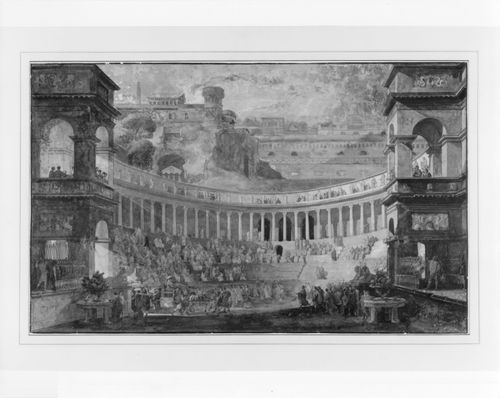
- The turbaned figure being carried into the theatre seated on a litter certainly refers to a non-Roman figure, possibly Hannibal. Behind this figure is a theatre and an imaginary town on a hill. The town buildings recall the Sicilian monuments in the 'Voyage pittoresque ou description des royaumes de Naples et de Sicile' published by the Abbé de Saint-Non in Paris between 1781 and 1786. Desprez interrupted his studies at the French Academy in Rome from December 1777 to January 1779 to accompany Dominique Vivant Denon and several other artists to Naples and Sicily in order to make drawings for this publication. The town buildings also recall several buildings Desprez planned in Stockholm while stage designer and architect to Gustavus III of Sweden from 1784 to 1792.
DR1984:1641
Description:
- The turbaned figure being carried into the theatre seated on a litter certainly refers to a non-Roman figure, possibly Hannibal. Behind this figure is a theatre and an imaginary town on a hill. The town buildings recall the Sicilian monuments in the 'Voyage pittoresque ou description des royaumes de Naples et de Sicile' published by the Abbé de Saint-Non in Paris between 1781 and 1786. Desprez interrupted his studies at the French Academy in Rome from December 1777 to January 1779 to accompany Dominique Vivant Denon and several other artists to Naples and Sicily in order to make drawings for this publication. The town buildings also recall several buildings Desprez planned in Stockholm while stage designer and architect to Gustavus III of Sweden from 1784 to 1792.
People:
Subject:
theatre design
theatre design
Date:
ca. 1780-1790
ca. 1780-1790
Title:
The Triumph of Hannibal
Actions:
DR1984:1641
Description:
- The turbaned figure being carried into the theatre seated on a litter certainly refers to a non-Roman figure, possibly Hannibal. Behind this figure is a theatre and an imaginary town on a hill. The town buildings recall the Sicilian monuments in the 'Voyage pittoresque ou description des royaumes de Naples et de Sicile' published by the Abbé de Saint-Non in Paris between 1781 and 1786. Desprez interrupted his studies at the French Academy in Rome from December 1777 to January 1779 to accompany Dominique Vivant Denon and several other artists to Naples and Sicily in order to make drawings for this publication. The town buildings also recall several buildings Desprez planned in Stockholm while stage designer and architect to Gustavus III of Sweden from 1784 to 1792.
The Triumph of Hannibal
Actions:
DR1984:1641
Description:
- The turbaned figure being carried into the theatre seated on a litter certainly refers to a non-Roman figure, possibly Hannibal. Behind this figure is a theatre and an imaginary town on a hill. The town buildings recall the Sicilian monuments in the 'Voyage pittoresque ou description des royaumes de Naples et de Sicile' published by the Abbé de Saint-Non in Paris between 1781 and 1786. Desprez interrupted his studies at the French Academy in Rome from December 1777 to January 1779 to accompany Dominique Vivant Denon and several other artists to Naples and Sicily in order to make drawings for this publication. The town buildings also recall several buildings Desprez planned in Stockholm while stage designer and architect to Gustavus III of Sweden from 1784 to 1792.
Form:
drawings
drawings
Date:
ca. 1780-1790
ca. 1780-1790
People:
Subject:
theatre design
theatre design
Form:
events
events

Actions:
Description:
Individuals act as their own historians, suppressing some stories and emphasizing others. But at the scale of nations and cultures, and especially in this age of ubiquitous digital memory, it has become more difficult to forget. Building on questions about history and its uses, raised by exhibitions like Educating Architects: Four Courses by Kenneth Frampton and Besides,(...)
Individuals act as their own historians, suppressing some stories and emphasizing others. But at the scale of nations and cultures, and especially in this age of ubiquitous digital memory, it has become more difficult to forget. Building on questions about history and its uses, raised by exhibitions like Educating Architects: Four Courses by Kenneth Frampton and Besides,(...)
Date:
7 December 2017
7 December 2017
Title:
Come and Forget the Internet, with Evgeny Morozov
Actions:
Description:
Individuals act as their own historians, suppressing some stories and emphasizing others. But at the scale of nations and cultures, and especially in this age of ubiquitous digital memory, it has become more difficult to forget. Building on questions about history and its uses, raised by exhibitions like Educating Architects: Four Courses by Kenneth Frampton and Besides,(...)
Come and Forget the Internet, with Evgeny Morozov
Actions:
Description:
Individuals act as their own historians, suppressing some stories and emphasizing others. But at the scale of nations and cultures, and especially in this age of ubiquitous digital memory, it has become more difficult to forget. Building on questions about history and its uses, raised by exhibitions like Educating Architects: Four Courses by Kenneth Frampton and Besides,(...)
Form:
events
events
Date:
7 December 2017
7 December 2017
Form:
events
events

Description:
Individuals act as their own historians, suppressing some stories and emphasizing others. But at the scale of nations and cultures, and especially in this age of ubiquitous digital memory, it has become more difficult to forget. Building on questions about history and its uses, raised by exhibitions like Educating Architects: Four Courses by Kenneth Frampton and Besides,(...)
Individuals act as their own historians, suppressing some stories and emphasizing others. But at the scale of nations and cultures, and especially in this age of ubiquitous digital memory, it has become more difficult to forget. Building on questions about history and its uses, raised by exhibitions like Educating Architects: Four Courses by Kenneth Frampton and Besides,(...)
Keyword(s):
Johannes Grenzfurthner
Johannes Grenzfurthner
Date:
12 April 2018
12 April 2018
Title:
Come and Forget the Counterculture, with Johannes Grenzfurthner
Actions:
Description:
Individuals act as their own historians, suppressing some stories and emphasizing others. But at the scale of nations and cultures, and especially in this age of ubiquitous digital memory, it has become more difficult to forget. Building on questions about history and its uses, raised by exhibitions like Educating Architects: Four Courses by Kenneth Frampton and Besides,(...)
Come and Forget the Counterculture, with Johannes Grenzfurthner
Actions:
Description:
Individuals act as their own historians, suppressing some stories and emphasizing others. But at the scale of nations and cultures, and especially in this age of ubiquitous digital memory, it has become more difficult to forget. Building on questions about history and its uses, raised by exhibitions like Educating Architects: Four Courses by Kenneth Frampton and Besides,(...)
Form:
events
events
Date:
12 April 2018
12 April 2018
Keyword(s):
Johannes Grenzfurthner
Johannes Grenzfurthner
Form:
exhibitions
exhibitions
Actions:
Description:
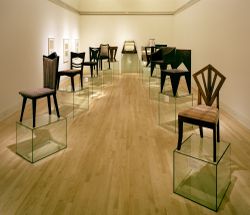
Combining enthusiasm for the radically new world view of cubist art with a desire to establish an autonomous aesthetic as well as political presence, the Czech cubists produced not only powerful visionary work, but also went beyond theory to practice. Czech Cubism: Architecture and Design, 1910–1925 brings together the work of a group of Czech artists, architects, and(...)
Combining enthusiasm for the radically new world view of cubist art with a desire to establish an autonomous aesthetic as well as political presence, the Czech cubists produced not only powerful visionary work, but also went beyond theory to practice. Czech Cubism: Architecture and Design, 1910–1925 brings together the work of a group of Czech artists, architects, and(...)
Location:
Main galleries
Main galleries
Date:
10 June 1992 to 2 August 1992
10 June 1992 to 2 August 1992
Title:
Czech Cubism: Architecture and Design, 1910–1925
Actions:
Description:
Combining enthusiasm for the radically new world view of cubist art with a desire to establish an autonomous aesthetic as well as political presence, the Czech cubists produced not only powerful visionary work, but also went beyond theory to practice. Czech Cubism: Architecture and Design, 1910–1925 brings together the work of a group of Czech artists, architects, and(...)
Czech Cubism: Architecture and Design, 1910–1925
Actions:
Description:
Combining enthusiasm for the radically new world view of cubist art with a desire to establish an autonomous aesthetic as well as political presence, the Czech cubists produced not only powerful visionary work, but also went beyond theory to practice. Czech Cubism: Architecture and Design, 1910–1925 brings together the work of a group of Czech artists, architects, and(...)
Form:
exhibitions
exhibitions
Date:
10 June 1992 to
2 August 1992
10 June 1992 to
2 August 1992
Location:
Main galleries
Main galleries
Form:
events
events
Title:
Building Knowledge
Building Knowledge
Actions:
Description:
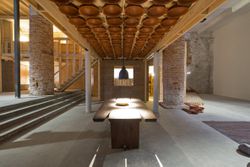
This lecture discusses a range of projects from Anupama Kundoo’s practice, research, and teaching. In these distinct but complementary areas of her work, she attempts to build collective knowledge in collaboration with engineers, masons, craftsmen, infrastructure providers, residents, material suppliers, and all other stakeholders involved in constructing and occupying(...)
This lecture discusses a range of projects from Anupama Kundoo’s practice, research, and teaching. In these distinct but complementary areas of her work, she attempts to build collective knowledge in collaboration with engineers, masons, craftsmen, infrastructure providers, residents, material suppliers, and all other stakeholders involved in constructing and occupying(...)
Location:
Paul-Desmarais Theatre
Paul-Desmarais Theatre
Date:
16 April 2015 , 6pm
16 April 2015 , 6pm
Title:
Building Knowledge
Actions:
Description:
This lecture discusses a range of projects from Anupama Kundoo’s practice, research, and teaching. In these distinct but complementary areas of her work, she attempts to build collective knowledge in collaboration with engineers, masons, craftsmen, infrastructure providers, residents, material suppliers, and all other stakeholders involved in constructing and occupying(...)
Building Knowledge
Actions:
Description:
This lecture discusses a range of projects from Anupama Kundoo’s practice, research, and teaching. In these distinct but complementary areas of her work, she attempts to build collective knowledge in collaboration with engineers, masons, craftsmen, infrastructure providers, residents, material suppliers, and all other stakeholders involved in constructing and occupying(...)
Form:
events
events
Date:
16 April 2015
6pm
16 April 2015
6pm
Location:
Paul-Desmarais Theatre
Paul-Desmarais Theatre
Form:
events
events
Actions:
Description:
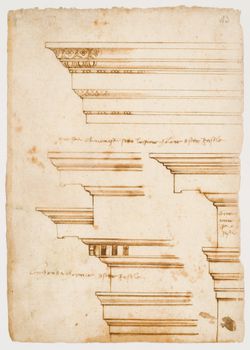
2016 Visiting Scholar Cara Rachele presents her research: This lecture investigates the explosion of detail drawings in the Renaissance. It connects the emergence of the detail in the sixteenth century as a canonical drawing type with the evocation of the material antique. The organic evolution of the detail drawing method can be seen in the sketchbooks of everyday(...)
2016 Visiting Scholar Cara Rachele presents her research: This lecture investigates the explosion of detail drawings in the Renaissance. It connects the emergence of the detail in the sixteenth century as a canonical drawing type with the evocation of the material antique. The organic evolution of the detail drawing method can be seen in the sketchbooks of everyday(...)
Date:
11 August 2016, 6pm
11 August 2016, 6pm
Title:
Visiting Scholar Seminar: Cara Rachele
Actions:
Description:
2016 Visiting Scholar Cara Rachele presents her research: This lecture investigates the explosion of detail drawings in the Renaissance. It connects the emergence of the detail in the sixteenth century as a canonical drawing type with the evocation of the material antique. The organic evolution of the detail drawing method can be seen in the sketchbooks of everyday(...)
Visiting Scholar Seminar: Cara Rachele
Actions:
Description:
2016 Visiting Scholar Cara Rachele presents her research: This lecture investigates the explosion of detail drawings in the Renaissance. It connects the emergence of the detail in the sixteenth century as a canonical drawing type with the evocation of the material antique. The organic evolution of the detail drawing method can be seen in the sketchbooks of everyday(...)
Form:
events
events
Date:
11 August 2016
6pm
11 August 2016
6pm
Form:
exhibitions
exhibitions
Actions:
Description:
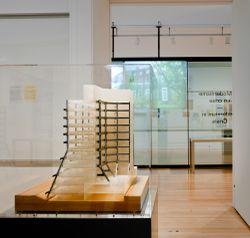
Architect James Frazer Stirling’s work has resisted characterization because of its radical shifts in influence, named by others as prewar modernism to Neoclassicism, Rationalism and Brutalism to Postmodernism. But the continuity of his thinking emerges through the quantity and variety of material in the James Stirling/Michael Wilford Archive, a tool for understanding an(...)
Architect James Frazer Stirling’s work has resisted characterization because of its radical shifts in influence, named by others as prewar modernism to Neoclassicism, Rationalism and Brutalism to Postmodernism. But the continuity of his thinking emerges through the quantity and variety of material in the James Stirling/Michael Wilford Archive, a tool for understanding an(...)
Location:
Main galleries
Main galleries
Date:
16 May 2012 to 14 October 2012
16 May 2012 to 14 October 2012
Title:
Notes from the Archive: James Frazer Stirling
Actions:
Description:
Architect James Frazer Stirling’s work has resisted characterization because of its radical shifts in influence, named by others as prewar modernism to Neoclassicism, Rationalism and Brutalism to Postmodernism. But the continuity of his thinking emerges through the quantity and variety of material in the James Stirling/Michael Wilford Archive, a tool for understanding an(...)
Notes from the Archive: James Frazer Stirling
Actions:
Description:
Architect James Frazer Stirling’s work has resisted characterization because of its radical shifts in influence, named by others as prewar modernism to Neoclassicism, Rationalism and Brutalism to Postmodernism. But the continuity of his thinking emerges through the quantity and variety of material in the James Stirling/Michael Wilford Archive, a tool for understanding an(...)
Form:
exhibitions
exhibitions
Date:
16 May 2012 to
14 October 2012
16 May 2012 to
14 October 2012
Location:
Main galleries
Main galleries
Level of archival description:
Project
Project
Title:
Two Tree Island
Two Tree Island
Reference number:
AP144.S2.D84
Description:
File documents an unexecuted project for Two Tree Island, the last uninhabited island in the Thames Estuary, in Essex, England. Cedric Price collaborated with Yorke Rosenberg Mardall Architects (YMR) on the project for client David Keddie, to develop a 178-hectare site on the island which encompassed both existing and reclaimed land, some of which was reserved under a trust for nature conservation. Early proposals showed residential areas, commercial, as well as, industrial zones, and facilities for recreation and leisure activities, including a marina. The final design proposed a much smaller residential area and harbour and included larger conservation and marshland areas in response to local concerns. The project was rejected and a portion of Two Tree Island was leased to the Nature Conservancy (NERC). An Appeal and Public Enquiry lodged by the client was subsequently indefinitely postponed. The architects produced several versions of a consultant's report, created a 'logbook' for the project, and published a brochure and promotional material for a public meeting. Existing conditions and reference material in the file includes maps of the area showing locations for a photo survey; Port of Authority of London plans showing water depths at various locations; a drawing of Marine Island, Essex; and a collage of photos of the area mounted on a board. Sketches by Cedric Price show development plans for the island and explore alternate "open" and "closed" configurations for the basin. Sketch sections show established maximum flood heights on the proposed schemes (see sketches in Works II, p. 86). A series of schematic drawings by YMR develop preliminary schemes exploring alternate layouts in relation to the primary basin configuration. A perspective drawing shows a view of the site from the main road to the island. Design development drawings include both original drawings and reprographic copies and include bird's-eye view perspective sketches; diagrams showing "domestic development" and projected "typical patterning"; and diagrammatic plans/charts showing existing and reclaimed areas, compatibility of activities, and degrees of accessibility (see typical diagram in Works II, p. 87). Other design development drawings include standard plans, sections and elevations, as well as site plans, land-use plans for the marina, plans showing alternate layouts for the marina dock, plans showing Thames tidal defences, site sections, and breakwater profiles. Working drawings for the marina by consulting engineers Sir Frederick Snow and Partners include survey plans, detailed sections illustrating the reinforcement and stabilization of the marine bed, and task sequencing diagrams and charts. Publication and presentation material includes photographs of rendered perspectives, over 18 watercolour renderings of Two Tree Island by Cedric Price, and a mock-up for a 13-page brochure or report summarizing the project. Many drawings are also included in the textual records, which also include Cedric Price's diary on the project. Some material in this file was published in 'Cedric Price-Works II' (London: Architectural Press, 1984), 72, 86-87. Material in this file was produced between 1963 and 1989, but predominantly between 1971 and 1974. Cedric Price's office lists the following firms as the main consultants for this project: Felix J. Samuely & Partners and Sir Frederick Snow & Partners, Consulting Engineers; Baker Wilkins & Smith, Quantity Surveyors; Prof. Peter Cowan, Director, Joint Unit for Planning Research; Prof. Peter Willmott, Director Institute of Community Studies; Prof. G. P. Wibberley, Professor of Countryside Planning, University of London; M. A. B. Boddington, Rural Planning Services. One drawing in DR1995:0255:011-021 is attributed to Costain Civil Engineering Ltd. File contains cartographic materials, conceptual drawings, design development drawings, presentation drawings, consultant drawings, model, and textual records.
AP144.S2.D84
Description:
File documents an unexecuted project for Two Tree Island, the last uninhabited island in the Thames Estuary, in Essex, England. Cedric Price collaborated with Yorke Rosenberg Mardall Architects (YMR) on the project for client David Keddie, to develop a 178-hectare site on the island which encompassed both existing and reclaimed land, some of which was reserved under a trust for nature conservation. Early proposals showed residential areas, commercial, as well as, industrial zones, and facilities for recreation and leisure activities, including a marina. The final design proposed a much smaller residential area and harbour and included larger conservation and marshland areas in response to local concerns. The project was rejected and a portion of Two Tree Island was leased to the Nature Conservancy (NERC). An Appeal and Public Enquiry lodged by the client was subsequently indefinitely postponed. The architects produced several versions of a consultant's report, created a 'logbook' for the project, and published a brochure and promotional material for a public meeting. Existing conditions and reference material in the file includes maps of the area showing locations for a photo survey; Port of Authority of London plans showing water depths at various locations; a drawing of Marine Island, Essex; and a collage of photos of the area mounted on a board. Sketches by Cedric Price show development plans for the island and explore alternate "open" and "closed" configurations for the basin. Sketch sections show established maximum flood heights on the proposed schemes (see sketches in Works II, p. 86). A series of schematic drawings by YMR develop preliminary schemes exploring alternate layouts in relation to the primary basin configuration. A perspective drawing shows a view of the site from the main road to the island. Design development drawings include both original drawings and reprographic copies and include bird's-eye view perspective sketches; diagrams showing "domestic development" and projected "typical patterning"; and diagrammatic plans/charts showing existing and reclaimed areas, compatibility of activities, and degrees of accessibility (see typical diagram in Works II, p. 87). Other design development drawings include standard plans, sections and elevations, as well as site plans, land-use plans for the marina, plans showing alternate layouts for the marina dock, plans showing Thames tidal defences, site sections, and breakwater profiles. Working drawings for the marina by consulting engineers Sir Frederick Snow and Partners include survey plans, detailed sections illustrating the reinforcement and stabilization of the marine bed, and task sequencing diagrams and charts. Publication and presentation material includes photographs of rendered perspectives, over 18 watercolour renderings of Two Tree Island by Cedric Price, and a mock-up for a 13-page brochure or report summarizing the project. Many drawings are also included in the textual records, which also include Cedric Price's diary on the project. Some material in this file was published in 'Cedric Price-Works II' (London: Architectural Press, 1984), 72, 86-87. Material in this file was produced between 1963 and 1989, but predominantly between 1971 and 1974. Cedric Price's office lists the following firms as the main consultants for this project: Felix J. Samuely & Partners and Sir Frederick Snow & Partners, Consulting Engineers; Baker Wilkins & Smith, Quantity Surveyors; Prof. Peter Cowan, Director, Joint Unit for Planning Research; Prof. Peter Willmott, Director Institute of Community Studies; Prof. G. P. Wibberley, Professor of Countryside Planning, University of London; M. A. B. Boddington, Rural Planning Services. One drawing in DR1995:0255:011-021 is attributed to Costain Civil Engineering Ltd. File contains cartographic materials, conceptual drawings, design development drawings, presentation drawings, consultant drawings, model, and textual records.
People:
Date:
1963-1989, predominant 1971-1974
1963-1989, predominant 1971-1974
Title:
Two Tree Island
Actions:
AP144.S2.D84
Description:
File documents an unexecuted project for Two Tree Island, the last uninhabited island in the Thames Estuary, in Essex, England. Cedric Price collaborated with Yorke Rosenberg Mardall Architects (YMR) on the project for client David Keddie, to develop a 178-hectare site on the island which encompassed both existing and reclaimed land, some of which was reserved under a trust for nature conservation. Early proposals showed residential areas, commercial, as well as, industrial zones, and facilities for recreation and leisure activities, including a marina. The final design proposed a much smaller residential area and harbour and included larger conservation and marshland areas in response to local concerns. The project was rejected and a portion of Two Tree Island was leased to the Nature Conservancy (NERC). An Appeal and Public Enquiry lodged by the client was subsequently indefinitely postponed. The architects produced several versions of a consultant's report, created a 'logbook' for the project, and published a brochure and promotional material for a public meeting. Existing conditions and reference material in the file includes maps of the area showing locations for a photo survey; Port of Authority of London plans showing water depths at various locations; a drawing of Marine Island, Essex; and a collage of photos of the area mounted on a board. Sketches by Cedric Price show development plans for the island and explore alternate "open" and "closed" configurations for the basin. Sketch sections show established maximum flood heights on the proposed schemes (see sketches in Works II, p. 86). A series of schematic drawings by YMR develop preliminary schemes exploring alternate layouts in relation to the primary basin configuration. A perspective drawing shows a view of the site from the main road to the island. Design development drawings include both original drawings and reprographic copies and include bird's-eye view perspective sketches; diagrams showing "domestic development" and projected "typical patterning"; and diagrammatic plans/charts showing existing and reclaimed areas, compatibility of activities, and degrees of accessibility (see typical diagram in Works II, p. 87). Other design development drawings include standard plans, sections and elevations, as well as site plans, land-use plans for the marina, plans showing alternate layouts for the marina dock, plans showing Thames tidal defences, site sections, and breakwater profiles. Working drawings for the marina by consulting engineers Sir Frederick Snow and Partners include survey plans, detailed sections illustrating the reinforcement and stabilization of the marine bed, and task sequencing diagrams and charts. Publication and presentation material includes photographs of rendered perspectives, over 18 watercolour renderings of Two Tree Island by Cedric Price, and a mock-up for a 13-page brochure or report summarizing the project. Many drawings are also included in the textual records, which also include Cedric Price's diary on the project. Some material in this file was published in 'Cedric Price-Works II' (London: Architectural Press, 1984), 72, 86-87. Material in this file was produced between 1963 and 1989, but predominantly between 1971 and 1974. Cedric Price's office lists the following firms as the main consultants for this project: Felix J. Samuely & Partners and Sir Frederick Snow & Partners, Consulting Engineers; Baker Wilkins & Smith, Quantity Surveyors; Prof. Peter Cowan, Director, Joint Unit for Planning Research; Prof. Peter Willmott, Director Institute of Community Studies; Prof. G. P. Wibberley, Professor of Countryside Planning, University of London; M. A. B. Boddington, Rural Planning Services. One drawing in DR1995:0255:011-021 is attributed to Costain Civil Engineering Ltd. File contains cartographic materials, conceptual drawings, design development drawings, presentation drawings, consultant drawings, model, and textual records.
Two Tree Island
Actions:
AP144.S2.D84
Description:
File documents an unexecuted project for Two Tree Island, the last uninhabited island in the Thames Estuary, in Essex, England. Cedric Price collaborated with Yorke Rosenberg Mardall Architects (YMR) on the project for client David Keddie, to develop a 178-hectare site on the island which encompassed both existing and reclaimed land, some of which was reserved under a trust for nature conservation. Early proposals showed residential areas, commercial, as well as, industrial zones, and facilities for recreation and leisure activities, including a marina. The final design proposed a much smaller residential area and harbour and included larger conservation and marshland areas in response to local concerns. The project was rejected and a portion of Two Tree Island was leased to the Nature Conservancy (NERC). An Appeal and Public Enquiry lodged by the client was subsequently indefinitely postponed. The architects produced several versions of a consultant's report, created a 'logbook' for the project, and published a brochure and promotional material for a public meeting. Existing conditions and reference material in the file includes maps of the area showing locations for a photo survey; Port of Authority of London plans showing water depths at various locations; a drawing of Marine Island, Essex; and a collage of photos of the area mounted on a board. Sketches by Cedric Price show development plans for the island and explore alternate "open" and "closed" configurations for the basin. Sketch sections show established maximum flood heights on the proposed schemes (see sketches in Works II, p. 86). A series of schematic drawings by YMR develop preliminary schemes exploring alternate layouts in relation to the primary basin configuration. A perspective drawing shows a view of the site from the main road to the island. Design development drawings include both original drawings and reprographic copies and include bird's-eye view perspective sketches; diagrams showing "domestic development" and projected "typical patterning"; and diagrammatic plans/charts showing existing and reclaimed areas, compatibility of activities, and degrees of accessibility (see typical diagram in Works II, p. 87). Other design development drawings include standard plans, sections and elevations, as well as site plans, land-use plans for the marina, plans showing alternate layouts for the marina dock, plans showing Thames tidal defences, site sections, and breakwater profiles. Working drawings for the marina by consulting engineers Sir Frederick Snow and Partners include survey plans, detailed sections illustrating the reinforcement and stabilization of the marine bed, and task sequencing diagrams and charts. Publication and presentation material includes photographs of rendered perspectives, over 18 watercolour renderings of Two Tree Island by Cedric Price, and a mock-up for a 13-page brochure or report summarizing the project. Many drawings are also included in the textual records, which also include Cedric Price's diary on the project. Some material in this file was published in 'Cedric Price-Works II' (London: Architectural Press, 1984), 72, 86-87. Material in this file was produced between 1963 and 1989, but predominantly between 1971 and 1974. Cedric Price's office lists the following firms as the main consultants for this project: Felix J. Samuely & Partners and Sir Frederick Snow & Partners, Consulting Engineers; Baker Wilkins & Smith, Quantity Surveyors; Prof. Peter Cowan, Director, Joint Unit for Planning Research; Prof. Peter Willmott, Director Institute of Community Studies; Prof. G. P. Wibberley, Professor of Countryside Planning, University of London; M. A. B. Boddington, Rural Planning Services. One drawing in DR1995:0255:011-021 is attributed to Costain Civil Engineering Ltd. File contains cartographic materials, conceptual drawings, design development drawings, presentation drawings, consultant drawings, model, and textual records.
Level of archival description:
File 84
File 84
Date:
1963-1989, predominant 1971-1974
1963-1989, predominant 1971-1974
People:
Form:
archives
Level of archival description:
Fonds
archives
Level of archival description:
Fonds
Title:
Douglas C. Simpson fonds
Douglas C. Simpson fonds
Reference number:
AP076
Synopsis:
The Douglas C. Simpson fonds documents Simpson's 1938 graduation thesis project, residential projects from early in his career in Ottawa, furniture projects, and residential and commercial projects in British Columbia including those by the firm Semmens, Simpson. The fonds is composed primarily of drawings and photographs dating from 1938-1992, with the bulk of the documents ranging from ca. 1940 to ca. 1960.
AP076
Synopsis:
The Douglas C. Simpson fonds documents Simpson's 1938 graduation thesis project, residential projects from early in his career in Ottawa, furniture projects, and residential and commercial projects in British Columbia including those by the firm Semmens, Simpson. The fonds is composed primarily of drawings and photographs dating from 1938-1992, with the bulk of the documents ranging from ca. 1940 to ca. 1960.
People:
Date:
1938-1992, [predominant ca. 1940-ca. 1960]
1938-1992, [predominant ca. 1940-ca. 1960]
Title:
Douglas C. Simpson fonds
Actions:
AP076
Synopsis:
The Douglas C. Simpson fonds documents Simpson's 1938 graduation thesis project, residential projects from early in his career in Ottawa, furniture projects, and residential and commercial projects in British Columbia including those by the firm Semmens, Simpson. The fonds is composed primarily of drawings and photographs dating from 1938-1992, with the bulk of the documents ranging from ca. 1940 to ca. 1960.
Douglas C. Simpson fonds
Actions:
AP076
Synopsis:
The Douglas C. Simpson fonds documents Simpson's 1938 graduation thesis project, residential projects from early in his career in Ottawa, furniture projects, and residential and commercial projects in British Columbia including those by the firm Semmens, Simpson. The fonds is composed primarily of drawings and photographs dating from 1938-1992, with the bulk of the documents ranging from ca. 1940 to ca. 1960.
Form:
archives
Level of archival description:
Fonds
archives
Level of archival description:
Fonds
Date:
1938-1992, [predominant ca. 1940-ca. 1960]
1938-1992, [predominant ca. 1940-ca. 1960]
People:


