


7057 Results
Form:
archives
Level of archival description:
Fonds
archives
Level of archival description:
Fonds
Reference number:
AP096
Synopsis:
The Charles B.K. Van Norman fonds consists of photographs, drawings, albums, a presentation panel, and textual records. The material ranges in date from ca. 1942 to 1967, and shows the variety of building types that Van Norman designed, primarily for corporate and government clients, through the busiest period of his career.
AP096
Synopsis:
The Charles B.K. Van Norman fonds consists of photographs, drawings, albums, a presentation panel, and textual records. The material ranges in date from ca. 1942 to 1967, and shows the variety of building types that Van Norman designed, primarily for corporate and government clients, through the busiest period of his career.
People:
Date:
[ca. 1942-1967]
[ca. 1942-1967]
Title:
Charles B.K. Van Norman fonds
Actions:
AP096
Synopsis:
The Charles B.K. Van Norman fonds consists of photographs, drawings, albums, a presentation panel, and textual records. The material ranges in date from ca. 1942 to 1967, and shows the variety of building types that Van Norman designed, primarily for corporate and government clients, through the busiest period of his career.
Charles B.K. Van Norman fonds
Actions:
AP096
Synopsis:
The Charles B.K. Van Norman fonds consists of photographs, drawings, albums, a presentation panel, and textual records. The material ranges in date from ca. 1942 to 1967, and shows the variety of building types that Van Norman designed, primarily for corporate and government clients, through the busiest period of his career.
Form:
archives
Level of archival description:
Fonds
archives
Level of archival description:
Fonds
Date:
[ca. 1942-1967]
[ca. 1942-1967]
People:
Level of archival description:
Project
Project
Actions:
Reference number:
AP207.S1.1978.PR02
Description:
The project series documents "Complimenti D'Architettura", an installation for the Biennale di Venezia at the Magazzini del Sale in 1978. The installation consists of a stone wall that showcases the different types of stone used as construction material over time, begining with uncut natural stone and ending with cut polished stone. "It is a symbolic history of architecture [...]: all the intermediate phases, from the collection of scattered pieces of rock, piled up to make a heap, to the hewn and polished stone, its surface as shiny as a mirror." [1] The installation was also presented at the exhibition "La fine del mondo" at the Centro Pecci per l'Arte Contemporanea in Prato, in 2016. The project series contains photographs of the first edition of the installation at the Biennale di Venezia, and installation sketches. It also contains two photographs of the second edition at the Centro Pecci per l'Arte Contemporanea. Source: [1] Gianni Pettena website, https://www.giannipettena.it/italiano/opere-1/inst-complements-1978/ (last accessed 14 November 2019).
AP207.S1.1978.PR02
Description:
The project series documents "Complimenti D'Architettura", an installation for the Biennale di Venezia at the Magazzini del Sale in 1978. The installation consists of a stone wall that showcases the different types of stone used as construction material over time, begining with uncut natural stone and ending with cut polished stone. "It is a symbolic history of architecture [...]: all the intermediate phases, from the collection of scattered pieces of rock, piled up to make a heap, to the hewn and polished stone, its surface as shiny as a mirror." [1] The installation was also presented at the exhibition "La fine del mondo" at the Centro Pecci per l'Arte Contemporanea in Prato, in 2016. The project series contains photographs of the first edition of the installation at the Biennale di Venezia, and installation sketches. It also contains two photographs of the second edition at the Centro Pecci per l'Arte Contemporanea. Source: [1] Gianni Pettena website, https://www.giannipettena.it/italiano/opere-1/inst-complements-1978/ (last accessed 14 November 2019).
People:
Date:
1978-2016
1978-2016
Title:
Complimenti D'Architettura [Complements of Architecture] (1978)
Actions:
AP207.S1.1978.PR02
Description:
The project series documents "Complimenti D'Architettura", an installation for the Biennale di Venezia at the Magazzini del Sale in 1978. The installation consists of a stone wall that showcases the different types of stone used as construction material over time, begining with uncut natural stone and ending with cut polished stone. "It is a symbolic history of architecture [...]: all the intermediate phases, from the collection of scattered pieces of rock, piled up to make a heap, to the hewn and polished stone, its surface as shiny as a mirror." [1] The installation was also presented at the exhibition "La fine del mondo" at the Centro Pecci per l'Arte Contemporanea in Prato, in 2016. The project series contains photographs of the first edition of the installation at the Biennale di Venezia, and installation sketches. It also contains two photographs of the second edition at the Centro Pecci per l'Arte Contemporanea. Source: [1] Gianni Pettena website, https://www.giannipettena.it/italiano/opere-1/inst-complements-1978/ (last accessed 14 November 2019).
Complimenti D'Architettura [Complements of Architecture] (1978)
Actions:
AP207.S1.1978.PR02
Description:
The project series documents "Complimenti D'Architettura", an installation for the Biennale di Venezia at the Magazzini del Sale in 1978. The installation consists of a stone wall that showcases the different types of stone used as construction material over time, begining with uncut natural stone and ending with cut polished stone. "It is a symbolic history of architecture [...]: all the intermediate phases, from the collection of scattered pieces of rock, piled up to make a heap, to the hewn and polished stone, its surface as shiny as a mirror." [1] The installation was also presented at the exhibition "La fine del mondo" at the Centro Pecci per l'Arte Contemporanea in Prato, in 2016. The project series contains photographs of the first edition of the installation at the Biennale di Venezia, and installation sketches. It also contains two photographs of the second edition at the Centro Pecci per l'Arte Contemporanea. Source: [1] Gianni Pettena website, https://www.giannipettena.it/italiano/opere-1/inst-complements-1978/ (last accessed 14 November 2019).
Level of archival description:
Project
Project
Date:
1978-2016
1978-2016
People:
Level of archival description:
Sub-series
Sub-series
Title:
Projects
Projects
Reference number:
AP163.S1.SS1
Description:
Sub-series documents the student work of Victor Prus at the Liverpool School of Architecture, in England, between 1945 and 1947 and his work as assistant professor at the Polish University College in London, betweeen 1947 and 1950. The sub-series also documents Victor Prus's early professional work as an architect in England, including his partnership with architect George Scolly in Prus and Scolly, Architects, from 1950 to 1952, and his work as Senior Executive Officer for the Festival of Britain, from 1949 to 1951. The sub-series contains conceptual, design development and presentation drawings, including reprographic copies, a few textual records that document some of the projects, photographs and presentation panels.
AP163.S1.SS1
Description:
Sub-series documents the student work of Victor Prus at the Liverpool School of Architecture, in England, between 1945 and 1947 and his work as assistant professor at the Polish University College in London, betweeen 1947 and 1950. The sub-series also documents Victor Prus's early professional work as an architect in England, including his partnership with architect George Scolly in Prus and Scolly, Architects, from 1950 to 1952, and his work as Senior Executive Officer for the Festival of Britain, from 1949 to 1951. The sub-series contains conceptual, design development and presentation drawings, including reprographic copies, a few textual records that document some of the projects, photographs and presentation panels.
People:
Title:
Projects
Actions:
AP163.S1.SS1
Description:
Sub-series documents the student work of Victor Prus at the Liverpool School of Architecture, in England, between 1945 and 1947 and his work as assistant professor at the Polish University College in London, betweeen 1947 and 1950. The sub-series also documents Victor Prus's early professional work as an architect in England, including his partnership with architect George Scolly in Prus and Scolly, Architects, from 1950 to 1952, and his work as Senior Executive Officer for the Festival of Britain, from 1949 to 1951. The sub-series contains conceptual, design development and presentation drawings, including reprographic copies, a few textual records that document some of the projects, photographs and presentation panels.
Projects
Actions:
AP163.S1.SS1
Description:
Sub-series documents the student work of Victor Prus at the Liverpool School of Architecture, in England, between 1945 and 1947 and his work as assistant professor at the Polish University College in London, betweeen 1947 and 1950. The sub-series also documents Victor Prus's early professional work as an architect in England, including his partnership with architect George Scolly in Prus and Scolly, Architects, from 1950 to 1952, and his work as Senior Executive Officer for the Festival of Britain, from 1949 to 1951. The sub-series contains conceptual, design development and presentation drawings, including reprographic copies, a few textual records that document some of the projects, photographs and presentation panels.
Level of archival description:
Sub-series 1
Sub-series 1
People:
Form:
photographs
photographs
Actions:
Reference number:
PH2018:0005:031
Description:
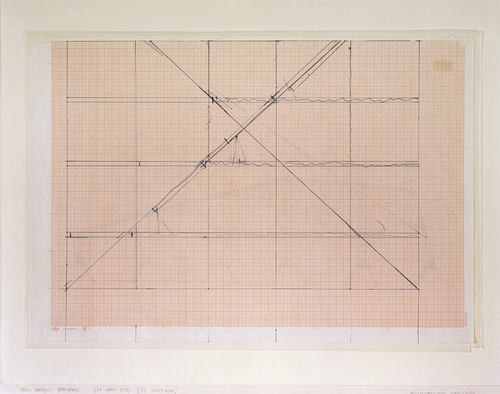
Photograph by Stefano Graziani of the following work: Gordon Matta-Clark, floor plan for Office Baroque, 1977, blue ballpoint pen on graph paper, 42 x 59.5 cm, PHCON2002:0016:059, Gordon Matta-Clark collection, Canadian Centre of Architecture, Gift of Estate of Gordon Matta-Clark, © Estate of Gordon Matta-Clark Questioning Pictures is a 36 photograph project commissioned by Fondazione Prada, Milan. Artist Stefano Graziani investigates archival and conservation systems in a number of museums. Through photographing museum objects, Graziani, focusing on the relationship between photographs, the museum objects and the power structures at play within institutions. The museums include the Canadian Centre for Architecture (CCA) in Montréal, Canada; Sir John Soane’s Museum in London, UK; the Kunstmuseum Basel, Switzerland; Museum Insel Hombroich in Neuss, Germany; the Museo di Castelvecchio in Verona, Italy; and the Plaster Cast Gallery at Museo Canova in Possagno, Italy.
PH2018:0005:031
Description:
Photograph by Stefano Graziani of the following work: Gordon Matta-Clark, floor plan for Office Baroque, 1977, blue ballpoint pen on graph paper, 42 x 59.5 cm, PHCON2002:0016:059, Gordon Matta-Clark collection, Canadian Centre of Architecture, Gift of Estate of Gordon Matta-Clark, © Estate of Gordon Matta-Clark Questioning Pictures is a 36 photograph project commissioned by Fondazione Prada, Milan. Artist Stefano Graziani investigates archival and conservation systems in a number of museums. Through photographing museum objects, Graziani, focusing on the relationship between photographs, the museum objects and the power structures at play within institutions. The museums include the Canadian Centre for Architecture (CCA) in Montréal, Canada; Sir John Soane’s Museum in London, UK; the Kunstmuseum Basel, Switzerland; Museum Insel Hombroich in Neuss, Germany; the Museo di Castelvecchio in Verona, Italy; and the Plaster Cast Gallery at Museo Canova in Possagno, Italy.
People:
Date:
2017
2017
Title:
Questioning Pictures: Photograph of floor plan for Office Baroque, blue pen on graph paper by Gordon Matta-Clark, 1977
Actions:
PH2018:0005:031
Description:
Photograph by Stefano Graziani of the following work: Gordon Matta-Clark, floor plan for Office Baroque, 1977, blue ballpoint pen on graph paper, 42 x 59.5 cm, PHCON2002:0016:059, Gordon Matta-Clark collection, Canadian Centre of Architecture, Gift of Estate of Gordon Matta-Clark, © Estate of Gordon Matta-Clark Questioning Pictures is a 36 photograph project commissioned by Fondazione Prada, Milan. Artist Stefano Graziani investigates archival and conservation systems in a number of museums. Through photographing museum objects, Graziani, focusing on the relationship between photographs, the museum objects and the power structures at play within institutions. The museums include the Canadian Centre for Architecture (CCA) in Montréal, Canada; Sir John Soane’s Museum in London, UK; the Kunstmuseum Basel, Switzerland; Museum Insel Hombroich in Neuss, Germany; the Museo di Castelvecchio in Verona, Italy; and the Plaster Cast Gallery at Museo Canova in Possagno, Italy.
Questioning Pictures: Photograph of floor plan for Office Baroque, blue pen on graph paper by Gordon Matta-Clark, 1977
Actions:
PH2018:0005:031
Description:
Photograph by Stefano Graziani of the following work: Gordon Matta-Clark, floor plan for Office Baroque, 1977, blue ballpoint pen on graph paper, 42 x 59.5 cm, PHCON2002:0016:059, Gordon Matta-Clark collection, Canadian Centre of Architecture, Gift of Estate of Gordon Matta-Clark, © Estate of Gordon Matta-Clark Questioning Pictures is a 36 photograph project commissioned by Fondazione Prada, Milan. Artist Stefano Graziani investigates archival and conservation systems in a number of museums. Through photographing museum objects, Graziani, focusing on the relationship between photographs, the museum objects and the power structures at play within institutions. The museums include the Canadian Centre for Architecture (CCA) in Montréal, Canada; Sir John Soane’s Museum in London, UK; the Kunstmuseum Basel, Switzerland; Museum Insel Hombroich in Neuss, Germany; the Museo di Castelvecchio in Verona, Italy; and the Plaster Cast Gallery at Museo Canova in Possagno, Italy.
Form:
photographs
photographs
Date:
2017
2017
People:
Form:
photographs
photographs
Actions:
Reference number:
PH2018:0005:033
Description:
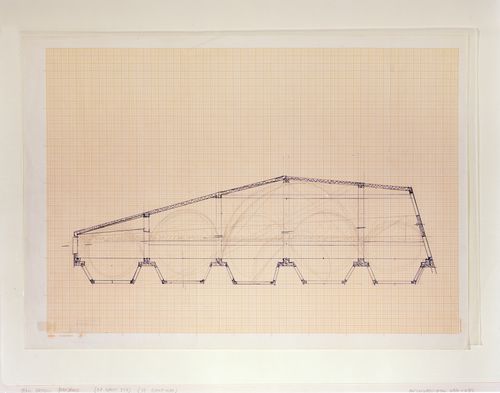
Photograph by Stefano Graziani of the following work: Gordon Matta-Clark, floor plan for Office Baroque, 1977, blue ballpoint pen on graph paper, 42 x 59.5 cm, PHCON2002:0016:058, Gordon Matta-Clark collection, Canadian Centre of Architecture, Gift of Estate of Gordon Matta-Clark, © Estate of Gordon Matta-Clark Questioning Pictures is a 36 photograph project commissioned by Fondazione Prada, Milan. Artist Stefano Graziani investigates archival and conservation systems in a number of museums. Through photographing museum objects, Graziani, focusing on the relationship between photographs, the museum objects and the power structures at play within institutions. The museums include the Canadian Centre for Architecture (CCA) in Montréal, Canada; Sir John Soane’s Museum in London, UK; the Kunstmuseum Basel, Switzerland; Museum Insel Hombroich in Neuss, Germany; the Museo di Castelvecchio in Verona, Italy; and the Plaster Cast Gallery at Museo Canova in Possagno, Italy.
PH2018:0005:033
Description:
Photograph by Stefano Graziani of the following work: Gordon Matta-Clark, floor plan for Office Baroque, 1977, blue ballpoint pen on graph paper, 42 x 59.5 cm, PHCON2002:0016:058, Gordon Matta-Clark collection, Canadian Centre of Architecture, Gift of Estate of Gordon Matta-Clark, © Estate of Gordon Matta-Clark Questioning Pictures is a 36 photograph project commissioned by Fondazione Prada, Milan. Artist Stefano Graziani investigates archival and conservation systems in a number of museums. Through photographing museum objects, Graziani, focusing on the relationship between photographs, the museum objects and the power structures at play within institutions. The museums include the Canadian Centre for Architecture (CCA) in Montréal, Canada; Sir John Soane’s Museum in London, UK; the Kunstmuseum Basel, Switzerland; Museum Insel Hombroich in Neuss, Germany; the Museo di Castelvecchio in Verona, Italy; and the Plaster Cast Gallery at Museo Canova in Possagno, Italy.
People:
Date:
2017
2017
Title:
Questioning Pictures: Photograph of floor plan for office Baroque, blue pen on graph paper by Gordon Matta-Clark, 1977
Actions:
PH2018:0005:033
Description:
Photograph by Stefano Graziani of the following work: Gordon Matta-Clark, floor plan for Office Baroque, 1977, blue ballpoint pen on graph paper, 42 x 59.5 cm, PHCON2002:0016:058, Gordon Matta-Clark collection, Canadian Centre of Architecture, Gift of Estate of Gordon Matta-Clark, © Estate of Gordon Matta-Clark Questioning Pictures is a 36 photograph project commissioned by Fondazione Prada, Milan. Artist Stefano Graziani investigates archival and conservation systems in a number of museums. Through photographing museum objects, Graziani, focusing on the relationship between photographs, the museum objects and the power structures at play within institutions. The museums include the Canadian Centre for Architecture (CCA) in Montréal, Canada; Sir John Soane’s Museum in London, UK; the Kunstmuseum Basel, Switzerland; Museum Insel Hombroich in Neuss, Germany; the Museo di Castelvecchio in Verona, Italy; and the Plaster Cast Gallery at Museo Canova in Possagno, Italy.
Questioning Pictures: Photograph of floor plan for office Baroque, blue pen on graph paper by Gordon Matta-Clark, 1977
Actions:
PH2018:0005:033
Description:
Photograph by Stefano Graziani of the following work: Gordon Matta-Clark, floor plan for Office Baroque, 1977, blue ballpoint pen on graph paper, 42 x 59.5 cm, PHCON2002:0016:058, Gordon Matta-Clark collection, Canadian Centre of Architecture, Gift of Estate of Gordon Matta-Clark, © Estate of Gordon Matta-Clark Questioning Pictures is a 36 photograph project commissioned by Fondazione Prada, Milan. Artist Stefano Graziani investigates archival and conservation systems in a number of museums. Through photographing museum objects, Graziani, focusing on the relationship between photographs, the museum objects and the power structures at play within institutions. The museums include the Canadian Centre for Architecture (CCA) in Montréal, Canada; Sir John Soane’s Museum in London, UK; the Kunstmuseum Basel, Switzerland; Museum Insel Hombroich in Neuss, Germany; the Museo di Castelvecchio in Verona, Italy; and the Plaster Cast Gallery at Museo Canova in Possagno, Italy.
Form:
photographs
photographs
Date:
2017
2017
People:
Actions:
Reference number:
DR2007:0020
Description:
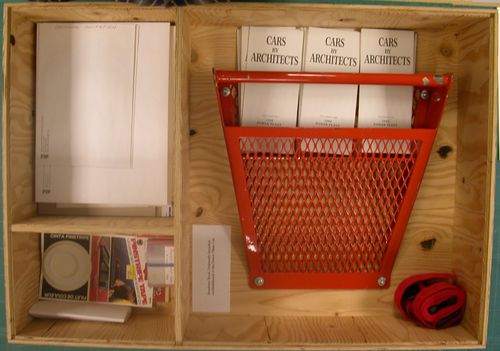
This consists of a boxed set of related pieces from L.W. Richards participation in "The Architecture Series" at the Power Plant contemporary art gallery in 1988-89. L.W. Richards renovated and drove a Pontiac Firebird, named "Power Plant". The project was the subject of Vikky Alexander's essay "Back to the Future" in the Power Plant Gallery's "The Architecture Series", 1989, pp.25-31. The project was reviewed by Adele Freedman (Globe and Mail, March 5, 1988, p.C12), Christopher Hume (Architect designs gallery on wheels, Toronto Star, Feb. 27, 1988, p. G15), and pictured and discussed in The Canadian Architect, Vol. 33, no. 4, April 1988, p.6. The set pf pieces includes: a) B&W photograph of the Power Plant car in an auto-body workshop, b) The Architecture Series, booklet with Alexander's essay, c)newspaper and magazine clippings/reviews, d)orangesteel brochure rack, that L.W. Richards designed, from the Power Plant car (~ 18" x 18" x 3"), e) nine B&W brochures titled "Cars by Architects" that fit into the red-orange rack, and f) ~ 20 colour slides of the Power Plant car in various locations in Toronto.
DR2007:0020
Description:
This consists of a boxed set of related pieces from L.W. Richards participation in "The Architecture Series" at the Power Plant contemporary art gallery in 1988-89. L.W. Richards renovated and drove a Pontiac Firebird, named "Power Plant". The project was the subject of Vikky Alexander's essay "Back to the Future" in the Power Plant Gallery's "The Architecture Series", 1989, pp.25-31. The project was reviewed by Adele Freedman (Globe and Mail, March 5, 1988, p.C12), Christopher Hume (Architect designs gallery on wheels, Toronto Star, Feb. 27, 1988, p. G15), and pictured and discussed in The Canadian Architect, Vol. 33, no. 4, April 1988, p.6. The set pf pieces includes: a) B&W photograph of the Power Plant car in an auto-body workshop, b) The Architecture Series, booklet with Alexander's essay, c)newspaper and magazine clippings/reviews, d)orangesteel brochure rack, that L.W. Richards designed, from the Power Plant car (~ 18" x 18" x 3"), e) nine B&W brochures titled "Cars by Architects" that fit into the red-orange rack, and f) ~ 20 colour slides of the Power Plant car in various locations in Toronto.
People:
Date:
1988-1989
1988-1989
Title:
Power Plant (Cars by Architects), 1988-1989
Actions:
DR2007:0020
Description:
This consists of a boxed set of related pieces from L.W. Richards participation in "The Architecture Series" at the Power Plant contemporary art gallery in 1988-89. L.W. Richards renovated and drove a Pontiac Firebird, named "Power Plant". The project was the subject of Vikky Alexander's essay "Back to the Future" in the Power Plant Gallery's "The Architecture Series", 1989, pp.25-31. The project was reviewed by Adele Freedman (Globe and Mail, March 5, 1988, p.C12), Christopher Hume (Architect designs gallery on wheels, Toronto Star, Feb. 27, 1988, p. G15), and pictured and discussed in The Canadian Architect, Vol. 33, no. 4, April 1988, p.6. The set pf pieces includes: a) B&W photograph of the Power Plant car in an auto-body workshop, b) The Architecture Series, booklet with Alexander's essay, c)newspaper and magazine clippings/reviews, d)orangesteel brochure rack, that L.W. Richards designed, from the Power Plant car (~ 18" x 18" x 3"), e) nine B&W brochures titled "Cars by Architects" that fit into the red-orange rack, and f) ~ 20 colour slides of the Power Plant car in various locations in Toronto.
Power Plant (Cars by Architects), 1988-1989
Actions:
DR2007:0020
Description:
This consists of a boxed set of related pieces from L.W. Richards participation in "The Architecture Series" at the Power Plant contemporary art gallery in 1988-89. L.W. Richards renovated and drove a Pontiac Firebird, named "Power Plant". The project was the subject of Vikky Alexander's essay "Back to the Future" in the Power Plant Gallery's "The Architecture Series", 1989, pp.25-31. The project was reviewed by Adele Freedman (Globe and Mail, March 5, 1988, p.C12), Christopher Hume (Architect designs gallery on wheels, Toronto Star, Feb. 27, 1988, p. G15), and pictured and discussed in The Canadian Architect, Vol. 33, no. 4, April 1988, p.6. The set pf pieces includes: a) B&W photograph of the Power Plant car in an auto-body workshop, b) The Architecture Series, booklet with Alexander's essay, c)newspaper and magazine clippings/reviews, d)orangesteel brochure rack, that L.W. Richards designed, from the Power Plant car (~ 18" x 18" x 3"), e) nine B&W brochures titled "Cars by Architects" that fit into the red-orange rack, and f) ~ 20 colour slides of the Power Plant car in various locations in Toronto.
Date:
1988-1989
1988-1989
People:
Level of archival description:
Project
Project
Reference number:
AP018.S1.1962.PR01
Description:
This project series documents the Sifto Salt Division Mill and Warehouse of Domtar Chemicals Limited in Goderich, Ontario, Canada from 1962-1963. The office probably identified the project number as either 6237 or 6264. This project consisted of a 62,000 square foot facility on the existing industrial complex of Domtar. The building was clad in epoxy faced brick and concrete up to the third floor, while the rest of the structure was clad in ribbed cement asbestos siding up to the roof. The building included process areas, packaging areas, a warehouse, bagging room, offices, cafeteria and canteen, and shipping and recieving areas. This project won a special mention at the Massey Medal for Architecture in 1964. The project is recorded through a mounted photograph showing the finished buillding.
AP018.S1.1962.PR01
Description:
This project series documents the Sifto Salt Division Mill and Warehouse of Domtar Chemicals Limited in Goderich, Ontario, Canada from 1962-1963. The office probably identified the project number as either 6237 or 6264. This project consisted of a 62,000 square foot facility on the existing industrial complex of Domtar. The building was clad in epoxy faced brick and concrete up to the third floor, while the rest of the structure was clad in ribbed cement asbestos siding up to the roof. The building included process areas, packaging areas, a warehouse, bagging room, offices, cafeteria and canteen, and shipping and recieving areas. This project won a special mention at the Massey Medal for Architecture in 1964. The project is recorded through a mounted photograph showing the finished buillding.
People:
Date:
circa 1963
circa 1963
Title:
Domtar Chemicals Limited, Sifto Salt Division Mill and Warehouse, Goderich, Ontario, Canada (1962-1963)
Actions:
AP018.S1.1962.PR01
Description:
This project series documents the Sifto Salt Division Mill and Warehouse of Domtar Chemicals Limited in Goderich, Ontario, Canada from 1962-1963. The office probably identified the project number as either 6237 or 6264. This project consisted of a 62,000 square foot facility on the existing industrial complex of Domtar. The building was clad in epoxy faced brick and concrete up to the third floor, while the rest of the structure was clad in ribbed cement asbestos siding up to the roof. The building included process areas, packaging areas, a warehouse, bagging room, offices, cafeteria and canteen, and shipping and recieving areas. This project won a special mention at the Massey Medal for Architecture in 1964. The project is recorded through a mounted photograph showing the finished buillding.
Domtar Chemicals Limited, Sifto Salt Division Mill and Warehouse, Goderich, Ontario, Canada (1962-1963)
Actions:
AP018.S1.1962.PR01
Description:
This project series documents the Sifto Salt Division Mill and Warehouse of Domtar Chemicals Limited in Goderich, Ontario, Canada from 1962-1963. The office probably identified the project number as either 6237 or 6264. This project consisted of a 62,000 square foot facility on the existing industrial complex of Domtar. The building was clad in epoxy faced brick and concrete up to the third floor, while the rest of the structure was clad in ribbed cement asbestos siding up to the roof. The building included process areas, packaging areas, a warehouse, bagging room, offices, cafeteria and canteen, and shipping and recieving areas. This project won a special mention at the Massey Medal for Architecture in 1964. The project is recorded through a mounted photograph showing the finished buillding.
Level of archival description:
Project
Project
Date:
circa 1963
circa 1963
People:
Level of archival description:
Project
Project
Title:
Ice House II (1972)
Ice House II (1972)
Reference number:
AP207.S1.1972.PR01
Description:
The project series documents "Ice House II" a project which consisted of freezing a small house in suburban Minneapolis, by pouring water into a wooden mold surrounding the house and letting the water freeze to create a block of ice. "If the addition of material then leads, paradoxically, to the disappearence of the 'architectural' object, this subtraction only highlights the serial repetitiveness of the dwellings in American suburbia." [1] It is unclear if this project was ever performed. The project series contains photographs of the frozen house, photographic reproductions of aerial views and plans of the neighbourhood for the selection of the house, sketches and a perspective drawing. Source: [1] Marco Scotini, editor. Non-conscious architecture: Gianni Pettena, Sternberg Press, 2018, 235 pages. p. 152.
AP207.S1.1972.PR01
Description:
The project series documents "Ice House II" a project which consisted of freezing a small house in suburban Minneapolis, by pouring water into a wooden mold surrounding the house and letting the water freeze to create a block of ice. "If the addition of material then leads, paradoxically, to the disappearence of the 'architectural' object, this subtraction only highlights the serial repetitiveness of the dwellings in American suburbia." [1] It is unclear if this project was ever performed. The project series contains photographs of the frozen house, photographic reproductions of aerial views and plans of the neighbourhood for the selection of the house, sketches and a perspective drawing. Source: [1] Marco Scotini, editor. Non-conscious architecture: Gianni Pettena, Sternberg Press, 2018, 235 pages. p. 152.
People:
Date:
circa 1972-2015
circa 1972-2015
Title:
Ice House II (1972)
Actions:
AP207.S1.1972.PR01
Description:
The project series documents "Ice House II" a project which consisted of freezing a small house in suburban Minneapolis, by pouring water into a wooden mold surrounding the house and letting the water freeze to create a block of ice. "If the addition of material then leads, paradoxically, to the disappearence of the 'architectural' object, this subtraction only highlights the serial repetitiveness of the dwellings in American suburbia." [1] It is unclear if this project was ever performed. The project series contains photographs of the frozen house, photographic reproductions of aerial views and plans of the neighbourhood for the selection of the house, sketches and a perspective drawing. Source: [1] Marco Scotini, editor. Non-conscious architecture: Gianni Pettena, Sternberg Press, 2018, 235 pages. p. 152.
Ice House II (1972)
Actions:
AP207.S1.1972.PR01
Description:
The project series documents "Ice House II" a project which consisted of freezing a small house in suburban Minneapolis, by pouring water into a wooden mold surrounding the house and letting the water freeze to create a block of ice. "If the addition of material then leads, paradoxically, to the disappearence of the 'architectural' object, this subtraction only highlights the serial repetitiveness of the dwellings in American suburbia." [1] It is unclear if this project was ever performed. The project series contains photographs of the frozen house, photographic reproductions of aerial views and plans of the neighbourhood for the selection of the house, sketches and a perspective drawing. Source: [1] Marco Scotini, editor. Non-conscious architecture: Gianni Pettena, Sternberg Press, 2018, 235 pages. p. 152.
Level of archival description:
Project
Project
Date:
circa 1972-2015
circa 1972-2015
People:
Level of archival description:
Project
Project
Reference number:
AP056.S1.1987.PR04
Description:
This project series documents the restoration and redevelopmet of King James Place in Toronto, Ontario. The office assigned the number 8722 to this project. King James Place is located on King St. East between Jarvis St. and Church St. and was completed in 1839. Construction on the project began in 1990. Drawings in the project series show the changes made to the floor plans and interiors while preserving the historic facade. The project received a Governor General's Award for Architecture in 1992, the Toronto Urban Design Award in 1993, and the Heritage Toronto Award in 1994. The project is recorded through sketches, original plans, elevations, sections, several perspectives, as well as presentation drawings. Also included are two photographs of the finished exterior and a model.
AP056.S1.1987.PR04
Description:
This project series documents the restoration and redevelopmet of King James Place in Toronto, Ontario. The office assigned the number 8722 to this project. King James Place is located on King St. East between Jarvis St. and Church St. and was completed in 1839. Construction on the project began in 1990. Drawings in the project series show the changes made to the floor plans and interiors while preserving the historic facade. The project received a Governor General's Award for Architecture in 1992, the Toronto Urban Design Award in 1993, and the Heritage Toronto Award in 1994. The project is recorded through sketches, original plans, elevations, sections, several perspectives, as well as presentation drawings. Also included are two photographs of the finished exterior and a model.
People:
Date:
1987-1996
1987-1996
Title:
King James Place, Toronto, Ontario (1987-1991)
Actions:
AP056.S1.1987.PR04
Description:
This project series documents the restoration and redevelopmet of King James Place in Toronto, Ontario. The office assigned the number 8722 to this project. King James Place is located on King St. East between Jarvis St. and Church St. and was completed in 1839. Construction on the project began in 1990. Drawings in the project series show the changes made to the floor plans and interiors while preserving the historic facade. The project received a Governor General's Award for Architecture in 1992, the Toronto Urban Design Award in 1993, and the Heritage Toronto Award in 1994. The project is recorded through sketches, original plans, elevations, sections, several perspectives, as well as presentation drawings. Also included are two photographs of the finished exterior and a model.
King James Place, Toronto, Ontario (1987-1991)
Actions:
AP056.S1.1987.PR04
Description:
This project series documents the restoration and redevelopmet of King James Place in Toronto, Ontario. The office assigned the number 8722 to this project. King James Place is located on King St. East between Jarvis St. and Church St. and was completed in 1839. Construction on the project began in 1990. Drawings in the project series show the changes made to the floor plans and interiors while preserving the historic facade. The project received a Governor General's Award for Architecture in 1992, the Toronto Urban Design Award in 1993, and the Heritage Toronto Award in 1994. The project is recorded through sketches, original plans, elevations, sections, several perspectives, as well as presentation drawings. Also included are two photographs of the finished exterior and a model.
Level of archival description:
Project
Project
Date:
1987-1996
1987-1996
People:
Level of archival description:
Series
Series
Title:
Œuvres du prix de Rome
Œuvres du prix de Rome
Actions:
Reference number:
AP066.S4
Description:
Cette série rassemble les documents produits par Jacques Rousseau dans le cadre du Prix de Rome (1988), soit: les esquisses préparatoires et les gravures blanches (sans encre) qui illustrent un projet de "Nouveau-Port" pour Montréal, et les dessins à la craie sèche sur papier intitulés "Mémoire virtuelle ...". On y retrouve également des avenues de projet qui n'ont pas été développées, "Étude du flanc est du Mont-Royal" et projet de "Boucliers de papier", et des documents issus de l'exposition intitulée Montréal vue de Rome présentée à la Maison Coloniale en mai 1990. Le dossier contient des dessins, des documents textuels, des documents photographiques et un artéfact. Description du projet par l'architecte: "Amorcé en 1985, lors de la consultation publique concernant le Vieux-Port de Montréal, "le projet du Nouveau Port" complète son cycle alors que je séjourne à Rome à titre de Prix de Rome du Conseil des Arts du Canada. Prétexte par excellence pour réfléchir sur l'espoir et la transformation de Montréal, le sujet du Nouveau Port m'est apparu comme le moyen d'informer une approche de la transformation de la ville. J'ai pensé le projet possible, nécessaire même et j'ai plongé." Jacques Rousseau, "Le projet du Nouveau Port", ARQ : Architecture-Québec, nº 67, p. 30.
AP066.S4
Description:
Cette série rassemble les documents produits par Jacques Rousseau dans le cadre du Prix de Rome (1988), soit: les esquisses préparatoires et les gravures blanches (sans encre) qui illustrent un projet de "Nouveau-Port" pour Montréal, et les dessins à la craie sèche sur papier intitulés "Mémoire virtuelle ...". On y retrouve également des avenues de projet qui n'ont pas été développées, "Étude du flanc est du Mont-Royal" et projet de "Boucliers de papier", et des documents issus de l'exposition intitulée Montréal vue de Rome présentée à la Maison Coloniale en mai 1990. Le dossier contient des dessins, des documents textuels, des documents photographiques et un artéfact. Description du projet par l'architecte: "Amorcé en 1985, lors de la consultation publique concernant le Vieux-Port de Montréal, "le projet du Nouveau Port" complète son cycle alors que je séjourne à Rome à titre de Prix de Rome du Conseil des Arts du Canada. Prétexte par excellence pour réfléchir sur l'espoir et la transformation de Montréal, le sujet du Nouveau Port m'est apparu comme le moyen d'informer une approche de la transformation de la ville. J'ai pensé le projet possible, nécessaire même et j'ai plongé." Jacques Rousseau, "Le projet du Nouveau Port", ARQ : Architecture-Québec, nº 67, p. 30.
People:
Date:
1987-1990
1987-1990
Title:
Œuvres du prix de Rome
Actions:
AP066.S4
Description:
Cette série rassemble les documents produits par Jacques Rousseau dans le cadre du Prix de Rome (1988), soit: les esquisses préparatoires et les gravures blanches (sans encre) qui illustrent un projet de "Nouveau-Port" pour Montréal, et les dessins à la craie sèche sur papier intitulés "Mémoire virtuelle ...". On y retrouve également des avenues de projet qui n'ont pas été développées, "Étude du flanc est du Mont-Royal" et projet de "Boucliers de papier", et des documents issus de l'exposition intitulée Montréal vue de Rome présentée à la Maison Coloniale en mai 1990. Le dossier contient des dessins, des documents textuels, des documents photographiques et un artéfact. Description du projet par l'architecte: "Amorcé en 1985, lors de la consultation publique concernant le Vieux-Port de Montréal, "le projet du Nouveau Port" complète son cycle alors que je séjourne à Rome à titre de Prix de Rome du Conseil des Arts du Canada. Prétexte par excellence pour réfléchir sur l'espoir et la transformation de Montréal, le sujet du Nouveau Port m'est apparu comme le moyen d'informer une approche de la transformation de la ville. J'ai pensé le projet possible, nécessaire même et j'ai plongé." Jacques Rousseau, "Le projet du Nouveau Port", ARQ : Architecture-Québec, nº 67, p. 30.
Œuvres du prix de Rome
Actions:
AP066.S4
Description:
Cette série rassemble les documents produits par Jacques Rousseau dans le cadre du Prix de Rome (1988), soit: les esquisses préparatoires et les gravures blanches (sans encre) qui illustrent un projet de "Nouveau-Port" pour Montréal, et les dessins à la craie sèche sur papier intitulés "Mémoire virtuelle ...". On y retrouve également des avenues de projet qui n'ont pas été développées, "Étude du flanc est du Mont-Royal" et projet de "Boucliers de papier", et des documents issus de l'exposition intitulée Montréal vue de Rome présentée à la Maison Coloniale en mai 1990. Le dossier contient des dessins, des documents textuels, des documents photographiques et un artéfact. Description du projet par l'architecte: "Amorcé en 1985, lors de la consultation publique concernant le Vieux-Port de Montréal, "le projet du Nouveau Port" complète son cycle alors que je séjourne à Rome à titre de Prix de Rome du Conseil des Arts du Canada. Prétexte par excellence pour réfléchir sur l'espoir et la transformation de Montréal, le sujet du Nouveau Port m'est apparu comme le moyen d'informer une approche de la transformation de la ville. J'ai pensé le projet possible, nécessaire même et j'ai plongé." Jacques Rousseau, "Le projet du Nouveau Port", ARQ : Architecture-Québec, nº 67, p. 30.
Level of archival description:
Série 4
Série 4
Date:
1987-1990
1987-1990
People:


