


4184 Results
Form:
photographs
photographs
Title:
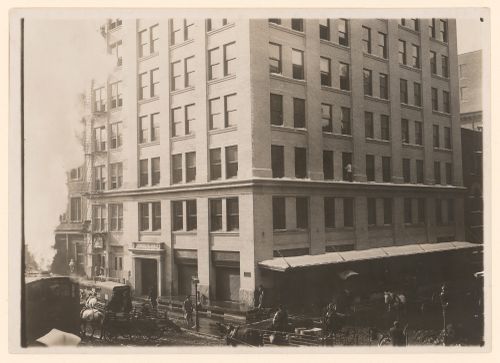
View of Habicht & Braun Nut Factory, Hudson and Laight Streets, New York, New York, United States
View of Habicht & Braun Nut Factory, Hudson and Laight Streets, New York, New York, United States
Actions:
Reference number:
PH1980:1134
Description:
Photograph taken while Lewis Wickes Hine was working for the National Child Labor Committee. Caption from NCLC caption card: "Deal in nuts only. Import them. Nuts are cracked and picked in the factory--are picked in the homes. 100 families in neighborhood working (35 families on list in / licensed houses.)".
PH1980:1134
Description:
Photograph taken while Lewis Wickes Hine was working for the National Child Labor Committee. Caption from NCLC caption card: "Deal in nuts only. Import them. Nuts are cracked and picked in the factory--are picked in the homes. 100 families in neighborhood working (35 families on list in / licensed houses.)".
People:
Date:
December 1911
December 1911
Title:
View of Habicht & Braun Nut Factory, Hudson and Laight Streets, New York, New York, United States
Actions:
PH1980:1134
Description:
Photograph taken while Lewis Wickes Hine was working for the National Child Labor Committee. Caption from NCLC caption card: "Deal in nuts only. Import them. Nuts are cracked and picked in the factory--are picked in the homes. 100 families in neighborhood working (35 families on list in / licensed houses.)".
View of Habicht & Braun Nut Factory, Hudson and Laight Streets, New York, New York, United States
Actions:
PH1980:1134
Description:
Photograph taken while Lewis Wickes Hine was working for the National Child Labor Committee. Caption from NCLC caption card: "Deal in nuts only. Import them. Nuts are cracked and picked in the factory--are picked in the homes. 100 families in neighborhood working (35 families on list in / licensed houses.)".
Form:
photographs
photographs
Date:
December 1911
December 1911
People:
Form:
textual records
textual records
Actions:
Reference number:
AP178.S1.1991.PR01.036.1
Description:
Original file title: Vitra diversos This file includes correspondence about the Fehlbaum familly tomb and a notebook.
AP178.S1.1991.PR01.036.1
Description:
Original file title: Vitra diversos This file includes correspondence about the Fehlbaum familly tomb and a notebook.
People:
Date:
1992-1995
1992-1995
Title:
Documentation, Vitra International, Weil am Rhein, Germany (folder 1 of 3)
Actions:
AP178.S1.1991.PR01.036.1
Description:
Original file title: Vitra diversos This file includes correspondence about the Fehlbaum familly tomb and a notebook.
Documentation, Vitra International, Weil am Rhein, Germany (folder 1 of 3)
Actions:
AP178.S1.1991.PR01.036.1
Description:
Original file title: Vitra diversos This file includes correspondence about the Fehlbaum familly tomb and a notebook.
Form:
textual records
textual records
Date:
1992-1995
1992-1995
People:
Form:
archives
Level of archival description:
Fonds
archives
Level of archival description:
Fonds
Title:
Pierre Jeanneret fonds
Pierre Jeanneret fonds
Reference number:
AP156
Synopsis:
Le Fonds Pierre Jeanneret documente la pratique professionnelle et la vie personnelle de l'architect Pierre Jeanneret de ses études et ses projets professionels en Europe à ses projets architecturaux à Chandigarh, en Inde. Les documents du Fonds consistent en des photographies, des dessins et des documents textuels relatifs à plus de 100 projets, principalement son travail pour le projet de la nouvelle ville de Chandigarh, en Inde, en 1951 à 1965. *** The Pierre Jeanneret fonds documents the professional practice and the personal life of architect Pierre Jeanneret from student and professional work in Europe to architectural projects in Chandigarh, India. The documents in the fonds consist of photographs, drawings and textual records relating to over 100 projects, predominantly his work for the project of the new city of Chandigarh, in India, in 1951 to 1965.
AP156
Synopsis:
Le Fonds Pierre Jeanneret documente la pratique professionnelle et la vie personnelle de l'architect Pierre Jeanneret de ses études et ses projets professionels en Europe à ses projets architecturaux à Chandigarh, en Inde. Les documents du Fonds consistent en des photographies, des dessins et des documents textuels relatifs à plus de 100 projets, principalement son travail pour le projet de la nouvelle ville de Chandigarh, en Inde, en 1951 à 1965. *** The Pierre Jeanneret fonds documents the professional practice and the personal life of architect Pierre Jeanneret from student and professional work in Europe to architectural projects in Chandigarh, India. The documents in the fonds consist of photographs, drawings and textual records relating to over 100 projects, predominantly his work for the project of the new city of Chandigarh, in India, in 1951 to 1965.
People:
Date:
1870s-2011
1870s-2011
Title:
Pierre Jeanneret fonds
Actions:
AP156
Synopsis:
Le Fonds Pierre Jeanneret documente la pratique professionnelle et la vie personnelle de l'architect Pierre Jeanneret de ses études et ses projets professionels en Europe à ses projets architecturaux à Chandigarh, en Inde. Les documents du Fonds consistent en des photographies, des dessins et des documents textuels relatifs à plus de 100 projets, principalement son travail pour le projet de la nouvelle ville de Chandigarh, en Inde, en 1951 à 1965. *** The Pierre Jeanneret fonds documents the professional practice and the personal life of architect Pierre Jeanneret from student and professional work in Europe to architectural projects in Chandigarh, India. The documents in the fonds consist of photographs, drawings and textual records relating to over 100 projects, predominantly his work for the project of the new city of Chandigarh, in India, in 1951 to 1965.
Pierre Jeanneret fonds
Actions:
AP156
Synopsis:
Le Fonds Pierre Jeanneret documente la pratique professionnelle et la vie personnelle de l'architect Pierre Jeanneret de ses études et ses projets professionels en Europe à ses projets architecturaux à Chandigarh, en Inde. Les documents du Fonds consistent en des photographies, des dessins et des documents textuels relatifs à plus de 100 projets, principalement son travail pour le projet de la nouvelle ville de Chandigarh, en Inde, en 1951 à 1965. *** The Pierre Jeanneret fonds documents the professional practice and the personal life of architect Pierre Jeanneret from student and professional work in Europe to architectural projects in Chandigarh, India. The documents in the fonds consist of photographs, drawings and textual records relating to over 100 projects, predominantly his work for the project of the new city of Chandigarh, in India, in 1951 to 1965.
Form:
archives
Level of archival description:
Fonds
archives
Level of archival description:
Fonds
Date:
1870s-2011
1870s-2011
People:
Form:
events
events

Form:
events
events
Date:
27 May 2018
11am to 4pm
27 May 2018
11am to 4pm
Location:
Shaughnessy House
Shaughnessy House
Form:
archives
Level of archival description:
Fonds
archives
Level of archival description:
Fonds
Title:
Amancio Williams fonds
Amancio Williams fonds
Reference number:
AP205
Synopsis:
The Amancio Williams fonds documents Williams' career as an architect and designer from the 1940s to the late 1980s. The fonds documents his work for over 80 architectural, urban planning and furniture design projects, as well as the administration of his architecture practice, and his professional activities through correspondence, photographic material, and promotional materials.
AP205
Synopsis:
The Amancio Williams fonds documents Williams' career as an architect and designer from the 1940s to the late 1980s. The fonds documents his work for over 80 architectural, urban planning and furniture design projects, as well as the administration of his architecture practice, and his professional activities through correspondence, photographic material, and promotional materials.
People:
Date:
1848-2010s
1848-2010s
Title:
Amancio Williams fonds
Actions:
AP205
Synopsis:
The Amancio Williams fonds documents Williams' career as an architect and designer from the 1940s to the late 1980s. The fonds documents his work for over 80 architectural, urban planning and furniture design projects, as well as the administration of his architecture practice, and his professional activities through correspondence, photographic material, and promotional materials.
Amancio Williams fonds
Actions:
AP205
Synopsis:
The Amancio Williams fonds documents Williams' career as an architect and designer from the 1940s to the late 1980s. The fonds documents his work for over 80 architectural, urban planning and furniture design projects, as well as the administration of his architecture practice, and his professional activities through correspondence, photographic material, and promotional materials.
Form:
archives
Level of archival description:
Fonds
archives
Level of archival description:
Fonds
Date:
1848-2010s
1848-2010s
People:
Form:
events
events
Title:
Learning from... Mexico City
Learning from... Mexico City
Actions:
Description:
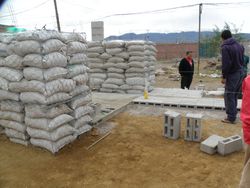
Arturo Ortiz Struck describes the boundaries of formal and legal building in the context of Mexico:“In order to build a critical view of the production of space and architecture in this environment, we should start from two fundamental premises. The first considers that spaces reflect who we are, and they express our cultural ways and how we unfold in everyday life. The(...)
Arturo Ortiz Struck describes the boundaries of formal and legal building in the context of Mexico:“In order to build a critical view of the production of space and architecture in this environment, we should start from two fundamental premises. The first considers that spaces reflect who we are, and they express our cultural ways and how we unfold in everyday life. The(...)
Location:
Paul-Desmarais Theatre
Paul-Desmarais Theatre
Date:
10 May 2012 , 7pm
10 May 2012 , 7pm
Title:
Learning from... Mexico City
Actions:
Description:
Arturo Ortiz Struck describes the boundaries of formal and legal building in the context of Mexico:“In order to build a critical view of the production of space and architecture in this environment, we should start from two fundamental premises. The first considers that spaces reflect who we are, and they express our cultural ways and how we unfold in everyday life. The(...)
Learning from... Mexico City
Actions:
Description:
Arturo Ortiz Struck describes the boundaries of formal and legal building in the context of Mexico:“In order to build a critical view of the production of space and architecture in this environment, we should start from two fundamental premises. The first considers that spaces reflect who we are, and they express our cultural ways and how we unfold in everyday life. The(...)
Form:
events
events
Date:
10 May 2012
7pm
10 May 2012
7pm
Location:
Paul-Desmarais Theatre
Paul-Desmarais Theatre
Level of archival description:
Project
Project
Title:
Quinta da Bela Flor, Lisboa
Quinta da Bela Flor, Lisboa
Actions:
Reference number:
CD034.S1.1976.PR01
Description:
This project series contains one reproduction of a photograph displayed in the exhibit to document the Quinta da Bela Flor neighbourhood, in Lisbon, Portugal. The exhibit text explained that: Artur Rosa's project in the neighbourhood grew out of a shanty town, built on a difficult site, dating back to the 19th century, with reports of families living in hillside caves that today flank the entrance to a nearby highway. The process was based on voluntary work, and its ending presented a huge disappointment to the local brigade. In 1976 and 1977, Artur Rosa, also a practicing artist, produced three works that reflected on SAAL, its failure and the subsequent sense of persecution felt by many brigade leaders. The decision not to present the project but rather the artistic interventions aims at revealing the performative nature of the process, its poetic intensity and the way it related to its protagonists. In 1977 the architect presented a performance at the Fine Arts Society in Lisbon in which he closed the documentation of the project in a darkened room. The following year, he presented a structure with the documentation closed inside, and finally he used the project drawings in a collage with photographs on the occasion of the first public tap in Quinta da Bela-Flor. Those poetic artistic interventions are his form of publicly mourning the end of the SAAL process. (The SAAL Process, Housing in Portugal 1974–76) Artur Rosa worked for SAAL/Lisbon and Central South with Etelvina José, Hélio Oliveira, José Luís Teles Rebolo, José Miguel Fonseca, Luís Pereira, Manuel Coutinho Raposo, Maria Fernanda Carvalho, Maria Isabel Rodrigues Lobo, Nuno Blanco Bártolo, Nuno Martins and the residents' association Cooperativa de Habitação Económica Bela Flor, that was founded on February 13th, 1976. The project included 288 dwellings. The operation began in September 1976, with a construction date in December 1976. This project series contains a reproduction of a photograph of a model. The original photograph was produced around 1976 and was reproduced in 2015 for the exhibit.
CD034.S1.1976.PR01
Description:
This project series contains one reproduction of a photograph displayed in the exhibit to document the Quinta da Bela Flor neighbourhood, in Lisbon, Portugal. The exhibit text explained that: Artur Rosa's project in the neighbourhood grew out of a shanty town, built on a difficult site, dating back to the 19th century, with reports of families living in hillside caves that today flank the entrance to a nearby highway. The process was based on voluntary work, and its ending presented a huge disappointment to the local brigade. In 1976 and 1977, Artur Rosa, also a practicing artist, produced three works that reflected on SAAL, its failure and the subsequent sense of persecution felt by many brigade leaders. The decision not to present the project but rather the artistic interventions aims at revealing the performative nature of the process, its poetic intensity and the way it related to its protagonists. In 1977 the architect presented a performance at the Fine Arts Society in Lisbon in which he closed the documentation of the project in a darkened room. The following year, he presented a structure with the documentation closed inside, and finally he used the project drawings in a collage with photographs on the occasion of the first public tap in Quinta da Bela-Flor. Those poetic artistic interventions are his form of publicly mourning the end of the SAAL process. (The SAAL Process, Housing in Portugal 1974–76) Artur Rosa worked for SAAL/Lisbon and Central South with Etelvina José, Hélio Oliveira, José Luís Teles Rebolo, José Miguel Fonseca, Luís Pereira, Manuel Coutinho Raposo, Maria Fernanda Carvalho, Maria Isabel Rodrigues Lobo, Nuno Blanco Bártolo, Nuno Martins and the residents' association Cooperativa de Habitação Económica Bela Flor, that was founded on February 13th, 1976. The project included 288 dwellings. The operation began in September 1976, with a construction date in December 1976. This project series contains a reproduction of a photograph of a model. The original photograph was produced around 1976 and was reproduced in 2015 for the exhibit.
People:
Date:
circa 1976
circa 1976
Title:
Quinta da Bela Flor, Lisboa
Actions:
CD034.S1.1976.PR01
Description:
This project series contains one reproduction of a photograph displayed in the exhibit to document the Quinta da Bela Flor neighbourhood, in Lisbon, Portugal. The exhibit text explained that: Artur Rosa's project in the neighbourhood grew out of a shanty town, built on a difficult site, dating back to the 19th century, with reports of families living in hillside caves that today flank the entrance to a nearby highway. The process was based on voluntary work, and its ending presented a huge disappointment to the local brigade. In 1976 and 1977, Artur Rosa, also a practicing artist, produced three works that reflected on SAAL, its failure and the subsequent sense of persecution felt by many brigade leaders. The decision not to present the project but rather the artistic interventions aims at revealing the performative nature of the process, its poetic intensity and the way it related to its protagonists. In 1977 the architect presented a performance at the Fine Arts Society in Lisbon in which he closed the documentation of the project in a darkened room. The following year, he presented a structure with the documentation closed inside, and finally he used the project drawings in a collage with photographs on the occasion of the first public tap in Quinta da Bela-Flor. Those poetic artistic interventions are his form of publicly mourning the end of the SAAL process. (The SAAL Process, Housing in Portugal 1974–76) Artur Rosa worked for SAAL/Lisbon and Central South with Etelvina José, Hélio Oliveira, José Luís Teles Rebolo, José Miguel Fonseca, Luís Pereira, Manuel Coutinho Raposo, Maria Fernanda Carvalho, Maria Isabel Rodrigues Lobo, Nuno Blanco Bártolo, Nuno Martins and the residents' association Cooperativa de Habitação Económica Bela Flor, that was founded on February 13th, 1976. The project included 288 dwellings. The operation began in September 1976, with a construction date in December 1976. This project series contains a reproduction of a photograph of a model. The original photograph was produced around 1976 and was reproduced in 2015 for the exhibit.
Quinta da Bela Flor, Lisboa
Actions:
CD034.S1.1976.PR01
Description:
This project series contains one reproduction of a photograph displayed in the exhibit to document the Quinta da Bela Flor neighbourhood, in Lisbon, Portugal. The exhibit text explained that: Artur Rosa's project in the neighbourhood grew out of a shanty town, built on a difficult site, dating back to the 19th century, with reports of families living in hillside caves that today flank the entrance to a nearby highway. The process was based on voluntary work, and its ending presented a huge disappointment to the local brigade. In 1976 and 1977, Artur Rosa, also a practicing artist, produced three works that reflected on SAAL, its failure and the subsequent sense of persecution felt by many brigade leaders. The decision not to present the project but rather the artistic interventions aims at revealing the performative nature of the process, its poetic intensity and the way it related to its protagonists. In 1977 the architect presented a performance at the Fine Arts Society in Lisbon in which he closed the documentation of the project in a darkened room. The following year, he presented a structure with the documentation closed inside, and finally he used the project drawings in a collage with photographs on the occasion of the first public tap in Quinta da Bela-Flor. Those poetic artistic interventions are his form of publicly mourning the end of the SAAL process. (The SAAL Process, Housing in Portugal 1974–76) Artur Rosa worked for SAAL/Lisbon and Central South with Etelvina José, Hélio Oliveira, José Luís Teles Rebolo, José Miguel Fonseca, Luís Pereira, Manuel Coutinho Raposo, Maria Fernanda Carvalho, Maria Isabel Rodrigues Lobo, Nuno Blanco Bártolo, Nuno Martins and the residents' association Cooperativa de Habitação Económica Bela Flor, that was founded on February 13th, 1976. The project included 288 dwellings. The operation began in September 1976, with a construction date in December 1976. This project series contains a reproduction of a photograph of a model. The original photograph was produced around 1976 and was reproduced in 2015 for the exhibit.
Level of archival description:
Project
Project
Date:
circa 1976
circa 1976
People:
Form:
archives
Level of archival description:
Fonds
archives
Level of archival description:
Fonds
Actions:
Reference number:
AP128
Synopsis:
The Harold Ship Alexis Nihon Plaza and Nuns’ Island Master Plan project records, (1956- 1973), document architect Harold Ship’s design and plan for the Alexis Nihon Plaza (1956-1965) and the Nun’s Island Master Plan (1959-1973). Materials in these project records consist of 1 619 drawings (including reprographic copies), 330 photographs, 5 l.m. of textual records, 5 models and 2 panels.
AP128
Synopsis:
The Harold Ship Alexis Nihon Plaza and Nuns’ Island Master Plan project records, (1956- 1973), document architect Harold Ship’s design and plan for the Alexis Nihon Plaza (1956-1965) and the Nun’s Island Master Plan (1959-1973). Materials in these project records consist of 1 619 drawings (including reprographic copies), 330 photographs, 5 l.m. of textual records, 5 models and 2 panels.
People:
Date:
1956-1973
1956-1973
Title:
Harold Ship Alexis Nihon Plaza and Nuns’ Island Master Plan project records
Actions:
AP128
Synopsis:
The Harold Ship Alexis Nihon Plaza and Nuns’ Island Master Plan project records, (1956- 1973), document architect Harold Ship’s design and plan for the Alexis Nihon Plaza (1956-1965) and the Nun’s Island Master Plan (1959-1973). Materials in these project records consist of 1 619 drawings (including reprographic copies), 330 photographs, 5 l.m. of textual records, 5 models and 2 panels.
Harold Ship Alexis Nihon Plaza and Nuns’ Island Master Plan project records
Actions:
AP128
Synopsis:
The Harold Ship Alexis Nihon Plaza and Nuns’ Island Master Plan project records, (1956- 1973), document architect Harold Ship’s design and plan for the Alexis Nihon Plaza (1956-1965) and the Nun’s Island Master Plan (1959-1973). Materials in these project records consist of 1 619 drawings (including reprographic copies), 330 photographs, 5 l.m. of textual records, 5 models and 2 panels.
Form:
archives
Level of archival description:
Fonds
archives
Level of archival description:
Fonds
Date:
1956-1973
1956-1973
People:
Form:
archives
Level of archival description:
Fonds
archives
Level of archival description:
Fonds
Actions:
Reference number:
AP176
Synopsis:
Karl Chu X PHYLUM project records, 1998-2014 (predominant 1998-2002), documents the development and design process of Chu’s project X PHYLUM. The archive consists exclusively of original born-digital material.
AP176
Synopsis:
Karl Chu X PHYLUM project records, 1998-2014 (predominant 1998-2002), documents the development and design process of Chu’s project X PHYLUM. The archive consists exclusively of original born-digital material.
People:
Date:
1998-2014
1998-2014
Title:
Karl Chu X Phylum project records
Actions:
AP176
Synopsis:
Karl Chu X PHYLUM project records, 1998-2014 (predominant 1998-2002), documents the development and design process of Chu’s project X PHYLUM. The archive consists exclusively of original born-digital material.
Karl Chu X Phylum project records
Actions:
AP176
Synopsis:
Karl Chu X PHYLUM project records, 1998-2014 (predominant 1998-2002), documents the development and design process of Chu’s project X PHYLUM. The archive consists exclusively of original born-digital material.
Form:
archives
Level of archival description:
Fonds
archives
Level of archival description:
Fonds
Date:
1998-2014
1998-2014
People:
Form:
works of art
works of art
Reference number:
DR1986:0442:001-022
Description:
- Michele Marieschi was a short-lived Venetian vedutista whose small graphic output was limited almost exclusively to this group of twenty-one etchings. The album is a modern-bound collection of the first edition (before the addition of plate numbers) of Marieschi's prints. The prints were all designed and etched by Marieschi himself, with only two exceptions. The frontpiece, with its portrait of Marieschi (and proud proclamation of his status as painter and architect) was drawn by Anzolo Trivisan (Angelo Trevisani, 1669-after 1753) and engraved by Carlo Orsolini (1710-1780). The dedication to the Prince of Beauvau-Craon and the prince's coat of arms, which appear below Marieschi's view of the Piazzetta and Ducal Palace, were also engraved by Orsolini. RH - Marieschi was probably called an architect in the frontispiece to this volume of etchings (folio 1) in reference to his activity as a stage designer. Folio 21 gives us an indication of Marieschi's activity as a stage designer. According to Fabio Mauroner (Print Collector's Quarterly, vol. 27), the painted façade shown on the Church of San Rocco on the first state of folio 21 was designed by Marieschi. Here Marieschi is probably illustrating a festival which took place on the saint's feast day, since easel paintings are also shown placed against the façades of the buildings to the right in the square. It is interesting that in the second state of the same folio, another façade is shown, the one added to the church by the architect Macarazzi in 1768. According to the text on the first state of the same folio, the original façade on San Rocco was constructed in marble according to a design by Sebastiano Serlio (Mauroner, pl. 16). In addition, the exaggerated two-point and multi-point perspectives which Marieschi uses in many of his views of Venice, also reveal the influence of the principles of stage set design as illustrated in the contemporary drawings of the Bibiera family. MNR
DR1986:0442:001-022
Description:
- Michele Marieschi was a short-lived Venetian vedutista whose small graphic output was limited almost exclusively to this group of twenty-one etchings. The album is a modern-bound collection of the first edition (before the addition of plate numbers) of Marieschi's prints. The prints were all designed and etched by Marieschi himself, with only two exceptions. The frontpiece, with its portrait of Marieschi (and proud proclamation of his status as painter and architect) was drawn by Anzolo Trivisan (Angelo Trevisani, 1669-after 1753) and engraved by Carlo Orsolini (1710-1780). The dedication to the Prince of Beauvau-Craon and the prince's coat of arms, which appear below Marieschi's view of the Piazzetta and Ducal Palace, were also engraved by Orsolini. RH - Marieschi was probably called an architect in the frontispiece to this volume of etchings (folio 1) in reference to his activity as a stage designer. Folio 21 gives us an indication of Marieschi's activity as a stage designer. According to Fabio Mauroner (Print Collector's Quarterly, vol. 27), the painted façade shown on the Church of San Rocco on the first state of folio 21 was designed by Marieschi. Here Marieschi is probably illustrating a festival which took place on the saint's feast day, since easel paintings are also shown placed against the façades of the buildings to the right in the square. It is interesting that in the second state of the same folio, another façade is shown, the one added to the church by the architect Macarazzi in 1768. According to the text on the first state of the same folio, the original façade on San Rocco was constructed in marble according to a design by Sebastiano Serlio (Mauroner, pl. 16). In addition, the exaggerated two-point and multi-point perspectives which Marieschi uses in many of his views of Venice, also reveal the influence of the principles of stage set design as illustrated in the contemporary drawings of the Bibiera family. MNR
People:
Subject:
architecture
architecture
Date:
ca. 1741
ca. 1741
Title:
Magnificentiores Selectioresque Urbis Venetiarum Prospectus
Actions:
DR1986:0442:001-022
Description:
- Michele Marieschi was a short-lived Venetian vedutista whose small graphic output was limited almost exclusively to this group of twenty-one etchings. The album is a modern-bound collection of the first edition (before the addition of plate numbers) of Marieschi's prints. The prints were all designed and etched by Marieschi himself, with only two exceptions. The frontpiece, with its portrait of Marieschi (and proud proclamation of his status as painter and architect) was drawn by Anzolo Trivisan (Angelo Trevisani, 1669-after 1753) and engraved by Carlo Orsolini (1710-1780). The dedication to the Prince of Beauvau-Craon and the prince's coat of arms, which appear below Marieschi's view of the Piazzetta and Ducal Palace, were also engraved by Orsolini. RH - Marieschi was probably called an architect in the frontispiece to this volume of etchings (folio 1) in reference to his activity as a stage designer. Folio 21 gives us an indication of Marieschi's activity as a stage designer. According to Fabio Mauroner (Print Collector's Quarterly, vol. 27), the painted façade shown on the Church of San Rocco on the first state of folio 21 was designed by Marieschi. Here Marieschi is probably illustrating a festival which took place on the saint's feast day, since easel paintings are also shown placed against the façades of the buildings to the right in the square. It is interesting that in the second state of the same folio, another façade is shown, the one added to the church by the architect Macarazzi in 1768. According to the text on the first state of the same folio, the original façade on San Rocco was constructed in marble according to a design by Sebastiano Serlio (Mauroner, pl. 16). In addition, the exaggerated two-point and multi-point perspectives which Marieschi uses in many of his views of Venice, also reveal the influence of the principles of stage set design as illustrated in the contemporary drawings of the Bibiera family. MNR
Magnificentiores Selectioresque Urbis Venetiarum Prospectus
Actions:
DR1986:0442:001-022
Description:
- Michele Marieschi was a short-lived Venetian vedutista whose small graphic output was limited almost exclusively to this group of twenty-one etchings. The album is a modern-bound collection of the first edition (before the addition of plate numbers) of Marieschi's prints. The prints were all designed and etched by Marieschi himself, with only two exceptions. The frontpiece, with its portrait of Marieschi (and proud proclamation of his status as painter and architect) was drawn by Anzolo Trivisan (Angelo Trevisani, 1669-after 1753) and engraved by Carlo Orsolini (1710-1780). The dedication to the Prince of Beauvau-Craon and the prince's coat of arms, which appear below Marieschi's view of the Piazzetta and Ducal Palace, were also engraved by Orsolini. RH - Marieschi was probably called an architect in the frontispiece to this volume of etchings (folio 1) in reference to his activity as a stage designer. Folio 21 gives us an indication of Marieschi's activity as a stage designer. According to Fabio Mauroner (Print Collector's Quarterly, vol. 27), the painted façade shown on the Church of San Rocco on the first state of folio 21 was designed by Marieschi. Here Marieschi is probably illustrating a festival which took place on the saint's feast day, since easel paintings are also shown placed against the façades of the buildings to the right in the square. It is interesting that in the second state of the same folio, another façade is shown, the one added to the church by the architect Macarazzi in 1768. According to the text on the first state of the same folio, the original façade on San Rocco was constructed in marble according to a design by Sebastiano Serlio (Mauroner, pl. 16). In addition, the exaggerated two-point and multi-point perspectives which Marieschi uses in many of his views of Venice, also reveal the influence of the principles of stage set design as illustrated in the contemporary drawings of the Bibiera family. MNR
Form:
works of art
works of art
Date:
ca. 1741
ca. 1741
People:
Subject:
architecture
architecture


