


5707 Results
Form:
events
events
Title:
Learning from... Nairobi
Learning from... Nairobi
Actions:
Description:
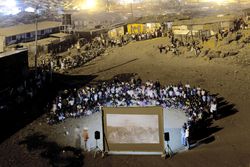
Italian documentary and architecture photographer Filippo Romano presents his ongoing study of Nairobi’s exploding slums. The city is represented through the many portraits of residents, workers and communities he captured, giving evidence of the built environment that shapes local urban cultures. The Learning From… series takes its title from Learning From Las Vegas(...)
Italian documentary and architecture photographer Filippo Romano presents his ongoing study of Nairobi’s exploding slums. The city is represented through the many portraits of residents, workers and communities he captured, giving evidence of the built environment that shapes local urban cultures. The Learning From… series takes its title from Learning From Las Vegas(...)
Location:
Paul-Desmarais Theatre
Paul-Desmarais Theatre
Date:
9 October 2014 , 6pm
9 October 2014 , 6pm
Title:
Learning from... Nairobi
Actions:
Description:
Italian documentary and architecture photographer Filippo Romano presents his ongoing study of Nairobi’s exploding slums. The city is represented through the many portraits of residents, workers and communities he captured, giving evidence of the built environment that shapes local urban cultures. The Learning From… series takes its title from Learning From Las Vegas(...)
Learning from... Nairobi
Actions:
Description:
Italian documentary and architecture photographer Filippo Romano presents his ongoing study of Nairobi’s exploding slums. The city is represented through the many portraits of residents, workers and communities he captured, giving evidence of the built environment that shapes local urban cultures. The Learning From… series takes its title from Learning From Las Vegas(...)
Form:
events
events
Date:
9 October 2014
6pm
9 October 2014
6pm
Location:
Paul-Desmarais Theatre
Paul-Desmarais Theatre
Form:
events
events
Actions:
Location:
Shaughnessy House, CCA Keyword(s):
Indigenous-led design, place-based practices, place-based knowledges, pedagogy, environment, climate crisis, on-the-land learning
Shaughnessy House, CCA Keyword(s):
Indigenous-led design, place-based practices, place-based knowledges, pedagogy, environment, climate crisis, on-the-land learning
Date:
24 February 2024, 2pm to 3:30pm
24 February 2024, 2pm to 3:30pm
Form:
events
events
Date:
24 February 2024
2pm to 3:30pm
24 February 2024
2pm to 3:30pm
Location:
Shaughnessy House, CCA Keyword(s):
Indigenous-led design, place-based practices, place-based knowledges, pedagogy, environment, climate crisis, on-the-land learning
Shaughnessy House, CCA Keyword(s):
Indigenous-led design, place-based practices, place-based knowledges, pedagogy, environment, climate crisis, on-the-land learning
Level of archival description:
Series
Series
Title:
Professional papers
Professional papers
Reference number:
AP206.S3
Description:
The Professional papers series, circa 1950-2008, records the professional activities of Aditya Prakash throughout his career up until his death in 2008. His work in architecture, art, photography, academia and theatre are documented through textual records, drawings, photographic materials, ephemera, books, serials and sound recordings. The earliest materials in this series show Prakash’s interest in architectural photography early in his career through photographs, slides, and negatives taken by him. These materials, dating from before 1970, show most prominently his projects, people, villages and cityscapes. Materials dating from after 1968 show Prakash’s move into academia and his solo architectural career. During this time, the records document Prakash’s research interests on subjects such as urbanization, Chandigarh, the Modular and the environment, through drawings, newspaper articles, government and committee reports, correspondence and presentation materials. Likewise, his teaching is recorded through overhead transparencies, drawings and notes. The series also shows Prakash’s involvement in the professional community, including event photographs, correspondence and records documenting conferences, events and his discussion group Our Get Togethers. Correspondence with architect Charles Correa and frequent letters between Prakash and writer Mulk Raj Anand are of note here. Apart from his architectural career, Prakash’s work as a modern artist is well recorded through drawings, sketchbooks, and photographic reproductions of his art, mostly dating from after 1980. His interest in art as well as his community involvement are documented through exhibition ephemera, correspondence, and exhibition reviews and writings on his artwork. His role as the president of the Lalit Kala Akademi is also documented through publications, event photographs and correspondence. Finally, Prakash’s involvement in theatre, specifically with his amateur theatre troop Abhinet, is captured through scripts, photographs of performances and play reviews.
AP206.S3
Description:
The Professional papers series, circa 1950-2008, records the professional activities of Aditya Prakash throughout his career up until his death in 2008. His work in architecture, art, photography, academia and theatre are documented through textual records, drawings, photographic materials, ephemera, books, serials and sound recordings. The earliest materials in this series show Prakash’s interest in architectural photography early in his career through photographs, slides, and negatives taken by him. These materials, dating from before 1970, show most prominently his projects, people, villages and cityscapes. Materials dating from after 1968 show Prakash’s move into academia and his solo architectural career. During this time, the records document Prakash’s research interests on subjects such as urbanization, Chandigarh, the Modular and the environment, through drawings, newspaper articles, government and committee reports, correspondence and presentation materials. Likewise, his teaching is recorded through overhead transparencies, drawings and notes. The series also shows Prakash’s involvement in the professional community, including event photographs, correspondence and records documenting conferences, events and his discussion group Our Get Togethers. Correspondence with architect Charles Correa and frequent letters between Prakash and writer Mulk Raj Anand are of note here. Apart from his architectural career, Prakash’s work as a modern artist is well recorded through drawings, sketchbooks, and photographic reproductions of his art, mostly dating from after 1980. His interest in art as well as his community involvement are documented through exhibition ephemera, correspondence, and exhibition reviews and writings on his artwork. His role as the president of the Lalit Kala Akademi is also documented through publications, event photographs and correspondence. Finally, Prakash’s involvement in theatre, specifically with his amateur theatre troop Abhinet, is captured through scripts, photographs of performances and play reviews.
People:
Date:
circa 1950-2008
circa 1950-2008
Title:
Professional papers
Actions:
AP206.S3
Description:
The Professional papers series, circa 1950-2008, records the professional activities of Aditya Prakash throughout his career up until his death in 2008. His work in architecture, art, photography, academia and theatre are documented through textual records, drawings, photographic materials, ephemera, books, serials and sound recordings. The earliest materials in this series show Prakash’s interest in architectural photography early in his career through photographs, slides, and negatives taken by him. These materials, dating from before 1970, show most prominently his projects, people, villages and cityscapes. Materials dating from after 1968 show Prakash’s move into academia and his solo architectural career. During this time, the records document Prakash’s research interests on subjects such as urbanization, Chandigarh, the Modular and the environment, through drawings, newspaper articles, government and committee reports, correspondence and presentation materials. Likewise, his teaching is recorded through overhead transparencies, drawings and notes. The series also shows Prakash’s involvement in the professional community, including event photographs, correspondence and records documenting conferences, events and his discussion group Our Get Togethers. Correspondence with architect Charles Correa and frequent letters between Prakash and writer Mulk Raj Anand are of note here. Apart from his architectural career, Prakash’s work as a modern artist is well recorded through drawings, sketchbooks, and photographic reproductions of his art, mostly dating from after 1980. His interest in art as well as his community involvement are documented through exhibition ephemera, correspondence, and exhibition reviews and writings on his artwork. His role as the president of the Lalit Kala Akademi is also documented through publications, event photographs and correspondence. Finally, Prakash’s involvement in theatre, specifically with his amateur theatre troop Abhinet, is captured through scripts, photographs of performances and play reviews.
Professional papers
Actions:
AP206.S3
Description:
The Professional papers series, circa 1950-2008, records the professional activities of Aditya Prakash throughout his career up until his death in 2008. His work in architecture, art, photography, academia and theatre are documented through textual records, drawings, photographic materials, ephemera, books, serials and sound recordings. The earliest materials in this series show Prakash’s interest in architectural photography early in his career through photographs, slides, and negatives taken by him. These materials, dating from before 1970, show most prominently his projects, people, villages and cityscapes. Materials dating from after 1968 show Prakash’s move into academia and his solo architectural career. During this time, the records document Prakash’s research interests on subjects such as urbanization, Chandigarh, the Modular and the environment, through drawings, newspaper articles, government and committee reports, correspondence and presentation materials. Likewise, his teaching is recorded through overhead transparencies, drawings and notes. The series also shows Prakash’s involvement in the professional community, including event photographs, correspondence and records documenting conferences, events and his discussion group Our Get Togethers. Correspondence with architect Charles Correa and frequent letters between Prakash and writer Mulk Raj Anand are of note here. Apart from his architectural career, Prakash’s work as a modern artist is well recorded through drawings, sketchbooks, and photographic reproductions of his art, mostly dating from after 1980. His interest in art as well as his community involvement are documented through exhibition ephemera, correspondence, and exhibition reviews and writings on his artwork. His role as the president of the Lalit Kala Akademi is also documented through publications, event photographs and correspondence. Finally, Prakash’s involvement in theatre, specifically with his amateur theatre troop Abhinet, is captured through scripts, photographs of performances and play reviews.
Level of archival description:
Series
Series
Date:
circa 1950-2008
circa 1950-2008
People:
Form:
exhibitions
exhibitions
Description:
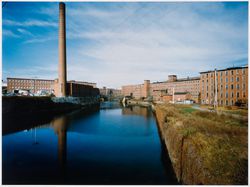
Commissioned by the CCA, for three years, French photographer Serge Hambourg recorded over four hundred historic mills and factories throughout New England. By capturing their surroundings as well as by focusing on the stark beauty of their interiors and exteriors, the images trace the evolution of this building type. The photographs included in the exhibition range from(...)
Commissioned by the CCA, for three years, French photographer Serge Hambourg recorded over four hundred historic mills and factories throughout New England. By capturing their surroundings as well as by focusing on the stark beauty of their interiors and exteriors, the images trace the evolution of this building type. The photographs included in the exhibition range from(...)
Location:
Octagonal gallery ante-room
Octagonal gallery ante-room
Date:
6 December 1989 to 11 February 1990
6 December 1989 to 11 February 1990
Title:
Mills and Factories of New England: Photographs by Serge Hambourg
Actions:
Description:
Commissioned by the CCA, for three years, French photographer Serge Hambourg recorded over four hundred historic mills and factories throughout New England. By capturing their surroundings as well as by focusing on the stark beauty of their interiors and exteriors, the images trace the evolution of this building type. The photographs included in the exhibition range from(...)
Mills and Factories of New England: Photographs by Serge Hambourg
Actions:
Description:
Commissioned by the CCA, for three years, French photographer Serge Hambourg recorded over four hundred historic mills and factories throughout New England. By capturing their surroundings as well as by focusing on the stark beauty of their interiors and exteriors, the images trace the evolution of this building type. The photographs included in the exhibition range from(...)
Form:
exhibitions
exhibitions
Date:
6 December 1989 to
11 February 1990
6 December 1989 to
11 February 1990
Location:
Octagonal gallery ante-room
Octagonal gallery ante-room
Level of archival description:
Series
Series
Title:
Architectural projects
Architectural projects
Reference number:
AP166.S1
Description:
Series 1, Architectural Projects (1990-2012, predominant 1990-1996) contains files for seven projects developed by Shoei Yoh and the firm Shoei Yoh + Architects. Six of these projects were developed during the period 1990-1996 in Japan. The Galaxy Toyama Gymnasium in Imizu, Toyama Prefecture, Japan, is the most voluminous project file and is related to two other projects in the series—the Odawara Municipal Sports Complex and the Prospecta Toyama ’92 Observatory Tower. The Odawara Municipal Sports Complex and the Galaxy Toyama Gymnasium were developed at approximately the same time, and, for both projects, digital technology was used to calculate the dimensions of elements in a space frame roof structure. The Galaxy Toyama Gymnasium and the Prospecta Toyama ’92 Observatory Tower were both designed by Shoei Yoh for the 1st Japan Expo Toyama ’92 (JET ‘92) and each of the two project files contains some material related to the other. The Galaxy Toyama Gymnasium project contains CAD files related to the roof design, printouts from computer simulations of the roof, design drawings, presentation material, architectural and structural working drawings, models and textual records. The project file for the Odawara Municipal Sports Complex contains some design drawings--including printouts from computer simulations of the roof, proposal documents and some photographs of the site. The other built projects—the Prospecta Toyama ’92 Observatory Tower, the Glass Station, the Naiju Community Center and Nursery School, and the Uchino Community Center for Seniors and Children—are documented through drawings, models, and photographic material. The final project file in the series--a project for a tower in Taichung, Taiwan—is composed of a few presentation documents. Drawings in the series include hand drawings and printouts or photocopies of images created using digital design software. Apart from the CAD files related to the roof design for the Galaxy Toyama Gymnasium, digital material in the series is composed of still images in .jpg format related to the projects for the Odawara Municipal Sports Complex and the Galaxy Toyama Gymnasium. Some of the documents in .jpg format are duplicates of paper documents in the series.
AP166.S1
Description:
Series 1, Architectural Projects (1990-2012, predominant 1990-1996) contains files for seven projects developed by Shoei Yoh and the firm Shoei Yoh + Architects. Six of these projects were developed during the period 1990-1996 in Japan. The Galaxy Toyama Gymnasium in Imizu, Toyama Prefecture, Japan, is the most voluminous project file and is related to two other projects in the series—the Odawara Municipal Sports Complex and the Prospecta Toyama ’92 Observatory Tower. The Odawara Municipal Sports Complex and the Galaxy Toyama Gymnasium were developed at approximately the same time, and, for both projects, digital technology was used to calculate the dimensions of elements in a space frame roof structure. The Galaxy Toyama Gymnasium and the Prospecta Toyama ’92 Observatory Tower were both designed by Shoei Yoh for the 1st Japan Expo Toyama ’92 (JET ‘92) and each of the two project files contains some material related to the other. The Galaxy Toyama Gymnasium project contains CAD files related to the roof design, printouts from computer simulations of the roof, design drawings, presentation material, architectural and structural working drawings, models and textual records. The project file for the Odawara Municipal Sports Complex contains some design drawings--including printouts from computer simulations of the roof, proposal documents and some photographs of the site. The other built projects—the Prospecta Toyama ’92 Observatory Tower, the Glass Station, the Naiju Community Center and Nursery School, and the Uchino Community Center for Seniors and Children—are documented through drawings, models, and photographic material. The final project file in the series--a project for a tower in Taichung, Taiwan—is composed of a few presentation documents. Drawings in the series include hand drawings and printouts or photocopies of images created using digital design software. Apart from the CAD files related to the roof design for the Galaxy Toyama Gymnasium, digital material in the series is composed of still images in .jpg format related to the projects for the Odawara Municipal Sports Complex and the Galaxy Toyama Gymnasium. Some of the documents in .jpg format are duplicates of paper documents in the series.
People:
Date:
1990-2012, predominant 1990-1996
1990-2012, predominant 1990-1996
Title:
Architectural projects
Actions:
AP166.S1
Description:
Series 1, Architectural Projects (1990-2012, predominant 1990-1996) contains files for seven projects developed by Shoei Yoh and the firm Shoei Yoh + Architects. Six of these projects were developed during the period 1990-1996 in Japan. The Galaxy Toyama Gymnasium in Imizu, Toyama Prefecture, Japan, is the most voluminous project file and is related to two other projects in the series—the Odawara Municipal Sports Complex and the Prospecta Toyama ’92 Observatory Tower. The Odawara Municipal Sports Complex and the Galaxy Toyama Gymnasium were developed at approximately the same time, and, for both projects, digital technology was used to calculate the dimensions of elements in a space frame roof structure. The Galaxy Toyama Gymnasium and the Prospecta Toyama ’92 Observatory Tower were both designed by Shoei Yoh for the 1st Japan Expo Toyama ’92 (JET ‘92) and each of the two project files contains some material related to the other. The Galaxy Toyama Gymnasium project contains CAD files related to the roof design, printouts from computer simulations of the roof, design drawings, presentation material, architectural and structural working drawings, models and textual records. The project file for the Odawara Municipal Sports Complex contains some design drawings--including printouts from computer simulations of the roof, proposal documents and some photographs of the site. The other built projects—the Prospecta Toyama ’92 Observatory Tower, the Glass Station, the Naiju Community Center and Nursery School, and the Uchino Community Center for Seniors and Children—are documented through drawings, models, and photographic material. The final project file in the series--a project for a tower in Taichung, Taiwan—is composed of a few presentation documents. Drawings in the series include hand drawings and printouts or photocopies of images created using digital design software. Apart from the CAD files related to the roof design for the Galaxy Toyama Gymnasium, digital material in the series is composed of still images in .jpg format related to the projects for the Odawara Municipal Sports Complex and the Galaxy Toyama Gymnasium. Some of the documents in .jpg format are duplicates of paper documents in the series.
Architectural projects
Actions:
AP166.S1
Description:
Series 1, Architectural Projects (1990-2012, predominant 1990-1996) contains files for seven projects developed by Shoei Yoh and the firm Shoei Yoh + Architects. Six of these projects were developed during the period 1990-1996 in Japan. The Galaxy Toyama Gymnasium in Imizu, Toyama Prefecture, Japan, is the most voluminous project file and is related to two other projects in the series—the Odawara Municipal Sports Complex and the Prospecta Toyama ’92 Observatory Tower. The Odawara Municipal Sports Complex and the Galaxy Toyama Gymnasium were developed at approximately the same time, and, for both projects, digital technology was used to calculate the dimensions of elements in a space frame roof structure. The Galaxy Toyama Gymnasium and the Prospecta Toyama ’92 Observatory Tower were both designed by Shoei Yoh for the 1st Japan Expo Toyama ’92 (JET ‘92) and each of the two project files contains some material related to the other. The Galaxy Toyama Gymnasium project contains CAD files related to the roof design, printouts from computer simulations of the roof, design drawings, presentation material, architectural and structural working drawings, models and textual records. The project file for the Odawara Municipal Sports Complex contains some design drawings--including printouts from computer simulations of the roof, proposal documents and some photographs of the site. The other built projects—the Prospecta Toyama ’92 Observatory Tower, the Glass Station, the Naiju Community Center and Nursery School, and the Uchino Community Center for Seniors and Children—are documented through drawings, models, and photographic material. The final project file in the series--a project for a tower in Taichung, Taiwan—is composed of a few presentation documents. Drawings in the series include hand drawings and printouts or photocopies of images created using digital design software. Apart from the CAD files related to the roof design for the Galaxy Toyama Gymnasium, digital material in the series is composed of still images in .jpg format related to the projects for the Odawara Municipal Sports Complex and the Galaxy Toyama Gymnasium. Some of the documents in .jpg format are duplicates of paper documents in the series.
Level of archival description:
series
series
Date:
1990-2012, predominant 1990-1996
1990-2012, predominant 1990-1996
People:
Form:
articles
articles
Actions:
Published:
3 November 2025
3 November 2025
Form:
webpages
webpages
Title:
CCA Research Network
CCA Research Network
Actions:
Summary:
Members of the Research Network are part of an inclusive community that will comes together to listen, learn, and exchange around research questions that matter to them.
Title:
CCA Research Network
Actions:
Summary:
CCA Research Network
Actions:
Summary:
Members of the Research Network are part of an inclusive community that will comes together to listen, learn, and exchange around research questions that matter to them.
Form:
webpages
webpages
Form:
articles
articles
Title:
Pictorial Storytelling
Pictorial Storytelling
Actions:
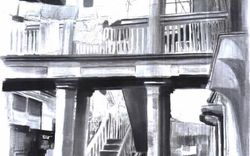
Warebi Gabriel Brisibe and Ramota Obagah-Stephen propose “other” research methods on colonial housing
Title:
Pictorial Storytelling
Warebi Gabriel Brisibe and Ramota Obagah-Stephen propose “other” research methods on colonial housing
Actions:
Pictorial Storytelling
Warebi Gabriel Brisibe and Ramota Obagah-Stephen propose “other” research methods on colonial housing
Actions:
Form:
events
events
Title:
Inter / Faces
Inter / Faces
Actions:
Description:
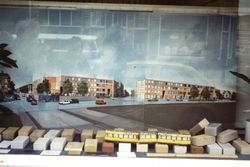
How can architecture respond to a specific urban context? How can the various typologies and cultural needs of diverse inhabitants influence design? How to capture the character of a city through its buildings? Portuguese architect Álvaro Siza’s social housing projects Bonjour Tristesse and Punt en Komma, designed for immigrant communities in Berlin and The Hague(...)
How can architecture respond to a specific urban context? How can the various typologies and cultural needs of diverse inhabitants influence design? How to capture the character of a city through its buildings? Portuguese architect Álvaro Siza’s social housing projects Bonjour Tristesse and Punt en Komma, designed for immigrant communities in Berlin and The Hague(...)
Date:
29 November 2015, 2:30pm - 4:30pm
29 November 2015, 2:30pm - 4:30pm
Title:
Inter / Faces
Actions:
Description:
How can architecture respond to a specific urban context? How can the various typologies and cultural needs of diverse inhabitants influence design? How to capture the character of a city through its buildings? Portuguese architect Álvaro Siza’s social housing projects Bonjour Tristesse and Punt en Komma, designed for immigrant communities in Berlin and The Hague(...)
Inter / Faces
Actions:
Description:
How can architecture respond to a specific urban context? How can the various typologies and cultural needs of diverse inhabitants influence design? How to capture the character of a city through its buildings? Portuguese architect Álvaro Siza’s social housing projects Bonjour Tristesse and Punt en Komma, designed for immigrant communities in Berlin and The Hague(...)
Form:
events
events
Date:
29 November 2015
2:30pm - 4:30pm
29 November 2015
2:30pm - 4:30pm
Form:
events
events
Description:
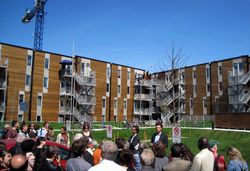
L’OEUF (Daniel Pearl, Bernard Olivier, and Sudhir Suri) is a Montreal-based architectural practice founded in 1992. Toronto architect Joe Lobko and Florence Portes, chef des services aux femmes at the Mission Old Brewery in Montreal, will join L’OEUF in a conversation on their book Community Inspired Housing in Canada. Co-edited with Daniel Wentz and published by the(...)
L’OEUF (Daniel Pearl, Bernard Olivier, and Sudhir Suri) is a Montreal-based architectural practice founded in 1992. Toronto architect Joe Lobko and Florence Portes, chef des services aux femmes at the Mission Old Brewery in Montreal, will join L’OEUF in a conversation on their book Community Inspired Housing in Canada. Co-edited with Daniel Wentz and published by the(...)
Date:
29 January 2015 , 6pm
29 January 2015 , 6pm
Title:
L’OEUF, Joe Lobko, and Florence Portes want to speak with you
Actions:
Description:
L’OEUF (Daniel Pearl, Bernard Olivier, and Sudhir Suri) is a Montreal-based architectural practice founded in 1992. Toronto architect Joe Lobko and Florence Portes, chef des services aux femmes at the Mission Old Brewery in Montreal, will join L’OEUF in a conversation on their book Community Inspired Housing in Canada. Co-edited with Daniel Wentz and published by the(...)
L’OEUF, Joe Lobko, and Florence Portes want to speak with you
Actions:
Description:
L’OEUF (Daniel Pearl, Bernard Olivier, and Sudhir Suri) is a Montreal-based architectural practice founded in 1992. Toronto architect Joe Lobko and Florence Portes, chef des services aux femmes at the Mission Old Brewery in Montreal, will join L’OEUF in a conversation on their book Community Inspired Housing in Canada. Co-edited with Daniel Wentz and published by the(...)
Form:
events
events
Date:
29 January 2015
6pm
29 January 2015
6pm


