


1598 Results
Level of archival description:
Project
Project
Title:
Proposal for Regina Hotel
Proposal for Regina Hotel
Actions:
Reference number:
AP013.S1.D92
Description:
File documents an unexecuted project for a hotel in Regina, Saskatchewan. Material in this file was produced in 1923. File contains preliminary drawings.
AP013.S1.D92
Description:
File documents an unexecuted project for a hotel in Regina, Saskatchewan. Material in this file was produced in 1923. File contains preliminary drawings.
People:
Date:
1923
1923
Title:
Proposal for Regina Hotel
Actions:
AP013.S1.D92
Description:
File documents an unexecuted project for a hotel in Regina, Saskatchewan. Material in this file was produced in 1923. File contains preliminary drawings.
Proposal for Regina Hotel
Actions:
AP013.S1.D92
Description:
File documents an unexecuted project for a hotel in Regina, Saskatchewan. Material in this file was produced in 1923. File contains preliminary drawings.
Level of archival description:
Project
Project
Date:
1923
1923
People:
Form:
archives
Level of archival description:
Fonds
archives
Level of archival description:
Fonds
Actions:
Reference number:
AP218
Synopsis:
The Gillian Hopwood and John Godwin fonds documents Hopwood and Godwin’s architectural projects from the early 1950s to the late 1980s, as well as their training to become architects, the administration of their architecture practice, and their career as architectural consultants, and their writing from the 1940s to 2023. The fonds mostly contains material related to their architectural projects, over 450 of them, mostly in Nigeria and some from their practice in the United Kingdom.
AP218
Synopsis:
The Gillian Hopwood and John Godwin fonds documents Hopwood and Godwin’s architectural projects from the early 1950s to the late 1980s, as well as their training to become architects, the administration of their architecture practice, and their career as architectural consultants, and their writing from the 1940s to 2023. The fonds mostly contains material related to their architectural projects, over 450 of them, mostly in Nigeria and some from their practice in the United Kingdom.
People:
Date:
1940-2025
1940-2025
Title:
Gillian Hopwood and John Godwin fonds
Actions:
AP218
Synopsis:
The Gillian Hopwood and John Godwin fonds documents Hopwood and Godwin’s architectural projects from the early 1950s to the late 1980s, as well as their training to become architects, the administration of their architecture practice, and their career as architectural consultants, and their writing from the 1940s to 2023. The fonds mostly contains material related to their architectural projects, over 450 of them, mostly in Nigeria and some from their practice in the United Kingdom.
Gillian Hopwood and John Godwin fonds
Actions:
AP218
Synopsis:
The Gillian Hopwood and John Godwin fonds documents Hopwood and Godwin’s architectural projects from the early 1950s to the late 1980s, as well as their training to become architects, the administration of their architecture practice, and their career as architectural consultants, and their writing from the 1940s to 2023. The fonds mostly contains material related to their architectural projects, over 450 of them, mostly in Nigeria and some from their practice in the United Kingdom.
Form:
archives
Level of archival description:
Fonds
archives
Level of archival description:
Fonds
Date:
1940-2025
1940-2025
People:
Form:
textual records
textual records
Actions:
Reference number:
DR2004:1309
Description:
annual reports, notes, correspondence, office memoranda, brochure, reports, pamphlets, clippings, subscription forms, publication, presentation document, and promotional material, with regards to work, possibly for Union Railways Limited, Network Technical Centre, and also contains material for Rink (AP144.S2.D160)
DR2004:1309
Description:
annual reports, notes, correspondence, office memoranda, brochure, reports, pamphlets, clippings, subscription forms, publication, presentation document, and promotional material, with regards to work, possibly for Union Railways Limited, Network Technical Centre, and also contains material for Rink (AP144.S2.D160)
People:
Date:
1992-1993
1992-1993
Title:
Annual reports, notes, correspondence, office memoranda
Actions:
DR2004:1309
Description:
annual reports, notes, correspondence, office memoranda, brochure, reports, pamphlets, clippings, subscription forms, publication, presentation document, and promotional material, with regards to work, possibly for Union Railways Limited, Network Technical Centre, and also contains material for Rink (AP144.S2.D160)
Annual reports, notes, correspondence, office memoranda
Actions:
DR2004:1309
Description:
annual reports, notes, correspondence, office memoranda, brochure, reports, pamphlets, clippings, subscription forms, publication, presentation document, and promotional material, with regards to work, possibly for Union Railways Limited, Network Technical Centre, and also contains material for Rink (AP144.S2.D160)
Form:
textual records
textual records
Date:
1992-1993
1992-1993
People:
Level of archival description:
Series
Series
Title:
Projects
Projects
Reference number:
AP144.S2
Description:
Series documents Cedric Price's projects from his early work in the late 1950s to work dating from the time he founded his own practice in 1960 until 2000. Material includes numerous competition entries, planning and building projects, transportation-related projects, exhibitions, conceptual projects, furniture and interior designs, and monuments, follies, and decorations. Some projects also reflect his teaching, research, lecture and publication activities. Price also worked on several competition juries (see projects Musique, Elephant). Many of Cedric Price's projects in the series are unexecuted. Significant unrealized projects from the 1960s and 1970s include Fun Palace (1961-1974), Potteries Thinkbelt (1963-1967), Oxford Corner House (1965-1966), and Generator (1976-1980). Significant built projects from the same period include the New Aviary (1960-1966), his first major realized project (with Lord Snowdon and Frank Newby), and Inter-Action Centre (1971-1979). Other realized projects include an office building (BTDB Computer, 1968-1973) and restaurant (Blackpool Project, 1971-1975). Planning projects from the 1960s and 1970s include Potteries Thinkbelt, Detroit Think Grid (1969-1971) and Rice University's design charette, Atom (1967). In the 1980s and 1990s, Cedric Price worked on several building proposals including greenhouses (Serre, Serre (2)), museums, galleries, and pavilions (Trafalgar, Pertpavs, Snake), a railway station (Strate (2)), a cultural centre (Tiff), houses (Perthut, Castel), a bus station (Walsall), an aviary (CP Aviary) and office buildings (Domain, Berlin). Planning projects from the same time include parks and cultural complexes, (Parc, South Bank), urban areas, (Strate, Stratton, IFPRI, Haven, Mills), university campuses (Frankfurt, Unibad, Bedford), and rural areas (Stark, Arkage). Transportation-related projects include railways (Strate, Control, Rink), roadways (Stratton) and pedestrian links (Magnet, Halmag, South Bank). Only a few of his projects from that period were executed and those include the renovation projects Congress and SAS 29; a mobile market stall design for Westminster City Council (Westal) for which prototypes were built; a coffee cup design (Crowbar); and building conversion projects Gatard and Juke. Exhibition projects in the series include some devoted to Cedric Price's works (AA Exhibition, Aedes, AFX, Afella), some designed by him (Strike, Food for the Future, Topolski/Waterloo, Ashmole, Mean, AFX), as well as projects designed for exhibition (Citlin, Castel). The series also contains self-financed research and client-less projects, which form a significant part of Cedric Price's practice. Undertaken in anticipation of future clients or new planning needs, they include research into air structures and lightweight enclosures as well as integrated construction and transportation solutions (Trucksafe Air Portable Dock Ahoy), and housing research. South Bank, Magnet, and Duck Land represent a few of the client-less projects. The material in this series documents Cedric Price's work in the United Kingdom, in particular England (the Greater London area, and other areas) and Scotland, Germany, France, Austria, Australia, Japan, the United Arab Emirates, and the United States and other locations such as Canada, Nigeria, and Norway. Major clients include J. Lyons & Co. (Oxford Corner House), David Keddie (Two Tree Island, Southend Roof), Howard Gilman (Generator), British Railways (Strate and Strate (2), and others), the McAlpine family , particularly Alistair McAlpine, and their company Sir Robert McAlpine & Sons Ltd. (McAppy, Perthut, Trafalgar, Pertpavs, Ashmole, Perth, Obeliq, McVance); Établissement Public du Parc de la Villette (Parc, Serre, Serre (2), Musique) and the Canadian Centre for Architecture (IFPRI, Mean). He collaborated with several architects and engineers during the course of his career, his closest association being with engineer Frank Newby and quantity surveyor Douglas Smith. Some of his other collaborators include engineer Max Fordham (Strate (2), Tiff, Berlin), engineering firms Scott Wilson Kirkpatrick and Partners (Stratton, Rink, Control), and Sir Frederick Snow & Partners (South Bank), cybernetician Gordon Pask (Kawasaki/Japnet), architectural firm YRM/Yorke Rosenberg Mardall (Unibad), and architect Richard Rogers (Marman). He also collaborated with members of Archigram on the Trondheim Competition, (1972-1974), and with John and Julia Frazer who provided the computer modelling for Generator. David Price, Cedric Price's brother was the model maker for several projects. The series contains conceptual drawings, design development drawings, reference drawings and maps, presentation drawings (particularly for competitions), and working drawings. A significant amount of textual records are included, especially for projects involving a large amount of research or publicity (Air Structures, Lightweight Enclosures, South Bank, CP Aviary, Stratton), for executed projects, and for the larger unrealized projects like Fun Palace and Generator. Also includes photographic materials of project sites and models. Some models included in the series are made from durable materials (wood, metal, plastic), while others are in-office constructions made out of paper, cardboard and Fome-Cor (TM). Of particular note are the 11 models for Magnet, and a full-size prototype of a market stall for Westal. Series also contains publication layouts, including material for the "Cedric Price Supplement", 'Architectural Design' vols. 40- 42 (1970-1972). Changes in office practice are noted around 1971, evident in the Blackpool Project and later, including the adoption of the metric system, and the creation of working and detail drawings on A4 size paper and filed with textual records (e.g. approximately 300 such drawings are included in the textual records for Blackpool Project). At the same time fewer preamble drawings that relate to site sensing, progress and life-cycle graphs and tables are created for the projects (a common feature from the 1960s), although project progress tables are still used. Of particular interest is material in the Early Work and Miscellaneous Records file (AP144.S2.D1) that relates to office work methods and programmes.
AP144.S2
Description:
Series documents Cedric Price's projects from his early work in the late 1950s to work dating from the time he founded his own practice in 1960 until 2000. Material includes numerous competition entries, planning and building projects, transportation-related projects, exhibitions, conceptual projects, furniture and interior designs, and monuments, follies, and decorations. Some projects also reflect his teaching, research, lecture and publication activities. Price also worked on several competition juries (see projects Musique, Elephant). Many of Cedric Price's projects in the series are unexecuted. Significant unrealized projects from the 1960s and 1970s include Fun Palace (1961-1974), Potteries Thinkbelt (1963-1967), Oxford Corner House (1965-1966), and Generator (1976-1980). Significant built projects from the same period include the New Aviary (1960-1966), his first major realized project (with Lord Snowdon and Frank Newby), and Inter-Action Centre (1971-1979). Other realized projects include an office building (BTDB Computer, 1968-1973) and restaurant (Blackpool Project, 1971-1975). Planning projects from the 1960s and 1970s include Potteries Thinkbelt, Detroit Think Grid (1969-1971) and Rice University's design charette, Atom (1967). In the 1980s and 1990s, Cedric Price worked on several building proposals including greenhouses (Serre, Serre (2)), museums, galleries, and pavilions (Trafalgar, Pertpavs, Snake), a railway station (Strate (2)), a cultural centre (Tiff), houses (Perthut, Castel), a bus station (Walsall), an aviary (CP Aviary) and office buildings (Domain, Berlin). Planning projects from the same time include parks and cultural complexes, (Parc, South Bank), urban areas, (Strate, Stratton, IFPRI, Haven, Mills), university campuses (Frankfurt, Unibad, Bedford), and rural areas (Stark, Arkage). Transportation-related projects include railways (Strate, Control, Rink), roadways (Stratton) and pedestrian links (Magnet, Halmag, South Bank). Only a few of his projects from that period were executed and those include the renovation projects Congress and SAS 29; a mobile market stall design for Westminster City Council (Westal) for which prototypes were built; a coffee cup design (Crowbar); and building conversion projects Gatard and Juke. Exhibition projects in the series include some devoted to Cedric Price's works (AA Exhibition, Aedes, AFX, Afella), some designed by him (Strike, Food for the Future, Topolski/Waterloo, Ashmole, Mean, AFX), as well as projects designed for exhibition (Citlin, Castel). The series also contains self-financed research and client-less projects, which form a significant part of Cedric Price's practice. Undertaken in anticipation of future clients or new planning needs, they include research into air structures and lightweight enclosures as well as integrated construction and transportation solutions (Trucksafe Air Portable Dock Ahoy), and housing research. South Bank, Magnet, and Duck Land represent a few of the client-less projects. The material in this series documents Cedric Price's work in the United Kingdom, in particular England (the Greater London area, and other areas) and Scotland, Germany, France, Austria, Australia, Japan, the United Arab Emirates, and the United States and other locations such as Canada, Nigeria, and Norway. Major clients include J. Lyons & Co. (Oxford Corner House), David Keddie (Two Tree Island, Southend Roof), Howard Gilman (Generator), British Railways (Strate and Strate (2), and others), the McAlpine family , particularly Alistair McAlpine, and their company Sir Robert McAlpine & Sons Ltd. (McAppy, Perthut, Trafalgar, Pertpavs, Ashmole, Perth, Obeliq, McVance); Établissement Public du Parc de la Villette (Parc, Serre, Serre (2), Musique) and the Canadian Centre for Architecture (IFPRI, Mean). He collaborated with several architects and engineers during the course of his career, his closest association being with engineer Frank Newby and quantity surveyor Douglas Smith. Some of his other collaborators include engineer Max Fordham (Strate (2), Tiff, Berlin), engineering firms Scott Wilson Kirkpatrick and Partners (Stratton, Rink, Control), and Sir Frederick Snow & Partners (South Bank), cybernetician Gordon Pask (Kawasaki/Japnet), architectural firm YRM/Yorke Rosenberg Mardall (Unibad), and architect Richard Rogers (Marman). He also collaborated with members of Archigram on the Trondheim Competition, (1972-1974), and with John and Julia Frazer who provided the computer modelling for Generator. David Price, Cedric Price's brother was the model maker for several projects. The series contains conceptual drawings, design development drawings, reference drawings and maps, presentation drawings (particularly for competitions), and working drawings. A significant amount of textual records are included, especially for projects involving a large amount of research or publicity (Air Structures, Lightweight Enclosures, South Bank, CP Aviary, Stratton), for executed projects, and for the larger unrealized projects like Fun Palace and Generator. Also includes photographic materials of project sites and models. Some models included in the series are made from durable materials (wood, metal, plastic), while others are in-office constructions made out of paper, cardboard and Fome-Cor (TM). Of particular note are the 11 models for Magnet, and a full-size prototype of a market stall for Westal. Series also contains publication layouts, including material for the "Cedric Price Supplement", 'Architectural Design' vols. 40- 42 (1970-1972). Changes in office practice are noted around 1971, evident in the Blackpool Project and later, including the adoption of the metric system, and the creation of working and detail drawings on A4 size paper and filed with textual records (e.g. approximately 300 such drawings are included in the textual records for Blackpool Project). At the same time fewer preamble drawings that relate to site sensing, progress and life-cycle graphs and tables are created for the projects (a common feature from the 1960s), although project progress tables are still used. Of particular interest is material in the Early Work and Miscellaneous Records file (AP144.S2.D1) that relates to office work methods and programmes.
People:
Date:
1903-2003, predominant 1960-2000
1903-2003, predominant 1960-2000
Title:
Projects
Actions:
AP144.S2
Description:
Series documents Cedric Price's projects from his early work in the late 1950s to work dating from the time he founded his own practice in 1960 until 2000. Material includes numerous competition entries, planning and building projects, transportation-related projects, exhibitions, conceptual projects, furniture and interior designs, and monuments, follies, and decorations. Some projects also reflect his teaching, research, lecture and publication activities. Price also worked on several competition juries (see projects Musique, Elephant). Many of Cedric Price's projects in the series are unexecuted. Significant unrealized projects from the 1960s and 1970s include Fun Palace (1961-1974), Potteries Thinkbelt (1963-1967), Oxford Corner House (1965-1966), and Generator (1976-1980). Significant built projects from the same period include the New Aviary (1960-1966), his first major realized project (with Lord Snowdon and Frank Newby), and Inter-Action Centre (1971-1979). Other realized projects include an office building (BTDB Computer, 1968-1973) and restaurant (Blackpool Project, 1971-1975). Planning projects from the 1960s and 1970s include Potteries Thinkbelt, Detroit Think Grid (1969-1971) and Rice University's design charette, Atom (1967). In the 1980s and 1990s, Cedric Price worked on several building proposals including greenhouses (Serre, Serre (2)), museums, galleries, and pavilions (Trafalgar, Pertpavs, Snake), a railway station (Strate (2)), a cultural centre (Tiff), houses (Perthut, Castel), a bus station (Walsall), an aviary (CP Aviary) and office buildings (Domain, Berlin). Planning projects from the same time include parks and cultural complexes, (Parc, South Bank), urban areas, (Strate, Stratton, IFPRI, Haven, Mills), university campuses (Frankfurt, Unibad, Bedford), and rural areas (Stark, Arkage). Transportation-related projects include railways (Strate, Control, Rink), roadways (Stratton) and pedestrian links (Magnet, Halmag, South Bank). Only a few of his projects from that period were executed and those include the renovation projects Congress and SAS 29; a mobile market stall design for Westminster City Council (Westal) for which prototypes were built; a coffee cup design (Crowbar); and building conversion projects Gatard and Juke. Exhibition projects in the series include some devoted to Cedric Price's works (AA Exhibition, Aedes, AFX, Afella), some designed by him (Strike, Food for the Future, Topolski/Waterloo, Ashmole, Mean, AFX), as well as projects designed for exhibition (Citlin, Castel). The series also contains self-financed research and client-less projects, which form a significant part of Cedric Price's practice. Undertaken in anticipation of future clients or new planning needs, they include research into air structures and lightweight enclosures as well as integrated construction and transportation solutions (Trucksafe Air Portable Dock Ahoy), and housing research. South Bank, Magnet, and Duck Land represent a few of the client-less projects. The material in this series documents Cedric Price's work in the United Kingdom, in particular England (the Greater London area, and other areas) and Scotland, Germany, France, Austria, Australia, Japan, the United Arab Emirates, and the United States and other locations such as Canada, Nigeria, and Norway. Major clients include J. Lyons & Co. (Oxford Corner House), David Keddie (Two Tree Island, Southend Roof), Howard Gilman (Generator), British Railways (Strate and Strate (2), and others), the McAlpine family , particularly Alistair McAlpine, and their company Sir Robert McAlpine & Sons Ltd. (McAppy, Perthut, Trafalgar, Pertpavs, Ashmole, Perth, Obeliq, McVance); Établissement Public du Parc de la Villette (Parc, Serre, Serre (2), Musique) and the Canadian Centre for Architecture (IFPRI, Mean). He collaborated with several architects and engineers during the course of his career, his closest association being with engineer Frank Newby and quantity surveyor Douglas Smith. Some of his other collaborators include engineer Max Fordham (Strate (2), Tiff, Berlin), engineering firms Scott Wilson Kirkpatrick and Partners (Stratton, Rink, Control), and Sir Frederick Snow & Partners (South Bank), cybernetician Gordon Pask (Kawasaki/Japnet), architectural firm YRM/Yorke Rosenberg Mardall (Unibad), and architect Richard Rogers (Marman). He also collaborated with members of Archigram on the Trondheim Competition, (1972-1974), and with John and Julia Frazer who provided the computer modelling for Generator. David Price, Cedric Price's brother was the model maker for several projects. The series contains conceptual drawings, design development drawings, reference drawings and maps, presentation drawings (particularly for competitions), and working drawings. A significant amount of textual records are included, especially for projects involving a large amount of research or publicity (Air Structures, Lightweight Enclosures, South Bank, CP Aviary, Stratton), for executed projects, and for the larger unrealized projects like Fun Palace and Generator. Also includes photographic materials of project sites and models. Some models included in the series are made from durable materials (wood, metal, plastic), while others are in-office constructions made out of paper, cardboard and Fome-Cor (TM). Of particular note are the 11 models for Magnet, and a full-size prototype of a market stall for Westal. Series also contains publication layouts, including material for the "Cedric Price Supplement", 'Architectural Design' vols. 40- 42 (1970-1972). Changes in office practice are noted around 1971, evident in the Blackpool Project and later, including the adoption of the metric system, and the creation of working and detail drawings on A4 size paper and filed with textual records (e.g. approximately 300 such drawings are included in the textual records for Blackpool Project). At the same time fewer preamble drawings that relate to site sensing, progress and life-cycle graphs and tables are created for the projects (a common feature from the 1960s), although project progress tables are still used. Of particular interest is material in the Early Work and Miscellaneous Records file (AP144.S2.D1) that relates to office work methods and programmes.
Projects
Actions:
AP144.S2
Description:
Series documents Cedric Price's projects from his early work in the late 1950s to work dating from the time he founded his own practice in 1960 until 2000. Material includes numerous competition entries, planning and building projects, transportation-related projects, exhibitions, conceptual projects, furniture and interior designs, and monuments, follies, and decorations. Some projects also reflect his teaching, research, lecture and publication activities. Price also worked on several competition juries (see projects Musique, Elephant). Many of Cedric Price's projects in the series are unexecuted. Significant unrealized projects from the 1960s and 1970s include Fun Palace (1961-1974), Potteries Thinkbelt (1963-1967), Oxford Corner House (1965-1966), and Generator (1976-1980). Significant built projects from the same period include the New Aviary (1960-1966), his first major realized project (with Lord Snowdon and Frank Newby), and Inter-Action Centre (1971-1979). Other realized projects include an office building (BTDB Computer, 1968-1973) and restaurant (Blackpool Project, 1971-1975). Planning projects from the 1960s and 1970s include Potteries Thinkbelt, Detroit Think Grid (1969-1971) and Rice University's design charette, Atom (1967). In the 1980s and 1990s, Cedric Price worked on several building proposals including greenhouses (Serre, Serre (2)), museums, galleries, and pavilions (Trafalgar, Pertpavs, Snake), a railway station (Strate (2)), a cultural centre (Tiff), houses (Perthut, Castel), a bus station (Walsall), an aviary (CP Aviary) and office buildings (Domain, Berlin). Planning projects from the same time include parks and cultural complexes, (Parc, South Bank), urban areas, (Strate, Stratton, IFPRI, Haven, Mills), university campuses (Frankfurt, Unibad, Bedford), and rural areas (Stark, Arkage). Transportation-related projects include railways (Strate, Control, Rink), roadways (Stratton) and pedestrian links (Magnet, Halmag, South Bank). Only a few of his projects from that period were executed and those include the renovation projects Congress and SAS 29; a mobile market stall design for Westminster City Council (Westal) for which prototypes were built; a coffee cup design (Crowbar); and building conversion projects Gatard and Juke. Exhibition projects in the series include some devoted to Cedric Price's works (AA Exhibition, Aedes, AFX, Afella), some designed by him (Strike, Food for the Future, Topolski/Waterloo, Ashmole, Mean, AFX), as well as projects designed for exhibition (Citlin, Castel). The series also contains self-financed research and client-less projects, which form a significant part of Cedric Price's practice. Undertaken in anticipation of future clients or new planning needs, they include research into air structures and lightweight enclosures as well as integrated construction and transportation solutions (Trucksafe Air Portable Dock Ahoy), and housing research. South Bank, Magnet, and Duck Land represent a few of the client-less projects. The material in this series documents Cedric Price's work in the United Kingdom, in particular England (the Greater London area, and other areas) and Scotland, Germany, France, Austria, Australia, Japan, the United Arab Emirates, and the United States and other locations such as Canada, Nigeria, and Norway. Major clients include J. Lyons & Co. (Oxford Corner House), David Keddie (Two Tree Island, Southend Roof), Howard Gilman (Generator), British Railways (Strate and Strate (2), and others), the McAlpine family , particularly Alistair McAlpine, and their company Sir Robert McAlpine & Sons Ltd. (McAppy, Perthut, Trafalgar, Pertpavs, Ashmole, Perth, Obeliq, McVance); Établissement Public du Parc de la Villette (Parc, Serre, Serre (2), Musique) and the Canadian Centre for Architecture (IFPRI, Mean). He collaborated with several architects and engineers during the course of his career, his closest association being with engineer Frank Newby and quantity surveyor Douglas Smith. Some of his other collaborators include engineer Max Fordham (Strate (2), Tiff, Berlin), engineering firms Scott Wilson Kirkpatrick and Partners (Stratton, Rink, Control), and Sir Frederick Snow & Partners (South Bank), cybernetician Gordon Pask (Kawasaki/Japnet), architectural firm YRM/Yorke Rosenberg Mardall (Unibad), and architect Richard Rogers (Marman). He also collaborated with members of Archigram on the Trondheim Competition, (1972-1974), and with John and Julia Frazer who provided the computer modelling for Generator. David Price, Cedric Price's brother was the model maker for several projects. The series contains conceptual drawings, design development drawings, reference drawings and maps, presentation drawings (particularly for competitions), and working drawings. A significant amount of textual records are included, especially for projects involving a large amount of research or publicity (Air Structures, Lightweight Enclosures, South Bank, CP Aviary, Stratton), for executed projects, and for the larger unrealized projects like Fun Palace and Generator. Also includes photographic materials of project sites and models. Some models included in the series are made from durable materials (wood, metal, plastic), while others are in-office constructions made out of paper, cardboard and Fome-Cor (TM). Of particular note are the 11 models for Magnet, and a full-size prototype of a market stall for Westal. Series also contains publication layouts, including material for the "Cedric Price Supplement", 'Architectural Design' vols. 40- 42 (1970-1972). Changes in office practice are noted around 1971, evident in the Blackpool Project and later, including the adoption of the metric system, and the creation of working and detail drawings on A4 size paper and filed with textual records (e.g. approximately 300 such drawings are included in the textual records for Blackpool Project). At the same time fewer preamble drawings that relate to site sensing, progress and life-cycle graphs and tables are created for the projects (a common feature from the 1960s), although project progress tables are still used. Of particular interest is material in the Early Work and Miscellaneous Records file (AP144.S2.D1) that relates to office work methods and programmes.
Level of archival description:
Series
Series
Date:
1903-2003, predominant 1960-2000
1903-2003, predominant 1960-2000
People:
Level of archival description:
Project
Project
Title:
O.C.H. Feasibility Study
O.C.H. Feasibility Study
Reference number:
AP144.S2.D59
Description:
File documents a feasibility study commissioned by J. Lyons Co. Ltd for the conversion of the Oxford Corner House, in London, England, United Kingdom, into a combined information, education and skill centre. The unrealized project was to include a 'self-pace public skill and information hive' with facilities for conferences, teaching, exhibitions, computer use, planetarium, audio-visual library, and public eating areas. The project included a movable floor system and projection screens. Reference material includes plans and details of London Electric Railway subway line, alterations to Oxford Street Corner House by J. Lyons and Co. Ltd., field notes, photographs and photomontages of site. Conceptual diagrammatic plans explore designs for the organization of activities. Charts show variables, including number of people, monitors/screens, and study carrels; circulation patterns; and maximization of viewing capacity. Preliminary presentation boards illustrate project feasibility and include photographs of model and existing conditions. Design development drawings include floor plans, plans exploring the relationships between various activities, analysis of building volumes and networks, comparative plans showing main structural grid, sections, diagrammatic sections for public activity areas, axonometric drawings of roof, perspectives of projection screens and moveable floor system, progress charts, and diagrams and graphs of communication and travel modes, routes, and time into central London from outlying areas. Some material in this file was published in Price, Cedric. 'Cedric Price-Works II' (London: Architectural Press, 1984), 11, 54, 112; Landau, Royston. 'New Directions in British Architecture'. New York: George Braziller, 1968. 108-111; and 'Self-Pace Public Skill and Information Hive.' 'Architectural Design'. (May 1968), 237-239. Material in this file was produced between 1927 and 1967, but predominantly between 1965 and 1966. Group DR1995:0224:001-013 contains reference drawings attributed to London Transport Architect's Department and J. Lyons & Company Limited Architect's Office. Group DR1995:0224:333-341 contains drawings attributed to Richard Sutcliffe Limited, Felix J. Samuely & Partners, and G.E.C. (Process Engineering) Ltd. File contains conceptual drawings, consultant drawings, design development drawings, presentation drawings, presentation panels, reference drawings, photographic material, and textual records.
AP144.S2.D59
Description:
File documents a feasibility study commissioned by J. Lyons Co. Ltd for the conversion of the Oxford Corner House, in London, England, United Kingdom, into a combined information, education and skill centre. The unrealized project was to include a 'self-pace public skill and information hive' with facilities for conferences, teaching, exhibitions, computer use, planetarium, audio-visual library, and public eating areas. The project included a movable floor system and projection screens. Reference material includes plans and details of London Electric Railway subway line, alterations to Oxford Street Corner House by J. Lyons and Co. Ltd., field notes, photographs and photomontages of site. Conceptual diagrammatic plans explore designs for the organization of activities. Charts show variables, including number of people, monitors/screens, and study carrels; circulation patterns; and maximization of viewing capacity. Preliminary presentation boards illustrate project feasibility and include photographs of model and existing conditions. Design development drawings include floor plans, plans exploring the relationships between various activities, analysis of building volumes and networks, comparative plans showing main structural grid, sections, diagrammatic sections for public activity areas, axonometric drawings of roof, perspectives of projection screens and moveable floor system, progress charts, and diagrams and graphs of communication and travel modes, routes, and time into central London from outlying areas. Some material in this file was published in Price, Cedric. 'Cedric Price-Works II' (London: Architectural Press, 1984), 11, 54, 112; Landau, Royston. 'New Directions in British Architecture'. New York: George Braziller, 1968. 108-111; and 'Self-Pace Public Skill and Information Hive.' 'Architectural Design'. (May 1968), 237-239. Material in this file was produced between 1927 and 1967, but predominantly between 1965 and 1966. Group DR1995:0224:001-013 contains reference drawings attributed to London Transport Architect's Department and J. Lyons & Company Limited Architect's Office. Group DR1995:0224:333-341 contains drawings attributed to Richard Sutcliffe Limited, Felix J. Samuely & Partners, and G.E.C. (Process Engineering) Ltd. File contains conceptual drawings, consultant drawings, design development drawings, presentation drawings, presentation panels, reference drawings, photographic material, and textual records.
People:
Date:
1927-1967, predominant 1965-1966
1927-1967, predominant 1965-1966
Title:
O.C.H. Feasibility Study
Actions:
AP144.S2.D59
Description:
File documents a feasibility study commissioned by J. Lyons Co. Ltd for the conversion of the Oxford Corner House, in London, England, United Kingdom, into a combined information, education and skill centre. The unrealized project was to include a 'self-pace public skill and information hive' with facilities for conferences, teaching, exhibitions, computer use, planetarium, audio-visual library, and public eating areas. The project included a movable floor system and projection screens. Reference material includes plans and details of London Electric Railway subway line, alterations to Oxford Street Corner House by J. Lyons and Co. Ltd., field notes, photographs and photomontages of site. Conceptual diagrammatic plans explore designs for the organization of activities. Charts show variables, including number of people, monitors/screens, and study carrels; circulation patterns; and maximization of viewing capacity. Preliminary presentation boards illustrate project feasibility and include photographs of model and existing conditions. Design development drawings include floor plans, plans exploring the relationships between various activities, analysis of building volumes and networks, comparative plans showing main structural grid, sections, diagrammatic sections for public activity areas, axonometric drawings of roof, perspectives of projection screens and moveable floor system, progress charts, and diagrams and graphs of communication and travel modes, routes, and time into central London from outlying areas. Some material in this file was published in Price, Cedric. 'Cedric Price-Works II' (London: Architectural Press, 1984), 11, 54, 112; Landau, Royston. 'New Directions in British Architecture'. New York: George Braziller, 1968. 108-111; and 'Self-Pace Public Skill and Information Hive.' 'Architectural Design'. (May 1968), 237-239. Material in this file was produced between 1927 and 1967, but predominantly between 1965 and 1966. Group DR1995:0224:001-013 contains reference drawings attributed to London Transport Architect's Department and J. Lyons & Company Limited Architect's Office. Group DR1995:0224:333-341 contains drawings attributed to Richard Sutcliffe Limited, Felix J. Samuely & Partners, and G.E.C. (Process Engineering) Ltd. File contains conceptual drawings, consultant drawings, design development drawings, presentation drawings, presentation panels, reference drawings, photographic material, and textual records.
O.C.H. Feasibility Study
Actions:
AP144.S2.D59
Description:
File documents a feasibility study commissioned by J. Lyons Co. Ltd for the conversion of the Oxford Corner House, in London, England, United Kingdom, into a combined information, education and skill centre. The unrealized project was to include a 'self-pace public skill and information hive' with facilities for conferences, teaching, exhibitions, computer use, planetarium, audio-visual library, and public eating areas. The project included a movable floor system and projection screens. Reference material includes plans and details of London Electric Railway subway line, alterations to Oxford Street Corner House by J. Lyons and Co. Ltd., field notes, photographs and photomontages of site. Conceptual diagrammatic plans explore designs for the organization of activities. Charts show variables, including number of people, monitors/screens, and study carrels; circulation patterns; and maximization of viewing capacity. Preliminary presentation boards illustrate project feasibility and include photographs of model and existing conditions. Design development drawings include floor plans, plans exploring the relationships between various activities, analysis of building volumes and networks, comparative plans showing main structural grid, sections, diagrammatic sections for public activity areas, axonometric drawings of roof, perspectives of projection screens and moveable floor system, progress charts, and diagrams and graphs of communication and travel modes, routes, and time into central London from outlying areas. Some material in this file was published in Price, Cedric. 'Cedric Price-Works II' (London: Architectural Press, 1984), 11, 54, 112; Landau, Royston. 'New Directions in British Architecture'. New York: George Braziller, 1968. 108-111; and 'Self-Pace Public Skill and Information Hive.' 'Architectural Design'. (May 1968), 237-239. Material in this file was produced between 1927 and 1967, but predominantly between 1965 and 1966. Group DR1995:0224:001-013 contains reference drawings attributed to London Transport Architect's Department and J. Lyons & Company Limited Architect's Office. Group DR1995:0224:333-341 contains drawings attributed to Richard Sutcliffe Limited, Felix J. Samuely & Partners, and G.E.C. (Process Engineering) Ltd. File contains conceptual drawings, consultant drawings, design development drawings, presentation drawings, presentation panels, reference drawings, photographic material, and textual records.
Level of archival description:
File 59
File 59
Date:
1927-1967, predominant 1965-1966
1927-1967, predominant 1965-1966
People:
Form:
photographs
photographs
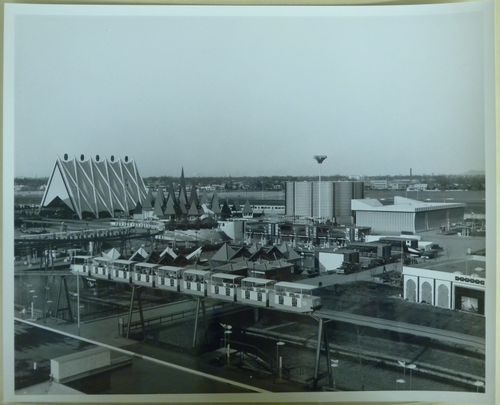
Actions:
Reference number:
ARCH255894
ARCH255894
People:
Date:
1967
1967
Form:
photographs
photographs
Date:
1967
1967
People:
Form:
drawings
drawings
Title:
Research drawings and maps
Research drawings and maps
Actions:
Reference number:
AP197.S2.060
Description:
Drawings in this box include: Alvar Aalto's Hansviertal Apartments, Berlin; the Sala della Valle by Aurelio Galfetti; the East River Bridge, ARUP + Michael Fieldman & Partners with Harry Wolf. This box also includes maps of the trans-contintental railways of North America, Ireland, Calcutta and more.
AP197.S2.060
Description:
Drawings in this box include: Alvar Aalto's Hansviertal Apartments, Berlin; the Sala della Valle by Aurelio Galfetti; the East River Bridge, ARUP + Michael Fieldman & Partners with Harry Wolf. This box also includes maps of the trans-contintental railways of North America, Ireland, Calcutta and more.
People:
Date:
circa 1980-2000
circa 1980-2000
Title:
Research drawings and maps
Actions:
AP197.S2.060
Description:
Drawings in this box include: Alvar Aalto's Hansviertal Apartments, Berlin; the Sala della Valle by Aurelio Galfetti; the East River Bridge, ARUP + Michael Fieldman & Partners with Harry Wolf. This box also includes maps of the trans-contintental railways of North America, Ireland, Calcutta and more.
Research drawings and maps
Actions:
AP197.S2.060
Description:
Drawings in this box include: Alvar Aalto's Hansviertal Apartments, Berlin; the Sala della Valle by Aurelio Galfetti; the East River Bridge, ARUP + Michael Fieldman & Partners with Harry Wolf. This box also includes maps of the trans-contintental railways of North America, Ireland, Calcutta and more.
Form:
drawings
drawings
Date:
circa 1980-2000
circa 1980-2000
People:
Form:
archives
Level of archival description:
Fonds
archives
Level of archival description:
Fonds
Actions:
Reference number:
AP106
Synopsis:
The Faubourg Québec project records, 1989-1994, document the redevelopment of Faubourg Québec, a 30 acre site east of the Old Port of Montréal, into an urban residential neighbourhood. Materials in these project records consist of approximately 253 drawings (including reprographic copies) and 0.33 of l.m. textual materials.
AP106
Synopsis:
The Faubourg Québec project records, 1989-1994, document the redevelopment of Faubourg Québec, a 30 acre site east of the Old Port of Montréal, into an urban residential neighbourhood. Materials in these project records consist of approximately 253 drawings (including reprographic copies) and 0.33 of l.m. textual materials.
People:
Date:
1989-1994
1989-1994
Title:
Faubourg Québec project records
Actions:
AP106
Synopsis:
The Faubourg Québec project records, 1989-1994, document the redevelopment of Faubourg Québec, a 30 acre site east of the Old Port of Montréal, into an urban residential neighbourhood. Materials in these project records consist of approximately 253 drawings (including reprographic copies) and 0.33 of l.m. textual materials.
Faubourg Québec project records
Actions:
AP106
Synopsis:
The Faubourg Québec project records, 1989-1994, document the redevelopment of Faubourg Québec, a 30 acre site east of the Old Port of Montréal, into an urban residential neighbourhood. Materials in these project records consist of approximately 253 drawings (including reprographic copies) and 0.33 of l.m. textual materials.
Form:
archives
Level of archival description:
Fonds
archives
Level of archival description:
Fonds
Date:
1989-1994
1989-1994
People:
Form:
drawings
Quantity:
3 conceptual drawing(s)
drawings
Quantity:
3 conceptual drawing(s)
Reference number:
DR1995:0240:001-003
Description:
conceptual thumbnail sketches with annotations; time, frequency, location, and movement chart allowing "five dimensional information [to be] presented on a two dimensional chart" (Price 1984, p.39); regional map of Portsmouth, Isle of Wight, New Forest, Southampton showing roads, railways, wooded areas, built areas, and beaches at low tide.
DR1995:0240:001-003
Description:
conceptual thumbnail sketches with annotations; time, frequency, location, and movement chart allowing "five dimensional information [to be] presented on a two dimensional chart" (Price 1984, p.39); regional map of Portsmouth, Isle of Wight, New Forest, Southampton showing roads, railways, wooded areas, built areas, and beaches at low tide.
People:
Title:
Conceptual thumbnail sketches with annotations
Actions:
DR1995:0240:001-003
Description:
conceptual thumbnail sketches with annotations; time, frequency, location, and movement chart allowing "five dimensional information [to be] presented on a two dimensional chart" (Price 1984, p.39); regional map of Portsmouth, Isle of Wight, New Forest, Southampton showing roads, railways, wooded areas, built areas, and beaches at low tide.
Conceptual thumbnail sketches with annotations
Actions:
DR1995:0240:001-003
Description:
conceptual thumbnail sketches with annotations; time, frequency, location, and movement chart allowing "five dimensional information [to be] presented on a two dimensional chart" (Price 1984, p.39); regional map of Portsmouth, Isle of Wight, New Forest, Southampton showing roads, railways, wooded areas, built areas, and beaches at low tide.
Form:
drawings
Quantity:
3 conceptual drawing(s)
drawings
Quantity:
3 conceptual drawing(s)
People:
Form:
photographs
photographs
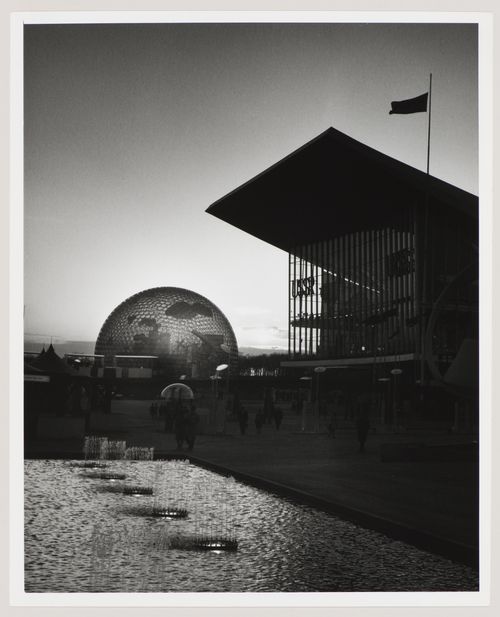
Title:
Sunset view of the Pavilions of the United States and of the Soviet Union, Expo 67, Montréal, Québec
Sunset view of the Pavilions of the United States and of the Soviet Union, Expo 67, Montréal, Québec
Actions:
Reference number:
ARCH256018
ARCH256018
People:
Date:
1967
1967
Form:
photographs
photographs
Date:
1967
1967
People:


