


6146 Results
Form:
exhibitions
exhibitions
Actions:
Description:
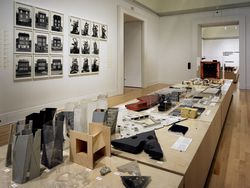
Herzog de Meuron: Archaeology of the Mind presents an exhaustive display of materials from the architects’ archive and from related collections. Referencing a natural history, the exhibition includes study models, books, photographs, toys, fossils, Chinese scholars’ rocks, and significant works of contemporary art, all of which have informed the thinking of the Swiss(...)
Herzog de Meuron: Archaeology of the Mind presents an exhaustive display of materials from the architects’ archive and from related collections. Referencing a natural history, the exhibition includes study models, books, photographs, toys, fossils, Chinese scholars’ rocks, and significant works of contemporary art, all of which have informed the thinking of the Swiss(...)
Location:
Main galleries
Main galleries
Date:
23 October 2002 to 6 April 2003
23 October 2002 to 6 April 2003
Title:
Herzog & de Meuron: Archaeology of the Mind
Actions:
Description:
Herzog de Meuron: Archaeology of the Mind presents an exhaustive display of materials from the architects’ archive and from related collections. Referencing a natural history, the exhibition includes study models, books, photographs, toys, fossils, Chinese scholars’ rocks, and significant works of contemporary art, all of which have informed the thinking of the Swiss(...)
Herzog & de Meuron: Archaeology of the Mind
Actions:
Description:
Herzog de Meuron: Archaeology of the Mind presents an exhaustive display of materials from the architects’ archive and from related collections. Referencing a natural history, the exhibition includes study models, books, photographs, toys, fossils, Chinese scholars’ rocks, and significant works of contemporary art, all of which have informed the thinking of the Swiss(...)
Form:
exhibitions
exhibitions
Date:
23 October 2002 to
6 April 2003
23 October 2002 to
6 April 2003
Location:
Main galleries
Main galleries
Form:
exhibitions
exhibitions
Actions:
Description:
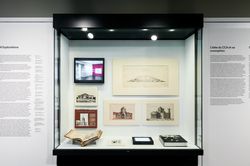
On the occasion of Phyllis Lambert’s ninetieth birthday, this exhibition offers an autobiographical glimpse into the evolution of the CCA founder’s ideas and her work as an architect, activist, editor, and curator. Highlighting her deep commitment to the city and to intellectual research, this display of archival material from the CCA’s collection, institutional archives,(...)
On the occasion of Phyllis Lambert’s ninetieth birthday, this exhibition offers an autobiographical glimpse into the evolution of the CCA founder’s ideas and her work as an architect, activist, editor, and curator. Highlighting her deep commitment to the city and to intellectual research, this display of archival material from the CCA’s collection, institutional archives,(...)
Location:
Hall cases
Hall cases
Date:
18 January 2017 to 11 June 2017
18 January 2017 to 11 June 2017
Title:
Phyllis Lambert: 75 Years At Work
Actions:
Description:
On the occasion of Phyllis Lambert’s ninetieth birthday, this exhibition offers an autobiographical glimpse into the evolution of the CCA founder’s ideas and her work as an architect, activist, editor, and curator. Highlighting her deep commitment to the city and to intellectual research, this display of archival material from the CCA’s collection, institutional archives,(...)
Phyllis Lambert: 75 Years At Work
Actions:
Description:
On the occasion of Phyllis Lambert’s ninetieth birthday, this exhibition offers an autobiographical glimpse into the evolution of the CCA founder’s ideas and her work as an architect, activist, editor, and curator. Highlighting her deep commitment to the city and to intellectual research, this display of archival material from the CCA’s collection, institutional archives,(...)
Form:
exhibitions
exhibitions
Date:
18 January 2017 to
11 June 2017
18 January 2017 to
11 June 2017
Location:
Hall cases
Hall cases
Form:
exhibitions
exhibitions
Actions:
Description:
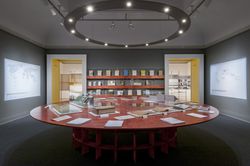
The beginning of the 1950s was a moment of global upheaval. From India to Morocco, from Guatemala to Indochina, the process of decolonization gained momentum and the Cold War began. Architects working or acting as experts in the non-Western areas of the globe could no longer plan as if sites were terrains vague and people were mute subjects. The end of colonial(...)
The beginning of the 1950s was a moment of global upheaval. From India to Morocco, from Guatemala to Indochina, the process of decolonization gained momentum and the Cold War began. Architects working or acting as experts in the non-Western areas of the globe could no longer plan as if sites were terrains vague and people were mute subjects. The end of colonial(...)
Location:
Main galleries Keyword(s):
Casablanca, Chandigarh, Le Corbusier, Jeanneret, Morocco, Punjab, India, Morocco, modernism, Africa, Takashi Homma, Yto Barrada
Main galleries Keyword(s):
Casablanca, Chandigarh, Le Corbusier, Jeanneret, Morocco, Punjab, India, Morocco, modernism, Africa, Takashi Homma, Yto Barrada
Date:
26 November 2013 to 20 April 2014
26 November 2013 to 20 April 2014
Title:
How architects, experts, politicians, international agencies and citizens negotiate modern planning: Casablanca Chandigarh
Actions:
Description:
The beginning of the 1950s was a moment of global upheaval. From India to Morocco, from Guatemala to Indochina, the process of decolonization gained momentum and the Cold War began. Architects working or acting as experts in the non-Western areas of the globe could no longer plan as if sites were terrains vague and people were mute subjects. The end of colonial(...)
How architects, experts, politicians, international agencies and citizens negotiate modern planning: Casablanca Chandigarh
Actions:
Description:
The beginning of the 1950s was a moment of global upheaval. From India to Morocco, from Guatemala to Indochina, the process of decolonization gained momentum and the Cold War began. Architects working or acting as experts in the non-Western areas of the globe could no longer plan as if sites were terrains vague and people were mute subjects. The end of colonial(...)
Form:
exhibitions
exhibitions
Date:
26 November 2013 to
20 April 2014
26 November 2013 to
20 April 2014
Location:
Main galleries Keyword(s):
Casablanca, Chandigarh, Le Corbusier, Jeanneret, Morocco, Punjab, India, Morocco, modernism, Africa, Takashi Homma, Yto Barrada
Main galleries Keyword(s):
Casablanca, Chandigarh, Le Corbusier, Jeanneret, Morocco, Punjab, India, Morocco, modernism, Africa, Takashi Homma, Yto Barrada
Form:
exhibitions
exhibitions
Actions:
Description:
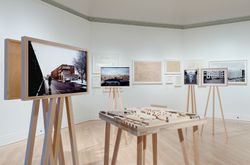
Wohnhaus Schlesisches Tor—also known as Bonjour Tristesse—in Berlin and Punt en Komma in The Hague are Álvaro Siza’s first built works outside his native Portugal. The two projects resemble one another in size, scale, program, and ambition: both were built in the 1980s, both are results of a distinct attitude towards the city, and both were social housing projects(...)
Wohnhaus Schlesisches Tor—also known as Bonjour Tristesse—in Berlin and Punt en Komma in The Hague are Álvaro Siza’s first built works outside his native Portugal. The two projects resemble one another in size, scale, program, and ambition: both were built in the 1980s, both are results of a distinct attitude towards the city, and both were social housing projects(...)
Location:
Octagonal gallery Keyword(s):
Álvaro Siza, Punt en Komma, The Hague, Bonjour Tristesse, Berlin
Octagonal gallery Keyword(s):
Álvaro Siza, Punt en Komma, The Hague, Bonjour Tristesse, Berlin
Date:
24 September 2015 to 22 May 2016
24 September 2015 to 22 May 2016
Title:
Corner, Block, Neighbourhood, Cities. Álvaro Siza in Berlin and The Hague
Actions:
Description:
Wohnhaus Schlesisches Tor—also known as Bonjour Tristesse—in Berlin and Punt en Komma in The Hague are Álvaro Siza’s first built works outside his native Portugal. The two projects resemble one another in size, scale, program, and ambition: both were built in the 1980s, both are results of a distinct attitude towards the city, and both were social housing projects(...)
Corner, Block, Neighbourhood, Cities. Álvaro Siza in Berlin and The Hague
Actions:
Description:
Wohnhaus Schlesisches Tor—also known as Bonjour Tristesse—in Berlin and Punt en Komma in The Hague are Álvaro Siza’s first built works outside his native Portugal. The two projects resemble one another in size, scale, program, and ambition: both were built in the 1980s, both are results of a distinct attitude towards the city, and both were social housing projects(...)
Form:
exhibitions
exhibitions
Date:
24 September 2015 to
22 May 2016
24 September 2015 to
22 May 2016
Location:
Octagonal gallery Keyword(s):
Álvaro Siza, Punt en Komma, The Hague, Bonjour Tristesse, Berlin
Octagonal gallery Keyword(s):
Álvaro Siza, Punt en Komma, The Hague, Bonjour Tristesse, Berlin
Form:
exhibitions
exhibitions
Actions:
Description:
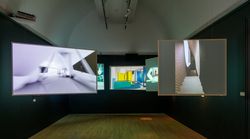
Archaeology of the Digital: Complexity and Convention is the third exhibition related to the development of a strategy for collecting and preserving digital archives at the CCA. The Archaeology of the Digital program comprises twenty-five projects for which digital materials are integral to an understanding of the design process. For projects included in the first two(...)
Archaeology of the Digital: Complexity and Convention is the third exhibition related to the development of a strategy for collecting and preserving digital archives at the CCA. The Archaeology of the Digital program comprises twenty-five projects for which digital materials are integral to an understanding of the design process. For projects included in the first two(...)
Date:
11 May 2016 to 16 October 2016
11 May 2016 to 16 October 2016
Title:
Archaeology of the Digital: Complexity and Convention
Actions:
Description:
Archaeology of the Digital: Complexity and Convention is the third exhibition related to the development of a strategy for collecting and preserving digital archives at the CCA. The Archaeology of the Digital program comprises twenty-five projects for which digital materials are integral to an understanding of the design process. For projects included in the first two(...)
Archaeology of the Digital: Complexity and Convention
Actions:
Description:
Archaeology of the Digital: Complexity and Convention is the third exhibition related to the development of a strategy for collecting and preserving digital archives at the CCA. The Archaeology of the Digital program comprises twenty-five projects for which digital materials are integral to an understanding of the design process. For projects included in the first two(...)
Form:
exhibitions
exhibitions
Date:
11 May 2016 to
16 October 2016
11 May 2016 to
16 October 2016
Form:
exhibitions
exhibitions
Actions:
Description:
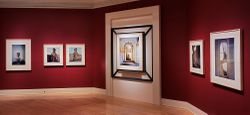
Visions and Views combines contemporary photography and engravings from the seventeenth and eighteenth centuries to establish a dialogue between two different approaches to representing Francesco Borromini’s built work. The photographs, part of a larger commission acquired by the CCA, were taken in Rome by Toronto photographer Edward Burtynsky in 1999. They are presented(...)
Visions and Views combines contemporary photography and engravings from the seventeenth and eighteenth centuries to establish a dialogue between two different approaches to representing Francesco Borromini’s built work. The photographs, part of a larger commission acquired by the CCA, were taken in Rome by Toronto photographer Edward Burtynsky in 1999. They are presented(...)
Location:
Octagonal gallery
Octagonal gallery
Date:
15 March 2000 to 7 May 2000
15 March 2000 to 7 May 2000
Title:
Visions and Views: The Architecture of Borromini in the Photographs of Edward Burtynsky
Actions:
Description:
Visions and Views combines contemporary photography and engravings from the seventeenth and eighteenth centuries to establish a dialogue between two different approaches to representing Francesco Borromini’s built work. The photographs, part of a larger commission acquired by the CCA, were taken in Rome by Toronto photographer Edward Burtynsky in 1999. They are presented(...)
Visions and Views: The Architecture of Borromini in the Photographs of Edward Burtynsky
Actions:
Description:
Visions and Views combines contemporary photography and engravings from the seventeenth and eighteenth centuries to establish a dialogue between two different approaches to representing Francesco Borromini’s built work. The photographs, part of a larger commission acquired by the CCA, were taken in Rome by Toronto photographer Edward Burtynsky in 1999. They are presented(...)
Form:
exhibitions
exhibitions
Date:
15 March 2000 to
7 May 2000
15 March 2000 to
7 May 2000
Location:
Octagonal gallery
Octagonal gallery
Form:
exhibitions
exhibitions
Actions:
Description:
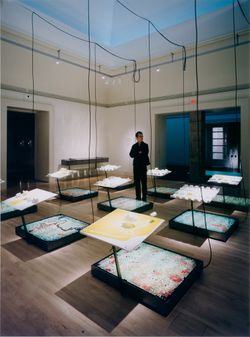
The American Lawn: Surface of Everyday Life reveals the lawn as a domestic symbol, civic showplace, economic force, and national icon. Bungalows in tract developments, suburban corporate headquarters, and the White House are all alike in that they sit behind a lawn: a carefully contrived patch of “nature” that lies open to the sky and to a multitude of uses and(...)
The American Lawn: Surface of Everyday Life reveals the lawn as a domestic symbol, civic showplace, economic force, and national icon. Bungalows in tract developments, suburban corporate headquarters, and the White House are all alike in that they sit behind a lawn: a carefully contrived patch of “nature” that lies open to the sky and to a multitude of uses and(...)
Location:
Main galleries, octagonal gallery, and hall cases
Main galleries, octagonal gallery, and hall cases
Date:
16 June 1998 to 8 November 1998
16 June 1998 to 8 November 1998
Title:
The American Lawn: Surface of Everyday Life
Actions:
Description:
The American Lawn: Surface of Everyday Life reveals the lawn as a domestic symbol, civic showplace, economic force, and national icon. Bungalows in tract developments, suburban corporate headquarters, and the White House are all alike in that they sit behind a lawn: a carefully contrived patch of “nature” that lies open to the sky and to a multitude of uses and(...)
The American Lawn: Surface of Everyday Life
Actions:
Description:
The American Lawn: Surface of Everyday Life reveals the lawn as a domestic symbol, civic showplace, economic force, and national icon. Bungalows in tract developments, suburban corporate headquarters, and the White House are all alike in that they sit behind a lawn: a carefully contrived patch of “nature” that lies open to the sky and to a multitude of uses and(...)
Form:
exhibitions
exhibitions
Date:
16 June 1998 to
8 November 1998
16 June 1998 to
8 November 1998
Location:
Main galleries, octagonal gallery, and hall cases
Main galleries, octagonal gallery, and hall cases
Form:
exhibitions
exhibitions
Actions:
Description:
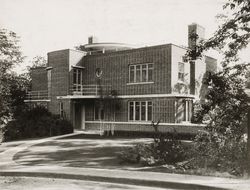
The exhibition is an introduction to the work and life of Ernest Isbell Barott, a Montréal architect who practised from 1912 to 1966. The drawings and photographs in the exhibition are largely drawn from the Ernest Isbell Barott Archive at the CCA. Ernest Barott’s career coincided with a period of profound physical and social change in Canada, a time of national and civic(...)
The exhibition is an introduction to the work and life of Ernest Isbell Barott, a Montréal architect who practised from 1912 to 1966. The drawings and photographs in the exhibition are largely drawn from the Ernest Isbell Barott Archive at the CCA. Ernest Barott’s career coincided with a period of profound physical and social change in Canada, a time of national and civic(...)
Location:
1440 rue Sainte-Catherine Ouest
1440 rue Sainte-Catherine Ouest
Date:
5 June 1985 to 6 September 1985
5 June 1985 to 6 September 1985
Title:
Ernest Isbell Barott, architecte/architect : une introduction/an introduction
Actions:
Description:
The exhibition is an introduction to the work and life of Ernest Isbell Barott, a Montréal architect who practised from 1912 to 1966. The drawings and photographs in the exhibition are largely drawn from the Ernest Isbell Barott Archive at the CCA. Ernest Barott’s career coincided with a period of profound physical and social change in Canada, a time of national and civic(...)
Ernest Isbell Barott, architecte/architect : une introduction/an introduction
Actions:
Description:
The exhibition is an introduction to the work and life of Ernest Isbell Barott, a Montréal architect who practised from 1912 to 1966. The drawings and photographs in the exhibition are largely drawn from the Ernest Isbell Barott Archive at the CCA. Ernest Barott’s career coincided with a period of profound physical and social change in Canada, a time of national and civic(...)
Form:
exhibitions
exhibitions
Date:
5 June 1985 to
6 September 1985
5 June 1985 to
6 September 1985
Location:
1440 rue Sainte-Catherine Ouest
1440 rue Sainte-Catherine Ouest
Level of archival description:
Series
Series
Actions:
Reference number:
CD041.S1
Description:
This series documents eight projects that Eva Hollo Vecsei worked on while at the firm Affleck, Desbarats, Dimakopoulos, Lebensold & Sise Architect (Arcop). Vecsei worked for the firm from 1959 to 1971 and was made an associate in 1964. She was the designer in charge of several Massey Award winning projects such as: Saint Gerard Magella Church, Saint-Jean-sur-Richelieu, Québec (1960-1963); Place Bonaventure, Montréal, Québec (circa 1963-1969); Student Union building, McGill University, Montréal, Québec (1965); and the Life science building, Dalhousie University, Halifax, Nova Scotia (1971). This series includes documents related to the following projects: Tifereth Jerusalem Synagogue, Côte-Saint-Luc, Québec (circa 1959-1971); Saint Gerard Magella Church, Saint-Jean-sur-Richelieu, Québec (1960-1963); Centre civique Chomedey, Chomedey [now Laval], Québec (1962-1965); Place des Arts, Montréal, Québec (1963); Place Bonaventure, Montréal, Québec (circa 1963-1969); Student Union building, McGill University, Montréal, Québec (1965); and the Life science building, Dalhousie University, Halifax, Nova Scotia (1971). Collection material in this series was produced between 1959 and 2017. Documenting the series are photographs, presentation drawings, slides, publications, clippings, correspondence, and digital material (mainly photographs and versions of a filmed interview). Records are predominantly related to Place Bonaventure, a large multi-functional complex comprised of exhibition and convention halls, an international trade centre, shopping concourses, offices, and a 400-room hotel with rooftop gardens. Mostly constructed of concrete, the building is connected to an underground pedestrian network and the Place Bonaventure metro station.
CD041.S1
Description:
This series documents eight projects that Eva Hollo Vecsei worked on while at the firm Affleck, Desbarats, Dimakopoulos, Lebensold & Sise Architect (Arcop). Vecsei worked for the firm from 1959 to 1971 and was made an associate in 1964. She was the designer in charge of several Massey Award winning projects such as: Saint Gerard Magella Church, Saint-Jean-sur-Richelieu, Québec (1960-1963); Place Bonaventure, Montréal, Québec (circa 1963-1969); Student Union building, McGill University, Montréal, Québec (1965); and the Life science building, Dalhousie University, Halifax, Nova Scotia (1971). This series includes documents related to the following projects: Tifereth Jerusalem Synagogue, Côte-Saint-Luc, Québec (circa 1959-1971); Saint Gerard Magella Church, Saint-Jean-sur-Richelieu, Québec (1960-1963); Centre civique Chomedey, Chomedey [now Laval], Québec (1962-1965); Place des Arts, Montréal, Québec (1963); Place Bonaventure, Montréal, Québec (circa 1963-1969); Student Union building, McGill University, Montréal, Québec (1965); and the Life science building, Dalhousie University, Halifax, Nova Scotia (1971). Collection material in this series was produced between 1959 and 2017. Documenting the series are photographs, presentation drawings, slides, publications, clippings, correspondence, and digital material (mainly photographs and versions of a filmed interview). Records are predominantly related to Place Bonaventure, a large multi-functional complex comprised of exhibition and convention halls, an international trade centre, shopping concourses, offices, and a 400-room hotel with rooftop gardens. Mostly constructed of concrete, the building is connected to an underground pedestrian network and the Place Bonaventure metro station.
People:
Date:
1959-2017
1959-2017
Title:
Affleck, Desbarats, Dimakopoulos, Lebensold & Sise Architect (1959-1971)
Actions:
CD041.S1
Description:
This series documents eight projects that Eva Hollo Vecsei worked on while at the firm Affleck, Desbarats, Dimakopoulos, Lebensold & Sise Architect (Arcop). Vecsei worked for the firm from 1959 to 1971 and was made an associate in 1964. She was the designer in charge of several Massey Award winning projects such as: Saint Gerard Magella Church, Saint-Jean-sur-Richelieu, Québec (1960-1963); Place Bonaventure, Montréal, Québec (circa 1963-1969); Student Union building, McGill University, Montréal, Québec (1965); and the Life science building, Dalhousie University, Halifax, Nova Scotia (1971). This series includes documents related to the following projects: Tifereth Jerusalem Synagogue, Côte-Saint-Luc, Québec (circa 1959-1971); Saint Gerard Magella Church, Saint-Jean-sur-Richelieu, Québec (1960-1963); Centre civique Chomedey, Chomedey [now Laval], Québec (1962-1965); Place des Arts, Montréal, Québec (1963); Place Bonaventure, Montréal, Québec (circa 1963-1969); Student Union building, McGill University, Montréal, Québec (1965); and the Life science building, Dalhousie University, Halifax, Nova Scotia (1971). Collection material in this series was produced between 1959 and 2017. Documenting the series are photographs, presentation drawings, slides, publications, clippings, correspondence, and digital material (mainly photographs and versions of a filmed interview). Records are predominantly related to Place Bonaventure, a large multi-functional complex comprised of exhibition and convention halls, an international trade centre, shopping concourses, offices, and a 400-room hotel with rooftop gardens. Mostly constructed of concrete, the building is connected to an underground pedestrian network and the Place Bonaventure metro station.
Affleck, Desbarats, Dimakopoulos, Lebensold & Sise Architect (1959-1971)
Actions:
CD041.S1
Description:
This series documents eight projects that Eva Hollo Vecsei worked on while at the firm Affleck, Desbarats, Dimakopoulos, Lebensold & Sise Architect (Arcop). Vecsei worked for the firm from 1959 to 1971 and was made an associate in 1964. She was the designer in charge of several Massey Award winning projects such as: Saint Gerard Magella Church, Saint-Jean-sur-Richelieu, Québec (1960-1963); Place Bonaventure, Montréal, Québec (circa 1963-1969); Student Union building, McGill University, Montréal, Québec (1965); and the Life science building, Dalhousie University, Halifax, Nova Scotia (1971). This series includes documents related to the following projects: Tifereth Jerusalem Synagogue, Côte-Saint-Luc, Québec (circa 1959-1971); Saint Gerard Magella Church, Saint-Jean-sur-Richelieu, Québec (1960-1963); Centre civique Chomedey, Chomedey [now Laval], Québec (1962-1965); Place des Arts, Montréal, Québec (1963); Place Bonaventure, Montréal, Québec (circa 1963-1969); Student Union building, McGill University, Montréal, Québec (1965); and the Life science building, Dalhousie University, Halifax, Nova Scotia (1971). Collection material in this series was produced between 1959 and 2017. Documenting the series are photographs, presentation drawings, slides, publications, clippings, correspondence, and digital material (mainly photographs and versions of a filmed interview). Records are predominantly related to Place Bonaventure, a large multi-functional complex comprised of exhibition and convention halls, an international trade centre, shopping concourses, offices, and a 400-room hotel with rooftop gardens. Mostly constructed of concrete, the building is connected to an underground pedestrian network and the Place Bonaventure metro station.
Level of archival description:
Series
Series
Date:
1959-2017
1959-2017
People:
Form:
exhibitions
exhibitions
Description:
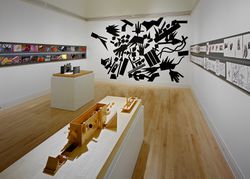
Other Soundings: Selected Works by John Hejduk, 1954–1997, the first major retrospective of Hejduk’s work, explores the themes that have always preoccupied him: architecture as a social act, the wall, the house, the church, passage and transformation, the experience of the city. The importance of John Hejduk rests on his teaching and on the originality of his vision of(...)
Other Soundings: Selected Works by John Hejduk, 1954–1997, the first major retrospective of Hejduk’s work, explores the themes that have always preoccupied him: architecture as a social act, the wall, the house, the church, passage and transformation, the experience of the city. The importance of John Hejduk rests on his teaching and on the originality of his vision of(...)
Location:
Main galleries
Main galleries
Date:
22 October 1997 to 15 February 1998
22 October 1997 to 15 February 1998
Title:
Other Soundings: Selected Works by John Hejduk, 1954-1997
Actions:
Description:
Other Soundings: Selected Works by John Hejduk, 1954–1997, the first major retrospective of Hejduk’s work, explores the themes that have always preoccupied him: architecture as a social act, the wall, the house, the church, passage and transformation, the experience of the city. The importance of John Hejduk rests on his teaching and on the originality of his vision of(...)
Other Soundings: Selected Works by John Hejduk, 1954-1997
Actions:
Description:
Other Soundings: Selected Works by John Hejduk, 1954–1997, the first major retrospective of Hejduk’s work, explores the themes that have always preoccupied him: architecture as a social act, the wall, the house, the church, passage and transformation, the experience of the city. The importance of John Hejduk rests on his teaching and on the originality of his vision of(...)
Form:
exhibitions
exhibitions
Date:
22 October 1997 to
15 February 1998
22 October 1997 to
15 February 1998
Location:
Main galleries
Main galleries


