


61574 Results
Form:
events
events
Title:
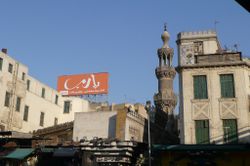
Learning from... Cairo
Learning from... Cairo
Actions:
Description:
Nasser Rabbat challenges the traditional framing strategies of East vs. West or traditional vs. modern, focusing instead on the dialectical relationship of modernity and history in the making of contemporary Cairo. Shaped by distinct waves of modernity from the colonial Napoleonic invasion of 1789 to the revolution and independence in 1952, the city responded with layers(...)
Nasser Rabbat challenges the traditional framing strategies of East vs. West or traditional vs. modern, focusing instead on the dialectical relationship of modernity and history in the making of contemporary Cairo. Shaped by distinct waves of modernity from the colonial Napoleonic invasion of 1789 to the revolution and independence in 1952, the city responded with layers(...)
Location:
Paul-Desmarais Theatre
Paul-Desmarais Theatre
Date:
15 September 2011 , 7pm
15 September 2011 , 7pm
Title:
Learning from... Cairo
Actions:
Description:
Nasser Rabbat challenges the traditional framing strategies of East vs. West or traditional vs. modern, focusing instead on the dialectical relationship of modernity and history in the making of contemporary Cairo. Shaped by distinct waves of modernity from the colonial Napoleonic invasion of 1789 to the revolution and independence in 1952, the city responded with layers(...)
Learning from... Cairo
Actions:
Description:
Nasser Rabbat challenges the traditional framing strategies of East vs. West or traditional vs. modern, focusing instead on the dialectical relationship of modernity and history in the making of contemporary Cairo. Shaped by distinct waves of modernity from the colonial Napoleonic invasion of 1789 to the revolution and independence in 1952, the city responded with layers(...)
Form:
events
events
Date:
15 September 2011
7pm
15 September 2011
7pm
Location:
Paul-Desmarais Theatre
Paul-Desmarais Theatre
Form:
events
events
Actions:
Description:
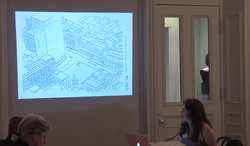
Michela Rosso, 2013 Support Grant Recipient, presents her research from Peter Carter’s archive on the Mansion House square scheme (1962–1985) and shows the different facets of the controversy over Mies van der Rohe’s unbuilt tower in the heart of the City of London. Rosso holds a doctorate from the Politecnico di Torino, where since 2003 she has been Associate professor(...)
Michela Rosso, 2013 Support Grant Recipient, presents her research from Peter Carter’s archive on the Mansion House square scheme (1962–1985) and shows the different facets of the controversy over Mies van der Rohe’s unbuilt tower in the heart of the City of London. Rosso holds a doctorate from the Politecnico di Torino, where since 2003 she has been Associate professor(...)
Location:
Shaughnessy House
Shaughnessy House
Date:
30 May 2013, 6pm
30 May 2013, 6pm
Title:
Friends and Enemies of Mies’s Mansion House Square
Actions:
Description:
Michela Rosso, 2013 Support Grant Recipient, presents her research from Peter Carter’s archive on the Mansion House square scheme (1962–1985) and shows the different facets of the controversy over Mies van der Rohe’s unbuilt tower in the heart of the City of London. Rosso holds a doctorate from the Politecnico di Torino, where since 2003 she has been Associate professor(...)
Friends and Enemies of Mies’s Mansion House Square
Actions:
Description:
Michela Rosso, 2013 Support Grant Recipient, presents her research from Peter Carter’s archive on the Mansion House square scheme (1962–1985) and shows the different facets of the controversy over Mies van der Rohe’s unbuilt tower in the heart of the City of London. Rosso holds a doctorate from the Politecnico di Torino, where since 2003 she has been Associate professor(...)
Form:
events
events
Date:
30 May 2013
6pm
30 May 2013
6pm
Location:
Shaughnessy House
Shaughnessy House
Reference number:
PH1978:0038:003
Description:
Album containing 100 photogravures made from photographs by Baldus following a special process of his own, that would restore them on the reverse side. Malcolm Daniel writes: "Baldus's Louvre photographs found their final incarnation in a gravure publication 'Palais du Louvre et des Tuileries'. The three volumes in this set largely parallel the albums that Baldus had made earlier for the Minister of State; again the majority of the images are of sculptural and ornamental details from the New Louvre, but statuary and ornament from the Tuileries Palace and Gardens are also included. The first edition of the 'Palais du Louvre et des Tuileries', published by Baldus himself, was offered for sale in fascicles beginning in late 1869, and the series was completed by the end of 1871. Two volumes, each with 100 plates, focused on interior and exterior decoration. Because of the success of the first two volumes, a third, showing both interior and exterior motifs was produced, and the three-volume set was published by Morel in 1875." ('History of Photography', p. 120-121). This album contains views of sculptural and ornamental details (some of them fragments) of the models made the decoration of the staircase of the Palais des Tuileries, the Entrance to the Gardens of the Tuileries, the façade on the Carrousel of the Louvre, the Flore Pavilion and the Minister of State.
PH1978:0038:003
Description:
Album containing 100 photogravures made from photographs by Baldus following a special process of his own, that would restore them on the reverse side. Malcolm Daniel writes: "Baldus's Louvre photographs found their final incarnation in a gravure publication 'Palais du Louvre et des Tuileries'. The three volumes in this set largely parallel the albums that Baldus had made earlier for the Minister of State; again the majority of the images are of sculptural and ornamental details from the New Louvre, but statuary and ornament from the Tuileries Palace and Gardens are also included. The first edition of the 'Palais du Louvre et des Tuileries', published by Baldus himself, was offered for sale in fascicles beginning in late 1869, and the series was completed by the end of 1871. Two volumes, each with 100 plates, focused on interior and exterior decoration. Because of the success of the first two volumes, a third, showing both interior and exterior motifs was produced, and the three-volume set was published by Morel in 1875." ('History of Photography', p. 120-121). This album contains views of sculptural and ornamental details (some of them fragments) of the models made the decoration of the staircase of the Palais des Tuileries, the Entrance to the Gardens of the Tuileries, the façade on the Carrousel of the Louvre, the Flore Pavilion and the Minister of State.
People:
Subject:
architecture, ornament, sculpture
architecture, ornament, sculpture
Date:
1869-1871
1869-1871
Title:
Palais du Louvre et des Tuileries. Motifs de décorations
Actions:
PH1978:0038:003
Description:
Album containing 100 photogravures made from photographs by Baldus following a special process of his own, that would restore them on the reverse side. Malcolm Daniel writes: "Baldus's Louvre photographs found their final incarnation in a gravure publication 'Palais du Louvre et des Tuileries'. The three volumes in this set largely parallel the albums that Baldus had made earlier for the Minister of State; again the majority of the images are of sculptural and ornamental details from the New Louvre, but statuary and ornament from the Tuileries Palace and Gardens are also included. The first edition of the 'Palais du Louvre et des Tuileries', published by Baldus himself, was offered for sale in fascicles beginning in late 1869, and the series was completed by the end of 1871. Two volumes, each with 100 plates, focused on interior and exterior decoration. Because of the success of the first two volumes, a third, showing both interior and exterior motifs was produced, and the three-volume set was published by Morel in 1875." ('History of Photography', p. 120-121). This album contains views of sculptural and ornamental details (some of them fragments) of the models made the decoration of the staircase of the Palais des Tuileries, the Entrance to the Gardens of the Tuileries, the façade on the Carrousel of the Louvre, the Flore Pavilion and the Minister of State.
Palais du Louvre et des Tuileries. Motifs de décorations
Actions:
PH1978:0038:003
Description:
Album containing 100 photogravures made from photographs by Baldus following a special process of his own, that would restore them on the reverse side. Malcolm Daniel writes: "Baldus's Louvre photographs found their final incarnation in a gravure publication 'Palais du Louvre et des Tuileries'. The three volumes in this set largely parallel the albums that Baldus had made earlier for the Minister of State; again the majority of the images are of sculptural and ornamental details from the New Louvre, but statuary and ornament from the Tuileries Palace and Gardens are also included. The first edition of the 'Palais du Louvre et des Tuileries', published by Baldus himself, was offered for sale in fascicles beginning in late 1869, and the series was completed by the end of 1871. Two volumes, each with 100 plates, focused on interior and exterior decoration. Because of the success of the first two volumes, a third, showing both interior and exterior motifs was produced, and the three-volume set was published by Morel in 1875." ('History of Photography', p. 120-121). This album contains views of sculptural and ornamental details (some of them fragments) of the models made the decoration of the staircase of the Palais des Tuileries, the Entrance to the Gardens of the Tuileries, the façade on the Carrousel of the Louvre, the Flore Pavilion and the Minister of State.
Date:
1869-1871
1869-1871
People:
Subject:
architecture, ornament, sculpture
architecture, ornament, sculpture
Form:
exhibitions
exhibitions
Actions:
Description:
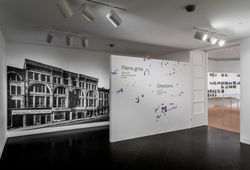
The greystone buildings standing in Montreal today are essential tools for understanding the city. A deep study of their material history from the late 17th century to the early 20th demonstrates how geology, topography, politics, ethnicity, culture, as well as changes in economy and technology, have shaped the city through the centuries. Conceived as a photographic(...)
The greystone buildings standing in Montreal today are essential tools for understanding the city. A deep study of their material history from the late 17th century to the early 20th demonstrates how geology, topography, politics, ethnicity, culture, as well as changes in economy and technology, have shaped the city through the centuries. Conceived as a photographic(...)
Location:
Octagonal gallery Keyword(s):
Greystone, Phyllis Lambert, Montréal, photography, Richard Pare
Octagonal gallery Keyword(s):
Greystone, Phyllis Lambert, Montréal, photography, Richard Pare
Date:
13 October 2017 to 4 March 2018
13 October 2017 to 4 March 2018
Title:
Greystone: Tools for Understanding the City
Actions:
Description:
The greystone buildings standing in Montreal today are essential tools for understanding the city. A deep study of their material history from the late 17th century to the early 20th demonstrates how geology, topography, politics, ethnicity, culture, as well as changes in economy and technology, have shaped the city through the centuries. Conceived as a photographic(...)
Greystone: Tools for Understanding the City
Actions:
Description:
The greystone buildings standing in Montreal today are essential tools for understanding the city. A deep study of their material history from the late 17th century to the early 20th demonstrates how geology, topography, politics, ethnicity, culture, as well as changes in economy and technology, have shaped the city through the centuries. Conceived as a photographic(...)
Form:
exhibitions
exhibitions
Date:
13 October 2017 to
4 March 2018
13 October 2017 to
4 March 2018
Location:
Octagonal gallery Keyword(s):
Greystone, Phyllis Lambert, Montréal, photography, Richard Pare
Octagonal gallery Keyword(s):
Greystone, Phyllis Lambert, Montréal, photography, Richard Pare
Form:
events
events

Actions:
Description:
Rebecca Solnit, 2008 CCA Mellon Senior Fellow, is an independent writer, historian, and activist with a particular interest in geography, landscape, slowness, insurrection, photography, indirect routes and subjects that escape category. She lives in San Francisco, has received various awards, including the Lannan, a Guggenheim, and the Western Writers of America Spur(...)
Rebecca Solnit, 2008 CCA Mellon Senior Fellow, is an independent writer, historian, and activist with a particular interest in geography, landscape, slowness, insurrection, photography, indirect routes and subjects that escape category. She lives in San Francisco, has received various awards, including the Lannan, a Guggenheim, and the Western Writers of America Spur(...)
Date:
9 October 2008
9 October 2008
Title:
Rebecca Solnit: The Ruins of Hope, Hope in the Ruins
Actions:
Description:
Rebecca Solnit, 2008 CCA Mellon Senior Fellow, is an independent writer, historian, and activist with a particular interest in geography, landscape, slowness, insurrection, photography, indirect routes and subjects that escape category. She lives in San Francisco, has received various awards, including the Lannan, a Guggenheim, and the Western Writers of America Spur(...)
Rebecca Solnit: The Ruins of Hope, Hope in the Ruins
Actions:
Description:
Rebecca Solnit, 2008 CCA Mellon Senior Fellow, is an independent writer, historian, and activist with a particular interest in geography, landscape, slowness, insurrection, photography, indirect routes and subjects that escape category. She lives in San Francisco, has received various awards, including the Lannan, a Guggenheim, and the Western Writers of America Spur(...)
Form:
events
events
Date:
9 October 2008
9 October 2008
Form:
events
events
Title:
Devices of Design
Devices of Design
Actions:
Description:
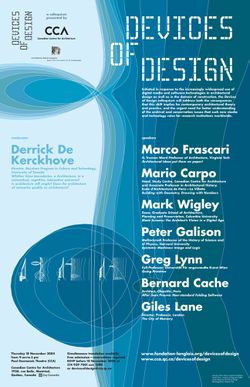
A collaboration between the CCA and the Daniel Langlois Foundation for Art, Science, and Technology, Devices of Design was initiated in response to the increasingly widespread use of digital media and software technologies in architectural design and construction. A colloquium and a subsequent roundtable discussion address both the consequences that this shift implies for(...)
A collaboration between the CCA and the Daniel Langlois Foundation for Art, Science, and Technology, Devices of Design was initiated in response to the increasingly widespread use of digital media and software technologies in architectural design and construction. A colloquium and a subsequent roundtable discussion address both the consequences that this shift implies for(...)
Location:
Paul-Desmarais Theatre
Paul-Desmarais Theatre
Date:
18 November 2004 to 19 November 2004
18 November 2004 to 19 November 2004
Title:
Devices of Design
Actions:
Description:
A collaboration between the CCA and the Daniel Langlois Foundation for Art, Science, and Technology, Devices of Design was initiated in response to the increasingly widespread use of digital media and software technologies in architectural design and construction. A colloquium and a subsequent roundtable discussion address both the consequences that this shift implies for(...)
Devices of Design
Actions:
Description:
A collaboration between the CCA and the Daniel Langlois Foundation for Art, Science, and Technology, Devices of Design was initiated in response to the increasingly widespread use of digital media and software technologies in architectural design and construction. A colloquium and a subsequent roundtable discussion address both the consequences that this shift implies for(...)
Form:
events
events
Date:
18 November 2004 to
19 November 2004
18 November 2004 to
19 November 2004
Location:
Paul-Desmarais Theatre
Paul-Desmarais Theatre
Form:
exhibitions
exhibitions
Title:
John Soane 1753-1837
John Soane 1753-1837
Actions:
Description:
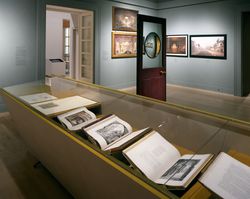
Described by Henry James as “one of the most curious things in London,” Sir John Soane’s Museum was built as the picturesque and enigmatic home, office, collector’s trove, and personal showplace of one of history’s most innovative architects. This exhibition is a major re-evaluation of Soane’s career, as well as a reconsideration of his importance to the history of modern(...)
Described by Henry James as “one of the most curious things in London,” Sir John Soane’s Museum was built as the picturesque and enigmatic home, office, collector’s trove, and personal showplace of one of history’s most innovative architects. This exhibition is a major re-evaluation of Soane’s career, as well as a reconsideration of his importance to the history of modern(...)
Location:
Main galleries
Main galleries
Date:
16 May 2001 to 3 September 2001
16 May 2001 to 3 September 2001
Title:
John Soane 1753-1837
Actions:
Description:
Described by Henry James as “one of the most curious things in London,” Sir John Soane’s Museum was built as the picturesque and enigmatic home, office, collector’s trove, and personal showplace of one of history’s most innovative architects. This exhibition is a major re-evaluation of Soane’s career, as well as a reconsideration of his importance to the history of modern(...)
John Soane 1753-1837
Actions:
Description:
Described by Henry James as “one of the most curious things in London,” Sir John Soane’s Museum was built as the picturesque and enigmatic home, office, collector’s trove, and personal showplace of one of history’s most innovative architects. This exhibition is a major re-evaluation of Soane’s career, as well as a reconsideration of his importance to the history of modern(...)
Form:
exhibitions
exhibitions
Date:
16 May 2001 to
3 September 2001
16 May 2001 to
3 September 2001
Location:
Main galleries
Main galleries
Form:
articles
articles
Title:
Playing it Safe
Playing it Safe
Actions:
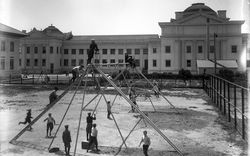
Delara Rahim, Francisco Brown, Jimmy Pan, and Angie Door on the creation of play subjects and playgrounds
Issue:
Keep Safe
Keep Safe
Keyword(s):
Keep Safe, playgrounds, safety, risk, regulation, public space, control, contemporary playground design,
Keep Safe, playgrounds, safety, risk, regulation, public space, control, contemporary playground design,
Published:
8 July 2024
8 July 2024
Title:
Playing it Safe
Delara Rahim, Francisco Brown, Jimmy Pan, and Angie Door on the creation of play subjects and playgrounds
Actions:
Playing it Safe
Delara Rahim, Francisco Brown, Jimmy Pan, and Angie Door on the creation of play subjects and playgrounds
Actions:
Issue:
Keep Safe
Keep Safe
Level of archival description:
Series
Series
Actions:
Reference number:
AP184.S1
Description:
Series 1, Three Dimensional Trading Floor, 1990 - 2009, relates to Asymptote Architecture’s design of a virtualized NYSE Trading Floor that visualized real-time numerical and statistical data. This series includes textual, born-digital, and audiovisual components, as well as digital artefacts, and chiefly dates from 1997 to 2002. The intent of the New York Stock Exchange Three Dimensional Trading Floor (3DTF) was to detect suspicious trading activity, track the impact of global news events on the market and potentially predict a crash before it happened. In order to achieve this technically, Asymptote worked with Silicon Graphics Incorporated (SGI) RealityEngine hardware which had been built specifically for these visualization-intensive applications. They also worked with Softimage and Alias software for modeling, rendering and animating, and VRML (Virtual Reality Markup Language) and Macromedia Flash in order to integrate real-time data into a navigable three-dimensional environment. The main elements of the virtual environment include posts, containers, and back wall. The two container types, Index Container (IC) and Group Container (GC), allow for visualization and comparison of stock histories and behaviors. The posts display stock information, corresponding heat maps on floors, and alerts. The back wall integrates live news broadcasts. Materials in this series are largely digital and primarily include still raster images and video demonstrating 3DTF functionality. There is also a small body of CAD material in Maya, Alias, Microstation, and Form-Z formats. Other digital materials include Virtual Reality Markup Language (VRML) files, HTML files, Silicon Graphics Images databases, research material, press kits, presentations, and handout files. The textual records are largely materials that were handed out at presentation meetings for each phase of the project. These typically illustrate major virtual components of 3DTF, like the heat maps and posts, and overlap significantly with the related digital files. There is also one VHS tape which compiles nearly twenty minutes of animated renderings. Finally, this series includes 43 CDs. The CDs were processed and are included as part of the digital records; the CDs themselves were kept in instances where they may have artefactual value, especially if they were visually interesting or informationally important.
AP184.S1
Description:
Series 1, Three Dimensional Trading Floor, 1990 - 2009, relates to Asymptote Architecture’s design of a virtualized NYSE Trading Floor that visualized real-time numerical and statistical data. This series includes textual, born-digital, and audiovisual components, as well as digital artefacts, and chiefly dates from 1997 to 2002. The intent of the New York Stock Exchange Three Dimensional Trading Floor (3DTF) was to detect suspicious trading activity, track the impact of global news events on the market and potentially predict a crash before it happened. In order to achieve this technically, Asymptote worked with Silicon Graphics Incorporated (SGI) RealityEngine hardware which had been built specifically for these visualization-intensive applications. They also worked with Softimage and Alias software for modeling, rendering and animating, and VRML (Virtual Reality Markup Language) and Macromedia Flash in order to integrate real-time data into a navigable three-dimensional environment. The main elements of the virtual environment include posts, containers, and back wall. The two container types, Index Container (IC) and Group Container (GC), allow for visualization and comparison of stock histories and behaviors. The posts display stock information, corresponding heat maps on floors, and alerts. The back wall integrates live news broadcasts. Materials in this series are largely digital and primarily include still raster images and video demonstrating 3DTF functionality. There is also a small body of CAD material in Maya, Alias, Microstation, and Form-Z formats. Other digital materials include Virtual Reality Markup Language (VRML) files, HTML files, Silicon Graphics Images databases, research material, press kits, presentations, and handout files. The textual records are largely materials that were handed out at presentation meetings for each phase of the project. These typically illustrate major virtual components of 3DTF, like the heat maps and posts, and overlap significantly with the related digital files. There is also one VHS tape which compiles nearly twenty minutes of animated renderings. Finally, this series includes 43 CDs. The CDs were processed and are included as part of the digital records; the CDs themselves were kept in instances where they may have artefactual value, especially if they were visually interesting or informationally important.
People:
Date:
1990-2009
1990-2009
Title:
Three Dimensional Trading Floor
Actions:
AP184.S1
Description:
Series 1, Three Dimensional Trading Floor, 1990 - 2009, relates to Asymptote Architecture’s design of a virtualized NYSE Trading Floor that visualized real-time numerical and statistical data. This series includes textual, born-digital, and audiovisual components, as well as digital artefacts, and chiefly dates from 1997 to 2002. The intent of the New York Stock Exchange Three Dimensional Trading Floor (3DTF) was to detect suspicious trading activity, track the impact of global news events on the market and potentially predict a crash before it happened. In order to achieve this technically, Asymptote worked with Silicon Graphics Incorporated (SGI) RealityEngine hardware which had been built specifically for these visualization-intensive applications. They also worked with Softimage and Alias software for modeling, rendering and animating, and VRML (Virtual Reality Markup Language) and Macromedia Flash in order to integrate real-time data into a navigable three-dimensional environment. The main elements of the virtual environment include posts, containers, and back wall. The two container types, Index Container (IC) and Group Container (GC), allow for visualization and comparison of stock histories and behaviors. The posts display stock information, corresponding heat maps on floors, and alerts. The back wall integrates live news broadcasts. Materials in this series are largely digital and primarily include still raster images and video demonstrating 3DTF functionality. There is also a small body of CAD material in Maya, Alias, Microstation, and Form-Z formats. Other digital materials include Virtual Reality Markup Language (VRML) files, HTML files, Silicon Graphics Images databases, research material, press kits, presentations, and handout files. The textual records are largely materials that were handed out at presentation meetings for each phase of the project. These typically illustrate major virtual components of 3DTF, like the heat maps and posts, and overlap significantly with the related digital files. There is also one VHS tape which compiles nearly twenty minutes of animated renderings. Finally, this series includes 43 CDs. The CDs were processed and are included as part of the digital records; the CDs themselves were kept in instances where they may have artefactual value, especially if they were visually interesting or informationally important.
Three Dimensional Trading Floor
Actions:
AP184.S1
Description:
Series 1, Three Dimensional Trading Floor, 1990 - 2009, relates to Asymptote Architecture’s design of a virtualized NYSE Trading Floor that visualized real-time numerical and statistical data. This series includes textual, born-digital, and audiovisual components, as well as digital artefacts, and chiefly dates from 1997 to 2002. The intent of the New York Stock Exchange Three Dimensional Trading Floor (3DTF) was to detect suspicious trading activity, track the impact of global news events on the market and potentially predict a crash before it happened. In order to achieve this technically, Asymptote worked with Silicon Graphics Incorporated (SGI) RealityEngine hardware which had been built specifically for these visualization-intensive applications. They also worked with Softimage and Alias software for modeling, rendering and animating, and VRML (Virtual Reality Markup Language) and Macromedia Flash in order to integrate real-time data into a navigable three-dimensional environment. The main elements of the virtual environment include posts, containers, and back wall. The two container types, Index Container (IC) and Group Container (GC), allow for visualization and comparison of stock histories and behaviors. The posts display stock information, corresponding heat maps on floors, and alerts. The back wall integrates live news broadcasts. Materials in this series are largely digital and primarily include still raster images and video demonstrating 3DTF functionality. There is also a small body of CAD material in Maya, Alias, Microstation, and Form-Z formats. Other digital materials include Virtual Reality Markup Language (VRML) files, HTML files, Silicon Graphics Images databases, research material, press kits, presentations, and handout files. The textual records are largely materials that were handed out at presentation meetings for each phase of the project. These typically illustrate major virtual components of 3DTF, like the heat maps and posts, and overlap significantly with the related digital files. There is also one VHS tape which compiles nearly twenty minutes of animated renderings. Finally, this series includes 43 CDs. The CDs were processed and are included as part of the digital records; the CDs themselves were kept in instances where they may have artefactual value, especially if they were visually interesting or informationally important.
Level of archival description:
Series
Series
Date:
1990-2009
1990-2009
People:
Form:
exhibitions
exhibitions
Actions:
Description:
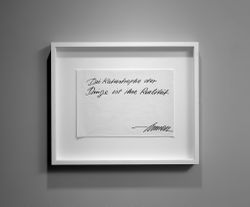
Dieter Appelt: The Catastrophe of Things presents images of the attic of the Künstlerhaus Bethanien in Berlin. Fascinated by sites charged with history, German artist Dieter Appelt uses his examination of the attic to inquire into the invisible, mysterious, and indefinite forces of decay that lie beyond everyday experience. By concentrating on structural details, and by(...)
Dieter Appelt: The Catastrophe of Things presents images of the attic of the Künstlerhaus Bethanien in Berlin. Fascinated by sites charged with history, German artist Dieter Appelt uses his examination of the attic to inquire into the invisible, mysterious, and indefinite forces of decay that lie beyond everyday experience. By concentrating on structural details, and by(...)
Location:
Octagonal gallery
Octagonal gallery
Date:
17 April 1996 to 4 August 1996
17 April 1996 to 4 August 1996
Title:
Dieter Appelt: The Catastrophe of Things
Actions:
Description:
Dieter Appelt: The Catastrophe of Things presents images of the attic of the Künstlerhaus Bethanien in Berlin. Fascinated by sites charged with history, German artist Dieter Appelt uses his examination of the attic to inquire into the invisible, mysterious, and indefinite forces of decay that lie beyond everyday experience. By concentrating on structural details, and by(...)
Dieter Appelt: The Catastrophe of Things
Actions:
Description:
Dieter Appelt: The Catastrophe of Things presents images of the attic of the Künstlerhaus Bethanien in Berlin. Fascinated by sites charged with history, German artist Dieter Appelt uses his examination of the attic to inquire into the invisible, mysterious, and indefinite forces of decay that lie beyond everyday experience. By concentrating on structural details, and by(...)
Form:
exhibitions
exhibitions
Date:
17 April 1996 to
4 August 1996
17 April 1996 to
4 August 1996
Location:
Octagonal gallery
Octagonal gallery


