


25840 Results
Level of archival description:
Project
Project
Reference number:
AP018.S1.1958.PR03
Description:
This project series documents the design and construction of Toronto City Hall and Civic Square in Toronto from 1958-1965. The office identified the project number as 5867. The design of Toronto's New City Hall, built next to its older counterpart, was realized through an international architectural competition that attracted more than 500 entries from around the world. Eventually, a unanimous jury chose Finnish architect Viljo Revell's design, cementing the age of modernist architecture in Toronto. However, the rules stated that if the winning architect was not part of the Ontario Association of Architects, they were required to partner with a local firm. In this way, John B. Parkin Associates was chosen as the associate architects for this project. The design was comprised of a concrete dome house, which contained the city council chambers, surrounded by two curved office towers, all perched on top of a podium, with a public square to the south, known as Nathan Phillips Square. The buildings were 816,000 square feet in size, the west tower having 18 office floors and the east tower with 25. The project is recorded through drawings, a mounted presentation photograph of the project and textual records dating from 1958-1966. The drawings are mostly reprographic copies, which include plans, elevations, sections, details and perspectives. The textual records consist of a competition synopsis book, a book of submission materials for the competition, and correspondence between Parkin and Revell.
AP018.S1.1958.PR03
Description:
This project series documents the design and construction of Toronto City Hall and Civic Square in Toronto from 1958-1965. The office identified the project number as 5867. The design of Toronto's New City Hall, built next to its older counterpart, was realized through an international architectural competition that attracted more than 500 entries from around the world. Eventually, a unanimous jury chose Finnish architect Viljo Revell's design, cementing the age of modernist architecture in Toronto. However, the rules stated that if the winning architect was not part of the Ontario Association of Architects, they were required to partner with a local firm. In this way, John B. Parkin Associates was chosen as the associate architects for this project. The design was comprised of a concrete dome house, which contained the city council chambers, surrounded by two curved office towers, all perched on top of a podium, with a public square to the south, known as Nathan Phillips Square. The buildings were 816,000 square feet in size, the west tower having 18 office floors and the east tower with 25. The project is recorded through drawings, a mounted presentation photograph of the project and textual records dating from 1958-1966. The drawings are mostly reprographic copies, which include plans, elevations, sections, details and perspectives. The textual records consist of a competition synopsis book, a book of submission materials for the competition, and correspondence between Parkin and Revell.
People:
Date:
1958-1966
1958-1966
Title:
Toronto City Hall and Civic Square, Toronto (1958)
Actions:
AP018.S1.1958.PR03
Description:
This project series documents the design and construction of Toronto City Hall and Civic Square in Toronto from 1958-1965. The office identified the project number as 5867. The design of Toronto's New City Hall, built next to its older counterpart, was realized through an international architectural competition that attracted more than 500 entries from around the world. Eventually, a unanimous jury chose Finnish architect Viljo Revell's design, cementing the age of modernist architecture in Toronto. However, the rules stated that if the winning architect was not part of the Ontario Association of Architects, they were required to partner with a local firm. In this way, John B. Parkin Associates was chosen as the associate architects for this project. The design was comprised of a concrete dome house, which contained the city council chambers, surrounded by two curved office towers, all perched on top of a podium, with a public square to the south, known as Nathan Phillips Square. The buildings were 816,000 square feet in size, the west tower having 18 office floors and the east tower with 25. The project is recorded through drawings, a mounted presentation photograph of the project and textual records dating from 1958-1966. The drawings are mostly reprographic copies, which include plans, elevations, sections, details and perspectives. The textual records consist of a competition synopsis book, a book of submission materials for the competition, and correspondence between Parkin and Revell.
Toronto City Hall and Civic Square, Toronto (1958)
Actions:
AP018.S1.1958.PR03
Description:
This project series documents the design and construction of Toronto City Hall and Civic Square in Toronto from 1958-1965. The office identified the project number as 5867. The design of Toronto's New City Hall, built next to its older counterpart, was realized through an international architectural competition that attracted more than 500 entries from around the world. Eventually, a unanimous jury chose Finnish architect Viljo Revell's design, cementing the age of modernist architecture in Toronto. However, the rules stated that if the winning architect was not part of the Ontario Association of Architects, they were required to partner with a local firm. In this way, John B. Parkin Associates was chosen as the associate architects for this project. The design was comprised of a concrete dome house, which contained the city council chambers, surrounded by two curved office towers, all perched on top of a podium, with a public square to the south, known as Nathan Phillips Square. The buildings were 816,000 square feet in size, the west tower having 18 office floors and the east tower with 25. The project is recorded through drawings, a mounted presentation photograph of the project and textual records dating from 1958-1966. The drawings are mostly reprographic copies, which include plans, elevations, sections, details and perspectives. The textual records consist of a competition synopsis book, a book of submission materials for the competition, and correspondence between Parkin and Revell.
Level of archival description:
Project
Project
Date:
1958-1966
1958-1966
People:
Form:
events
events
Title:
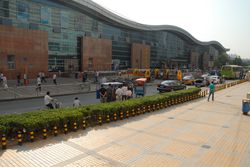
Learning from... Tongzhou
Learning from... Tongzhou
Actions:
Description:
It has been standard Chinese urban policy to develop new towns in overpopulated metropolitan regions since the 1990s. This lecture by Jing Zhou takes the case of Tongzhou near Beijing as an example of the resulting mixture of planned and unplanned urban development.Tongzhou town was first planned as a satellite town in the 1950s and founded on a historic harbour town. Its(...)
It has been standard Chinese urban policy to develop new towns in overpopulated metropolitan regions since the 1990s. This lecture by Jing Zhou takes the case of Tongzhou near Beijing as an example of the resulting mixture of planned and unplanned urban development.Tongzhou town was first planned as a satellite town in the 1950s and founded on a historic harbour town. Its(...)
Location:
Paul Desmarais Theatre
Paul Desmarais Theatre
Date:
10 April 2014 , 6pm
10 April 2014 , 6pm
Title:
Learning from... Tongzhou
Actions:
Description:
It has been standard Chinese urban policy to develop new towns in overpopulated metropolitan regions since the 1990s. This lecture by Jing Zhou takes the case of Tongzhou near Beijing as an example of the resulting mixture of planned and unplanned urban development.Tongzhou town was first planned as a satellite town in the 1950s and founded on a historic harbour town. Its(...)
Learning from... Tongzhou
Actions:
Description:
It has been standard Chinese urban policy to develop new towns in overpopulated metropolitan regions since the 1990s. This lecture by Jing Zhou takes the case of Tongzhou near Beijing as an example of the resulting mixture of planned and unplanned urban development.Tongzhou town was first planned as a satellite town in the 1950s and founded on a historic harbour town. Its(...)
Form:
events
events
Date:
10 April 2014
6pm
10 April 2014
6pm
Location:
Paul Desmarais Theatre
Paul Desmarais Theatre
Level of archival description:
Project
Project
Reference number:
AP143.S4.D65
Description:
File documents the unexecuted project for the University Art Museum, Long Beach, California. Material in this file was produced between 1986 and 1988. California State University, Long Beach (CSULB), commissioned Eisenman/Robertson Architects to design an art museum adjacent to the main campus entrance. The 67,500-square-foot building was to comprise four galleries, a black-box theater, an auditorium, a cafe, conference rooms, a library, offices, preparation spaces, and storage vaults. The project, sited on a 23-acre arboretum, included landscaping; terraced sculpture courtyards, botanical gardens, and a two-acre pond. Eisenman linked the northern and southern parts of the arboretum by an elevated public walkway through the museum. Sets of drawings were presented on 8 and 30 April, 2 June, and 5 Aug. In the first design phase Eisenman explores the cartographic figures which form the basis of his artificial excavation when superposed: a series of sketches establishes the analogical relationships which fix the relative scales of the plans and produce the superpositions; another series contextualizes the superposed figures by placing them within the museum site (DR1987:0859:087-090). The second phase concerns the building; the working model shows the building carved out of a square pit, from which spring an oil derrick and a reconstruction of a recreational pier (Rainbow Pier, 1920s) used here as circulatory bridge (DR1987:0859:160). In the third phase the architect systematizes his archeological procedure by using five significant cartographic dates - 1849, 1889, 1949, 1989, 2049 - each corresponding to a specific superposition (see DR1987:0859:274-277). In the fourth phase, Eisenman simplifies the superposition of 2049 to a few iconic colour-coded forms: ranch (green), ranch house (blue), campus site (red), and water forms (river and pond) (gold). Material for the fourth phase includes three relief models, four presentation drawings, and a model (property of the CSULB) (relief models: DR1987:0859:001-003; drawings: DR1987:0859:004-008). Eisenman "inhabits" his artifical archeology by detailed planning of interior spaces, and gives substance to the cartographic traces in a series of sketch sections, perspectives, and working models. Working models reveal how the central "canal" area gradually became the museum's access point (DR1987:0859:484-490); the museum, galleries, offices, and preparation areas are on one side of this deep cut, while the cafeteria and black-box theater are on the other. The upper level was to house offices, meeting rooms, and the library. File contains audiovisual material, conceptual drawings, design development drawings, presentation drawings, reference drawings, working drawings, photographic materials, and textual records.
AP143.S4.D65
Description:
File documents the unexecuted project for the University Art Museum, Long Beach, California. Material in this file was produced between 1986 and 1988. California State University, Long Beach (CSULB), commissioned Eisenman/Robertson Architects to design an art museum adjacent to the main campus entrance. The 67,500-square-foot building was to comprise four galleries, a black-box theater, an auditorium, a cafe, conference rooms, a library, offices, preparation spaces, and storage vaults. The project, sited on a 23-acre arboretum, included landscaping; terraced sculpture courtyards, botanical gardens, and a two-acre pond. Eisenman linked the northern and southern parts of the arboretum by an elevated public walkway through the museum. Sets of drawings were presented on 8 and 30 April, 2 June, and 5 Aug. In the first design phase Eisenman explores the cartographic figures which form the basis of his artificial excavation when superposed: a series of sketches establishes the analogical relationships which fix the relative scales of the plans and produce the superpositions; another series contextualizes the superposed figures by placing them within the museum site (DR1987:0859:087-090). The second phase concerns the building; the working model shows the building carved out of a square pit, from which spring an oil derrick and a reconstruction of a recreational pier (Rainbow Pier, 1920s) used here as circulatory bridge (DR1987:0859:160). In the third phase the architect systematizes his archeological procedure by using five significant cartographic dates - 1849, 1889, 1949, 1989, 2049 - each corresponding to a specific superposition (see DR1987:0859:274-277). In the fourth phase, Eisenman simplifies the superposition of 2049 to a few iconic colour-coded forms: ranch (green), ranch house (blue), campus site (red), and water forms (river and pond) (gold). Material for the fourth phase includes three relief models, four presentation drawings, and a model (property of the CSULB) (relief models: DR1987:0859:001-003; drawings: DR1987:0859:004-008). Eisenman "inhabits" his artifical archeology by detailed planning of interior spaces, and gives substance to the cartographic traces in a series of sketch sections, perspectives, and working models. Working models reveal how the central "canal" area gradually became the museum's access point (DR1987:0859:484-490); the museum, galleries, offices, and preparation areas are on one side of this deep cut, while the cafeteria and black-box theater are on the other. The upper level was to house offices, meeting rooms, and the library. File contains audiovisual material, conceptual drawings, design development drawings, presentation drawings, reference drawings, working drawings, photographic materials, and textual records.
People:
Date:
1986-1988
1986-1988
Title:
University Art Museum
Actions:
AP143.S4.D65
Description:
File documents the unexecuted project for the University Art Museum, Long Beach, California. Material in this file was produced between 1986 and 1988. California State University, Long Beach (CSULB), commissioned Eisenman/Robertson Architects to design an art museum adjacent to the main campus entrance. The 67,500-square-foot building was to comprise four galleries, a black-box theater, an auditorium, a cafe, conference rooms, a library, offices, preparation spaces, and storage vaults. The project, sited on a 23-acre arboretum, included landscaping; terraced sculpture courtyards, botanical gardens, and a two-acre pond. Eisenman linked the northern and southern parts of the arboretum by an elevated public walkway through the museum. Sets of drawings were presented on 8 and 30 April, 2 June, and 5 Aug. In the first design phase Eisenman explores the cartographic figures which form the basis of his artificial excavation when superposed: a series of sketches establishes the analogical relationships which fix the relative scales of the plans and produce the superpositions; another series contextualizes the superposed figures by placing them within the museum site (DR1987:0859:087-090). The second phase concerns the building; the working model shows the building carved out of a square pit, from which spring an oil derrick and a reconstruction of a recreational pier (Rainbow Pier, 1920s) used here as circulatory bridge (DR1987:0859:160). In the third phase the architect systematizes his archeological procedure by using five significant cartographic dates - 1849, 1889, 1949, 1989, 2049 - each corresponding to a specific superposition (see DR1987:0859:274-277). In the fourth phase, Eisenman simplifies the superposition of 2049 to a few iconic colour-coded forms: ranch (green), ranch house (blue), campus site (red), and water forms (river and pond) (gold). Material for the fourth phase includes three relief models, four presentation drawings, and a model (property of the CSULB) (relief models: DR1987:0859:001-003; drawings: DR1987:0859:004-008). Eisenman "inhabits" his artifical archeology by detailed planning of interior spaces, and gives substance to the cartographic traces in a series of sketch sections, perspectives, and working models. Working models reveal how the central "canal" area gradually became the museum's access point (DR1987:0859:484-490); the museum, galleries, offices, and preparation areas are on one side of this deep cut, while the cafeteria and black-box theater are on the other. The upper level was to house offices, meeting rooms, and the library. File contains audiovisual material, conceptual drawings, design development drawings, presentation drawings, reference drawings, working drawings, photographic materials, and textual records.
University Art Museum
Actions:
AP143.S4.D65
Description:
File documents the unexecuted project for the University Art Museum, Long Beach, California. Material in this file was produced between 1986 and 1988. California State University, Long Beach (CSULB), commissioned Eisenman/Robertson Architects to design an art museum adjacent to the main campus entrance. The 67,500-square-foot building was to comprise four galleries, a black-box theater, an auditorium, a cafe, conference rooms, a library, offices, preparation spaces, and storage vaults. The project, sited on a 23-acre arboretum, included landscaping; terraced sculpture courtyards, botanical gardens, and a two-acre pond. Eisenman linked the northern and southern parts of the arboretum by an elevated public walkway through the museum. Sets of drawings were presented on 8 and 30 April, 2 June, and 5 Aug. In the first design phase Eisenman explores the cartographic figures which form the basis of his artificial excavation when superposed: a series of sketches establishes the analogical relationships which fix the relative scales of the plans and produce the superpositions; another series contextualizes the superposed figures by placing them within the museum site (DR1987:0859:087-090). The second phase concerns the building; the working model shows the building carved out of a square pit, from which spring an oil derrick and a reconstruction of a recreational pier (Rainbow Pier, 1920s) used here as circulatory bridge (DR1987:0859:160). In the third phase the architect systematizes his archeological procedure by using five significant cartographic dates - 1849, 1889, 1949, 1989, 2049 - each corresponding to a specific superposition (see DR1987:0859:274-277). In the fourth phase, Eisenman simplifies the superposition of 2049 to a few iconic colour-coded forms: ranch (green), ranch house (blue), campus site (red), and water forms (river and pond) (gold). Material for the fourth phase includes three relief models, four presentation drawings, and a model (property of the CSULB) (relief models: DR1987:0859:001-003; drawings: DR1987:0859:004-008). Eisenman "inhabits" his artifical archeology by detailed planning of interior spaces, and gives substance to the cartographic traces in a series of sketch sections, perspectives, and working models. Working models reveal how the central "canal" area gradually became the museum's access point (DR1987:0859:484-490); the museum, galleries, offices, and preparation areas are on one side of this deep cut, while the cafeteria and black-box theater are on the other. The upper level was to house offices, meeting rooms, and the library. File contains audiovisual material, conceptual drawings, design development drawings, presentation drawings, reference drawings, working drawings, photographic materials, and textual records.
Level of archival description:
File 65
File 65
Date:
1986-1988
1986-1988
People:
Level of archival description:
Series
Series
Actions:
Reference number:
AP193.S2
Description:
Series 2, I’ve heard about and Hypnosis chamber, 2004-2006, relates to the conception of the urban structure “I’ve heard about”. The records contain algorithmically-generated images, renderings, pictures of models and exhibitions. There are also photographs of the contour crafting process, 3D models and animated renderings illustrating the construction process of the structure. The project is a conceptual, unbuilt project that is meant to be a habitable organism, an adaptive landscape in a constant state of evolution. By means of transitory scenarios in which the operational mode is entropy and uncertainty, it develops open algorithms based on growth scripts permeable not only to human expressions, but also to the most discrete data such as the chemical emissions (for example due to stress or anxiety) of those who inhabit it. The chemical information is harvested through nanoreceptors feeding the VIAB machine with information. This biostructure becomes the visible part of human contingencies and their negotiation in real time. The structure is conceptualized to be in constant construction through the VIAB machine which is also a constituent of the structure itself. It secretes fiber cement, shaping the landscape where it is located and through which it moves. It generates the reticular structure using a process modelled on contour crafting. The VIAB machine was developed with Robotics Research Lab of the University of Southern California and takes its name from the terms viability and variability. R&Sie(n) considers that due to its mode of emergence “I’ve heard about” fabrication is not subjugated to any political power. Hypnosis chamber is a component of “I’ve heard about”. It consists of an indoor chamber, which was realized as a full-scale sample constructed through automated machinery. The chamber is situated as a part of the whole urban structure presented by “I’ve heard about,” and its goal is to immerse the audience into the project, into a fictional environment only reachable by hypnosis. In this context, hypnosis is a way to help citizens escape from their social condition and experience the new condition of citizenship imagined in “I’ve heard about”, where democracy is re-evaluated as a process of self-determination. Both parts of the projects were shown in contemporary art museums. First at Musée d’art de la ville de Paris in Paris (2005), the Hypnotic chamber is permanently on view at Towada Art Center in Towanda, Japan. AP193.S4 contains a video orienting the project into François Roche theoretical stance, research as speculation, that can be summarize as the use of technological tools to take a critical and political position through esthetic in order to open new lines of thoughts. AP193.S4 contains an updated version of the VIAB machine
AP193.S2
Description:
Series 2, I’ve heard about and Hypnosis chamber, 2004-2006, relates to the conception of the urban structure “I’ve heard about”. The records contain algorithmically-generated images, renderings, pictures of models and exhibitions. There are also photographs of the contour crafting process, 3D models and animated renderings illustrating the construction process of the structure. The project is a conceptual, unbuilt project that is meant to be a habitable organism, an adaptive landscape in a constant state of evolution. By means of transitory scenarios in which the operational mode is entropy and uncertainty, it develops open algorithms based on growth scripts permeable not only to human expressions, but also to the most discrete data such as the chemical emissions (for example due to stress or anxiety) of those who inhabit it. The chemical information is harvested through nanoreceptors feeding the VIAB machine with information. This biostructure becomes the visible part of human contingencies and their negotiation in real time. The structure is conceptualized to be in constant construction through the VIAB machine which is also a constituent of the structure itself. It secretes fiber cement, shaping the landscape where it is located and through which it moves. It generates the reticular structure using a process modelled on contour crafting. The VIAB machine was developed with Robotics Research Lab of the University of Southern California and takes its name from the terms viability and variability. R&Sie(n) considers that due to its mode of emergence “I’ve heard about” fabrication is not subjugated to any political power. Hypnosis chamber is a component of “I’ve heard about”. It consists of an indoor chamber, which was realized as a full-scale sample constructed through automated machinery. The chamber is situated as a part of the whole urban structure presented by “I’ve heard about,” and its goal is to immerse the audience into the project, into a fictional environment only reachable by hypnosis. In this context, hypnosis is a way to help citizens escape from their social condition and experience the new condition of citizenship imagined in “I’ve heard about”, where democracy is re-evaluated as a process of self-determination. Both parts of the projects were shown in contemporary art museums. First at Musée d’art de la ville de Paris in Paris (2005), the Hypnotic chamber is permanently on view at Towada Art Center in Towanda, Japan. AP193.S4 contains a video orienting the project into François Roche theoretical stance, research as speculation, that can be summarize as the use of technological tools to take a critical and political position through esthetic in order to open new lines of thoughts. AP193.S4 contains an updated version of the VIAB machine
People:
Date:
2004-2006
2004-2006
Title:
I’ve heard about and Hypnosis chamber
Actions:
AP193.S2
Description:
Series 2, I’ve heard about and Hypnosis chamber, 2004-2006, relates to the conception of the urban structure “I’ve heard about”. The records contain algorithmically-generated images, renderings, pictures of models and exhibitions. There are also photographs of the contour crafting process, 3D models and animated renderings illustrating the construction process of the structure. The project is a conceptual, unbuilt project that is meant to be a habitable organism, an adaptive landscape in a constant state of evolution. By means of transitory scenarios in which the operational mode is entropy and uncertainty, it develops open algorithms based on growth scripts permeable not only to human expressions, but also to the most discrete data such as the chemical emissions (for example due to stress or anxiety) of those who inhabit it. The chemical information is harvested through nanoreceptors feeding the VIAB machine with information. This biostructure becomes the visible part of human contingencies and their negotiation in real time. The structure is conceptualized to be in constant construction through the VIAB machine which is also a constituent of the structure itself. It secretes fiber cement, shaping the landscape where it is located and through which it moves. It generates the reticular structure using a process modelled on contour crafting. The VIAB machine was developed with Robotics Research Lab of the University of Southern California and takes its name from the terms viability and variability. R&Sie(n) considers that due to its mode of emergence “I’ve heard about” fabrication is not subjugated to any political power. Hypnosis chamber is a component of “I’ve heard about”. It consists of an indoor chamber, which was realized as a full-scale sample constructed through automated machinery. The chamber is situated as a part of the whole urban structure presented by “I’ve heard about,” and its goal is to immerse the audience into the project, into a fictional environment only reachable by hypnosis. In this context, hypnosis is a way to help citizens escape from their social condition and experience the new condition of citizenship imagined in “I’ve heard about”, where democracy is re-evaluated as a process of self-determination. Both parts of the projects were shown in contemporary art museums. First at Musée d’art de la ville de Paris in Paris (2005), the Hypnotic chamber is permanently on view at Towada Art Center in Towanda, Japan. AP193.S4 contains a video orienting the project into François Roche theoretical stance, research as speculation, that can be summarize as the use of technological tools to take a critical and political position through esthetic in order to open new lines of thoughts. AP193.S4 contains an updated version of the VIAB machine
I’ve heard about and Hypnosis chamber
Actions:
AP193.S2
Description:
Series 2, I’ve heard about and Hypnosis chamber, 2004-2006, relates to the conception of the urban structure “I’ve heard about”. The records contain algorithmically-generated images, renderings, pictures of models and exhibitions. There are also photographs of the contour crafting process, 3D models and animated renderings illustrating the construction process of the structure. The project is a conceptual, unbuilt project that is meant to be a habitable organism, an adaptive landscape in a constant state of evolution. By means of transitory scenarios in which the operational mode is entropy and uncertainty, it develops open algorithms based on growth scripts permeable not only to human expressions, but also to the most discrete data such as the chemical emissions (for example due to stress or anxiety) of those who inhabit it. The chemical information is harvested through nanoreceptors feeding the VIAB machine with information. This biostructure becomes the visible part of human contingencies and their negotiation in real time. The structure is conceptualized to be in constant construction through the VIAB machine which is also a constituent of the structure itself. It secretes fiber cement, shaping the landscape where it is located and through which it moves. It generates the reticular structure using a process modelled on contour crafting. The VIAB machine was developed with Robotics Research Lab of the University of Southern California and takes its name from the terms viability and variability. R&Sie(n) considers that due to its mode of emergence “I’ve heard about” fabrication is not subjugated to any political power. Hypnosis chamber is a component of “I’ve heard about”. It consists of an indoor chamber, which was realized as a full-scale sample constructed through automated machinery. The chamber is situated as a part of the whole urban structure presented by “I’ve heard about,” and its goal is to immerse the audience into the project, into a fictional environment only reachable by hypnosis. In this context, hypnosis is a way to help citizens escape from their social condition and experience the new condition of citizenship imagined in “I’ve heard about”, where democracy is re-evaluated as a process of self-determination. Both parts of the projects were shown in contemporary art museums. First at Musée d’art de la ville de Paris in Paris (2005), the Hypnotic chamber is permanently on view at Towada Art Center in Towanda, Japan. AP193.S4 contains a video orienting the project into François Roche theoretical stance, research as speculation, that can be summarize as the use of technological tools to take a critical and political position through esthetic in order to open new lines of thoughts. AP193.S4 contains an updated version of the VIAB machine
Level of archival description:
Series
Series
Date:
2004-2006
2004-2006
People:
Form:
research
research
Title:
Visiting Scholars 2018
Visiting Scholars 2018
Actions:
Description:
Elisa Dainese,Dalhousie University, Canada Architectural Culture in Translation: Postwar Cities and African Villages Martina Hrabová, Institute of Art History, Czech Academy of Sciences, Czech Republic The Geography of an Intellectual Field: The Social Network of Le Corbusier’s Studio Lina Malfona, Rome Sapienza, Italy Political Mind: Alvaro Siza’s Urban Projects From(...)
Elisa Dainese,Dalhousie University, Canada Architectural Culture in Translation: Postwar Cities and African Villages Martina Hrabová, Institute of Art History, Czech Academy of Sciences, Czech Republic The Geography of an Intellectual Field: The Social Network of Le Corbusier’s Studio Lina Malfona, Rome Sapienza, Italy Political Mind: Alvaro Siza’s Urban Projects From(...)
Date:
June 2018 to September 2018
June 2018 to September 2018
Title:
Visiting Scholars 2018
Actions:
Description:
Elisa Dainese,Dalhousie University, Canada Architectural Culture in Translation: Postwar Cities and African Villages Martina Hrabová, Institute of Art History, Czech Academy of Sciences, Czech Republic The Geography of an Intellectual Field: The Social Network of Le Corbusier’s Studio Lina Malfona, Rome Sapienza, Italy Political Mind: Alvaro Siza’s Urban Projects From(...)
Visiting Scholars 2018
Actions:
Description:
Elisa Dainese,Dalhousie University, Canada Architectural Culture in Translation: Postwar Cities and African Villages Martina Hrabová, Institute of Art History, Czech Academy of Sciences, Czech Republic The Geography of an Intellectual Field: The Social Network of Le Corbusier’s Studio Lina Malfona, Rome Sapienza, Italy Political Mind: Alvaro Siza’s Urban Projects From(...)
Form:
research
research
Date:
June 2018 to
September 2018
June 2018 to
September 2018
Form:
archives
Level of archival description:
Fonds
archives
Level of archival description:
Fonds
Title:
Gene Summers fonds
Gene Summers fonds
Reference number:
AP114
Synopsis:
The Gene Summers fonds documents primarily the later part of Gene Summers' career as an architect, developer, artist and art collector. Summer's early work with the Office of Mies van der Rohe and C.F. Murphy Associates is summarily represented by notes, sketches and photographs.
AP114
Synopsis:
The Gene Summers fonds documents primarily the later part of Gene Summers' career as an architect, developer, artist and art collector. Summer's early work with the Office of Mies van der Rohe and C.F. Murphy Associates is summarily represented by notes, sketches and photographs.
People:
Date:
1957 - 2004
1957 - 2004
Title:
Gene Summers fonds
Actions:
AP114
Synopsis:
The Gene Summers fonds documents primarily the later part of Gene Summers' career as an architect, developer, artist and art collector. Summer's early work with the Office of Mies van der Rohe and C.F. Murphy Associates is summarily represented by notes, sketches and photographs.
Gene Summers fonds
Actions:
AP114
Synopsis:
The Gene Summers fonds documents primarily the later part of Gene Summers' career as an architect, developer, artist and art collector. Summer's early work with the Office of Mies van der Rohe and C.F. Murphy Associates is summarily represented by notes, sketches and photographs.
Form:
archives
Level of archival description:
Fonds
archives
Level of archival description:
Fonds
Date:
1957 - 2004
1957 - 2004
People:
Form:
archives
Level of archival description:
Fonds
archives
Level of archival description:
Fonds
Actions:
Reference number:
AP226
Synopsis:
The Toyo Ito & Associates, Architects fonds, 1970 – 2011, documents the studio’s architectural work and involvement in selected exhibitions in the 1970s and 1980s. The records in this fonds represent 34 architectural projects, including built, unbuilt, and conceptual projects. The majority of the projects are located in Japan and are mostly documented through drawings as well as a limited number of videos, models, panels, textual records, and photographs. The fonds also contains records related to Toyo Ito & Associates, Architects’ participation in three exhibitions in the USA and the UK in 1978 and 1986.
AP226
Synopsis:
The Toyo Ito & Associates, Architects fonds, 1970 – 2011, documents the studio’s architectural work and involvement in selected exhibitions in the 1970s and 1980s. The records in this fonds represent 34 architectural projects, including built, unbuilt, and conceptual projects. The majority of the projects are located in Japan and are mostly documented through drawings as well as a limited number of videos, models, panels, textual records, and photographs. The fonds also contains records related to Toyo Ito & Associates, Architects’ participation in three exhibitions in the USA and the UK in 1978 and 1986.
People:
Date:
1970 - 2011
1970 - 2011
Title:
Toyo Ito & Associates, Architects fonds
Actions:
AP226
Synopsis:
The Toyo Ito & Associates, Architects fonds, 1970 – 2011, documents the studio’s architectural work and involvement in selected exhibitions in the 1970s and 1980s. The records in this fonds represent 34 architectural projects, including built, unbuilt, and conceptual projects. The majority of the projects are located in Japan and are mostly documented through drawings as well as a limited number of videos, models, panels, textual records, and photographs. The fonds also contains records related to Toyo Ito & Associates, Architects’ participation in three exhibitions in the USA and the UK in 1978 and 1986.
Toyo Ito & Associates, Architects fonds
Actions:
AP226
Synopsis:
The Toyo Ito & Associates, Architects fonds, 1970 – 2011, documents the studio’s architectural work and involvement in selected exhibitions in the 1970s and 1980s. The records in this fonds represent 34 architectural projects, including built, unbuilt, and conceptual projects. The majority of the projects are located in Japan and are mostly documented through drawings as well as a limited number of videos, models, panels, textual records, and photographs. The fonds also contains records related to Toyo Ito & Associates, Architects’ participation in three exhibitions in the USA and the UK in 1978 and 1986.
Form:
archives
Level of archival description:
Fonds
archives
Level of archival description:
Fonds
Date:
1970 - 2011
1970 - 2011
People:
Form:
events
events
Actions:
Description:
As the Earth’s climate reaches a state of constant instability, there is growing awareness of how global warming can affect human rights and increase social strife. Less attention has been paid to the ways in which political violence and human rights abuses, from past and present, constitute driving factors in the transformations of the global environment and climate.(...)
As the Earth’s climate reaches a state of constant instability, there is growing awareness of how global warming can affect human rights and increase social strife. Less attention has been paid to the ways in which political violence and human rights abuses, from past and present, constitute driving factors in the transformations of the global environment and climate.(...)
Location:
Paul Demarais Theatre
Paul Demarais Theatre
Date:
1 December 2016, 6pm
1 December 2016, 6pm
Title:
In the Frontiers of Climate Change (Toward a Politics of Nonhuman Rights)
Actions:
Description:
As the Earth’s climate reaches a state of constant instability, there is growing awareness of how global warming can affect human rights and increase social strife. Less attention has been paid to the ways in which political violence and human rights abuses, from past and present, constitute driving factors in the transformations of the global environment and climate.(...)
In the Frontiers of Climate Change (Toward a Politics of Nonhuman Rights)
Actions:
Description:
As the Earth’s climate reaches a state of constant instability, there is growing awareness of how global warming can affect human rights and increase social strife. Less attention has been paid to the ways in which political violence and human rights abuses, from past and present, constitute driving factors in the transformations of the global environment and climate.(...)
Form:
events
events
Date:
1 December 2016
6pm
1 December 2016
6pm
Location:
Paul Demarais Theatre
Paul Demarais Theatre
Form:
research
research
Title:
Visiting Scholars 2011
Visiting Scholars 2011
Actions:
Description:
Pedro Ignacio Alonso, Pontificia Universidad Católica de Chile, Santiago, Chile Topic: The Soviet I-464 Building System in Cuba and Chile, 1963-1973 Gaia Caramellino, Politecnico di Torino, Turin, Italy Topic: Architecture for Public Housing in the United States, 1930s-1940s Penelope Dean, University of Illinois, Chicago, United States Topic: Choice by Design,(...)
Pedro Ignacio Alonso, Pontificia Universidad Católica de Chile, Santiago, Chile Topic: The Soviet I-464 Building System in Cuba and Chile, 1963-1973 Gaia Caramellino, Politecnico di Torino, Turin, Italy Topic: Architecture for Public Housing in the United States, 1930s-1940s Penelope Dean, University of Illinois, Chicago, United States Topic: Choice by Design,(...)
Date:
April 2011 to October 2011
April 2011 to October 2011
Title:
Visiting Scholars 2011
Actions:
Description:
Pedro Ignacio Alonso, Pontificia Universidad Católica de Chile, Santiago, Chile Topic: The Soviet I-464 Building System in Cuba and Chile, 1963-1973 Gaia Caramellino, Politecnico di Torino, Turin, Italy Topic: Architecture for Public Housing in the United States, 1930s-1940s Penelope Dean, University of Illinois, Chicago, United States Topic: Choice by Design,(...)
Visiting Scholars 2011
Actions:
Description:
Pedro Ignacio Alonso, Pontificia Universidad Católica de Chile, Santiago, Chile Topic: The Soviet I-464 Building System in Cuba and Chile, 1963-1973 Gaia Caramellino, Politecnico di Torino, Turin, Italy Topic: Architecture for Public Housing in the United States, 1930s-1940s Penelope Dean, University of Illinois, Chicago, United States Topic: Choice by Design,(...)
Form:
research
research
Date:
April 2011 to
October 2011
April 2011 to
October 2011
Quantity:
19 file
19 file
Actions:
Reference number:
DR1999:0365
Description:
videocassettes include: - 2/18/86 - Texas A + M University "Arrows, Eros and More Errors" - 12/1/88 - P.E. Higgins Renovation - June 1988 - Philip Johnson at OSU - 8/17/89 - P.E./students/faculty/staff DAAP building - August 1989 - "Banyoles al Costat de Barcelona" in English - November 16th, 1989 - Wexner Symposium - OSU - Fall 1989 - All School Lecture Series Rice University, Texas - 7/19/90 - Greater Columbus Convention Center Promo video - 3/1/90 - DAAP students/faculty/staff meeting - March 1990 - lecture University of Tennessee - July 1st - 4th 1990 - Tokyo, Koizumi - 11/1/91 - P.E./Columbia - 3/25/91 - Columbia University lecture - 4/15/92 - Pacific Design Center, Westweek 1992 "Venice Biennale" - 8/19/92 & 11/4/92 - T.V. news monitoring service - August 1992 - Nunotani on Japan T.V. - June 24th, 1993 - Philip Johnson on Charlie Rose - October 25th, 1993 - DAAP - preground breaking lecture -Peter Eisenman, Penn State April 7, 1994
DR1999:0365
Description:
videocassettes include: - 2/18/86 - Texas A + M University "Arrows, Eros and More Errors" - 12/1/88 - P.E. Higgins Renovation - June 1988 - Philip Johnson at OSU - 8/17/89 - P.E./students/faculty/staff DAAP building - August 1989 - "Banyoles al Costat de Barcelona" in English - November 16th, 1989 - Wexner Symposium - OSU - Fall 1989 - All School Lecture Series Rice University, Texas - 7/19/90 - Greater Columbus Convention Center Promo video - 3/1/90 - DAAP students/faculty/staff meeting - March 1990 - lecture University of Tennessee - July 1st - 4th 1990 - Tokyo, Koizumi - 11/1/91 - P.E./Columbia - 3/25/91 - Columbia University lecture - 4/15/92 - Pacific Design Center, Westweek 1992 "Venice Biennale" - 8/19/92 & 11/4/92 - T.V. news monitoring service - August 1992 - Nunotani on Japan T.V. - June 24th, 1993 - Philip Johnson on Charlie Rose - October 25th, 1993 - DAAP - preground breaking lecture -Peter Eisenman, Penn State April 7, 1994
People:
Title:
Lectures for Wexner Center, Columbus, Ohio and Banyoles Olympic Hotel, Banyoles, Spain
Actions:
DR1999:0365
Description:
videocassettes include: - 2/18/86 - Texas A + M University "Arrows, Eros and More Errors" - 12/1/88 - P.E. Higgins Renovation - June 1988 - Philip Johnson at OSU - 8/17/89 - P.E./students/faculty/staff DAAP building - August 1989 - "Banyoles al Costat de Barcelona" in English - November 16th, 1989 - Wexner Symposium - OSU - Fall 1989 - All School Lecture Series Rice University, Texas - 7/19/90 - Greater Columbus Convention Center Promo video - 3/1/90 - DAAP students/faculty/staff meeting - March 1990 - lecture University of Tennessee - July 1st - 4th 1990 - Tokyo, Koizumi - 11/1/91 - P.E./Columbia - 3/25/91 - Columbia University lecture - 4/15/92 - Pacific Design Center, Westweek 1992 "Venice Biennale" - 8/19/92 & 11/4/92 - T.V. news monitoring service - August 1992 - Nunotani on Japan T.V. - June 24th, 1993 - Philip Johnson on Charlie Rose - October 25th, 1993 - DAAP - preground breaking lecture -Peter Eisenman, Penn State April 7, 1994
Lectures for Wexner Center, Columbus, Ohio and Banyoles Olympic Hotel, Banyoles, Spain
Actions:
DR1999:0365
Description:
videocassettes include: - 2/18/86 - Texas A + M University "Arrows, Eros and More Errors" - 12/1/88 - P.E. Higgins Renovation - June 1988 - Philip Johnson at OSU - 8/17/89 - P.E./students/faculty/staff DAAP building - August 1989 - "Banyoles al Costat de Barcelona" in English - November 16th, 1989 - Wexner Symposium - OSU - Fall 1989 - All School Lecture Series Rice University, Texas - 7/19/90 - Greater Columbus Convention Center Promo video - 3/1/90 - DAAP students/faculty/staff meeting - March 1990 - lecture University of Tennessee - July 1st - 4th 1990 - Tokyo, Koizumi - 11/1/91 - P.E./Columbia - 3/25/91 - Columbia University lecture - 4/15/92 - Pacific Design Center, Westweek 1992 "Venice Biennale" - 8/19/92 & 11/4/92 - T.V. news monitoring service - August 1992 - Nunotani on Japan T.V. - June 24th, 1993 - Philip Johnson on Charlie Rose - October 25th, 1993 - DAAP - preground breaking lecture -Peter Eisenman, Penn State April 7, 1994
Quantity:
19 file
19 file
People:


