


19461 Results
Form:
exhibitions
exhibitions
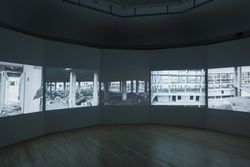
Location:
Octagonal gallery
Octagonal gallery
Date:
7 February 2020 to 4 October 2020
7 February 2020 to 4 October 2020
Form:
exhibitions
exhibitions
Date:
7 February 2020 to
4 October 2020
7 February 2020 to
4 October 2020
Location:
Octagonal gallery
Octagonal gallery
Form:
exhibitions
exhibitions
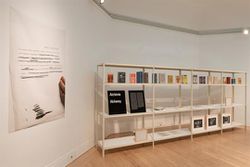
Location:
Octagonal gallery
Octagonal gallery
Date:
7 June 2019 to 8 September 2019
7 June 2019 to 8 September 2019
Form:
exhibitions
exhibitions
Date:
7 June 2019 to
8 September 2019
7 June 2019 to
8 September 2019
Location:
Octagonal gallery
Octagonal gallery
Form:
events
events

Actions:
Description:
To coincide with the opening of our exhibition To Build Law, we invite you to a roundtable on renovation and rehabilitation policies in Canada. Olaf Grawert, Alina Kolar (bplus.xyz), and Juliette Cook (Ha/f Climate Design) will discuss the economic, environmental, and legal challenges of renovation.
To coincide with the opening of our exhibition To Build Law, we invite you to a roundtable on renovation and rehabilitation policies in Canada. Olaf Grawert, Alina Kolar (bplus.xyz), and Juliette Cook (Ha/f Climate Design) will discuss the economic, environmental, and legal challenges of renovation.
Location:
Shaughnessy House Keyword(s):
renovation and rehabilitation policies in Canada, roundtable, economic, environmental, and legal challenges of renovation
Shaughnessy House Keyword(s):
renovation and rehabilitation policies in Canada, roundtable, economic, environmental, and legal challenges of renovation
Date:
11 December 2024, 6pm
11 December 2024, 6pm
Title:
Tear Down or Repair
Actions:
Description:
To coincide with the opening of our exhibition To Build Law, we invite you to a roundtable on renovation and rehabilitation policies in Canada. Olaf Grawert, Alina Kolar (bplus.xyz), and Juliette Cook (Ha/f Climate Design) will discuss the economic, environmental, and legal challenges of renovation.
Tear Down or Repair
Actions:
Description:
To coincide with the opening of our exhibition To Build Law, we invite you to a roundtable on renovation and rehabilitation policies in Canada. Olaf Grawert, Alina Kolar (bplus.xyz), and Juliette Cook (Ha/f Climate Design) will discuss the economic, environmental, and legal challenges of renovation.
Form:
events
events
Date:
11 December 2024
6pm
11 December 2024
6pm
Location:
Shaughnessy House Keyword(s):
renovation and rehabilitation policies in Canada, roundtable, economic, environmental, and legal challenges of renovation
Shaughnessy House Keyword(s):
renovation and rehabilitation policies in Canada, roundtable, economic, environmental, and legal challenges of renovation
Form:
events
events
Actions:
Description:
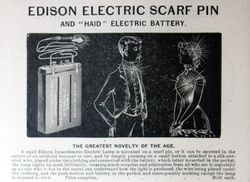
Visiting Scholar Katie Lloyd Thomas presents her research: In the United Kingdom, the naming and selection of building products—or ‘shopping’ on behalf of the client—only became part of the architect’s role during the vast expansion of mass manufacturing in the 1930s. These radical transformations, largely overlooked today, were enthusiastically embraced and debated by(...)
Visiting Scholar Katie Lloyd Thomas presents her research: In the United Kingdom, the naming and selection of building products—or ‘shopping’ on behalf of the client—only became part of the architect’s role during the vast expansion of mass manufacturing in the 1930s. These radical transformations, largely overlooked today, were enthusiastically embraced and debated by(...)
Location:
Shaughnessy House
Shaughnessy House
Date:
20 July 2017, 6pm
20 July 2017, 6pm
Title:
Visiting Scholar Seminar: Katie Lloyd Thomas
Actions:
Description:
Visiting Scholar Katie Lloyd Thomas presents her research: In the United Kingdom, the naming and selection of building products—or ‘shopping’ on behalf of the client—only became part of the architect’s role during the vast expansion of mass manufacturing in the 1930s. These radical transformations, largely overlooked today, were enthusiastically embraced and debated by(...)
Visiting Scholar Seminar: Katie Lloyd Thomas
Actions:
Description:
Visiting Scholar Katie Lloyd Thomas presents her research: In the United Kingdom, the naming and selection of building products—or ‘shopping’ on behalf of the client—only became part of the architect’s role during the vast expansion of mass manufacturing in the 1930s. These radical transformations, largely overlooked today, were enthusiastically embraced and debated by(...)
Form:
events
events
Date:
20 July 2017
6pm
20 July 2017
6pm
Location:
Shaughnessy House
Shaughnessy House
Form:
films
films
Title:
Into the Island
Into the Island
Actions:
Description:
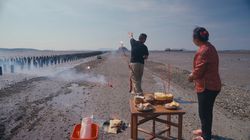
Into the Island follows Xu Tiantian of DnA in her discovery of essential elements, pressure points, and issues on the destabilizing terrain that is the ocean and its delicate ecosystem of Meizhou Island. It is the first chapter in a three part film and exhibition series, Groundwork.
Into the Island follows Xu Tiantian of DnA in her discovery of essential elements, pressure points, and issues on the destabilizing terrain that is the ocean and its delicate ecosystem of Meizhou Island. It is the first chapter in a three part film and exhibition series, Groundwork.
Date:
2024
2024
Title:
Into the Island
Actions:
Description:
Into the Island follows Xu Tiantian of DnA in her discovery of essential elements, pressure points, and issues on the destabilizing terrain that is the ocean and its delicate ecosystem of Meizhou Island. It is the first chapter in a three part film and exhibition series, Groundwork.
Into the Island
Actions:
Description:
Into the Island follows Xu Tiantian of DnA in her discovery of essential elements, pressure points, and issues on the destabilizing terrain that is the ocean and its delicate ecosystem of Meizhou Island. It is the first chapter in a three part film and exhibition series, Groundwork.
Form:
films
films
Date:
2024 to
2024
2024 to
2024
Level of archival description:
Series
Series
Reference number:
AP115.S2
Description:
Cette série porte sur le travail de documentation photographique de Robert Duchesnay du dôme géodésique du pavilon des États-Unis à l'exposition universelle de 1967 (Expo 67) à Montréal, au Québec. Le dôme, conçu par Buckminster Fuller, mesure 249 pieds de diamètre et 200 pieds de hauteur. Un incendie en 1976 détruit de revêtement de polymère du dôme et ne laisse que la structure en acier. En 1990, la structure est intégrée à l'aménagement du bâtiment d'un musée du l'environnement et les enjeux socio-environnementaux contemporains, la Biosphère. La série contient une sélection d'images de la série intitulée Dome Project élaborée entre 1983 et 1992. Cette série, qui compte 25 photographies, montre le pavillon des États-Unis sous différents angles, depuis l'extérieur et l'intérieur de la structure, ainsi que plusieurs détails architecturaux. La série nous renseigne sur l'état de l'édifice après l'incendie de 1976 et avant qu'il ne soit restauré entre 1993 et 1995 pour devenir la Biosphère; elle nous renseigne aussi sur la pratique artistique de Robert Duchesnay alors que sa principale préoccupation consistait à documenter l'état de ruines du pavillion des États-Unis, afin de sensibiliser l'opinion publique du danger qui menaçait l'édifice de disparaître.
AP115.S2
Description:
Cette série porte sur le travail de documentation photographique de Robert Duchesnay du dôme géodésique du pavilon des États-Unis à l'exposition universelle de 1967 (Expo 67) à Montréal, au Québec. Le dôme, conçu par Buckminster Fuller, mesure 249 pieds de diamètre et 200 pieds de hauteur. Un incendie en 1976 détruit de revêtement de polymère du dôme et ne laisse que la structure en acier. En 1990, la structure est intégrée à l'aménagement du bâtiment d'un musée du l'environnement et les enjeux socio-environnementaux contemporains, la Biosphère. La série contient une sélection d'images de la série intitulée Dome Project élaborée entre 1983 et 1992. Cette série, qui compte 25 photographies, montre le pavillon des États-Unis sous différents angles, depuis l'extérieur et l'intérieur de la structure, ainsi que plusieurs détails architecturaux. La série nous renseigne sur l'état de l'édifice après l'incendie de 1976 et avant qu'il ne soit restauré entre 1993 et 1995 pour devenir la Biosphère; elle nous renseigne aussi sur la pratique artistique de Robert Duchesnay alors que sa principale préoccupation consistait à documenter l'état de ruines du pavillion des États-Unis, afin de sensibiliser l'opinion publique du danger qui menaçait l'édifice de disparaître.
People:
Date:
circa 1884-1990
circa 1884-1990
Title:
Pavillon des États-Unis, Expo 67, Montréal, Québec
Actions:
AP115.S2
Description:
Cette série porte sur le travail de documentation photographique de Robert Duchesnay du dôme géodésique du pavilon des États-Unis à l'exposition universelle de 1967 (Expo 67) à Montréal, au Québec. Le dôme, conçu par Buckminster Fuller, mesure 249 pieds de diamètre et 200 pieds de hauteur. Un incendie en 1976 détruit de revêtement de polymère du dôme et ne laisse que la structure en acier. En 1990, la structure est intégrée à l'aménagement du bâtiment d'un musée du l'environnement et les enjeux socio-environnementaux contemporains, la Biosphère. La série contient une sélection d'images de la série intitulée Dome Project élaborée entre 1983 et 1992. Cette série, qui compte 25 photographies, montre le pavillon des États-Unis sous différents angles, depuis l'extérieur et l'intérieur de la structure, ainsi que plusieurs détails architecturaux. La série nous renseigne sur l'état de l'édifice après l'incendie de 1976 et avant qu'il ne soit restauré entre 1993 et 1995 pour devenir la Biosphère; elle nous renseigne aussi sur la pratique artistique de Robert Duchesnay alors que sa principale préoccupation consistait à documenter l'état de ruines du pavillion des États-Unis, afin de sensibiliser l'opinion publique du danger qui menaçait l'édifice de disparaître.
Pavillon des États-Unis, Expo 67, Montréal, Québec
Actions:
AP115.S2
Description:
Cette série porte sur le travail de documentation photographique de Robert Duchesnay du dôme géodésique du pavilon des États-Unis à l'exposition universelle de 1967 (Expo 67) à Montréal, au Québec. Le dôme, conçu par Buckminster Fuller, mesure 249 pieds de diamètre et 200 pieds de hauteur. Un incendie en 1976 détruit de revêtement de polymère du dôme et ne laisse que la structure en acier. En 1990, la structure est intégrée à l'aménagement du bâtiment d'un musée du l'environnement et les enjeux socio-environnementaux contemporains, la Biosphère. La série contient une sélection d'images de la série intitulée Dome Project élaborée entre 1983 et 1992. Cette série, qui compte 25 photographies, montre le pavillon des États-Unis sous différents angles, depuis l'extérieur et l'intérieur de la structure, ainsi que plusieurs détails architecturaux. La série nous renseigne sur l'état de l'édifice après l'incendie de 1976 et avant qu'il ne soit restauré entre 1993 et 1995 pour devenir la Biosphère; elle nous renseigne aussi sur la pratique artistique de Robert Duchesnay alors que sa principale préoccupation consistait à documenter l'état de ruines du pavillion des États-Unis, afin de sensibiliser l'opinion publique du danger qui menaçait l'édifice de disparaître.
Level of archival description:
Série
Série
Date:
circa 1884-1990
circa 1884-1990
People:
Level of archival description:
Series
Series
Title:
Œuvres du prix de Rome
Œuvres du prix de Rome
Actions:
Reference number:
AP066.S4
Description:
Cette série rassemble les documents produits par Jacques Rousseau dans le cadre du Prix de Rome (1988), soit: les esquisses préparatoires et les gravures blanches (sans encre) qui illustrent un projet de "Nouveau-Port" pour Montréal, et les dessins à la craie sèche sur papier intitulés "Mémoire virtuelle ...". On y retrouve également des avenues de projet qui n'ont pas été développées, "Étude du flanc est du Mont-Royal" et projet de "Boucliers de papier", et des documents issus de l'exposition intitulée Montréal vue de Rome présentée à la Maison Coloniale en mai 1990. Le dossier contient des dessins, des documents textuels, des documents photographiques et un artéfact. Description du projet par l'architecte: "Amorcé en 1985, lors de la consultation publique concernant le Vieux-Port de Montréal, "le projet du Nouveau Port" complète son cycle alors que je séjourne à Rome à titre de Prix de Rome du Conseil des Arts du Canada. Prétexte par excellence pour réfléchir sur l'espoir et la transformation de Montréal, le sujet du Nouveau Port m'est apparu comme le moyen d'informer une approche de la transformation de la ville. J'ai pensé le projet possible, nécessaire même et j'ai plongé." Jacques Rousseau, "Le projet du Nouveau Port", ARQ : Architecture-Québec, nº 67, p. 30.
AP066.S4
Description:
Cette série rassemble les documents produits par Jacques Rousseau dans le cadre du Prix de Rome (1988), soit: les esquisses préparatoires et les gravures blanches (sans encre) qui illustrent un projet de "Nouveau-Port" pour Montréal, et les dessins à la craie sèche sur papier intitulés "Mémoire virtuelle ...". On y retrouve également des avenues de projet qui n'ont pas été développées, "Étude du flanc est du Mont-Royal" et projet de "Boucliers de papier", et des documents issus de l'exposition intitulée Montréal vue de Rome présentée à la Maison Coloniale en mai 1990. Le dossier contient des dessins, des documents textuels, des documents photographiques et un artéfact. Description du projet par l'architecte: "Amorcé en 1985, lors de la consultation publique concernant le Vieux-Port de Montréal, "le projet du Nouveau Port" complète son cycle alors que je séjourne à Rome à titre de Prix de Rome du Conseil des Arts du Canada. Prétexte par excellence pour réfléchir sur l'espoir et la transformation de Montréal, le sujet du Nouveau Port m'est apparu comme le moyen d'informer une approche de la transformation de la ville. J'ai pensé le projet possible, nécessaire même et j'ai plongé." Jacques Rousseau, "Le projet du Nouveau Port", ARQ : Architecture-Québec, nº 67, p. 30.
People:
Date:
1987-1990
1987-1990
Title:
Œuvres du prix de Rome
Actions:
AP066.S4
Description:
Cette série rassemble les documents produits par Jacques Rousseau dans le cadre du Prix de Rome (1988), soit: les esquisses préparatoires et les gravures blanches (sans encre) qui illustrent un projet de "Nouveau-Port" pour Montréal, et les dessins à la craie sèche sur papier intitulés "Mémoire virtuelle ...". On y retrouve également des avenues de projet qui n'ont pas été développées, "Étude du flanc est du Mont-Royal" et projet de "Boucliers de papier", et des documents issus de l'exposition intitulée Montréal vue de Rome présentée à la Maison Coloniale en mai 1990. Le dossier contient des dessins, des documents textuels, des documents photographiques et un artéfact. Description du projet par l'architecte: "Amorcé en 1985, lors de la consultation publique concernant le Vieux-Port de Montréal, "le projet du Nouveau Port" complète son cycle alors que je séjourne à Rome à titre de Prix de Rome du Conseil des Arts du Canada. Prétexte par excellence pour réfléchir sur l'espoir et la transformation de Montréal, le sujet du Nouveau Port m'est apparu comme le moyen d'informer une approche de la transformation de la ville. J'ai pensé le projet possible, nécessaire même et j'ai plongé." Jacques Rousseau, "Le projet du Nouveau Port", ARQ : Architecture-Québec, nº 67, p. 30.
Œuvres du prix de Rome
Actions:
AP066.S4
Description:
Cette série rassemble les documents produits par Jacques Rousseau dans le cadre du Prix de Rome (1988), soit: les esquisses préparatoires et les gravures blanches (sans encre) qui illustrent un projet de "Nouveau-Port" pour Montréal, et les dessins à la craie sèche sur papier intitulés "Mémoire virtuelle ...". On y retrouve également des avenues de projet qui n'ont pas été développées, "Étude du flanc est du Mont-Royal" et projet de "Boucliers de papier", et des documents issus de l'exposition intitulée Montréal vue de Rome présentée à la Maison Coloniale en mai 1990. Le dossier contient des dessins, des documents textuels, des documents photographiques et un artéfact. Description du projet par l'architecte: "Amorcé en 1985, lors de la consultation publique concernant le Vieux-Port de Montréal, "le projet du Nouveau Port" complète son cycle alors que je séjourne à Rome à titre de Prix de Rome du Conseil des Arts du Canada. Prétexte par excellence pour réfléchir sur l'espoir et la transformation de Montréal, le sujet du Nouveau Port m'est apparu comme le moyen d'informer une approche de la transformation de la ville. J'ai pensé le projet possible, nécessaire même et j'ai plongé." Jacques Rousseau, "Le projet du Nouveau Port", ARQ : Architecture-Québec, nº 67, p. 30.
Level of archival description:
Série 4
Série 4
Date:
1987-1990
1987-1990
People:
Form:
textual records
textual records
Actions:
Reference number:
DR2012:0012:085:015
Description:
File containing documents in French, including contracts, correspondence, programs, and press clippings related to the group exhibition "De la perspective... dans l'art comtemporain", at Centre d'exposition du Vieux-Palais, in Saint-Jérôme, Quebec. The exhibition included the following artworks: - Houses on the prairie ... chez Keegstra; - St-Anne's in Reltaw ... forgotten cities; - Fragments of a forgotten city, no. 12. Original folder inscribed in graphite: VIEUX-PALAIS, ST-JEROME/1993 MAISON HAMEL-BRUNEAU, ST. FOY
DR2012:0012:085:015
Description:
File containing documents in French, including contracts, correspondence, programs, and press clippings related to the group exhibition "De la perspective... dans l'art comtemporain", at Centre d'exposition du Vieux-Palais, in Saint-Jérôme, Quebec. The exhibition included the following artworks: - Houses on the prairie ... chez Keegstra; - St-Anne's in Reltaw ... forgotten cities; - Fragments of a forgotten city, no. 12. Original folder inscribed in graphite: VIEUX-PALAIS, ST-JEROME/1993 MAISON HAMEL-BRUNEAU, ST. FOY
People:
Date:
1993
1993
Title:
Contracts, correspondence, programs, and press clippings related to the group exhibition "De la perspective... dans l'art comtemporain"
Actions:
DR2012:0012:085:015
Description:
File containing documents in French, including contracts, correspondence, programs, and press clippings related to the group exhibition "De la perspective... dans l'art comtemporain", at Centre d'exposition du Vieux-Palais, in Saint-Jérôme, Quebec. The exhibition included the following artworks: - Houses on the prairie ... chez Keegstra; - St-Anne's in Reltaw ... forgotten cities; - Fragments of a forgotten city, no. 12. Original folder inscribed in graphite: VIEUX-PALAIS, ST-JEROME/1993 MAISON HAMEL-BRUNEAU, ST. FOY
Contracts, correspondence, programs, and press clippings related to the group exhibition "De la perspective... dans l'art comtemporain"
Actions:
DR2012:0012:085:015
Description:
File containing documents in French, including contracts, correspondence, programs, and press clippings related to the group exhibition "De la perspective... dans l'art comtemporain", at Centre d'exposition du Vieux-Palais, in Saint-Jérôme, Quebec. The exhibition included the following artworks: - Houses on the prairie ... chez Keegstra; - St-Anne's in Reltaw ... forgotten cities; - Fragments of a forgotten city, no. 12. Original folder inscribed in graphite: VIEUX-PALAIS, ST-JEROME/1993 MAISON HAMEL-BRUNEAU, ST. FOY
Form:
textual records
textual records
Date:
1993
1993
People:
Form:
articles
articles
Title:
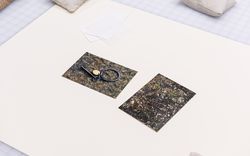
Neighbours at Altitude
Neighbours at Altitude
Actions:
Ella Eßlinger on artist residencies at the Fruka Pass
Form:
archives
Level of archival description:
Fonds
archives
Level of archival description:
Fonds
Reference number:
CP138
Synopsis:
The Gordon Matta-Clark collection documents the personal and professional activities of Gordon Matta-Clark through his correspondence, texts, library, artwork and films, created predominantly between 1969 and 1978. Additionally the collection contains correspondence and photographs collected by Anne Alpert, Matta-Clark's mother, and documentation on his work collected by his widow Jane Crawford following his death.
CP138
Synopsis:
The Gordon Matta-Clark collection documents the personal and professional activities of Gordon Matta-Clark through his correspondence, texts, library, artwork and films, created predominantly between 1969 and 1978. Additionally the collection contains correspondence and photographs collected by Anne Alpert, Matta-Clark's mother, and documentation on his work collected by his widow Jane Crawford following his death.
People:
Date:
1914-2008
1914-2008
Title:
Gordon Matta-Clark collection
Actions:
CP138
Synopsis:
The Gordon Matta-Clark collection documents the personal and professional activities of Gordon Matta-Clark through his correspondence, texts, library, artwork and films, created predominantly between 1969 and 1978. Additionally the collection contains correspondence and photographs collected by Anne Alpert, Matta-Clark's mother, and documentation on his work collected by his widow Jane Crawford following his death.
Gordon Matta-Clark collection
Actions:
CP138
Synopsis:
The Gordon Matta-Clark collection documents the personal and professional activities of Gordon Matta-Clark through his correspondence, texts, library, artwork and films, created predominantly between 1969 and 1978. Additionally the collection contains correspondence and photographs collected by Anne Alpert, Matta-Clark's mother, and documentation on his work collected by his widow Jane Crawford following his death.
Form:
archives
Level of archival description:
Collection
archives
Level of archival description:
Collection
Date:
1914-2008
1914-2008
People:


