


2 Résultats
Classification:
livres
livres
Prix:
$63.95
(disponible sur commande)
Résumé:
Daniel Kiss examines the urban development of Budapest from 1990 to 2010. This period is characterized by the significant decline in communally town planning: given the structural legacies of socialist urbanization, the decentralization of government and resources, and the impact of a post-socialist culture struggle, a trend is being analyzed in which nebulous(...)
$63.95
(disponible sur commande)
Résumé:
Daniel Kiss examines the urban development of Budapest from 1990 to 2010. This period is characterized by the significant decline in communally town planning: given the structural legacies of socialist urbanization, the decentralization of government and resources, and the impact of a post-socialist culture struggle, a trend is being analyzed in which nebulous(...)
Titre:
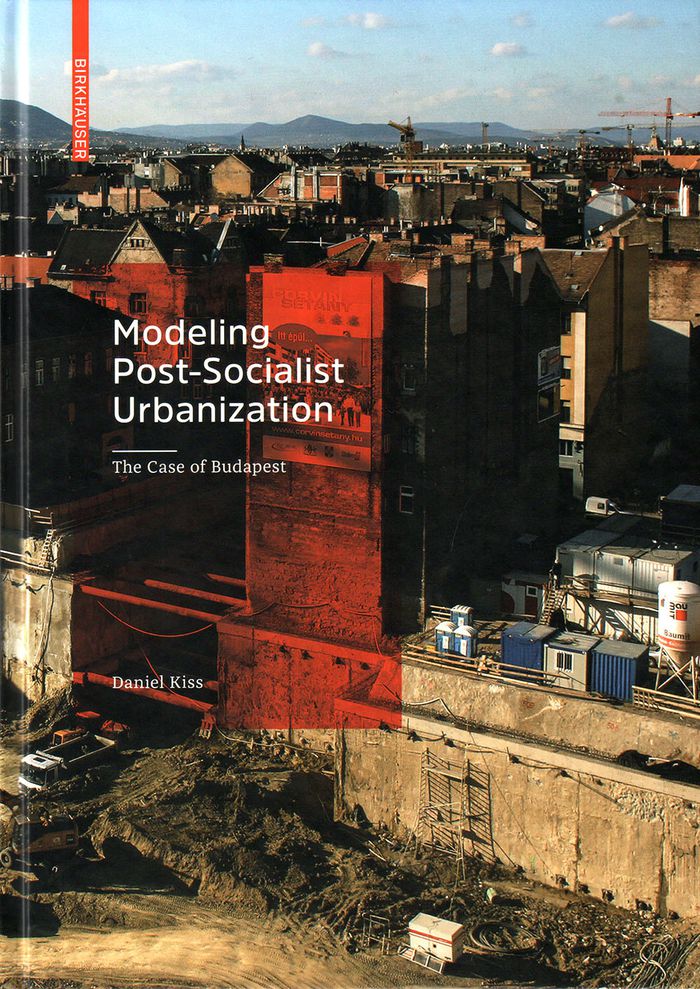
Modeling post-socialist urbanization: the case of Budapest
Actions:
Prix:
$63.95
(disponible sur commande)
Résumé:
Daniel Kiss examines the urban development of Budapest from 1990 to 2010. This period is characterized by the significant decline in communally town planning: given the structural legacies of socialist urbanization, the decentralization of government and resources, and the impact of a post-socialist culture struggle, a trend is being analyzed in which nebulous competencies lead to unclear and thus to a failure of higher-level planning. The ensuing consequence is an increase in large, investment-driven projects: it is characteristic of these privately financed projects that they do not submit to higher level control, in particular when these control bodies are rather weak. This model-based analysis presents the phenomenon as exemplary of the development in post-socialist cities.
Modeling post-socialist urbanization: the case of Budapest
Actions:
Prix:
$63.95
(disponible sur commande)
Résumé:
Daniel Kiss examines the urban development of Budapest from 1990 to 2010. This period is characterized by the significant decline in communally town planning: given the structural legacies of socialist urbanization, the decentralization of government and resources, and the impact of a post-socialist culture struggle, a trend is being analyzed in which nebulous competencies lead to unclear and thus to a failure of higher-level planning. The ensuing consequence is an increase in large, investment-driven projects: it is characteristic of these privately financed projects that they do not submit to higher level control, in particular when these control bodies are rather weak. This model-based analysis presents the phenomenon as exemplary of the development in post-socialist cities.
Classification:
livres
livres
Publication:
novembre 2018
novembre 2018
Sujet:
Théorie de l’urbanisme
Théorie de l’urbanisme
Classification:
livres
livres
Actions:
Prix:
$42.00
(disponible sur commande)
Résumé:
This commentated anthology contains essential passages from eight important architecture and urban design theory texts from the 1960s to the 2010s. With these excerpts, the editors discursively outline the concept of form as a relational field of tension between man and material. The relational element is treated not only as a topos, but above all the interpretational(...)
$42.00
(disponible sur commande)
Résumé:
This commentated anthology contains essential passages from eight important architecture and urban design theory texts from the 1960s to the 2010s. With these excerpts, the editors discursively outline the concept of form as a relational field of tension between man and material. The relational element is treated not only as a topos, but above all the interpretational(...)
Titre:
Relational theories of urban form: an anthology
Actions:
Prix:
$42.00
(disponible sur commande)
Résumé:
This commentated anthology contains essential passages from eight important architecture and urban design theory texts from the 1960s to the 2010s. With these excerpts, the editors discursively outline the concept of form as a relational field of tension between man and material. The relational element is treated not only as a topos, but above all the interpretational perspective of architectural theory.
Relational theories of urban form: an anthology
Actions:
Prix:
$42.00
(disponible sur commande)
Résumé:
This commentated anthology contains essential passages from eight important architecture and urban design theory texts from the 1960s to the 2010s. With these excerpts, the editors discursively outline the concept of form as a relational field of tension between man and material. The relational element is treated not only as a topos, but above all the interpretational perspective of architectural theory.
Classification:
livres
livres
Publication:
janvier 2021
janvier 2021
Sujet:
Théorie de l’urbanisme
Théorie de l’urbanisme


