


18 Résultats
Classification:
livres
livres
Titre:
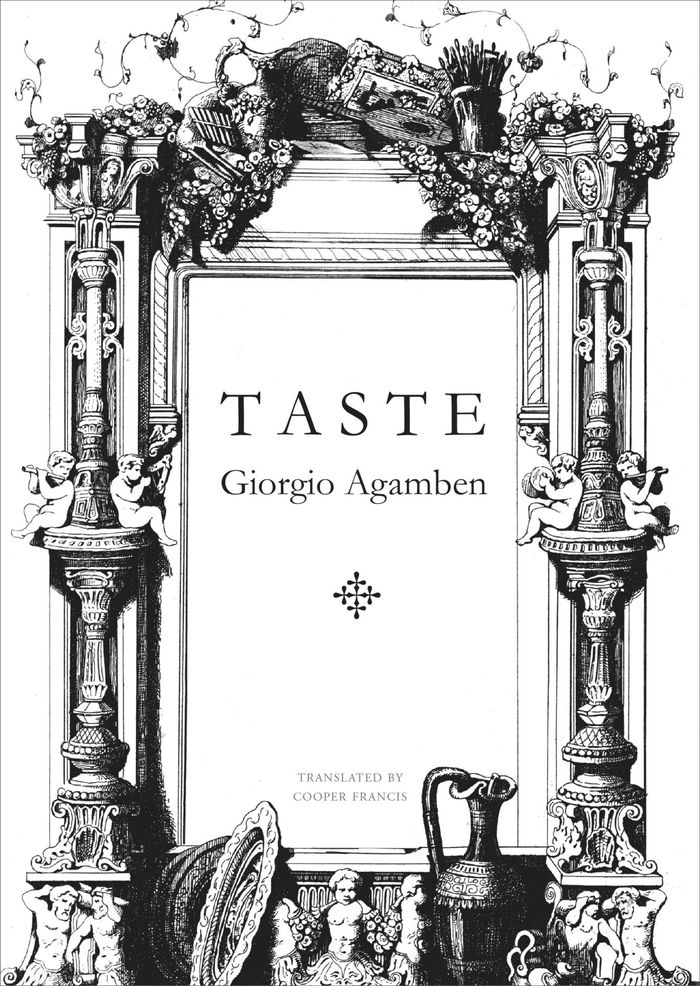
Taste
Taste
Actions:
Prix:
$25.00
(disponible en magasin)
Résumé:
Italian philosopher Giorgio Agamben takes a close look at why the sense of taste has not historically been appreciated as a means to know and experience pleasure or why it has always been considered inferior to actual theoretical knowledge.
$25.00
(disponible en magasin)
Résumé:
Italian philosopher Giorgio Agamben takes a close look at why the sense of taste has not historically been appreciated as a means to know and experience pleasure or why it has always been considered inferior to actual theoretical knowledge.
Titre:
Taste
Actions:
Prix:
$25.00
(disponible en magasin)
Résumé:
Italian philosopher Giorgio Agamben takes a close look at why the sense of taste has not historically been appreciated as a means to know and experience pleasure or why it has always been considered inferior to actual theoretical knowledge.
Taste
Actions:
Prix:
$25.00
(disponible en magasin)
Résumé:
Italian philosopher Giorgio Agamben takes a close look at why the sense of taste has not historically been appreciated as a means to know and experience pleasure or why it has always been considered inferior to actual theoretical knowledge.
Classification:
livres
livres
Publication:
mars 2025
mars 2025
Sujet:
Théorie/ philosophie
Théorie/ philosophie
Classification:
livres
livres
Actions:
Prix:
$34.00
(disponible sur commande)
Résumé:
"The signature of all things" is Giorgio Agamben’s sustained reflection on method. To reflect on method implies for Agamben an archeological vigilance: a persistent form of thinking whose path is to expose, examine, and elaborate that which remains obscure, unthematized, even unsaid, in an author’s thought. To be archeologically vigilant, then, is to return to, even(...)
$34.00
(disponible sur commande)
Résumé:
"The signature of all things" is Giorgio Agamben’s sustained reflection on method. To reflect on method implies for Agamben an archeological vigilance: a persistent form of thinking whose path is to expose, examine, and elaborate that which remains obscure, unthematized, even unsaid, in an author’s thought. To be archeologically vigilant, then, is to return to, even(...)
Titre:
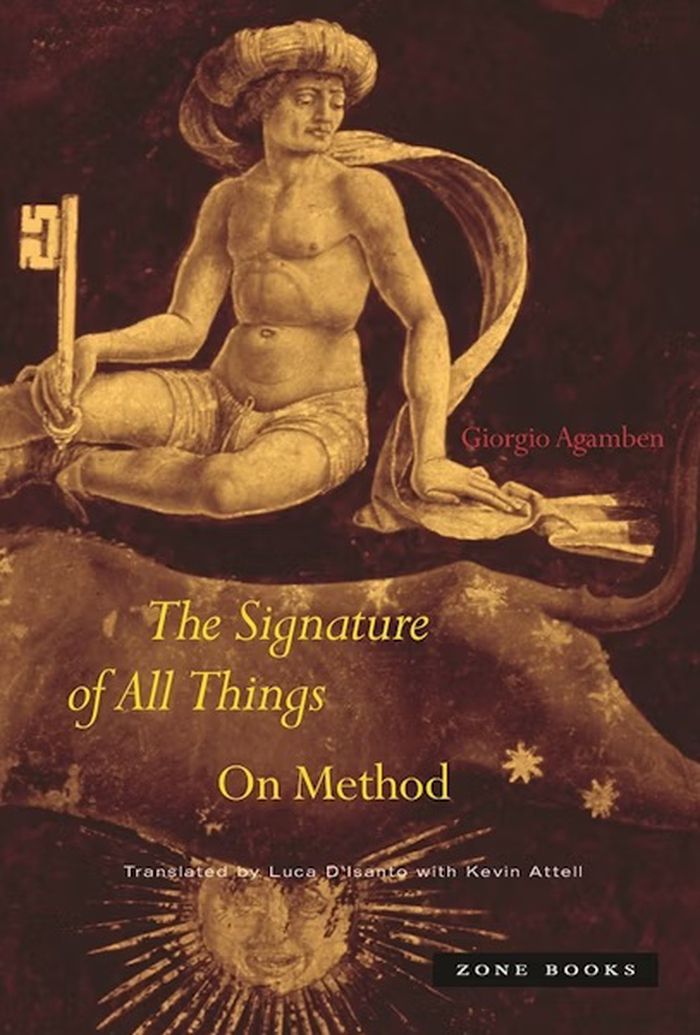
The signature of all things: On method
Actions:
Prix:
$34.00
(disponible sur commande)
Résumé:
"The signature of all things" is Giorgio Agamben’s sustained reflection on method. To reflect on method implies for Agamben an archeological vigilance: a persistent form of thinking whose path is to expose, examine, and elaborate that which remains obscure, unthematized, even unsaid, in an author’s thought. To be archeologically vigilant, then, is to return to, even invent, a method attuned to a "world supported by a thick plot of resemblances and sympathies, analogies and correspondences." The range of authors and of topics Agamben collects in this slim but dense volume exemplifies this search to create a science of signatures that exceeds either a semiology or hermeneutics vainly attempting to determine the pure and unmarked signs that signify univocally, neutrally, and eternally.
The signature of all things: On method
Actions:
Prix:
$34.00
(disponible sur commande)
Résumé:
"The signature of all things" is Giorgio Agamben’s sustained reflection on method. To reflect on method implies for Agamben an archeological vigilance: a persistent form of thinking whose path is to expose, examine, and elaborate that which remains obscure, unthematized, even unsaid, in an author’s thought. To be archeologically vigilant, then, is to return to, even invent, a method attuned to a "world supported by a thick plot of resemblances and sympathies, analogies and correspondences." The range of authors and of topics Agamben collects in this slim but dense volume exemplifies this search to create a science of signatures that exceeds either a semiology or hermeneutics vainly attempting to determine the pure and unmarked signs that signify univocally, neutrally, and eternally.
Classification:
livres
livres
Publication:
février 2025
février 2025
Sujet:
Théorie/ philosophie
Théorie/ philosophie
Classification:
livres
livres
Titre:
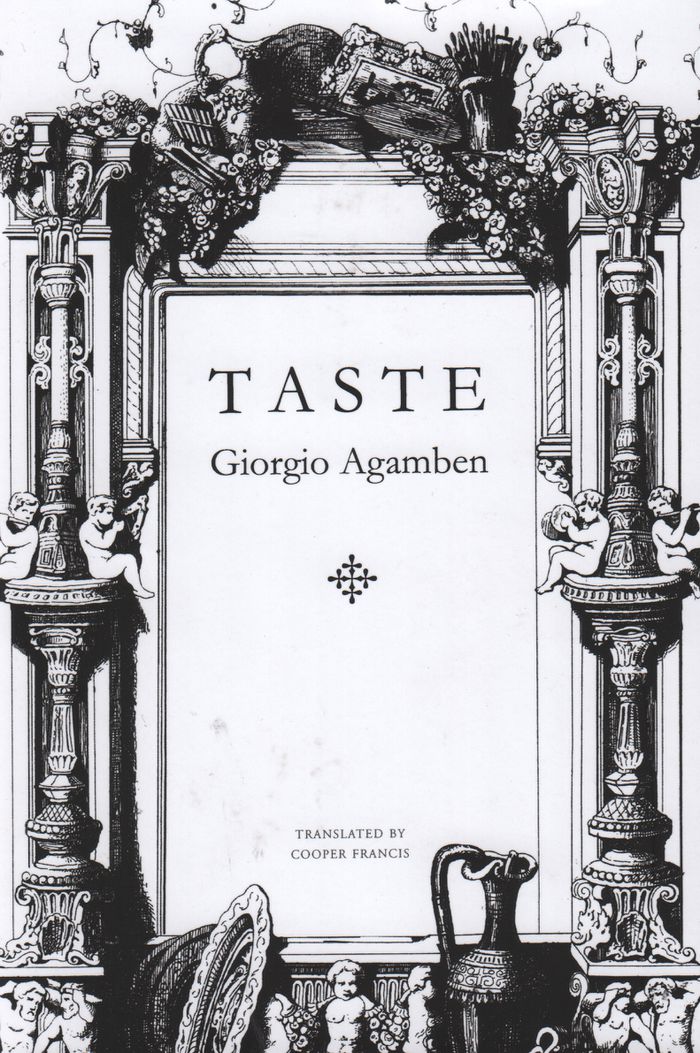
Taste
Taste
Actions:
Prix:
$28.50
(disponible sur commande)
Résumé:
Our taste buds are a powerful way for humans to know beauty and experience beautiful things. In Taste, Italian philosopher Giorgio Agamben takes a close look at why the sense of taste has not historically been appreciated as a means to know and experience pleasure or why it has always been considered inferior to actual theoretical knowledge.
$28.50
(disponible sur commande)
Résumé:
Our taste buds are a powerful way for humans to know beauty and experience beautiful things. In Taste, Italian philosopher Giorgio Agamben takes a close look at why the sense of taste has not historically been appreciated as a means to know and experience pleasure or why it has always been considered inferior to actual theoretical knowledge.
Titre:
Taste
Actions:
Prix:
$28.50
(disponible sur commande)
Résumé:
Our taste buds are a powerful way for humans to know beauty and experience beautiful things. In Taste, Italian philosopher Giorgio Agamben takes a close look at why the sense of taste has not historically been appreciated as a means to know and experience pleasure or why it has always been considered inferior to actual theoretical knowledge.
Taste
Actions:
Prix:
$28.50
(disponible sur commande)
Résumé:
Our taste buds are a powerful way for humans to know beauty and experience beautiful things. In Taste, Italian philosopher Giorgio Agamben takes a close look at why the sense of taste has not historically been appreciated as a means to know and experience pleasure or why it has always been considered inferior to actual theoretical knowledge.
Classification:
livres
livres
Publication:
décembre 2017
décembre 2017
Sujet:
Théorie de l’art
Théorie de l’art
Classification:
livres
livres
Titre:
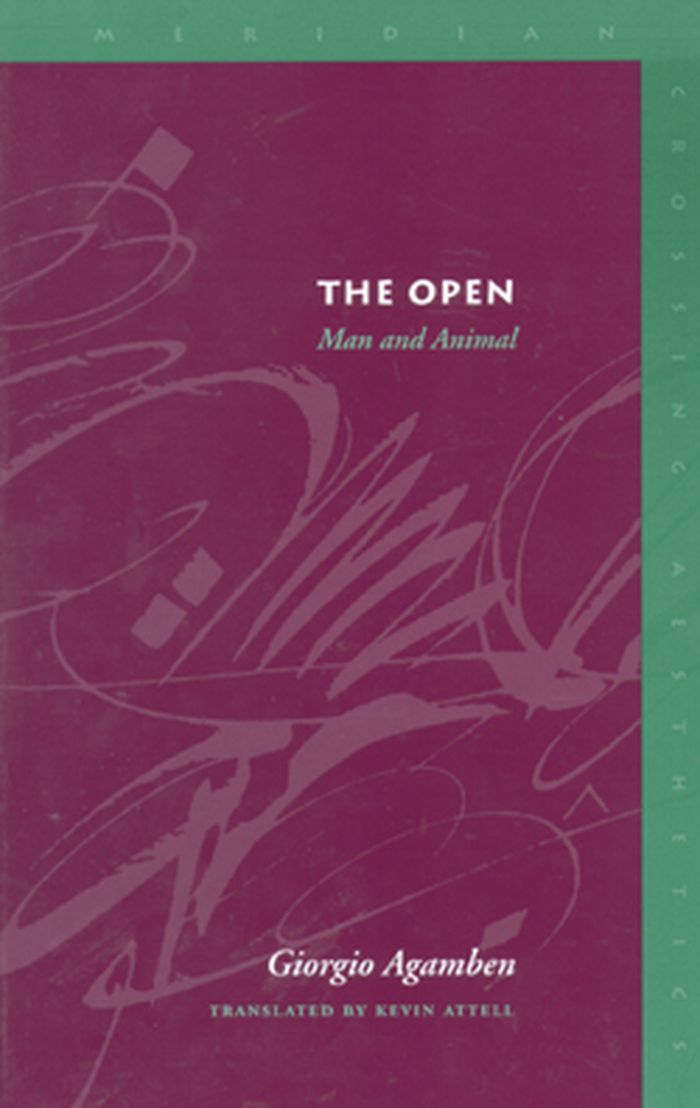
The open: man and animal
The open: man and animal
Actions:
Prix:
$24.95
(disponible sur commande)
Résumé:
In The Open, contemporary Italian philosopher Giorgio Agamben considers the ways in which the “human” has been thought of as either a distinct and superior type of animal, or a kind of being that is essentially different from animal altogether. In an argument that ranges from ancient Greek, Christian, and Jewish texts to twentieth-century thinkers such as Heidegger,(...)
$24.95
(disponible sur commande)
Résumé:
In The Open, contemporary Italian philosopher Giorgio Agamben considers the ways in which the “human” has been thought of as either a distinct and superior type of animal, or a kind of being that is essentially different from animal altogether. In an argument that ranges from ancient Greek, Christian, and Jewish texts to twentieth-century thinkers such as Heidegger,(...)
Titre:
The open: man and animal
Actions:
Prix:
$24.95
(disponible sur commande)
Résumé:
In The Open, contemporary Italian philosopher Giorgio Agamben considers the ways in which the “human” has been thought of as either a distinct and superior type of animal, or a kind of being that is essentially different from animal altogether. In an argument that ranges from ancient Greek, Christian, and Jewish texts to twentieth-century thinkers such as Heidegger, Benjamin, and Kojève, Agamben examines the ways in which the distinction between man and animal has been manufactured by the logical presuppositions of Western thought, and he investigates the profound implications that the man/animal distinction has had for disciplines as seemingly disparate as philosophy, law, anthropology, medicine, and politics.
The open: man and animal
Actions:
Prix:
$24.95
(disponible sur commande)
Résumé:
In The Open, contemporary Italian philosopher Giorgio Agamben considers the ways in which the “human” has been thought of as either a distinct and superior type of animal, or a kind of being that is essentially different from animal altogether. In an argument that ranges from ancient Greek, Christian, and Jewish texts to twentieth-century thinkers such as Heidegger, Benjamin, and Kojève, Agamben examines the ways in which the distinction between man and animal has been manufactured by the logical presuppositions of Western thought, and he investigates the profound implications that the man/animal distinction has had for disciplines as seemingly disparate as philosophy, law, anthropology, medicine, and politics.
Classification:
livres
livres
Publication:
octobre 2003, Stanford
octobre 2003, Stanford
Sujet:
Théorie/ philosophie
Théorie/ philosophie
Classification:
livres
livres
Titre:
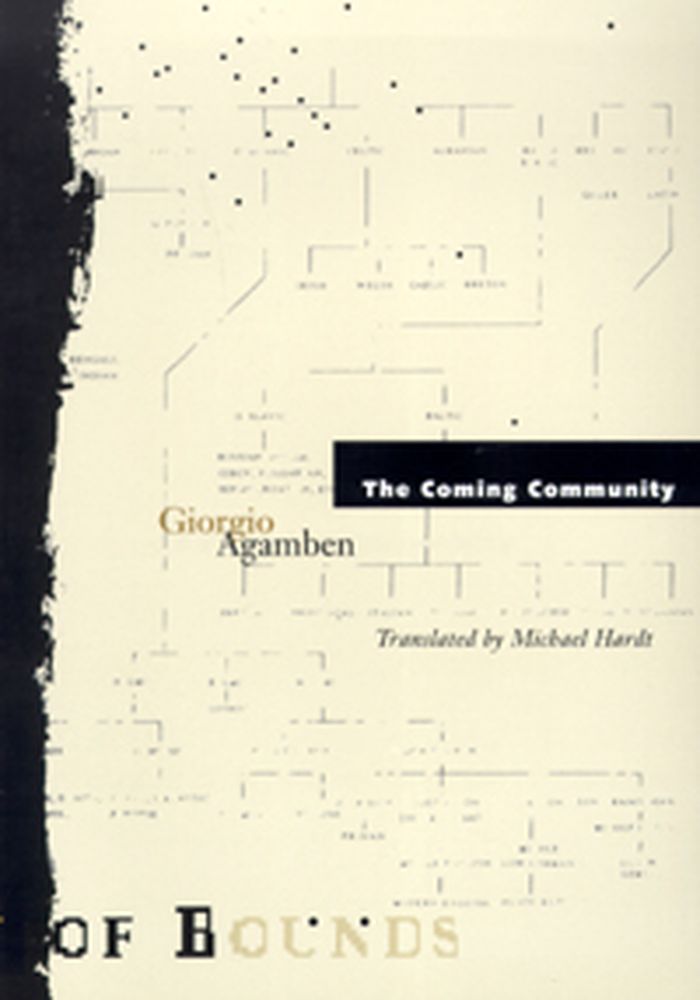
The coming community
The coming community
Actions:
Prix:
$19.50
(disponible sur commande)
Résumé:
In this extraordinary and original philosophical achievement, Agamben develops the concept of community and the social implications of his philosophical thought. Agamben's exploration is, in part, a contemporary response to the work of Heidegger, Wittgenstein, Blanchot, Jean-Luc Nancy, and, more historically, Plato, Spinoza, and medieval scholars and theorists of(...)
$19.50
(disponible sur commande)
Résumé:
In this extraordinary and original philosophical achievement, Agamben develops the concept of community and the social implications of his philosophical thought. Agamben's exploration is, in part, a contemporary response to the work of Heidegger, Wittgenstein, Blanchot, Jean-Luc Nancy, and, more historically, Plato, Spinoza, and medieval scholars and theorists of(...)
Titre:
The coming community
Actions:
Prix:
$19.50
(disponible sur commande)
Résumé:
In this extraordinary and original philosophical achievement, Agamben develops the concept of community and the social implications of his philosophical thought. Agamben's exploration is, in part, a contemporary response to the work of Heidegger, Wittgenstein, Blanchot, Jean-Luc Nancy, and, more historically, Plato, Spinoza, and medieval scholars and theorists of Judeo-Christian scriptures.
The coming community
Actions:
Prix:
$19.50
(disponible sur commande)
Résumé:
In this extraordinary and original philosophical achievement, Agamben develops the concept of community and the social implications of his philosophical thought. Agamben's exploration is, in part, a contemporary response to the work of Heidegger, Wittgenstein, Blanchot, Jean-Luc Nancy, and, more historically, Plato, Spinoza, and medieval scholars and theorists of Judeo-Christian scriptures.
Classification:
livres
livres
Publication:
mars 1993, Minneapolis
mars 1993, Minneapolis
Sujet:
Théorie/ philosophie
Théorie/ philosophie
Classification:
livres
livres
Prix:
$29.95
(disponible sur commande)
Résumé:
Que serait une communauté sans présupposés, sans conditions d'appartenance, sans identité? Peut-on imaginer une communauté faite d'hommes qui ne revendiquent pas une identité (être français, rouge ou musulman)? Comment penser désormais une communauté formée par des singularités quelconques, c'est-à-dire parfaitement déterminées, mais sans concept ou une propriété puisse(...)
$29.95
(disponible sur commande)
Résumé:
Que serait une communauté sans présupposés, sans conditions d'appartenance, sans identité? Peut-on imaginer une communauté faite d'hommes qui ne revendiquent pas une identité (être français, rouge ou musulman)? Comment penser désormais une communauté formée par des singularités quelconques, c'est-à-dire parfaitement déterminées, mais sans concept ou une propriété puisse(...)
Titre:
La communauté qui vient: théorie de la singularité quelconque
Actions:
Prix:
$29.95
(disponible sur commande)
Résumé:
Que serait une communauté sans présupposés, sans conditions d'appartenance, sans identité? Peut-on imaginer une communauté faite d'hommes qui ne revendiquent pas une identité (être français, rouge ou musulman)? Comment penser désormais une communauté formée par des singularités quelconques, c'est-à-dire parfaitement déterminées, mais sans concept ou une propriété puisse leur servir d'identité?
La communauté qui vient: théorie de la singularité quelconque
Actions:
Prix:
$29.95
(disponible sur commande)
Résumé:
Que serait une communauté sans présupposés, sans conditions d'appartenance, sans identité? Peut-on imaginer une communauté faite d'hommes qui ne revendiquent pas une identité (être français, rouge ou musulman)? Comment penser désormais une communauté formée par des singularités quelconques, c'est-à-dire parfaitement déterminées, mais sans concept ou une propriété puisse leur servir d'identité?
Classification:
livres
livres
Publication:
novembre 1990, Paris
novembre 1990, Paris
Sujet:
Théorie/ philosophie
Théorie/ philosophie
Classification:
livres
livres
Titre:
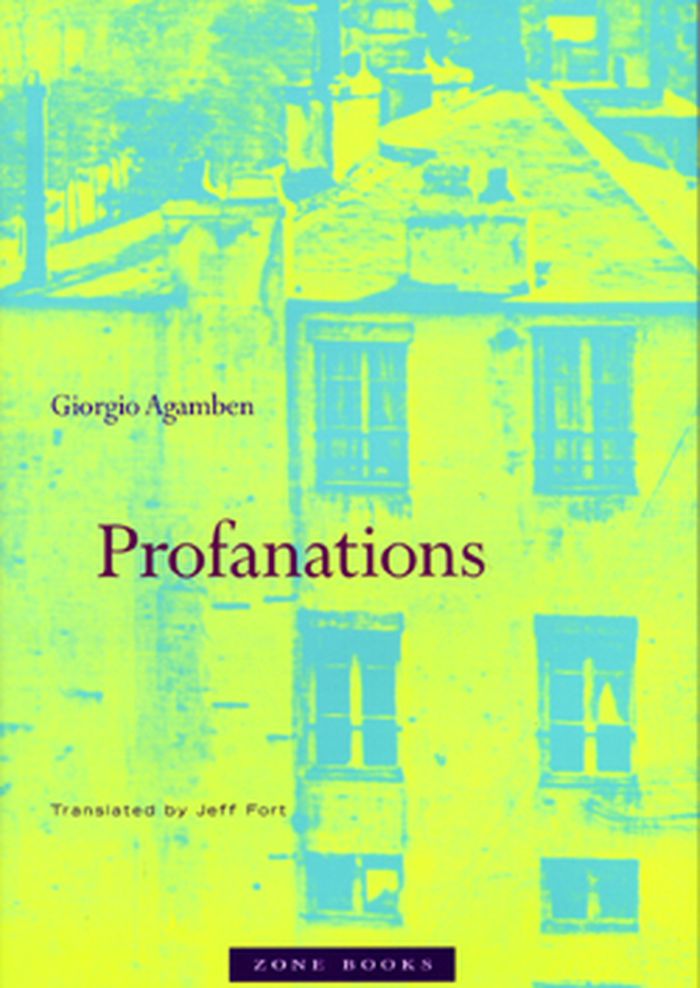
Profanations
Profanations
Actions:
Prix:
$25.95
(disponible sur commande)
Résumé:
The Italian philosopher Giorgio Agamben has always been an original reader of texts, understanding their many rich and multiple historical, aesthetic, and political meanings and effects. In "Profanations", Agamben has assembled for the first time some of his most pivotal essays on photography, the novel, and film.
$25.95
(disponible sur commande)
Résumé:
The Italian philosopher Giorgio Agamben has always been an original reader of texts, understanding their many rich and multiple historical, aesthetic, and political meanings and effects. In "Profanations", Agamben has assembled for the first time some of his most pivotal essays on photography, the novel, and film.
Titre:
Profanations
Actions:
Prix:
$25.95
(disponible sur commande)
Résumé:
The Italian philosopher Giorgio Agamben has always been an original reader of texts, understanding their many rich and multiple historical, aesthetic, and political meanings and effects. In "Profanations", Agamben has assembled for the first time some of his most pivotal essays on photography, the novel, and film.
Profanations
Actions:
Prix:
$25.95
(disponible sur commande)
Résumé:
The Italian philosopher Giorgio Agamben has always been an original reader of texts, understanding their many rich and multiple historical, aesthetic, and political meanings and effects. In "Profanations", Agamben has assembled for the first time some of his most pivotal essays on photography, the novel, and film.
Classification:
livres
livres
Publication:
octobre 2007, New York
octobre 2007, New York
Sujet:
Théorie/ philosophie
Théorie/ philosophie
Classification:
livres
livres
Actions:
Prix:
$22.00
(disponible sur commande)
Résumé:
The three essays collected in this book offer a succinct introduction to Agamben's recent work through an investigation of Foucault's notion of the apparatus, a meditation on the intimate link of philosophy to friendship, and a reflection on contemporariness, or the singular relation one may have to one's own time.
$22.00
(disponible sur commande)
Résumé:
The three essays collected in this book offer a succinct introduction to Agamben's recent work through an investigation of Foucault's notion of the apparatus, a meditation on the intimate link of philosophy to friendship, and a reflection on contemporariness, or the singular relation one may have to one's own time.
Titre:
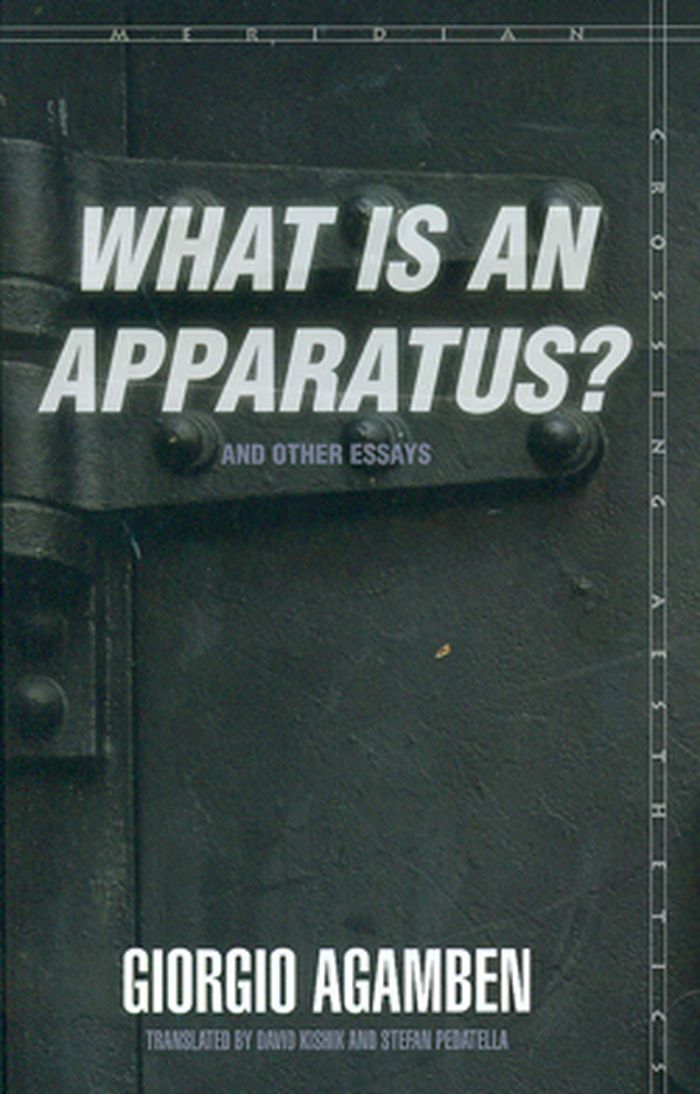
What is an apparatus? and other essays
Actions:
Prix:
$22.00
(disponible sur commande)
Résumé:
The three essays collected in this book offer a succinct introduction to Agamben's recent work through an investigation of Foucault's notion of the apparatus, a meditation on the intimate link of philosophy to friendship, and a reflection on contemporariness, or the singular relation one may have to one's own time.
What is an apparatus? and other essays
Actions:
Prix:
$22.00
(disponible sur commande)
Résumé:
The three essays collected in this book offer a succinct introduction to Agamben's recent work through an investigation of Foucault's notion of the apparatus, a meditation on the intimate link of philosophy to friendship, and a reflection on contemporariness, or the singular relation one may have to one's own time.
Classification:
livres
livres
Publication:
avril 2009
avril 2009
Sujet:
Théorie/ philosophie
Théorie/ philosophie


