


16 Résultats
Classification:
livres
livres
Actions:
Prix:
$66.00
(disponible sur commande)
Résumé:
In this new edition of his striking collection of street views from 1970 to 2010. Thomas Struth presents a series of urban streetscapes from cities such as Edinburgh, Lima, Pyongyang, Naples, and New York City, all taken in similar conditions--devoid of human activity. Struth refers to these mundane buildings, unpopulated streets and anonymous facades as "unconscious(...)
$66.00
(disponible sur commande)
Résumé:
In this new edition of his striking collection of street views from 1970 to 2010. Thomas Struth presents a series of urban streetscapes from cities such as Edinburgh, Lima, Pyongyang, Naples, and New York City, all taken in similar conditions--devoid of human activity. Struth refers to these mundane buildings, unpopulated streets and anonymous facades as "unconscious(...)
Titre:
Thomas Struth: Unconscious places
Actions:
Prix:
$66.00
(disponible sur commande)
Résumé:
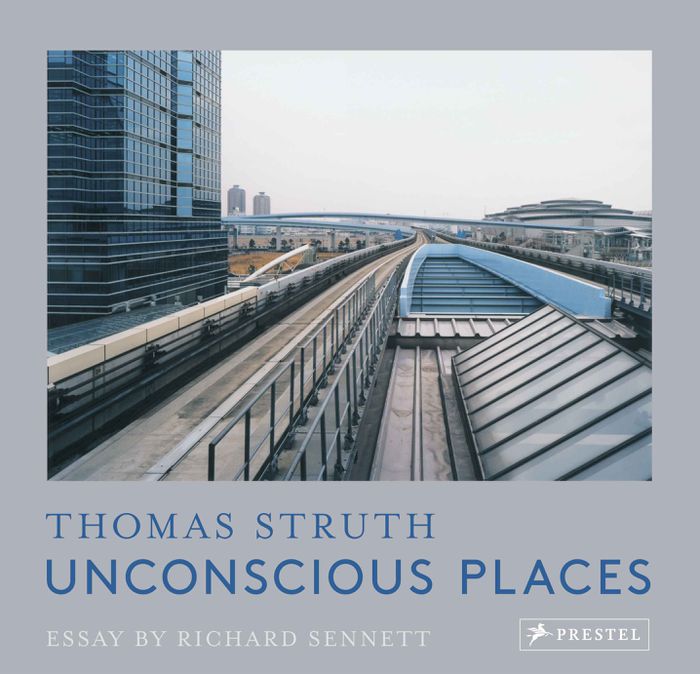
In this new edition of his striking collection of street views from 1970 to 2010. Thomas Struth presents a series of urban streetscapes from cities such as Edinburgh, Lima, Pyongyang, Naples, and New York City, all taken in similar conditions--devoid of human activity. Struth refers to these mundane buildings, unpopulated streets and anonymous facades as "unconscious places"--environments that are imbued with meaning only by the viewer. Captured with exquisite technical prowess and presented with powerful, restrained neutrality, Struth's images allow us to fully appreciate a city's character--from its telephone wires above to the pavement below. Richard Sennett's illuminating essay reveals how Struth's sober, lucid photography leads the viewer to create their own conclusions, rather than forcing a perspective. The resulting interplay among photographer, viewer, and landscape may hold the key to understanding how architecture affects our daily lives.
Thomas Struth: Unconscious places
Actions:
Prix:
$66.00
(disponible sur commande)
Résumé:
In this new edition of his striking collection of street views from 1970 to 2010. Thomas Struth presents a series of urban streetscapes from cities such as Edinburgh, Lima, Pyongyang, Naples, and New York City, all taken in similar conditions--devoid of human activity. Struth refers to these mundane buildings, unpopulated streets and anonymous facades as "unconscious places"--environments that are imbued with meaning only by the viewer. Captured with exquisite technical prowess and presented with powerful, restrained neutrality, Struth's images allow us to fully appreciate a city's character--from its telephone wires above to the pavement below. Richard Sennett's illuminating essay reveals how Struth's sober, lucid photography leads the viewer to create their own conclusions, rather than forcing a perspective. The resulting interplay among photographer, viewer, and landscape may hold the key to understanding how architecture affects our daily lives.
Classification:
livres
livres
Publication:
septembre 2020
septembre 2020
Sujet:
Monographies photo
Monographies photo
Classification:
livres
livres
Prix:
$25.95
(disponible sur commande)
Résumé:
A manifesto for the Open City: vibrant, disordered, adaptable. In 1970 Richard Sennett published the ground breaking ''The uses of disorder,'' that the ideal of a planned and ordered city was flawed, likely to produce a fragile, restrictive urban environment. Fifty years later, Sennett returns to these still fertile ideas and alongside campaigner and architect, Pablo(...)
$25.95
(disponible sur commande)
Résumé:
A manifesto for the Open City: vibrant, disordered, adaptable. In 1970 Richard Sennett published the ground breaking ''The uses of disorder,'' that the ideal of a planned and ordered city was flawed, likely to produce a fragile, restrictive urban environment. Fifty years later, Sennett returns to these still fertile ideas and alongside campaigner and architect, Pablo(...)
Titre:
Designing disorder: Experiments and disruptions in the ciity
Actions:
Prix:
$25.95
(disponible sur commande)
Résumé:
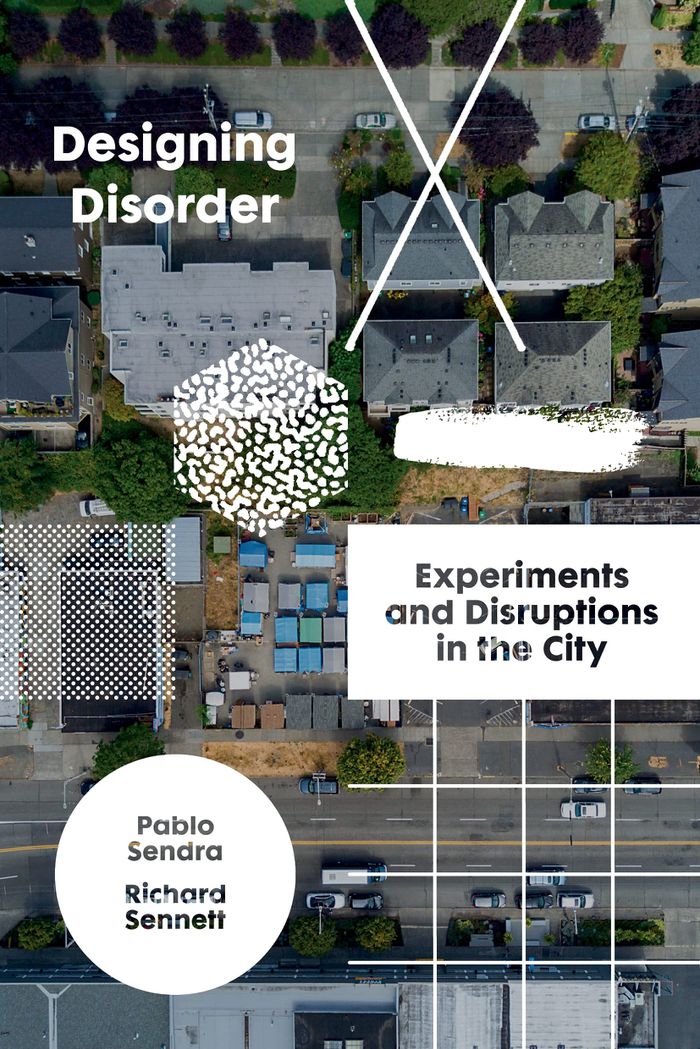
A manifesto for the Open City: vibrant, disordered, adaptable. In 1970 Richard Sennett published the ground breaking ''The uses of disorder,'' that the ideal of a planned and ordered city was flawed, likely to produce a fragile, restrictive urban environment. Fifty years later, Sennett returns to these still fertile ideas and alongside campaigner and architect, Pablo Sendra, sets out an agenda for the design and ethics of the Open City.
Designing disorder: Experiments and disruptions in the ciity
Actions:
Prix:
$25.95
(disponible sur commande)
Résumé:
A manifesto for the Open City: vibrant, disordered, adaptable. In 1970 Richard Sennett published the ground breaking ''The uses of disorder,'' that the ideal of a planned and ordered city was flawed, likely to produce a fragile, restrictive urban environment. Fifty years later, Sennett returns to these still fertile ideas and alongside campaigner and architect, Pablo Sendra, sets out an agenda for the design and ethics of the Open City.
Classification:
livres
livres
Publication:
avril 2022
avril 2022
Sujet:
Théorie de l’urbanisme
Théorie de l’urbanisme
Classification:
livres
livres
Actions:
Prix:
$24.00
(disponible sur commande)
Résumé:
In ''Building and dwelling,'' Richard Sennett distils a lifetime's thinking and practical experience to explore the relationship between the good built environment and the good life. He argues for, and describes in rich detail, the idea of an open city, one in which people learn to manage complexity. He shows how the design of cities can enrich or diminish the everyday(...)
$24.00
(disponible sur commande)
Résumé:
In ''Building and dwelling,'' Richard Sennett distils a lifetime's thinking and practical experience to explore the relationship between the good built environment and the good life. He argues for, and describes in rich detail, the idea of an open city, one in which people learn to manage complexity. He shows how the design of cities can enrich or diminish the everyday(...)
Titre:
Building and dwelling: ethics for the city
Actions:
Prix:
$24.00
(disponible sur commande)
Résumé:
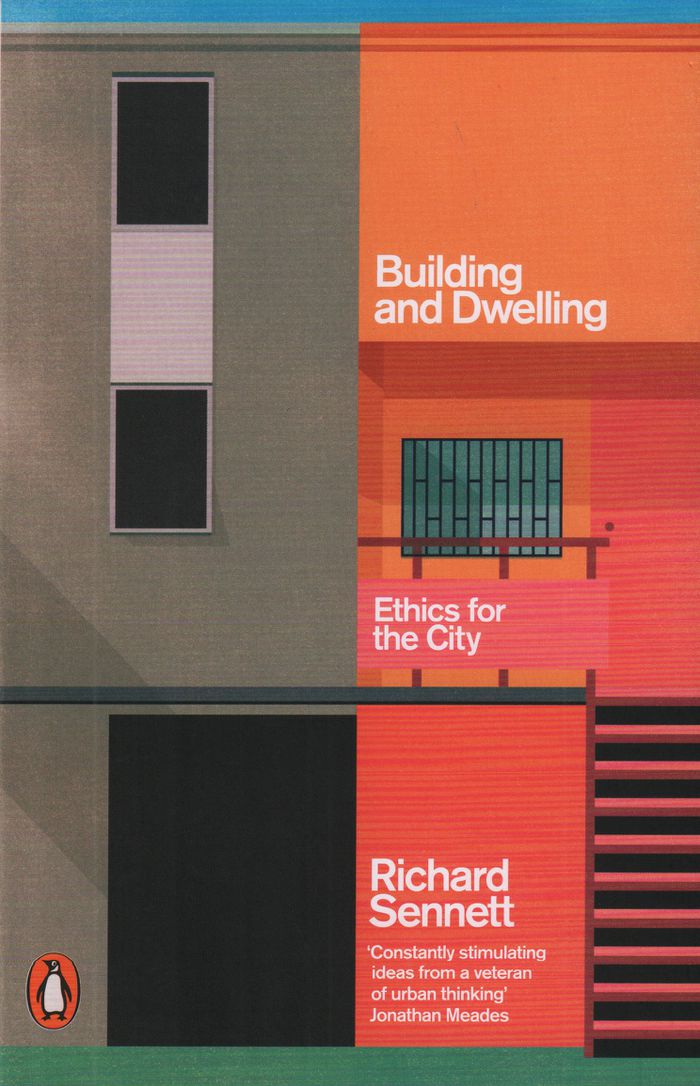
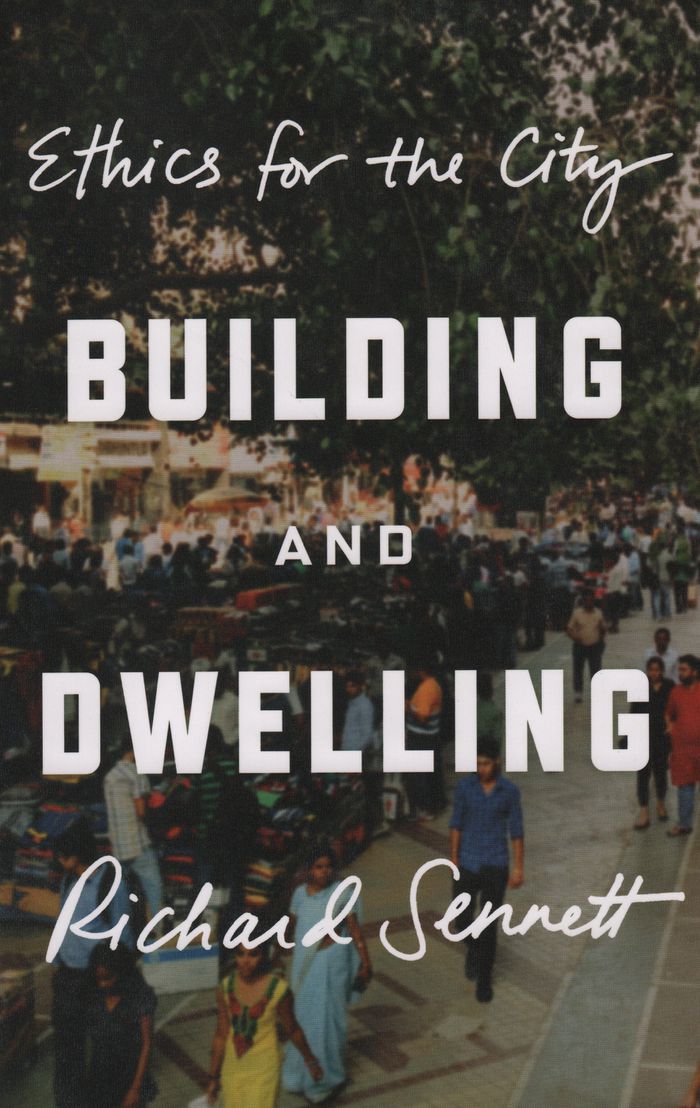
In ''Building and dwelling,'' Richard Sennett distils a lifetime's thinking and practical experience to explore the relationship between the good built environment and the good life. He argues for, and describes in rich detail, the idea of an open city, one in which people learn to manage complexity. He shows how the design of cities can enrich or diminish the everyday experience of those who dwell in them. The book ranges widely - from London, Paris and Barcelona to Shanghai, Mumbai and Medellin in Colombia - and draws on classic thinkers such as Tocqueville, Heidegger, Max Weber, and Walter Benjamin. It also draws on Sennett's many decades as a practical planner himself, testing what works, what doesn't, and why. He shows what works ethically is often the most practical solution for cities' problems.
Building and dwelling: ethics for the city
Actions:
Prix:
$24.00
(disponible sur commande)
Résumé:
In ''Building and dwelling,'' Richard Sennett distils a lifetime's thinking and practical experience to explore the relationship between the good built environment and the good life. He argues for, and describes in rich detail, the idea of an open city, one in which people learn to manage complexity. He shows how the design of cities can enrich or diminish the everyday experience of those who dwell in them. The book ranges widely - from London, Paris and Barcelona to Shanghai, Mumbai and Medellin in Colombia - and draws on classic thinkers such as Tocqueville, Heidegger, Max Weber, and Walter Benjamin. It also draws on Sennett's many decades as a practical planner himself, testing what works, what doesn't, and why. He shows what works ethically is often the most practical solution for cities' problems.
Classification:
livres
livres
Publication:
juin 2019
juin 2019
Sujet:
Théorie de l’urbanisme
Théorie de l’urbanisme
Classification:
livres
livres
Actions:
Prix:
$18.00
(disponible sur commande)
Résumé:
Treating cities as laboratories of the modern world, Infrastructures of the Urban examines how they are made and how they should be remade. The contributors— scholars and practitioners from architects and sociologists to physicists— bring to bear empirical analysis, ethnography, eyewitness reflections, cultural critique, and manifestos to explore how improving our(...)
$18.00
(disponible sur commande)
Résumé:
Treating cities as laboratories of the modern world, Infrastructures of the Urban examines how they are made and how they should be remade. The contributors— scholars and practitioners from architects and sociologists to physicists— bring to bear empirical analysis, ethnography, eyewitness reflections, cultural critique, and manifestos to explore how improving our(...)
Publication:
février 2013
février 2013
Titre:
Public Culture 70: Infrastructures of the urban
Actions:
Prix:
$18.00
(disponible sur commande)
Résumé:
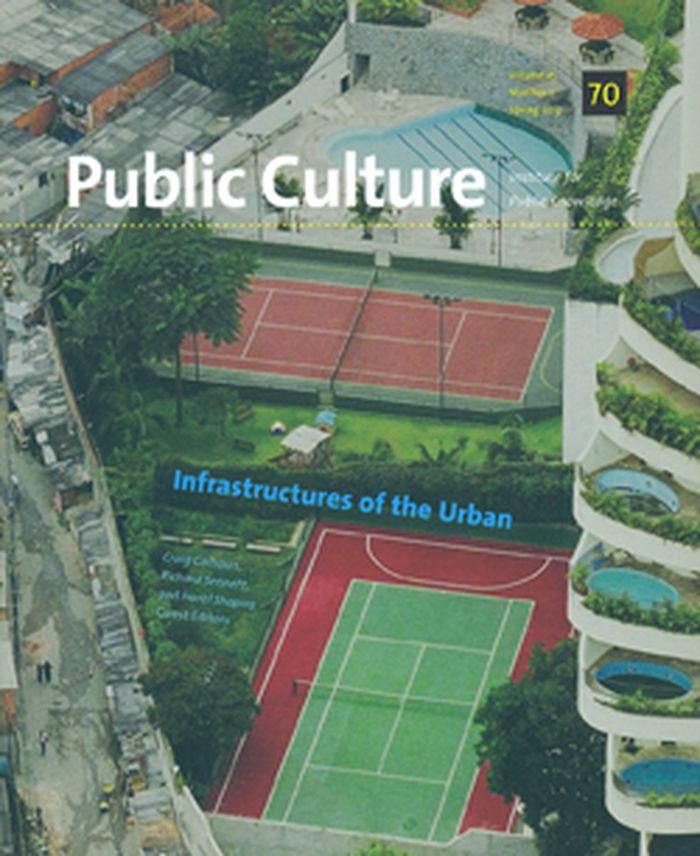
Treating cities as laboratories of the modern world, Infrastructures of the Urban examines how they are made and how they should be remade. The contributors— scholars and practitioners from architects and sociologists to physicists— bring to bear empirical analysis, ethnography, eyewitness reflections, cultural critique, and manifestos to explore how improving our material and cultural infrastructure can produce a better society. Topics include the World Trade Center memorial, the planning of the London Olympics, the informal redesign of shanty housing by slum residents in Mumbai and Mozambique, and the more formalized construction of highways and “tech-cities” like Sondgu, South Korea. The contributors show how cities are made and remade daily, as well as how the diverse, unexpected agents involved in the process break down the distinction between experts and laypeople.
Public Culture 70: Infrastructures of the urban
Actions:
Prix:
$18.00
(disponible sur commande)
Résumé:
Treating cities as laboratories of the modern world, Infrastructures of the Urban examines how they are made and how they should be remade. The contributors— scholars and practitioners from architects and sociologists to physicists— bring to bear empirical analysis, ethnography, eyewitness reflections, cultural critique, and manifestos to explore how improving our material and cultural infrastructure can produce a better society. Topics include the World Trade Center memorial, the planning of the London Olympics, the informal redesign of shanty housing by slum residents in Mumbai and Mozambique, and the more formalized construction of highways and “tech-cities” like Sondgu, South Korea. The contributors show how cities are made and remade daily, as well as how the diverse, unexpected agents involved in the process break down the distinction between experts and laypeople.
Classification:
livres
livres
Publication:
février 2013
février 2013
Classification:
livres
livres
Titre:
The fall of public man
The fall of public man
Actions:
Prix:
$19.95
(disponible sur commande)
Résumé:
In an original and sweeping historical study, the sociologist author of The Uses of Disorder relates society's most prominent ills, from clinical narcissism to political apathy, to the decline of public life and the rise of an arid privatism, exalting intimacy and enshrining personality. His model is the Enlightenment cosmopolis, where "a balance of public and private(...)
$19.95
(disponible sur commande)
Résumé:
In an original and sweeping historical study, the sociologist author of The Uses of Disorder relates society's most prominent ills, from clinical narcissism to political apathy, to the decline of public life and the rise of an arid privatism, exalting intimacy and enshrining personality. His model is the Enlightenment cosmopolis, where "a balance of public and private(...)
Sujet:
Théorie de l’architecture
Théorie de l’architecture
Publication:
janvier 1900, New York, London
janvier 1900, New York, London
Titre:
The fall of public man
Actions:
Prix:
$19.95
(disponible sur commande)
Résumé:
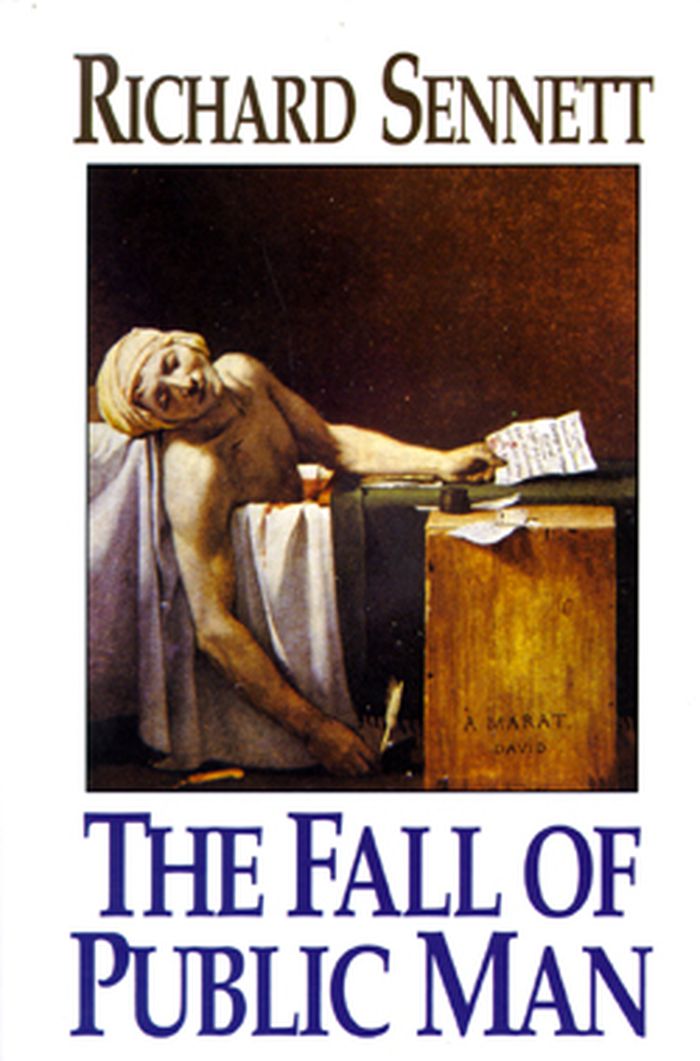
In an original and sweeping historical study, the sociologist author of The Uses of Disorder relates society's most prominent ills, from clinical narcissism to political apathy, to the decline of public life and the rise of an arid privatism, exalting intimacy and enshrining personality. His model is the Enlightenment cosmopolis, where "a balance of public and private geography. . . did exist"; his method is to investigate the change in public roles - "the social terms on which human beings are expressive" - from the 1750s to the 1890s in the prototypical urban centers, London and Paris.
The fall of public man
Actions:
Prix:
$19.95
(disponible sur commande)
Résumé:
In an original and sweeping historical study, the sociologist author of The Uses of Disorder relates society's most prominent ills, from clinical narcissism to political apathy, to the decline of public life and the rise of an arid privatism, exalting intimacy and enshrining personality. His model is the Enlightenment cosmopolis, where "a balance of public and private geography. . . did exist"; his method is to investigate the change in public roles - "the social terms on which human beings are expressive" - from the 1750s to the 1890s in the prototypical urban centers, London and Paris.
Classification:
livres
livres
Publication:
janvier 1900, New York, London
janvier 1900, New York, London
Sujet:
Théorie de l’architecture
Théorie de l’architecture
Classification:
livres
livres
Actions:
Prix:
$45.00
(disponible en magasin)
Résumé:
In ''The Performer'', Richard Sennett explores the relations between performing in art (particularly music), politics, and everyday experience. It focuses on the bodily and physical dimensions of performing, rather than on words. Sennett is particularly attuned to the ways in which the rituals of ordinary life are performances.
$45.00
(disponible en magasin)
Résumé:
In ''The Performer'', Richard Sennett explores the relations between performing in art (particularly music), politics, and everyday experience. It focuses on the bodily and physical dimensions of performing, rather than on words. Sennett is particularly attuned to the ways in which the rituals of ordinary life are performances.
Titre:
The performer: Art, life, and politics
Actions:
Prix:
$45.00
(disponible en magasin)
Résumé:
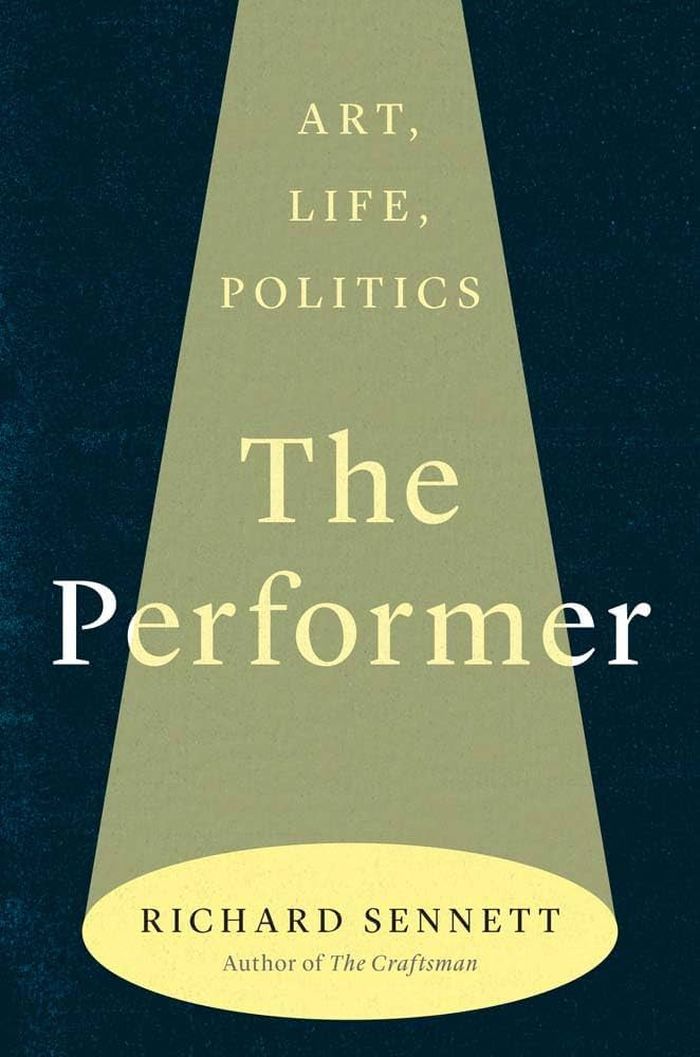
In ''The Performer'', Richard Sennett explores the relations between performing in art (particularly music), politics, and everyday experience. It focuses on the bodily and physical dimensions of performing, rather than on words. Sennett is particularly attuned to the ways in which the rituals of ordinary life are performances.
The performer: Art, life, and politics
Actions:
Prix:
$45.00
(disponible en magasin)
Résumé:
In ''The Performer'', Richard Sennett explores the relations between performing in art (particularly music), politics, and everyday experience. It focuses on the bodily and physical dimensions of performing, rather than on words. Sennett is particularly attuned to the ways in which the rituals of ordinary life are performances.
Classification:
livres
livres
Publication:
mai 2024
mai 2024
Sujet:
Social
Social
Classification:
livres
livres
Titre:
Democracy and urban form
Democracy and urban form
Actions:
Prix:
$36.95
(disponible en magasin)
Résumé:
"Never have the potential political consequences of architecture been greater, and never has the political sensibility of architecture been less." This was the state of the discipline that social theorist and urban thinker Richard Sennett declared when he addressed an audience at the Harvard University Graduate School of Design in 1981. Over a series of six lectures,(...)
$36.95
(disponible en magasin)
Résumé:
"Never have the potential political consequences of architecture been greater, and never has the political sensibility of architecture been less." This was the state of the discipline that social theorist and urban thinker Richard Sennett declared when he addressed an audience at the Harvard University Graduate School of Design in 1981. Over a series of six lectures,(...)
Titre:
Democracy and urban form
Actions:
Prix:
$36.95
(disponible en magasin)
Résumé:
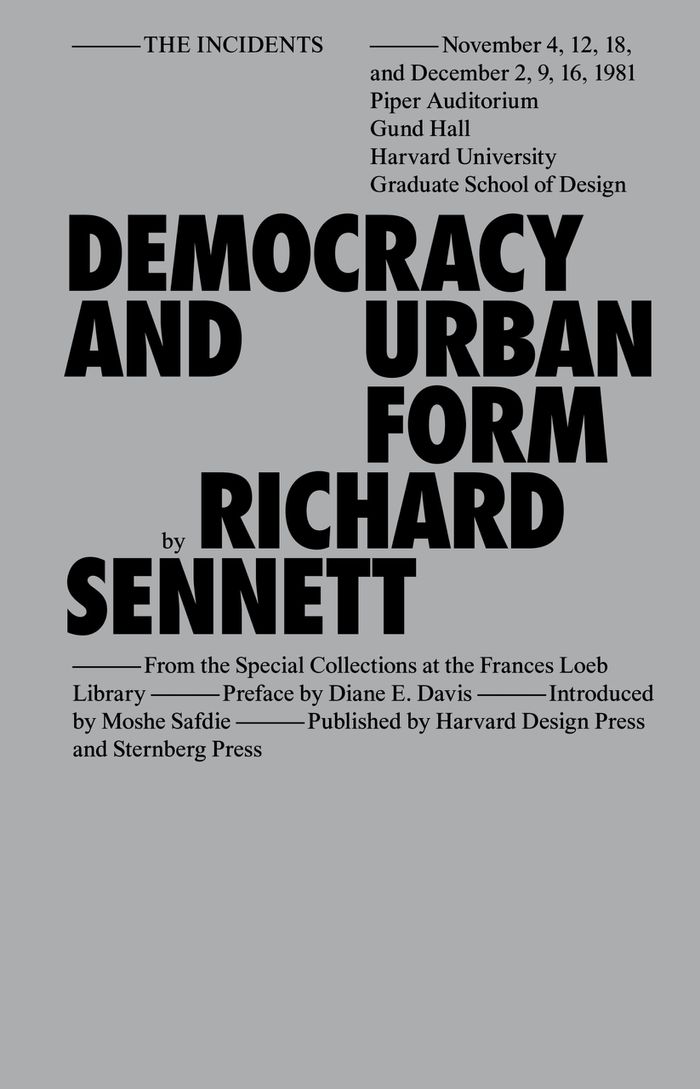
"Never have the potential political consequences of architecture been greater, and never has the political sensibility of architecture been less." This was the state of the discipline that social theorist and urban thinker Richard Sennett declared when he addressed an audience at the Harvard University Graduate School of Design in 1981. Over a series of six lectures, Sennett presented discourse as the foundation of democracy, and posited that our cities are uniquely positioned to either empower or constrict this discourse—and that the difference could lie in architecture and urban design. Now, over 40 years later, as political polarization persists and its consequences arise in both new and familiar ways, "Democracy and urban form" revisits questions that remain relevant: If discourse is the foundation of democracy, how can the design of our cities empower and enable discourse?
Democracy and urban form
Actions:
Prix:
$36.95
(disponible en magasin)
Résumé:
"Never have the potential political consequences of architecture been greater, and never has the political sensibility of architecture been less." This was the state of the discipline that social theorist and urban thinker Richard Sennett declared when he addressed an audience at the Harvard University Graduate School of Design in 1981. Over a series of six lectures, Sennett presented discourse as the foundation of democracy, and posited that our cities are uniquely positioned to either empower or constrict this discourse—and that the difference could lie in architecture and urban design. Now, over 40 years later, as political polarization persists and its consequences arise in both new and familiar ways, "Democracy and urban form" revisits questions that remain relevant: If discourse is the foundation of democracy, how can the design of our cities empower and enable discourse?
Classification:
livres
livres
Publication:
novembre 2024
novembre 2024
Sujet:
Théorie de l’urbanisme
Théorie de l’urbanisme
Classification:
livres
livres
Actions:
Prix:
$39.00
(disponible sur commande)
Résumé:
A preeminent thinker redefines the meaning of city life and charts a way forward. « Building and Dwelling » is the definitive statement on cities by the renowned public intellectual Richard Sennett. In this sweeping work, he traces the anguished relation between how cities are built and how people live in them, from ancient Athens to twenty-first-century Shanghai.
$39.00
(disponible sur commande)
Résumé:
A preeminent thinker redefines the meaning of city life and charts a way forward. « Building and Dwelling » is the definitive statement on cities by the renowned public intellectual Richard Sennett. In this sweeping work, he traces the anguished relation between how cities are built and how people live in them, from ancient Athens to twenty-first-century Shanghai.
Titre:
Building and dwelling: ethics for the city
Actions:
Prix:
$39.00
(disponible sur commande)
Résumé:
A preeminent thinker redefines the meaning of city life and charts a way forward. « Building and Dwelling » is the definitive statement on cities by the renowned public intellectual Richard Sennett. In this sweeping work, he traces the anguished relation between how cities are built and how people live in them, from ancient Athens to twenty-first-century Shanghai.
Building and dwelling: ethics for the city
Actions:
Prix:
$39.00
(disponible sur commande)
Résumé:
A preeminent thinker redefines the meaning of city life and charts a way forward. « Building and Dwelling » is the definitive statement on cities by the renowned public intellectual Richard Sennett. In this sweeping work, he traces the anguished relation between how cities are built and how people live in them, from ancient Athens to twenty-first-century Shanghai.
Classification:
livres
livres
Publication:
octobre 2018
octobre 2018
Sujet:
Théorie de l’urbanisme
Théorie de l’urbanisme
Classification:
livres
livres
Titre:
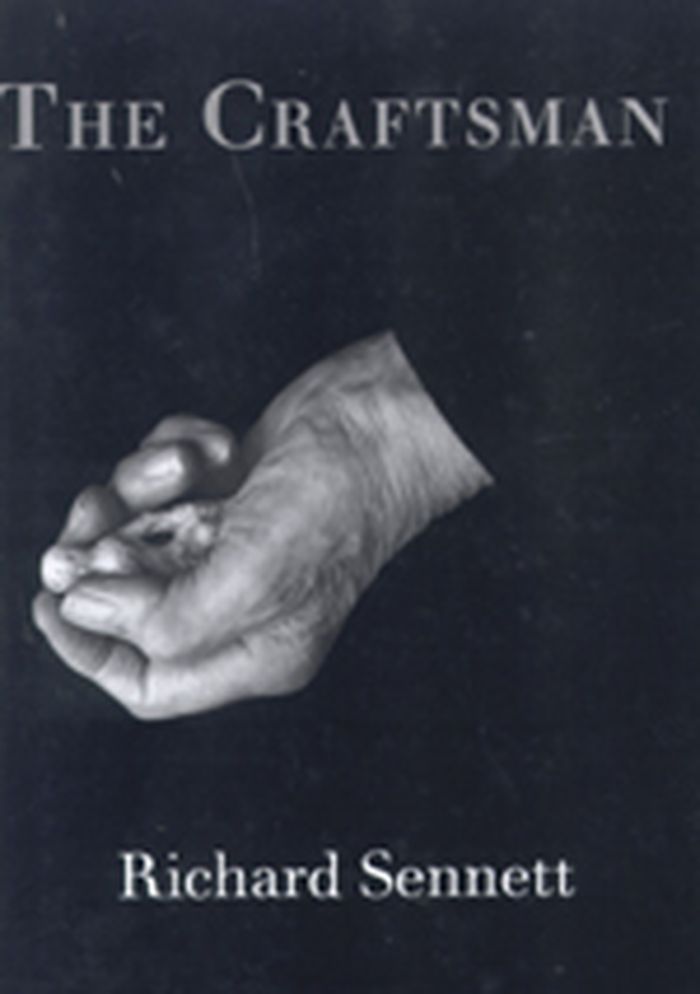
The Craftsman
The Craftsman
Actions:
Prix:
$27.50
(disponible sur commande)
Résumé:
«As Richard Sennett makes clear in this lucid and compelling book, craftsmanship one connected people to their work by conferring pride and meaning. The loss of craftmanship and of a society that values it has impoverished us in ways we have long forgotten but Sennett helps us understand.» Robert B. Reich
$27.50
(disponible sur commande)
Résumé:
«As Richard Sennett makes clear in this lucid and compelling book, craftsmanship one connected people to their work by conferring pride and meaning. The loss of craftmanship and of a society that values it has impoverished us in ways we have long forgotten but Sennett helps us understand.» Robert B. Reich
Titre:
The Craftsman
Actions:
Prix:
$27.50
(disponible sur commande)
Résumé:
«As Richard Sennett makes clear in this lucid and compelling book, craftsmanship one connected people to their work by conferring pride and meaning. The loss of craftmanship and of a society that values it has impoverished us in ways we have long forgotten but Sennett helps us understand.» Robert B. Reich
The Craftsman
Actions:
Prix:
$27.50
(disponible sur commande)
Résumé:
«As Richard Sennett makes clear in this lucid and compelling book, craftsmanship one connected people to their work by conferring pride and meaning. The loss of craftmanship and of a society that values it has impoverished us in ways we have long forgotten but Sennett helps us understand.» Robert B. Reich
Classification:
livres
livres
Publication:
mars 2008, New Haven, London
mars 2008, New Haven, London
Sujet:
Théorie de l’architecture
Théorie de l’architecture
Classification:
livres
livres
Titre:
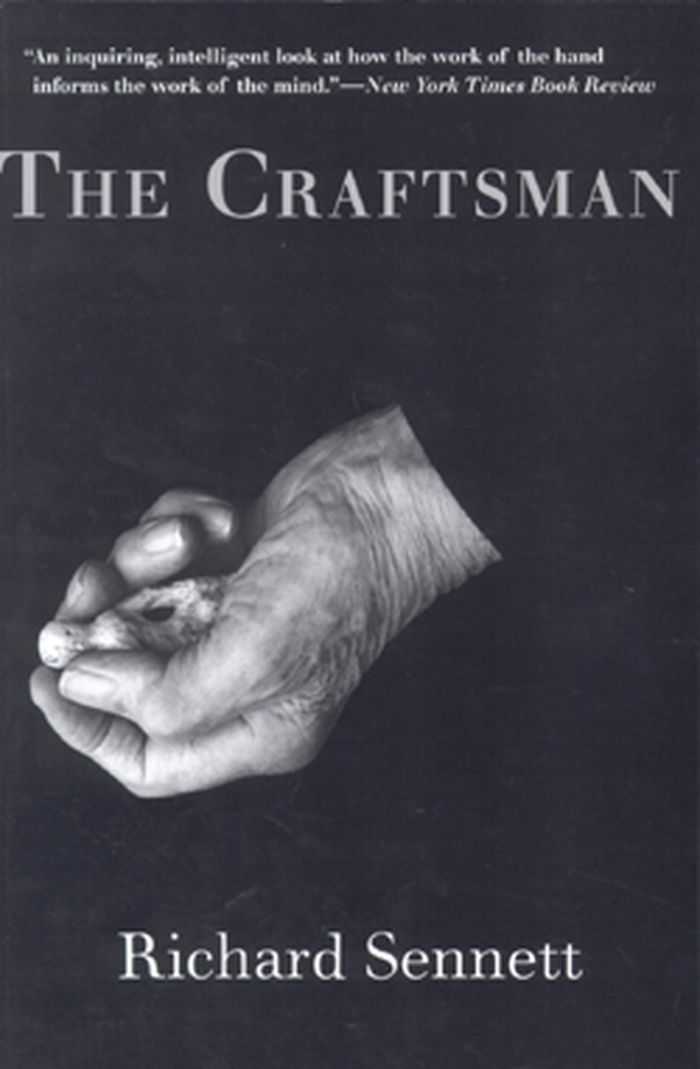
The craftsman
The craftsman
Actions:
Prix:
$32.00
(disponible en magasin)
Résumé:
In this thought-provoking book, Richard Sennett explores the work of craftsmen past and present, identifies deep connections between material consciousness and ethical values, and challenges received ideas about what constitutes good work in today’s world.
$32.00
(disponible en magasin)
Résumé:
In this thought-provoking book, Richard Sennett explores the work of craftsmen past and present, identifies deep connections between material consciousness and ethical values, and challenges received ideas about what constitutes good work in today’s world.
Titre:
The craftsman
Actions:
Prix:
$32.00
(disponible en magasin)
Résumé:
In this thought-provoking book, Richard Sennett explores the work of craftsmen past and present, identifies deep connections between material consciousness and ethical values, and challenges received ideas about what constitutes good work in today’s world.
The craftsman
Actions:
Prix:
$32.00
(disponible en magasin)
Résumé:
In this thought-provoking book, Richard Sennett explores the work of craftsmen past and present, identifies deep connections between material consciousness and ethical values, and challenges received ideas about what constitutes good work in today’s world.
Classification:
livres
livres
Publication:
mars 2009, New Haven, London
mars 2009, New Haven, London
Sujet:
Social
Social


