


3 Résultats
Classification:
livres
livres

Titre:
Perspecta 51
Perspecta 51
Actions:
Prix:
$42.95
(disponible sur commande)
Résumé:
Perspecta 51, ''Medium.'' Since the arrival of radio and television in the twentieth century, understandings of space have become visibly intertwined with what is commonly referred to as the media. But what is a medium? Dictionaries define ''medium'' as something in the middle, or, a means of conveyance, and this elemental understanding of medium has nourished early(...)
Titre:
Perspecta 51
Actions:
Prix:
$42.95
(disponible sur commande)
Résumé:
Perspecta 51, ''Medium.'' Since the arrival of radio and television in the twentieth century, understandings of space have become visibly intertwined with what is commonly referred to as the media. But what is a medium? Dictionaries define ''medium'' as something in the middle, or, a means of conveyance, and this elemental understanding of medium has nourished early conversations of networks and cybernetics, as well as recent media theory. Yet today, midcentury architectural fictions and fantasies are reality—nomadic devices connect people, rooms, buildings, and cities to vast networks of data, capital, and energy; media are palpably enmeshed in the concrete built environment surrounding us. This volume of Perspecta takes a broad view of medium to take stock of and unpack unexpected relationships.
Classification:
livres
livres
Publication:
octobre 2018
octobre 2018
Sujet:
Revues
Revues
Classification:
livres
livres
Actions:
Prix:
$125.00
(disponible en magasin)
Résumé:
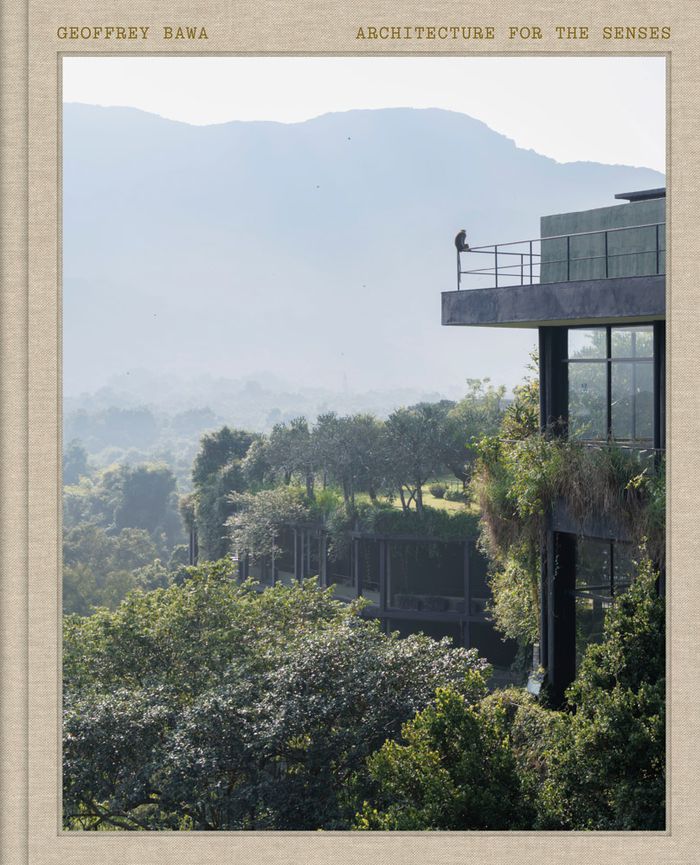
Accompanying the Vitra Design Museum’s retrospective exhibition, coproduced with the M+ and the Geoffrey Bawa Trust, ''Architecture for the Senses'' contextualizes Geoffrey Bawa’s practice within postcolonial Sri Lanka, and situates his work in relation to contemporary discourses around collaboration, social enterprise and ecology. The book features scholarly essays, a(...)
Sujet:
Architecture, monographies
Architecture, monographies
Publication:
décembre 2026
décembre 2026
Titre:
Geoffrey Bawa: Architecture for the senses
Actions:
Prix:
$125.00
(disponible en magasin)
Résumé:
Accompanying the Vitra Design Museum’s retrospective exhibition, coproduced with the M+ and the Geoffrey Bawa Trust, ''Architecture for the Senses'' contextualizes Geoffrey Bawa’s practice within postcolonial Sri Lanka, and situates his work in relation to contemporary discourses around collaboration, social enterprise and ecology. The book features scholarly essays, a never-before-published text by Bawa, fully illustrated descriptions of all exhibited projects, comprehensive listings of his entire oeuvre and interviews with leading contemporary architects inspired by his work. Richly illustrated with archival photographs, many taken by Bawa himself, and newly commissioned images of Bawa’s buildings in Sri Lanka from Iwan Baan, the book is a visual treat for anyone interested in 20th-century architecture and design. With a career spanning five decades and over 200 projects, Geoffrey Bawa (1919–2003) was one of the most influential voices in architecture in post-independence Sri Lanka. His remarkable oeuvre includes hotels, private residences, schools, universities, factories, office buildings and Sri Lanka's Parliament building.
Classification:
livres
livres
Publication:
décembre 2026
décembre 2026
Sujet:
Architecture, monographies
Architecture, monographies
Classification:
livres
livres
Actions:
Prix:
$69.00
(disponible sur commande)
Résumé:
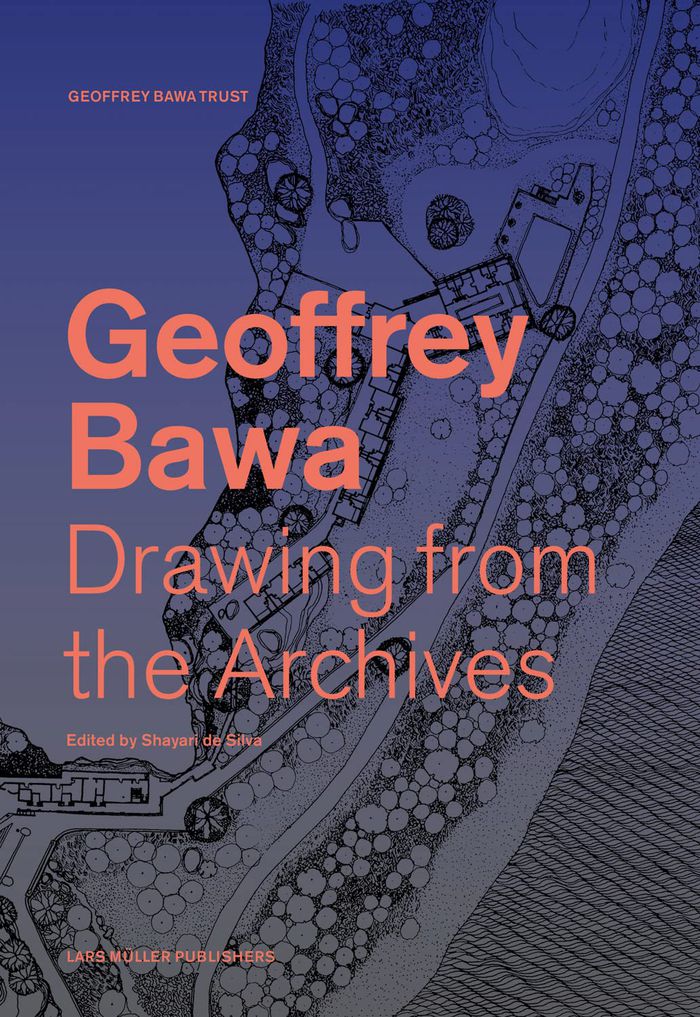
The architecture of Geoffrey Bawa (1919-2003) was revolutionary. The Sri Lankan architect succeeded in fusing sensitivity for local context with the technological discoveries and design principles of modernism in his work. A pioneer of bioclimatic architecture, Bawa incorporated materials and layouts specific to Sri Lanka’s monsoon climate and storied architectural(...)
Titre:
Drawings from the Geoffrey Bawa archives
Actions:
Prix:
$69.00
(disponible sur commande)
Résumé:
The architecture of Geoffrey Bawa (1919-2003) was revolutionary. The Sri Lankan architect succeeded in fusing sensitivity for local context with the technological discoveries and design principles of modernism in his work. A pioneer of bioclimatic architecture, Bawa incorporated materials and layouts specific to Sri Lanka’s monsoon climate and storied architectural history into his modernist designs. Although he never built outside Asia, his work and way of thinking resonate far beyond the region. Gathering essays by scholars and writers across a multitude of disciplines, this volume spotlights the beautiful architectural drawings of Bawa’s practice. Illustrated with more than 200 drawings and photographs, many of which published for the first time, the book delves into the central, multipronged role of the medium in Bawa’s work. It also explores the identity of post-independence Sri Lanka, which Bawa helped to shape aesthetically and ideologically.
Classification:
livres
livres
Publication:
décembre 2022
décembre 2022
Sujet:
Architecture, monographies
Architecture, monographies


