


2 Résultats
Classification:
livres
livres
Actions:
Prix:
$54.95
(disponible sur commande)
Résumé:
Sol LeWitt (1928-2007), renowned for his role in establishing Conceptualism and Minimalism as dominant art movements in the postwar era, is perhaps best known for his masterful and brilliantly colored wall drawings. Throughout his career, however, LeWitt also created many remarkable three-dimensional works suitable for display in outdoor settings. In this publication,(...)
$54.95
(disponible sur commande)
Résumé:
Sol LeWitt (1928-2007), renowned for his role in establishing Conceptualism and Minimalism as dominant art movements in the postwar era, is perhaps best known for his masterful and brilliantly colored wall drawings. Throughout his career, however, LeWitt also created many remarkable three-dimensional works suitable for display in outdoor settings. In this publication,(...)
Titre:
Sol Lewitt : structures 1965-2006
Actions:
Prix:
$54.95
(disponible sur commande)
Résumé:
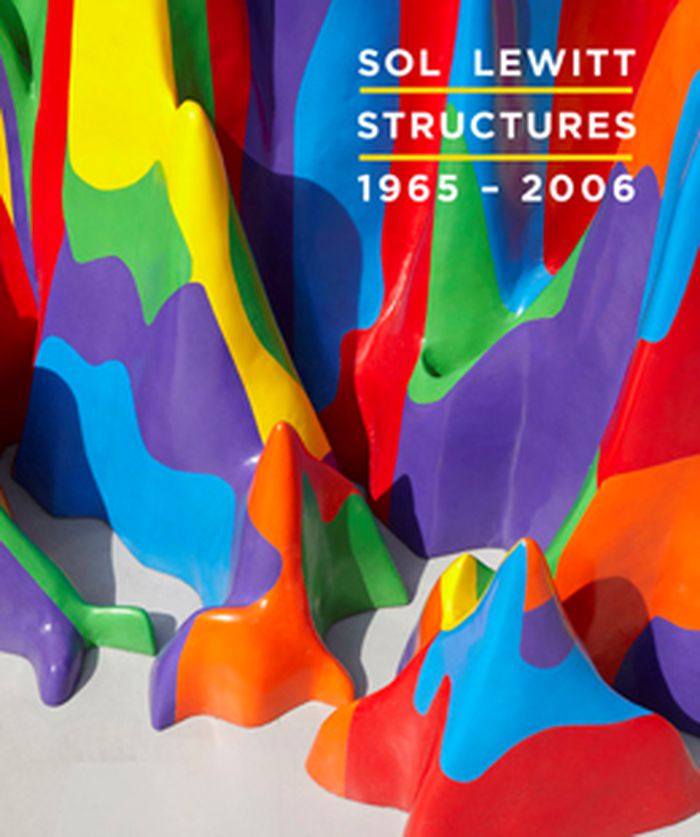
Sol LeWitt (1928-2007), renowned for his role in establishing Conceptualism and Minimalism as dominant art movements in the postwar era, is perhaps best known for his masterful and brilliantly colored wall drawings. Throughout his career, however, LeWitt also created many remarkable three-dimensional works suitable for display in outdoor settings. In this publication, which accompanies the first major career survey of LeWitt's "structures," the artist's modular works are traced from their simplest manifestation in a single large-scale cube through multiple variations, with examples from the 1960s through the 1990s. Works from the 1980s onward explore the three-dimensional possibilities of diverse geometric forms, such as stars, and the introduction of new materials, including concrete block and fiberglass, stimulating experimentation with non-geometric, irregular forms on an increasing scale.
Sol Lewitt : structures 1965-2006
Actions:
Prix:
$54.95
(disponible sur commande)
Résumé:
Sol LeWitt (1928-2007), renowned for his role in establishing Conceptualism and Minimalism as dominant art movements in the postwar era, is perhaps best known for his masterful and brilliantly colored wall drawings. Throughout his career, however, LeWitt also created many remarkable three-dimensional works suitable for display in outdoor settings. In this publication, which accompanies the first major career survey of LeWitt's "structures," the artist's modular works are traced from their simplest manifestation in a single large-scale cube through multiple variations, with examples from the 1960s through the 1990s. Works from the 1980s onward explore the three-dimensional possibilities of diverse geometric forms, such as stars, and the introduction of new materials, including concrete block and fiberglass, stimulating experimentation with non-geometric, irregular forms on an increasing scale.
Classification:
livres
livres
Publication:
novembre 2011
novembre 2011
Classification:
livres
livres
Actions:
Prix:
$24.95
(disponible en magasin)
Résumé:
Originally published in 1977, this 34 page staple-bound book is an early example of LeWitt’s rigorous, algorithmic process in which a set of rules is run through its permutations to generate corresponding images. First in overview and then in detail, the publication sets down all possible combinations in overlaying four basic lines (vertical, horizontal, right-facing(...)
$24.95
(disponible en magasin)
Résumé:
Originally published in 1977, this 34 page staple-bound book is an early example of LeWitt’s rigorous, algorithmic process in which a set of rules is run through its permutations to generate corresponding images. First in overview and then in detail, the publication sets down all possible combinations in overlaying four basic lines (vertical, horizontal, right-facing(...)
Titre:
Sol LeWitt: Four Basic Kinds of Lines & Colour
Actions:
Prix:
$24.95
(disponible en magasin)
Résumé:
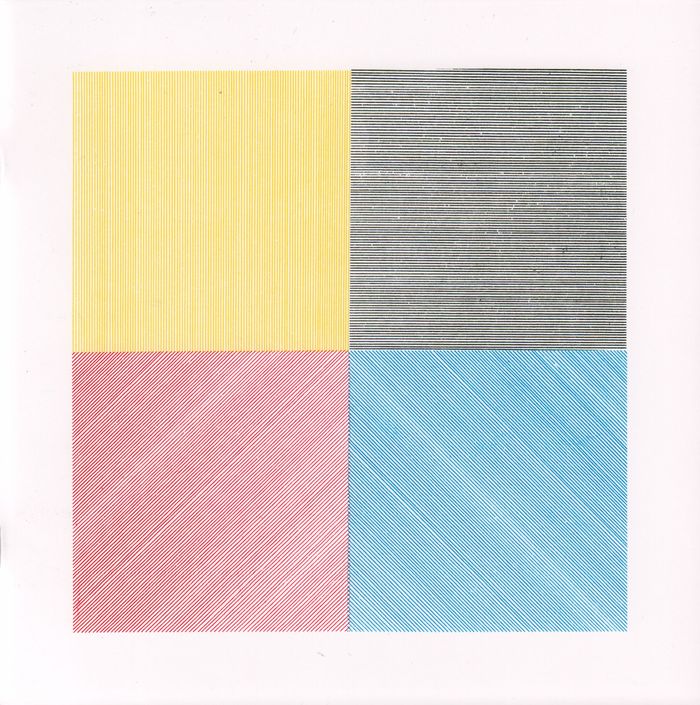
Originally published in 1977, this 34 page staple-bound book is an early example of LeWitt’s rigorous, algorithmic process in which a set of rules is run through its permutations to generate corresponding images. First in overview and then in detail, the publication sets down all possible combinations in overlaying four basic lines (vertical, horizontal, right-facing diagonal, left-facing diagonal) followed by a distinct combinatory system of four basic colors (yellow, black, red, blue). Each spread is composed of these two parallel systems played out one at a time, with escalating line combinations on the left hand side and corresponding color combinations on the right.
Sol LeWitt: Four Basic Kinds of Lines & Colour
Actions:
Prix:
$24.95
(disponible en magasin)
Résumé:
Originally published in 1977, this 34 page staple-bound book is an early example of LeWitt’s rigorous, algorithmic process in which a set of rules is run through its permutations to generate corresponding images. First in overview and then in detail, the publication sets down all possible combinations in overlaying four basic lines (vertical, horizontal, right-facing diagonal, left-facing diagonal) followed by a distinct combinatory system of four basic colors (yellow, black, red, blue). Each spread is composed of these two parallel systems played out one at a time, with escalating line combinations on the left hand side and corresponding color combinations on the right.
Classification:
livres
livres
Publication:
septembre 2019
septembre 2019


