


2227 Résultats
Classification:
livres
livres
Prix:
$49.95
(disponible en magasin)
Résumé:
Where is sexuality, especially queer sexuality, in architecture? "The house is (not) a prison" approaches this question from a radically new position, looking not for a theory of queer architecture, but rather for a queer theory of architecture. Starting from a reconsideration of the foundational principles of architecture, Colin Ripley demonstrates how the division of(...)
$49.95
(disponible en magasin)
Résumé:
Where is sexuality, especially queer sexuality, in architecture? "The house is (not) a prison" approaches this question from a radically new position, looking not for a theory of queer architecture, but rather for a queer theory of architecture. Starting from a reconsideration of the foundational principles of architecture, Colin Ripley demonstrates how the division of(...)
Titre:
The house is (not) a prison: On the queerness of architecture
Actions:
Prix:
$49.95
(disponible en magasin)
Résumé:
Where is sexuality, especially queer sexuality, in architecture? "The house is (not) a prison" approaches this question from a radically new position, looking not for a theory of queer architecture, but rather for a queer theory of architecture. Starting from a reconsideration of the foundational principles of architecture, Colin Ripley demonstrates how the division of space steals land from the commons and forces separations and categories. In the process, queerness is created as an indispensable outside to architecture’s disciplinary interior.
The house is (not) a prison: On the queerness of architecture
Actions:
Prix:
$49.95
(disponible en magasin)
Résumé:
Where is sexuality, especially queer sexuality, in architecture? "The house is (not) a prison" approaches this question from a radically new position, looking not for a theory of queer architecture, but rather for a queer theory of architecture. Starting from a reconsideration of the foundational principles of architecture, Colin Ripley demonstrates how the division of space steals land from the commons and forces separations and categories. In the process, queerness is created as an indispensable outside to architecture’s disciplinary interior.
Classification:
livres
livres
Publication:
décembre 2025
décembre 2025
Sujet:
Théorie de l’architecture
Théorie de l’architecture
Classification:
livres
livres
Actions:
Prix:
$56.95
(disponible en magasin)
Résumé:
Première traduction française du texte de 1967 de Giorgio Grassi, « La construction logique de l'architecture » est une prise de position forte en faveur d'une architecture pensée pour elle-même, à contre-courant des dérives expérimentales qui marquent aussi bien son époque que la nôtre. En s'appuyant sur l'histoire des traités et des théories architecturales depuis le(...)
$56.95
(disponible en magasin)
Résumé:
Première traduction française du texte de 1967 de Giorgio Grassi, « La construction logique de l'architecture » est une prise de position forte en faveur d'une architecture pensée pour elle-même, à contre-courant des dérives expérimentales qui marquent aussi bien son époque que la nôtre. En s'appuyant sur l'histoire des traités et des théories architecturales depuis le(...)
Sujet:
Théorie de l’architecture
Théorie de l’architecture
Publication:
novembre 2025
novembre 2025
Titre:
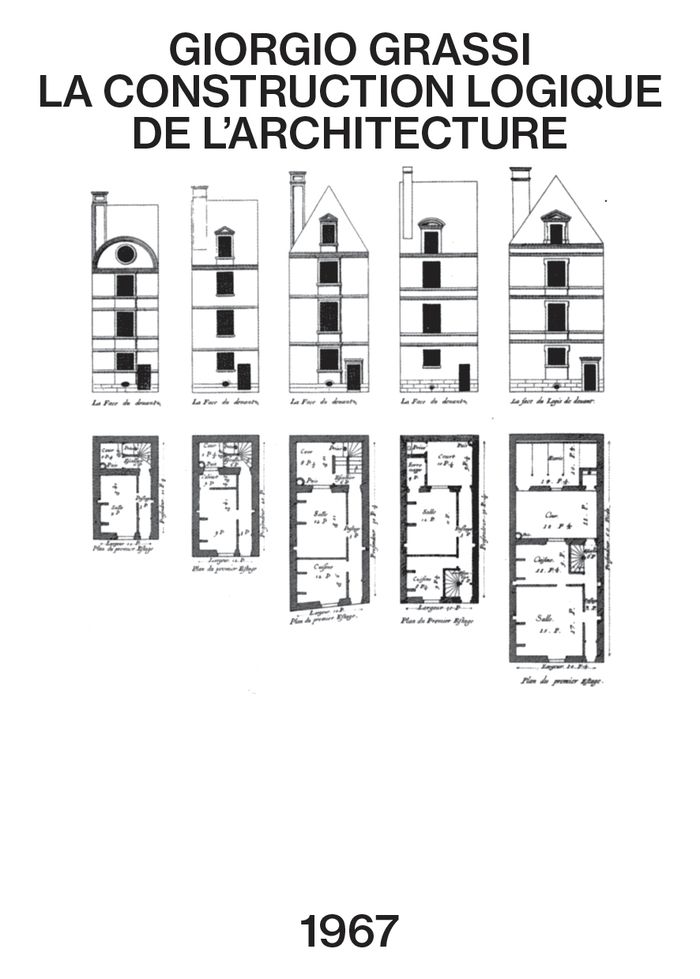
La construction logique de l'architecture
Actions:
Prix:
$56.95
(disponible en magasin)
Résumé:
Première traduction française du texte de 1967 de Giorgio Grassi, « La construction logique de l'architecture » est une prise de position forte en faveur d'une architecture pensée pour elle-même, à contre-courant des dérives expérimentales qui marquent aussi bien son époque que la nôtre. En s'appuyant sur l'histoire des traités et des théories architecturales depuis le XVIIe siècle, Grassi défend une discipline autonome, rigoureuse et responsable, capable de répondre aux enjeux du territoire et du phénomène urbain. Ce texte fondamental dessine les contours d'une architecture entendue comme une théorie pratique, où la construction devient l'expression la plus aboutie de la pensée.
La construction logique de l'architecture
Actions:
Prix:
$56.95
(disponible en magasin)
Résumé:
Première traduction française du texte de 1967 de Giorgio Grassi, « La construction logique de l'architecture » est une prise de position forte en faveur d'une architecture pensée pour elle-même, à contre-courant des dérives expérimentales qui marquent aussi bien son époque que la nôtre. En s'appuyant sur l'histoire des traités et des théories architecturales depuis le XVIIe siècle, Grassi défend une discipline autonome, rigoureuse et responsable, capable de répondre aux enjeux du territoire et du phénomène urbain. Ce texte fondamental dessine les contours d'une architecture entendue comme une théorie pratique, où la construction devient l'expression la plus aboutie de la pensée.
Classification:
livres
livres
Publication:
novembre 2025
novembre 2025
Sujet:
Théorie de l’architecture
Théorie de l’architecture
Classification:
livres
livres
Actions:
Prix:
$50.95
(disponible sur commande)
Résumé:
Au XVe siècle, l'apparition de formes architecturales inédites, inspirées des édifices antiques romains, a bouleversé toutes les modes. Ces projets originaux étaient signés de la main de maîtres d'oeuvre indépendants des corporations, nouveaux intervenants dans la production : les architectes. De nouvelles formes artistiques investirent alors les palais urbains, les(...)
$50.95
(disponible sur commande)
Résumé:
Au XVe siècle, l'apparition de formes architecturales inédites, inspirées des édifices antiques romains, a bouleversé toutes les modes. Ces projets originaux étaient signés de la main de maîtres d'oeuvre indépendants des corporations, nouveaux intervenants dans la production : les architectes. De nouvelles formes artistiques investirent alors les palais urbains, les(...)
Titre:
Essai sur les formes en architecture
Actions:
Prix:
$50.95
(disponible sur commande)
Résumé:
Au XVe siècle, l'apparition de formes architecturales inédites, inspirées des édifices antiques romains, a bouleversé toutes les modes. Ces projets originaux étaient signés de la main de maîtres d'oeuvre indépendants des corporations, nouveaux intervenants dans la production : les architectes. De nouvelles formes artistiques investirent alors les palais urbains, les églises, leurs façades, leurs cours. A partir du XIXe siècle, l'architecture moderniste rejeta néanmoins ces formes, tout comme celles décoratives : les oeuvres architecturales devaient être techniques et fonctionnelles, du retour du gothique à l'architecture computationnelle. L'emploi de formes historiques ainsi que la problématique de la composition perdurèrent néanmoins, réactualisés dans le travail d'architectes comme Le Corbusier, Louis Kahn ou Livio Vacchini, parmi d'autres créateurs.
Essai sur les formes en architecture
Actions:
Prix:
$50.95
(disponible sur commande)
Résumé:
Au XVe siècle, l'apparition de formes architecturales inédites, inspirées des édifices antiques romains, a bouleversé toutes les modes. Ces projets originaux étaient signés de la main de maîtres d'oeuvre indépendants des corporations, nouveaux intervenants dans la production : les architectes. De nouvelles formes artistiques investirent alors les palais urbains, les églises, leurs façades, leurs cours. A partir du XIXe siècle, l'architecture moderniste rejeta néanmoins ces formes, tout comme celles décoratives : les oeuvres architecturales devaient être techniques et fonctionnelles, du retour du gothique à l'architecture computationnelle. L'emploi de formes historiques ainsi que la problématique de la composition perdurèrent néanmoins, réactualisés dans le travail d'architectes comme Le Corbusier, Louis Kahn ou Livio Vacchini, parmi d'autres créateurs.
Classification:
livres
livres
Publication:
mai 2025
mai 2025
Sujet:
Théorie de l’architecture
Théorie de l’architecture
Classification:
livres
livres
Titre:
Terra Infecta
Terra Infecta
Actions:
Prix:
$45.00
(disponible en magasin)
Résumé:
In ''Terra Infecta'', Andrea Bagnato tells an unfamiliar story about a well-known place. Since the early days of tourism, the cities and landscapes of Italy have been bywords for beauty and grandeur. But, at home and abroad, the same places have also been haunted by associations with disease and uncleanliness, often more to do with politics than conditions on the(...)
$45.00
(disponible en magasin)
Résumé:
In ''Terra Infecta'', Andrea Bagnato tells an unfamiliar story about a well-known place. Since the early days of tourism, the cities and landscapes of Italy have been bywords for beauty and grandeur. But, at home and abroad, the same places have also been haunted by associations with disease and uncleanliness, often more to do with politics than conditions on the(...)
Titre:
Terra Infecta
Actions:
Prix:
$45.00
(disponible en magasin)
Résumé:
In ''Terra Infecta'', Andrea Bagnato tells an unfamiliar story about a well-known place. Since the early days of tourism, the cities and landscapes of Italy have been bywords for beauty and grandeur. But, at home and abroad, the same places have also been haunted by associations with disease and uncleanliness, often more to do with politics than conditions on the ground. In this gripping narrative study, Bagnato shows how the modern quest for sanitation shaped Italy’s urban and rural landscapes, propelling major transformations from the draining of the wetlands around Venice, to demolitions and replanning in Naples, to the expulsion of the inhabitants of ancient Matera. He argues that current north–south inequalities are founded on spurious medical narratives, and focuses on the real impact on the people caught in their ministrations. Ranging from Italian unification to the aftershocks of Covid-19, and drawing on architectural records, medical history, and the author’s own travels, ''Terra Infecta'' reveals the lived realities of grand schemes, traces of vanished communities, and forgotten histories of collective organisation and resistance.
Terra Infecta
Actions:
Prix:
$45.00
(disponible en magasin)
Résumé:
In ''Terra Infecta'', Andrea Bagnato tells an unfamiliar story about a well-known place. Since the early days of tourism, the cities and landscapes of Italy have been bywords for beauty and grandeur. But, at home and abroad, the same places have also been haunted by associations with disease and uncleanliness, often more to do with politics than conditions on the ground. In this gripping narrative study, Bagnato shows how the modern quest for sanitation shaped Italy’s urban and rural landscapes, propelling major transformations from the draining of the wetlands around Venice, to demolitions and replanning in Naples, to the expulsion of the inhabitants of ancient Matera. He argues that current north–south inequalities are founded on spurious medical narratives, and focuses on the real impact on the people caught in their ministrations. Ranging from Italian unification to the aftershocks of Covid-19, and drawing on architectural records, medical history, and the author’s own travels, ''Terra Infecta'' reveals the lived realities of grand schemes, traces of vanished communities, and forgotten histories of collective organisation and resistance.
Classification:
livres
livres
Publication:
février 2026
février 2026
Sujet:
Théorie de l’architecture
Théorie de l’architecture
Classification:
livres
livres
Prix:
$74.95
(disponible en magasin)
Résumé:
The provenance of artworks is a burning issue in current scholarship and politics. Transpose provenance into architecture and it reveals new and surprising dimensions in the social, material and cultural lives of buildings and architectural artefacts, reframing questions of migration, movement and circulation. Provenance in architecture illuminates the intricate(...)
$74.95
(disponible en magasin)
Résumé:
The provenance of artworks is a burning issue in current scholarship and politics. Transpose provenance into architecture and it reveals new and surprising dimensions in the social, material and cultural lives of buildings and architectural artefacts, reframing questions of migration, movement and circulation. Provenance in architecture illuminates the intricate(...)
Titre:
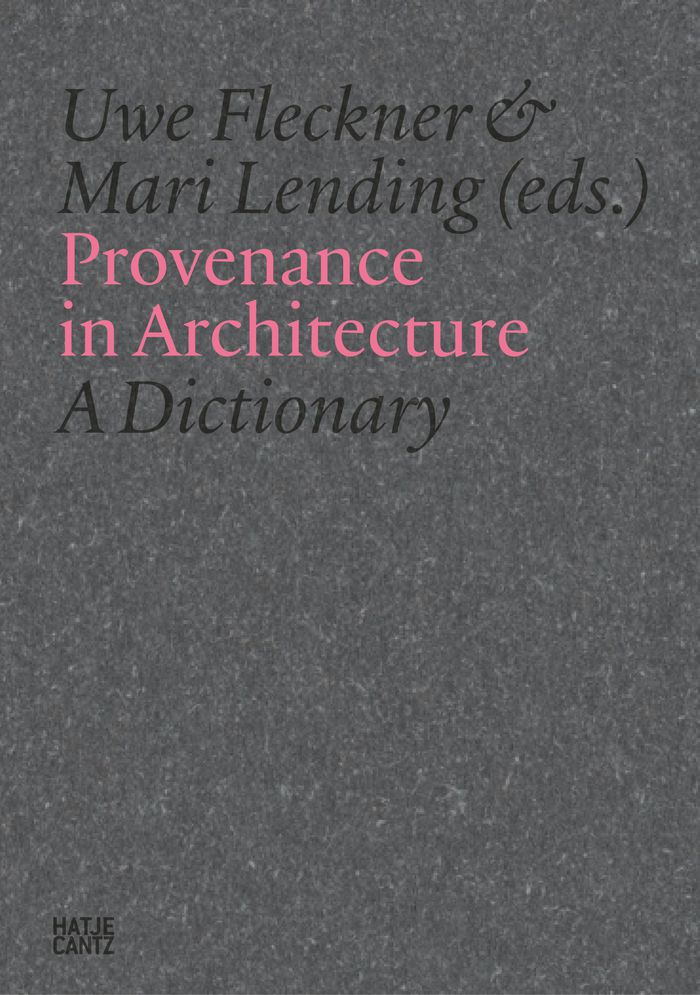
Provenance in Architecture A Dictionary of Terms 1. Auflage
Actions:
Prix:
$74.95
(disponible en magasin)
Résumé:
The provenance of artworks is a burning issue in current scholarship and politics. Transpose provenance into architecture and it reveals new and surprising dimensions in the social, material and cultural lives of buildings and architectural artefacts, reframing questions of migration, movement and circulation. Provenance in architecture illuminates the intricate trajectories of fundamentally composite objects from their complex origins to their uncertain destinations. This dictionary examines architectural provenance across 101 key concepts from "Acquisition" to "Will". The entries provide new ways of writing architectural history, highlighting how architecture moves, is destroyed, survives and is transformed.
Provenance in Architecture A Dictionary of Terms 1. Auflage
Actions:
Prix:
$74.95
(disponible en magasin)
Résumé:
The provenance of artworks is a burning issue in current scholarship and politics. Transpose provenance into architecture and it reveals new and surprising dimensions in the social, material and cultural lives of buildings and architectural artefacts, reframing questions of migration, movement and circulation. Provenance in architecture illuminates the intricate trajectories of fundamentally composite objects from their complex origins to their uncertain destinations. This dictionary examines architectural provenance across 101 key concepts from "Acquisition" to "Will". The entries provide new ways of writing architectural history, highlighting how architecture moves, is destroyed, survives and is transformed.
Classification:
livres
livres
Publication:
janvier 2026
janvier 2026
Sujet:
Théorie de l’architecture
Théorie de l’architecture
Classification:
livres
livres
Actions:
Prix:
$24.95
(disponible en magasin)
Résumé:
Siegfried Kracauer’s texts are a widely investigated field of sociology and media studies. It is less well known that Kracauer was a graduate architect, practised during World War I and was awarded his PhD after writing a thesis in 1915 in the field of architectural history. After the war, Kracauer published numerous critiques with a special focus on the architectural(...)
$24.95
(disponible en magasin)
Résumé:
Siegfried Kracauer’s texts are a widely investigated field of sociology and media studies. It is less well known that Kracauer was a graduate architect, practised during World War I and was awarded his PhD after writing a thesis in 1915 in the field of architectural history. After the war, Kracauer published numerous critiques with a special focus on the architectural(...)
Sujet:
Théorie de l’architecture
Théorie de l’architecture
Publication:
décembre 2022
décembre 2022
Titre:
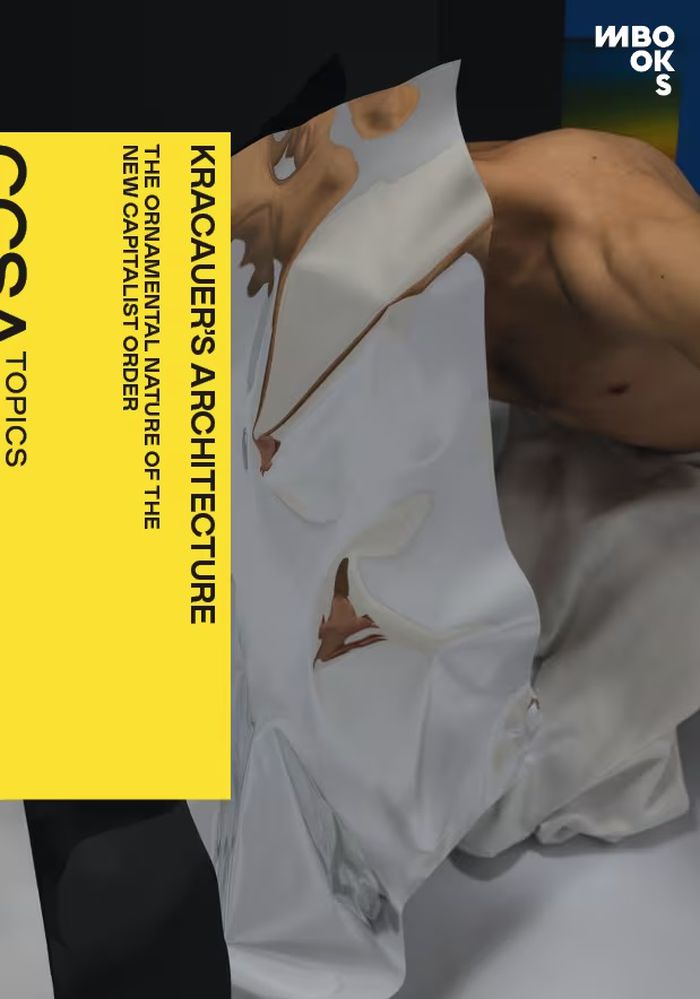
Kracauer's Architecture : The ornamental nature of the new capitalist order
Actions:
Prix:
$24.95
(disponible en magasin)
Résumé:
Siegfried Kracauer’s texts are a widely investigated field of sociology and media studies. It is less well known that Kracauer was a graduate architect, practised during World War I and was awarded his PhD after writing a thesis in 1915 in the field of architectural history. After the war, Kracauer published numerous critiques with a special focus on the architectural developments of the time. They document an interest in architectural phenomena ranging from a reflection on his own experiences to a general perspective on the subjectivity of the modern architect, as well as more universal social phenomena. In essence, this essay claims that the lack of ornamentation in modern architecture can be grasped as an ornamental concept of the new social order of capitalism.
Kracauer's Architecture : The ornamental nature of the new capitalist order
Actions:
Prix:
$24.95
(disponible en magasin)
Résumé:
Siegfried Kracauer’s texts are a widely investigated field of sociology and media studies. It is less well known that Kracauer was a graduate architect, practised during World War I and was awarded his PhD after writing a thesis in 1915 in the field of architectural history. After the war, Kracauer published numerous critiques with a special focus on the architectural developments of the time. They document an interest in architectural phenomena ranging from a reflection on his own experiences to a general perspective on the subjectivity of the modern architect, as well as more universal social phenomena. In essence, this essay claims that the lack of ornamentation in modern architecture can be grasped as an ornamental concept of the new social order of capitalism.
Classification:
livres
livres
Publication:
décembre 2022
décembre 2022
Sujet:
Théorie de l’architecture
Théorie de l’architecture
Classification:
livres
livres
Actions:
Prix:
$24.95
(disponible sur commande)
Résumé:
In the first half of the 20th century, when architecture and literature dreamed of transparency, glass was the material these dreams were made of. However, the historiography of both fields usually focuses on a few canonical works by male authors to tell the story of this shared fascination. Departing from this imbalance, this essay takes the opportunity to explore the(...)
$24.95
(disponible sur commande)
Résumé:
In the first half of the 20th century, when architecture and literature dreamed of transparency, glass was the material these dreams were made of. However, the historiography of both fields usually focuses on a few canonical works by male authors to tell the story of this shared fascination. Departing from this imbalance, this essay takes the opportunity to explore the(...)
Sujet:
Théorie de l’architecture
Théorie de l’architecture
Publication:
décembre 2023
décembre 2023
Titre:
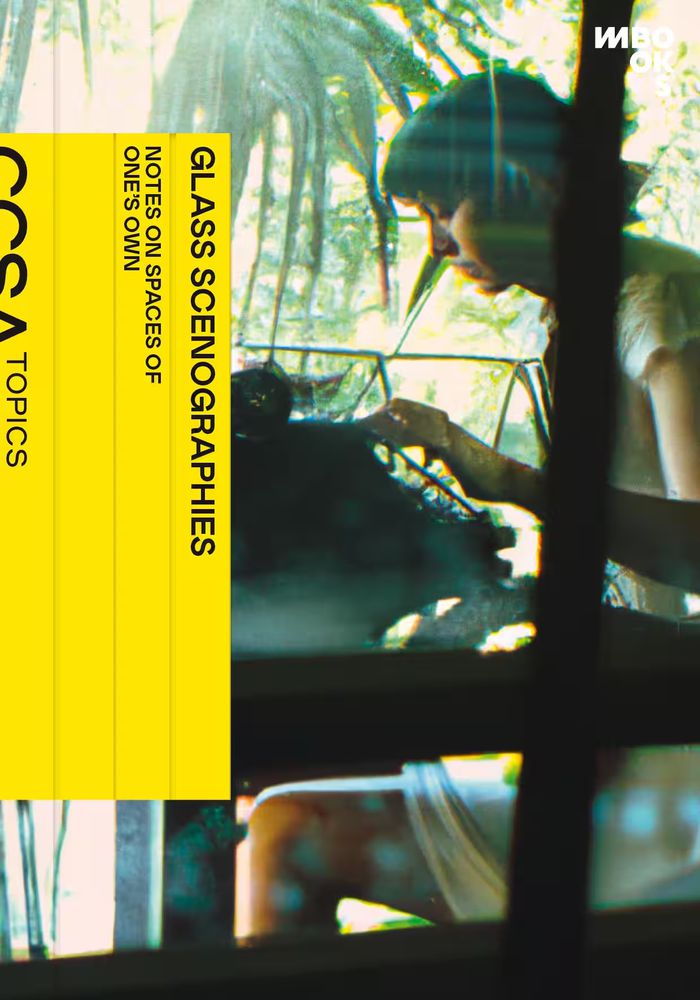
Glass scenographies. Notes on spaces of one’s own
Actions:
Prix:
$24.95
(disponible sur commande)
Résumé:
In the first half of the 20th century, when architecture and literature dreamed of transparency, glass was the material these dreams were made of. However, the historiography of both fields usually focuses on a few canonical works by male authors to tell the story of this shared fascination. Departing from this imbalance, this essay takes the opportunity to explore the glass culture of modernity through the lens of female projects whose stories often take place simultaneously on different continents. While the former silent film actress Evelyn Word Leigh builds a glass house for herself in Nyack, New York, artists and writers based in Europe – like Claude Cahun, Anaïs Nin, and Hilda ‘H.D.’ Doolittle – flesh out imaginary glass domes as construction sites of artistic subjectivities. Whether homes or domes, these creative women used glass environments to question and renegotiate their assigned places in Western societies, challenging the boundaries of female agency.
Glass scenographies. Notes on spaces of one’s own
Actions:
Prix:
$24.95
(disponible sur commande)
Résumé:
In the first half of the 20th century, when architecture and literature dreamed of transparency, glass was the material these dreams were made of. However, the historiography of both fields usually focuses on a few canonical works by male authors to tell the story of this shared fascination. Departing from this imbalance, this essay takes the opportunity to explore the glass culture of modernity through the lens of female projects whose stories often take place simultaneously on different continents. While the former silent film actress Evelyn Word Leigh builds a glass house for herself in Nyack, New York, artists and writers based in Europe – like Claude Cahun, Anaïs Nin, and Hilda ‘H.D.’ Doolittle – flesh out imaginary glass domes as construction sites of artistic subjectivities. Whether homes or domes, these creative women used glass environments to question and renegotiate their assigned places in Western societies, challenging the boundaries of female agency.
Classification:
livres
livres
Publication:
décembre 2023
décembre 2023
Sujet:
Théorie de l’architecture
Théorie de l’architecture
Classification:
livres
livres
Actions:
Prix:
$24.95
(disponible en magasin)
Résumé:
The modern Moravian Church is notable as an independent religious movement that for over two centuries developed a highly interconnected global network of settlements and mission stations. By 1800, close to 20 carefully planned Moravian communities had been established on either side of the Atlantic Ocean. Part of the CCSA Topics series, ‘A Complicated Organism’ examines(...)
$24.95
(disponible en magasin)
Résumé:
The modern Moravian Church is notable as an independent religious movement that for over two centuries developed a highly interconnected global network of settlements and mission stations. By 1800, close to 20 carefully planned Moravian communities had been established on either side of the Atlantic Ocean. Part of the CCSA Topics series, ‘A Complicated Organism’ examines(...)
Sujet:
Théorie de l’architecture
Théorie de l’architecture
Publication:
décembre 2024
décembre 2024
Titre:
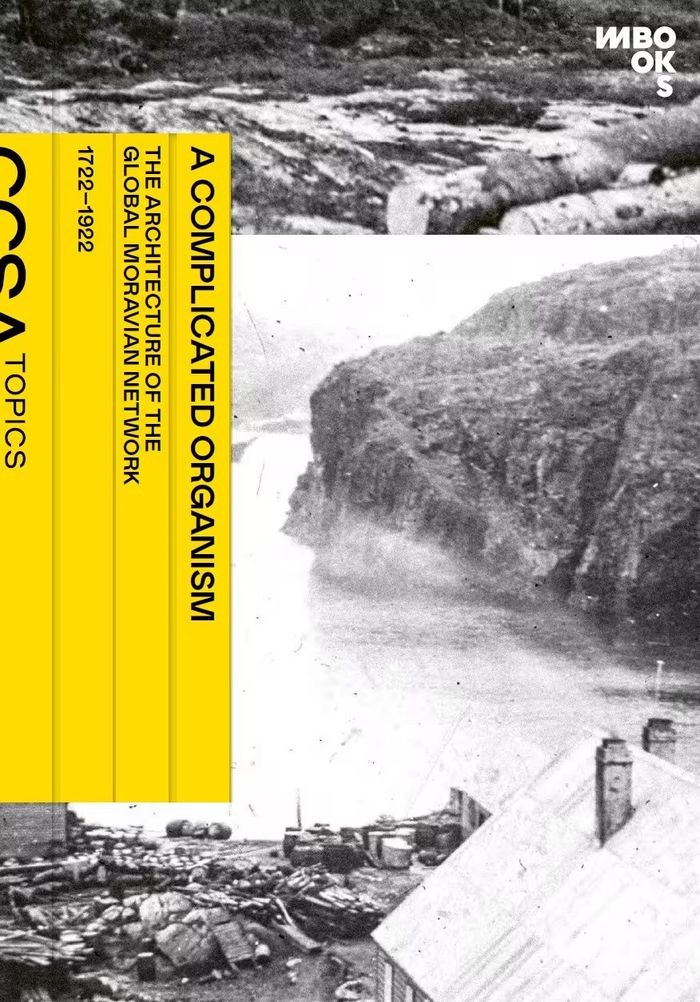
A complicated organism. The architecture of the global Moravian network 1722–1922
Actions:
Prix:
$24.95
(disponible en magasin)
Résumé:
The modern Moravian Church is notable as an independent religious movement that for over two centuries developed a highly interconnected global network of settlements and mission stations. By 1800, close to 20 carefully planned Moravian communities had been established on either side of the Atlantic Ocean. Part of the CCSA Topics series, ‘A Complicated Organism’ examines the role of architecture and spatial thinking in enabling the modern Moravians to perform their unique brand of organisational governance, aimed at establishing similar conditions in diverse environments scattered across an increasingly connected world.
A complicated organism. The architecture of the global Moravian network 1722–1922
Actions:
Prix:
$24.95
(disponible en magasin)
Résumé:
The modern Moravian Church is notable as an independent religious movement that for over two centuries developed a highly interconnected global network of settlements and mission stations. By 1800, close to 20 carefully planned Moravian communities had been established on either side of the Atlantic Ocean. Part of the CCSA Topics series, ‘A Complicated Organism’ examines the role of architecture and spatial thinking in enabling the modern Moravians to perform their unique brand of organisational governance, aimed at establishing similar conditions in diverse environments scattered across an increasingly connected world.
Classification:
livres
livres
Publication:
décembre 2024
décembre 2024
Sujet:
Théorie de l’architecture
Théorie de l’architecture
Classification:
livres
livres
Prix:
$24.95
(disponible en magasin)
Résumé:
The 2020 murder of George Floyd in Minneapolis led to the closure of the Tate Britain restaurant in London, which had advertised its 55-foot-long racist mural from the 1920s as "the most amusing room in Europe" Suddenly it was obvious. Flooded by Mail introduces strategies of antihegemonic amateur collecting and examines why the killing of a Black man by U.S. police in(...)
$24.95
(disponible en magasin)
Résumé:
The 2020 murder of George Floyd in Minneapolis led to the closure of the Tate Britain restaurant in London, which had advertised its 55-foot-long racist mural from the 1920s as "the most amusing room in Europe" Suddenly it was obvious. Flooded by Mail introduces strategies of antihegemonic amateur collecting and examines why the killing of a Black man by U.S. police in(...)
Sujet:
Théorie de l’architecture
Théorie de l’architecture
Publication:
décembre 2025
décembre 2025
Titre:
Flooded by mail: How George Floyd (remember?) landed at the Tate
Actions:
Prix:
$24.95
(disponible en magasin)
Résumé:
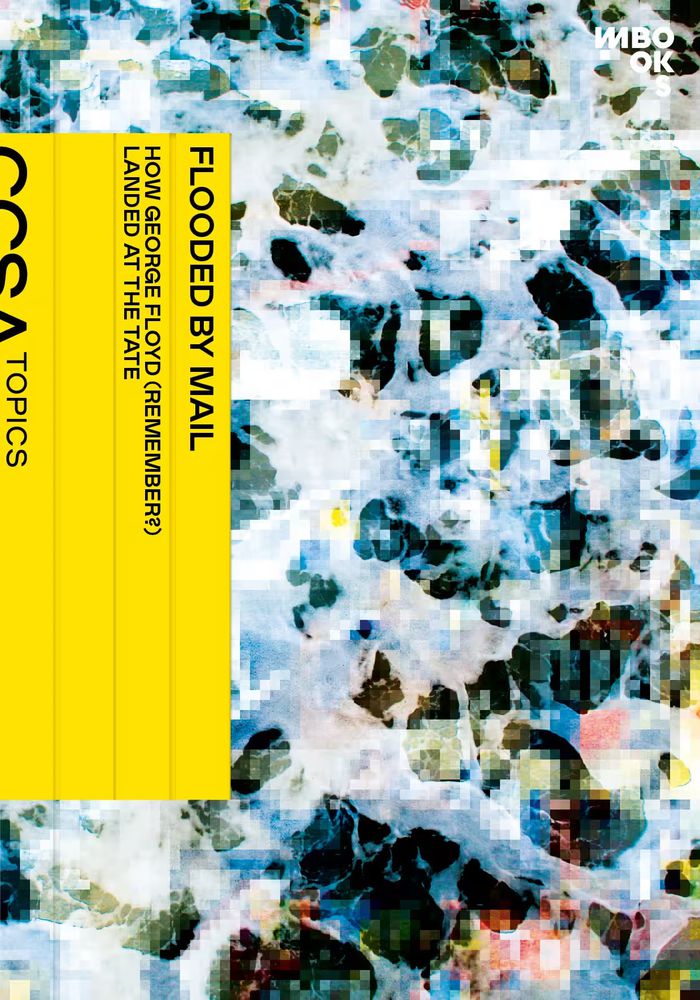
The 2020 murder of George Floyd in Minneapolis led to the closure of the Tate Britain restaurant in London, which had advertised its 55-foot-long racist mural from the 1920s as "the most amusing room in Europe" Suddenly it was obvious. Flooded by Mail introduces strategies of antihegemonic amateur collecting and examines why the killing of a Black man by U.S. police in public implicates us in Europe. A number of objects found online are useful for this task: the trial minting of a coin commemorating the collapse of the Cologne City Archive that never entered circulation, a board game from a 1932 German film, stock photos and generic copperplate engravings from the same family over centuries, Köllnflocken trading cards, postcards from a wall in Morocco, a procession in Cologne and a possessed harbor in Spain, and a 1970s conceptualist installation with postcards of rough seas along the British coast.
Flooded by mail: How George Floyd (remember?) landed at the Tate
Actions:
Prix:
$24.95
(disponible en magasin)
Résumé:
The 2020 murder of George Floyd in Minneapolis led to the closure of the Tate Britain restaurant in London, which had advertised its 55-foot-long racist mural from the 1920s as "the most amusing room in Europe" Suddenly it was obvious. Flooded by Mail introduces strategies of antihegemonic amateur collecting and examines why the killing of a Black man by U.S. police in public implicates us in Europe. A number of objects found online are useful for this task: the trial minting of a coin commemorating the collapse of the Cologne City Archive that never entered circulation, a board game from a 1932 German film, stock photos and generic copperplate engravings from the same family over centuries, Köllnflocken trading cards, postcards from a wall in Morocco, a procession in Cologne and a possessed harbor in Spain, and a 1970s conceptualist installation with postcards of rough seas along the British coast.
Classification:
livres
livres
Publication:
décembre 2025
décembre 2025
Sujet:
Théorie de l’architecture
Théorie de l’architecture
Classification:
livres
livres
Actions:
Prix:
$38.95
(disponible en magasin)
Résumé:
During US colonial rule in the Philippines, reinforced concrete was used to the near exclusion of all other building materials. In Concrete Colonialism , Diana Jean S. Martinez examines the motivations for and lasting effects of this forgotten colonial policy. Arguing that the pervasive use of reinforced concrete technologies revolutionized techniques of imperial(...)
$38.95
(disponible en magasin)
Résumé:
During US colonial rule in the Philippines, reinforced concrete was used to the near exclusion of all other building materials. In Concrete Colonialism , Diana Jean S. Martinez examines the motivations for and lasting effects of this forgotten colonial policy. Arguing that the pervasive use of reinforced concrete technologies revolutionized techniques of imperial(...)
Titre:
Concrete colonialism: Architecture, urbanism, and the US imperial project in the Philippines
Actions:
Prix:
$38.95
(disponible en magasin)
Résumé:
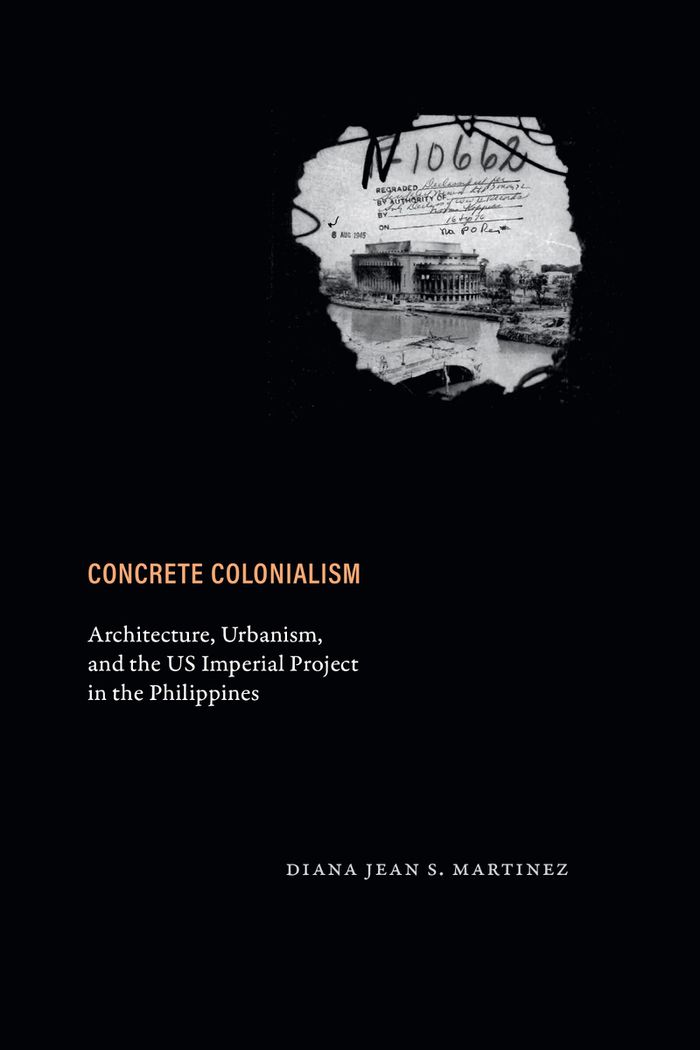
During US colonial rule in the Philippines, reinforced concrete was used to the near exclusion of all other building materials. In Concrete Colonialism , Diana Jean S. Martinez examines the motivations for and lasting effects of this forgotten colonial policy. Arguing that the pervasive use of reinforced concrete technologies revolutionized techniques of imperial conquest, Martinez shows how concrete reshaped colonialism as a project that sought durable change through the reformation of environments, colonial society, and racialized biologies. Martinez locates the origins of this material revolution in the development of Chicago, highlighting how building this urban center atop exceptionally challenging geology made it possible to transform diverse global ecologies. She details how the material's stability, plasticity, strength, and other qualities served the shifting imperatives of the US colonial regime, playing a central role in defending territory, controlling disease, and constructing monuments to nation and empire. By describing a world irreversibly remade, Martinez urges readers to consider how colonialism persists--in concrete forms--despite claims of its conclusion.
Concrete colonialism: Architecture, urbanism, and the US imperial project in the Philippines
Actions:
Prix:
$38.95
(disponible en magasin)
Résumé:
During US colonial rule in the Philippines, reinforced concrete was used to the near exclusion of all other building materials. In Concrete Colonialism , Diana Jean S. Martinez examines the motivations for and lasting effects of this forgotten colonial policy. Arguing that the pervasive use of reinforced concrete technologies revolutionized techniques of imperial conquest, Martinez shows how concrete reshaped colonialism as a project that sought durable change through the reformation of environments, colonial society, and racialized biologies. Martinez locates the origins of this material revolution in the development of Chicago, highlighting how building this urban center atop exceptionally challenging geology made it possible to transform diverse global ecologies. She details how the material's stability, plasticity, strength, and other qualities served the shifting imperatives of the US colonial regime, playing a central role in defending territory, controlling disease, and constructing monuments to nation and empire. By describing a world irreversibly remade, Martinez urges readers to consider how colonialism persists--in concrete forms--despite claims of its conclusion.
Classification:
livres
livres
Publication:
octobre 2025
octobre 2025
Sujet:
Théorie de l’architecture
Théorie de l’architecture


