


2227 Résultats
Classification:
livres
livres
Actions:
Prix:
$45.50
(disponible sur commande)
Résumé:
The Victorian age is much closer to us in time than we might believe. Yet at that time, in the most technologically advanced nation in the world, people buried meat in fresh earth to prevent mould forming and wrung sheets out in boiling water with their bare hands. Such household drudgery was routinely performed by the grandparents of people still living, but the(...)
$45.50
(disponible sur commande)
Résumé:
The Victorian age is much closer to us in time than we might believe. Yet at that time, in the most technologically advanced nation in the world, people buried meat in fresh earth to prevent mould forming and wrung sheets out in boiling water with their bare hands. Such household drudgery was routinely performed by the grandparents of people still living, but the(...)
Titre:
Inside the victorian home : a portrait of domestic life in victorian England
Actions:
Prix:
$45.50
(disponible sur commande)
Résumé:
The Victorian age is much closer to us in time than we might believe. Yet at that time, in the most technologically advanced nation in the world, people buried meat in fresh earth to prevent mould forming and wrung sheets out in boiling water with their bare hands. Such household drudgery was routinely performed by the grandparents of people still living, but the knowledge of it has passed as if it had never been. Judith Flanders's book is laid out like a Victorian house, taking you through the story of daily life from room to room. In each space she depicts the home's furnishings and decoration: from childbirth in the master bedroom, through the scullery and kitchen, the separate male and female domains of the drawing room and the parlour, and ending in the sickroom. A rich selection from diaries, letters, advice books, magazines, and paintings fills the rooms with the people and personalities of the age.
Inside the victorian home : a portrait of domestic life in victorian England
Actions:
Prix:
$45.50
(disponible sur commande)
Résumé:
The Victorian age is much closer to us in time than we might believe. Yet at that time, in the most technologically advanced nation in the world, people buried meat in fresh earth to prevent mould forming and wrung sheets out in boiling water with their bare hands. Such household drudgery was routinely performed by the grandparents of people still living, but the knowledge of it has passed as if it had never been. Judith Flanders's book is laid out like a Victorian house, taking you through the story of daily life from room to room. In each space she depicts the home's furnishings and decoration: from childbirth in the master bedroom, through the scullery and kitchen, the separate male and female domains of the drawing room and the parlour, and ending in the sickroom. A rich selection from diaries, letters, advice books, magazines, and paintings fills the rooms with the people and personalities of the age.
Classification:
livres
livres
Publication:
mai 2004, New York, London
mai 2004, New York, London
Sujet:
Théorie de l’architecture
Théorie de l’architecture
Classification:
livres
livres
Actions:
Prix:
$61.95
(disponible sur commande)
Résumé:
Thierry Paquot présente le concept d’habiter, l’examine attentivement eu égard des positions de Gaston Bachelard, Maurice Merleau-Ponty, Emmanuel Lévinas, Henri Maldiney, Augustin Berque... Puis, il rassemble les éléments épars d’une enquête philosophico-étymologique : comment, quand, par qui et pour quels résultats, l’habiter arrive-t-il en France ? Et bénéficie d’un(...)
$61.95
(disponible sur commande)
Résumé:
Thierry Paquot présente le concept d’habiter, l’examine attentivement eu égard des positions de Gaston Bachelard, Maurice Merleau-Ponty, Emmanuel Lévinas, Henri Maldiney, Augustin Berque... Puis, il rassemble les éléments épars d’une enquête philosophico-étymologique : comment, quand, par qui et pour quels résultats, l’habiter arrive-t-il en France ? Et bénéficie d’un(...)
Titre:
Demeure terrestre : enquête vagabonde sur l'habiter
Actions:
Prix:
$61.95
(disponible sur commande)
Résumé:
Thierry Paquot présente le concept d’habiter, l’examine attentivement eu égard des positions de Gaston Bachelard, Maurice Merleau-Ponty, Emmanuel Lévinas, Henri Maldiney, Augustin Berque... Puis, il rassemble les éléments épars d’une enquête philosophico-étymologique : comment, quand, par qui et pour quels résultats, l’habiter arrive-t-il en France ? Et bénéficie d’un accueil favorable parmi les architectes et les spécialistes du logement et de la ville ? Il s’interroge, enfin, sur la dénaturation « tranquille » d’un concept philosophique, ses usages hybrides qui l’apparentent aussi bien à la « machine-à-habiter » de Le Corbusier qu’aux « modes d’habiter » décrits par les anthropologues. Cet essai au ton personnel, emprunte à l’autobiographie, au récit de voyage, à la spéculation théorique et à la géohistoire comparée des idées afin de réaffirmer la puissance du concept heideggérien et de le confronter à la vie urbaine contemporaine.
Demeure terrestre : enquête vagabonde sur l'habiter
Actions:
Prix:
$61.95
(disponible sur commande)
Résumé:
Thierry Paquot présente le concept d’habiter, l’examine attentivement eu égard des positions de Gaston Bachelard, Maurice Merleau-Ponty, Emmanuel Lévinas, Henri Maldiney, Augustin Berque... Puis, il rassemble les éléments épars d’une enquête philosophico-étymologique : comment, quand, par qui et pour quels résultats, l’habiter arrive-t-il en France ? Et bénéficie d’un accueil favorable parmi les architectes et les spécialistes du logement et de la ville ? Il s’interroge, enfin, sur la dénaturation « tranquille » d’un concept philosophique, ses usages hybrides qui l’apparentent aussi bien à la « machine-à-habiter » de Le Corbusier qu’aux « modes d’habiter » décrits par les anthropologues. Cet essai au ton personnel, emprunte à l’autobiographie, au récit de voyage, à la spéculation théorique et à la géohistoire comparée des idées afin de réaffirmer la puissance du concept heideggérien et de le confronter à la vie urbaine contemporaine.
Classification:
livres
livres
Publication:
mai 2005, Paris
mai 2005, Paris
Sujet:
Théorie de l’architecture
Théorie de l’architecture
Classification:
livres
livres
Titre:
Les nouvelles Athènes
Les nouvelles Athènes
Actions:
Prix:
$41.95
(disponible sur commande)
Résumé:
La culture grecque, éteinte depuis longtemps, même en Grèce, est ressuscitée et revit à Florence», s'exclame Poliziano, une des grandes figures marquantes de la Renaissance italienne. Présentée comme une «nouvelle Athènes», Florence devient à son tour le modèle de quelques-uns des grands centres culturels aux XVIIIe et XIXe siécles au nord des Alpes. Dresde, Weimar,(...)
$41.95
(disponible sur commande)
Résumé:
La culture grecque, éteinte depuis longtemps, même en Grèce, est ressuscitée et revit à Florence», s'exclame Poliziano, une des grandes figures marquantes de la Renaissance italienne. Présentée comme une «nouvelle Athènes», Florence devient à son tour le modèle de quelques-uns des grands centres culturels aux XVIIIe et XIXe siécles au nord des Alpes. Dresde, Weimar,(...)
Titre:
Les nouvelles Athènes
Actions:
Prix:
$41.95
(disponible sur commande)
Résumé:
La culture grecque, éteinte depuis longtemps, même en Grèce, est ressuscitée et revit à Florence», s'exclame Poliziano, une des grandes figures marquantes de la Renaissance italienne. Présentée comme une «nouvelle Athènes», Florence devient à son tour le modèle de quelques-uns des grands centres culturels aux XVIIIe et XIXe siécles au nord des Alpes. Dresde, Weimar, Munich ou Edimbourg deviennent, à l'apogée de leur rayonnement, des «nouvelles Athènes» ou des «nouvelles Florence». Le but de l'ouvrage d'André Reszler est d'esquisser l'histoire des grands mythes culturels de l'Europe moderne à travers ses réalisations successives...
Les nouvelles Athènes
Actions:
Prix:
$41.95
(disponible sur commande)
Résumé:
La culture grecque, éteinte depuis longtemps, même en Grèce, est ressuscitée et revit à Florence», s'exclame Poliziano, une des grandes figures marquantes de la Renaissance italienne. Présentée comme une «nouvelle Athènes», Florence devient à son tour le modèle de quelques-uns des grands centres culturels aux XVIIIe et XIXe siécles au nord des Alpes. Dresde, Weimar, Munich ou Edimbourg deviennent, à l'apogée de leur rayonnement, des «nouvelles Athènes» ou des «nouvelles Florence». Le but de l'ouvrage d'André Reszler est d'esquisser l'histoire des grands mythes culturels de l'Europe moderne à travers ses réalisations successives...
Classification:
livres
livres
Publication:
novembre 2004, Gollion
novembre 2004, Gollion
Sujet:
Théorie de l’architecture
Théorie de l’architecture
Classification:
livres
livres
Titre:
Le projet tectonique
Le projet tectonique
Actions:
Prix:
$42.95
(disponible sur commande)
Résumé:
La tectonique s'offre aujourd'hui comme une façon d'interroger le dialogue culturel entre conception et construction. Cet ouvrage rassemble les contributions d'architectes, d'artistes, d'historiens, de philosophes et de pédagogues autour du «projet tectonique» dont ils tirent une quintessence troublante et enrichissante: la fonction constructive est aussi une fiction(...)
$42.95
(disponible sur commande)
Résumé:
La tectonique s'offre aujourd'hui comme une façon d'interroger le dialogue culturel entre conception et construction. Cet ouvrage rassemble les contributions d'architectes, d'artistes, d'historiens, de philosophes et de pédagogues autour du «projet tectonique» dont ils tirent une quintessence troublante et enrichissante: la fonction constructive est aussi une fiction(...)
Sujet:
Théorie de l’architecture
Théorie de l’architecture
Publication:
octobre 2005, Gollion
octobre 2005, Gollion
Titre:
Le projet tectonique
Actions:
Prix:
$42.95
(disponible sur commande)
Résumé:
La tectonique s'offre aujourd'hui comme une façon d'interroger le dialogue culturel entre conception et construction. Cet ouvrage rassemble les contributions d'architectes, d'artistes, d'historiens, de philosophes et de pédagogues autour du «projet tectonique» dont ils tirent une quintessence troublante et enrichissante: la fonction constructive est aussi une fiction constructive. Ce premier volume issu des Grands Ateliers se veut également l'acte inaugural d'une production durable relative aux questionnements engendrés par la rencontre, encore peu sensible il y a dix ans, entre l'art de contruire - qui appartient à un secteur de production encore traditionnel - et les nouvelles technologies de conception et de communication.
Le projet tectonique
Actions:
Prix:
$42.95
(disponible sur commande)
Résumé:
La tectonique s'offre aujourd'hui comme une façon d'interroger le dialogue culturel entre conception et construction. Cet ouvrage rassemble les contributions d'architectes, d'artistes, d'historiens, de philosophes et de pédagogues autour du «projet tectonique» dont ils tirent une quintessence troublante et enrichissante: la fonction constructive est aussi une fiction constructive. Ce premier volume issu des Grands Ateliers se veut également l'acte inaugural d'une production durable relative aux questionnements engendrés par la rencontre, encore peu sensible il y a dix ans, entre l'art de contruire - qui appartient à un secteur de production encore traditionnel - et les nouvelles technologies de conception et de communication.
Classification:
livres
livres
Publication:
octobre 2005, Gollion
octobre 2005, Gollion
Sujet:
Théorie de l’architecture
Théorie de l’architecture
Classification:
livres
livres
Actions:
Prix:
$23.95
(disponible sur commande)
Résumé:
Les situationnistes sont un groupe d'insurgés utopistes, de théoriciens radicaux, d'artistes novateurs, d'activistes déterminés qui, dès les années 1950, ont dénoncé les mécanismes d'aliénation de la société de consommation. A l'heure où la notion de " société des loisirs " émerge, Guy Debord, figure de proue des situationnistes, oppose celle de " société du spectacle ",(...)
$23.95
(disponible sur commande)
Résumé:
Les situationnistes sont un groupe d'insurgés utopistes, de théoriciens radicaux, d'artistes novateurs, d'activistes déterminés qui, dès les années 1950, ont dénoncé les mécanismes d'aliénation de la société de consommation. A l'heure où la notion de " société des loisirs " émerge, Guy Debord, figure de proue des situationnistes, oppose celle de " société du spectacle ",(...)
Titre:
Les situationnstes : l'utopie incarnée
Actions:
Prix:
$23.95
(disponible sur commande)
Résumé:
Les situationnistes sont un groupe d'insurgés utopistes, de théoriciens radicaux, d'artistes novateurs, d'activistes déterminés qui, dès les années 1950, ont dénoncé les mécanismes d'aliénation de la société de consommation. A l'heure où la notion de " société des loisirs " émerge, Guy Debord, figure de proue des situationnistes, oppose celle de " société du spectacle ", le spectacle étant défini comme " le règne autocratique de l'économie marchande ayant accédé à un statut de souveraineté irresponsable ". Etre situationniste consiste à lutter sans trêve contre l'aliénation sous toutes ses formes - une lutte révolutionnaire qui a connu son heure de gloire en mai 1968.
Les situationnstes : l'utopie incarnée
Actions:
Prix:
$23.95
(disponible sur commande)
Résumé:
Les situationnistes sont un groupe d'insurgés utopistes, de théoriciens radicaux, d'artistes novateurs, d'activistes déterminés qui, dès les années 1950, ont dénoncé les mécanismes d'aliénation de la société de consommation. A l'heure où la notion de " société des loisirs " émerge, Guy Debord, figure de proue des situationnistes, oppose celle de " société du spectacle ", le spectacle étant défini comme " le règne autocratique de l'économie marchande ayant accédé à un statut de souveraineté irresponsable ". Etre situationniste consiste à lutter sans trêve contre l'aliénation sous toutes ses formes - une lutte révolutionnaire qui a connu son heure de gloire en mai 1968.
Classification:
livres
livres
Publication:
novembre 2004, Paris
novembre 2004, Paris
Sujet:
Théorie de l’architecture
Théorie de l’architecture
Classification:
livres
livres
Prix:
$42.00
(disponible en magasin)
Résumé:
Western society is being terrorized by fear. Whether concerning national security, road safety or the protection of public health, every form of risk is meant to be spread, accounted for or eradicated. The safety and security obsession is leaving behind ever more visible traces, especially in public space. Speed bumps, smoke-free zones and surveillance cameras serve a(...)
$42.00
(disponible en magasin)
Résumé:
Western society is being terrorized by fear. Whether concerning national security, road safety or the protection of public health, every form of risk is meant to be spread, accounted for or eradicated. The safety and security obsession is leaving behind ever more visible traces, especially in public space. Speed bumps, smoke-free zones and surveillance cameras serve a(...)
Titre:
Fear & space : the view of young designers in the Netherlands
Actions:
Prix:
$42.00
(disponible en magasin)
Résumé:
Western society is being terrorized by fear. Whether concerning national security, road safety or the protection of public health, every form of risk is meant to be spread, accounted for or eradicated. The safety and security obsession is leaving behind ever more visible traces, especially in public space. Speed bumps, smoke-free zones and surveillance cameras serve a society where prevention is the order of the day. This second book in the Group portraits series -a collaboration between the Netherlands architecture fund and the Netherlands foundation for visual arts, design and architecture (Fonds BKVB) - once again brings together four groups of young designers around a highly topical theme. As a sequel to the successful "City branding" book, this publication explores the various aspects of fear and prevention and considers the impact on contemporary urban space in four chapters. All the stops are pulled out: text, photography, research and design alternate in a thought-provoking sequence. This publication is the result of intensive research into the presence of fear in our Western society and the role that architecture might play herein. It is therefore an instrument for students, researchers, architects and policy-makers who are concerned with security issues.
Fear & space : the view of young designers in the Netherlands
Actions:
Prix:
$42.00
(disponible en magasin)
Résumé:
Western society is being terrorized by fear. Whether concerning national security, road safety or the protection of public health, every form of risk is meant to be spread, accounted for or eradicated. The safety and security obsession is leaving behind ever more visible traces, especially in public space. Speed bumps, smoke-free zones and surveillance cameras serve a society where prevention is the order of the day. This second book in the Group portraits series -a collaboration between the Netherlands architecture fund and the Netherlands foundation for visual arts, design and architecture (Fonds BKVB) - once again brings together four groups of young designers around a highly topical theme. As a sequel to the successful "City branding" book, this publication explores the various aspects of fear and prevention and considers the impact on contemporary urban space in four chapters. All the stops are pulled out: text, photography, research and design alternate in a thought-provoking sequence. This publication is the result of intensive research into the presence of fear in our Western society and the role that architecture might play herein. It is therefore an instrument for students, researchers, architects and policy-makers who are concerned with security issues.
Classification:
livres
livres
Publication:
janvier 2005, Rotterdam
janvier 2005, Rotterdam
Sujet:
Théorie de l’architecture
Théorie de l’architecture
Classification:
livres
livres
Actions:
Prix:
$31.95
(disponible en magasin)
Résumé:
This architect from Rome is one of the younger generation of Italian architects who possesses a wide knowledge of the architectural debate and is firmly dedicated to a qualitative and innovative resurrection of architecture in Italy. He is known, among other reasons, for his analyses of the cultural situation and the profession of the contemporary architect in the(...)
$31.95
(disponible en magasin)
Résumé:
This architect from Rome is one of the younger generation of Italian architects who possesses a wide knowledge of the architectural debate and is firmly dedicated to a qualitative and innovative resurrection of architecture in Italy. He is known, among other reasons, for his analyses of the cultural situation and the profession of the contemporary architect in the(...)
Titre:
Towards an architecture of today / panta rhei 1
Actions:
Prix:
$31.95
(disponible en magasin)
Résumé:
This architect from Rome is one of the younger generation of Italian architects who possesses a wide knowledge of the architectural debate and is firmly dedicated to a qualitative and innovative resurrection of architecture in Italy. He is known, among other reasons, for his analyses of the cultural situation and the profession of the contemporary architect in the internationally renowned architectural magazine "Domus", as well as for his activities as deputy editor-in-chief of this journal from 1992 to 1996. In this book, Nicola Di Battista analyses the discipline of architecture and the architect's profession, developing principles of a new orientation from a beneficial distance and with a clear overview.
Towards an architecture of today / panta rhei 1
Actions:
Prix:
$31.95
(disponible en magasin)
Résumé:
This architect from Rome is one of the younger generation of Italian architects who possesses a wide knowledge of the architectural debate and is firmly dedicated to a qualitative and innovative resurrection of architecture in Italy. He is known, among other reasons, for his analyses of the cultural situation and the profession of the contemporary architect in the internationally renowned architectural magazine "Domus", as well as for his activities as deputy editor-in-chief of this journal from 1992 to 1996. In this book, Nicola Di Battista analyses the discipline of architecture and the architect's profession, developing principles of a new orientation from a beneficial distance and with a clear overview.
Classification:
livres
livres
Publication:
janvier 2001, Luzern
janvier 2001, Luzern
Sujet:
Théorie de l’architecture
Théorie de l’architecture
Classification:
livres
livres

Titre:
The world : who wants it?
The world : who wants it?
Actions:
Prix:
$24.50
(disponible sur commande)
Résumé:
"The World: Who Wants It?" proposes a concrete plan, albeit satirical, for re-establishing world peace. Set in the near present, the $100 billion that has been pledged by the United States to address the world's wrongs is used to advocate consumptive restraint and to seek new American Values, thus lessening the fury of the Third World against America's apparent wastage,(...)
$24.50
(disponible sur commande)
Résumé:
"The World: Who Wants It?" proposes a concrete plan, albeit satirical, for re-establishing world peace. Set in the near present, the $100 billion that has been pledged by the United States to address the world's wrongs is used to advocate consumptive restraint and to seek new American Values, thus lessening the fury of the Third World against America's apparent wastage,(...)
Titre:
The world : who wants it?
Actions:
Prix:
$24.50
(disponible sur commande)
Résumé:
"The World: Who Wants It?" proposes a concrete plan, albeit satirical, for re-establishing world peace. Set in the near present, the $100 billion that has been pledged by the United States to address the world's wrongs is used to advocate consumptive restraint and to seek new American Values, thus lessening the fury of the Third World against America's apparent wastage, misuse of resources, vice, and militaristic bombast. In this vision of a new world order, International policy largely focuses on the rebuilding of the city of Jerusalem so as to accommodate all the hope and aspirations of the three Abrahamic faiths, Christianity, Islam, and Judaism. The starting point for Ben Nicholson's restructuring of the world is that what was remarkable about the World Trade Center is that its given name purported to suggest that the building was the center of world trade. When the towers were removed they took along with them a myriad of links and responsibilities that course throughout the globe, touching every aspect of life. It is ultimately immaterial what the shape and size of the rebuilt World Trade Center will be, unless the whole world is simultaneously rethought and restructured along with the reconstruction. What would the new world order be?
The world : who wants it?
Actions:
Prix:
$24.50
(disponible sur commande)
Résumé:
"The World: Who Wants It?" proposes a concrete plan, albeit satirical, for re-establishing world peace. Set in the near present, the $100 billion that has been pledged by the United States to address the world's wrongs is used to advocate consumptive restraint and to seek new American Values, thus lessening the fury of the Third World against America's apparent wastage, misuse of resources, vice, and militaristic bombast. In this vision of a new world order, International policy largely focuses on the rebuilding of the city of Jerusalem so as to accommodate all the hope and aspirations of the three Abrahamic faiths, Christianity, Islam, and Judaism. The starting point for Ben Nicholson's restructuring of the world is that what was remarkable about the World Trade Center is that its given name purported to suggest that the building was the center of world trade. When the towers were removed they took along with them a myriad of links and responsibilities that course throughout the globe, touching every aspect of life. It is ultimately immaterial what the shape and size of the rebuilt World Trade Center will be, unless the whole world is simultaneously rethought and restructured along with the reconstruction. What would the new world order be?
Classification:
livres
livres
Publication:
mars 2004, London
mars 2004, London
Sujet:
Théorie de l’architecture
Théorie de l’architecture
Classification:
livres
livres
Actions:
Prix:
$54.95
(disponible sur commande)
Résumé:
Malcolm Quantrill made his first visit to Finland half a century ago as a young student from the University of Liverpool, England. Since 1983 Quantrill has published six books on Finnish modern architecture and, in recognition of his contributions to architectural history and theory, he has been the Distinguished Professor of Architecture at Texas A+M University in the(...)
$54.95
(disponible sur commande)
Résumé:
Malcolm Quantrill made his first visit to Finland half a century ago as a young student from the University of Liverpool, England. Since 1983 Quantrill has published six books on Finnish modern architecture and, in recognition of his contributions to architectural history and theory, he has been the Distinguished Professor of Architecture at Texas A+M University in the(...)
Sujet:
Théorie de l’architecture
Théorie de l’architecture
Publication:
janvier 1900, Helsinki
janvier 1900, Helsinki
Titre:
The unmade bed of architecture : exchanges between Matti K. Mäkinen and Malcolm Quantrill
Actions:
Prix:
$54.95
(disponible sur commande)
Résumé:
Malcolm Quantrill made his first visit to Finland half a century ago as a young student from the University of Liverpool, England. Since 1983 Quantrill has published six books on Finnish modern architecture and, in recognition of his contributions to architectural history and theory, he has been the Distinguished Professor of Architecture at Texas A+M University in the USA since 1986. Quantrill and Mäkinen have collaborated since 1987, one result being Quantrill's book in honour of Academician Reima Pietilä, One Man's Odyssey in Search of Finnish Architecture (1988). Matti K. Mäkinen is a prominent Finnish architect who served as Director General of the National Board of Public Building from 1985 until 1994. He has published several books and articles on architecture and urban design. Professor Mäkinen is a former President of The Finnish Association of Architects SAFA and an honorary member of the professional institutes of architects in the USA (FAIA) and in Hungary (MÈSZ). Here the authors engage in dialogues as they explore the present state of architecture and its culture. Under such headings as The Balthusian Dilemma, Stealing a Gem, Heroes and Statues, The Elephant and the Butterfly, they address their theme of The Unmade Bed of Architecture.
The unmade bed of architecture : exchanges between Matti K. Mäkinen and Malcolm Quantrill
Actions:
Prix:
$54.95
(disponible sur commande)
Résumé:
Malcolm Quantrill made his first visit to Finland half a century ago as a young student from the University of Liverpool, England. Since 1983 Quantrill has published six books on Finnish modern architecture and, in recognition of his contributions to architectural history and theory, he has been the Distinguished Professor of Architecture at Texas A+M University in the USA since 1986. Quantrill and Mäkinen have collaborated since 1987, one result being Quantrill's book in honour of Academician Reima Pietilä, One Man's Odyssey in Search of Finnish Architecture (1988). Matti K. Mäkinen is a prominent Finnish architect who served as Director General of the National Board of Public Building from 1985 until 1994. He has published several books and articles on architecture and urban design. Professor Mäkinen is a former President of The Finnish Association of Architects SAFA and an honorary member of the professional institutes of architects in the USA (FAIA) and in Hungary (MÈSZ). Here the authors engage in dialogues as they explore the present state of architecture and its culture. Under such headings as The Balthusian Dilemma, Stealing a Gem, Heroes and Statues, The Elephant and the Butterfly, they address their theme of The Unmade Bed of Architecture.
Classification:
livres
livres
Publication:
janvier 1900, Helsinki
janvier 1900, Helsinki
Sujet:
Théorie de l’architecture
Théorie de l’architecture
Classification:
livres
livres
Actions:
Prix:
$40.95
(disponible sur commande)
Résumé:
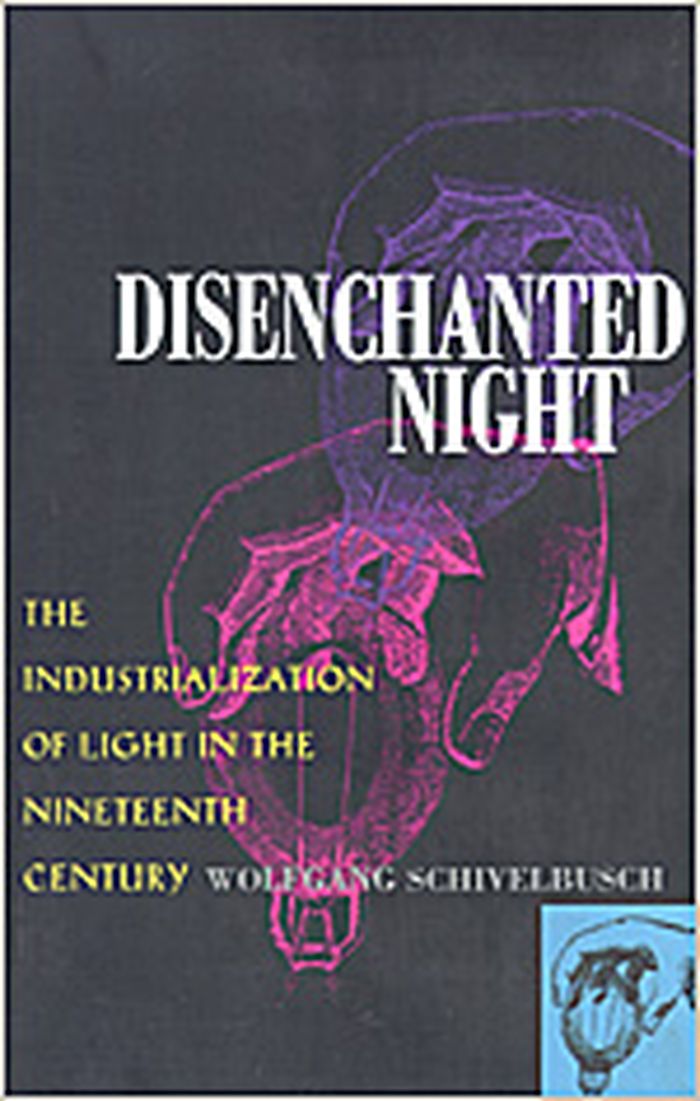
The story of the development of artificial light in the 19th century is not only a history of its technology but a revelation of how that technology helped forge modern consciousness. The range of subjects includes the political symbolism of streetlamps, the rise of nightlife and the shop window, and the importance of the salon in the bourgeois culture.
$40.95
(disponible sur commande)
Résumé:
The story of the development of artificial light in the 19th century is not only a history of its technology but a revelation of how that technology helped forge modern consciousness. The range of subjects includes the political symbolism of streetlamps, the rise of nightlife and the shop window, and the importance of the salon in the bourgeois culture.
Titre:
Disenchanted night : the industrialization of light in the nineteenth century
Actions:
Prix:
$40.95
(disponible sur commande)
Résumé:
The story of the development of artificial light in the 19th century is not only a history of its technology but a revelation of how that technology helped forge modern consciousness. The range of subjects includes the political symbolism of streetlamps, the rise of nightlife and the shop window, and the importance of the salon in the bourgeois culture.
Disenchanted night : the industrialization of light in the nineteenth century
Actions:
Prix:
$40.95
(disponible sur commande)
Résumé:
The story of the development of artificial light in the 19th century is not only a history of its technology but a revelation of how that technology helped forge modern consciousness. The range of subjects includes the political symbolism of streetlamps, the rise of nightlife and the shop window, and the importance of the salon in the bourgeois culture.
Classification:
livres
livres
Publication:
janvier 1995, Berkeley
janvier 1995, Berkeley
Sujet:
Théorie de l’architecture
Théorie de l’architecture


