


2227 Résultats
Classification:
livres
livres

Titre:
The war of appearances
The war of appearances
Actions:
Prix:
$36.00
(disponible sur commande)
Résumé:
Produced and designed by Joke Brouwer of the V2_Institute for the Unstable Media, this book presents new essays by nine contributors, among them Paul Frissen, Graham Harman, Luciana Parisi, Lars Spuybroek, and McKenzie Wark, plus artworks by Paolo Cirio, Wim Delvoye, Tomás Saraceno, and Diana Scherer. Two strategies (opacity and radiance) are developed against the(...)
Titre:
The war of appearances
Actions:
Prix:
$36.00
(disponible sur commande)
Résumé:
Produced and designed by Joke Brouwer of the V2_Institute for the Unstable Media, this book presents new essays by nine contributors, among them Paul Frissen, Graham Harman, Luciana Parisi, Lars Spuybroek, and McKenzie Wark, plus artworks by Paolo Cirio, Wim Delvoye, Tomás Saraceno, and Diana Scherer. Two strategies (opacity and radiance) are developed against the Enlightenment ideal of transparency, since transformed into a global state of mediation and automation. Although they initially appear to be diametrically opposed, the strategies soon begin to overlap, together evolving into a kind of spook-phenomenology that opens up new ways of thinking and seeing.
Classification:
livres
livres
Publication:
juin 2017
juin 2017
Sujet:
Théorie de l’architecture
Théorie de l’architecture
Classification:
livres
livres

Actions:
Prix:
$30.00
(disponible en magasin)
Résumé:
Fondé par le territoire, l’environnement construit émane des premières matières de la terre propre. Ceux-là émergent, s’érigent, mutent et modifient le territoire premier constituant ainsi une culture matérielle. La tache ici entreprise cherche à lier les choses et les idées pour œuvrer de la façon la plus claire et la plus économe d’une situation donnée. Partant de(...)
Titre:
Émergences : territoire et architectonique
Actions:
Prix:
$30.00
(disponible en magasin)
Résumé:
Fondé par le territoire, l’environnement construit émane des premières matières de la terre propre. Ceux-là émergent, s’érigent, mutent et modifient le territoire premier constituant ainsi une culture matérielle. La tache ici entreprise cherche à lier les choses et les idées pour œuvrer de la façon la plus claire et la plus économe d’une situation donnée. Partant de l'aspect synoptique de l,espace moderne, ce projet veut s'ancrer dans le récit humain fondé sur les catégories de l'orientation spatiale. On veut y reconnaître la notion de mouvance comme plaisir de la dynamique du projet. Quatre projets sont élaborés dans le riche territoire du Charlevoix comme argumentaire en termes d'analyse comparative.
Classification:
livres
livres
Publication:
avril 2017
avril 2017
Classification:
livres
livres
Titre:
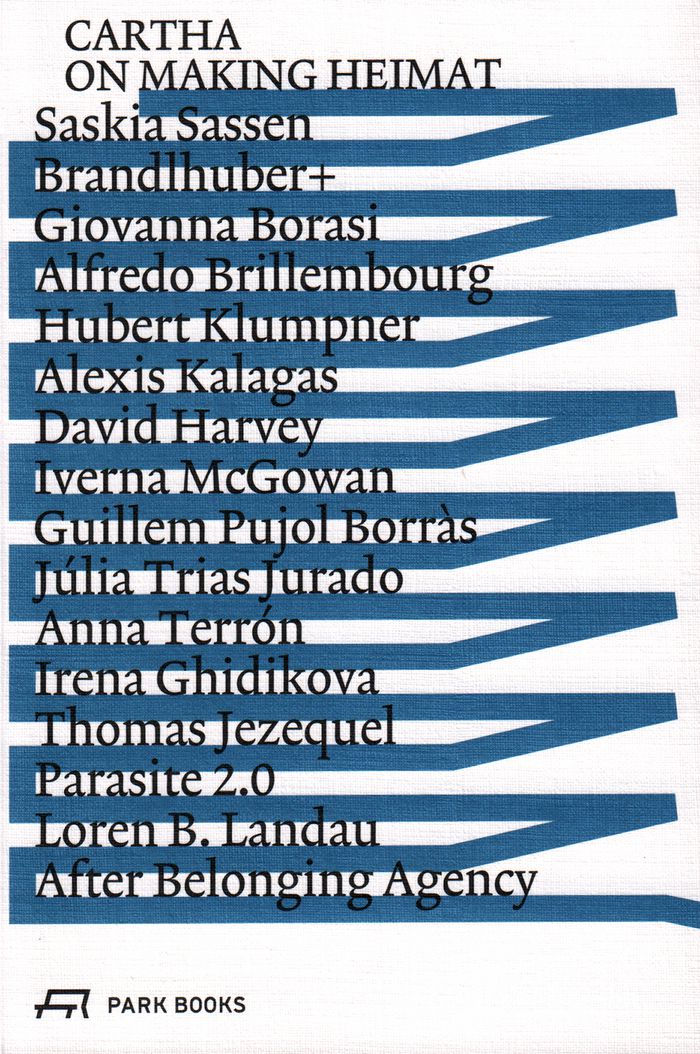
CARTHA: On making heimat
CARTHA: On making heimat
Actions:
Prix:
$29.95
(disponible en magasin)
Résumé:
Since 2014, CARTHA has provided a platform for critical thinking on architecture and society. Founded by an international team of architects and designers, it aims to bridge the gap between theoretical and practical approaches to contemporary architecture. Each year, CARTHA initiates research and publishes four issues on a topic in its online magazine, which are then(...)
Titre:
CARTHA: On making heimat
Actions:
Prix:
$29.95
(disponible en magasin)
Résumé:
Since 2014, CARTHA has provided a platform for critical thinking on architecture and society. Founded by an international team of architects and designers, it aims to bridge the gap between theoretical and practical approaches to contemporary architecture. Each year, CARTHA initiates research and publishes four issues on a topic in its online magazine, which are then brought together in an annual book. In 2016, CARTHA collaborated with the German Pavilion at the International Architecture Exhibition of the 2016 Venice Biennale. Titled Making Heimat: Germany, Arrival Country, the German Pavilion explored the challenges and potential of the recent influx of refugees to Germany has posed for architecture and urban design, and contributions to CARTHA further reflect on this topic. Contributors include, among others, architect Arno Brandlhuber, critic Marina Otero Verzier, and design studio Urban ThinkTank, and the book also features interviews with Iverna McGowan of Amnesty International; David Harvey of Graduate Center, CUNY; Saskia Sassen of Columbia University; and Giovanna Borasi, of the Canadian Centre for Architecture.
Classification:
livres
livres
Publication:
octobre 2017
octobre 2017
Sujet:
Théorie de l’architecture
Théorie de l’architecture
Classification:
livres
livres
Prix:
$48.95
(disponible sur commande)
Résumé:
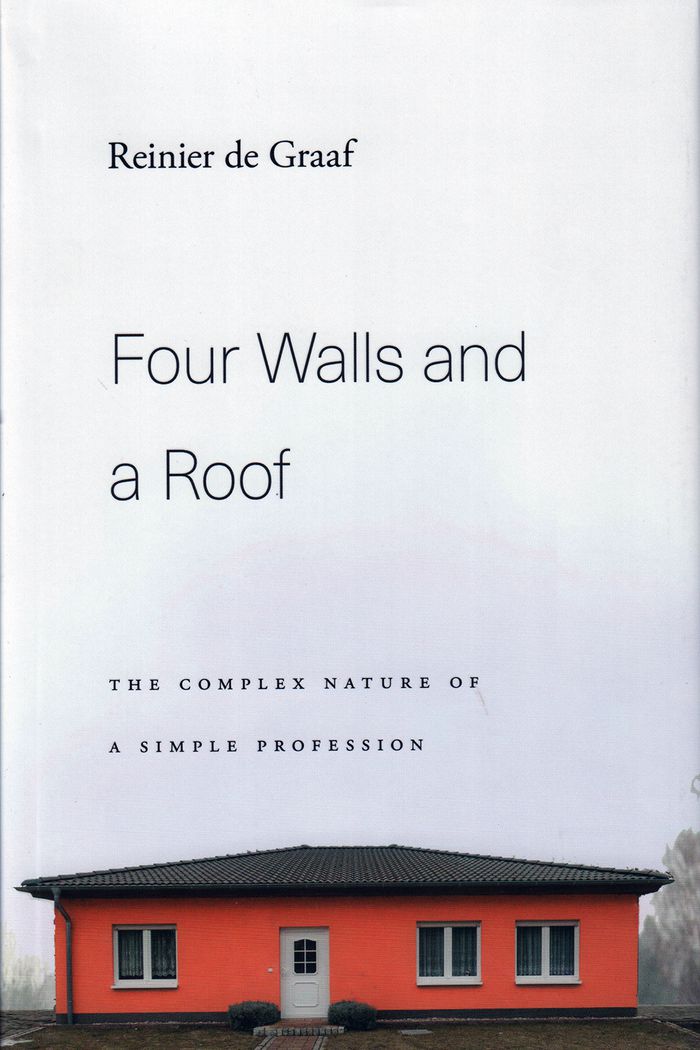
Architects, we like to believe, shape the world as they please. Reinier de Graaf draws on his own tragicomic experiences to present a candid account of what it is really like to work as an architect. To achieve anything, he notes, architects must serve the powers they strive to critique, finding themselves in a perpetual conflict of interest.
Titre:
Four walls and a roof: the complex nature of a simple profession
Actions:
Prix:
$48.95
(disponible sur commande)
Résumé:
Architects, we like to believe, shape the world as they please. Reinier de Graaf draws on his own tragicomic experiences to present a candid account of what it is really like to work as an architect. To achieve anything, he notes, architects must serve the powers they strive to critique, finding themselves in a perpetual conflict of interest.
Classification:
livres
livres
Publication:
septembre 2017
septembre 2017
Sujet:
Théorie de l’architecture
Théorie de l’architecture
Classification:
livres
livres
Titre:
The social (re)production of architecture: politics, values and actions in contemporary practice
The social (re)production of architecture: politics, values and actions in contemporary practice
Actions:
Prix:
$76.90
(disponible sur commande)
Résumé:
''The Social (Re)Production of Architecture'' brings the debates of the 'right to the city' into today’s context of ecological, economic and social crises. Building on the 1970s' discussions about the 'production of space', which French sociologist Henri Lefebvre considered a civic right, the authors question who has the right to make space, and explore the kinds of(...)
Titre:
The social (re)production of architecture: politics, values and actions in contemporary practice
Actions:
Prix:
$76.90
(disponible sur commande)
Résumé:
''The Social (Re)Production of Architecture'' brings the debates of the 'right to the city' into today’s context of ecological, economic and social crises. Building on the 1970s' discussions about the 'production of space', which French sociologist Henri Lefebvre considered a civic right, the authors question who has the right to make space, and explore the kinds of relations that are produced in the process. In the emerging post-capitalist era, this book addresses urgent social and ecological imperatives for change and opens up questions around architecture's engagement with new forms of organization and practice. The book asks what (new) kinds of 'social' can architecture (re)produce, and what kinds of politics, values and actions are needed.
Classification:
livres
livres
Publication:
août 2017
août 2017
Sujet:
Théorie de l’architecture
Théorie de l’architecture
Classification:
livres
livres
Actions:
Prix:
$131.00
(disponible en magasin)
Résumé:
Upon its publication by the MIT Press in 1972, "Learning from Las Vegas" was immediately influential and controversial. The authors made an argument that was revolutionary for its time—that the billboards and casinos of Las Vegas were worthy of architectural attention—and offered a challenge for contemporary architects obsessed with the heroic and monumental. The physical(...)
Sujet:
Théorie de l’architecture
Théorie de l’architecture
Publication:
septembre 2017
septembre 2017
Titre:
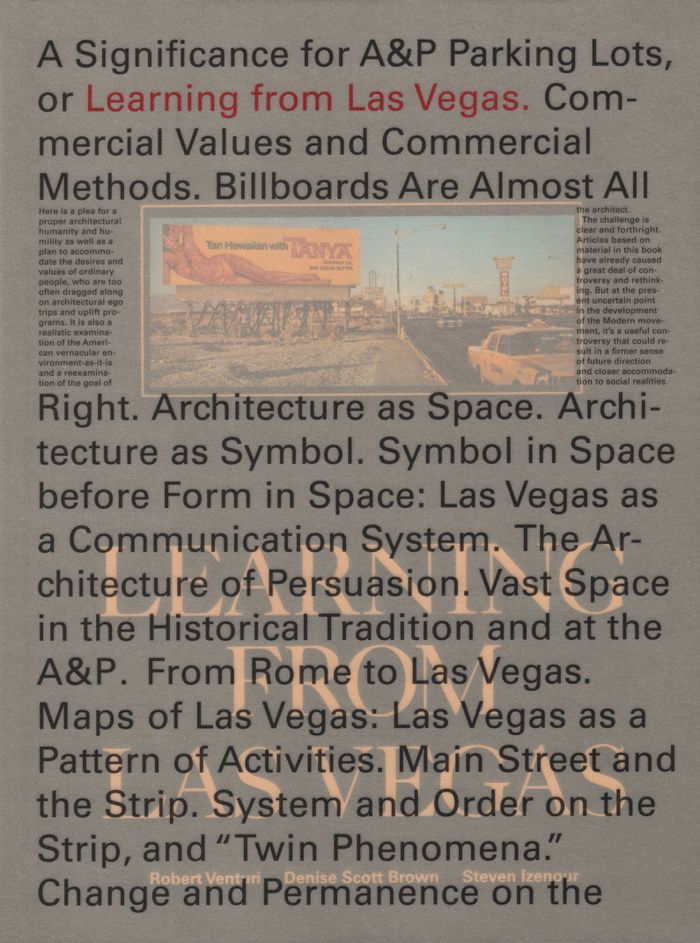
Learning from Las Vegas, facsimile edition
Actions:
Prix:
$131.00
(disponible en magasin)
Résumé:
Upon its publication by the MIT Press in 1972, "Learning from Las Vegas" was immediately influential and controversial. The authors made an argument that was revolutionary for its time—that the billboards and casinos of Las Vegas were worthy of architectural attention—and offered a challenge for contemporary architects obsessed with the heroic and monumental. The physical book itself, designed by MIT’s iconic designer Muriel Cooper, was hailed as a masterpiece of modernist design, but the book’s design struck the authors as too monumental for a text that praised the ugly and ordinary over the heroic and monumental. The MIT Press published a revised version in 1977—a modest paperback that the authors felt was more in keeping with the argument of the book—and the original Cooper-designed book fell out of print and became a highly sought-after collectors’ item; it now sells for thousands of dollars in the rare book market, while the author-redesigned paperback has remained continuously in print at a price affordable to students. Now, decades after the original hardcover edition sold out, the MIT Press is publishing a facsimile edition of the original large-format Cooper-designed edition of Learning from Las Vegas, complete with translucent glassine wrap. This edition also features a spirited preface by Denise Scott Brown, looking back on the creation of the book and explaining her and Robert Venturi’s reservations about the original design.
Classification:
livres
livres
Publication:
septembre 2017
septembre 2017
Sujet:
Théorie de l’architecture
Théorie de l’architecture
Classification:
livres
livres
Titre:
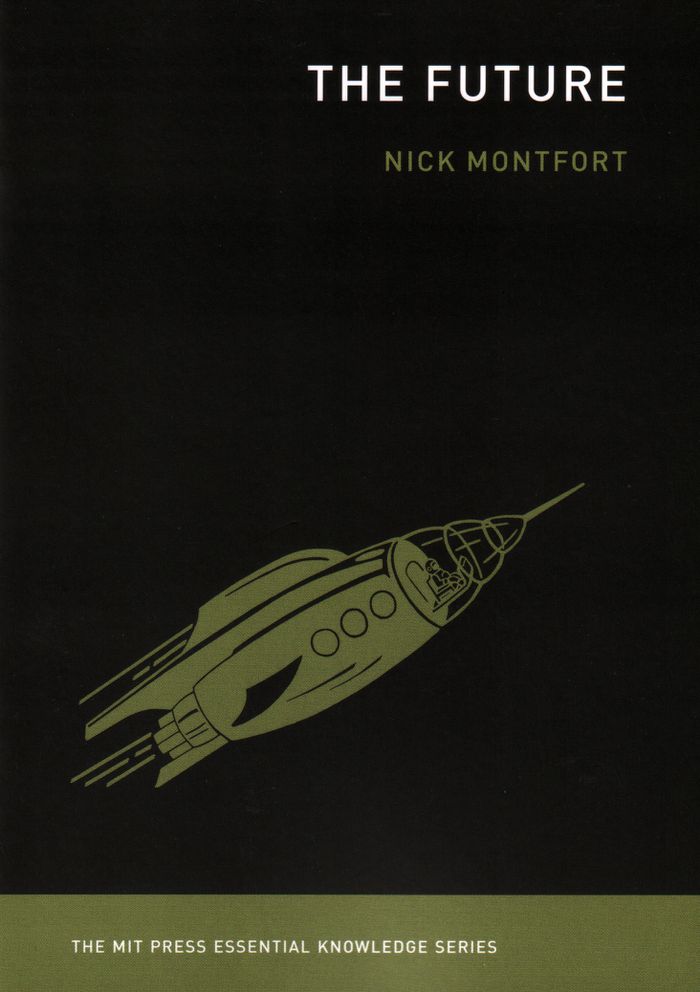
The future
The future
Actions:
Prix:
$21.95
(disponible sur commande)
Résumé:
The future is like an unwritten book. It is not something we see in a crystal ball, or can only hope to predict, like the weather. In this volume of the MIT Press's Essential Knowledge series, Nick Montfort argues that the future is something to be made, not predicted. Montfort offers what he considers essential knowledge about the future, as seen in the work of writers,(...)
Titre:
The future
Actions:
Prix:
$21.95
(disponible sur commande)
Résumé:
The future is like an unwritten book. It is not something we see in a crystal ball, or can only hope to predict, like the weather. In this volume of the MIT Press's Essential Knowledge series, Nick Montfort argues that the future is something to be made, not predicted. Montfort offers what he considers essential knowledge about the future, as seen in the work of writers, artists, inventors, and designers (mainly in Western culture) who developed and described the core components of the futures they envisioned. Montfort's approach is not that of futurology or scenario planning; instead, he reports on the work of making the future -- the thinkers who devoted themselves to writing pages in the unwritten book.
Classification:
livres
livres
Publication:
décembre 2017
décembre 2017
Sujet:
Théorie de l’architecture
Théorie de l’architecture
Classification:
livres
livres
Prix:
$66.00
(disponible sur commande)
Résumé:
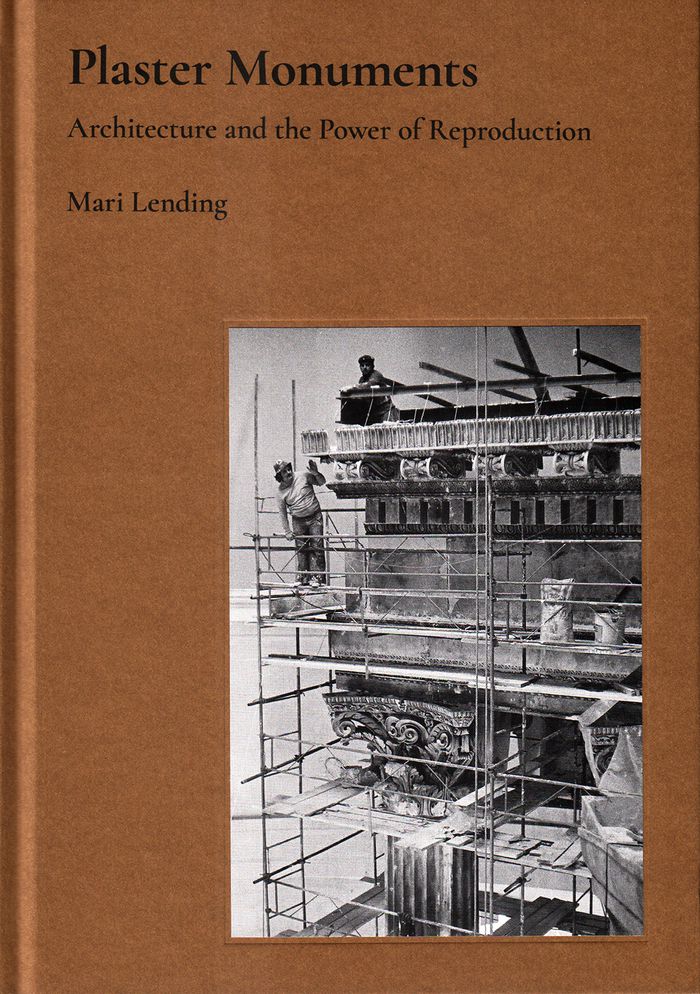
"Plaster monuments" unsettles conventional thinking about copies and originals. As Mari Lending shows, casts were used to restore wholeness to buildings that in reality lay in ruin, or to isolate specific features of monuments to illustrate what was typical of a particular building, style, or era. Arranged in galleries and published in exhibition catalogues, these often(...)
Titre:
Plaster monuments: architecture and the power of reproduction
Actions:
Prix:
$66.00
(disponible sur commande)
Résumé:
"Plaster monuments" unsettles conventional thinking about copies and originals. As Mari Lending shows, casts were used to restore wholeness to buildings that in reality lay in ruin, or to isolate specific features of monuments to illustrate what was typical of a particular building, style, or era. Arranged in galleries and published in exhibition catalogues, these often enormous objects were staged to suggest the sweep of history, synthesizing structures from vastly different regions and time periods into coherent narratives. The first comprehensive history of these full-scale replicas, "Plaster monuments" examines how they were produced, marketed, sold, and displayed, and how their significance can be understood today.
Classification:
livres
livres
Publication:
décembre 2017
décembre 2017
Sujet:
Théorie de l’architecture
Théorie de l’architecture
Classification:
livres
livres

Actions:
Prix:
$22.95
(disponible sur commande)
Résumé:
Why do walls marking national boundaries proliferate amid widespread proclamations of global connectedness and despite anticipation of a world without borders? Why are barricades built of concrete, steel, and barbed wire when threats to the nation today are so often miniaturized, vaporous, clandestine, dispersed, or networked? In "Walled states, waning sovereignty", Wendy(...)
Titre:
Walled states, waning sovereignty, New edition
Actions:
Prix:
$22.95
(disponible sur commande)
Résumé:
Why do walls marking national boundaries proliferate amid widespread proclamations of global connectedness and despite anticipation of a world without borders? Why are barricades built of concrete, steel, and barbed wire when threats to the nation today are so often miniaturized, vaporous, clandestine, dispersed, or networked? In "Walled states, waning sovereignty", Wendy Brown considers the recent spate of wall building in contrast to the erosion of nation-state sovereignty. Drawing on classical and contemporary political theories of state sovereignty in order to understand how state power and national identity persist amid its decline, Brown considers both the need of the state for legitimacy and the popular desires that incite the contemporary building of walls. The new walls—dividing Texas from Mexico, Israel from Palestine, South Africa from Zimbabwe—consecrate the broken boundaries they would seem to contest and signify the ungovernability of a range of forces unleashed by globalization. Yet these same walls often amount to little more than theatrical props, frequently breached, and blur the distinction between law and lawlessness that they are intended to represent. But if today’s walls fail to resolve the conflicts between globalization and national identity, they nonetheless project a stark image of sovereign power. Walls, Brown argues, address human desires for containment and protection in a world increasingly without these provisions. Walls respond to the wish for horizons even as horizons are vanquished.
Classification:
livres
livres
Publication:
avril 2017
avril 2017
Sujet:
Théorie de l’architecture
Théorie de l’architecture
Classification:
livres
livres
Actions:
Prix:
$39.95
(disponible sur commande)
Résumé:
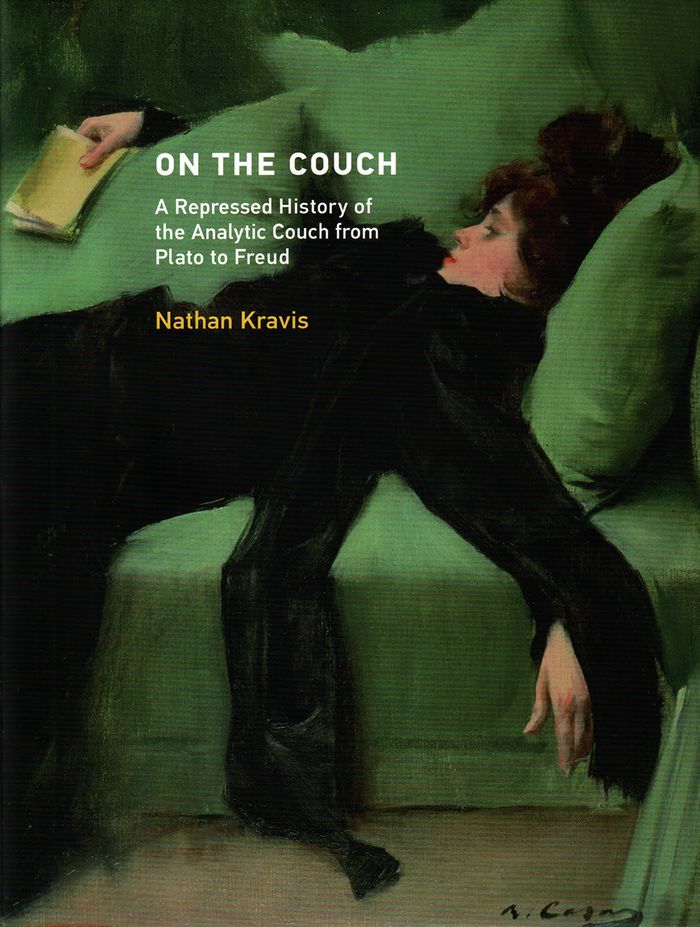
The peculiar arrangement of the psychoanalyst’s office for an analytic session seems inexplicable. The analyst sits in a chair out of sight while the patient lies on a couch facing away. It has been this way since Freud, although, as Nathan Kravis points out in On the Couch, this practice is grounded more in the cultural history of reclining posture than in empirical(...)
Titre:
On the couch : a repressed history of the analytic couch from Plato to Freud
Actions:
Prix:
$39.95
(disponible sur commande)
Résumé:
The peculiar arrangement of the psychoanalyst’s office for an analytic session seems inexplicable. The analyst sits in a chair out of sight while the patient lies on a couch facing away. It has been this way since Freud, although, as Nathan Kravis points out in On the Couch, this practice is grounded more in the cultural history of reclining posture than in empirical research. Kravis, himself a practicing psychoanalyst, shows that the tradition of recumbent speech wasn’t dreamed up by Freud but can be traced back to ancient Greece, where guests reclined on couches at the symposion (a gathering for upper-class males to discuss philosophy and drink wine), and to the Roman convivium (a banquet at which men and women reclined together). From bed to bench to settee to chaise-longue to sofa: Kravis tells how the couch became an icon of self-knowledge and self-reflection as well as a site for pleasure, privacy, transgression, and healing.
Classification:
livres
livres
Publication:
août 2017
août 2017


