


2227 Résultats
Classification:
livres
livres
Titre:
The spaces between buildings
The spaces between buildings
Actions:
Prix:
$33.95
(disponible sur commande)
Résumé:
Ford begins by looking at the growth of four urban places, each representing a historical era as much as a geographic location: the Islamic medina; the city shaped by the Spanish renaissance; the nineteenth-century North American city; and the twentieth-century American city. His first(...)
$33.95
(disponible sur commande)
Résumé:
Ford begins by looking at the growth of four urban places, each representing a historical era as much as a geographic location: the Islamic medina; the city shaped by the Spanish renaissance; the nineteenth-century North American city; and the twentieth-century American city. His first(...)
Titre:
The spaces between buildings
Actions:
Prix:
$33.95
(disponible sur commande)
Résumé:
Ford begins by looking at the growth of four urban places, each representing a historical era as much as a geographic location: the Islamic medina; the city shaped by the Spanish renaissance; the nineteenth-century North American city; and the twentieth-century American city. His first essay also discusses the evolution of the free-standing structure as a basic urban building type and the problems encountered in beautifying the often work-a-day back and side yards that have helped to create the image of the untidy American city. The second essay examines the urban trend toward viewing lawns, gardens, hedges, and trees as an essential adjunct to architecture. The final essay focuses on pedestrian and vehicular spaces. Here the author includes the landscape of the garage, sidewalks, streets, and alleys. In its exploration of how spaces become places, "The Spaces between Buildings" invites readers to see anew the spaces they encounter every day and often take for granted.
The spaces between buildings
Actions:
Prix:
$33.95
(disponible sur commande)
Résumé:
Ford begins by looking at the growth of four urban places, each representing a historical era as much as a geographic location: the Islamic medina; the city shaped by the Spanish renaissance; the nineteenth-century North American city; and the twentieth-century American city. His first essay also discusses the evolution of the free-standing structure as a basic urban building type and the problems encountered in beautifying the often work-a-day back and side yards that have helped to create the image of the untidy American city. The second essay examines the urban trend toward viewing lawns, gardens, hedges, and trees as an essential adjunct to architecture. The final essay focuses on pedestrian and vehicular spaces. Here the author includes the landscape of the garage, sidewalks, streets, and alleys. In its exploration of how spaces become places, "The Spaces between Buildings" invites readers to see anew the spaces they encounter every day and often take for granted.
Classification:
livres
livres
Publication:
août 2000, Baltimore
août 2000, Baltimore
Sujet:
Théorie de l’architecture
Théorie de l’architecture
Classification:
livres
livres
Actions:
Prix:
$20.00
(disponible sur commande)
Résumé:
Textes par / by Tanis Hinchcliffe, Annmarie Adams, Louis Martin, Joan Ockman, Réjean Legault, Daniel Guibert, Joseph Rykwert, Martin Bressani, Alberto Pérez-Gomez.
$20.00
(disponible sur commande)
Résumé:
Textes par / by Tanis Hinchcliffe, Annmarie Adams, Louis Martin, Joan Ockman, Réjean Legault, Daniel Guibert, Joseph Rykwert, Martin Bressani, Alberto Pérez-Gomez.
Titre:
Peter Collins et l'histoire critique de l'architecture moderne / Peter Collins and the critical history of modern architecture
Actions:
Prix:
$20.00
(disponible sur commande)
Résumé:
Textes par / by Tanis Hinchcliffe, Annmarie Adams, Louis Martin, Joan Ockman, Réjean Legault, Daniel Guibert, Joseph Rykwert, Martin Bressani, Alberto Pérez-Gomez.
Peter Collins et l'histoire critique de l'architecture moderne / Peter Collins and the critical history of modern architecture
Actions:
Prix:
$20.00
(disponible sur commande)
Résumé:
Textes par / by Tanis Hinchcliffe, Annmarie Adams, Louis Martin, Joan Ockman, Réjean Legault, Daniel Guibert, Joseph Rykwert, Martin Bressani, Alberto Pérez-Gomez.
Classification:
livres
livres
Publication:
décembre 2002, Montréal
décembre 2002, Montréal
Sujet:
Théorie de l’architecture
Théorie de l’architecture
Classification:
livres
livres
Prix:
$24.95
(disponible sur commande)
Résumé:
Today, we live in a kaleidoscopic new world of images : Is there a vocabulary we can learn in order to read these images? Is there something we can do so as not to remain passive when we flip through an illustrated book, or download images on a screen? Are there ways in which we can "read" the stories within paintings, monuments, buildings and sculptures? We say "every(...)
$24.95
(disponible sur commande)
Résumé:
Today, we live in a kaleidoscopic new world of images : Is there a vocabulary we can learn in order to read these images? Is there something we can do so as not to remain passive when we flip through an illustrated book, or download images on a screen? Are there ways in which we can "read" the stories within paintings, monuments, buildings and sculptures? We say "every(...)
Sujet:
Théorie de l’architecture
Théorie de l’architecture
Publication:
octobre 2003, Toronto / New York
octobre 2003, Toronto / New York
Titre:
Reading pictures - what we think about when we look at art
Actions:
Prix:
$24.95
(disponible sur commande)
Résumé:
Today, we live in a kaleidoscopic new world of images : Is there a vocabulary we can learn in order to read these images? Is there something we can do so as not to remain passive when we flip through an illustrated book, or download images on a screen? Are there ways in which we can "read" the stories within paintings, monuments, buildings and sculptures? We say "every picture tells a story" - but does it? Taking images - photographed, painted, built, sculpted - Alberto Manguel explores how each one attempts to tell a story that we, the viewer, must decipher or invent.
Reading pictures - what we think about when we look at art
Actions:
Prix:
$24.95
(disponible sur commande)
Résumé:
Today, we live in a kaleidoscopic new world of images : Is there a vocabulary we can learn in order to read these images? Is there something we can do so as not to remain passive when we flip through an illustrated book, or download images on a screen? Are there ways in which we can "read" the stories within paintings, monuments, buildings and sculptures? We say "every picture tells a story" - but does it? Taking images - photographed, painted, built, sculpted - Alberto Manguel explores how each one attempts to tell a story that we, the viewer, must decipher or invent.
Classification:
livres
livres
Publication:
octobre 2003, Toronto / New York
octobre 2003, Toronto / New York
Sujet:
Théorie de l’architecture
Théorie de l’architecture
Classification:
livres
livres
Actions:
Prix:
$45.00
(disponible sur commande)
Résumé:
Mass culture is a fact. Its irresistible vitality and force are enthusiastically exploited by all manner of enterprises, whether network providers for mobile phones, hip lifestyle magazines or trendy fashion labels. Oddly enough, architecture and urban planning have so far failed to exploit the potential offered by mass culture. This book presents the findings of a(...)
$45.00
(disponible sur commande)
Résumé:
Mass culture is a fact. Its irresistible vitality and force are enthusiastically exploited by all manner of enterprises, whether network providers for mobile phones, hip lifestyle magazines or trendy fashion labels. Oddly enough, architecture and urban planning have so far failed to exploit the potential offered by mass culture. This book presents the findings of a(...)
Titre:
Snooze : immersing architecture in mass culture
Actions:
Prix:
$45.00
(disponible sur commande)
Résumé:
Mass culture is a fact. Its irresistible vitality and force are enthusiastically exploited by all manner of enterprises, whether network providers for mobile phones, hip lifestyle magazines or trendy fashion labels. Oddly enough, architecture and urban planning have so far failed to exploit the potential offered by mass culture. This book presents the findings of a study by studio Sputnik, a Rotterdam-based architecture practice, of the opportunities that mass culture presents for architecture. "Snooze" analyses products successful in consumer society and relates the patterns behind their success to the city. The nature and importance of communication proves to be pivotal to architecture's role. What does a building signify, what does it communicate? "Snooze" is not about style or form, nor is it about commercial motives or technical ingenuity. It adds a new voice to architectural discourse at the intersection of theory and design. The surprising insights that this book offers are presented in a highly visual essay.
Snooze : immersing architecture in mass culture
Actions:
Prix:
$45.00
(disponible sur commande)
Résumé:
Mass culture is a fact. Its irresistible vitality and force are enthusiastically exploited by all manner of enterprises, whether network providers for mobile phones, hip lifestyle magazines or trendy fashion labels. Oddly enough, architecture and urban planning have so far failed to exploit the potential offered by mass culture. This book presents the findings of a study by studio Sputnik, a Rotterdam-based architecture practice, of the opportunities that mass culture presents for architecture. "Snooze" analyses products successful in consumer society and relates the patterns behind their success to the city. The nature and importance of communication proves to be pivotal to architecture's role. What does a building signify, what does it communicate? "Snooze" is not about style or form, nor is it about commercial motives or technical ingenuity. It adds a new voice to architectural discourse at the intersection of theory and design. The surprising insights that this book offers are presented in a highly visual essay.
Classification:
livres
livres
Publication:
septembre 2003, Rotterdam
septembre 2003, Rotterdam
Sujet:
Théorie de l’architecture
Théorie de l’architecture
Classification:
livres
livres
Actions:
Prix:
$48.00
(disponible en magasin)
Résumé:
Foreword by Arthur Drexler. Introduction by Vincent Scully. First published in 1966, this book has become a reference in architectural literature. "Complexity and contradiction in architecture" expresses the postmodern rebellion against the purism of modernism. Three hundred and fifty architectural photographs serve as historical comparisons and illuminate the author's(...)
$48.00
(disponible en magasin)
Résumé:
Foreword by Arthur Drexler. Introduction by Vincent Scully. First published in 1966, this book has become a reference in architectural literature. "Complexity and contradiction in architecture" expresses the postmodern rebellion against the purism of modernism. Three hundred and fifty architectural photographs serve as historical comparisons and illuminate the author's(...)
Titre:
Complexity and contradiction in architecture
Actions:
Prix:
$48.00
(disponible en magasin)
Résumé:
Foreword by Arthur Drexler. Introduction by Vincent Scully. First published in 1966, this book has become a reference in architectural literature. "Complexity and contradiction in architecture" expresses the postmodern rebellion against the purism of modernism. Three hundred and fifty architectural photographs serve as historical comparisons and illuminate the author's ideas on creating and experiencing architecture.
Complexity and contradiction in architecture
Actions:
Prix:
$48.00
(disponible en magasin)
Résumé:
Foreword by Arthur Drexler. Introduction by Vincent Scully. First published in 1966, this book has become a reference in architectural literature. "Complexity and contradiction in architecture" expresses the postmodern rebellion against the purism of modernism. Three hundred and fifty architectural photographs serve as historical comparisons and illuminate the author's ideas on creating and experiencing architecture.
Classification:
livres
livres
Publication:
juin 2002, New York
juin 2002, New York
Sujet:
Théorie de l’architecture
Théorie de l’architecture
Classification:
livres
livres
Actions:
Prix:
$91.00
(disponible sur commande)
Résumé:
This book is a text reader related to the online platform www.mediaartnet.org presenting a panorama of international art and contexts. It features the most important essays which are accompanied online by multimedia and audiovisual representations of media art. Essays are by Inke Arns, Dieter Daniels, Söke Dinkla, Golo Föllmer, Rudolf Frieling, Oliver Grau and Heike(...)
$91.00
(disponible sur commande)
Résumé:
This book is a text reader related to the online platform www.mediaartnet.org presenting a panorama of international art and contexts. It features the most important essays which are accompanied online by multimedia and audiovisual representations of media art. Essays are by Inke Arns, Dieter Daniels, Söke Dinkla, Golo Föllmer, Rudolf Frieling, Oliver Grau and Heike(...)
Sujet:
Théorie de l’architecture
Théorie de l’architecture
Publication:
octobre 2003, Vienna
octobre 2003, Vienna
Titre:
Media art net 1 : survey of media art
Actions:
Prix:
$91.00
(disponible sur commande)
Résumé:
This book is a text reader related to the online platform www.mediaartnet.org presenting a panorama of international art and contexts. It features the most important essays which are accompanied online by multimedia and audiovisual representations of media art. Essays are by Inke Arns, Dieter Daniels, Söke Dinkla, Golo Föllmer, Rudolf Frieling, Oliver Grau and Heike Helfert on topics such as media art forms in the 1910's and 1920's, intermedia currents of the 1950's and 1960's, performance and media art, media activism, mass media, perception, museum and media, virtual narratives, audio arts, communication, telematics, interaction, and immersion.
Media art net 1 : survey of media art
Actions:
Prix:
$91.00
(disponible sur commande)
Résumé:
This book is a text reader related to the online platform www.mediaartnet.org presenting a panorama of international art and contexts. It features the most important essays which are accompanied online by multimedia and audiovisual representations of media art. Essays are by Inke Arns, Dieter Daniels, Söke Dinkla, Golo Föllmer, Rudolf Frieling, Oliver Grau and Heike Helfert on topics such as media art forms in the 1910's and 1920's, intermedia currents of the 1950's and 1960's, performance and media art, media activism, mass media, perception, museum and media, virtual narratives, audio arts, communication, telematics, interaction, and immersion.
Classification:
livres
livres
Publication:
octobre 2003, Vienna
octobre 2003, Vienna
Sujet:
Théorie de l’architecture
Théorie de l’architecture
Classification:
livres
livres
Actions:
Prix:
$23.95
(disponible sur commande)
Résumé:
In a literary tour of the spaces of our homes, noted design essayist Akiko Busch reflects on how we define such elusive qualities as privacy, security, and comfort. Part social history, part architectural history, part personal anecdote, this rich and delightful book uncovers the hidden meanings of the place we call home.
$23.95
(disponible sur commande)
Résumé:
In a literary tour of the spaces of our homes, noted design essayist Akiko Busch reflects on how we define such elusive qualities as privacy, security, and comfort. Part social history, part architectural history, part personal anecdote, this rich and delightful book uncovers the hidden meanings of the place we call home.
Titre:
Geography of home : writings on where we live
Actions:
Prix:
$23.95
(disponible sur commande)
Résumé:
In a literary tour of the spaces of our homes, noted design essayist Akiko Busch reflects on how we define such elusive qualities as privacy, security, and comfort. Part social history, part architectural history, part personal anecdote, this rich and delightful book uncovers the hidden meanings of the place we call home.
Geography of home : writings on where we live
Actions:
Prix:
$23.95
(disponible sur commande)
Résumé:
In a literary tour of the spaces of our homes, noted design essayist Akiko Busch reflects on how we define such elusive qualities as privacy, security, and comfort. Part social history, part architectural history, part personal anecdote, this rich and delightful book uncovers the hidden meanings of the place we call home.
Classification:
livres
livres
Publication:
janvier 2004, New York
janvier 2004, New York
Sujet:
Théorie de l’architecture
Théorie de l’architecture
Classification:
livres
livres
Prix:
$21.00
(disponible sur commande)
Résumé:
In this meditation on ruins, Christopher Woodward takes us on a thousand-year journey from the plains of Troy to the monuments of ancient Rome, from the crumbling palaces of Sicily, Cuba, and Zanzibar to the rubble of the London Blitz. With an exquisite sense of romantic melancholy, we encounter the teenage Byron in the moldering Newstead Abbey, Flaubert watching the(...)
$21.00
(disponible sur commande)
Résumé:
In this meditation on ruins, Christopher Woodward takes us on a thousand-year journey from the plains of Troy to the monuments of ancient Rome, from the crumbling palaces of Sicily, Cuba, and Zanzibar to the rubble of the London Blitz. With an exquisite sense of romantic melancholy, we encounter the teenage Byron in the moldering Newstead Abbey, Flaubert watching the(...)
Titre:
In ruins : a journey through history, art, and literature
Actions:
Prix:
$21.00
(disponible sur commande)
Résumé:
In this meditation on ruins, Christopher Woodward takes us on a thousand-year journey from the plains of Troy to the monuments of ancient Rome, from the crumbling palaces of Sicily, Cuba, and Zanzibar to the rubble of the London Blitz. With an exquisite sense of romantic melancholy, we encounter the teenage Byron in the moldering Newstead Abbey, Flaubert watching the buzzards on the pyramids, Henry James in the Colosseum, and Freud at Pompeii. We travel the Appian Way with Dickens and behold the Baths of Caracalla with Shelley. An exhilarating tour, at once elegant and stimulating, "In Ruins" casts an exalting spell as it explores the bewitching power of architectural remains and their persistent hold on the imagination.
In ruins : a journey through history, art, and literature
Actions:
Prix:
$21.00
(disponible sur commande)
Résumé:
In this meditation on ruins, Christopher Woodward takes us on a thousand-year journey from the plains of Troy to the monuments of ancient Rome, from the crumbling palaces of Sicily, Cuba, and Zanzibar to the rubble of the London Blitz. With an exquisite sense of romantic melancholy, we encounter the teenage Byron in the moldering Newstead Abbey, Flaubert watching the buzzards on the pyramids, Henry James in the Colosseum, and Freud at Pompeii. We travel the Appian Way with Dickens and behold the Baths of Caracalla with Shelley. An exhilarating tour, at once elegant and stimulating, "In Ruins" casts an exalting spell as it explores the bewitching power of architectural remains and their persistent hold on the imagination.
Classification:
livres
livres
Publication:
octobre 2003, New York
octobre 2003, New York
Sujet:
Théorie de l’architecture
Théorie de l’architecture
Classification:
livres
livres
Actions:
Prix:
$37.50
(disponible sur commande)
Résumé:
A serious effort to document the changing landscape in the design professions and to make this information available to various constituencies and stakeholder groups as part of an effort to educate as well as bridge the gap between academia and practice.
$37.50
(disponible sur commande)
Résumé:
A serious effort to document the changing landscape in the design professions and to make this information available to various constituencies and stakeholder groups as part of an effort to educate as well as bridge the gap between academia and practice.
Sujet:
Théorie de l’architecture
Théorie de l’architecture
Publication:
novembre 2003, San Francisco
novembre 2003, San Francisco
Titre:
Reconfiguration in the study and practice of design and architecture
Actions:
Prix:
$37.50
(disponible sur commande)
Résumé:
A serious effort to document the changing landscape in the design professions and to make this information available to various constituencies and stakeholder groups as part of an effort to educate as well as bridge the gap between academia and practice.
Reconfiguration in the study and practice of design and architecture
Actions:
Prix:
$37.50
(disponible sur commande)
Résumé:
A serious effort to document the changing landscape in the design professions and to make this information available to various constituencies and stakeholder groups as part of an effort to educate as well as bridge the gap between academia and practice.
Classification:
livres
livres
Publication:
novembre 2003, San Francisco
novembre 2003, San Francisco
Sujet:
Théorie de l’architecture
Théorie de l’architecture
Classification:
livres
livres
Actions:
Prix:
$67.50
(disponible sur commande)
Résumé:
This book is a cutting edge study exploring the field of the conception and the tectonic making of place as it impinges in, and thus changes, the site in which it is set. It examines the attitudes to both nature and the built environment of the designer, the client and the society in which an intervention (be it architecture, landscape design or a piece of art) is made.(...)
$67.50
(disponible sur commande)
Résumé:
This book is a cutting edge study exploring the field of the conception and the tectonic making of place as it impinges in, and thus changes, the site in which it is set. It examines the attitudes to both nature and the built environment of the designer, the client and the society in which an intervention (be it architecture, landscape design or a piece of art) is made.(...)
Titre:
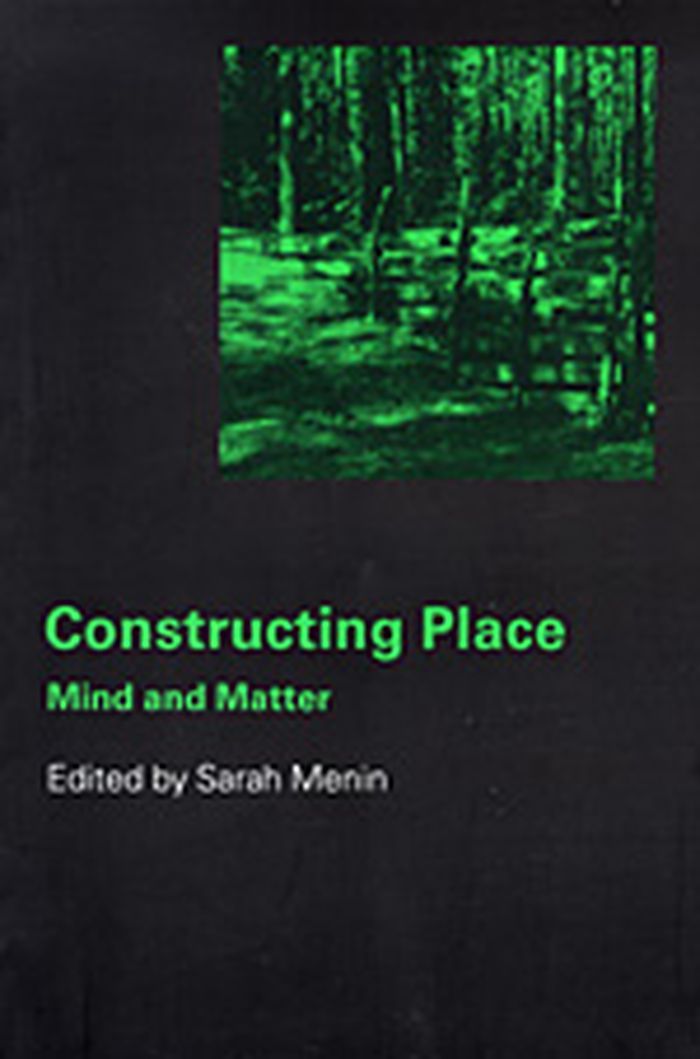
Constructing place : mind and matter
Actions:
Prix:
$67.50
(disponible sur commande)
Résumé:
This book is a cutting edge study exploring the field of the conception and the tectonic making of place as it impinges in, and thus changes, the site in which it is set. It examines the attitudes to both nature and the built environment of the designer, the client and the society in which an intervention (be it architecture, landscape design or a piece of art) is made. The legacy of the Modernist view of nature and the environment is also addressed, and the degree to which such ideas continue to impinge on contemporary interventions is assessed. These topics are addressed through the methodologies of history, theory, philosophy and psychology. The book forges new collaborative ideas in an interdisciplinary way, including essays on architecture, planning, landscape and philosophy (particularly applied aesthetics).
Constructing place : mind and matter
Actions:
Prix:
$67.50
(disponible sur commande)
Résumé:
This book is a cutting edge study exploring the field of the conception and the tectonic making of place as it impinges in, and thus changes, the site in which it is set. It examines the attitudes to both nature and the built environment of the designer, the client and the society in which an intervention (be it architecture, landscape design or a piece of art) is made. The legacy of the Modernist view of nature and the environment is also addressed, and the degree to which such ideas continue to impinge on contemporary interventions is assessed. These topics are addressed through the methodologies of history, theory, philosophy and psychology. The book forges new collaborative ideas in an interdisciplinary way, including essays on architecture, planning, landscape and philosophy (particularly applied aesthetics).
Classification:
livres
livres
Publication:
octobre 2003, London / New York
octobre 2003, London / New York
Sujet:
Théorie de l’architecture
Théorie de l’architecture


