


2227 Résultats
Classification:
livres
livres
Actions:
Prix:
$60.95
(disponible sur commande)
Résumé:
Mussolini’s bold claims upon the monuments and rhetoric of ancient Rome have been the subject of a number of recent books. D. Medina Lasansky shows us a much less familiar side of the cultural politics of Italian Fascism, tracing its wide-ranging efforts to adapt the nation’s medieval and Renaissance heritage to satisfy the regime’s programs of national regeneration.(...)
$60.95
(disponible sur commande)
Résumé:
Mussolini’s bold claims upon the monuments and rhetoric of ancient Rome have been the subject of a number of recent books. D. Medina Lasansky shows us a much less familiar side of the cultural politics of Italian Fascism, tracing its wide-ranging efforts to adapt the nation’s medieval and Renaissance heritage to satisfy the regime’s programs of national regeneration.(...)
Titre:
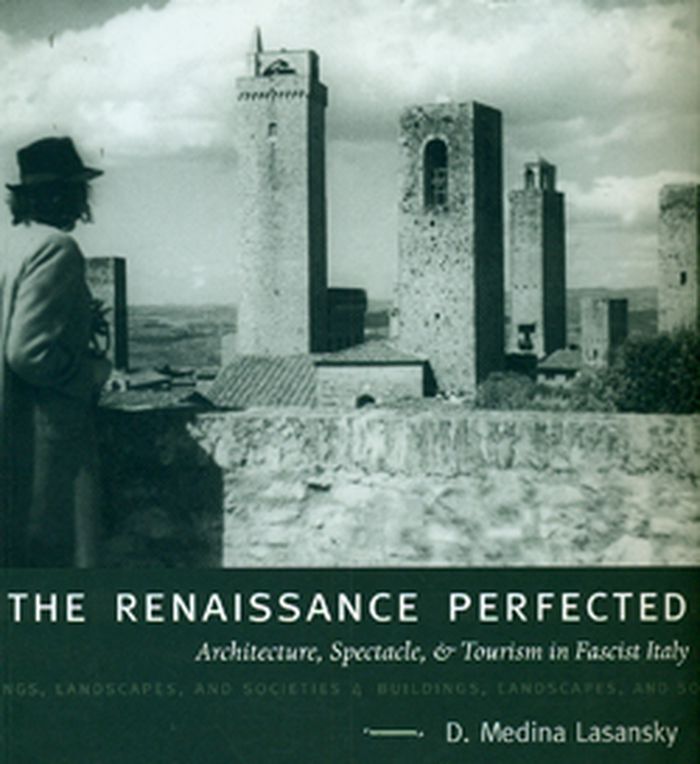
The Renaissance perfected: architecture, spectacle, and tourism in Fascist Italy
Actions:
Prix:
$60.95
(disponible sur commande)
Résumé:
Mussolini’s bold claims upon the monuments and rhetoric of ancient Rome have been the subject of a number of recent books. D. Medina Lasansky shows us a much less familiar side of the cultural politics of Italian Fascism, tracing its wide-ranging efforts to adapt the nation’s medieval and Renaissance heritage to satisfy the regime’s programs of national regeneration. Anyone acquainted with the beauties of Tuscany will be surprised to learn that architects, planners, and administrators working within Fascist programs fabricated much of what today’s tourists admire as authentic. Public squares, town halls, palaces, gardens, and civic rituals (including the famed palio of Siena) were all "restored" to suit a vision of the past shaped by Fascist notions of virile power, social order, and national achievement in the arts. Ultimately, Lasansky forces readers to question long-standing assumptions about the Renaissance even as she expands the parameters of what constitutes Fascist culture.The arguments in The Renaissance Perfected are based in fresh archival evidence and a rich collection of illustrations, many reproduced for the first time, ranging from photographs and architectural drawings to tourist posters and film stills. Lasansky’s groundbreaking book will be essential reading for students of medieval, Renaissance, and twentieth-century Italy as well as all those concerned with visual culture, architectural preservation, heritage studies, and tourism studies.
The Renaissance perfected: architecture, spectacle, and tourism in Fascist Italy
Actions:
Prix:
$60.95
(disponible sur commande)
Résumé:
Mussolini’s bold claims upon the monuments and rhetoric of ancient Rome have been the subject of a number of recent books. D. Medina Lasansky shows us a much less familiar side of the cultural politics of Italian Fascism, tracing its wide-ranging efforts to adapt the nation’s medieval and Renaissance heritage to satisfy the regime’s programs of national regeneration. Anyone acquainted with the beauties of Tuscany will be surprised to learn that architects, planners, and administrators working within Fascist programs fabricated much of what today’s tourists admire as authentic. Public squares, town halls, palaces, gardens, and civic rituals (including the famed palio of Siena) were all "restored" to suit a vision of the past shaped by Fascist notions of virile power, social order, and national achievement in the arts. Ultimately, Lasansky forces readers to question long-standing assumptions about the Renaissance even as she expands the parameters of what constitutes Fascist culture.The arguments in The Renaissance Perfected are based in fresh archival evidence and a rich collection of illustrations, many reproduced for the first time, ranging from photographs and architectural drawings to tourist posters and film stills. Lasansky’s groundbreaking book will be essential reading for students of medieval, Renaissance, and twentieth-century Italy as well as all those concerned with visual culture, architectural preservation, heritage studies, and tourism studies.
Classification:
livres
livres
Publication:
mai 2009
mai 2009
Sujet:
Théorie de l’architecture
Théorie de l’architecture
Classification:
livres
livres
Titre:
Cotton worldwide
Cotton worldwide
Actions:
Prix:
$60.00
(disponible sur commande)
Résumé:
Cotton is grown on every continent, in a broad range of environmental conditions and under widely disparate conditions of production. Hans Peter Jost has created a photographic portrait of cotton on his trips to India, China, Brazil, America, Uzbekistan, Mali, and Tanzania, documenting the lives and working conditions of cotton farmers and the cultivation, harvesting,(...)
$60.00
(disponible sur commande)
Résumé:
Cotton is grown on every continent, in a broad range of environmental conditions and under widely disparate conditions of production. Hans Peter Jost has created a photographic portrait of cotton on his trips to India, China, Brazil, America, Uzbekistan, Mali, and Tanzania, documenting the lives and working conditions of cotton farmers and the cultivation, harvesting,(...)
Titre:
Cotton worldwide
Actions:
Prix:
$60.00
(disponible sur commande)
Résumé:
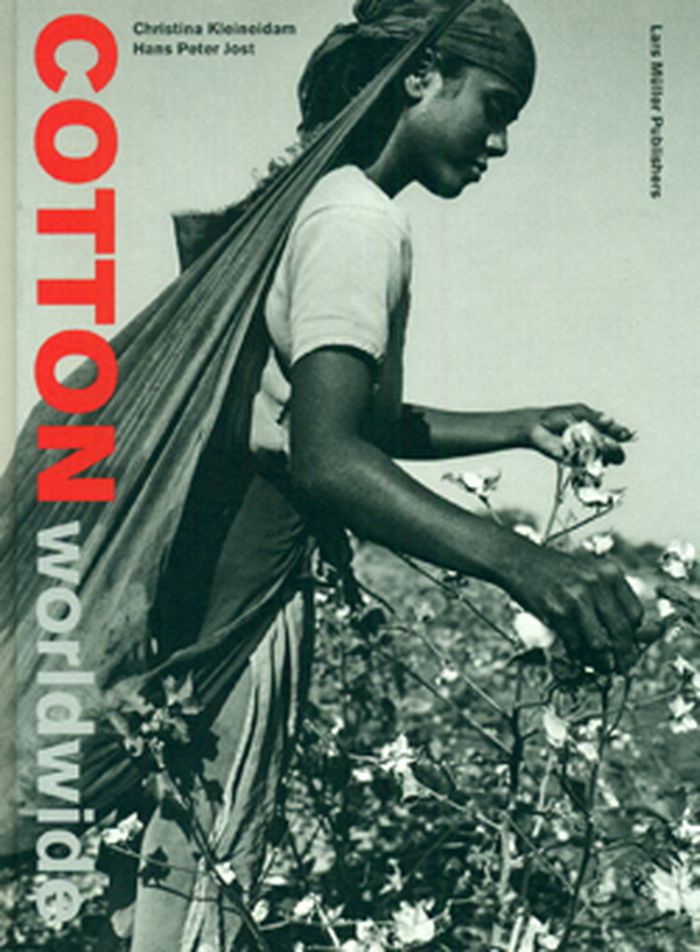
Cotton is grown on every continent, in a broad range of environmental conditions and under widely disparate conditions of production. Hans Peter Jost has created a photographic portrait of cotton on his trips to India, China, Brazil, America, Uzbekistan, Mali, and Tanzania, documenting the lives and working conditions of cotton farmers and the cultivation, harvesting, processing, and marketing of cotton. Christina Kleineidam, who accompanied the photographer on his travels, describes what they saw and offers background information on the specific problems of the individual countries.
Cotton worldwide
Actions:
Prix:
$60.00
(disponible sur commande)
Résumé:
Cotton is grown on every continent, in a broad range of environmental conditions and under widely disparate conditions of production. Hans Peter Jost has created a photographic portrait of cotton on his trips to India, China, Brazil, America, Uzbekistan, Mali, and Tanzania, documenting the lives and working conditions of cotton farmers and the cultivation, harvesting, processing, and marketing of cotton. Christina Kleineidam, who accompanied the photographer on his travels, describes what they saw and offers background information on the specific problems of the individual countries.
Classification:
livres
livres
Publication:
novembre 2009
novembre 2009
Sujet:
Théorie de l’architecture
Théorie de l’architecture
Classification:
livres
livres
Titre:
Occasions
Occasions
Actions:
Prix:
$37.00
(disponible sur commande)
Résumé:
Josep Lluìs Mateo is one of Spain's most influential architects in architecture today. This book brings together his recent projects, his influences, his references together with material from interviews and a wealth of images. It is, in a nutshell, his work philosophy. Conversations, reflections and projects completed in the last five years are presented as realities(...)
$37.00
(disponible sur commande)
Résumé:
Josep Lluìs Mateo is one of Spain's most influential architects in architecture today. This book brings together his recent projects, his influences, his references together with material from interviews and a wealth of images. It is, in a nutshell, his work philosophy. Conversations, reflections and projects completed in the last five years are presented as realities(...)
Titre:
Occasions
Actions:
Prix:
$37.00
(disponible sur commande)
Résumé:
Josep Lluìs Mateo is one of Spain's most influential architects in architecture today. This book brings together his recent projects, his influences, his references together with material from interviews and a wealth of images. It is, in a nutshell, his work philosophy. Conversations, reflections and projects completed in the last five years are presented as realities and actions, interpreted through this concept, which can be contemplated as infinity of individual forms of contacting with reality and acting upon it. For Josep LluÃs Mateo, the crux of this work is to analyse, from the perspective of his unique work, the state of issues and situations today in architecture and to interact accordingly with exterior space.
Occasions
Actions:
Prix:
$37.00
(disponible sur commande)
Résumé:
Josep Lluìs Mateo is one of Spain's most influential architects in architecture today. This book brings together his recent projects, his influences, his references together with material from interviews and a wealth of images. It is, in a nutshell, his work philosophy. Conversations, reflections and projects completed in the last five years are presented as realities and actions, interpreted through this concept, which can be contemplated as infinity of individual forms of contacting with reality and acting upon it. For Josep LluÃs Mateo, the crux of this work is to analyse, from the perspective of his unique work, the state of issues and situations today in architecture and to interact accordingly with exterior space.
Classification:
livres
livres
Publication:
novembre 2009
novembre 2009
Sujet:
Théorie de l’architecture
Théorie de l’architecture
Classification:
livres
livres
Actions:
Prix:
$77.95
(disponible sur commande)
Résumé:
Monographie consacrée au travail de l'architecte Jean-Michel Wilmotte. Sa philosophie, sa méthode de travail, ses sources d'inspiration, son langage architectural, ses projets, réalisés ou inédits, sont présentés. "L'architecture n'est pas une discipline abstraite. Elle doit s'inscrire dans le réel, concilier la forme et l'idéologie au travers de ses multiples écritures."
$77.95
(disponible sur commande)
Résumé:
Monographie consacrée au travail de l'architecte Jean-Michel Wilmotte. Sa philosophie, sa méthode de travail, ses sources d'inspiration, son langage architectural, ses projets, réalisés ou inédits, sont présentés. "L'architecture n'est pas une discipline abstraite. Elle doit s'inscrire dans le réel, concilier la forme et l'idéologie au travers de ses multiples écritures."
Titre:
Jean-Michel Wilmotte, architecture écriture
Actions:
Prix:
$77.95
(disponible sur commande)
Résumé:
Monographie consacrée au travail de l'architecte Jean-Michel Wilmotte. Sa philosophie, sa méthode de travail, ses sources d'inspiration, son langage architectural, ses projets, réalisés ou inédits, sont présentés. "L'architecture n'est pas une discipline abstraite. Elle doit s'inscrire dans le réel, concilier la forme et l'idéologie au travers de ses multiples écritures."
Jean-Michel Wilmotte, architecture écriture
Actions:
Prix:
$77.95
(disponible sur commande)
Résumé:
Monographie consacrée au travail de l'architecte Jean-Michel Wilmotte. Sa philosophie, sa méthode de travail, ses sources d'inspiration, son langage architectural, ses projets, réalisés ou inédits, sont présentés. "L'architecture n'est pas une discipline abstraite. Elle doit s'inscrire dans le réel, concilier la forme et l'idéologie au travers de ses multiples écritures."
Classification:
livres
livres
Publication:
novembre 2009
novembre 2009
Sujet:
Théorie de l’architecture
Théorie de l’architecture
Classification:
livres
livres
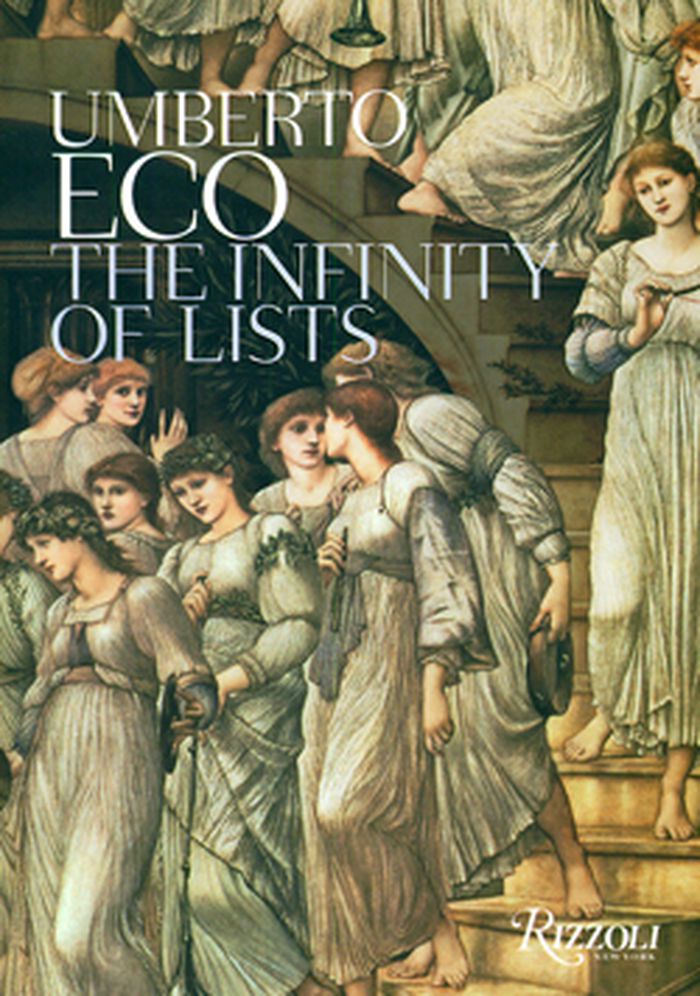
Titre:
The infinity of lists
The infinity of lists
Actions:
Prix:
$54.00
(disponible sur commande)
Résumé:
Author and philosopher Umberto Eco is currently resident at the Louvre, and his chosen theme of study is "the vertigo of lists." Reflecting on this enormous trove of human achievements, he has embarked on an investigation of the phenomenon of cataloging and collecting. This book, featuring lavish reproductions of artworks from the Louvre and other world-famous(...)
$54.00
(disponible sur commande)
Résumé:
Author and philosopher Umberto Eco is currently resident at the Louvre, and his chosen theme of study is "the vertigo of lists." Reflecting on this enormous trove of human achievements, he has embarked on an investigation of the phenomenon of cataloging and collecting. This book, featuring lavish reproductions of artworks from the Louvre and other world-famous(...)
Titre:
The infinity of lists
Actions:
Prix:
$54.00
(disponible sur commande)
Résumé:
Author and philosopher Umberto Eco is currently resident at the Louvre, and his chosen theme of study is "the vertigo of lists." Reflecting on this enormous trove of human achievements, he has embarked on an investigation of the phenomenon of cataloging and collecting. This book, featuring lavish reproductions of artworks from the Louvre and other world-famous collections, is a philosophical and artistic sequel to Eco’s recent acclaimed books, History of Beauty and On Ugliness, books in which he delved into the psychology, philosophy, history, and art of human forms. Here he examines the Western mind’s predilection for list-making and the encyclopedic. His central thesis is that in Western culture a passion for accumulation is recurring: lists of saints, catalogues of plants, collections of art. This impulse has recurred through the ages from music to literature to art.From medieval reliquaries to Andy Warhol’s compulsive collecting, Umberto Eco reflects in his inimitably inspiring way on how such catalogues mirror the spirit of their times.
The infinity of lists
Actions:
Prix:
$54.00
(disponible sur commande)
Résumé:
Author and philosopher Umberto Eco is currently resident at the Louvre, and his chosen theme of study is "the vertigo of lists." Reflecting on this enormous trove of human achievements, he has embarked on an investigation of the phenomenon of cataloging and collecting. This book, featuring lavish reproductions of artworks from the Louvre and other world-famous collections, is a philosophical and artistic sequel to Eco’s recent acclaimed books, History of Beauty and On Ugliness, books in which he delved into the psychology, philosophy, history, and art of human forms. Here he examines the Western mind’s predilection for list-making and the encyclopedic. His central thesis is that in Western culture a passion for accumulation is recurring: lists of saints, catalogues of plants, collections of art. This impulse has recurred through the ages from music to literature to art.From medieval reliquaries to Andy Warhol’s compulsive collecting, Umberto Eco reflects in his inimitably inspiring way on how such catalogues mirror the spirit of their times.
Classification:
livres
livres
Publication:
novembre 2009
novembre 2009
Classification:
livres
livres
Prix:
$61.00
(disponible sur commande)
Résumé:
This follow-up to Kate Nesbitt's best-selling anthology Theorizing a New Agenda collects twenty-eight essays that address architecture theory from the mid-1990s, where Nesbitt left off, through the present. Kristin Sykes offers an overview of the myriad approaches and attitudes adopted by architects and architectural theorists during this era. Multiple themes—including(...)
$61.00
(disponible sur commande)
Résumé:
This follow-up to Kate Nesbitt's best-selling anthology Theorizing a New Agenda collects twenty-eight essays that address architecture theory from the mid-1990s, where Nesbitt left off, through the present. Kristin Sykes offers an overview of the myriad approaches and attitudes adopted by architects and architectural theorists during this era. Multiple themes—including(...)
Titre:
Constructing a new agenda: architectural theory, 1993-2009
Actions:
Prix:
$61.00
(disponible sur commande)
Résumé:
This follow-up to Kate Nesbitt's best-selling anthology Theorizing a New Agenda collects twenty-eight essays that address architecture theory from the mid-1990s, where Nesbitt left off, through the present. Kristin Sykes offers an overview of the myriad approaches and attitudes adopted by architects and architectural theorists during this era. Multiple themes—including the impact of digital technologies on processes of architectural design, production, materiality, and representation; the implications of globalization and networks of information; the growing emphasis on sustainable and green architecture; and the phenomenon of the "starchitect" and iconic architecture—appear against a background colored by architectural theory, as it existed from the 1960s on, in a period of transition (if not crisis) that centers around the perceived abyss between theory and practice. Theory's transitional state persists today, rendering its immediate history particularly relevant to contemporary thought and practice.
Constructing a new agenda: architectural theory, 1993-2009
Actions:
Prix:
$61.00
(disponible sur commande)
Résumé:
This follow-up to Kate Nesbitt's best-selling anthology Theorizing a New Agenda collects twenty-eight essays that address architecture theory from the mid-1990s, where Nesbitt left off, through the present. Kristin Sykes offers an overview of the myriad approaches and attitudes adopted by architects and architectural theorists during this era. Multiple themes—including the impact of digital technologies on processes of architectural design, production, materiality, and representation; the implications of globalization and networks of information; the growing emphasis on sustainable and green architecture; and the phenomenon of the "starchitect" and iconic architecture—appear against a background colored by architectural theory, as it existed from the 1960s on, in a period of transition (if not crisis) that centers around the perceived abyss between theory and practice. Theory's transitional state persists today, rendering its immediate history particularly relevant to contemporary thought and practice.
Classification:
livres
livres
Publication:
mars 2010
mars 2010
Classification:
livres
livres
Prix:
$48.00
(disponible sur commande)
Résumé:
This is the only book of Gutman's collected essays to span his entire career, with the earliest essay included from 1965, and the most recent from 2005. Before his death in 2007, Gutman wrote a new introduction for the book, its chapters, and each of the included essays. The fourteen essays included here are the rare case of valuable historical documents that remain(...)
$48.00
(disponible sur commande)
Résumé:
This is the only book of Gutman's collected essays to span his entire career, with the earliest essay included from 1965, and the most recent from 2005. Before his death in 2007, Gutman wrote a new introduction for the book, its chapters, and each of the included essays. The fourteen essays included here are the rare case of valuable historical documents that remain(...)
Titre:
Architecture from the outside in, selected essays by Robert Gutman
Actions:
Prix:
$48.00
(disponible sur commande)
Résumé:
This is the only book of Gutman's collected essays to span his entire career, with the earliest essay included from 1965, and the most recent from 2005. Before his death in 2007, Gutman wrote a new introduction for the book, its chapters, and each of the included essays. The fourteen essays included here are the rare case of valuable historical documents that remain relevant to architects practicing today. Editors added twelve dialogues by some of Gutman's former students, now some of the best-known architects and theorists of today: Bryan Bell, Deborah Berke, Peggy Deamer, Frank Duffy, etc.
Architecture from the outside in, selected essays by Robert Gutman
Actions:
Prix:
$48.00
(disponible sur commande)
Résumé:
This is the only book of Gutman's collected essays to span his entire career, with the earliest essay included from 1965, and the most recent from 2005. Before his death in 2007, Gutman wrote a new introduction for the book, its chapters, and each of the included essays. The fourteen essays included here are the rare case of valuable historical documents that remain relevant to architects practicing today. Editors added twelve dialogues by some of Gutman's former students, now some of the best-known architects and theorists of today: Bryan Bell, Deborah Berke, Peggy Deamer, Frank Duffy, etc.
Classification:
livres
livres
Publication:
mars 2010
mars 2010
Sujet:
Théorie de l’architecture
Théorie de l’architecture
Classification:
livres
livres
Titre:
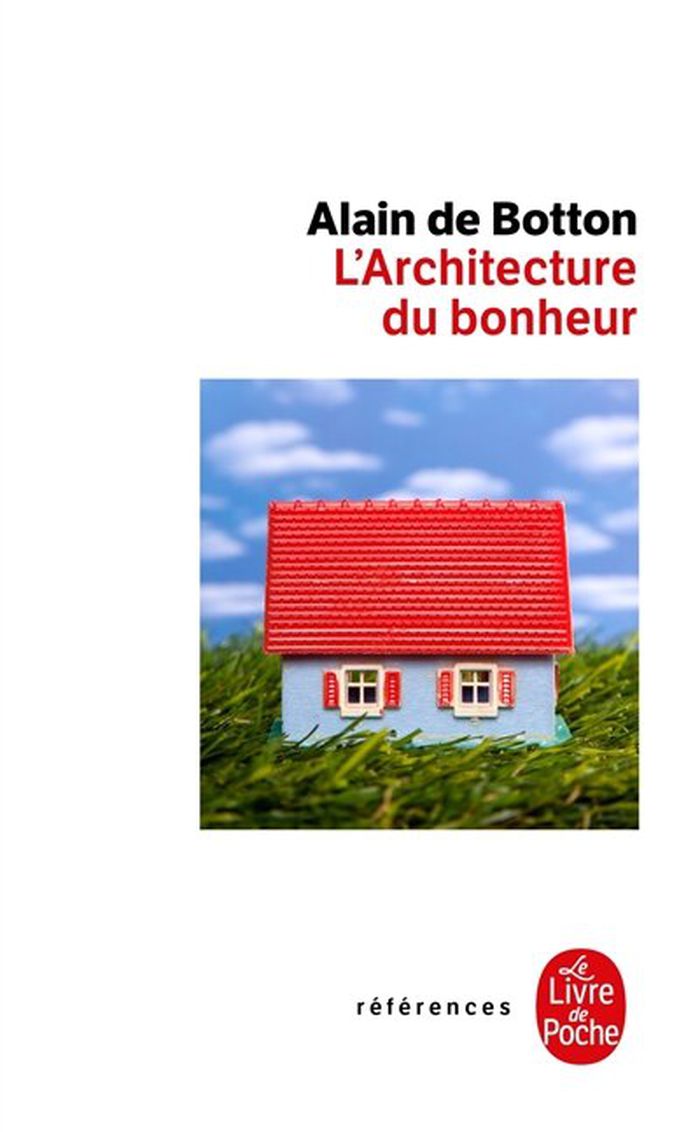
L'architecture du bonheur
L'architecture du bonheur
Actions:
Prix:
$15.95
(disponible en magasin)
Résumé:
Réflexion sur l'architecture des lieux où nous vivons et travaillons. En quoi le cadre de vie influence-t-il notre mode de pensée, notre façon de nous comporter, notre existence au quotidien ? De Paris à Tokyo, du Kent à l'Engadine, l'auteur évoque les idéaux architecturaux et les met en relation avec les lieux où il fait bon vivre.
$15.95
(disponible en magasin)
Résumé:
Réflexion sur l'architecture des lieux où nous vivons et travaillons. En quoi le cadre de vie influence-t-il notre mode de pensée, notre façon de nous comporter, notre existence au quotidien ? De Paris à Tokyo, du Kent à l'Engadine, l'auteur évoque les idéaux architecturaux et les met en relation avec les lieux où il fait bon vivre.
Titre:
L'architecture du bonheur
Actions:
Prix:
$15.95
(disponible en magasin)
Résumé:
Réflexion sur l'architecture des lieux où nous vivons et travaillons. En quoi le cadre de vie influence-t-il notre mode de pensée, notre façon de nous comporter, notre existence au quotidien ? De Paris à Tokyo, du Kent à l'Engadine, l'auteur évoque les idéaux architecturaux et les met en relation avec les lieux où il fait bon vivre.
L'architecture du bonheur
Actions:
Prix:
$15.95
(disponible en magasin)
Résumé:
Réflexion sur l'architecture des lieux où nous vivons et travaillons. En quoi le cadre de vie influence-t-il notre mode de pensée, notre façon de nous comporter, notre existence au quotidien ? De Paris à Tokyo, du Kent à l'Engadine, l'auteur évoque les idéaux architecturaux et les met en relation avec les lieux où il fait bon vivre.
Classification:
livres
livres
Publication:
juillet 2025
juillet 2025
Sujet:
Théorie de l’architecture
Théorie de l’architecture
Classification:
livres
livres
Actions:
Prix:
$62.50
(disponible sur commande)
Résumé:
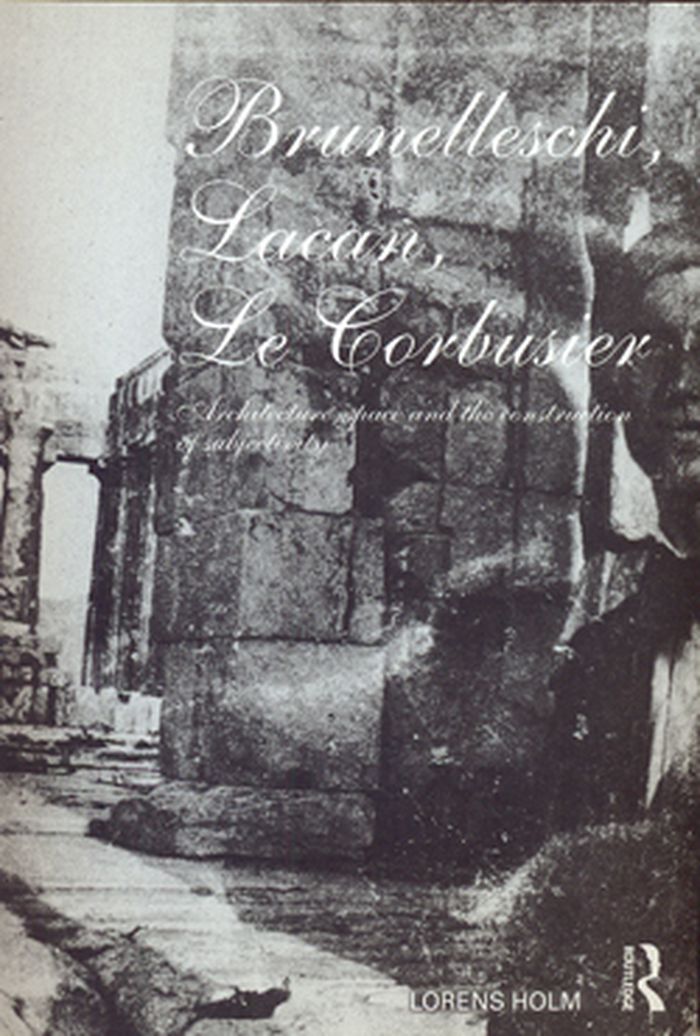
This text provides a greater understanding of spatial issues in the field of architecture. Re-interpreting the fifteenth century demonstration of perspective, Lorens Holm puts it in relation to today’s theories of subjectivity and elaborates for the first time the theoretical link between architecture and psychoanalysis. Divided into three sections, 'Brunelleschi,(...)
$62.50
(disponible sur commande)
Résumé:
This text provides a greater understanding of spatial issues in the field of architecture. Re-interpreting the fifteenth century demonstration of perspective, Lorens Holm puts it in relation to today’s theories of subjectivity and elaborates for the first time the theoretical link between architecture and psychoanalysis. Divided into three sections, 'Brunelleschi,(...)
Titre:
Brunelleschi, Lacan, Le Corbusier : architecture, space and the construction of subjectivity
Actions:
Prix:
$62.50
(disponible sur commande)
Résumé:
This text provides a greater understanding of spatial issues in the field of architecture. Re-interpreting the fifteenth century demonstration of perspective, Lorens Holm puts it in relation to today’s theories of subjectivity and elaborates for the first time the theoretical link between architecture and psychoanalysis. Divided into three sections, 'Brunelleschi, Lacan, Le Corbusier' argues that perspective remains the primary and most satisfying way of representing form, because it is the paradigmatic form of spatial consciousness.
Brunelleschi, Lacan, Le Corbusier : architecture, space and the construction of subjectivity
Actions:
Prix:
$62.50
(disponible sur commande)
Résumé:
This text provides a greater understanding of spatial issues in the field of architecture. Re-interpreting the fifteenth century demonstration of perspective, Lorens Holm puts it in relation to today’s theories of subjectivity and elaborates for the first time the theoretical link between architecture and psychoanalysis. Divided into three sections, 'Brunelleschi, Lacan, Le Corbusier' argues that perspective remains the primary and most satisfying way of representing form, because it is the paradigmatic form of spatial consciousness.
Classification:
livres
livres
Publication:
décembre 2009
décembre 2009
Sujet:
Théorie de l’architecture
Théorie de l’architecture
Classification:
livres
livres
Actions:
Prix:
$62.50
(disponible sur commande)
Résumé:
While the potential of agency is most frequently taken to be the power and freedom to act for oneself, for the architectural community this also involves the power and responsibility to act as intermediaries on behalf of others. Presenting current thinking from practitioners and scholars from around the world, this book asks for a more active relationship between the(...)
$62.50
(disponible sur commande)
Résumé:
While the potential of agency is most frequently taken to be the power and freedom to act for oneself, for the architectural community this also involves the power and responsibility to act as intermediaries on behalf of others. Presenting current thinking from practitioners and scholars from around the world, this book asks for a more active relationship between the(...)
Sujet:
Théorie de l’architecture
Théorie de l’architecture
Publication:
janvier 2010
janvier 2010
Titre:
Agency: working with uncertain architecture
Actions:
Prix:
$62.50
(disponible sur commande)
Résumé:
While the potential of agency is most frequently taken to be the power and freedom to act for oneself, for the architectural community this also involves the power and responsibility to act as intermediaries on behalf of others. Presenting current thinking from practitioners and scholars from around the world, this book asks for a more active relationship between the humanities, the architectural profession, and society. Considering issues of architectural research as an agency of transformation, this book explores how humanities research can better contribute towards understanding current architectural needs.
Agency: working with uncertain architecture
Actions:
Prix:
$62.50
(disponible sur commande)
Résumé:
While the potential of agency is most frequently taken to be the power and freedom to act for oneself, for the architectural community this also involves the power and responsibility to act as intermediaries on behalf of others. Presenting current thinking from practitioners and scholars from around the world, this book asks for a more active relationship between the humanities, the architectural profession, and society. Considering issues of architectural research as an agency of transformation, this book explores how humanities research can better contribute towards understanding current architectural needs.
Classification:
livres
livres
Publication:
janvier 2010
janvier 2010
Sujet:
Théorie de l’architecture
Théorie de l’architecture


