


593 Résultats
Classification:
livres
livres
Prix:
$81.50
(disponible en magasin)
Résumé:
Do you know how to design for a circular economy? A truly sustainable, circular economy is both a robust and viable option for architecture. Through 24 inspirational case studies, interviews and essays, this book is an accessible and practical guide to how architects can move from a linear economy towards a circular economy. This atlas to sustainable, closed-loop systems(...)
$81.50
(disponible en magasin)
Résumé:
Do you know how to design for a circular economy? A truly sustainable, circular economy is both a robust and viable option for architecture. Through 24 inspirational case studies, interviews and essays, this book is an accessible and practical guide to how architects can move from a linear economy towards a circular economy. This atlas to sustainable, closed-loop systems(...)
Titre:
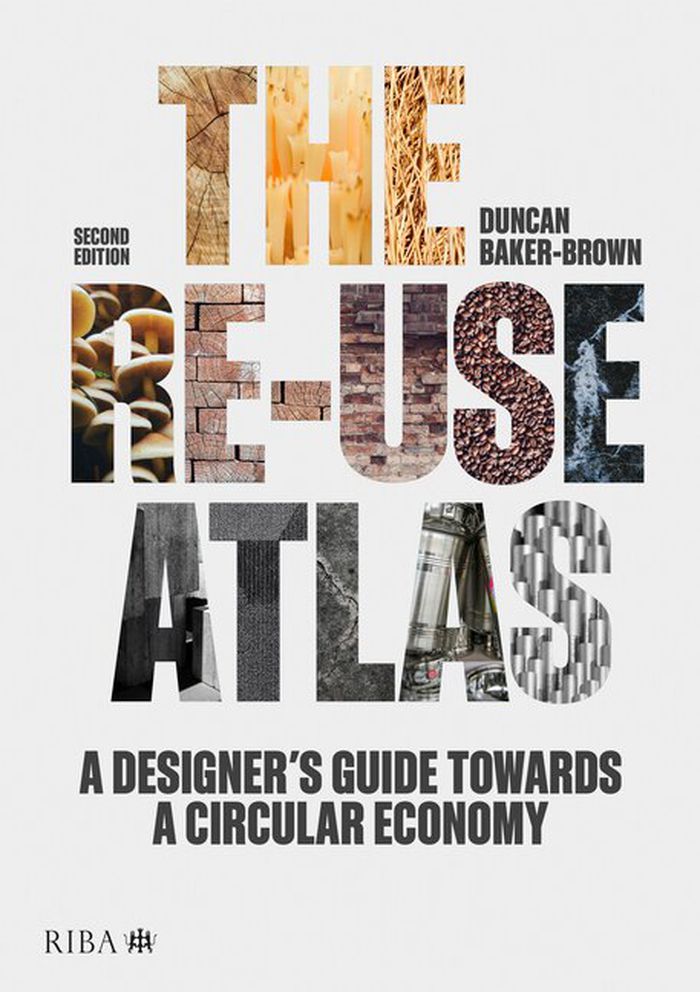
The re-use atlas: A designer's guide towards a circular economy
Actions:
Prix:
$81.50
(disponible en magasin)
Résumé:
Do you know how to design for a circular economy? A truly sustainable, circular economy is both a robust and viable option for architecture. Through 24 inspirational case studies, interviews and essays, this book is an accessible and practical guide to how architects can move from a linear economy towards a circular economy. This atlas to sustainable, closed-loop systems takes the reader on a journey through four distinct steps (Recycle, Reuse, Reduce, Circular Economy) that show how they can dramatically reduce the negative impact humans have on the planet. It gives architects the skills and knowledge to navigate through the emerging fields of resource management towards a true Circular Economy. Each step is supplemented with an in-depth interview with an expert who is successfully tacking one or more of the challenges facing all designers today. If we change our behaviour, we enable humanity to work with nature rather than against it.
The re-use atlas: A designer's guide towards a circular economy
Actions:
Prix:
$81.50
(disponible en magasin)
Résumé:
Do you know how to design for a circular economy? A truly sustainable, circular economy is both a robust and viable option for architecture. Through 24 inspirational case studies, interviews and essays, this book is an accessible and practical guide to how architects can move from a linear economy towards a circular economy. This atlas to sustainable, closed-loop systems takes the reader on a journey through four distinct steps (Recycle, Reuse, Reduce, Circular Economy) that show how they can dramatically reduce the negative impact humans have on the planet. It gives architects the skills and knowledge to navigate through the emerging fields of resource management towards a true Circular Economy. Each step is supplemented with an in-depth interview with an expert who is successfully tacking one or more of the challenges facing all designers today. If we change our behaviour, we enable humanity to work with nature rather than against it.
Classification:
livres
livres
Publication:
novembre 2024
novembre 2024
Sujet:
Architecture écologique
Architecture écologique
Classification:
livres
livres
Actions:
Prix:
$75.00
(disponible en magasin)
Résumé:
There is a creative explosion of work taking place in architecture and design schools exploring materials such as mycelium, clay/earth, engineered timber, bio-based plastics and algae. This handbook of low- and no-carbon materials for architects and designers focuses on sustainable materials, their sourcing, technical properties and the processes required for their use in(...)
$75.00
(disponible en magasin)
Résumé:
There is a creative explosion of work taking place in architecture and design schools exploring materials such as mycelium, clay/earth, engineered timber, bio-based plastics and algae. This handbook of low- and no-carbon materials for architects and designers focuses on sustainable materials, their sourcing, technical properties and the processes required for their use in(...)
Titre:
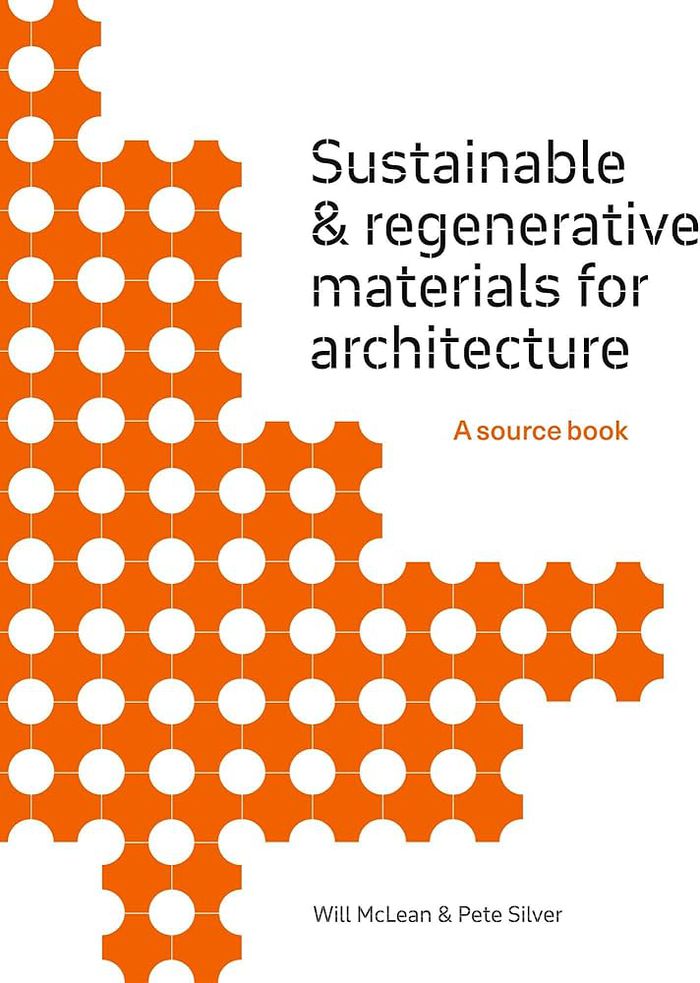
Sustainable and Regenerative Materials for Architecture: A Sourcebook
Actions:
Prix:
$75.00
(disponible en magasin)
Résumé:
There is a creative explosion of work taking place in architecture and design schools exploring materials such as mycelium, clay/earth, engineered timber, bio-based plastics and algae. This handbook of low- and no-carbon materials for architects and designers focuses on sustainable materials, their sourcing, technical properties and the processes required for their use in architecture. The book showcases new and rediscovered processes for material fabrication, responsible sourcing and creative material design. Material properties (structural, thermal, fire, health and life safety) are described and case studies from around the world illustrate the inventive ways in which these materials have been deployed in the built environment. The book is designed as an introduction to the exciting and rapidly changing world of construction materials. With a better understanding of the social, environmental and economic sustainability of any given material - alongside its technical properties - students of architecture can lead the change in responsible and creative material use.
Sustainable and Regenerative Materials for Architecture: A Sourcebook
Actions:
Prix:
$75.00
(disponible en magasin)
Résumé:
There is a creative explosion of work taking place in architecture and design schools exploring materials such as mycelium, clay/earth, engineered timber, bio-based plastics and algae. This handbook of low- and no-carbon materials for architects and designers focuses on sustainable materials, their sourcing, technical properties and the processes required for their use in architecture. The book showcases new and rediscovered processes for material fabrication, responsible sourcing and creative material design. Material properties (structural, thermal, fire, health and life safety) are described and case studies from around the world illustrate the inventive ways in which these materials have been deployed in the built environment. The book is designed as an introduction to the exciting and rapidly changing world of construction materials. With a better understanding of the social, environmental and economic sustainability of any given material - alongside its technical properties - students of architecture can lead the change in responsible and creative material use.
Classification:
livres
livres
Publication:
février 2025
février 2025
Sujet:
Architecture écologique
Architecture écologique
Classification:
livres
livres
Actions:
Prix:
$69.95
(disponible en magasin)
Résumé:
Sediment is an unseen infrastructure that shapes and enables modern life. Silt is scooped from sea floors to deepen underwater highways for container ships. It is diverted from river basins to control flooding. It is collected, sorted, managed, and moved to reshape deltas, marshes, and beaches. Anthropogenic action now moves more sediment annually than "natural" geologic(...)
$69.95
(disponible en magasin)
Résumé:
Sediment is an unseen infrastructure that shapes and enables modern life. Silt is scooped from sea floors to deepen underwater highways for container ships. It is diverted from river basins to control flooding. It is collected, sorted, managed, and moved to reshape deltas, marshes, and beaches. Anthropogenic action now moves more sediment annually than "natural" geologic(...)
Titre:
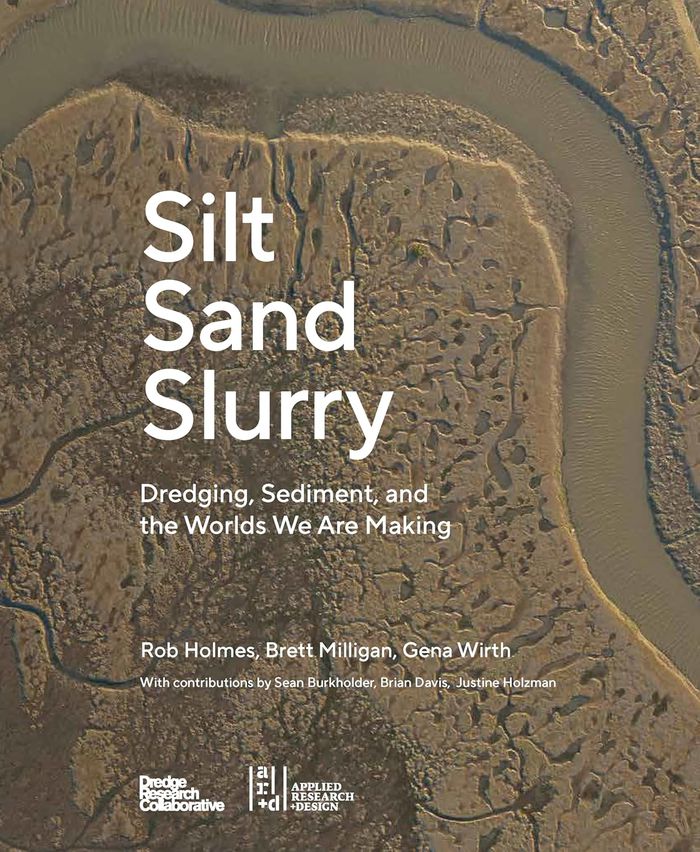
Silt, sand and slurry: dredging, sediment and the world we are making
Actions:
Prix:
$69.95
(disponible en magasin)
Résumé:
Sediment is an unseen infrastructure that shapes and enables modern life. Silt is scooped from sea floors to deepen underwater highways for container ships. It is diverted from river basins to control flooding. It is collected, sorted, managed, and moved to reshape deltas, marshes, and beaches. Anthropogenic action now moves more sediment annually than "natural" geologic processes — yet this global reshaping of the earth’s surface is rarely-discussed and poorly-understood.
Silt, sand and slurry: dredging, sediment and the world we are making
Actions:
Prix:
$69.95
(disponible en magasin)
Résumé:
Sediment is an unseen infrastructure that shapes and enables modern life. Silt is scooped from sea floors to deepen underwater highways for container ships. It is diverted from river basins to control flooding. It is collected, sorted, managed, and moved to reshape deltas, marshes, and beaches. Anthropogenic action now moves more sediment annually than "natural" geologic processes — yet this global reshaping of the earth’s surface is rarely-discussed and poorly-understood.
Classification:
livres
livres
Publication:
mars 2024
mars 2024
Sujet:
Architecture écologique
Architecture écologique
Classification:
livres
livres
Titre:
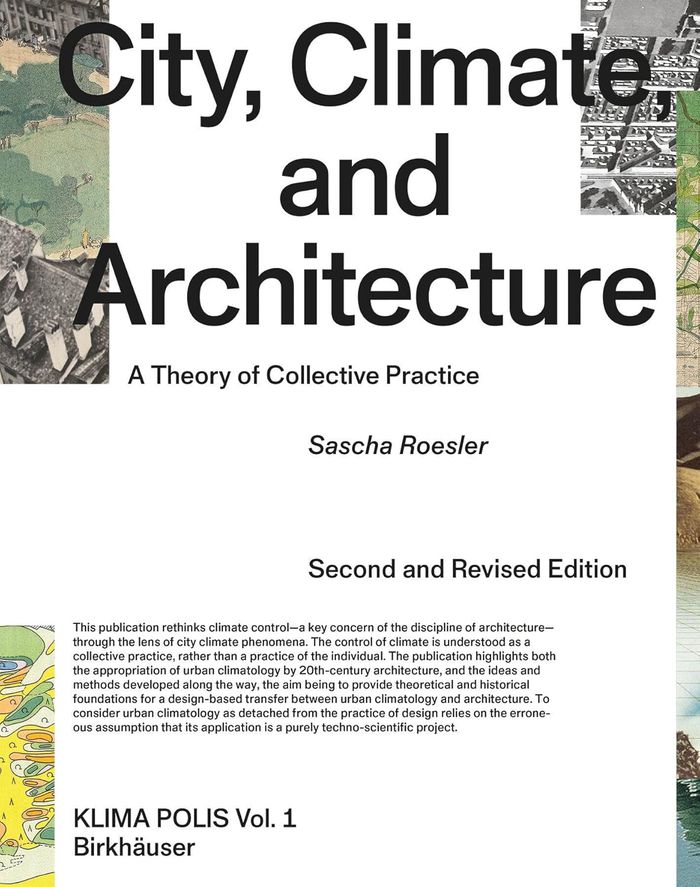
City, climate and architecture: A theory of collective practice, Volume 1. Revised second edition
City, climate and architecture: A theory of collective practice, Volume 1. Revised second edition
Actions:
Prix:
$105.00
(disponible sur commande)
Résumé:
The publication rethinks climate control – a key concern of the discipline of architecture – through the lens of city climate phenomena over the course of the 20th century. Based on a history of climate control on urban scales, it promotes the integration of indoors and outdoors in order to reduce environmental and thermal loads in cities. Just as heating and cooling(...)
$105.00
(disponible sur commande)
Résumé:
The publication rethinks climate control – a key concern of the discipline of architecture – through the lens of city climate phenomena over the course of the 20th century. Based on a history of climate control on urban scales, it promotes the integration of indoors and outdoors in order to reduce environmental and thermal loads in cities. Just as heating and cooling(...)
Titre:
City, climate and architecture: A theory of collective practice, Volume 1. Revised second edition
Actions:
Prix:
$105.00
(disponible sur commande)
Résumé:
The publication rethinks climate control – a key concern of the discipline of architecture – through the lens of city climate phenomena over the course of the 20th century. Based on a history of climate control on urban scales, it promotes the integration of indoors and outdoors in order to reduce environmental and thermal loads in cities. Just as heating and cooling practices inside the buildings are affecting the (urban) climate outdoors, urban heat islands are influencing the energy requirements and thermal conditions inside the buildings. While the first part of the book focuses on the interwar period in Europe, the publication’s second part considers examples from all over the globe, tracing the growing significance of ecological thinking for the design of urban environments.
City, climate and architecture: A theory of collective practice, Volume 1. Revised second edition
Actions:
Prix:
$105.00
(disponible sur commande)
Résumé:
The publication rethinks climate control – a key concern of the discipline of architecture – through the lens of city climate phenomena over the course of the 20th century. Based on a history of climate control on urban scales, it promotes the integration of indoors and outdoors in order to reduce environmental and thermal loads in cities. Just as heating and cooling practices inside the buildings are affecting the (urban) climate outdoors, urban heat islands are influencing the energy requirements and thermal conditions inside the buildings. While the first part of the book focuses on the interwar period in Europe, the publication’s second part considers examples from all over the globe, tracing the growing significance of ecological thinking for the design of urban environments.
Classification:
livres
livres
Publication:
février 2025
février 2025
Sujet:
Architecture écologique
Architecture écologique
Classification:
livres
livres
Titre:
The face of human rights
The face of human rights
Actions:
Prix:
$60.00
(disponible sur commande)
Résumé:
There is a remarkable paucity of pictorial material to draw on when discussing human rights and the way they are respected or infringed. This publication captures injustice and evokes feeling, inviting the reader to interact. But is also risks presenting images of normality in a peaceful world. A visual interpretations of individual legal aspects is supported by textual(...)
$60.00
(disponible sur commande)
Résumé:
There is a remarkable paucity of pictorial material to draw on when discussing human rights and the way they are respected or infringed. This publication captures injustice and evokes feeling, inviting the reader to interact. But is also risks presenting images of normality in a peaceful world. A visual interpretations of individual legal aspects is supported by textual(...)
Publication:
octobre 2004, Baden
octobre 2004, Baden
Titre:
The face of human rights
Actions:
Prix:
$60.00
(disponible sur commande)
Résumé:
There is a remarkable paucity of pictorial material to draw on when discussing human rights and the way they are respected or infringed. This publication captures injustice and evokes feeling, inviting the reader to interact. But is also risks presenting images of normality in a peaceful world. A visual interpretations of individual legal aspects is supported by textual collages from historical and current human rights discussions. It also offers facts and figures, and acknowledges the efforts governmental and non-governmental organizations are making to defend human rights and stamp out their infringement.
The face of human rights
Actions:
Prix:
$60.00
(disponible sur commande)
Résumé:
There is a remarkable paucity of pictorial material to draw on when discussing human rights and the way they are respected or infringed. This publication captures injustice and evokes feeling, inviting the reader to interact. But is also risks presenting images of normality in a peaceful world. A visual interpretations of individual legal aspects is supported by textual collages from historical and current human rights discussions. It also offers facts and figures, and acknowledges the efforts governmental and non-governmental organizations are making to defend human rights and stamp out their infringement.
Classification:
livres
livres
Publication:
octobre 2004, Baden
octobre 2004, Baden
Classification:
livres
livres
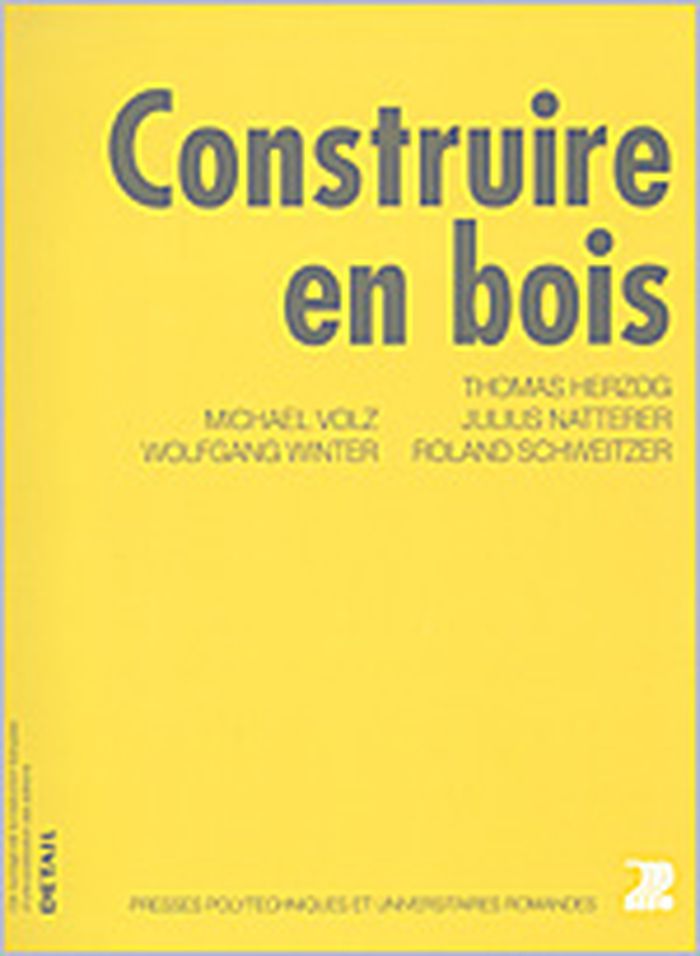
Titre:
Construire en bois
Construire en bois
Actions:
Prix:
$152.00
(disponible sur commande)
Résumé:
Ce nouveau volume de "Construire en bois" propose une mise à jour complète, remaniée et augmentée des précédents volumes ("Construire en bois", "Construire en bois 2"), et se pose comme nouvel ouvrage de référence de la construction en bois pour les architectes et les ingénieurs. Les avantages de la construction en bois demeurent sous-estimés de nos jours. Peu de procédés(...)
$152.00
(disponible sur commande)
Résumé:
Ce nouveau volume de "Construire en bois" propose une mise à jour complète, remaniée et augmentée des précédents volumes ("Construire en bois", "Construire en bois 2"), et se pose comme nouvel ouvrage de référence de la construction en bois pour les architectes et les ingénieurs. Les avantages de la construction en bois demeurent sous-estimés de nos jours. Peu de procédés(...)
Sujet:
Architecture écologique
Architecture écologique
Publication:
novembre 2004, Lausanne
novembre 2004, Lausanne
Titre:
Construire en bois
Actions:
Prix:
$152.00
(disponible sur commande)
Résumé:
Ce nouveau volume de "Construire en bois" propose une mise à jour complète, remaniée et augmentée des précédents volumes ("Construire en bois", "Construire en bois 2"), et se pose comme nouvel ouvrage de référence de la construction en bois pour les architectes et les ingénieurs. Les avantages de la construction en bois demeurent sous-estimés de nos jours. Peu de procédés subissent autant de préjugés négatifs et infondés de la part des maîtres d'ouvrage, des assureurs et des planificateurs. Mais les avantages offerts part ce matériaux sont nombreux, tant d'un point de vue technologique qu'économique ou écologique. Fruit de l'expérience de deux ingénieurs et trois architectes, "Construire en bois" privilégie cette double approche dans le but d'améliorer sans cesse la conception des ouvrages en bois. Riche de centaines de photos noir et blanc et couleurs ainsi que de milliers de dessins au trait, il présente une vaste gamme de formes, de moyens et de techniques d'assemblage, de conceptions d'appui et de systèmes porteurs, et rassemble ainsi en un seul manuel toutes les informations relatives aux propriétés du matériau bois et ses possibilités d'utilisation dans le domaine de la construction. Illustré de plus de 3000 dessins et 700 photographies au travers de près de 200 exemples, imprimé en quadrichromie, cet ouvrage offre un panorama complet des dernières technologies à la base des grandes constructions en bois du monde actuel.
Construire en bois
Actions:
Prix:
$152.00
(disponible sur commande)
Résumé:
Ce nouveau volume de "Construire en bois" propose une mise à jour complète, remaniée et augmentée des précédents volumes ("Construire en bois", "Construire en bois 2"), et se pose comme nouvel ouvrage de référence de la construction en bois pour les architectes et les ingénieurs. Les avantages de la construction en bois demeurent sous-estimés de nos jours. Peu de procédés subissent autant de préjugés négatifs et infondés de la part des maîtres d'ouvrage, des assureurs et des planificateurs. Mais les avantages offerts part ce matériaux sont nombreux, tant d'un point de vue technologique qu'économique ou écologique. Fruit de l'expérience de deux ingénieurs et trois architectes, "Construire en bois" privilégie cette double approche dans le but d'améliorer sans cesse la conception des ouvrages en bois. Riche de centaines de photos noir et blanc et couleurs ainsi que de milliers de dessins au trait, il présente une vaste gamme de formes, de moyens et de techniques d'assemblage, de conceptions d'appui et de systèmes porteurs, et rassemble ainsi en un seul manuel toutes les informations relatives aux propriétés du matériau bois et ses possibilités d'utilisation dans le domaine de la construction. Illustré de plus de 3000 dessins et 700 photographies au travers de près de 200 exemples, imprimé en quadrichromie, cet ouvrage offre un panorama complet des dernières technologies à la base des grandes constructions en bois du monde actuel.
Classification:
livres
livres
Publication:
novembre 2004, Lausanne
novembre 2004, Lausanne
Sujet:
Architecture écologique
Architecture écologique
Classification:
livres
livres
Titre:
Who owns the water?
Who owns the water?
Actions:
Prix:
$60.00
(disponible sur commande)
Résumé:
Industrialization and population growth have brought about a global water crisis. Nature can no longer compensate the exploitation of our freshwater and our oceans. One billion people have no reliable access to clean drinking water; two billion live in precarious hygienic conditions. Famine, poverty, epidemics, and infant mortality are closely linked with the water(...)
$60.00
(disponible sur commande)
Résumé:
Industrialization and population growth have brought about a global water crisis. Nature can no longer compensate the exploitation of our freshwater and our oceans. One billion people have no reliable access to clean drinking water; two billion live in precarious hygienic conditions. Famine, poverty, epidemics, and infant mortality are closely linked with the water(...)
Titre:
Who owns the water?
Actions:
Prix:
$60.00
(disponible sur commande)
Résumé:
Industrialization and population growth have brought about a global water crisis. Nature can no longer compensate the exploitation of our freshwater and our oceans. One billion people have no reliable access to clean drinking water; two billion live in precarious hygienic conditions. Famine, poverty, epidemics, and infant mortality are closely linked with the water crisis. Social, ecological, political, and economic conflicts obstruct efforts to resolve the global water crisis. Water is an instrument of power. The key question reads: Is water a commodity or is free access to water an inalienable human right? By approaching water from a phenomenological perspective, Who owns the Water? seeks to persuade the reader that an element that is constantly flowing and changing defies all claims to own it, be they political or economic, and is instead the responsibility of the entire international community.
Who owns the water?
Actions:
Prix:
$60.00
(disponible sur commande)
Résumé:
Industrialization and population growth have brought about a global water crisis. Nature can no longer compensate the exploitation of our freshwater and our oceans. One billion people have no reliable access to clean drinking water; two billion live in precarious hygienic conditions. Famine, poverty, epidemics, and infant mortality are closely linked with the water crisis. Social, ecological, political, and economic conflicts obstruct efforts to resolve the global water crisis. Water is an instrument of power. The key question reads: Is water a commodity or is free access to water an inalienable human right? By approaching water from a phenomenological perspective, Who owns the Water? seeks to persuade the reader that an element that is constantly flowing and changing defies all claims to own it, be they political or economic, and is instead the responsibility of the entire international community.
Classification:
livres
livres
Publication:
mai 2006
mai 2006
Sujet:
Architecture écologique
Architecture écologique
Classification:
livres
livres
Prix:
$49.95
(disponible sur commande)
Résumé:
Six different climactic zones are presented in "The Green House" : waterfront, forest and mountain, tropical, desert, suburban, and urban, as well as a section on mobile dwellings. Each chapter features a series of homes that show the diversity and possibility of sustainable design. Projects are presented with large colour images, plans, drawings, and an accompanying text(...)
$49.95
(disponible sur commande)
Résumé:
Six different climactic zones are presented in "The Green House" : waterfront, forest and mountain, tropical, desert, suburban, and urban, as well as a section on mobile dwellings. Each chapter features a series of homes that show the diversity and possibility of sustainable design. Projects are presented with large colour images, plans, drawings, and an accompanying text(...)
Sujet:
Architecture écologique
Architecture écologique
Publication:
février 2005, New York
février 2005, New York
Titre:
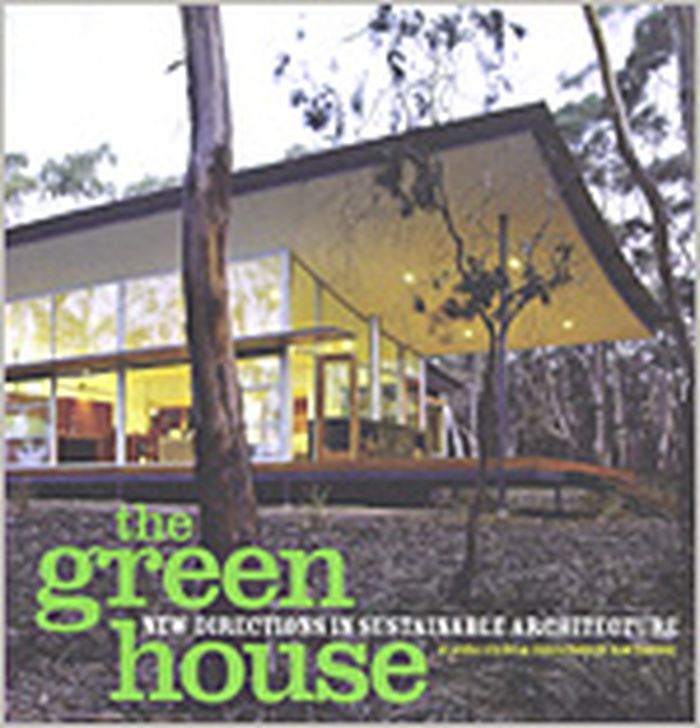
The green house : new directions in sustainable architecture
Actions:
Prix:
$49.95
(disponible sur commande)
Résumé:
Six different climactic zones are presented in "The Green House" : waterfront, forest and mountain, tropical, desert, suburban, and urban, as well as a section on mobile dwellings. Each chapter features a series of homes that show the diversity and possibility of sustainable design. Projects are presented with large colour images, plans, drawings, and an accompanying text that describes their green features and explains how they work with and in the environment. Architects included: Santiago Calatrava, Shigeru Ban, Miller/Hull, Rick Joy, Lake Flato, Kengo Kuma, Glenn Murcutt, Pugh – Scarpa, Werner Sobek, and others.
The green house : new directions in sustainable architecture
Actions:
Prix:
$49.95
(disponible sur commande)
Résumé:
Six different climactic zones are presented in "The Green House" : waterfront, forest and mountain, tropical, desert, suburban, and urban, as well as a section on mobile dwellings. Each chapter features a series of homes that show the diversity and possibility of sustainable design. Projects are presented with large colour images, plans, drawings, and an accompanying text that describes their green features and explains how they work with and in the environment. Architects included: Santiago Calatrava, Shigeru Ban, Miller/Hull, Rick Joy, Lake Flato, Kengo Kuma, Glenn Murcutt, Pugh – Scarpa, Werner Sobek, and others.
Classification:
livres
livres
Publication:
février 2005, New York
février 2005, New York
Sujet:
Architecture écologique
Architecture écologique
Classification:
livres
livres
Actions:
Prix:
$20.95
(disponible sur commande)
Résumé:
À quoi faut-il veiller lorsque l’on décide de faire construire ? Quels pièges éviter ? Comment planifier avec efficacité son temps et gérer son investissement ? Quels organismes contacter ? Faut-il prendre un maître d’œuvre, un architecte ? Quels détails techniques ne pas oublier ? Le cadre de la construction d’une maison individuelle est si vaste et tant de questions se(...)
$20.95
(disponible sur commande)
Résumé:
À quoi faut-il veiller lorsque l’on décide de faire construire ? Quels pièges éviter ? Comment planifier avec efficacité son temps et gérer son investissement ? Quels organismes contacter ? Faut-il prendre un maître d’œuvre, un architecte ? Quels détails techniques ne pas oublier ? Le cadre de la construction d’une maison individuelle est si vaste et tant de questions se(...)
Titre:
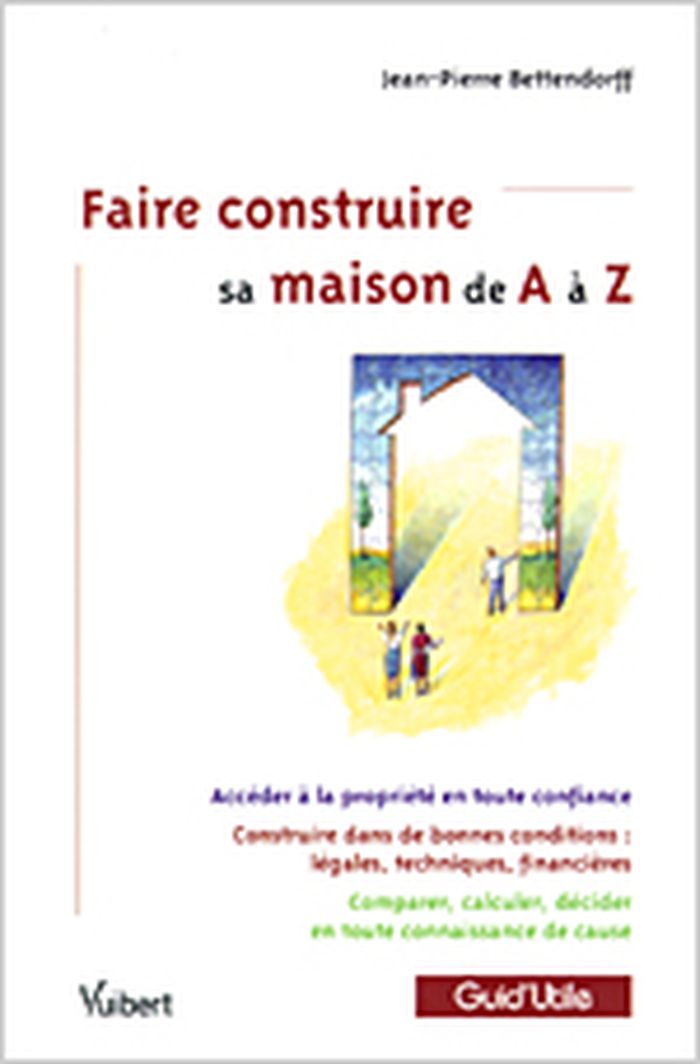
Faire construire sa maison de a à z
Actions:
Prix:
$20.95
(disponible sur commande)
Résumé:
À quoi faut-il veiller lorsque l’on décide de faire construire ? Quels pièges éviter ? Comment planifier avec efficacité son temps et gérer son investissement ? Quels organismes contacter ? Faut-il prendre un maître d’œuvre, un architecte ? Quels détails techniques ne pas oublier ? Le cadre de la construction d’une maison individuelle est si vaste et tant de questions se posent qu’il s’avère nécessaire, pour le futur propriétaire non professionnel, de bien connaître les étapes à suivre afin d’accéder à son rêve avec confiance et efficacité. Finances, architecture, technique, matériaux, organisation, lois et règlements, etc., aucun de ces éléments ne doit être négligé pour maximiser son investissement personnel et financier.
Faire construire sa maison de a à z
Actions:
Prix:
$20.95
(disponible sur commande)
Résumé:
À quoi faut-il veiller lorsque l’on décide de faire construire ? Quels pièges éviter ? Comment planifier avec efficacité son temps et gérer son investissement ? Quels organismes contacter ? Faut-il prendre un maître d’œuvre, un architecte ? Quels détails techniques ne pas oublier ? Le cadre de la construction d’une maison individuelle est si vaste et tant de questions se posent qu’il s’avère nécessaire, pour le futur propriétaire non professionnel, de bien connaître les étapes à suivre afin d’accéder à son rêve avec confiance et efficacité. Finances, architecture, technique, matériaux, organisation, lois et règlements, etc., aucun de ces éléments ne doit être négligé pour maximiser son investissement personnel et financier.
Classification:
livres
livres
Publication:
avril 2004, Paris
avril 2004, Paris
Sujet:
Architecture écologique
Architecture écologique
Classification:
livres
livres
Actions:
Prix:
$24.95
(disponible sur commande)
Résumé:
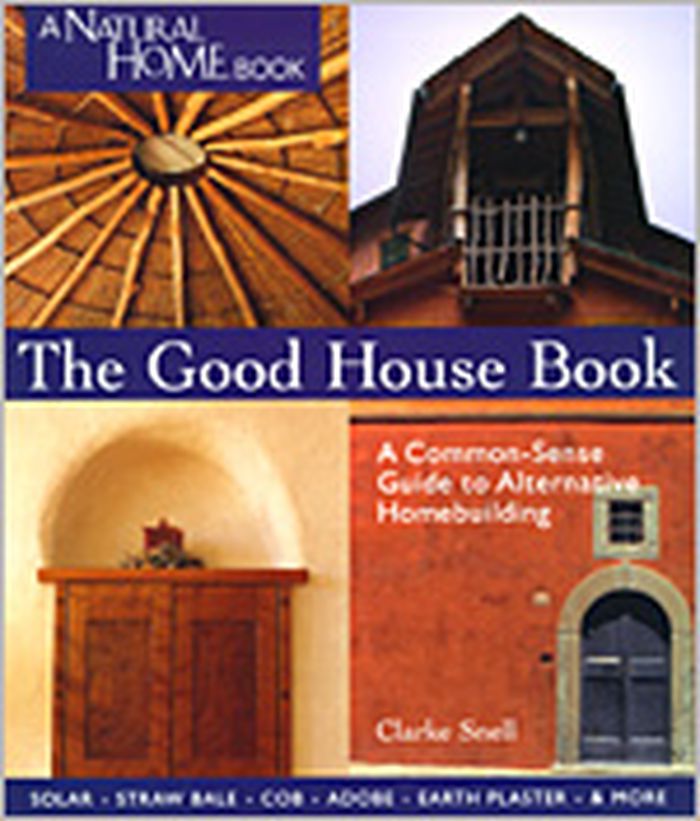
"The Good House Book" offers an intelligent look at how a home is supposed to function and a variety of different building approaches. What’s important is finding the right solution to fit your individual needs, local climate, and natural resources. The broad range of topics covered include choosing a site; selecting materials; building with straw bale, cob, adobe, or(...)
$24.95
(disponible sur commande)
Résumé:
"The Good House Book" offers an intelligent look at how a home is supposed to function and a variety of different building approaches. What’s important is finding the right solution to fit your individual needs, local climate, and natural resources. The broad range of topics covered include choosing a site; selecting materials; building with straw bale, cob, adobe, or(...)
Titre:
The good house book : a common-sense guide to alternative homebuilding
Actions:
Prix:
$24.95
(disponible sur commande)
Résumé:
"The Good House Book" offers an intelligent look at how a home is supposed to function and a variety of different building approaches. What’s important is finding the right solution to fit your individual needs, local climate, and natural resources. The broad range of topics covered include choosing a site; selecting materials; building with straw bale, cob, adobe, or rammed earth; and plugging into alternative home power systems. This book includes interviews with six homeowners and photographs of the homes they built.
The good house book : a common-sense guide to alternative homebuilding
Actions:
Prix:
$24.95
(disponible sur commande)
Résumé:
"The Good House Book" offers an intelligent look at how a home is supposed to function and a variety of different building approaches. What’s important is finding the right solution to fit your individual needs, local climate, and natural resources. The broad range of topics covered include choosing a site; selecting materials; building with straw bale, cob, adobe, or rammed earth; and plugging into alternative home power systems. This book includes interviews with six homeowners and photographs of the homes they built.
Classification:
livres
livres
Publication:
avril 2004, New York
avril 2004, New York
Sujet:
Architecture écologique
Architecture écologique


