


168 Résultats
Classification:
livres
livres
Titre:
Seen from here : A photographic-literary encounter with buildings by Aebi & Vincent Architekten
Seen from here : A photographic-literary encounter with buildings by Aebi & Vincent Architekten
Actions:
Prix:
$89.95
(disponible sur commande)
Résumé:
For more than twenty-five years, Swiss architects Bernhard Aebi and Pascal Vincent have been running their practice with offices in Bern and Geneva. Housing is one of the firm’s main fields of activity, yet it has also won several high-profile public commissions, such as the restoration and reconstruction of Switzerland’s national parliament building in Bern, the(...)
$89.95
(disponible sur commande)
Résumé:
For more than twenty-five years, Swiss architects Bernhard Aebi and Pascal Vincent have been running their practice with offices in Bern and Geneva. Housing is one of the firm’s main fields of activity, yet it has also won several high-profile public commissions, such as the restoration and reconstruction of Switzerland’s national parliament building in Bern, the(...)
Publication:
février 2024
février 2024
Titre:
Seen from here : A photographic-literary encounter with buildings by Aebi & Vincent Architekten
Actions:
Prix:
$89.95
(disponible sur commande)
Résumé:
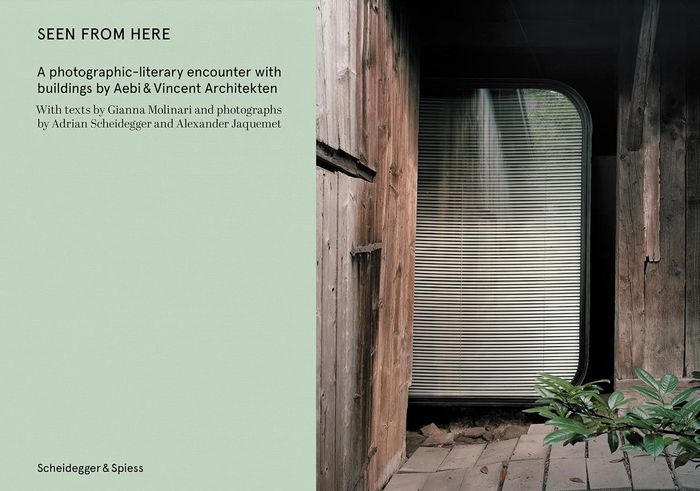
For more than twenty-five years, Swiss architects Bernhard Aebi and Pascal Vincent have been running their practice with offices in Bern and Geneva. Housing is one of the firm’s main fields of activity, yet it has also won several high-profile public commissions, such as the restoration and reconstruction of Switzerland’s national parliament building in Bern, the renovation of the Swiss National Bank’s Bern headquarters, and the south wing of Zurich’s main train station. The images by photographers Adrian Scheidegger and Alexander Jaquemet, both longtime companions of the architects, demonstrate how the spaces they created gradually and naturally integrate with their environment. Writer Gianna Molinari joined Scheidegger and Jaquemet on their expeditions to Aebi & Vincent’s buildings. Her literary snapshots supplement the images in this volume, stimulating our imagination of the inner life of these structures and their occupants.
Seen from here : A photographic-literary encounter with buildings by Aebi & Vincent Architekten
Actions:
Prix:
$89.95
(disponible sur commande)
Résumé:
For more than twenty-five years, Swiss architects Bernhard Aebi and Pascal Vincent have been running their practice with offices in Bern and Geneva. Housing is one of the firm’s main fields of activity, yet it has also won several high-profile public commissions, such as the restoration and reconstruction of Switzerland’s national parliament building in Bern, the renovation of the Swiss National Bank’s Bern headquarters, and the south wing of Zurich’s main train station. The images by photographers Adrian Scheidegger and Alexander Jaquemet, both longtime companions of the architects, demonstrate how the spaces they created gradually and naturally integrate with their environment. Writer Gianna Molinari joined Scheidegger and Jaquemet on their expeditions to Aebi & Vincent’s buildings. Her literary snapshots supplement the images in this volume, stimulating our imagination of the inner life of these structures and their occupants.
Classification:
livres
livres
Publication:
février 2024
février 2024
Classification:
livres
livres
Prix:
$84.95
(disponible sur commande)
Résumé:
Nelson Byrd Woltz (NBW) is one of the most in-demand and respected firms working in landscape architecture today with major commissions across the United States. This collection of twelve projects illustrates the power of design to create vital public realms at the heart of communities. Through the celebrated firm’s process, ecological and cultural histories are revealed(...)
$84.95
(disponible sur commande)
Résumé:
Nelson Byrd Woltz (NBW) is one of the most in-demand and respected firms working in landscape architecture today with major commissions across the United States. This collection of twelve projects illustrates the power of design to create vital public realms at the heart of communities. Through the celebrated firm’s process, ecological and cultural histories are revealed(...)
Publication:
novembre 2024
novembre 2024
Titre:
The land is full: Nelson Byrd Woltz Landscape architecture
Actions:
Prix:
$84.95
(disponible sur commande)
Résumé:
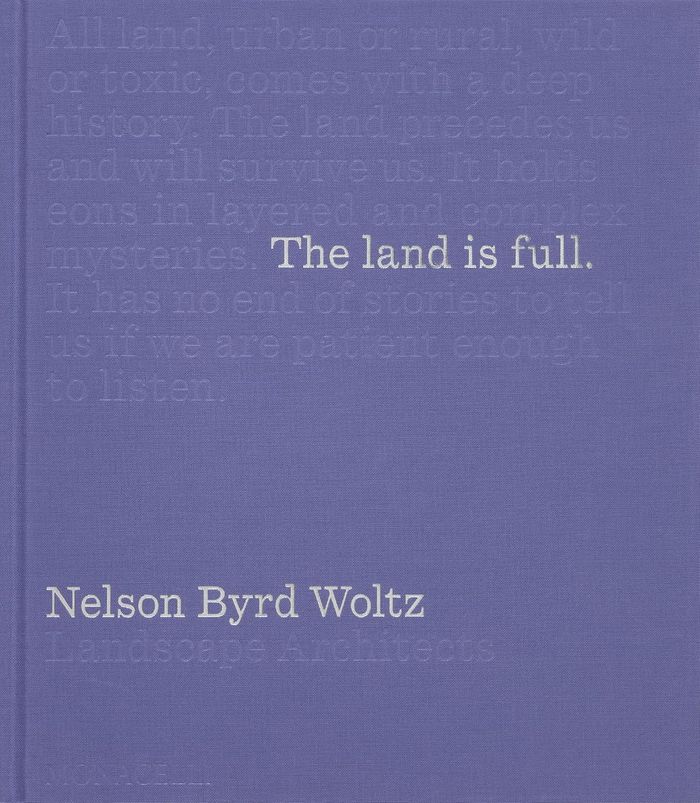
Nelson Byrd Woltz (NBW) is one of the most in-demand and respected firms working in landscape architecture today with major commissions across the United States. This collection of twelve projects illustrates the power of design to create vital public realms at the heart of communities. Through the celebrated firm’s process, ecological and cultural histories are revealed and integrated into meaningful public experiences. The firm has worked with exceptionally sensitive sites across the United States, including those that hold the vital histories of enslaved peoples, the rich cultures of indigenous peoples, and the natural habitats that have been threatened by infrastructure and construction.
The land is full: Nelson Byrd Woltz Landscape architecture
Actions:
Prix:
$84.95
(disponible sur commande)
Résumé:
Nelson Byrd Woltz (NBW) is one of the most in-demand and respected firms working in landscape architecture today with major commissions across the United States. This collection of twelve projects illustrates the power of design to create vital public realms at the heart of communities. Through the celebrated firm’s process, ecological and cultural histories are revealed and integrated into meaningful public experiences. The firm has worked with exceptionally sensitive sites across the United States, including those that hold the vital histories of enslaved peoples, the rich cultures of indigenous peoples, and the natural habitats that have been threatened by infrastructure and construction.
Classification:
livres
livres
Publication:
novembre 2024
novembre 2024
Classification:
livres
livres
Actions:
Prix:
$107.99
(disponible sur commande)
Résumé:
Mien Ruys, who worked mostly in the Netherlands for almost 60 years, was one of the most influential landscape architects of the 20th Century. A leading proponent of modernist design, she introduced clean lines, geometric shapes and innovative materials. One of the few women members of CIAM, she collaborated regularly with architects including Aldo van Eyck and Gerrit(...)
$107.99
(disponible sur commande)
Résumé:
Mien Ruys, who worked mostly in the Netherlands for almost 60 years, was one of the most influential landscape architects of the 20th Century. A leading proponent of modernist design, she introduced clean lines, geometric shapes and innovative materials. One of the few women members of CIAM, she collaborated regularly with architects including Aldo van Eyck and Gerrit(...)
Titre:
Mien Ruys: The mother of modernist gardens
Actions:
Prix:
$107.99
(disponible sur commande)
Résumé:
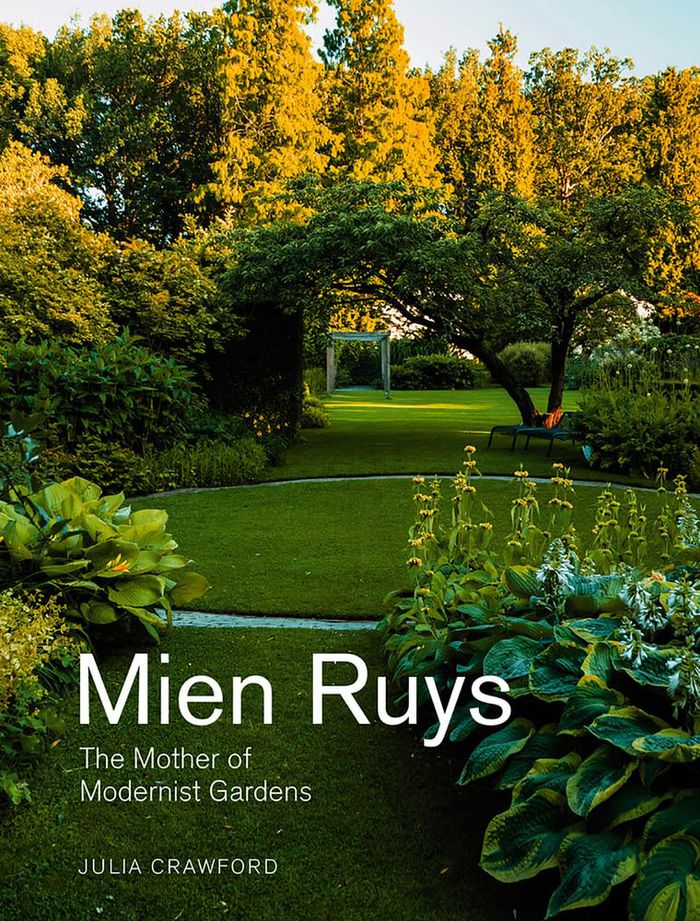
Mien Ruys, who worked mostly in the Netherlands for almost 60 years, was one of the most influential landscape architects of the 20th Century. A leading proponent of modernist design, she introduced clean lines, geometric shapes and innovative materials. One of the few women members of CIAM, she collaborated regularly with architects including Aldo van Eyck and Gerrit Rietveld, often on much needed social housing schemes. Uniquely, she combined this modernist approach with an extensive knowledge of plants and planting, which she learnt in her father’ s Royal Moerheim Nursery in Dedemsvaart. At the nursery, she met Gertrude Jekyll - who greatly influenced Mien as she developed her own loose, natural style of planting - and created 30 experimental gardens from which lessons which can still be learnt.
Mien Ruys: The mother of modernist gardens
Actions:
Prix:
$107.99
(disponible sur commande)
Résumé:
Mien Ruys, who worked mostly in the Netherlands for almost 60 years, was one of the most influential landscape architects of the 20th Century. A leading proponent of modernist design, she introduced clean lines, geometric shapes and innovative materials. One of the few women members of CIAM, she collaborated regularly with architects including Aldo van Eyck and Gerrit Rietveld, often on much needed social housing schemes. Uniquely, she combined this modernist approach with an extensive knowledge of plants and planting, which she learnt in her father’ s Royal Moerheim Nursery in Dedemsvaart. At the nursery, she met Gertrude Jekyll - who greatly influenced Mien as she developed her own loose, natural style of planting - and created 30 experimental gardens from which lessons which can still be learnt.
Classification:
livres
livres
Publication:
avril 2024
avril 2024
Classification:
livres
livres
Actions:
Prix:
$98.00
(disponible sur commande)
Résumé:
Gilmore D. Clarke and Michael Rapuano were the foremost spatial designers of the American century. Their vast portfolio of public landscapes propelled the legacy of Frederick Law Olmsted and Calvert Vaux into the motor age, touching the lives of millions and changing the face of the nation. This book recovers the forgotten legacy of Clarke and Rapuano, whose parks and(...)
$98.00
(disponible sur commande)
Résumé:
Gilmore D. Clarke and Michael Rapuano were the foremost spatial designers of the American century. Their vast portfolio of public landscapes propelled the legacy of Frederick Law Olmsted and Calvert Vaux into the motor age, touching the lives of millions and changing the face of the nation. This book recovers the forgotten legacy of Clarke and Rapuano, whose parks and(...)
Titre:
Designing the American century: The public landscapes of Clarke and Rapuano, 1915-1965
Actions:
Prix:
$98.00
(disponible sur commande)
Résumé:
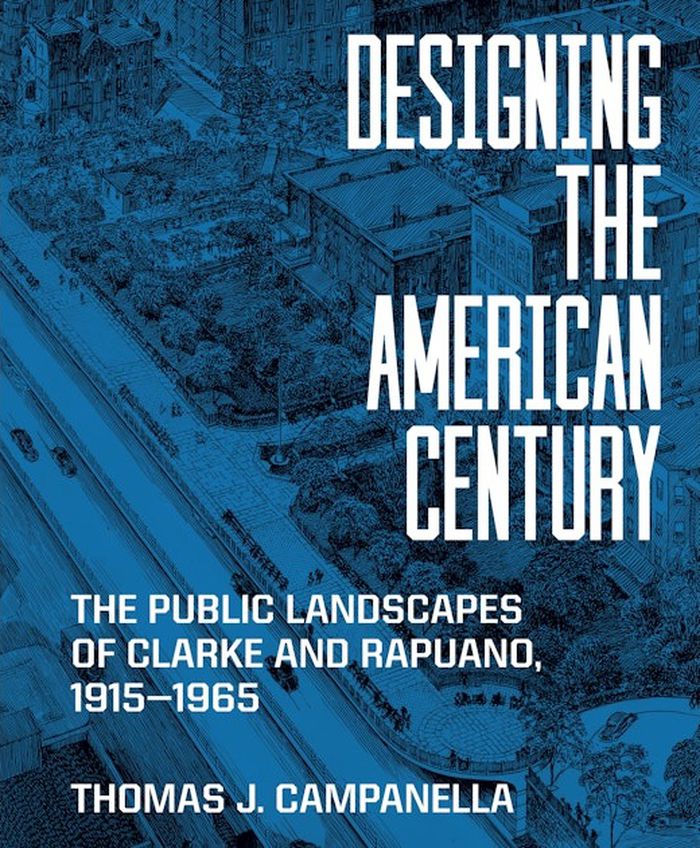
Gilmore D. Clarke and Michael Rapuano were the foremost spatial designers of the American century. Their vast portfolio of public landscapes propelled the legacy of Frederick Law Olmsted and Calvert Vaux into the motor age, touching the lives of millions and changing the face of the nation. This book recovers the forgotten legacy of Clarke and Rapuano, whose parks and parkways, highways and housing estates helped modernize—for better or worse—the American metropolis. With the patronage of public-works titan Robert Moses, Clarke and Rapuano transformed New York over a span of fifty years, revitalizing the city’s immense park system but also planning expressways, public housing, and urban renewal projects that laid waste to entire sections of the city. In this work, Thomas J. Campanella describes how Clarke and Rapuano helped create some of the metropolitan region’s most iconic landscapes, from the Central Park Zoo and Conservatory Garden to the Henry Hudson Parkway and Riverside Park, Jones Beach, the Palisades and Taconic State Parkways, and the Brooklyn Heights Promenade. He shows how they left their mark far beyond Gotham as well, with projects as diverse as Yellowstone’s Mammoth Hot Springs, the Mount Vernon Memorial Highway, site plans for the Pentagon and CIA headquarters, and Montreal’s Olympic Park.
Designing the American century: The public landscapes of Clarke and Rapuano, 1915-1965
Actions:
Prix:
$98.00
(disponible sur commande)
Résumé:
Gilmore D. Clarke and Michael Rapuano were the foremost spatial designers of the American century. Their vast portfolio of public landscapes propelled the legacy of Frederick Law Olmsted and Calvert Vaux into the motor age, touching the lives of millions and changing the face of the nation. This book recovers the forgotten legacy of Clarke and Rapuano, whose parks and parkways, highways and housing estates helped modernize—for better or worse—the American metropolis. With the patronage of public-works titan Robert Moses, Clarke and Rapuano transformed New York over a span of fifty years, revitalizing the city’s immense park system but also planning expressways, public housing, and urban renewal projects that laid waste to entire sections of the city. In this work, Thomas J. Campanella describes how Clarke and Rapuano helped create some of the metropolitan region’s most iconic landscapes, from the Central Park Zoo and Conservatory Garden to the Henry Hudson Parkway and Riverside Park, Jones Beach, the Palisades and Taconic State Parkways, and the Brooklyn Heights Promenade. He shows how they left their mark far beyond Gotham as well, with projects as diverse as Yellowstone’s Mammoth Hot Springs, the Mount Vernon Memorial Highway, site plans for the Pentagon and CIA headquarters, and Montreal’s Olympic Park.
Classification:
livres
livres
Publication:
juillet 2025
juillet 2025
Classification:
livres
livres
Actions:
Prix:
$49.95
(disponible sur commande)
Résumé:
Christophe Girot has occupied the Chair of Landscape Architecture at the ETH Zurich since the year 2000. Girot's projects are all based on simple geometric and gestural movements. His concept of garden architecture begins with the modelling of the earth surface. The resulting topography is the basis of a restrained plant vocabulary.
$49.95
(disponible sur commande)
Résumé:
Christophe Girot has occupied the Chair of Landscape Architecture at the ETH Zurich since the year 2000. Girot's projects are all based on simple geometric and gestural movements. His concept of garden architecture begins with the modelling of the earth surface. The resulting topography is the basis of a restrained plant vocabulary.
Publication:
janvier 2004, Luzern
janvier 2004, Luzern
Titre:
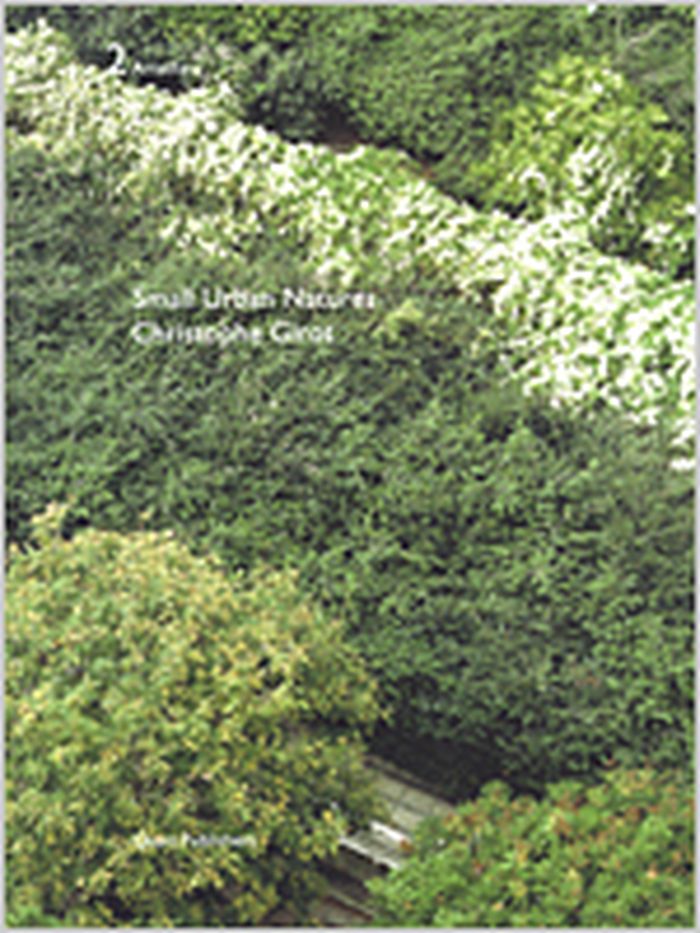
Small urban natures : Christophe Girot / arcadia 2
Actions:
Prix:
$49.95
(disponible sur commande)
Résumé:
Christophe Girot has occupied the Chair of Landscape Architecture at the ETH Zurich since the year 2000. Girot's projects are all based on simple geometric and gestural movements. His concept of garden architecture begins with the modelling of the earth surface. The resulting topography is the basis of a restrained plant vocabulary.
Small urban natures : Christophe Girot / arcadia 2
Actions:
Prix:
$49.95
(disponible sur commande)
Résumé:
Christophe Girot has occupied the Chair of Landscape Architecture at the ETH Zurich since the year 2000. Girot's projects are all based on simple geometric and gestural movements. His concept of garden architecture begins with the modelling of the earth surface. The resulting topography is the basis of a restrained plant vocabulary.
Classification:
livres
livres
Publication:
janvier 2004, Luzern
janvier 2004, Luzern
Classification:
livres
livres
Actions:
Prix:
$49.95
(disponible sur commande)
Résumé:
Le premier volume de la collection "Arcadia" présente trois architectes paysagistes parisiens: Henri Bava, Michel Hoessler et Olivier Philippe. Sous le nom "Agence Ter", ils ont fondé ensemble une agence à Paris en 1986, une deuxième en Guyane française en 1988 et une troisième à Karlsruhe en 2000. Une œuvre étonnante est issue de cette constellation. Suite à des concours(...)
$49.95
(disponible sur commande)
Résumé:
Le premier volume de la collection "Arcadia" présente trois architectes paysagistes parisiens: Henri Bava, Michel Hoessler et Olivier Philippe. Sous le nom "Agence Ter", ils ont fondé ensemble une agence à Paris en 1986, une deuxième en Guyane française en 1988 et une troisième à Karlsruhe en 2000. Une œuvre étonnante est issue de cette constellation. Suite à des concours(...)
Publication:
janvier 1900, Luzern
janvier 1900, Luzern
Titre:
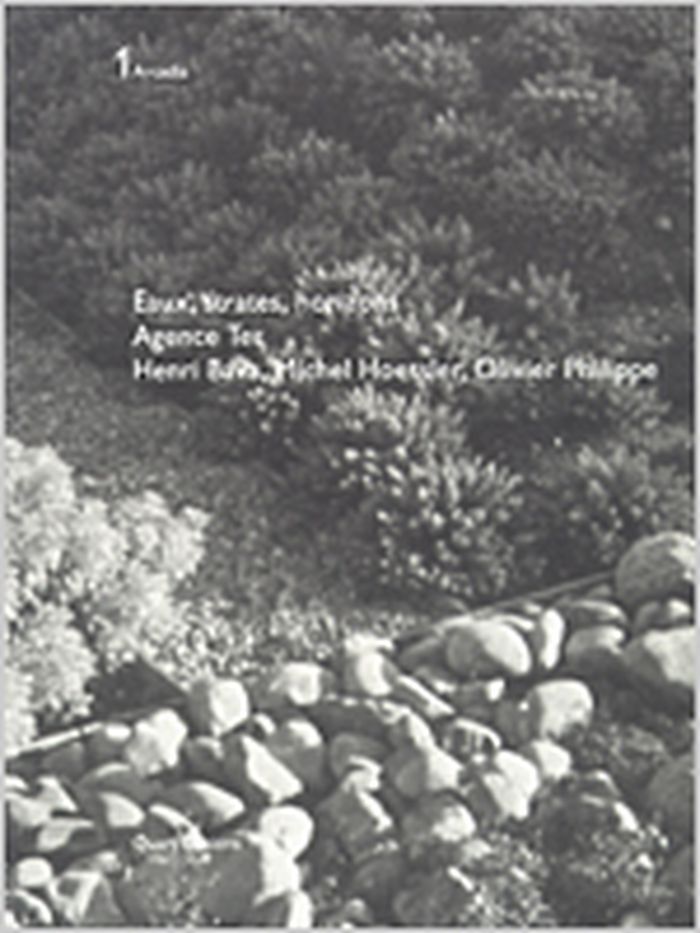
Eaux, strates, horizons : Agence Ter / arcadia 1
Actions:
Prix:
$49.95
(disponible sur commande)
Résumé:
Le premier volume de la collection "Arcadia" présente trois architectes paysagistes parisiens: Henri Bava, Michel Hoessler et Olivier Philippe. Sous le nom "Agence Ter", ils ont fondé ensemble une agence à Paris en 1986, une deuxième en Guyane française en 1988 et une troisième à Karlsruhe en 2000. Une œuvre étonnante est issue de cette constellation. Suite à des concours gagnés en Allemagne, Angleterre et aux Pays-Bas et grâce à l'enseignement d'Henri Bava à l'Université de Karlsruhe, l'influence de ces architectes s'étend au-delà des frontières nationales. Cette oeuvre ainsi que l'essai analytique de Jean Pierre Le Dantec, l'un des plus grands connaisseurs de l'architecture du paysage en France, est consacré aux travaux de l'Agence Ter qui développent la thématique de l'eau. Dans les jardins et les aménagements qu'elle propose, l'eau constitue souvent un thème important, voire central. Elément fugitif et à multiples facettes, elle déploie dans les jardins un potentiel poétique varié.
Eaux, strates, horizons : Agence Ter / arcadia 1
Actions:
Prix:
$49.95
(disponible sur commande)
Résumé:
Le premier volume de la collection "Arcadia" présente trois architectes paysagistes parisiens: Henri Bava, Michel Hoessler et Olivier Philippe. Sous le nom "Agence Ter", ils ont fondé ensemble une agence à Paris en 1986, une deuxième en Guyane française en 1988 et une troisième à Karlsruhe en 2000. Une œuvre étonnante est issue de cette constellation. Suite à des concours gagnés en Allemagne, Angleterre et aux Pays-Bas et grâce à l'enseignement d'Henri Bava à l'Université de Karlsruhe, l'influence de ces architectes s'étend au-delà des frontières nationales. Cette oeuvre ainsi que l'essai analytique de Jean Pierre Le Dantec, l'un des plus grands connaisseurs de l'architecture du paysage en France, est consacré aux travaux de l'Agence Ter qui développent la thématique de l'eau. Dans les jardins et les aménagements qu'elle propose, l'eau constitue souvent un thème important, voire central. Elément fugitif et à multiples facettes, elle déploie dans les jardins un potentiel poétique varié.
Classification:
livres
livres
Publication:
janvier 1900, Luzern
janvier 1900, Luzern
Classification:
livres
livres
Actions:
Prix:
$37.50
(disponible sur commande)
Résumé:
The unexpected discovery of very ancient quarries, still burried under tons of rubble, that laid the path of a motorway under construction in western France suggested the possibility of transforming them into Land Art. The creative process by Bernard Lassus provides a wonderful opportunity for a close observation, illustrated by his own photographs and drawings, of his(...)
$37.50
(disponible sur commande)
Résumé:
The unexpected discovery of very ancient quarries, still burried under tons of rubble, that laid the path of a motorway under construction in western France suggested the possibility of transforming them into Land Art. The creative process by Bernard Lassus provides a wonderful opportunity for a close observation, illustrated by his own photographs and drawings, of his(...)
Publication:
janvier 1900, Washington
janvier 1900, Washington
Titre:
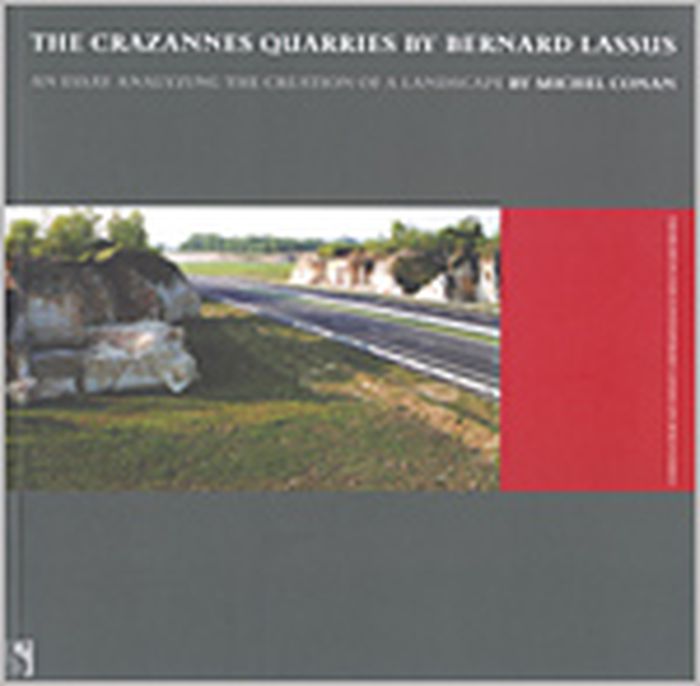
The crazannes quarries by Bernard Lassus : an essay analyzing the creation of a landscape
Actions:
Prix:
$37.50
(disponible sur commande)
Résumé:
The unexpected discovery of very ancient quarries, still burried under tons of rubble, that laid the path of a motorway under construction in western France suggested the possibility of transforming them into Land Art. The creative process by Bernard Lassus provides a wonderful opportunity for a close observation, illustrated by his own photographs and drawings, of his landscape design approach which is opening new directions for landscape design beyond the motorway. It shows how an artist calls upon his own life experience and upon his understanding of the ethical and esthetic issues of landscape design to create a stunning landscape.
The crazannes quarries by Bernard Lassus : an essay analyzing the creation of a landscape
Actions:
Prix:
$37.50
(disponible sur commande)
Résumé:
The unexpected discovery of very ancient quarries, still burried under tons of rubble, that laid the path of a motorway under construction in western France suggested the possibility of transforming them into Land Art. The creative process by Bernard Lassus provides a wonderful opportunity for a close observation, illustrated by his own photographs and drawings, of his landscape design approach which is opening new directions for landscape design beyond the motorway. It shows how an artist calls upon his own life experience and upon his understanding of the ethical and esthetic issues of landscape design to create a stunning landscape.
Classification:
livres
livres
Publication:
janvier 1900, Washington
janvier 1900, Washington
Classification:
livres
livres
Actions:
Prix:
$78.95
(disponible sur commande)
Résumé:
C'est à Vaux le Vicomte, chez le surintendant Fouquet, que le futur jardinier de Louis XIV, Le Nôtre, utilise pour la première fois les jeux de perspectives et d'illusion optiques qui devaient bientôt définir son style. Michel Brix décrit et explique dans cet ouvrage chacun des procédés nouveaux mis en oeuvre par le grand jardinier. Ces principes donneront naissance au(...)
$78.95
(disponible sur commande)
Résumé:
C'est à Vaux le Vicomte, chez le surintendant Fouquet, que le futur jardinier de Louis XIV, Le Nôtre, utilise pour la première fois les jeux de perspectives et d'illusion optiques qui devaient bientôt définir son style. Michel Brix décrit et explique dans cet ouvrage chacun des procédés nouveaux mis en oeuvre par le grand jardinier. Ces principes donneront naissance au(...)
Titre:
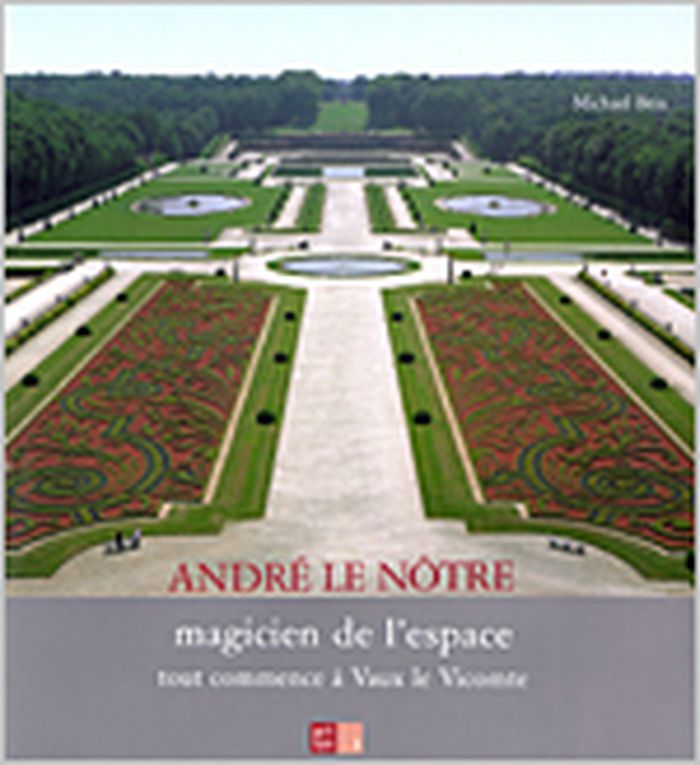
André Le Nôtre, magicien de l'espace : tout commence à Vaux le Vicomte
Actions:
Prix:
$78.95
(disponible sur commande)
Résumé:
C'est à Vaux le Vicomte, chez le surintendant Fouquet, que le futur jardinier de Louis XIV, Le Nôtre, utilise pour la première fois les jeux de perspectives et d'illusion optiques qui devaient bientôt définir son style. Michel Brix décrit et explique dans cet ouvrage chacun des procédés nouveaux mis en oeuvre par le grand jardinier. Ces principes donneront naissance au jardin à la française, bientôt copiés dans toute l'Europe.
André Le Nôtre, magicien de l'espace : tout commence à Vaux le Vicomte
Actions:
Prix:
$78.95
(disponible sur commande)
Résumé:
C'est à Vaux le Vicomte, chez le surintendant Fouquet, que le futur jardinier de Louis XIV, Le Nôtre, utilise pour la première fois les jeux de perspectives et d'illusion optiques qui devaient bientôt définir son style. Michel Brix décrit et explique dans cet ouvrage chacun des procédés nouveaux mis en oeuvre par le grand jardinier. Ces principes donneront naissance au jardin à la française, bientôt copiés dans toute l'Europe.
Classification:
livres
livres
Publication:
juin 2004, Versailles
juin 2004, Versailles
Classification:
livres
livres
Actions:
Prix:
$52.50
(disponible sur commande)
Résumé:
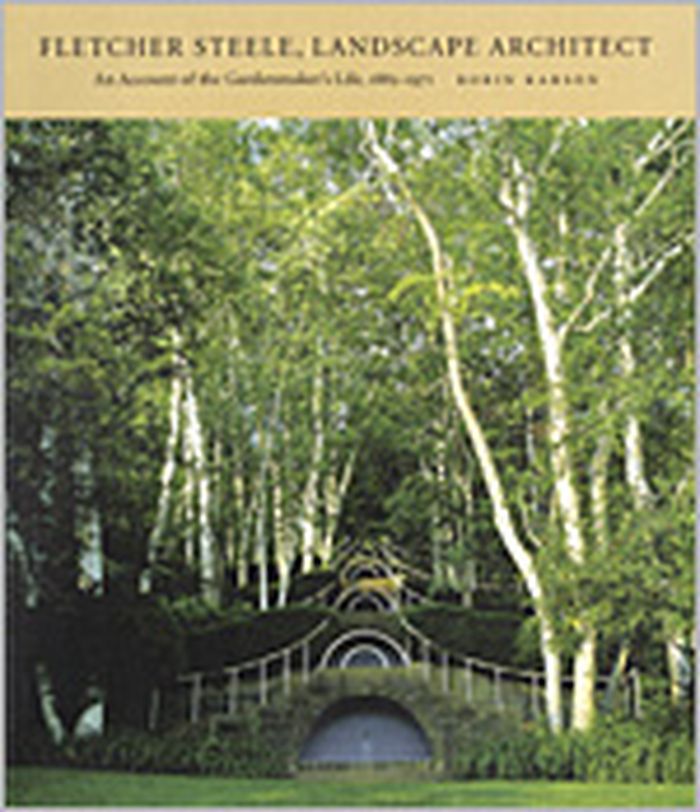
For sixty years Fletcher Steele practiced landscape architecture as a fine art, designing nearly seven hundred gardens, from Boston to Detroit, and New Brunswick, Canada, to Asheville, North Carolina. Often brilliant, always original, Steele’s work is considered by many to constitute the essential link between nineteenth-century Beaux-Arts formalism and modern landscape design.
$52.50
(disponible sur commande)
Résumé:
For sixty years Fletcher Steele practiced landscape architecture as a fine art, designing nearly seven hundred gardens, from Boston to Detroit, and New Brunswick, Canada, to Asheville, North Carolina. Often brilliant, always original, Steele’s work is considered by many to constitute the essential link between nineteenth-century Beaux-Arts formalism and modern landscape design.
Publication:
août 2003, Amherst, Mass.
août 2003, Amherst, Mass.
Titre:
Fletcher Steele, landscape architect : an account of the gardenmaker's life, 1885 - 1971
Actions:
Prix:
$52.50
(disponible sur commande)
Résumé:
For sixty years Fletcher Steele practiced landscape architecture as a fine art, designing nearly seven hundred gardens, from Boston to Detroit, and New Brunswick, Canada, to Asheville, North Carolina. Often brilliant, always original, Steele’s work is considered by many to constitute the essential link between nineteenth-century Beaux-Arts formalism and modern landscape design.
Fletcher Steele, landscape architect : an account of the gardenmaker's life, 1885 - 1971
Actions:
Prix:
$52.50
(disponible sur commande)
Résumé:
For sixty years Fletcher Steele practiced landscape architecture as a fine art, designing nearly seven hundred gardens, from Boston to Detroit, and New Brunswick, Canada, to Asheville, North Carolina. Often brilliant, always original, Steele’s work is considered by many to constitute the essential link between nineteenth-century Beaux-Arts formalism and modern landscape design.
Classification:
livres
livres
Publication:
août 2003, Amherst, Mass.
août 2003, Amherst, Mass.
Classification:
livres
livres
Actions:
Prix:
$22.50
(disponible sur commande)
Résumé:
Collaboration with the greatest botanists of his time, an instinctive humanitarianism, and a natural ingenuity in landscape design combined to make Thomas Jefferson a pioneer in American landscape architecture. Frederick D. Nichols and Ralph E. Griswold, in this close study of Jefferson’s many notes, letters, and sketches, present a clear and detailed interpretation of(...)
$22.50
(disponible sur commande)
Résumé:
Collaboration with the greatest botanists of his time, an instinctive humanitarianism, and a natural ingenuity in landscape design combined to make Thomas Jefferson a pioneer in American landscape architecture. Frederick D. Nichols and Ralph E. Griswold, in this close study of Jefferson’s many notes, letters, and sketches, present a clear and detailed interpretation of(...)
Publication:
juin 2003, Charlottesville
juin 2003, Charlottesville
Titre:
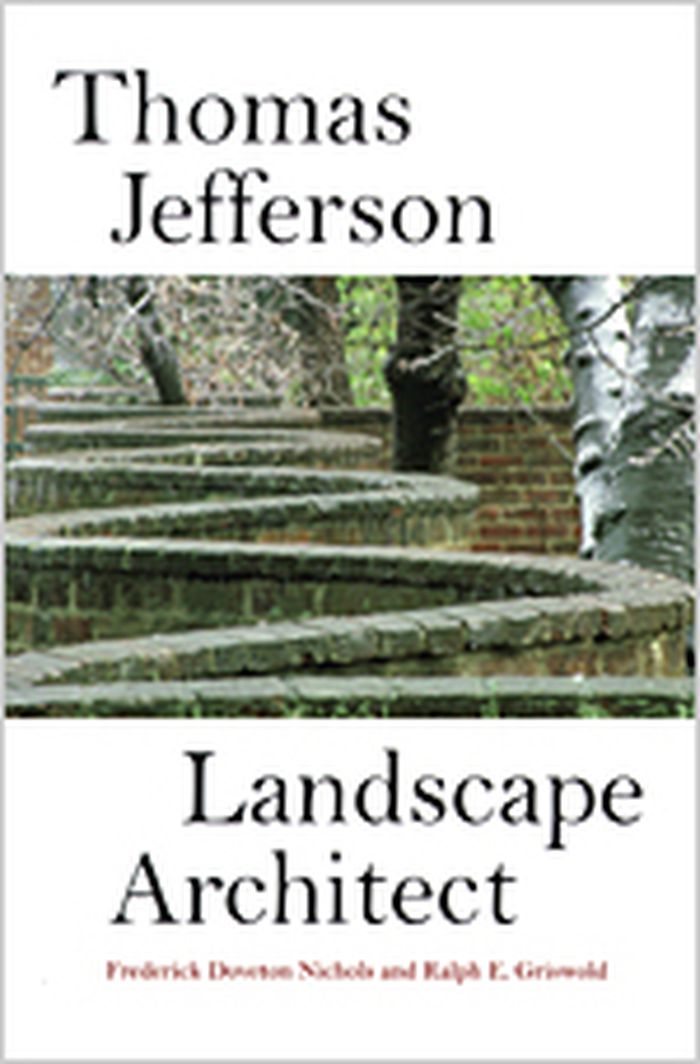
Thomas Jefferson, landscape architect
Actions:
Prix:
$22.50
(disponible sur commande)
Résumé:
Collaboration with the greatest botanists of his time, an instinctive humanitarianism, and a natural ingenuity in landscape design combined to make Thomas Jefferson a pioneer in American landscape architecture. Frederick D. Nichols and Ralph E. Griswold, in this close study of Jefferson’s many notes, letters, and sketches, present a clear and detailed interpretation of his extraordinary accomplishments in the field. "Thomas Jefferson, Landscape Architect" investigates the many influences on — and of — the Jeffersonian legacy in architecture. Jefferson’s personality, friendships, and convictions, complemented by his extensive reading and travels, clearly influenced his architectural work. His fresh approach to incorporating foreign elements into domestic designs, his revolutionary approach to relating the house to the surrounding land, and his profound influences on the architectural character of the District of Columbia are just a few of Jefferson’s contributions to the American landscape. Eighteenth- and nineteenth-century maps, plans, and drawings, as well as pictures of the species of trees that Jefferson used for his designs, generously illustrate the engaging narrative in "Thomas Jefferson, Landscape Architect".
Thomas Jefferson, landscape architect
Actions:
Prix:
$22.50
(disponible sur commande)
Résumé:
Collaboration with the greatest botanists of his time, an instinctive humanitarianism, and a natural ingenuity in landscape design combined to make Thomas Jefferson a pioneer in American landscape architecture. Frederick D. Nichols and Ralph E. Griswold, in this close study of Jefferson’s many notes, letters, and sketches, present a clear and detailed interpretation of his extraordinary accomplishments in the field. "Thomas Jefferson, Landscape Architect" investigates the many influences on — and of — the Jeffersonian legacy in architecture. Jefferson’s personality, friendships, and convictions, complemented by his extensive reading and travels, clearly influenced his architectural work. His fresh approach to incorporating foreign elements into domestic designs, his revolutionary approach to relating the house to the surrounding land, and his profound influences on the architectural character of the District of Columbia are just a few of Jefferson’s contributions to the American landscape. Eighteenth- and nineteenth-century maps, plans, and drawings, as well as pictures of the species of trees that Jefferson used for his designs, generously illustrate the engaging narrative in "Thomas Jefferson, Landscape Architect".
Classification:
livres
livres
Publication:
juin 2003, Charlottesville
juin 2003, Charlottesville


