


1204 Résultats
Classification:
livres
livres
Prix:
$51.00
(disponible sur commande)
Résumé:
In this book, art historian Christine Ross examines contemporary art's response to migration, showing that art invites us to abandon our preconceptions about the current “crisis”—to unlearn them—and to see migration more critically, more disobediently. Viewers in Europe and North America must come to see migration in terms of coexistence: the interdependence of beings.(...)
$51.00
(disponible sur commande)
Résumé:
In this book, art historian Christine Ross examines contemporary art's response to migration, showing that art invites us to abandon our preconceptions about the current “crisis”—to unlearn them—and to see migration more critically, more disobediently. Viewers in Europe and North America must come to see migration in terms of coexistence: the interdependence of beings.(...)
Titre:
Art for coexistence: Unlearning the way we see migration
Actions:
Prix:
$51.00
(disponible sur commande)
Résumé:
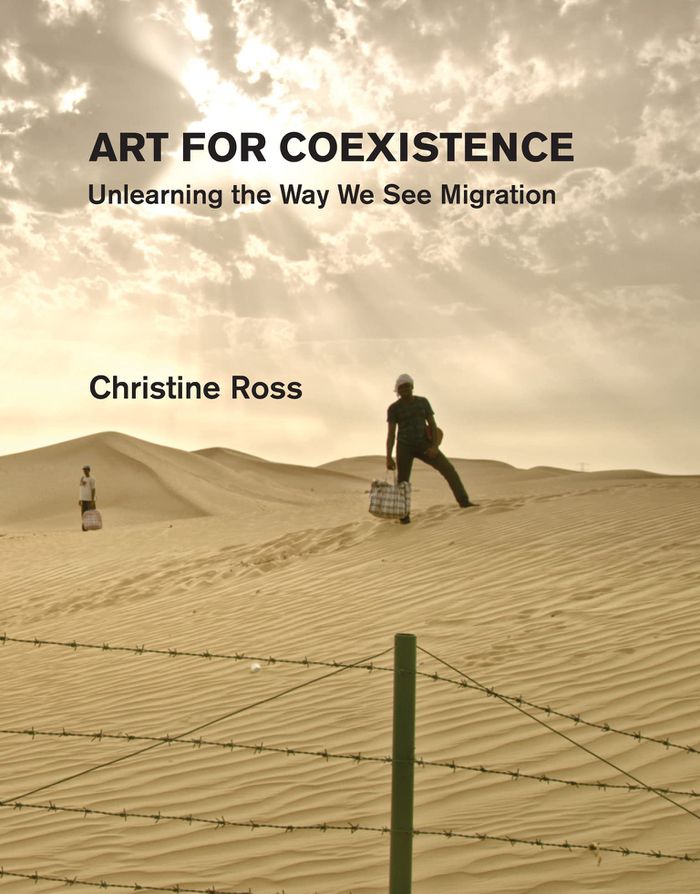
In this book, art historian Christine Ross examines contemporary art's response to migration, showing that art invites us to abandon our preconceptions about the current “crisis”—to unlearn them—and to see migration more critically, more disobediently. Viewers in Europe and North America must come to see migration in terms of coexistence: the interdependence of beings. The artworks explored by Ross reveal, contest, rethink, delink, and relink more reciprocally the interdependencies shaping migration today—connecting citizens-on-the-move from some of the poorest countries and acknowledged citizens of some of the wealthiest countries and democracies worldwide. Ross argues that art invents a set of interconnected calls for more mutual forms of coexistence: to historicize, to become responsible, to empathize, and to story-tell.
Art for coexistence: Unlearning the way we see migration
Actions:
Prix:
$51.00
(disponible sur commande)
Résumé:
In this book, art historian Christine Ross examines contemporary art's response to migration, showing that art invites us to abandon our preconceptions about the current “crisis”—to unlearn them—and to see migration more critically, more disobediently. Viewers in Europe and North America must come to see migration in terms of coexistence: the interdependence of beings. The artworks explored by Ross reveal, contest, rethink, delink, and relink more reciprocally the interdependencies shaping migration today—connecting citizens-on-the-move from some of the poorest countries and acknowledged citizens of some of the wealthiest countries and democracies worldwide. Ross argues that art invents a set of interconnected calls for more mutual forms of coexistence: to historicize, to become responsible, to empathize, and to story-tell.
Classification:
livres
livres
Publication:
novembre 2022
novembre 2022
Sujet:
Théorie de l’art
Théorie de l’art
Classification:
livres
livres
Titre:
The changing constitution of the present: Essays on the work of art in times of contemporaneity
The changing constitution of the present: Essays on the work of art in times of contemporaneity
Actions:
Prix:
$33.95
(disponible sur commande)
Résumé:
Our present is defined by contemporaneity—the interconnection of heterogeneous times, histories, and temporalities. These many and various times do not merely exist in parallel with one another, simultaneously. Rather, they interconnect and are brought to bear on the same present, forming a sort of planetary present, and—at least in principle—a global sharing of time,(...)
$33.95
(disponible sur commande)
Résumé:
Our present is defined by contemporaneity—the interconnection of heterogeneous times, histories, and temporalities. These many and various times do not merely exist in parallel with one another, simultaneously. Rather, they interconnect and are brought to bear on the same present, forming a sort of planetary present, and—at least in principle—a global sharing of time,(...)
Titre:
The changing constitution of the present: Essays on the work of art in times of contemporaneity
Actions:
Prix:
$33.95
(disponible sur commande)
Résumé:
Our present is defined by contemporaneity—the interconnection of heterogeneous times, histories, and temporalities. These many and various times do not merely exist in parallel with one another, simultaneously. Rather, they interconnect and are brought to bear on the same present, forming a sort of planetary present, and—at least in principle—a global sharing of time, although one not shared equally. Jacob Lund explores how the conditions for politically engaged art and aesthetic practice, for questioning the present, have changed in recent decades, while considering how our historical present and its temporal quality differ significantly from previous presents.
The changing constitution of the present: Essays on the work of art in times of contemporaneity
Actions:
Prix:
$33.95
(disponible sur commande)
Résumé:
Our present is defined by contemporaneity—the interconnection of heterogeneous times, histories, and temporalities. These many and various times do not merely exist in parallel with one another, simultaneously. Rather, they interconnect and are brought to bear on the same present, forming a sort of planetary present, and—at least in principle—a global sharing of time, although one not shared equally. Jacob Lund explores how the conditions for politically engaged art and aesthetic practice, for questioning the present, have changed in recent decades, while considering how our historical present and its temporal quality differ significantly from previous presents.
Classification:
livres
livres
Publication:
novembre 2022
novembre 2022
Sujet:
Théorie de l’art
Théorie de l’art
Classification:
livres
livres
Actions:
Prix:
$19.95
(disponible sur commande)
Résumé:
Les Editions du Seuil ont été fondées en 1935 par Henri Sjöberg, un publicitaire en mal d’engagement dans la tourmente des années d’avant-guerre. Son mentor, l’abbé Jean Plaquevent, joua un rôle considérable dans ces débuts. Deux ans plus tard, Jean Bardet et Paul Flamand, deux jeunes bourgeois partageant le même goût pour l’action, prennent les rênes du petit(...)
$19.95
(disponible sur commande)
Résumé:
Les Editions du Seuil ont été fondées en 1935 par Henri Sjöberg, un publicitaire en mal d’engagement dans la tourmente des années d’avant-guerre. Son mentor, l’abbé Jean Plaquevent, joua un rôle considérable dans ces débuts. Deux ans plus tard, Jean Bardet et Paul Flamand, deux jeunes bourgeois partageant le même goût pour l’action, prennent les rênes du petit(...)
Titre:
Aux origines des éditions du Seuil
Actions:
Prix:
$19.95
(disponible sur commande)
Résumé:
Les Editions du Seuil ont été fondées en 1935 par Henri Sjöberg, un publicitaire en mal d’engagement dans la tourmente des années d’avant-guerre. Son mentor, l’abbé Jean Plaquevent, joua un rôle considérable dans ces débuts. Deux ans plus tard, Jean Bardet et Paul Flamand, deux jeunes bourgeois partageant le même goût pour l’action, prennent les rênes du petit attelage. 1935-1940 : voici racontées, pour la première fois, les tribulations de quatre aventuriers de l’esprit qui fondèrent l’une des institutions intellectuelles et littéraires les plus influentes de la France contemporaine.
Aux origines des éditions du Seuil
Actions:
Prix:
$19.95
(disponible sur commande)
Résumé:
Les Editions du Seuil ont été fondées en 1935 par Henri Sjöberg, un publicitaire en mal d’engagement dans la tourmente des années d’avant-guerre. Son mentor, l’abbé Jean Plaquevent, joua un rôle considérable dans ces débuts. Deux ans plus tard, Jean Bardet et Paul Flamand, deux jeunes bourgeois partageant le même goût pour l’action, prennent les rênes du petit attelage. 1935-1940 : voici racontées, pour la première fois, les tribulations de quatre aventuriers de l’esprit qui fondèrent l’une des institutions intellectuelles et littéraires les plus influentes de la France contemporaine.
Classification:
livres
livres
Publication:
octobre 2015
octobre 2015
Sujet:
Théorie de l’art
Théorie de l’art
Classification:
livres
livres
Titre:
Ewa Lajer-Burcharth
Ewa Lajer-Burcharth
Actions:
Prix:
$27.95
(disponible sur commande)
Résumé:
Adapted from the lecture she delivered at the Institut für Kunstkritik, Städelschule in Frankfurt am Main, Ewa Lajer-Burcharth’s essay explores the dimension of self-reflexivity in the work of eighteenth-century French painter, Jean-Siméon Chardin. Focusing on the material aspects of Chardin’s practice, Lajer-Burcharth asks: In what ways were Chardin’s painterly(...)
$27.95
(disponible sur commande)
Résumé:
Adapted from the lecture she delivered at the Institut für Kunstkritik, Städelschule in Frankfurt am Main, Ewa Lajer-Burcharth’s essay explores the dimension of self-reflexivity in the work of eighteenth-century French painter, Jean-Siméon Chardin. Focusing on the material aspects of Chardin’s practice, Lajer-Burcharth asks: In what ways were Chardin’s painterly(...)
Titre:
Ewa Lajer-Burcharth
Actions:
Prix:
$27.95
(disponible sur commande)
Résumé:
Adapted from the lecture she delivered at the Institut für Kunstkritik, Städelschule in Frankfurt am Main, Ewa Lajer-Burcharth’s essay explores the dimension of self-reflexivity in the work of eighteenth-century French painter, Jean-Siméon Chardin. Focusing on the material aspects of Chardin’s practice, Lajer-Burcharth asks: In what ways were Chardin’s painterly procedures “his own,” and what were the implications of his possessive and personalized approach to the process of making? The author delves into these questions by examining a crucial moment in the artist’s career, when he, for reasons we can only speculate about, temporarily abandoned his still life practice and turned to painting genre scenes. The essay is joined by responses from Daniel Birnbaum and Isabelle Graw, followed by the author’s replies.
Ewa Lajer-Burcharth
Actions:
Prix:
$27.95
(disponible sur commande)
Résumé:
Adapted from the lecture she delivered at the Institut für Kunstkritik, Städelschule in Frankfurt am Main, Ewa Lajer-Burcharth’s essay explores the dimension of self-reflexivity in the work of eighteenth-century French painter, Jean-Siméon Chardin. Focusing on the material aspects of Chardin’s practice, Lajer-Burcharth asks: In what ways were Chardin’s painterly procedures “his own,” and what were the implications of his possessive and personalized approach to the process of making? The author delves into these questions by examining a crucial moment in the artist’s career, when he, for reasons we can only speculate about, temporarily abandoned his still life practice and turned to painting genre scenes. The essay is joined by responses from Daniel Birnbaum and Isabelle Graw, followed by the author’s replies.
Classification:
livres
livres
Publication:
octobre 2011
octobre 2011
Sujet:
Théorie de l’art
Théorie de l’art


