


1212 Résultats
Classification:
livres
livres
Prix:
$18.95
(disponible sur commande)
Résumé:
The fictitious hero of this 1984 installation is a lonely dreamer who develops an impossible project: to fly alone in cosmic space. But this dream is also an individual appropriation of a collective Soviet project and the official Soviet propaganda connected to it. Having built a makeshift slingshot, the hero apparently flies through the ceiling of his shabby room and(...)
Titre:
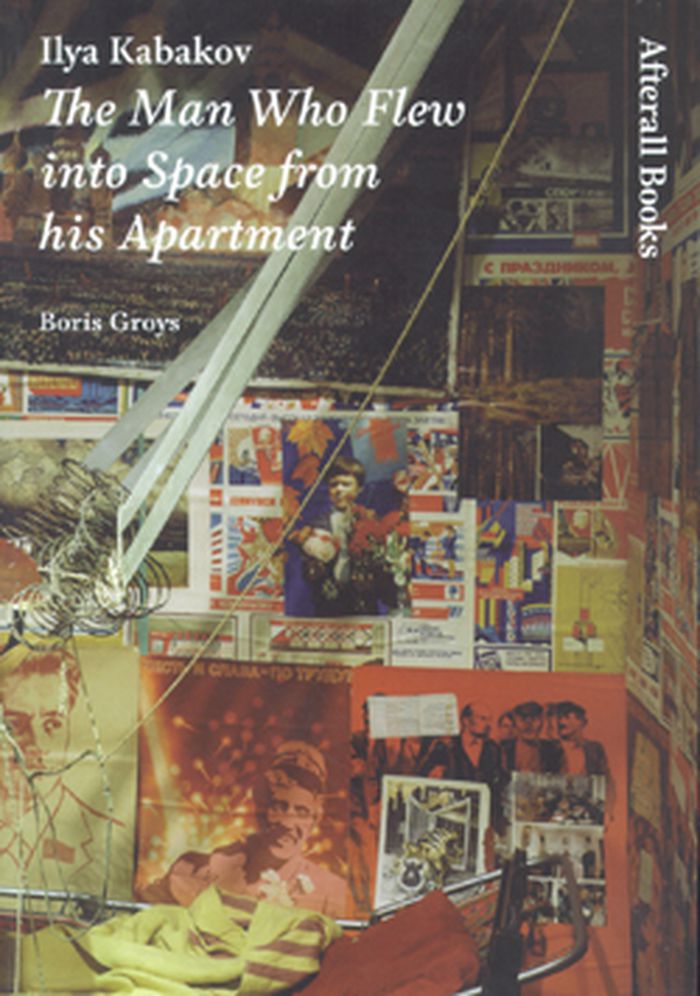
Ilka Kabakov: the man who flew into space from his apartment
Actions:
Prix:
$18.95
(disponible sur commande)
Résumé:
The fictitious hero of this 1984 installation is a lonely dreamer who develops an impossible project: to fly alone in cosmic space. But this dream is also an individual appropriation of a collective Soviet project and the official Soviet propaganda connected to it. Having built a makeshift slingshot, the hero apparently flies through the ceiling of his shabby room and vanishes into space. The miserable room and the primitive slingshot suggest the reality behind the Soviet utopia, in which where cosmic vision and the political project of the Communist revolution are seen as indissoluble. The Man who Flew into Space from His Apartment also raises questions of authorship in modernity. All of Kabakov's work is made in the name of other, fictitious artists. This reveals a hidden rule of the modern art system: only an artist who doesn't want to be an artist or who doesn't even know that he is an artist is a real artist—just as only an artwork that does not look like an artwork is a real artwork. The installation is a narrative, the documentation of a fictitious event. Boris Groys is Professor of Philosophy and Art Theory at the Academy for Design in Karlsruhe, Germany, and Global Professor at New York University.
Classification:
livres
livres
Publication:
mai 2006, London
mai 2006, London
Sujet:
Théorie de l’art
Théorie de l’art
Classification:
livres
livres

Actions:
Prix:
$18.00
(disponible sur commande)
Résumé:
Hanne Darboven's Kulturgeschichte 1880-1983 (Cultural History 1880-1983) (1980-1983) is an overwhelming and encyclopedic installation consisting of 1,590 works on paper and 19 sculptural objects. The work weaves together cultural, social, and historical references with autobiographical documents, postcards, pinups of film and rock stars, documentary references to the(...)
Titre:
Hanne Darboven: cultural history 1880-1983
Actions:
Prix:
$18.00
(disponible sur commande)
Résumé:
Hanne Darboven's Kulturgeschichte 1880-1983 (Cultural History 1880-1983) (1980-1983) is an overwhelming and encyclopedic installation consisting of 1,590 works on paper and 19 sculptural objects. The work weaves together cultural, social, and historical references with autobiographical documents, postcards, pinups of film and rock stars, documentary references to the first and second world wars, geometric diagrams for textile weaving, a sampling of New York doorways, illustrated covers from news magazines, the contents of an exhibition catalogue devoted to postwar European and American art, a kitschy literary calendar, and extracts from some of Darboven's earlier works.
Classification:
livres
livres
Publication:
mars 2009, Cambridge
mars 2009, Cambridge
Sujet:
Théorie de l’art
Théorie de l’art
Classification:
livres
livres

Titre:
Chris Marker : la jetée
Chris Marker : la jetée
Actions:
Prix:
$18.00
(disponible sur commande)
Résumé:
A reconsideration of Chris Markers famous film, examining its treatment of time, its use of sound, the influence of the comic book form, and other topics.
$18.00
(disponible sur commande)
Résumé:
A reconsideration of Chris Markers famous film, examining its treatment of time, its use of sound, the influence of the comic book form, and other topics.
Titre:
Chris Marker : la jetée
Actions:
Prix:
$18.00
(disponible sur commande)
Résumé:
A reconsideration of Chris Markers famous film, examining its treatment of time, its use of sound, the influence of the comic book form, and other topics.
Chris Marker : la jetée
Actions:
Prix:
$18.00
(disponible sur commande)
Résumé:
A reconsideration of Chris Markers famous film, examining its treatment of time, its use of sound, the influence of the comic book form, and other topics.
Classification:
livres
livres
Publication:
mars 2009, Cambridge
mars 2009, Cambridge
Sujet:
Théorie de l’art
Théorie de l’art
Classification:
livres
livres
Actions:
Prix:
$29.95
(disponible sur commande)
Résumé:
What is the role of art in modern society? Is it made to entertain us, to teach us? Both? And what of philosophy? What relevance does it have to how we think and live? In Opening Gambits , cultural critic and philosopher Mark Kingwell puts forth an argument for the similarity between art and philosophy as forms of play, working at the margins of meaning and sense.(...)
Titre:
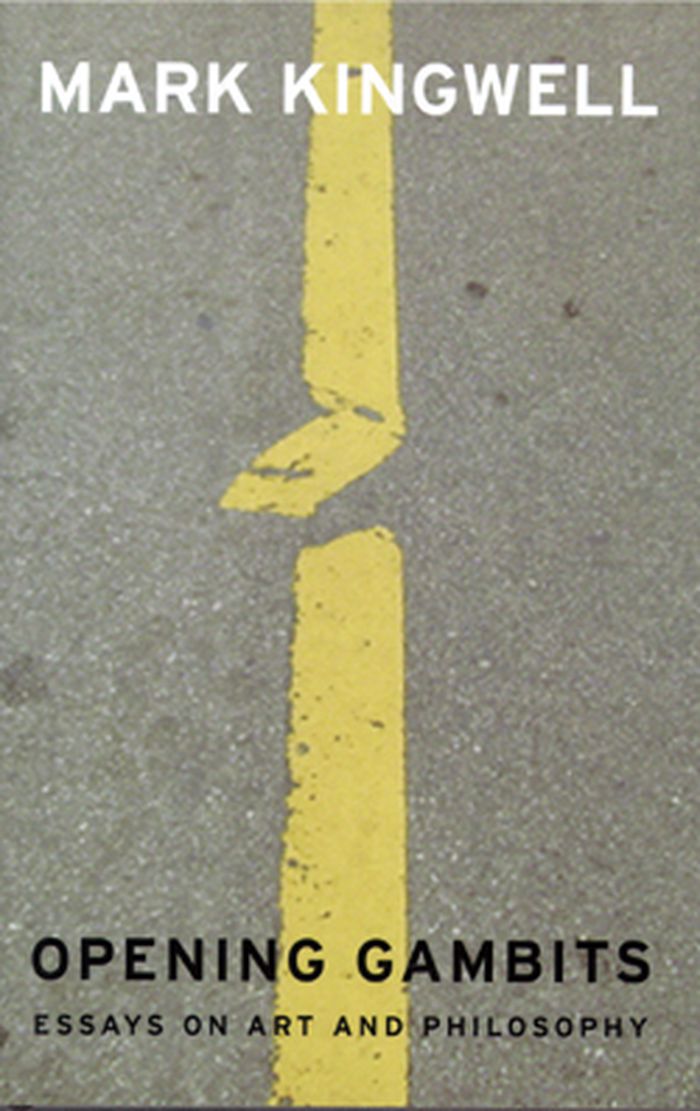
Opening gambits: essays on art and philosophy
Actions:
Prix:
$29.95
(disponible sur commande)
Résumé:
What is the role of art in modern society? Is it made to entertain us, to teach us? Both? And what of philosophy? What relevance does it have to how we think and live? In Opening Gambits , cultural critic and philosopher Mark Kingwell puts forth an argument for the similarity between art and philosophy as forms of play, working at the margins of meaning and sense. Featuring essays previously published in Queen’s Quarterly, Descant, Harvard Design Magazine, Canadian Art , and Harper’s, the book begins with general assessments of the art world and the relationship between art and architecture. Including lively critical engagements with artists such as Edward Burtynsky, David Bierk, James Lahey, and Blue Republic, these pieces draw out the philosophical issues embedded in the aesthetic experience of art. In the second half of the collection, Kingwell reverses the polarity, investigating philosophy as a kind of art form that is constantly questioning its own possibility. The two parts of the book are simultaneously separated and joined by a collection of images that feature the works discussed in Part One.
Classification:
livres
livres
Publication:
octobre 2008, Toronto
octobre 2008, Toronto
Sujet:
Théorie de l’art
Théorie de l’art
Classification:
livres
livres

Actions:
Prix:
$80.00
(disponible sur commande)
Résumé:
Les années 1980 évoquent pour chacun les dernières années d'avant la chute du mur de Berlin, de la mondialisation et de l'explosion du web. Pour les artistes ce sont des années contradictoires, celles de la volonté de changement de la société et de l'espace public, mais aussi celles du repli sur la sphère privative et domestique. Ce livre, qui accompagne l'exposition du(...)
Publication:
janvier 2009, Grenoble
janvier 2009, Grenoble
Titre:
Espèces d'espace: les années 1980 première partie / the eighties first part
Actions:
Prix:
$80.00
(disponible sur commande)
Résumé:
Les années 1980 évoquent pour chacun les dernières années d'avant la chute du mur de Berlin, de la mondialisation et de l'explosion du web. Pour les artistes ce sont des années contradictoires, celles de la volonté de changement de la société et de l'espace public, mais aussi celles du repli sur la sphère privative et domestique. Ce livre, qui accompagne l'exposition du même nom, rassemble les textes et les images d'oeuvres les plus significatifs de cette période. Il sera suivi d'une seconde partie consacrée aux images et aux représentations.
Classification:
livres
livres
Publication:
janvier 2009, Grenoble
janvier 2009, Grenoble
Classification:
livres
livres
Actions:
Prix:
$11.50
(disponible en magasin)
Résumé:
During the glory days of Something Else Press (1964-1974), its founder, the poet, editor and scholar Dick Higgins created the Great Bear imprint to publish pamphlets that were quickly printed and easily disseminated, guaranteeing wide distribution and accessibility. Ranging in length from 16 to 32 pages, saddle-stitched and printed on varying color stock, the Great Bear(...)
Titre:
A great bear pamphlet #20 a zaj sampler
Actions:
Prix:
$11.50
(disponible en magasin)
Résumé:
During the glory days of Something Else Press (1964-1974), its founder, the poet, editor and scholar Dick Higgins created the Great Bear imprint to publish pamphlets that were quickly printed and easily disseminated, guaranteeing wide distribution and accessibility. Ranging in length from 16 to 32 pages, saddle-stitched and printed on varying color stock, the Great Bear pamphlets showcased the work of some of the most innovative writers and artists across the twentieth century: the likes of Jackson Mac Low, Oyvind Fahlstrom, Robert Filliou, Robert Watts, Emmett Williams, Dieter Roth, David Antin and Claes Oldenburg appeared alongside predecessors such as the Italian Futurist composer Luigi Russolo and John Cage's seminal Diary: How to Improve the World (You Will Only Make Matters Worse). All pamphlets have been out of print since their original publications in the 1960s.
Classification:
livres
livres
Publication:
octobre 2008, New York
octobre 2008, New York
Classification:
livres
livres
Actions:
Prix:
$11.50
(disponible en magasin)
Résumé:
During the glory days of Something Else Press (1964-1974), its founder, the poet, editor and scholar Dick Higgins created the Great Bear imprint to publish pamphlets that were quickly printed and easily disseminated, guaranteeing wide distribution and accessibility. Ranging in length from 16 to 32 pages, saddle-stitched and printed on varying color stock, the Great Bear(...)
Publication:
octobre 2008, New York
octobre 2008, New York
Titre:
A great bear pamphlet # 19 the last french-fried potato and other poems
Actions:
Prix:
$11.50
(disponible en magasin)
Résumé:
During the glory days of Something Else Press (1964-1974), its founder, the poet, editor and scholar Dick Higgins created the Great Bear imprint to publish pamphlets that were quickly printed and easily disseminated, guaranteeing wide distribution and accessibility. Ranging in length from 16 to 32 pages, saddle-stitched and printed on varying color stock, the Great Bear pamphlets showcased the work of some of the most innovative writers and artists across the twentieth century: the likes of Jackson Mac Low, Oyvind Fahlstrom, Robert Filliou, Robert Watts, Emmett Williams, Dieter Roth, David Antin and Claes Oldenburg appeared alongside predecessors such as the Italian Futurist composer Luigi Russolo and John Cage's seminal Diary: How to Improve the World (You Will Only Make Matters Worse). All pamphlets have been out of print since their original publications in the 1960s.
Classification:
livres
livres
Publication:
octobre 2008, New York
octobre 2008, New York
Classification:
livres
livres
Actions:
Prix:
$11.50
(disponible sur commande)
Résumé:
During the glory days of Something Else Press (1964-1974), its founder, the poet, editor and scholar Dick Higgins created the Great Bear imprint to publish pamphlets that were quickly printed and easily disseminated, guaranteeing wide distribution and accessibility. Ranging in length from 16 to 32 pages, saddle-stitched and printed on varying color stock, the Great Bear(...)
Publication:
octobre 2008, New York
octobre 2008, New York
Titre:
A great bear pamphlet # 18 the art of noise (futurist manifesto, 1913)
Actions:
Prix:
$11.50
(disponible sur commande)
Résumé:
During the glory days of Something Else Press (1964-1974), its founder, the poet, editor and scholar Dick Higgins created the Great Bear imprint to publish pamphlets that were quickly printed and easily disseminated, guaranteeing wide distribution and accessibility. Ranging in length from 16 to 32 pages, saddle-stitched and printed on varying color stock, the Great Bear pamphlets showcased the work of some of the most innovative writers and artists across the twentieth century: the likes of Jackson Mac Low, Oyvind Fahlstrom, Robert Filliou, Robert Watts, Emmett Williams, Dieter Roth, David Antin and Claes Oldenburg appeared alongside predecessors such as the Italian Futurist composer Luigi Russolo and John Cage's seminal Diary: How to Improve the World (You Will Only Make Matters Worse). All pamphlets have been out of print since their original publications in the 1960s.
Classification:
livres
livres
Publication:
octobre 2008, New York
octobre 2008, New York
Classification:
livres
livres
Prix:
$11.50
(disponible sur commande)
Résumé:
During the glory days of Something Else Press (1964-1974), its founder, the poet, editor and scholar Dick Higgins created the Great Bear imprint to publish pamphlets that were quickly printed and easily disseminated, guaranteeing wide distribution and accessibility. Ranging in length from 16 to 32 pages, saddle-stitched and printed on varying color stock, the Great Bear(...)
Titre:
A great bear pamphlet # 17 a look into the blue tide part 2
Actions:
Prix:
$11.50
(disponible sur commande)
Résumé:
During the glory days of Something Else Press (1964-1974), its founder, the poet, editor and scholar Dick Higgins created the Great Bear imprint to publish pamphlets that were quickly printed and easily disseminated, guaranteeing wide distribution and accessibility. Ranging in length from 16 to 32 pages, saddle-stitched and printed on varying color stock, the Great Bear pamphlets showcased the work of some of the most innovative writers and artists across the twentieth century: the likes of Jackson Mac Low, Oyvind Fahlstrom, Robert Filliou, Robert Watts, Emmett Williams, Dieter Roth, David Antin and Claes Oldenburg appeared alongside predecessors such as the Italian Futurist composer Luigi Russolo and John Cage's seminal Diary: How to Improve the World (You Will Only Make Matters Worse). All pamphlets have been out of print since their original publications in the 1960s.
Classification:
livres
livres
Publication:
octobre 2008, New York
octobre 2008, New York
Classification:
livres
livres
Prix:
$11.50
(disponible sur commande)
Résumé:
During the glory days of Something Else Press (1964-1974), its founder, the poet, editor and scholar Dick Higgins created the Great Bear imprint to publish pamphlets that were quickly printed and easily disseminated, guaranteeing wide distribution and accessibility. Ranging in length from 16 to 32 pages, saddle-stitched and printed on varying color stock, the Great Bear(...)
$11.50
(disponible sur commande)
Résumé:
During the glory days of Something Else Press (1964-1974), its founder, the poet, editor and scholar Dick Higgins created the Great Bear imprint to publish pamphlets that were quickly printed and easily disseminated, guaranteeing wide distribution and accessibility. Ranging in length from 16 to 32 pages, saddle-stitched and printed on varying color stock, the Great Bear(...)
Publication:
octobre 2008, New York
octobre 2008, New York
Titre:
A great bear pamphlet # 16 untitled essay and other works
Actions:
Prix:
$11.50
(disponible sur commande)
Résumé:
During the glory days of Something Else Press (1964-1974), its founder, the poet, editor and scholar Dick Higgins created the Great Bear imprint to publish pamphlets that were quickly printed and easily disseminated, guaranteeing wide distribution and accessibility. Ranging in length from 16 to 32 pages, saddle-stitched and printed on varying color stock, the Great Bear pamphlets showcased the work of some of the most innovative writers and artists across the twentieth century: the likes of Jackson Mac Low, Oyvind Fahlstrom, Robert Filliou, Robert Watts, Emmett Williams, Dieter Roth, David Antin and Claes Oldenburg appeared alongside predecessors such as the Italian Futurist composer Luigi Russolo and John Cage's seminal Diary: How to Improve the World (You Will Only Make Matters Worse). All pamphlets have been out of print since their original publications in the 1960s.
Classification:
livres
livres
Publication:
octobre 2008, New York
octobre 2008, New York


