


166 Résultats
Classification:
livres
livres
Titre:
CCA sur papier, 3e édition
CCA sur papier, 3e édition
Actions:
Prix:
$10.95
(disponible en magasin)
Résumé:
« CCA sur papier » présente l’ensemble des publications imprimées et électroniques du Centre Canadien d’Architecture. À travers divers documents, reproductions d’objets et éléments visuels, CCA sur papier reflète la diversité des sujets et concepts graphiques développés dans les publications du CCA, tout en attestant de leur contribution au discours international en(...)
$10.95
(disponible en magasin)
Résumé:
« CCA sur papier » présente l’ensemble des publications imprimées et électroniques du Centre Canadien d’Architecture. À travers divers documents, reproductions d’objets et éléments visuels, CCA sur papier reflète la diversité des sujets et concepts graphiques développés dans les publications du CCA, tout en attestant de leur contribution au discours international en(...)
Titre:
CCA sur papier, 3e édition
Actions:
Prix:
$10.95
(disponible en magasin)
Résumé:
« CCA sur papier » présente l’ensemble des publications imprimées et électroniques du Centre Canadien d’Architecture. À travers divers documents, reproductions d’objets et éléments visuels, CCA sur papier reflète la diversité des sujets et concepts graphiques développés dans les publications du CCA, tout en attestant de leur contribution au discours international en architecture. Le guide comprend également une conversation entre Phyllis Lambert et Mirko Zardini, au sujet de l’histoire et de la philosophie de l’édition au CCA.
CCA sur papier, 3e édition
Actions:
Prix:
$10.95
(disponible en magasin)
Résumé:
« CCA sur papier » présente l’ensemble des publications imprimées et électroniques du Centre Canadien d’Architecture. À travers divers documents, reproductions d’objets et éléments visuels, CCA sur papier reflète la diversité des sujets et concepts graphiques développés dans les publications du CCA, tout en attestant de leur contribution au discours international en architecture. Le guide comprend également une conversation entre Phyllis Lambert et Mirko Zardini, au sujet de l’histoire et de la philosophie de l’édition au CCA.
Classification:
livres
livres
Publication:
août 2017
août 2017
Sujet:
Publications du CCA
Publications du CCA
Classification:
livres
livres
Titre:
CCA on paper, 4th edition
CCA on paper, 4th edition
Actions:
Prix:
$10.95
(disponible en magasin)
Résumé:
''CCA on Paper'' presents all the print and electronic publications of the Canadian Centre for Architecture. Through illustrations, documents, and visual elements, CCA on Paper reflects the diversity in subject matter and graphic design of CCA publications, while attesting to their contribution to international discourse on architecture. A conversation between Phyllis(...)
$10.95
(disponible en magasin)
Résumé:
''CCA on Paper'' presents all the print and electronic publications of the Canadian Centre for Architecture. Through illustrations, documents, and visual elements, CCA on Paper reflects the diversity in subject matter and graphic design of CCA publications, while attesting to their contribution to international discourse on architecture. A conversation between Phyllis(...)
Titre:
CCA on paper, 4th edition
Actions:
Prix:
$10.95
(disponible en magasin)
Résumé:
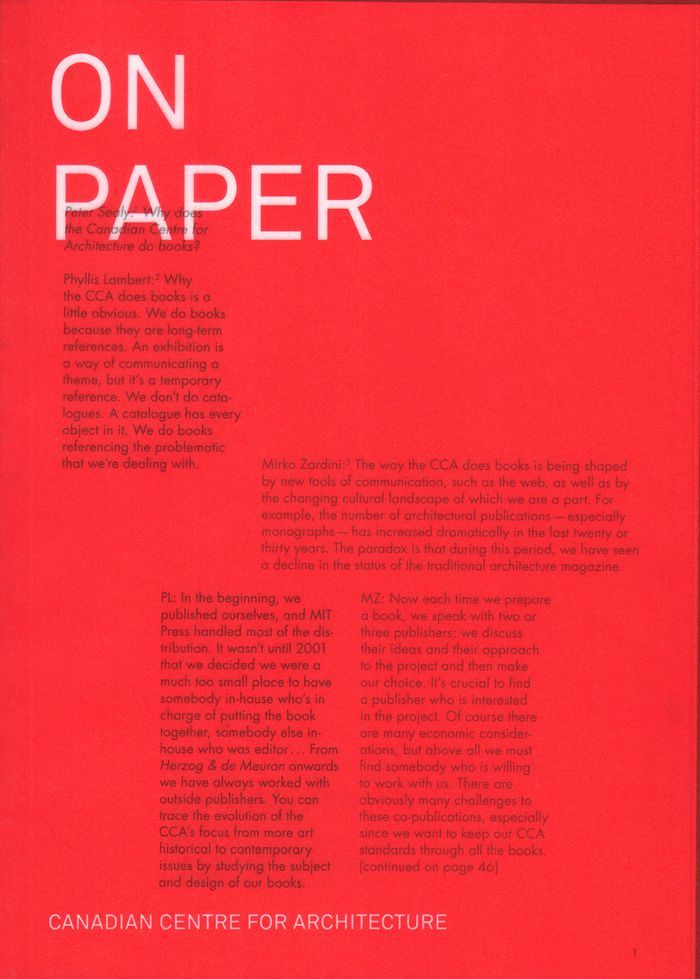
''CCA on Paper'' presents all the print and electronic publications of the Canadian Centre for Architecture. Through illustrations, documents, and visual elements, CCA on Paper reflects the diversity in subject matter and graphic design of CCA publications, while attesting to their contribution to international discourse on architecture. A conversation between Phyllis Lambert and Mirko Zardini on the history and philosophy of publishing at the CCA also runs through the guide.
CCA on paper, 4th edition
Actions:
Prix:
$10.95
(disponible en magasin)
Résumé:
''CCA on Paper'' presents all the print and electronic publications of the Canadian Centre for Architecture. Through illustrations, documents, and visual elements, CCA on Paper reflects the diversity in subject matter and graphic design of CCA publications, while attesting to their contribution to international discourse on architecture. A conversation between Phyllis Lambert and Mirko Zardini on the history and philosophy of publishing at the CCA also runs through the guide.
Classification:
livres
livres
Publication:
août 2017
août 2017
Sujet:
Publications du CCA
Publications du CCA
Classification:
livres
livres
Titre:
The university is now on air, broadcasting modern architecture. Eight episodes by Joaquim Moreno
The university is now on air, broadcasting modern architecture. Eight episodes by Joaquim Moreno
Actions:
Prix:
$45.00
(disponible en magasin)
Résumé:
"The university is now on air, broadcasting modern architecture" examines a key experiment by The Open University to mobilize new media environments for distance and adult education. Eight episodes written by Joaquim Moreno, conversations with Tim Benton, Nick Levinson, Adrian Forty, Joseph Rykwert, and Stephen Bayley, and contributions by Nick Beech, Laura Carter, Ben(...)
$45.00
(disponible en magasin)
Résumé:
"The university is now on air, broadcasting modern architecture" examines a key experiment by The Open University to mobilize new media environments for distance and adult education. Eight episodes written by Joaquim Moreno, conversations with Tim Benton, Nick Levinson, Adrian Forty, Joseph Rykwert, and Stephen Bayley, and contributions by Nick Beech, Laura Carter, Ben(...)
Titre:
The university is now on air, broadcasting modern architecture. Eight episodes by Joaquim Moreno
Actions:
Prix:
$45.00
(disponible en magasin)
Résumé:
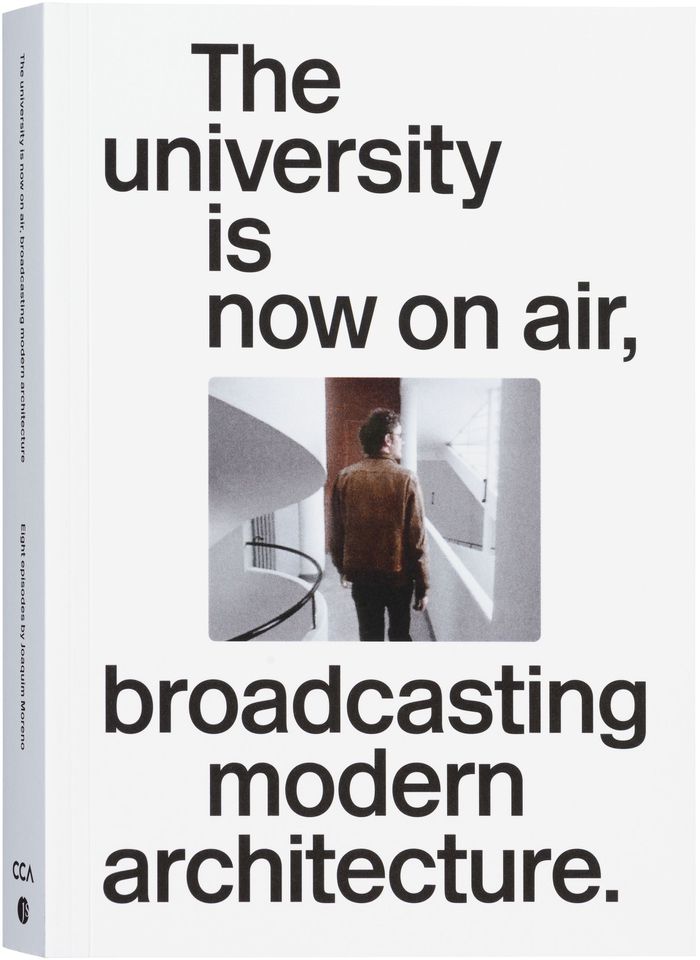
"The university is now on air, broadcasting modern architecture" examines a key experiment by The Open University to mobilize new media environments for distance and adult education. Eight episodes written by Joaquim Moreno, conversations with Tim Benton, Nick Levinson, Adrian Forty, Joseph Rykwert, and Stephen Bayley, and contributions by Nick Beech, Laura Carter, Ben Highmore, and Joseph Bedford, offer a close reading of the course A305, History of Architecture ad Design 1890-1939, which was taught through television and radio broadcasts, aired on the BBC between 1975 and 1982. As current models for producing and transmitting knowledge are being brought into question, "The university is now on air, broadcasting modern architecture" traces a radical attempt at rethinking the mandate of higher education through mass media.
The university is now on air, broadcasting modern architecture. Eight episodes by Joaquim Moreno
Actions:
Prix:
$45.00
(disponible en magasin)
Résumé:
"The university is now on air, broadcasting modern architecture" examines a key experiment by The Open University to mobilize new media environments for distance and adult education. Eight episodes written by Joaquim Moreno, conversations with Tim Benton, Nick Levinson, Adrian Forty, Joseph Rykwert, and Stephen Bayley, and contributions by Nick Beech, Laura Carter, Ben Highmore, and Joseph Bedford, offer a close reading of the course A305, History of Architecture ad Design 1890-1939, which was taught through television and radio broadcasts, aired on the BBC between 1975 and 1982. As current models for producing and transmitting knowledge are being brought into question, "The university is now on air, broadcasting modern architecture" traces a radical attempt at rethinking the mandate of higher education through mass media.
Classification:
livres
livres
Publication:
mai 2018
mai 2018
Sujet:
Publications du CCA
Publications du CCA
Classification:
livres
livres
Titre:
Revues d'architecture dans les années 1960 et 1970/ Architectural periodicals in the 1960s and 1970s
Revues d'architecture dans les années 1960 et 1970/ Architectural periodicals in the 1960s and 1970s
Actions:
Prix:
$25.95
(disponible en magasin)
Résumé:
The 1960s and 1970s were the heroic age of the architectural "little magazine". During this period even commercial periodicals were willing to include theoretical discourse as they catered to a profession confronted by radical social change. These essays by nine international architectural scholars are from the Proceedings of the International Colloquium held in 2004 at(...)
$25.95
(disponible en magasin)
Résumé:
The 1960s and 1970s were the heroic age of the architectural "little magazine". During this period even commercial periodicals were willing to include theoretical discourse as they catered to a profession confronted by radical social change. These essays by nine international architectural scholars are from the Proceedings of the International Colloquium held in 2004 at(...)
Publication:
septembre 2008, Montreal
septembre 2008, Montreal
Titre:
Revues d'architecture dans les années 1960 et 1970/ Architectural periodicals in the 1960s and 1970s
Actions:
Prix:
$25.95
(disponible en magasin)
Résumé:
The 1960s and 1970s were the heroic age of the architectural "little magazine". During this period even commercial periodicals were willing to include theoretical discourse as they catered to a profession confronted by radical social change. These essays by nine international architectural scholars are from the Proceedings of the International Colloquium held in 2004 at the Canadian Centre for Architecture. They enrich our understanding of a format which monopolized the space for professional debate about what mattered most in architecture at the time. These contributions give architectural periodicals a central place in the historical debates on the period with particular emphasis on material production, intellectual contribution, and critical reception. Six essays in English and three essays in French with a bilingual introduction. Neuf historiens en architecture examinent l’architecture radicale dans la presse parallèle des années 1960 et 1970. Ces périodiques novateurs ont été marqués par les idées expérimentales et les designs avant-gardistes qui ont grandement influencées le discours architectural de la période. Actes du colloque tenu en 2004 au Centre Canadien d'Architecture. Six textes en anglais, trois textes en français avec une introduction bilingue.
Revues d'architecture dans les années 1960 et 1970/ Architectural periodicals in the 1960s and 1970s
Actions:
Prix:
$25.95
(disponible en magasin)
Résumé:
The 1960s and 1970s were the heroic age of the architectural "little magazine". During this period even commercial periodicals were willing to include theoretical discourse as they catered to a profession confronted by radical social change. These essays by nine international architectural scholars are from the Proceedings of the International Colloquium held in 2004 at the Canadian Centre for Architecture. They enrich our understanding of a format which monopolized the space for professional debate about what mattered most in architecture at the time. These contributions give architectural periodicals a central place in the historical debates on the period with particular emphasis on material production, intellectual contribution, and critical reception. Six essays in English and three essays in French with a bilingual introduction. Neuf historiens en architecture examinent l’architecture radicale dans la presse parallèle des années 1960 et 1970. Ces périodiques novateurs ont été marqués par les idées expérimentales et les designs avant-gardistes qui ont grandement influencées le discours architectural de la période. Actes du colloque tenu en 2004 au Centre Canadien d'Architecture. Six textes en anglais, trois textes en français avec une introduction bilingue.
Classification:
livres
livres
Publication:
septembre 2008, Montreal
septembre 2008, Montreal
Classification:
livres
livres
Actions:
Prix:
$45.00
(disponible en magasin)
Résumé:
Iñaki Ábalos and Juan Herreros established the renowned architectural firm Ábalos & Herreros in Madrid in 1984. At the time, following the end of the Franco regime, architects were valued more for their technical ability than for their contributions to theoretical research. In this context, Ábalos and Herreros’s melding of design with a range of publications and(...)
$45.00
(disponible en magasin)
Résumé:
Iñaki Ábalos and Juan Herreros established the renowned architectural firm Ábalos & Herreros in Madrid in 1984. At the time, following the end of the Franco regime, architects were valued more for their technical ability than for their contributions to theoretical research. In this context, Ábalos and Herreros’s melding of design with a range of publications and(...)
Titre:
AP164: Ábalos & Herreros. Selected by OFFICE, Juan José Castellon and SO-IL
Actions:
Prix:
$45.00
(disponible en magasin)
Résumé:
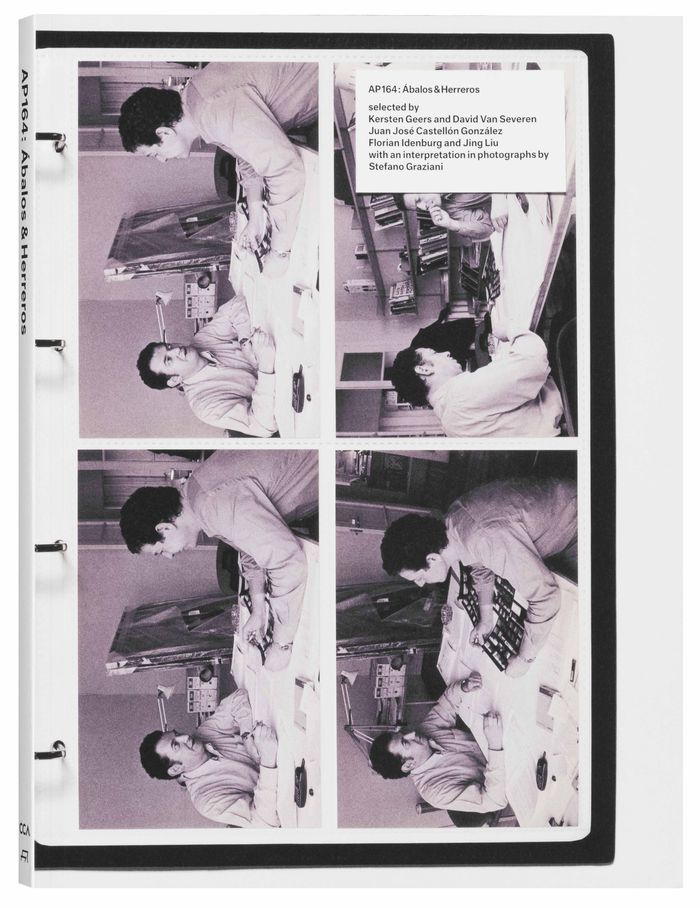
Iñaki Ábalos and Juan Herreros established the renowned architectural firm Ábalos & Herreros in Madrid in 1984. At the time, following the end of the Franco regime, architects were valued more for their technical ability than for their contributions to theoretical research. In this context, Ábalos and Herreros’s melding of design with a range of publications and curatorial projects presented a remarkable challenge to assumptions about the role of an architect. In 2012, the Canadian Centre for Architecture obtained the Ábalos & Herreros archive, which contains documents related to more than 160 projects. The material comprises sketches, slides, models, collages, and drawings. The archive presents a compelling opportunity to reconstruct Ábalos and Herreros’s planning and design process. Each of the book’s three contributors—two of whom worked with Ábalos and Herreros—approaches the archive with specific questions, and their essays explore topics including the architects’ fascination with industrial architecture, their capacity to construct a hybrid materiality without recourse to building technology as language, and their innovative visions for landscape architecture.
AP164: Ábalos & Herreros. Selected by OFFICE, Juan José Castellon and SO-IL
Actions:
Prix:
$45.00
(disponible en magasin)
Résumé:
Iñaki Ábalos and Juan Herreros established the renowned architectural firm Ábalos & Herreros in Madrid in 1984. At the time, following the end of the Franco regime, architects were valued more for their technical ability than for their contributions to theoretical research. In this context, Ábalos and Herreros’s melding of design with a range of publications and curatorial projects presented a remarkable challenge to assumptions about the role of an architect. In 2012, the Canadian Centre for Architecture obtained the Ábalos & Herreros archive, which contains documents related to more than 160 projects. The material comprises sketches, slides, models, collages, and drawings. The archive presents a compelling opportunity to reconstruct Ábalos and Herreros’s planning and design process. Each of the book’s three contributors—two of whom worked with Ábalos and Herreros—approaches the archive with specific questions, and their essays explore topics including the architects’ fascination with industrial architecture, their capacity to construct a hybrid materiality without recourse to building technology as language, and their innovative visions for landscape architecture.
Classification:
livres
livres
Publication:
mai 2016
mai 2016
Sujet:
Publications du CCA
Publications du CCA
Classification:
livres
livres
Titre:
The evidence room
The evidence room
Actions:
Prix:
$40.95
(disponible en magasin)
Résumé:
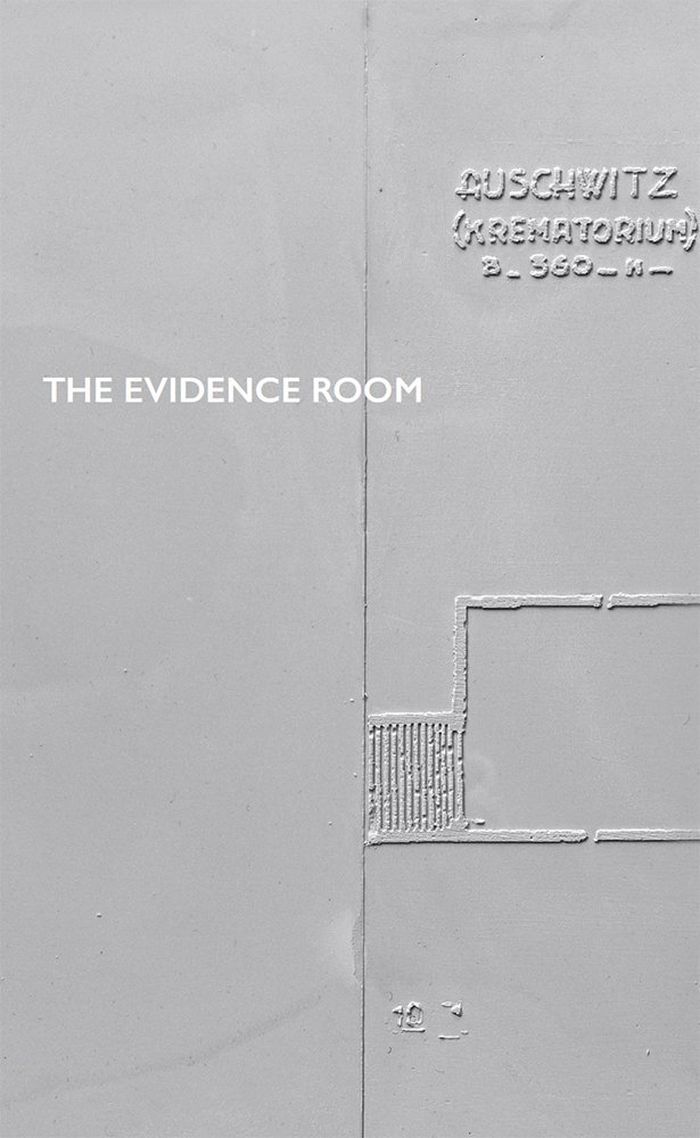
Internationally renowned and award-winning historian Dr. Robert Jan van Pelt's 'The Evidence Room' is a chilling exploration of the role architecture played in constructing Auschwitz-arguably the Nazis' most horrifying facility. 'The Evidence Room' is both a companion piece to, and an elaboration of, the upcoming exhibit at the 2016 Venice Architecture Biennale and at the(...)
$40.95
(disponible en magasin)
Résumé:
Internationally renowned and award-winning historian Dr. Robert Jan van Pelt's 'The Evidence Room' is a chilling exploration of the role architecture played in constructing Auschwitz-arguably the Nazis' most horrifying facility. 'The Evidence Room' is both a companion piece to, and an elaboration of, the upcoming exhibit at the 2016 Venice Architecture Biennale and at the(...)
Publication:
juin 2016
juin 2016
Titre:
The evidence room
Actions:
Prix:
$40.95
(disponible en magasin)
Résumé:
Internationally renowned and award-winning historian Dr. Robert Jan van Pelt's 'The Evidence Room' is a chilling exploration of the role architecture played in constructing Auschwitz-arguably the Nazis' most horrifying facility. 'The Evidence Room' is both a companion piece to, and an elaboration of, the upcoming exhibit at the 2016 Venice Architecture Biennale and at the Canadian Center for Architecture, based on van Pelt's authoritative testimony against Holocaust denial in a 2000 libel suit argued before the Royal Courts of Justice in London.
The evidence room
Actions:
Prix:
$40.95
(disponible en magasin)
Résumé:
Internationally renowned and award-winning historian Dr. Robert Jan van Pelt's 'The Evidence Room' is a chilling exploration of the role architecture played in constructing Auschwitz-arguably the Nazis' most horrifying facility. 'The Evidence Room' is both a companion piece to, and an elaboration of, the upcoming exhibit at the 2016 Venice Architecture Biennale and at the Canadian Center for Architecture, based on van Pelt's authoritative testimony against Holocaust denial in a 2000 libel suit argued before the Royal Courts of Justice in London.
Classification:
livres
livres
Publication:
juin 2016
juin 2016
Classification:
livres
livres
Actions:
Prix:
$45.00
(disponible en magasin)
Résumé:
Iñaki Ábalos and Juan Herreros established the renowned architectural firm Ábalos & Herreros in Madrid in 1984. At the time, following the end of the Franco regime, architects were valued more for their technical ability than for their contributions to theoretical research. In this context, Ábalos and Herreros’s melding of design with a range of publications and(...)
$45.00
(disponible en magasin)
Résumé:
Iñaki Ábalos and Juan Herreros established the renowned architectural firm Ábalos & Herreros in Madrid in 1984. At the time, following the end of the Franco regime, architects were valued more for their technical ability than for their contributions to theoretical research. In this context, Ábalos and Herreros’s melding of design with a range of publications and(...)
Titre:
AP164: Ábalos & Herreros (spanish version)
Actions:
Prix:
$45.00
(disponible en magasin)
Résumé:
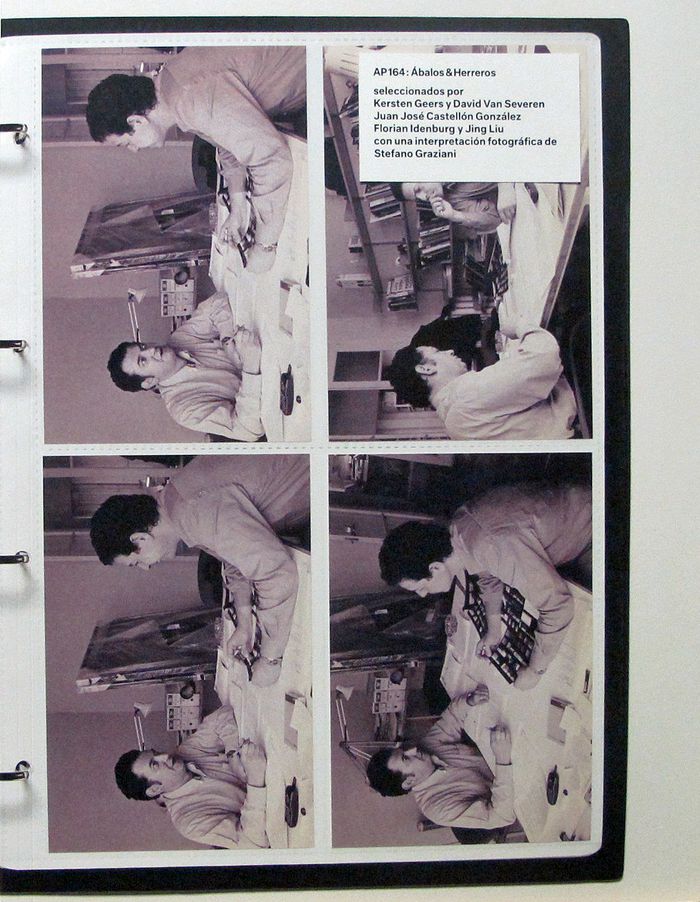
Iñaki Ábalos and Juan Herreros established the renowned architectural firm Ábalos & Herreros in Madrid in 1984. At the time, following the end of the Franco regime, architects were valued more for their technical ability than for their contributions to theoretical research. In this context, Ábalos and Herreros’s melding of design with a range of publications and curatorial projects presented a remarkable challenge to assumptions about the role of an architect. In 2012, the Canadian Centre for Architecture obtained the Ábalos & Herreros archive, which contains documents related to more than 160 projects. The material comprises sketches, slides, models, collages, and drawings. The archive presents a compelling opportunity to reconstruct Ábalos and Herreros’s planning and design process. Each of the book’s three contributors—two of whom worked with Ábalos and Herreros—approaches the archive with specific questions, and their essays explore topics including the architects’ fascination with industrial architecture, their capacity to construct a hybrid materiality without recourse to building technology as language, and their innovative visions for landscape architecture. Texto en español / text in spanish
AP164: Ábalos & Herreros (spanish version)
Actions:
Prix:
$45.00
(disponible en magasin)
Résumé:
Iñaki Ábalos and Juan Herreros established the renowned architectural firm Ábalos & Herreros in Madrid in 1984. At the time, following the end of the Franco regime, architects were valued more for their technical ability than for their contributions to theoretical research. In this context, Ábalos and Herreros’s melding of design with a range of publications and curatorial projects presented a remarkable challenge to assumptions about the role of an architect. In 2012, the Canadian Centre for Architecture obtained the Ábalos & Herreros archive, which contains documents related to more than 160 projects. The material comprises sketches, slides, models, collages, and drawings. The archive presents a compelling opportunity to reconstruct Ábalos and Herreros’s planning and design process. Each of the book’s three contributors—two of whom worked with Ábalos and Herreros—approaches the archive with specific questions, and their essays explore topics including the architects’ fascination with industrial architecture, their capacity to construct a hybrid materiality without recourse to building technology as language, and their innovative visions for landscape architecture. Texto en español / text in spanish
Classification:
livres
livres
Publication:
mai 2016
mai 2016
Sujet:
Publications du CCA
Publications du CCA
Classification:
livres
livres
Actions:
Prix:
$45.00
(disponible sur commande)
Résumé:
In an age of unprecedented human impact on the planet, certain countries stand out for their privileged positions and the complexity of their relationships with nature. Today, Canada's environmental record is among the poorest when compared to other wealthy nations, a fact that suggests ambivalence, and the actions of competing interests, which are most often exposed in(...)
$45.00
(disponible sur commande)
Résumé:
In an age of unprecedented human impact on the planet, certain countries stand out for their privileged positions and the complexity of their relationships with nature. Today, Canada's environmental record is among the poorest when compared to other wealthy nations, a fact that suggests ambivalence, and the actions of competing interests, which are most often exposed in(...)
Titre:
It's all happening so fast: a counter-history of the modern Canadian environment
Actions:
Prix:
$45.00
(disponible sur commande)
Résumé:
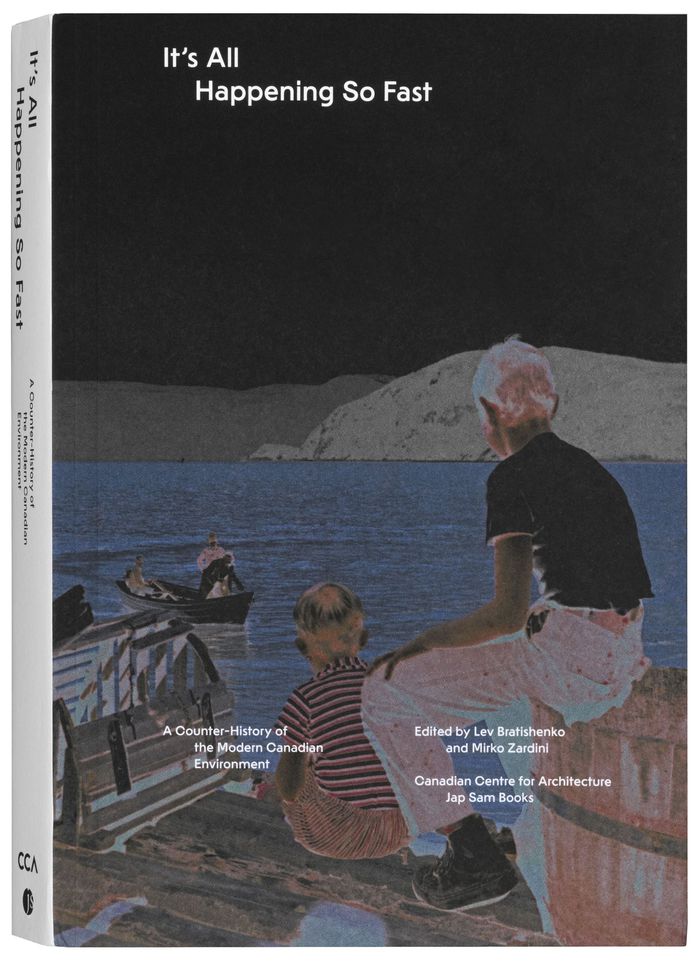
In an age of unprecedented human impact on the planet, certain countries stand out for their privileged positions and the complexity of their relationships with nature. Today, Canada's environmental record is among the poorest when compared to other wealthy nations, a fact that suggests ambivalence, and the actions of competing interests, which are most often exposed in moments of disorder and disregard for the unexpected consequences of managing the country's seemingly endless bounty. The 15 case studies presented here reframe Canada since 1945, and these surprising events are grounded in conversations about cultural myths and the legal environment, changing ideas of natural resources and environmental risk, indigenous engagement with environmentalism and development, and the impacts of the environmentalist movement.
It's all happening so fast: a counter-history of the modern Canadian environment
Actions:
Prix:
$45.00
(disponible sur commande)
Résumé:
In an age of unprecedented human impact on the planet, certain countries stand out for their privileged positions and the complexity of their relationships with nature. Today, Canada's environmental record is among the poorest when compared to other wealthy nations, a fact that suggests ambivalence, and the actions of competing interests, which are most often exposed in moments of disorder and disregard for the unexpected consequences of managing the country's seemingly endless bounty. The 15 case studies presented here reframe Canada since 1945, and these surprising events are grounded in conversations about cultural myths and the legal environment, changing ideas of natural resources and environmental risk, indigenous engagement with environmentalism and development, and the impacts of the environmentalist movement.
Classification:
livres
livres
Publication:
novembre 2016
novembre 2016
Sujet:
Publications du CCA
Publications du CCA
Classification:
livres
livres
Actions:
Prix:
$45.00
(disponible en magasin)
Résumé:
Il s'agit ici d'une contre-histoire distillant quelques faits déroutants et autres contradictions qui se dissimulent derrière le concept dominant de progrès; une notion qui a subjugué notre imagination et a défini notre relation à l'environnement. Dans une époque caractérisée par l'ampleur sans précédent de l'impact de l'activité humaine sur la planète, nous devons(...)
$45.00
(disponible en magasin)
Résumé:
Il s'agit ici d'une contre-histoire distillant quelques faits déroutants et autres contradictions qui se dissimulent derrière le concept dominant de progrès; une notion qui a subjugué notre imagination et a défini notre relation à l'environnement. Dans une époque caractérisée par l'ampleur sans précédent de l'impact de l'activité humaine sur la planète, nous devons(...)
Titre:
Le temps presse : une contre-histoire environnementale du Canada moderne
Actions:
Prix:
$45.00
(disponible en magasin)
Résumé:
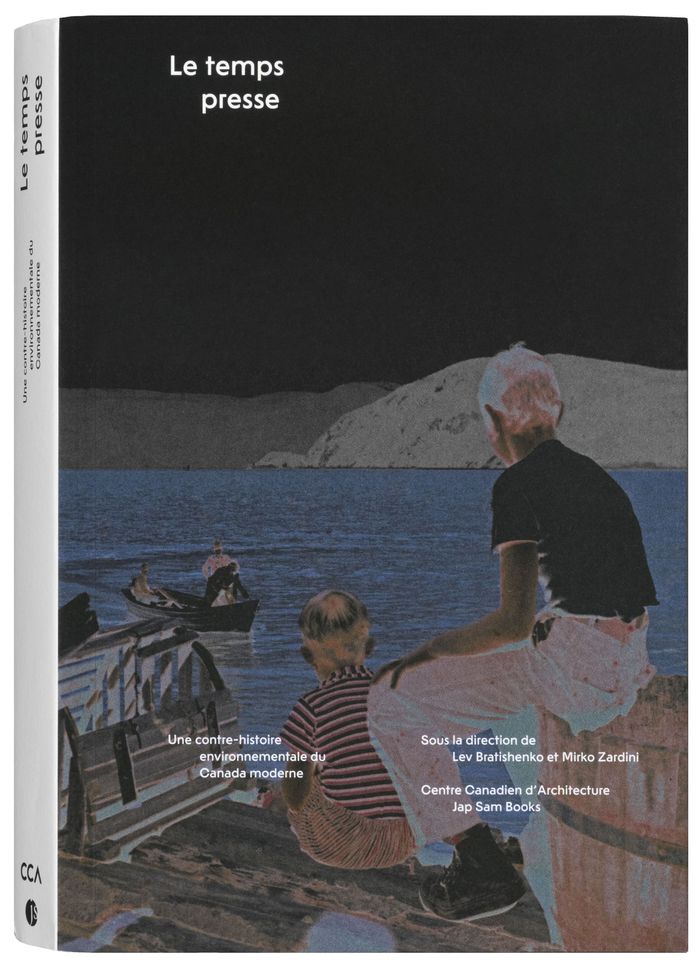
Il s'agit ici d'une contre-histoire distillant quelques faits déroutants et autres contradictions qui se dissimulent derrière le concept dominant de progrès; une notion qui a subjugué notre imagination et a défini notre relation à l'environnement. Dans une époque caractérisée par l'ampleur sans précédent de l'impact de l'activité humaine sur la planète, nous devons réexaminer les hypothèses fondamentales et les préjugés qui président à nos actions et les justifient. Il faut inventer de nouveaux récits, et le cas du Canada n'est qu'un exemple parmi d'autres des contradictions frappantes entre une vision idéalisée de la nature et une réalité qui s'avère complexe et troublante. Le livre qui accompagne l’exposition (à l’affiche de novembre 2016 jusqu’à avril 2017) présente quinze études de cas, replacés dans leur contexte grâce à cinq entrevues.
Le temps presse : une contre-histoire environnementale du Canada moderne
Actions:
Prix:
$45.00
(disponible en magasin)
Résumé:
Il s'agit ici d'une contre-histoire distillant quelques faits déroutants et autres contradictions qui se dissimulent derrière le concept dominant de progrès; une notion qui a subjugué notre imagination et a défini notre relation à l'environnement. Dans une époque caractérisée par l'ampleur sans précédent de l'impact de l'activité humaine sur la planète, nous devons réexaminer les hypothèses fondamentales et les préjugés qui président à nos actions et les justifient. Il faut inventer de nouveaux récits, et le cas du Canada n'est qu'un exemple parmi d'autres des contradictions frappantes entre une vision idéalisée de la nature et une réalité qui s'avère complexe et troublante. Le livre qui accompagne l’exposition (à l’affiche de novembre 2016 jusqu’à avril 2017) présente quinze études de cas, replacés dans leur contexte grâce à cinq entrevues.
Classification:
livres
livres
Publication:
décembre 2016
décembre 2016
Sujet:
Publications du CCA
Publications du CCA
Classification:
livres
livres
Titre:
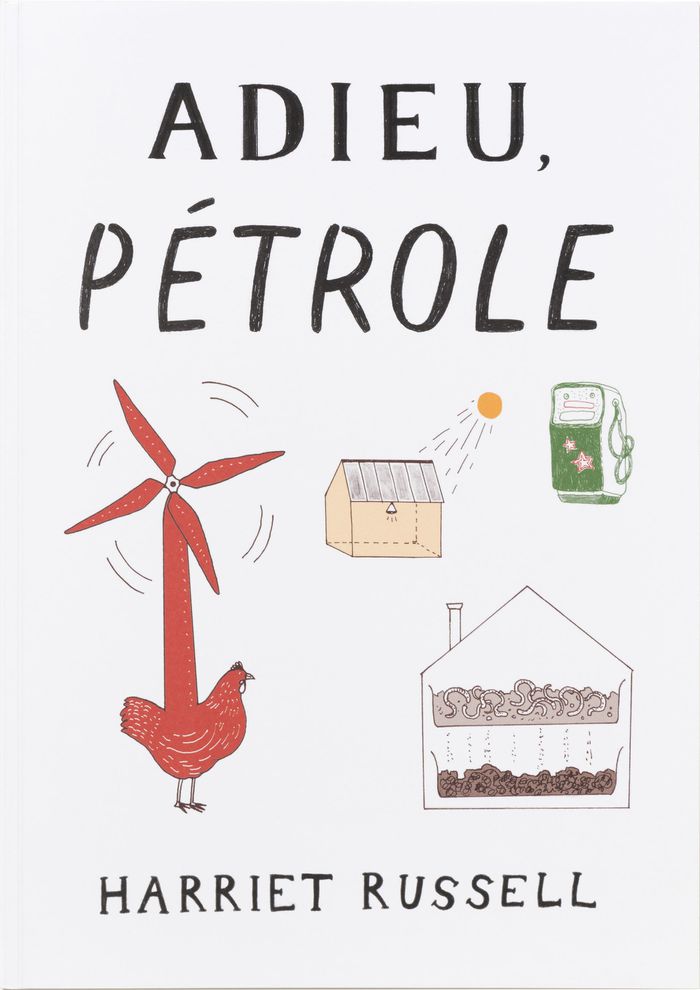
Adieu, pétrole
Adieu, pétrole
Actions:
Prix:
$19.00
(disponible en magasin)
Résumé:
L’album illustré « Adieu, pétrole » explore comment le pétrole est produit et comment nous pouvons diminuer notre dépendance à celui-ci. Le récit de Harriet Russell offre des solutions possibles pour alimenter nos véhicules, chauffer nos maisons et fabriquer les biens que nous consommons. Le livre adopte une perspective non conventionnelle sur l’énergie et sur les(...)
$19.00
(disponible en magasin)
Résumé:
L’album illustré « Adieu, pétrole » explore comment le pétrole est produit et comment nous pouvons diminuer notre dépendance à celui-ci. Le récit de Harriet Russell offre des solutions possibles pour alimenter nos véhicules, chauffer nos maisons et fabriquer les biens que nous consommons. Le livre adopte une perspective non conventionnelle sur l’énergie et sur les(...)
Titre:
Adieu, pétrole
Actions:
Prix:
$19.00
(disponible en magasin)
Résumé:
L’album illustré « Adieu, pétrole » explore comment le pétrole est produit et comment nous pouvons diminuer notre dépendance à celui-ci. Le récit de Harriet Russell offre des solutions possibles pour alimenter nos véhicules, chauffer nos maisons et fabriquer les biens que nous consommons. Le livre adopte une perspective non conventionnelle sur l’énergie et sur les problèmes qui surviendront lorsque nous aurons épuisé nos réserves de pétrole, invitant les lecteurs de tous âges à imaginer leur vie quotidienne de façon différente. « Adieu, pétrole » est une édition augmentée du récit « Une espèce en danger », initialement paru en introduction à « Désolé, plus d’essence : l’innovation architecturale en réponse à la crise pétrolière de 1973 » (2007).
Adieu, pétrole
Actions:
Prix:
$19.00
(disponible en magasin)
Résumé:
L’album illustré « Adieu, pétrole » explore comment le pétrole est produit et comment nous pouvons diminuer notre dépendance à celui-ci. Le récit de Harriet Russell offre des solutions possibles pour alimenter nos véhicules, chauffer nos maisons et fabriquer les biens que nous consommons. Le livre adopte une perspective non conventionnelle sur l’énergie et sur les problèmes qui surviendront lorsque nous aurons épuisé nos réserves de pétrole, invitant les lecteurs de tous âges à imaginer leur vie quotidienne de façon différente. « Adieu, pétrole » est une édition augmentée du récit « Une espèce en danger », initialement paru en introduction à « Désolé, plus d’essence : l’innovation architecturale en réponse à la crise pétrolière de 1973 » (2007).
Classification:
livres
livres
Publication:
avril 2018
avril 2018
Sujet:
Publications du CCA
Publications du CCA


