


166 Résultats
Classification:
livres
livres
Prix:
$52.50
(disponible sur commande)
Résumé:
This book pursues the legendary but elusive 1974 exhibition, Anarchitecture. Conceived of as an anonymous, photographic statement about the intersection of art and building by the research collective Anarchitecture Group, the exhibition is a constant reference point in discussion, regardless of the almost complete lack of evidence about it. Contrasting the(...)
$52.50
(disponible sur commande)
Résumé:
This book pursues the legendary but elusive 1974 exhibition, Anarchitecture. Conceived of as an anonymous, photographic statement about the intersection of art and building by the research collective Anarchitecture Group, the exhibition is a constant reference point in discussion, regardless of the almost complete lack of evidence about it. Contrasting the(...)
Titre:
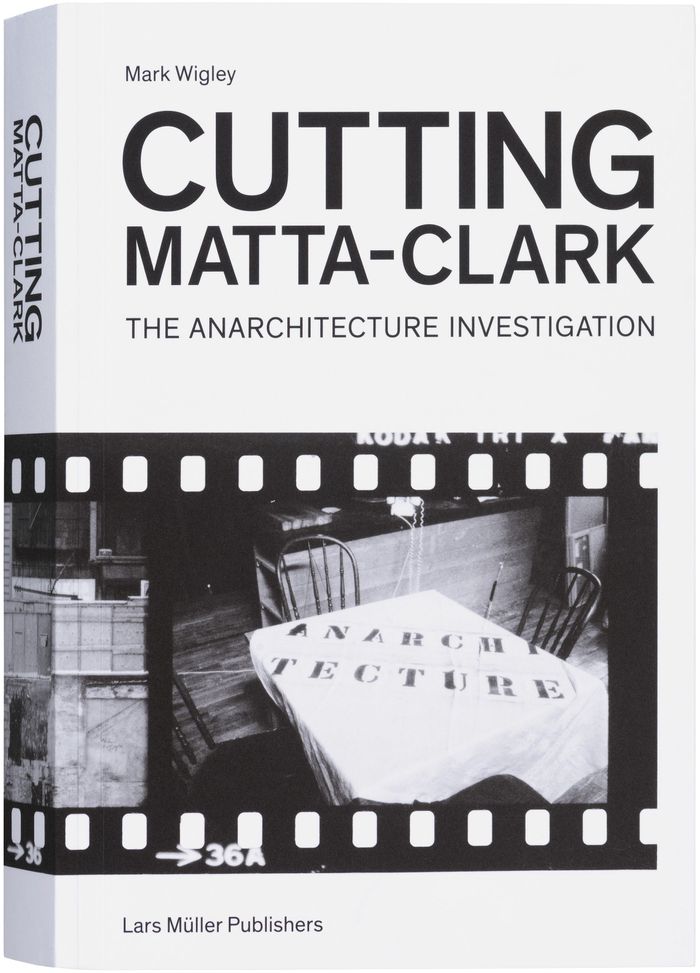
Cutting Matta-Clark: the anarchitecture investigation
Actions:
Prix:
$52.50
(disponible sur commande)
Résumé:
This book pursues the legendary but elusive 1974 exhibition, Anarchitecture. Conceived of as an anonymous, photographic statement about the intersection of art and building by the research collective Anarchitecture Group, the exhibition is a constant reference point in discussion, regardless of the almost complete lack of evidence about it. Contrasting the hyper-visibility of Anarchitecture Group’s leader, Gordon Matta-Clark, and his canonical work, SPLITTING, with the near invisibility of Anarchitecture, this book takes various Matta-Clark archives, including the CCA’s holdings, as its point of departure and follows the traces of the exhibition. Formulated as a detective story, Cutting Matta-Clark: The Anarchitecture Investigation assembles a comprehensive dossier of previously unpublished evidence including photographs, loose-leaf documents, and notecards, as well as interviews with protagonists of the Anarchitecture Group.
Cutting Matta-Clark: the anarchitecture investigation
Actions:
Prix:
$52.50
(disponible sur commande)
Résumé:
This book pursues the legendary but elusive 1974 exhibition, Anarchitecture. Conceived of as an anonymous, photographic statement about the intersection of art and building by the research collective Anarchitecture Group, the exhibition is a constant reference point in discussion, regardless of the almost complete lack of evidence about it. Contrasting the hyper-visibility of Anarchitecture Group’s leader, Gordon Matta-Clark, and his canonical work, SPLITTING, with the near invisibility of Anarchitecture, this book takes various Matta-Clark archives, including the CCA’s holdings, as its point of departure and follows the traces of the exhibition. Formulated as a detective story, Cutting Matta-Clark: The Anarchitecture Investigation assembles a comprehensive dossier of previously unpublished evidence including photographs, loose-leaf documents, and notecards, as well as interviews with protagonists of the Anarchitecture Group.
Classification:
livres
livres
Publication:
juin 2018
juin 2018
Sujet:
Publications du CCA
Publications du CCA
Classification:
livres
livres

Prix:
$65.00
(disponible en magasin)
Résumé:
Born out of the Portuguese revolution of 1974, the Serviço Ambulatório de Apoio Local (SAAL) was one of the most compelling processes in 20th-century architecture. A pioneering experiment in Europe, it set up technical teams led by architects who, in collaboration with the local population, tried to address the urgent housing needs of communities across the nation. The(...)
$65.00
(disponible en magasin)
Résumé:
Born out of the Portuguese revolution of 1974, the Serviço Ambulatório de Apoio Local (SAAL) was one of the most compelling processes in 20th-century architecture. A pioneering experiment in Europe, it set up technical teams led by architects who, in collaboration with the local population, tried to address the urgent housing needs of communities across the nation. The(...)
Titre:
The SAAL process: Architecture and participation 1974-1976
Actions:
Prix:
$65.00
(disponible en magasin)
Résumé:
Born out of the Portuguese revolution of 1974, the Serviço Ambulatório de Apoio Local (SAAL) was one of the most compelling processes in 20th-century architecture. A pioneering experiment in Europe, it set up technical teams led by architects who, in collaboration with the local population, tried to address the urgent housing needs of communities across the nation. The teams were reinventing architectural practice, from surveying living conditions to monitoring land expropriation, designing projects with the residents directly. This volume includes new essays along with historic texts, an interview with some of the major figures involved, and extensive project documentation. An exhibition by the Museu de Arte Contemporânea de Serralves, The SAAL Process will be presented at the CCA in Spring 2015.
The SAAL process: Architecture and participation 1974-1976
Actions:
Prix:
$65.00
(disponible en magasin)
Résumé:
Born out of the Portuguese revolution of 1974, the Serviço Ambulatório de Apoio Local (SAAL) was one of the most compelling processes in 20th-century architecture. A pioneering experiment in Europe, it set up technical teams led by architects who, in collaboration with the local population, tried to address the urgent housing needs of communities across the nation. The teams were reinventing architectural practice, from surveying living conditions to monitoring land expropriation, designing projects with the residents directly. This volume includes new essays along with historic texts, an interview with some of the major figures involved, and extensive project documentation. An exhibition by the Museu de Arte Contemporânea de Serralves, The SAAL Process will be presented at the CCA in Spring 2015.
Classification:
livres
livres
Publication:
janvier 2015
janvier 2015
Classification:
livres
livres
Actions:
Prix:
$25.00
(disponible en magasin)
Résumé:
Rooms You May Have Missed reclaims the significance of inhabitation and is for that reason a collection of domestic spaces—entry porticos, kitchens, bedrooms, closets, dining rooms, courtyards, gardens, vestibules, living rooms, offices, dens and washrooms—as reinvented in the work of two very different architects: Umberto Riva in Milan and Bijoy Jain in Mumbai. Common to(...)
$25.00
(disponible en magasin)
Résumé:
Rooms You May Have Missed reclaims the significance of inhabitation and is for that reason a collection of domestic spaces—entry porticos, kitchens, bedrooms, closets, dining rooms, courtyards, gardens, vestibules, living rooms, offices, dens and washrooms—as reinvented in the work of two very different architects: Umberto Riva in Milan and Bijoy Jain in Mumbai. Common to(...)
Titre:
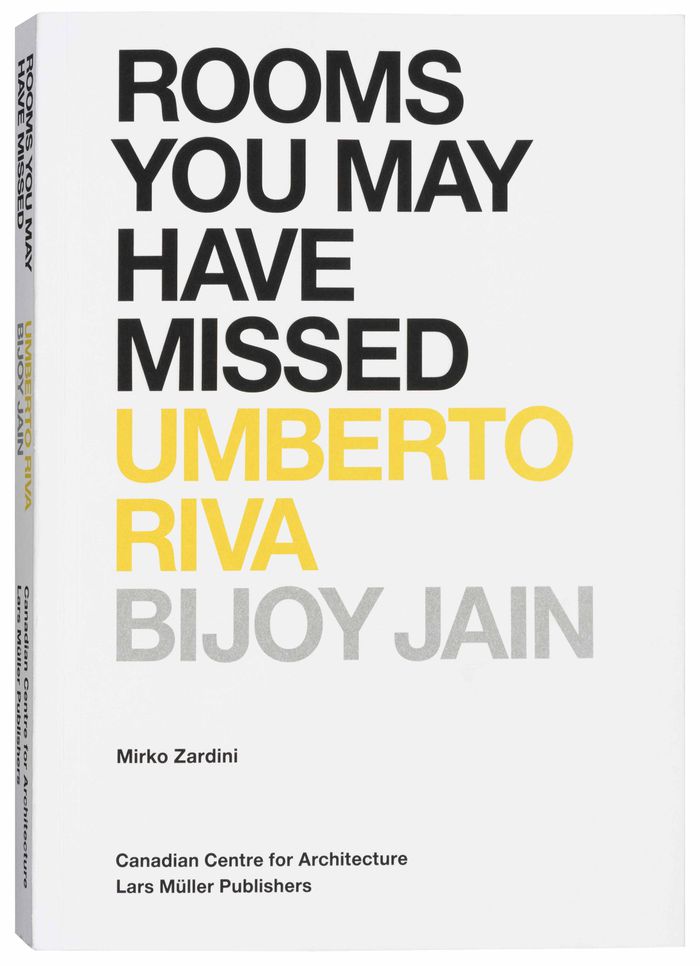
Rooms you may have missed: Bijoy Jain, Umberto Riva
Actions:
Prix:
$25.00
(disponible en magasin)
Résumé:
Rooms You May Have Missed reclaims the significance of inhabitation and is for that reason a collection of domestic spaces—entry porticos, kitchens, bedrooms, closets, dining rooms, courtyards, gardens, vestibules, living rooms, offices, dens and washrooms—as reinvented in the work of two very different architects: Umberto Riva in Milan and Bijoy Jain in Mumbai. Common to their practices is a genuine concern for the details that support living in and our common rituals of waking, bathing, eating, entertaining and sleeping.
Rooms you may have missed: Bijoy Jain, Umberto Riva
Actions:
Prix:
$25.00
(disponible en magasin)
Résumé:
Rooms You May Have Missed reclaims the significance of inhabitation and is for that reason a collection of domestic spaces—entry porticos, kitchens, bedrooms, closets, dining rooms, courtyards, gardens, vestibules, living rooms, offices, dens and washrooms—as reinvented in the work of two very different architects: Umberto Riva in Milan and Bijoy Jain in Mumbai. Common to their practices is a genuine concern for the details that support living in and our common rituals of waking, bathing, eating, entertaining and sleeping.
Classification:
livres
livres
Publication:
octobre 2015
octobre 2015
Sujet:
Publications du CCA
Publications du CCA
Classification:
livres
livres
Prix:
$25.00
(disponible en magasin)
Résumé:
L’exposition Des pièces à ne manquer revendique l’importance de l’acte d’habiter et constitue, pour cette raison, une collection d’espaces domestiques (porches, cuisines, chambres, penderies, salles à manger, cours, jardins, vestibules, séjours, bureaux, coins de détente et salles d’eau) réinventés par deux architectes très différents, Umberto Riva à Milan et Bijoy Jain à(...)
$25.00
(disponible en magasin)
Résumé:
L’exposition Des pièces à ne manquer revendique l’importance de l’acte d’habiter et constitue, pour cette raison, une collection d’espaces domestiques (porches, cuisines, chambres, penderies, salles à manger, cours, jardins, vestibules, séjours, bureaux, coins de détente et salles d’eau) réinventés par deux architectes très différents, Umberto Riva à Milan et Bijoy Jain à(...)
Titre:
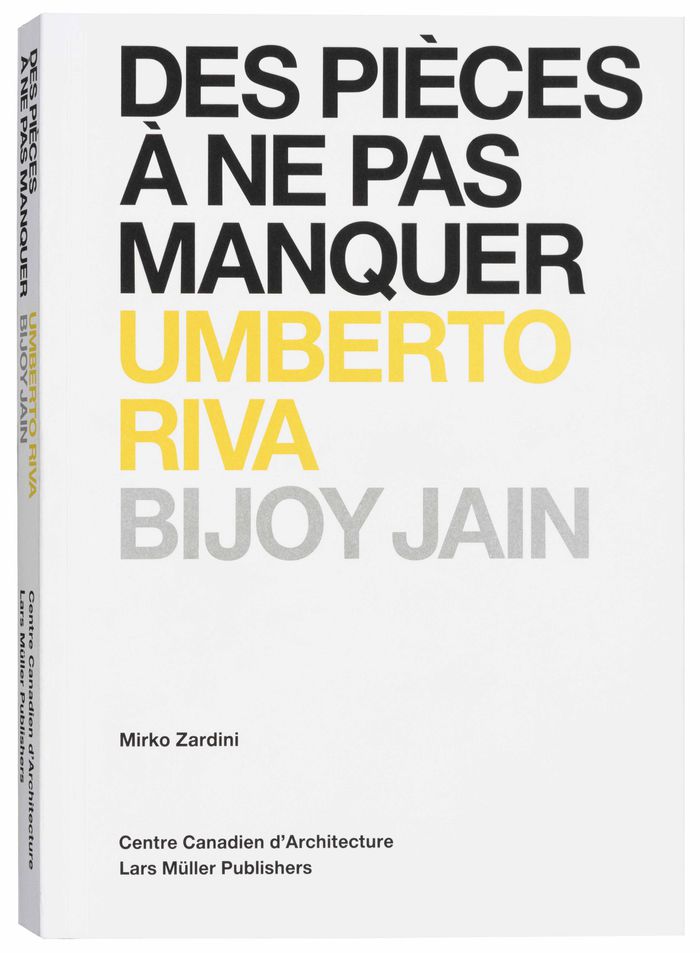
Des pièces à ne pas manquer: Bijoy Jain, Umberto Riva
Actions:
Prix:
$25.00
(disponible en magasin)
Résumé:
L’exposition Des pièces à ne manquer revendique l’importance de l’acte d’habiter et constitue, pour cette raison, une collection d’espaces domestiques (porches, cuisines, chambres, penderies, salles à manger, cours, jardins, vestibules, séjours, bureaux, coins de détente et salles d’eau) réinventés par deux architectes très différents, Umberto Riva à Milan et Bijoy Jain à Mumbai. Ceux-ci se rejoignent néanmoins dans l’attention qu’ils portent aux détails de la vie à l’intérieur ainsi qu’à nos rituels communs que sont le réveil, le bain, les repas, le divertissement et le sommeil. Cette publication accompagne l'exposition.
Des pièces à ne pas manquer: Bijoy Jain, Umberto Riva
Actions:
Prix:
$25.00
(disponible en magasin)
Résumé:
L’exposition Des pièces à ne manquer revendique l’importance de l’acte d’habiter et constitue, pour cette raison, une collection d’espaces domestiques (porches, cuisines, chambres, penderies, salles à manger, cours, jardins, vestibules, séjours, bureaux, coins de détente et salles d’eau) réinventés par deux architectes très différents, Umberto Riva à Milan et Bijoy Jain à Mumbai. Ceux-ci se rejoignent néanmoins dans l’attention qu’ils portent aux détails de la vie à l’intérieur ainsi qu’à nos rituels communs que sont le réveil, le bain, les repas, le divertissement et le sommeil. Cette publication accompagne l'exposition.
Classification:
livres
livres
Publication:
octobre 2015
octobre 2015
Sujet:
Publications du CCA
Publications du CCA
Classification:
livres
livres
Actions:
Prix:
$49.00
(disponible sur commande)
Résumé:
The Anatomy of the Architectural Book examines the relationships between book culture and building culture, making visible the axes along which architectural knowledge circulates through books into buildings and back. Using five conceptual tools—texture, surface, rhythm, structure, and scale—Tavares analyzes the material qualities of a wide range of books in order to(...)
$49.00
(disponible sur commande)
Résumé:
The Anatomy of the Architectural Book examines the relationships between book culture and building culture, making visible the axes along which architectural knowledge circulates through books into buildings and back. Using five conceptual tools—texture, surface, rhythm, structure, and scale—Tavares analyzes the material qualities of a wide range of books in order to(...)
Publication:
mars 2016
mars 2016
Titre:
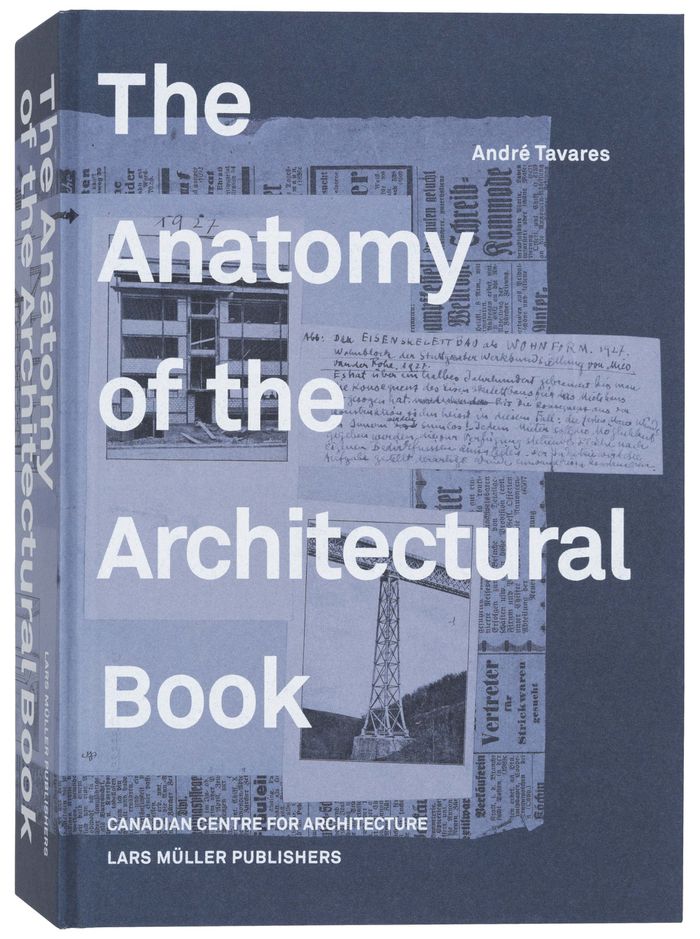
The anatomy of the architectural book
Actions:
Prix:
$49.00
(disponible sur commande)
Résumé:
The Anatomy of the Architectural Book examines the relationships between book culture and building culture, making visible the axes along which architectural knowledge circulates through books into buildings and back. Using five conceptual tools—texture, surface, rhythm, structure, and scale—Tavares analyzes the material qualities of a wide range of books in order to assess these dynamics and intersections. This investigation confronts us with the rise of the industrialized book, and thus of the editor as an important intermediary between the author and the printer, as well as with the configuration of the book as a unique visual device (with the designer taking part in a progressively more complex chain of decision-making). Richly illustrated with samples from the CCA library, the volume discusses work by authors including William Morris, Gottfried Semper, El Lissitzky, Le Corbusier, and Frank Lloyd Wright, among others. A large portion of the research for the book was undertaken while Tavares was a Visiting Scholar at the CCA. It is co-published in English by Lars Müller Publishers and in Portuguese by Dafne Editora.
The anatomy of the architectural book
Actions:
Prix:
$49.00
(disponible sur commande)
Résumé:
The Anatomy of the Architectural Book examines the relationships between book culture and building culture, making visible the axes along which architectural knowledge circulates through books into buildings and back. Using five conceptual tools—texture, surface, rhythm, structure, and scale—Tavares analyzes the material qualities of a wide range of books in order to assess these dynamics and intersections. This investigation confronts us with the rise of the industrialized book, and thus of the editor as an important intermediary between the author and the printer, as well as with the configuration of the book as a unique visual device (with the designer taking part in a progressively more complex chain of decision-making). Richly illustrated with samples from the CCA library, the volume discusses work by authors including William Morris, Gottfried Semper, El Lissitzky, Le Corbusier, and Frank Lloyd Wright, among others. A large portion of the research for the book was undertaken while Tavares was a Visiting Scholar at the CCA. It is co-published in English by Lars Müller Publishers and in Portuguese by Dafne Editora.
Classification:
livres
livres
Publication:
mars 2016
mars 2016
Classification:
livres
livres
Prix:
$45.00
(disponible en magasin)
Résumé:
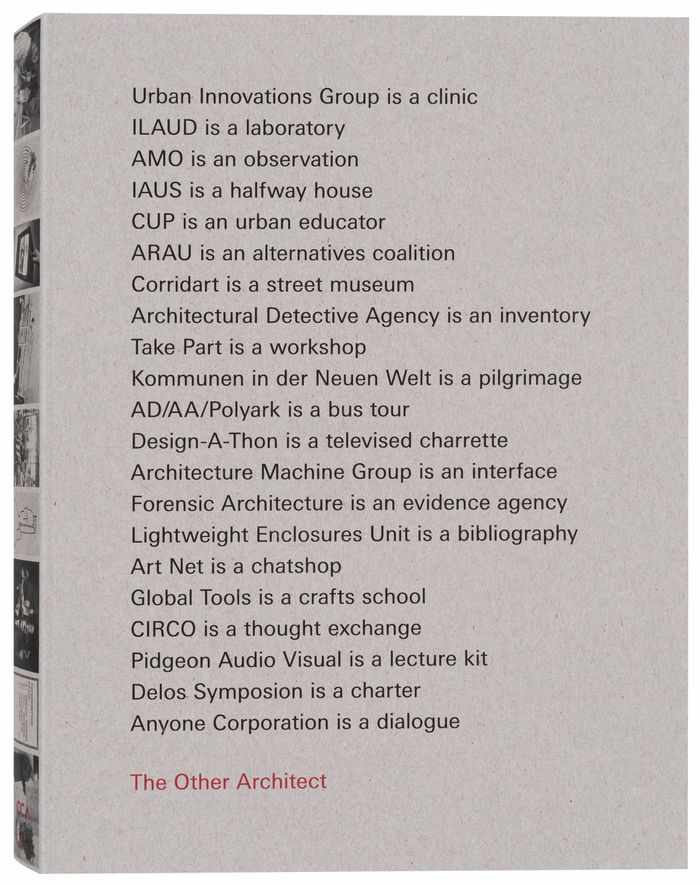
The Other Architect presents 23 case studies that emphasize the potential for architecture to identify the urgent issues of our time. These international and often multidisciplinary groups, with examples from the 1960s to today, invented and adopted new methods outside of traditional design practices in order to create architecture without building. The alternative(...)
$45.00
(disponible en magasin)
Résumé:
The Other Architect presents 23 case studies that emphasize the potential for architecture to identify the urgent issues of our time. These international and often multidisciplinary groups, with examples from the 1960s to today, invented and adopted new methods outside of traditional design practices in order to create architecture without building. The alternative(...)
Titre:
The other architect: another way of building architecture
Actions:
Prix:
$45.00
(disponible en magasin)
Résumé:
The Other Architect presents 23 case studies that emphasize the potential for architecture to identify the urgent issues of our time. These international and often multidisciplinary groups, with examples from the 1960s to today, invented and adopted new methods outside of traditional design practices in order to create architecture without building. The alternative approaches shown in the exhibition challenge the concept of individual authorship in favor of establishing collaborative networks or partnerships with permeable roles. Their work took on non-traditional forms such as bibliographies, surveys, databases, conferences, posters, questionnaires and manifestos. By avoiding the built form, these unexpected ways of practicing allow architecture to actively shape a cultural agenda. 416 pages and over 300 colour facsimiles of traces left in letters, books, drawings, photographs, budgets, videos, mission statements, meeting minutes, T-shirts, boats, and buses
The other architect: another way of building architecture
Actions:
Prix:
$45.00
(disponible en magasin)
Résumé:
The Other Architect presents 23 case studies that emphasize the potential for architecture to identify the urgent issues of our time. These international and often multidisciplinary groups, with examples from the 1960s to today, invented and adopted new methods outside of traditional design practices in order to create architecture without building. The alternative approaches shown in the exhibition challenge the concept of individual authorship in favor of establishing collaborative networks or partnerships with permeable roles. Their work took on non-traditional forms such as bibliographies, surveys, databases, conferences, posters, questionnaires and manifestos. By avoiding the built form, these unexpected ways of practicing allow architecture to actively shape a cultural agenda. 416 pages and over 300 colour facsimiles of traces left in letters, books, drawings, photographs, budgets, videos, mission statements, meeting minutes, T-shirts, boats, and buses
Classification:
livres
livres
Publication:
novembre 2015
novembre 2015
Sujet:
Publications du CCA
Publications du CCA


