


2950 Résultats
Classification:
livres
livres
Actions:
Prix:
$54.95
(disponible en magasin)
Résumé:
The moment human fingertips lifted from the ground, upright walking became a privilege rather than a mere posture. The liberated hands could now be used to create tools for defense and hunting. The pupils’ gazes shifted from a level view to a downward perspective, a physical change that also translated into an awareness that overlooked other species. The spine, situated(...)
$54.95
(disponible en magasin)
Résumé:
The moment human fingertips lifted from the ground, upright walking became a privilege rather than a mere posture. The liberated hands could now be used to create tools for defense and hunting. The pupils’ gazes shifted from a level view to a downward perspective, a physical change that also translated into an awareness that overlooked other species. The spine, situated(...)
Titre:
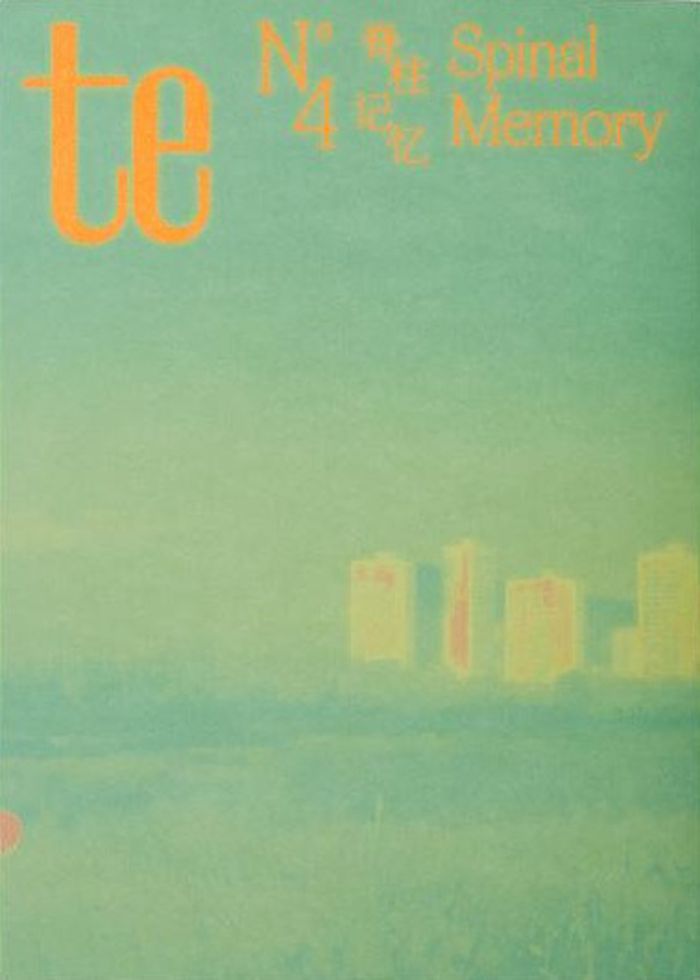
te magazine no.4: Spinal Memory
Actions:
Prix:
$54.95
(disponible en magasin)
Résumé:
The moment human fingertips lifted from the ground, upright walking became a privilege rather than a mere posture. The liberated hands could now be used to create tools for defense and hunting. The pupils’ gazes shifted from a level view to a downward perspective, a physical change that also translated into an awareness that overlooked other species. The spine, situated at the center of the human body, acts like a covert ruler, measuring the scale of evolution and supporting the illusion of being "human-centric." Thus, humans stand, placing themselves far above all other creatures. Following this profound gestural revolution came the imagination and manipulation of non-human animals (the Others), turning them into livestock and companions, as their wildness was rewritten as docility. Their bodies became resources to be medicated and refined, transforming into instruments for milk and nutritious meat production. They became basic knowledge and research data, linking humanity’s ever-expanding and illusory colonial territories.
te magazine no.4: Spinal Memory
Actions:
Prix:
$54.95
(disponible en magasin)
Résumé:
The moment human fingertips lifted from the ground, upright walking became a privilege rather than a mere posture. The liberated hands could now be used to create tools for defense and hunting. The pupils’ gazes shifted from a level view to a downward perspective, a physical change that also translated into an awareness that overlooked other species. The spine, situated at the center of the human body, acts like a covert ruler, measuring the scale of evolution and supporting the illusion of being "human-centric." Thus, humans stand, placing themselves far above all other creatures. Following this profound gestural revolution came the imagination and manipulation of non-human animals (the Others), turning them into livestock and companions, as their wildness was rewritten as docility. Their bodies became resources to be medicated and refined, transforming into instruments for milk and nutritious meat production. They became basic knowledge and research data, linking humanity’s ever-expanding and illusory colonial territories.
Classification:
livres
livres
Publication:
mai 2026
mai 2026
Sujet:
Revues
Revues
Classification:
périodiques
périodiques
Actions:
Prix:
$8.00
(disponible en magasin)
Résumé:
Tight fascia, exhaustion. From the energy spent and drained in the routines of our days—from untangling ourselves from demands and expectations. But energy is also generative. And it emerges in the work of Mariuccia Secol in the textures of presence and absence that the stretching of fabric and skin have in common. Energy also pulses through Marina Vishmidt’s notion of(...)
$8.00
(disponible en magasin)
Résumé:
Tight fascia, exhaustion. From the energy spent and drained in the routines of our days—from untangling ourselves from demands and expectations. But energy is also generative. And it emerges in the work of Mariuccia Secol in the textures of presence and absence that the stretching of fabric and skin have in common. Energy also pulses through Marina Vishmidt’s notion of(...)
Titre:
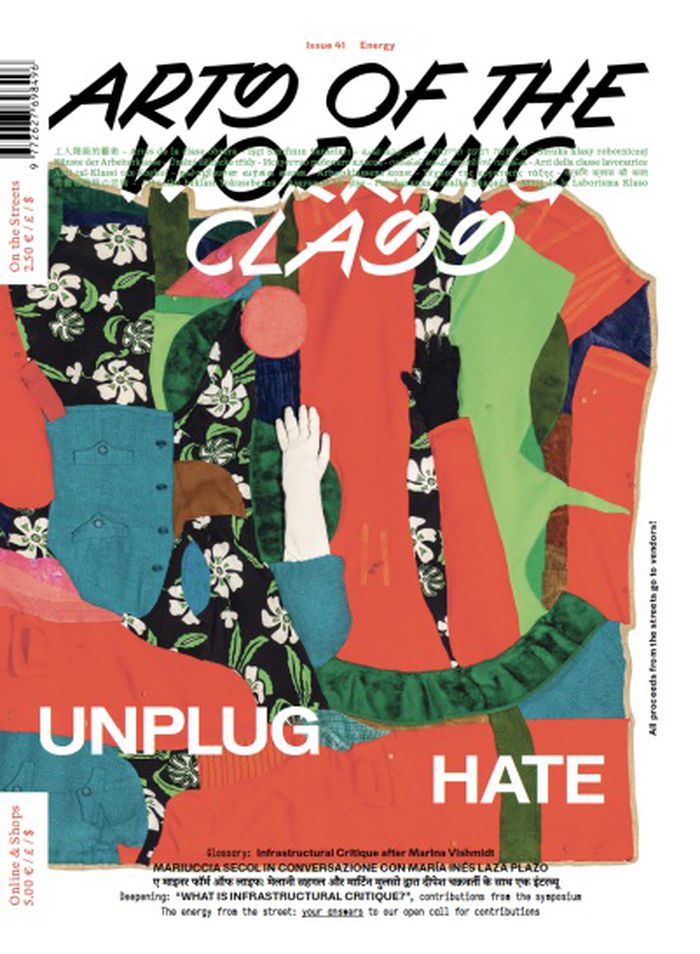
Arts of the Working Class #41: Energy
Actions:
Prix:
$8.00
(disponible en magasin)
Résumé:
Tight fascia, exhaustion. From the energy spent and drained in the routines of our days—from untangling ourselves from demands and expectations. But energy is also generative. And it emerges in the work of Mariuccia Secol in the textures of presence and absence that the stretching of fabric and skin have in common. Energy also pulses through Marina Vishmidt’s notion of infrastructural critique—and in her tireless hours of writing, teaching, and collaborating. For both Secol and Vishmidt, energy is everything, and this issue owes its impetus to their shared attention to energy’s rhythms and resistances.
Arts of the Working Class #41: Energy
Actions:
Prix:
$8.00
(disponible en magasin)
Résumé:
Tight fascia, exhaustion. From the energy spent and drained in the routines of our days—from untangling ourselves from demands and expectations. But energy is also generative. And it emerges in the work of Mariuccia Secol in the textures of presence and absence that the stretching of fabric and skin have in common. Energy also pulses through Marina Vishmidt’s notion of infrastructural critique—and in her tireless hours of writing, teaching, and collaborating. For both Secol and Vishmidt, energy is everything, and this issue owes its impetus to their shared attention to energy’s rhythms and resistances.
Classification:
périodiques
périodiques
Publication:
mai 2026
mai 2026
Sujet:
Revues
Revues
Classification:
périodiques
périodiques
Actions:
Prix:
$8.00
(disponible en magasin)
Résumé:
Our new editorial cycle, Transformers, begins from the reckoning that transformation in the arts has never been linear. For us at AWC, it flourishes in repetition, meandering, and the subtle work of what often goes unnoticed. Rather than asking what is new, Transformers—not the 2007 blockbuster, but the era it anticipated, a spectacle of war, digitalization, and(...)
$8.00
(disponible en magasin)
Résumé:
Our new editorial cycle, Transformers, begins from the reckoning that transformation in the arts has never been linear. For us at AWC, it flourishes in repetition, meandering, and the subtle work of what often goes unnoticed. Rather than asking what is new, Transformers—not the 2007 blockbuster, but the era it anticipated, a spectacle of war, digitalization, and(...)
Titre:
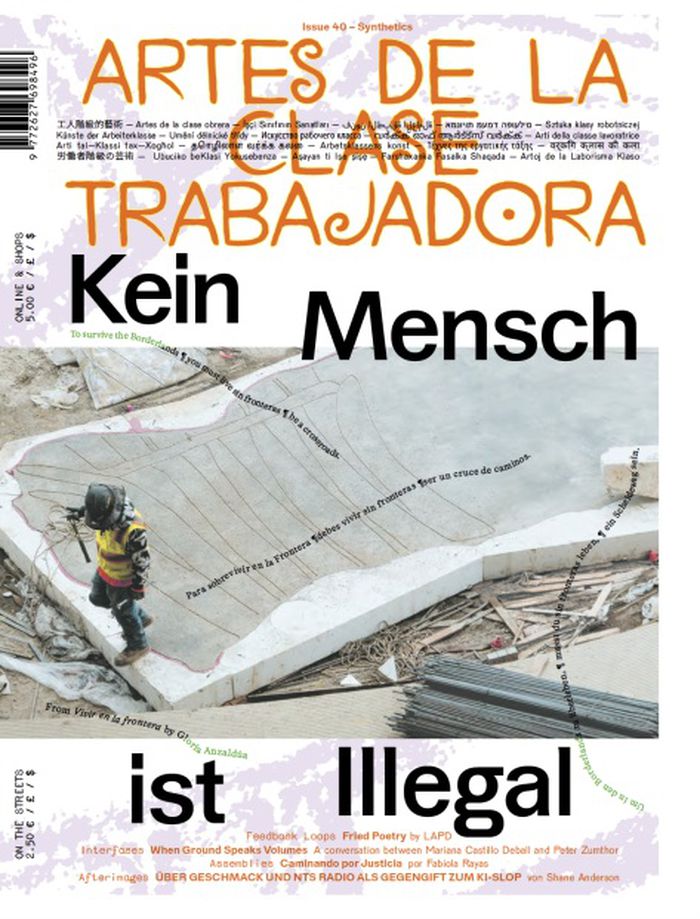
Arts of the Working Class #40: Synthetics
Actions:
Prix:
$8.00
(disponible en magasin)
Résumé:
Our new editorial cycle, Transformers, begins from the reckoning that transformation in the arts has never been linear. For us at AWC, it flourishes in repetition, meandering, and the subtle work of what often goes unnoticed. Rather than asking what is new, Transformers—not the 2007 blockbuster, but the era it anticipated, a spectacle of war, digitalization, and profit—attends to what has been quietly shifting as new configurations of power, labor, and life crystallize. The unfolding chronicle of atrocities revealed in the Jeffrey Epstein files exposes how greed underwrites tribalism, and how the dismantling of an already iniquitous globalism has been further engineered to concentrate wealth in the hands of the fewest of the few.
Arts of the Working Class #40: Synthetics
Actions:
Prix:
$8.00
(disponible en magasin)
Résumé:
Our new editorial cycle, Transformers, begins from the reckoning that transformation in the arts has never been linear. For us at AWC, it flourishes in repetition, meandering, and the subtle work of what often goes unnoticed. Rather than asking what is new, Transformers—not the 2007 blockbuster, but the era it anticipated, a spectacle of war, digitalization, and profit—attends to what has been quietly shifting as new configurations of power, labor, and life crystallize. The unfolding chronicle of atrocities revealed in the Jeffrey Epstein files exposes how greed underwrites tribalism, and how the dismantling of an already iniquitous globalism has been further engineered to concentrate wealth in the hands of the fewest of the few.
Classification:
périodiques
périodiques
Publication:
février 2026
février 2026
Sujet:
Revues
Revues
Classification:
périodiques
périodiques
Actions:
Prix:
$8.00
(disponible en magasin)
Résumé:
As this year’s editorial cycle was titled Value Attachment—a poetic and materialist inquiry into how we assign worth to our worlds—the Sumud Flotilla offers a paradigm for what that question truly entails. The Gaza Biennial reasserts, in its own terms, the primacy of relationships as the ground on which politics is built. Not relationships as networks of exchange or(...)
$8.00
(disponible en magasin)
Résumé:
As this year’s editorial cycle was titled Value Attachment—a poetic and materialist inquiry into how we assign worth to our worlds—the Sumud Flotilla offers a paradigm for what that question truly entails. The Gaza Biennial reasserts, in its own terms, the primacy of relationships as the ground on which politics is built. Not relationships as networks of exchange or(...)
Titre:
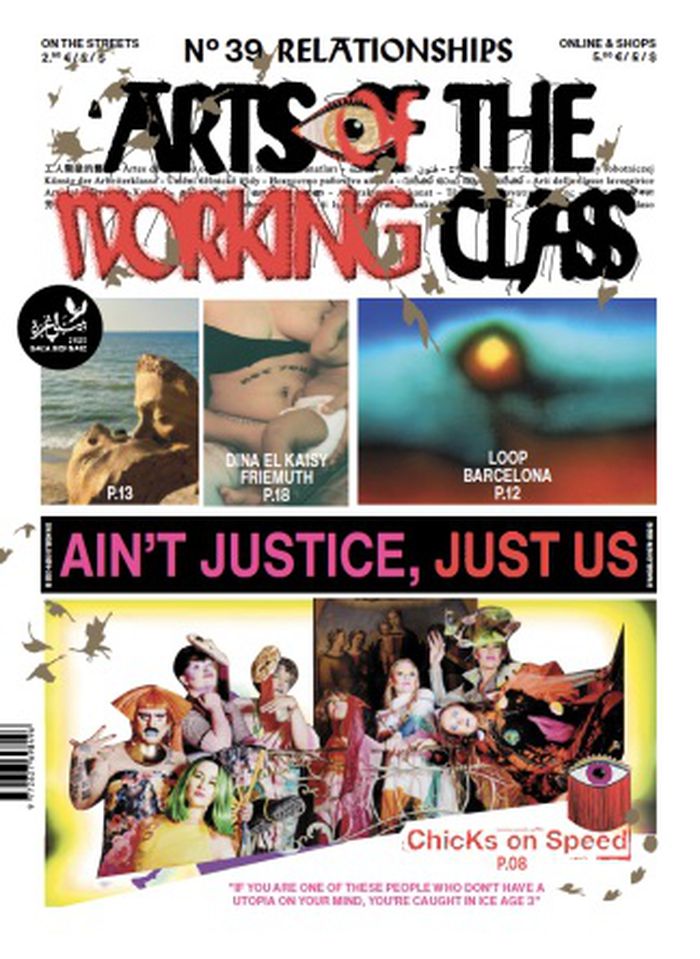
Arts of the Working Class #39: Relationships
Actions:
Prix:
$8.00
(disponible en magasin)
Résumé:
As this year’s editorial cycle was titled Value Attachment—a poetic and materialist inquiry into how we assign worth to our worlds—the Sumud Flotilla offers a paradigm for what that question truly entails. The Gaza Biennial reasserts, in its own terms, the primacy of relationships as the ground on which politics is built. Not relationships as networks of exchange or capital, but as infrastructures of mutual dependence and resistance: fragile, chaotic, complex, indispensable. Across the previous four issues in 2025, we have traced how this question recurs across different registers. Now, we turn to Relationships: to sentimental versions and terrains of struggle. Fascism, in its twenty-first-century iterations, thrives not only on nationalism and exclusion but on dismantling relational life: isolating, atomizing, privatizing it until solidarity becomes suspect and empathy itself a form of dissent. Proximity is policed, intimacy is surveilled. Love is reduced to transaction. Care is outsourced. Trust weaponized. Even friendship, the most basic form of political relation, is co-opted as a tool of influence and control.
Arts of the Working Class #39: Relationships
Actions:
Prix:
$8.00
(disponible en magasin)
Résumé:
As this year’s editorial cycle was titled Value Attachment—a poetic and materialist inquiry into how we assign worth to our worlds—the Sumud Flotilla offers a paradigm for what that question truly entails. The Gaza Biennial reasserts, in its own terms, the primacy of relationships as the ground on which politics is built. Not relationships as networks of exchange or capital, but as infrastructures of mutual dependence and resistance: fragile, chaotic, complex, indispensable. Across the previous four issues in 2025, we have traced how this question recurs across different registers. Now, we turn to Relationships: to sentimental versions and terrains of struggle. Fascism, in its twenty-first-century iterations, thrives not only on nationalism and exclusion but on dismantling relational life: isolating, atomizing, privatizing it until solidarity becomes suspect and empathy itself a form of dissent. Proximity is policed, intimacy is surveilled. Love is reduced to transaction. Care is outsourced. Trust weaponized. Even friendship, the most basic form of political relation, is co-opted as a tool of influence and control.
Classification:
périodiques
périodiques
Publication:
novembre 2025
novembre 2025
Sujet:
Revues
Revues
Classification:
périodiques
périodiques
Actions:
Prix:
$8.00
(disponible en magasin)
Résumé:
Issue 38: Choreography inquires into how memories, histories, and rituals transform individuals into groups, words into policies, threads into textures, notes into dances, gestures into positions. Today, choreography thrives not only on stage but through social media, where short videos compress movement into consumable poses—endlessly repeated and algorithmically(...)
$8.00
(disponible en magasin)
Résumé:
Issue 38: Choreography inquires into how memories, histories, and rituals transform individuals into groups, words into policies, threads into textures, notes into dances, gestures into positions. Today, choreography thrives not only on stage but through social media, where short videos compress movement into consumable poses—endlessly repeated and algorithmically(...)
Titre:
Arts of the Working Class #38: Choreography
Actions:
Prix:
$8.00
(disponible en magasin)
Résumé:
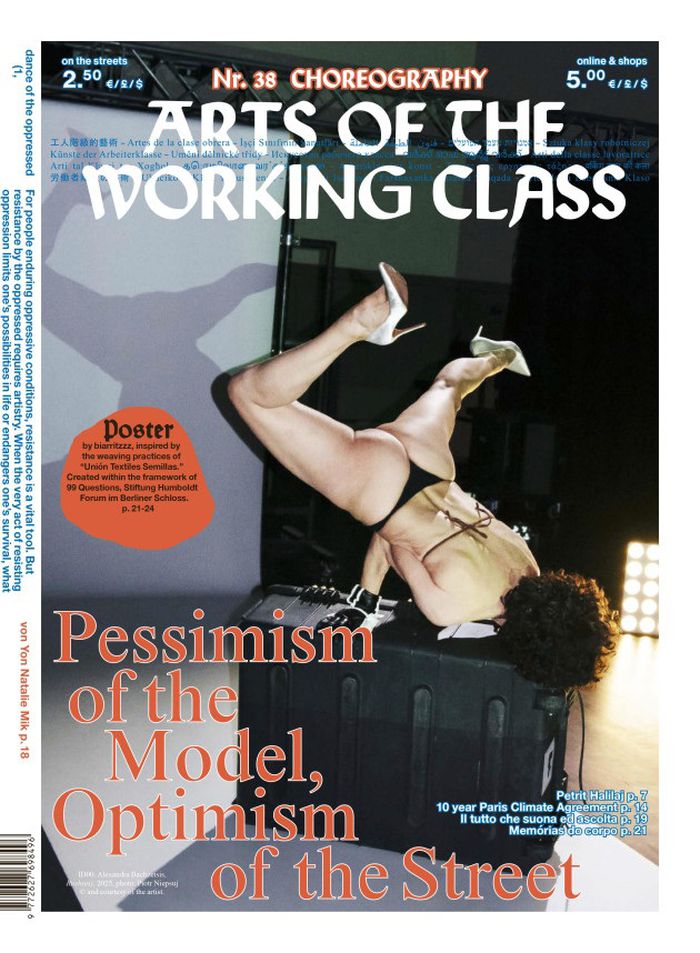
Issue 38: Choreography inquires into how memories, histories, and rituals transform individuals into groups, words into policies, threads into textures, notes into dances, gestures into positions. Today, choreography thrives not only on stage but through social media, where short videos compress movement into consumable poses—endlessly repeated and algorithmically rewarded. Here the body mirrors Mark Fisher’s architecture of capitalist realism: gestures circulate even as they are emptied of meaning, as if there were no alternative but to keep performing. It is a dance of reflexive impotence, where participation feels inevitable and refusal unimaginable.
Arts of the Working Class #38: Choreography
Actions:
Prix:
$8.00
(disponible en magasin)
Résumé:
Issue 38: Choreography inquires into how memories, histories, and rituals transform individuals into groups, words into policies, threads into textures, notes into dances, gestures into positions. Today, choreography thrives not only on stage but through social media, where short videos compress movement into consumable poses—endlessly repeated and algorithmically rewarded. Here the body mirrors Mark Fisher’s architecture of capitalist realism: gestures circulate even as they are emptied of meaning, as if there were no alternative but to keep performing. It is a dance of reflexive impotence, where participation feels inevitable and refusal unimaginable.
Classification:
périodiques
périodiques
Publication:
septembre 2025
septembre 2025
Sujet:
Revues
Revues
Classification:
périodiques
périodiques
Actions:
Prix:
$19.00
(disponible en magasin)
Résumé:
Aucune machine n’a jamais été inventée pour ralentir. Si nos outils excellent dans l’art de l’accélération, aucun n’a été conçu pour suspendre le mouvement. La « dromologie (1) » de Paul Virilio a fait de la vitesse la mesure même d’un progrès dont l’ombre portée serait l’accident. Dans la théorie de l’accélération sociale, Hartmut Rosa rappelle que le présent est une(...)
$19.00
(disponible en magasin)
Résumé:
Aucune machine n’a jamais été inventée pour ralentir. Si nos outils excellent dans l’art de l’accélération, aucun n’a été conçu pour suspendre le mouvement. La « dromologie (1) » de Paul Virilio a fait de la vitesse la mesure même d’un progrès dont l’ombre portée serait l’accident. Dans la théorie de l’accélération sociale, Hartmut Rosa rappelle que le présent est une(...)
Titre:
Plan L**** 216 : suspendre le temps
Actions:
Prix:
$19.00
(disponible en magasin)
Résumé:
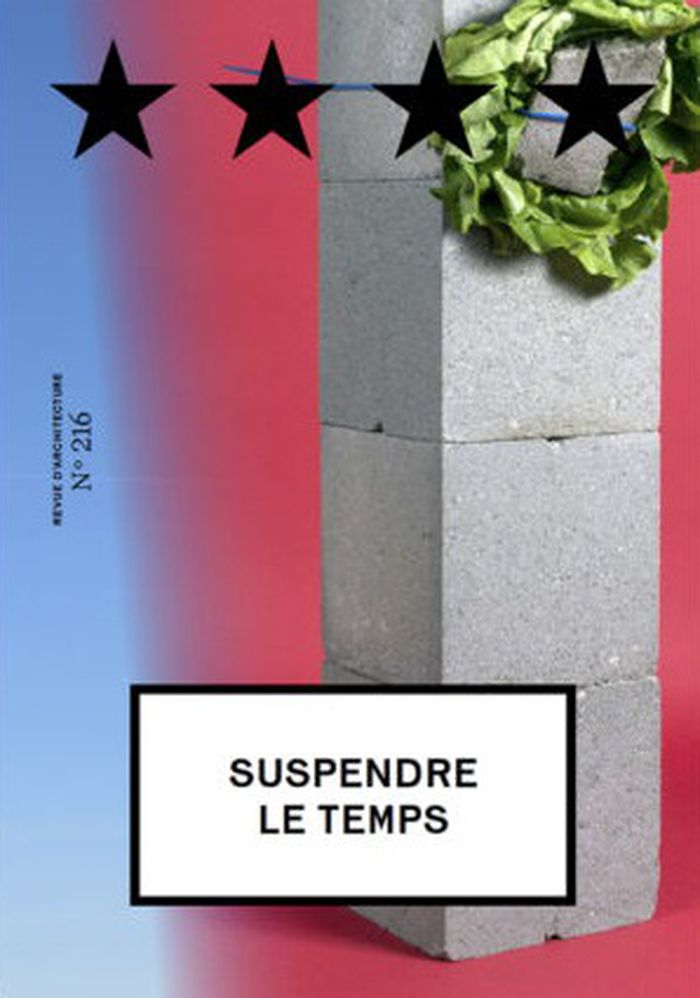
Aucune machine n’a jamais été inventée pour ralentir. Si nos outils excellent dans l’art de l’accélération, aucun n’a été conçu pour suspendre le mouvement. La « dromologie (1) » de Paul Virilio a fait de la vitesse la mesure même d’un progrès dont l’ombre portée serait l’accident. Dans la théorie de l’accélération sociale, Hartmut Rosa rappelle que le présent est une période durant laquelle nos connaissances, nos institutions, nos techniques ou nos habitudes restent suffisamment stables pour orienter notre action. Il façonne le concept de « rétrécissement de présent », dans lequel la fragmentation de nos expériences, les obsolescences rapides nous privent du temps d’habiter les choses (2). Notre époque produit du mouvement plus vite qu’elle ne produit du sens. Se « présenter » à nouveau, un peu plus longtemps, est alors une tentative de faire sens.
Plan L**** 216 : suspendre le temps
Actions:
Prix:
$19.00
(disponible en magasin)
Résumé:
Aucune machine n’a jamais été inventée pour ralentir. Si nos outils excellent dans l’art de l’accélération, aucun n’a été conçu pour suspendre le mouvement. La « dromologie (1) » de Paul Virilio a fait de la vitesse la mesure même d’un progrès dont l’ombre portée serait l’accident. Dans la théorie de l’accélération sociale, Hartmut Rosa rappelle que le présent est une période durant laquelle nos connaissances, nos institutions, nos techniques ou nos habitudes restent suffisamment stables pour orienter notre action. Il façonne le concept de « rétrécissement de présent », dans lequel la fragmentation de nos expériences, les obsolescences rapides nous privent du temps d’habiter les choses (2). Notre époque produit du mouvement plus vite qu’elle ne produit du sens. Se « présenter » à nouveau, un peu plus longtemps, est alors une tentative de faire sens.
Classification:
périodiques
périodiques
Publication:
juillet 2026
juillet 2026
Sujet:
Revues
Revues
Classification:
livres
livres
Actions:
Prix:
$188.95
(disponible en magasin)
Résumé:
Based in Mallorca, Aulets is an architecture practice working across design, research, teaching, and action. It understands architecture as a means of making a territory habitable for a community through the resources available in a specific place. The work of Aulets therefore extends beyond constructing buildings to encompass the activation of new productive processes(...)
$188.95
(disponible en magasin)
Résumé:
Based in Mallorca, Aulets is an architecture practice working across design, research, teaching, and action. It understands architecture as a means of making a territory habitable for a community through the resources available in a specific place. The work of Aulets therefore extends beyond constructing buildings to encompass the activation of new productive processes(...)
Titre:
El croquis 235: Aulets (2003-2026)
Actions:
Prix:
$188.95
(disponible en magasin)
Résumé:
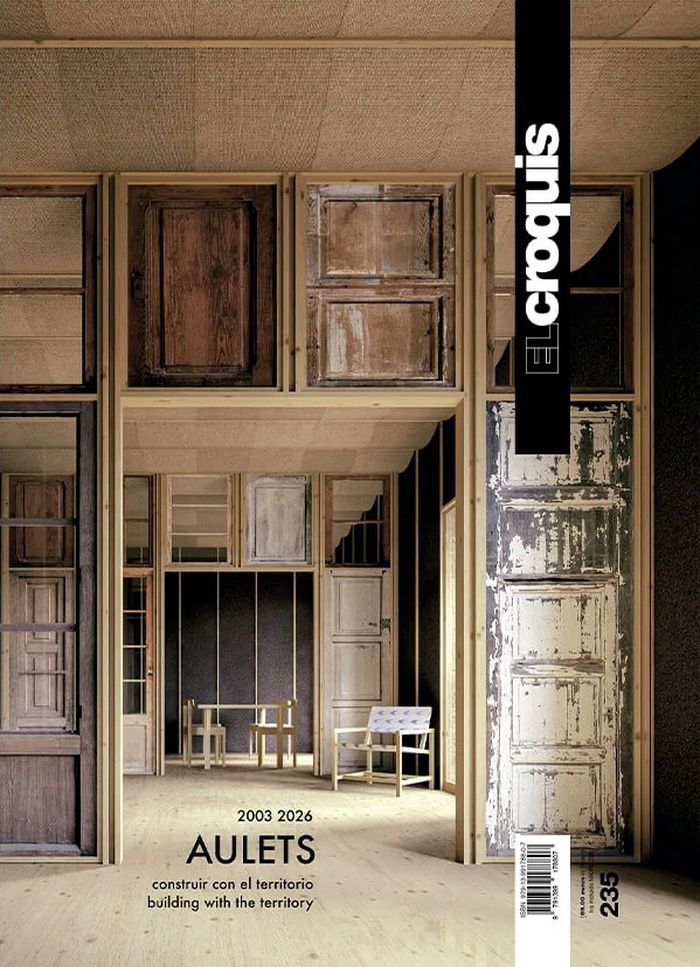
Based in Mallorca, Aulets is an architecture practice working across design, research, teaching, and action. It understands architecture as a means of making a territory habitable for a community through the resources available in a specific place. The work of Aulets therefore extends beyond constructing buildings to encompass the activation of new productive processes and the transformation of these practices within schools of architecture. Its activities range from regeneration of vulnerable neighbourhoods and the adaptation of public space for climate change to initiatives such as forest conservation. The magazine introduces Aulets across three sections: Earth, Stone, and Wood.
El croquis 235: Aulets (2003-2026)
Actions:
Prix:
$188.95
(disponible en magasin)
Résumé:
Based in Mallorca, Aulets is an architecture practice working across design, research, teaching, and action. It understands architecture as a means of making a territory habitable for a community through the resources available in a specific place. The work of Aulets therefore extends beyond constructing buildings to encompass the activation of new productive processes and the transformation of these practices within schools of architecture. Its activities range from regeneration of vulnerable neighbourhoods and the adaptation of public space for climate change to initiatives such as forest conservation. The magazine introduces Aulets across three sections: Earth, Stone, and Wood.
Classification:
livres
livres
Publication:
août 2026
août 2026
Sujet:
Revues
Revues
Classification:
livres
livres
Actions:
Prix:
$45.00
(disponible en magasin)
Résumé:
Transparency is no longer the only horizon for glass. AV Proyectos 135 explores the contemporary possibilities of this material through seven works by Max Núñez, MVRDV, or Snøhetta, among other offices, in which blocks, slats, and undulating panels transform light and create complex atmospheres. The issue also includes a feature dedicated to AgwA, the Belgian firm that(...)
$45.00
(disponible en magasin)
Résumé:
Transparency is no longer the only horizon for glass. AV Proyectos 135 explores the contemporary possibilities of this material through seven works by Max Núñez, MVRDV, or Snøhetta, among other offices, in which blocks, slats, and undulating panels transform light and create complex atmospheres. The issue also includes a feature dedicated to AgwA, the Belgian firm that(...)
Titre:
AV Proyectos 135 : Pieles de vidrio
Actions:
Prix:
$45.00
(disponible en magasin)
Résumé:
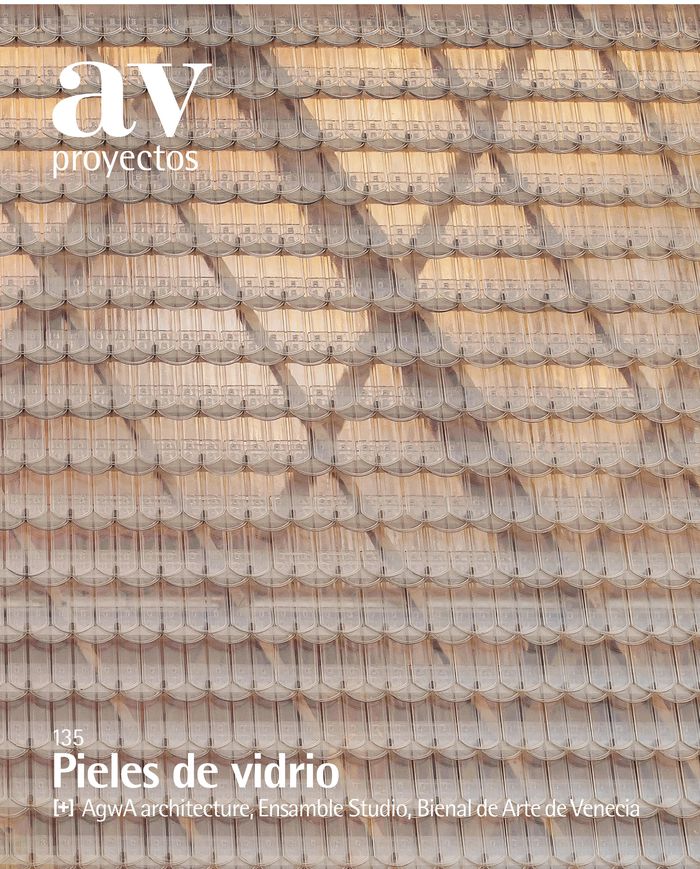
Transparency is no longer the only horizon for glass. AV Proyectos 135 explores the contemporary possibilities of this material through seven works by Max Núñez, MVRDV, or Snøhetta, among other offices, in which blocks, slats, and undulating panels transform light and create complex atmospheres. The issue also includes a feature dedicated to AgwA, the Belgian firm that has developed its practice with a focus on revitalizing existing structures through precise interventions open to collective uses. Meanwhile, Ensamble Studio presents The Cloud visitors’ center in Seoul – still under construction – conceived as a habitable topography. The overview extends to the Venice Art Biennale, with its focus on minor forms and memory processes, and is rounded out by the renovation of the Louvre by Annabelle Selldorf and Studios Architecture; OMA’s Roma Continua urban plan; and the expansion of the Museum of Contemporary Art in Panama by Palma and Taller TO. The issue concludes with a selection of products and Barbara Iweins’s personal photo archive.
AV Proyectos 135 : Pieles de vidrio
Actions:
Prix:
$45.00
(disponible en magasin)
Résumé:
Transparency is no longer the only horizon for glass. AV Proyectos 135 explores the contemporary possibilities of this material through seven works by Max Núñez, MVRDV, or Snøhetta, among other offices, in which blocks, slats, and undulating panels transform light and create complex atmospheres. The issue also includes a feature dedicated to AgwA, the Belgian firm that has developed its practice with a focus on revitalizing existing structures through precise interventions open to collective uses. Meanwhile, Ensamble Studio presents The Cloud visitors’ center in Seoul – still under construction – conceived as a habitable topography. The overview extends to the Venice Art Biennale, with its focus on minor forms and memory processes, and is rounded out by the renovation of the Louvre by Annabelle Selldorf and Studios Architecture; OMA’s Roma Continua urban plan; and the expansion of the Museum of Contemporary Art in Panama by Palma and Taller TO. The issue concludes with a selection of products and Barbara Iweins’s personal photo archive.
Classification:
livres
livres
Publication:
juin 2026
juin 2026
Sujet:
Revues
Revues
Classification:
livres
livres
Titre:
A+U 667 26:04: BAST
A+U 667 26:04: BAST
Actions:
Prix:
$50.00
(disponible en magasin)
Résumé:
a+u’s April issue features BAST (Bureau Architectures Sans Titre), based in Toulouse, France. Laurent Didier, Mathieu Le Ny, and Louis Léger have structured a worker-owned cooperative to pursue a research-based approach to architecture. Instead of asserting a singular vision across the board, they inform each project with site-specific decisions and structural logic.(...)
$50.00
(disponible en magasin)
Résumé:
a+u’s April issue features BAST (Bureau Architectures Sans Titre), based in Toulouse, France. Laurent Didier, Mathieu Le Ny, and Louis Léger have structured a worker-owned cooperative to pursue a research-based approach to architecture. Instead of asserting a singular vision across the board, they inform each project with site-specific decisions and structural logic.(...)
Titre:
A+U 667 26:04: BAST
Actions:
Prix:
$50.00
(disponible en magasin)
Résumé:
a+u’s April issue features BAST (Bureau Architectures Sans Titre), based in Toulouse, France. Laurent Didier, Mathieu Le Ny, and Louis Léger have structured a worker-owned cooperative to pursue a research-based approach to architecture. Instead of asserting a singular vision across the board, they inform each project with site-specific decisions and structural logic. Engaging with modest programs, including the refurbishment projects M47 and E53, BAST carves out new spaces while preserving the integrity of the local vernacular building. New constructions, such as M37, present new methods to connect with the site. The 18 projects presented in this issue focus not only on the finished building, but also on the dynamism of the construction site, where constant calibrations take place between human, site, and material.
A+U 667 26:04: BAST
Actions:
Prix:
$50.00
(disponible en magasin)
Résumé:
a+u’s April issue features BAST (Bureau Architectures Sans Titre), based in Toulouse, France. Laurent Didier, Mathieu Le Ny, and Louis Léger have structured a worker-owned cooperative to pursue a research-based approach to architecture. Instead of asserting a singular vision across the board, they inform each project with site-specific decisions and structural logic. Engaging with modest programs, including the refurbishment projects M47 and E53, BAST carves out new spaces while preserving the integrity of the local vernacular building. New constructions, such as M37, present new methods to connect with the site. The 18 projects presented in this issue focus not only on the finished building, but also on the dynamism of the construction site, where constant calibrations take place between human, site, and material.
Classification:
livres
livres
Publication:
avril 2026
avril 2026
Sujet:
Revues
Revues
Classification:
périodiques
périodiques
Actions:
Prix:
$52.00
(disponible en magasin)
Résumé:
When Ansgar Schulz first visits Adorf, a small town in Saxony, it is raining. For centuries, freshwater pearl mussels have been fished from the Elster river here; a local heritage museum earmarked for expansion documents their rich history. Watching rainwater trace its way across the existing roofs, the architect imagines the same for the facade of the new building. With(...)
$52.00
(disponible en magasin)
Résumé:
When Ansgar Schulz first visits Adorf, a small town in Saxony, it is raining. For centuries, freshwater pearl mussels have been fished from the Elster river here; a local heritage museum earmarked for expansion documents their rich history. Watching rainwater trace its way across the existing roofs, the architect imagines the same for the facade of the new building. With(...)
Titre:
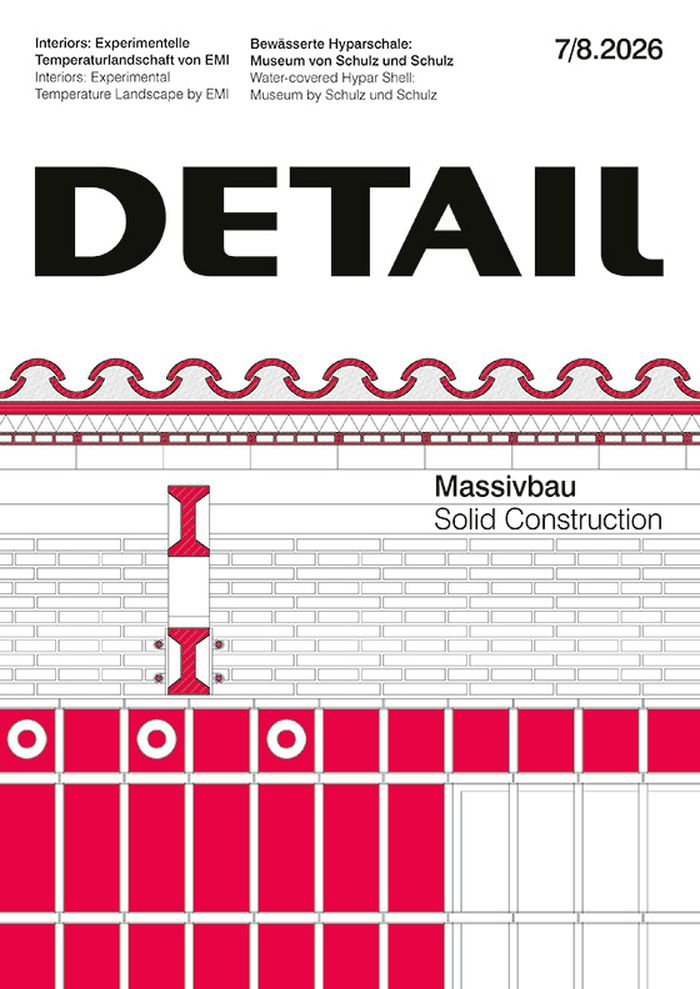
Detail 7/8 2026: Solid construction
Actions:
Prix:
$52.00
(disponible en magasin)
Résumé:
When Ansgar Schulz first visits Adorf, a small town in Saxony, it is raining. For centuries, freshwater pearl mussels have been fished from the Elster river here; a local heritage museum earmarked for expansion documents their rich history. Watching rainwater trace its way across the existing roofs, the architect imagines the same for the facade of the new building. With its double-curved canopy, the Mother-of-Pearl Museum connects two existing structures. Clad in waterproof concrete, the building lets water run quietly down its surface – as if it were always meant to. Outside, the performative detail becomes a sensory echo of the pearl mussels inside. Solid construction is associated with weight, permanence, and immobility. This issue argues otherwise. Hand-pressed bricks, wax-treated rammed earth composed of demolition material, cyclopean concrete from limestone and rubble, hemp lime as a renewable material for the future – each detail explores what masonry can do when it is rethought. Does the heaviest building material have the lightest future?
Detail 7/8 2026: Solid construction
Actions:
Prix:
$52.00
(disponible en magasin)
Résumé:
When Ansgar Schulz first visits Adorf, a small town in Saxony, it is raining. For centuries, freshwater pearl mussels have been fished from the Elster river here; a local heritage museum earmarked for expansion documents their rich history. Watching rainwater trace its way across the existing roofs, the architect imagines the same for the facade of the new building. With its double-curved canopy, the Mother-of-Pearl Museum connects two existing structures. Clad in waterproof concrete, the building lets water run quietly down its surface – as if it were always meant to. Outside, the performative detail becomes a sensory echo of the pearl mussels inside. Solid construction is associated with weight, permanence, and immobility. This issue argues otherwise. Hand-pressed bricks, wax-treated rammed earth composed of demolition material, cyclopean concrete from limestone and rubble, hemp lime as a renewable material for the future – each detail explores what masonry can do when it is rethought. Does the heaviest building material have the lightest future?
Classification:
périodiques
périodiques
Publication:
juillet 2026
juillet 2026
Sujet:
Revues
Revues


