


2950 Résultats
Classification:
périodiques
périodiques
Titre:
Matières 7
Matières 7
Actions:
Prix:
$57.00
(disponible sur commande)
Résumé:
Qu'est-ce qui préside à la définition de la forme d'un bâtiment, selon quelles modalités est-elle conçue, quels principes engage-t-elle, quelles régles convoque ou produit-elles? Ces questions sont posées par toute investigation théorique concernant l'architecture. Et, une nouvelle fois, elles sont celles auxquelles les contributions de cette septième livraison de(...)
$57.00
(disponible sur commande)
Résumé:
Qu'est-ce qui préside à la définition de la forme d'un bâtiment, selon quelles modalités est-elle conçue, quels principes engage-t-elle, quelles régles convoque ou produit-elles? Ces questions sont posées par toute investigation théorique concernant l'architecture. Et, une nouvelle fois, elles sont celles auxquelles les contributions de cette septième livraison de(...)
Sujet:
Revues
Revues
Publication:
mars 2005, Lausanne
mars 2005, Lausanne
Titre:
Matières 7
Actions:
Prix:
$57.00
(disponible sur commande)
Résumé:
Qu'est-ce qui préside à la définition de la forme d'un bâtiment, selon quelles modalités est-elle conçue, quels principes engage-t-elle, quelles régles convoque ou produit-elles? Ces questions sont posées par toute investigation théorique concernant l'architecture. Et, une nouvelle fois, elles sont celles auxquelles les contributions de cette septième livraison de "Matières" tentent de répondre, ou plutôt tentent d'apporter plusieurs réponses car les problématiques des auteurs sont différentes les unes des autres, tout comme sont divers les bâtiments, les projets ou les thèmes auxquels ils s'intéressent. Les réponses se rejoignent cependant sur de nombreux points, à partir desquels il est possible de dessiner la trame de réflexions communes.
Matières 7
Actions:
Prix:
$57.00
(disponible sur commande)
Résumé:
Qu'est-ce qui préside à la définition de la forme d'un bâtiment, selon quelles modalités est-elle conçue, quels principes engage-t-elle, quelles régles convoque ou produit-elles? Ces questions sont posées par toute investigation théorique concernant l'architecture. Et, une nouvelle fois, elles sont celles auxquelles les contributions de cette septième livraison de "Matières" tentent de répondre, ou plutôt tentent d'apporter plusieurs réponses car les problématiques des auteurs sont différentes les unes des autres, tout comme sont divers les bâtiments, les projets ou les thèmes auxquels ils s'intéressent. Les réponses se rejoignent cependant sur de nombreux points, à partir desquels il est possible de dessiner la trame de réflexions communes.
Classification:
périodiques
périodiques
Publication:
mars 2005, Lausanne
mars 2005, Lausanne
Sujet:
Revues
Revues
Classification:
périodiques
périodiques
Titre:
Future anterior
Future anterior
Actions:
Prix:
$14.95
(disponible sur commande)
Résumé:
Historic preservation is at an important moment of rethinking. The field has grown exponentially in America since its first academic program was founded at Columbia University in 1965. Although initially concerned only with buildings, preservation has recently expanded to include the protection and creative interpretation of entire urban environments, landscapes,(...)
$14.95
(disponible sur commande)
Résumé:
Historic preservation is at an important moment of rethinking. The field has grown exponentially in America since its first academic program was founded at Columbia University in 1965. Although initially concerned only with buildings, preservation has recently expanded to include the protection and creative interpretation of entire urban environments, landscapes,(...)
Titre:
Future anterior
Actions:
Prix:
$14.95
(disponible sur commande)
Résumé:
Historic preservation is at an important moment of rethinking. The field has grown exponentially in America since its first academic program was founded at Columbia University in 1965. Although initially concerned only with buildings, preservation has recently expanded to include the protection and creative interpretation of entire urban environments, landscapes, highways, cultural traditions, artistic practices, and even specific “experiences” such as historic view sheds. Most importantly, historic preservation is beginning a significant re-clarification of its purposes, sharpening and deepening its focus on the contributions old architecture and artifacts make to our understanding of the human condition and how we should address and live in it. Future Anterior is the first and only journal in American academia to be devoted to the study and advancement of preservation, which brings together the interests of scholars and professionals in multiple disciplines such as architecture, art, history, philosophy, law, planning, materials science, cultural anthropology, conservation, and others. Future Anterior establishes an important and much needed forum for the critical examination of this expanding discipline, to spur challenges of its motives, goals, forms of practice and results. The appearance of Future Anterior signals the maturation of the field of preservation and a shift away from nostalgic antiquarianism towards an active involvement in the understanding and creative transformation of human environments. This turn in preservation is reflected in an increased interest in historic architecture and artifacts as expressive resources of great public importance. The destruction of patrimony, from the colossal Buddhas in Afghanistan to New York’s World Trade Center, is seen not just as barbarism but as sources of understanding about where we are going wrong and what we need to do next. In response, architects, planners, urban designers, and artists have been producing works which engage the public in new ways of reflecting and taking on the past not as constraint but as provocation.
Future anterior
Actions:
Prix:
$14.95
(disponible sur commande)
Résumé:
Historic preservation is at an important moment of rethinking. The field has grown exponentially in America since its first academic program was founded at Columbia University in 1965. Although initially concerned only with buildings, preservation has recently expanded to include the protection and creative interpretation of entire urban environments, landscapes, highways, cultural traditions, artistic practices, and even specific “experiences” such as historic view sheds. Most importantly, historic preservation is beginning a significant re-clarification of its purposes, sharpening and deepening its focus on the contributions old architecture and artifacts make to our understanding of the human condition and how we should address and live in it. Future Anterior is the first and only journal in American academia to be devoted to the study and advancement of preservation, which brings together the interests of scholars and professionals in multiple disciplines such as architecture, art, history, philosophy, law, planning, materials science, cultural anthropology, conservation, and others. Future Anterior establishes an important and much needed forum for the critical examination of this expanding discipline, to spur challenges of its motives, goals, forms of practice and results. The appearance of Future Anterior signals the maturation of the field of preservation and a shift away from nostalgic antiquarianism towards an active involvement in the understanding and creative transformation of human environments. This turn in preservation is reflected in an increased interest in historic architecture and artifacts as expressive resources of great public importance. The destruction of patrimony, from the colossal Buddhas in Afghanistan to New York’s World Trade Center, is seen not just as barbarism but as sources of understanding about where we are going wrong and what we need to do next. In response, architects, planners, urban designers, and artists have been producing works which engage the public in new ways of reflecting and taking on the past not as constraint but as provocation.
Classification:
périodiques
périodiques
Publication:
octobre 2004, New York
octobre 2004, New York
Sujet:
Revues
Revues
Classification:
périodiques
périodiques
Actions:
Prix:
$36.00
(disponible sur commande)
Résumé:
In our culture, in which the media play a predominant role, there is an increasing emphasis on achieving visibility and transparency. Openness and communication are subservient to that visibility, and even seem to coincide with it more and more emphatically. At the same time, both notions form the foundations for social order and political power. In our over-visualized(...)
$36.00
(disponible sur commande)
Résumé:
In our culture, in which the media play a predominant role, there is an increasing emphasis on achieving visibility and transparency. Openness and communication are subservient to that visibility, and even seem to coincide with it more and more emphatically. At the same time, both notions form the foundations for social order and political power. In our over-visualized(...)
Titre:
Open 8 : (in)visibility : beyond the image in art, culture and the public domain
Actions:
Prix:
$36.00
(disponible sur commande)
Résumé:
In our culture, in which the media play a predominant role, there is an increasing emphasis on achieving visibility and transparency. Openness and communication are subservient to that visibility, and even seem to coincide with it more and more emphatically. At the same time, both notions form the foundations for social order and political power. In our over-visualized culture, however, it seems as if every message or social agenda is being squeezed out in favour of styling, commerce and fashion. What position does art occupy in this, or what position should it occupy? In "Open" 8, guest editors Willem van Weelden and Jan van Grunsven write a general introduction, Brian Holmes explores (in)visibility as a tactic in art, and Jouke Kleerebezem asks who actually decides about (in)visibility in the public space; Camiel van Winkel writes over the visual deficit of contemporary culture; Dieter Lesage critically examines the proposals by OMA/AMO for a new iconography of Europe; Henk Oosterling investigates the FBI's prosecution of the Critical Art Ensemble; Jorinde Seijdel considers how media images are used as evidence for social and political events. "Open" 8 includes interviews with Arno van der Mark of DRFTWD, an Amsterdam-based multidisciplinary design bureau, and with the French research organization Bureau d'études, as well as an account of a roundtable discussion about a possible new legitimation for academic training in 'art and the public space'. The cahier also presents a column by the Belgian architect/author Wouter Davidts, photographic essays and book reviews.
Open 8 : (in)visibility : beyond the image in art, culture and the public domain
Actions:
Prix:
$36.00
(disponible sur commande)
Résumé:
In our culture, in which the media play a predominant role, there is an increasing emphasis on achieving visibility and transparency. Openness and communication are subservient to that visibility, and even seem to coincide with it more and more emphatically. At the same time, both notions form the foundations for social order and political power. In our over-visualized culture, however, it seems as if every message or social agenda is being squeezed out in favour of styling, commerce and fashion. What position does art occupy in this, or what position should it occupy? In "Open" 8, guest editors Willem van Weelden and Jan van Grunsven write a general introduction, Brian Holmes explores (in)visibility as a tactic in art, and Jouke Kleerebezem asks who actually decides about (in)visibility in the public space; Camiel van Winkel writes over the visual deficit of contemporary culture; Dieter Lesage critically examines the proposals by OMA/AMO for a new iconography of Europe; Henk Oosterling investigates the FBI's prosecution of the Critical Art Ensemble; Jorinde Seijdel considers how media images are used as evidence for social and political events. "Open" 8 includes interviews with Arno van der Mark of DRFTWD, an Amsterdam-based multidisciplinary design bureau, and with the French research organization Bureau d'études, as well as an account of a roundtable discussion about a possible new legitimation for academic training in 'art and the public space'. The cahier also presents a column by the Belgian architect/author Wouter Davidts, photographic essays and book reviews.
Classification:
périodiques
périodiques
Publication:
janvier 1900, Rotterdam
janvier 1900, Rotterdam
Sujet:
Revues
Revues
Classification:
périodiques
périodiques
Titre:
Open 6 (in)security
Open 6 (in)security
Actions:
Prix:
$36.00
(disponible sur commande)
Résumé:
There is a yearning for security in today's public domain. The individual and the community are increasingly demanding protection from and control over the space, themselves and others. A society of control is looming, but one lacking a clear idea about the nature and the origin of its underlying fears. This cahier examines the consequences of the current preoccupation(...)
$36.00
(disponible sur commande)
Résumé:
There is a yearning for security in today's public domain. The individual and the community are increasingly demanding protection from and control over the space, themselves and others. A society of control is looming, but one lacking a clear idea about the nature and the origin of its underlying fears. This cahier examines the consequences of the current preoccupation(...)
Sujet:
Revues
Revues
Publication:
août 2004, Rotterdam
août 2004, Rotterdam
Titre:
Open 6 (in)security
Actions:
Prix:
$36.00
(disponible sur commande)
Résumé:
There is a yearning for security in today's public domain. The individual and the community are increasingly demanding protection from and control over the space, themselves and others. A society of control is looming, but one lacking a clear idea about the nature and the origin of its underlying fears. This cahier examines the consequences of the current preoccupation with security for the public space and the visual arts. What are the implications for the functioning of the public domain, for its arrangement, design and experience? And how does this influence the task and perception of art? From art, architecture, philosophy and politics come theoretical and practical scenarios, proposals and visions that expose something of today's security paradigm, advocate alternative (conceptual) models or offer insights into the current ethics and aesthetics of security. Gijs van Oenen subjects the 'new securityscape' to a critical analysis. Lieven De Cauter digs into the various strata of the new fear. Sean Snyder presents images from his Temporary Occupation project. Thomas Y. Levin looks at how artists deal with surveillance in the public space. Sven Lütticken reflects on the concept of a 'human park' in philosophy, art and media. Harm Tilman focuses on architecture in a society of control. Mark Wigley analyses the issue of security in relation to the World Trade Center buildings in New York. Hans Boutellier wishes art would apply the brakes to the security Utopia. Jouke Kleerebezem calls for vigilance in the information society. Willem van Weelden discusses the project in Kanaleneiland, Utrecht. Q.S. Serafijn shows multiple dimensions of the interactive D-Tower in Doetinchem. Mark Wigley dissects the abode of the Unabomber.
Open 6 (in)security
Actions:
Prix:
$36.00
(disponible sur commande)
Résumé:
There is a yearning for security in today's public domain. The individual and the community are increasingly demanding protection from and control over the space, themselves and others. A society of control is looming, but one lacking a clear idea about the nature and the origin of its underlying fears. This cahier examines the consequences of the current preoccupation with security for the public space and the visual arts. What are the implications for the functioning of the public domain, for its arrangement, design and experience? And how does this influence the task and perception of art? From art, architecture, philosophy and politics come theoretical and practical scenarios, proposals and visions that expose something of today's security paradigm, advocate alternative (conceptual) models or offer insights into the current ethics and aesthetics of security. Gijs van Oenen subjects the 'new securityscape' to a critical analysis. Lieven De Cauter digs into the various strata of the new fear. Sean Snyder presents images from his Temporary Occupation project. Thomas Y. Levin looks at how artists deal with surveillance in the public space. Sven Lütticken reflects on the concept of a 'human park' in philosophy, art and media. Harm Tilman focuses on architecture in a society of control. Mark Wigley analyses the issue of security in relation to the World Trade Center buildings in New York. Hans Boutellier wishes art would apply the brakes to the security Utopia. Jouke Kleerebezem calls for vigilance in the information society. Willem van Weelden discusses the project in Kanaleneiland, Utrecht. Q.S. Serafijn shows multiple dimensions of the interactive D-Tower in Doetinchem. Mark Wigley dissects the abode of the Unabomber.
Classification:
périodiques
périodiques
Publication:
août 2004, Rotterdam
août 2004, Rotterdam
Sujet:
Revues
Revues
Classification:
périodiques
périodiques
Titre:
Perspecta 37 : famous
Perspecta 37 : famous
Actions:
Prix:
$22.95
(disponible sur commande)
Résumé:
Does fame empower architecture or undermine it? Does the star power or cult status of an architect enhance the art or dilute it? This issue of Perspecta examines the inner workings of fame as it relates to architecture though media and culture. It looks at how the commodification of architecture affects the design process - whether fame emphasizes all the wrong aspects of(...)
$22.95
(disponible sur commande)
Résumé:
Does fame empower architecture or undermine it? Does the star power or cult status of an architect enhance the art or dilute it? This issue of Perspecta examines the inner workings of fame as it relates to architecture though media and culture. It looks at how the commodification of architecture affects the design process - whether fame emphasizes all the wrong aspects of(...)
Sujet:
Revues
Revues
Publication:
juin 2005, Cambridge, Mass.
juin 2005, Cambridge, Mass.
Titre:
Perspecta 37 : famous
Actions:
Prix:
$22.95
(disponible sur commande)
Résumé:
Does fame empower architecture or undermine it? Does the star power or cult status of an architect enhance the art or dilute it? This issue of Perspecta examines the inner workings of fame as it relates to architecture though media and culture. It looks at how the commodification of architecture affects the design process - whether fame emphasizes all the wrong aspects of architecture or provides the only way an architect can produce truly ambitious projects. How does architecture generate fame? And how does fame generate architecture? Celebrity permeates all levels of contemporary society; architecture, academia, the architectural press, and the mainstream media all play a role in promoting the mystique of the designer genius. The tradition of learning through apprenticeship and the struggle to have projects commissioned and built perpetuate the importance of the famous architect. Does this serve architecture or only the architectural star? The contributors to Perspecta examine both sides of the argument: Architecture moves forward through a process of innovation; fame provides the architect with the leverage needed to accomplish innovation. Or is it that fame, because of its relationship to the media and popular tastes, inevitably dilutes the quality of the architecture? Does "famous" architecture glorify only itself and neglect the people, the values, and the functions that it must serve?
Perspecta 37 : famous
Actions:
Prix:
$22.95
(disponible sur commande)
Résumé:
Does fame empower architecture or undermine it? Does the star power or cult status of an architect enhance the art or dilute it? This issue of Perspecta examines the inner workings of fame as it relates to architecture though media and culture. It looks at how the commodification of architecture affects the design process - whether fame emphasizes all the wrong aspects of architecture or provides the only way an architect can produce truly ambitious projects. How does architecture generate fame? And how does fame generate architecture? Celebrity permeates all levels of contemporary society; architecture, academia, the architectural press, and the mainstream media all play a role in promoting the mystique of the designer genius. The tradition of learning through apprenticeship and the struggle to have projects commissioned and built perpetuate the importance of the famous architect. Does this serve architecture or only the architectural star? The contributors to Perspecta examine both sides of the argument: Architecture moves forward through a process of innovation; fame provides the architect with the leverage needed to accomplish innovation. Or is it that fame, because of its relationship to the media and popular tastes, inevitably dilutes the quality of the architecture? Does "famous" architecture glorify only itself and neglect the people, the values, and the functions that it must serve?
Classification:
périodiques
périodiques
Publication:
juin 2005, Cambridge, Mass.
juin 2005, Cambridge, Mass.
Sujet:
Revues
Revues
Classification:
périodiques
périodiques
Prix:
$36.95
(disponible en magasin)
Résumé:
For its inaugural 112-page issue, more than 30 creatives from around Europe, including writers, illustrators, photographers and makers from Georgia, Ukraine, Lithuania, to Sweden, Spain and the UK, contributed to bring the magazine to life.
$36.95
(disponible en magasin)
Résumé:
For its inaugural 112-page issue, more than 30 creatives from around Europe, including writers, illustrators, photographers and makers from Georgia, Ukraine, Lithuania, to Sweden, Spain and the UK, contributed to bring the magazine to life.
Titre:
Playground issue 1 : An honest magazine for imaginitive minds
Actions:
Prix:
$36.95
(disponible en magasin)
Résumé:
For its inaugural 112-page issue, more than 30 creatives from around Europe, including writers, illustrators, photographers and makers from Georgia, Ukraine, Lithuania, to Sweden, Spain and the UK, contributed to bring the magazine to life.
Playground issue 1 : An honest magazine for imaginitive minds
Actions:
Prix:
$36.95
(disponible en magasin)
Résumé:
For its inaugural 112-page issue, more than 30 creatives from around Europe, including writers, illustrators, photographers and makers from Georgia, Ukraine, Lithuania, to Sweden, Spain and the UK, contributed to bring the magazine to life.
Classification:
périodiques
périodiques
Publication:
février 2024
février 2024
Sujet:
Revues
Revues
Classification:
périodiques
périodiques
Titre:
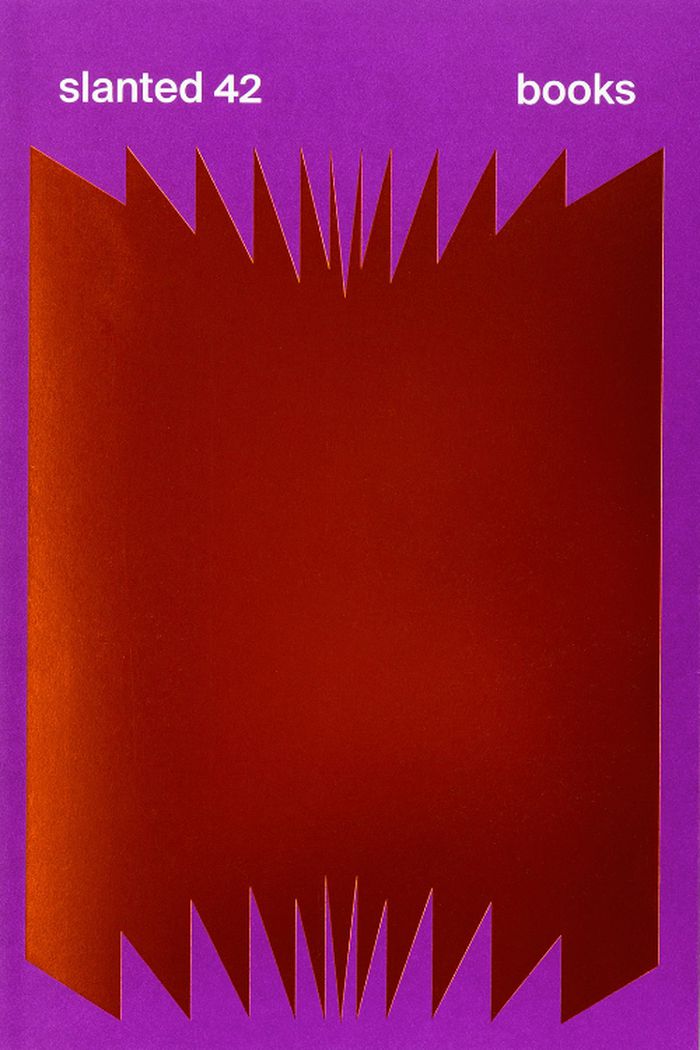
Slanted #42 : Books
Slanted #42 : Books
Actions:
Prix:
$50.00
(disponible sur commande)
Résumé:
In this issue ''Slanted'' presents experimental design strategies—books that go unconventional ways—in contrast to classical books. They are looking for accidents, work that is based on mistakes and inaccuracy, cutting edge approaches, as well as new experimental procedures, from processing to AI-generated content. In opposition, it presents timeless book designs, where(...)
$50.00
(disponible sur commande)
Résumé:
In this issue ''Slanted'' presents experimental design strategies—books that go unconventional ways—in contrast to classical books. They are looking for accidents, work that is based on mistakes and inaccuracy, cutting edge approaches, as well as new experimental procedures, from processing to AI-generated content. In opposition, it presents timeless book designs, where(...)
Titre:
Slanted #42 : Books
Actions:
Prix:
$50.00
(disponible sur commande)
Résumé:
In this issue ''Slanted'' presents experimental design strategies—books that go unconventional ways—in contrast to classical books. They are looking for accidents, work that is based on mistakes and inaccuracy, cutting edge approaches, as well as new experimental procedures, from processing to AI-generated content. In opposition, it presents timeless book designs, where content dictates form.
Slanted #42 : Books
Actions:
Prix:
$50.00
(disponible sur commande)
Résumé:
In this issue ''Slanted'' presents experimental design strategies—books that go unconventional ways—in contrast to classical books. They are looking for accidents, work that is based on mistakes and inaccuracy, cutting edge approaches, as well as new experimental procedures, from processing to AI-generated content. In opposition, it presents timeless book designs, where content dictates form.
Classification:
périodiques
périodiques
Publication:
février 2024
février 2024
Sujet:
Revues
Revues
Classification:
périodiques
périodiques
Titre:
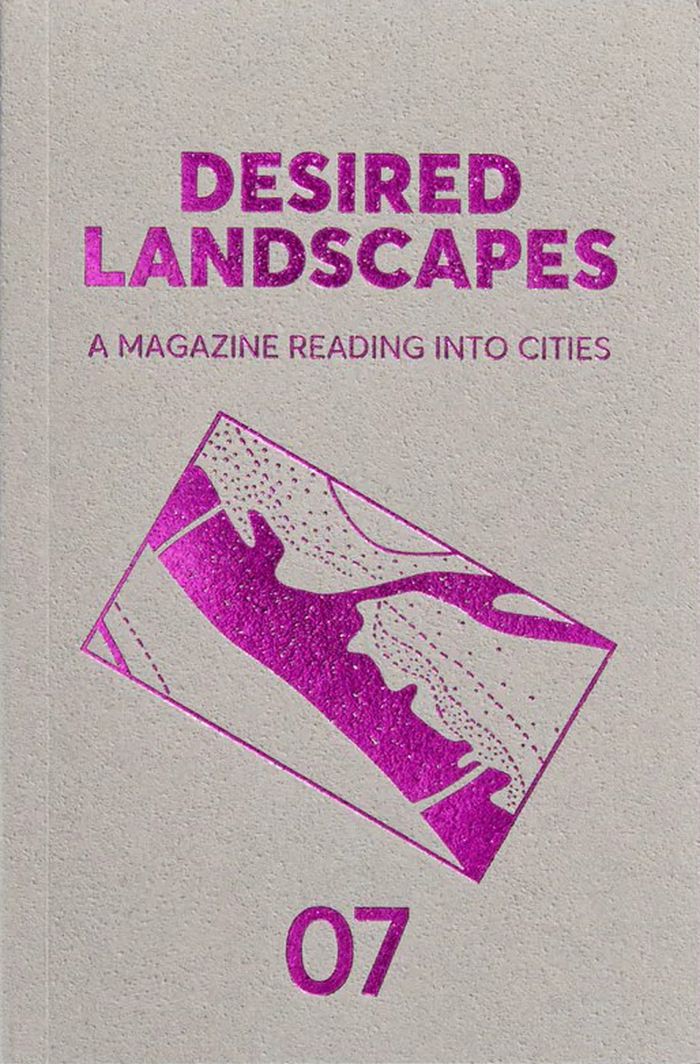
Desired Landscapes. Issue 7
Desired Landscapes. Issue 7
Actions:
Prix:
$38.95
(disponible en magasin)
Résumé:
Issue 07 now available at the bookstore!
$38.95
(disponible en magasin)
Résumé:
Issue 07 now available at the bookstore!
Sujet:
Revues
Revues
Publication:
février 2024
février 2024
Titre:
Desired Landscapes. Issue 7
Actions:
Prix:
$38.95
(disponible en magasin)
Résumé:
Issue 07 now available at the bookstore!
Desired Landscapes. Issue 7
Actions:
Prix:
$38.95
(disponible en magasin)
Résumé:
Issue 07 now available at the bookstore!
Classification:
périodiques
périodiques
Publication:
février 2024
février 2024
Sujet:
Revues
Revues
Classification:
livres
livres
Titre:
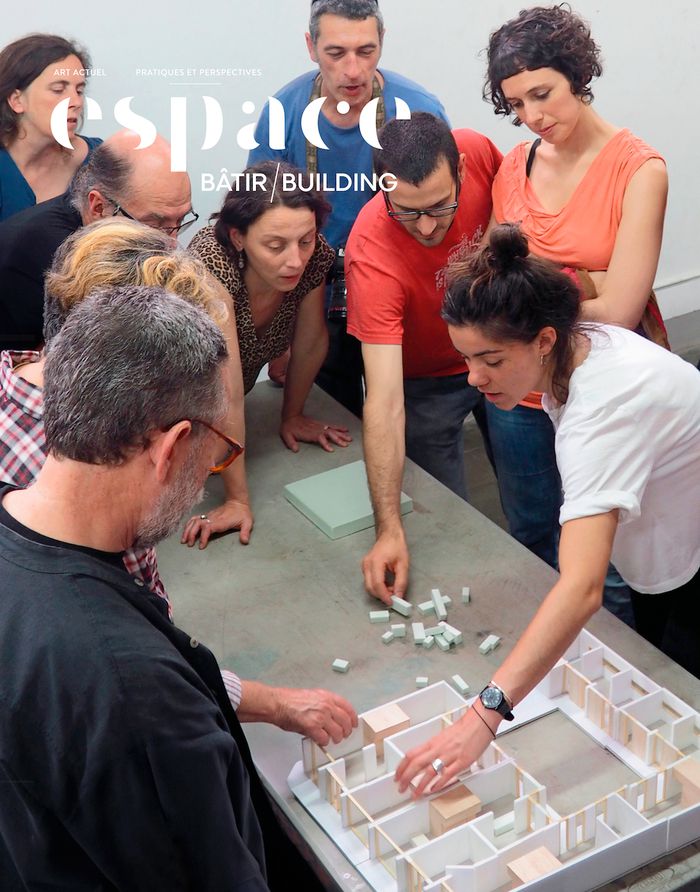
Espace 136 : Bâtir/Building
Espace 136 : Bâtir/Building
Actions:
Prix:
$13.50
(disponible en magasin)
Résumé:
Ayant pour thème « Bâtir », le dossier du n°136 de la revue ESPACE art actuel s’intéresse au devenir de l’architecture comme déploiement de l’habitation du vivant humain au sein de nos agglomérations urbaines.
$13.50
(disponible en magasin)
Résumé:
Ayant pour thème « Bâtir », le dossier du n°136 de la revue ESPACE art actuel s’intéresse au devenir de l’architecture comme déploiement de l’habitation du vivant humain au sein de nos agglomérations urbaines.
Titre:
Espace 136 : Bâtir/Building
Actions:
Prix:
$13.50
(disponible en magasin)
Résumé:
Ayant pour thème « Bâtir », le dossier du n°136 de la revue ESPACE art actuel s’intéresse au devenir de l’architecture comme déploiement de l’habitation du vivant humain au sein de nos agglomérations urbaines.
Espace 136 : Bâtir/Building
Actions:
Prix:
$13.50
(disponible en magasin)
Résumé:
Ayant pour thème « Bâtir », le dossier du n°136 de la revue ESPACE art actuel s’intéresse au devenir de l’architecture comme déploiement de l’habitation du vivant humain au sein de nos agglomérations urbaines.
Classification:
livres
livres
Publication:
février 2024
février 2024
Sujet:
Revues
Revues
Classification:
livres
livres
Actions:
Prix:
$20.00
(disponible sur commande)
Résumé:
The latest issue is now available at the bookstore.
$20.00
(disponible sur commande)
Résumé:
The latest issue is now available at the bookstore.
Titre:
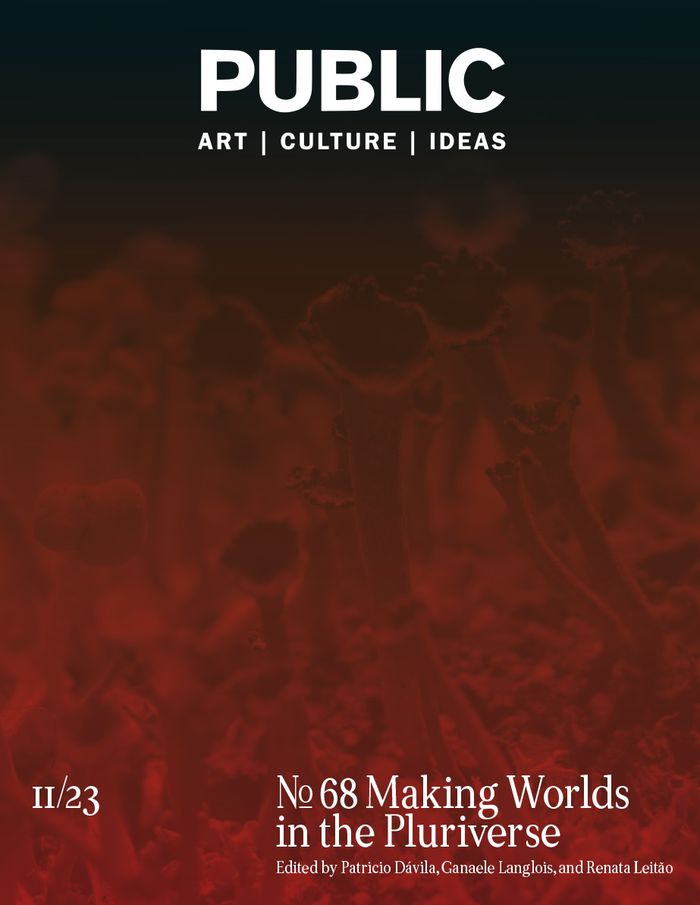
Public 68 : Making worlds in the Pluriverse
Actions:
Prix:
$20.00
(disponible sur commande)
Résumé:
The latest issue is now available at the bookstore.
Public 68 : Making worlds in the Pluriverse
Actions:
Prix:
$20.00
(disponible sur commande)
Résumé:
The latest issue is now available at the bookstore.
Classification:
livres
livres
Publication:
novembre 2023
novembre 2023
Sujet:
Revues
Revues


