


265 Résultats
Classification:
livres
livres
Actions:
Prix:
$34.95
(disponible sur commande)
Résumé:
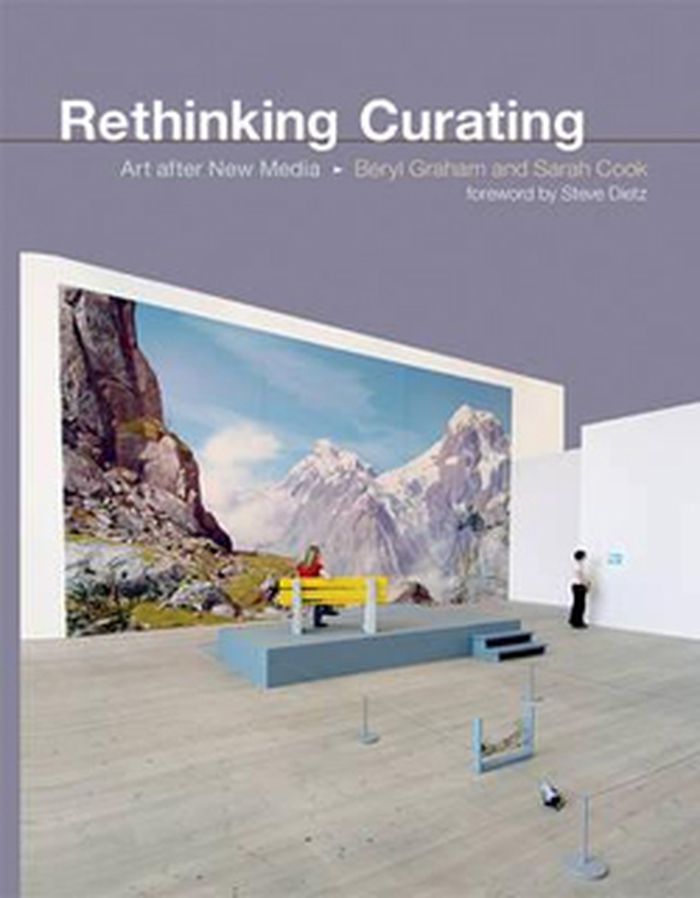
The authors, both of whom have extensive experience as curators, offer numerous examples of artworks and exhibitions to illustrate how the roles of curators and audiences can be redefined in light of new media art’s characteristics. Rethinking Curating offers curators a route through the hype around platforms and autonomous zones by following the lead of current artists’ practice.
$34.95
(disponible sur commande)
Résumé:
The authors, both of whom have extensive experience as curators, offer numerous examples of artworks and exhibitions to illustrate how the roles of curators and audiences can be redefined in light of new media art’s characteristics. Rethinking Curating offers curators a route through the hype around platforms and autonomous zones by following the lead of current artists’ practice.
Titre:
Rethinking curating : art after new media
Actions:
Prix:
$34.95
(disponible sur commande)
Résumé:
The authors, both of whom have extensive experience as curators, offer numerous examples of artworks and exhibitions to illustrate how the roles of curators and audiences can be redefined in light of new media art’s characteristics. Rethinking Curating offers curators a route through the hype around platforms and autonomous zones by following the lead of current artists’ practice.
Rethinking curating : art after new media
Actions:
Prix:
$34.95
(disponible sur commande)
Résumé:
The authors, both of whom have extensive experience as curators, offer numerous examples of artworks and exhibitions to illustrate how the roles of curators and audiences can be redefined in light of new media art’s characteristics. Rethinking Curating offers curators a route through the hype around platforms and autonomous zones by following the lead of current artists’ practice.
Classification:
livres
livres
Publication:
septembre 2015
septembre 2015
Sujet:
Muséologie
Muséologie
Classification:
livres
livres

Actions:
Prix:
$10.95
(disponible sur commande)
Résumé:
Pourquoi un second Louvre ? Pour renouveler le regard porté sur les œuvres et la manière de les présenter. Un défi que l'agence d'architecture japonaise Sanaa (Kazuyo Sejima et Ryûe Nishizawa) a relevé de façon subtile et inventive.
$10.95
(disponible sur commande)
Résumé:
Pourquoi un second Louvre ? Pour renouveler le regard porté sur les œuvres et la manière de les présenter. Un défi que l'agence d'architecture japonaise Sanaa (Kazuyo Sejima et Ryûe Nishizawa) a relevé de façon subtile et inventive.
Titre:
Louvre-Lens : l'esprit du lieu
Actions:
Prix:
$10.95
(disponible sur commande)
Résumé:
Pourquoi un second Louvre ? Pour renouveler le regard porté sur les œuvres et la manière de les présenter. Un défi que l'agence d'architecture japonaise Sanaa (Kazuyo Sejima et Ryûe Nishizawa) a relevé de façon subtile et inventive.
Louvre-Lens : l'esprit du lieu
Actions:
Prix:
$10.95
(disponible sur commande)
Résumé:
Pourquoi un second Louvre ? Pour renouveler le regard porté sur les œuvres et la manière de les présenter. Un défi que l'agence d'architecture japonaise Sanaa (Kazuyo Sejima et Ryûe Nishizawa) a relevé de façon subtile et inventive.
Classification:
livres
livres
Publication:
septembre 2013
septembre 2013
Sujet:
Muséologie
Muséologie
Classification:
livres
livres
Prix:
$25.00
(disponible sur commande)
Résumé:
Cet ouvrage propose une analyse détaillée des dynamiques à l'œuvre dans les organisations artistiques et de la façon par laquelle ceux qui sont à leur tête ont choisi de répondre aux défis qui leur étaient lancés. Cette réflexion est soutenue par le témoignage d'importants leaders de la scène culturelle qui ont su garantir le succès de leur organisation : Nathalie Bondil,(...)
$25.00
(disponible sur commande)
Résumé:
Cet ouvrage propose une analyse détaillée des dynamiques à l'œuvre dans les organisations artistiques et de la façon par laquelle ceux qui sont à leur tête ont choisi de répondre aux défis qui leur étaient lancés. Cette réflexion est soutenue par le témoignage d'importants leaders de la scène culturelle qui ont su garantir le succès de leur organisation : Nathalie Bondil,(...)
Publication:
septembre 2013
septembre 2013
Titre:
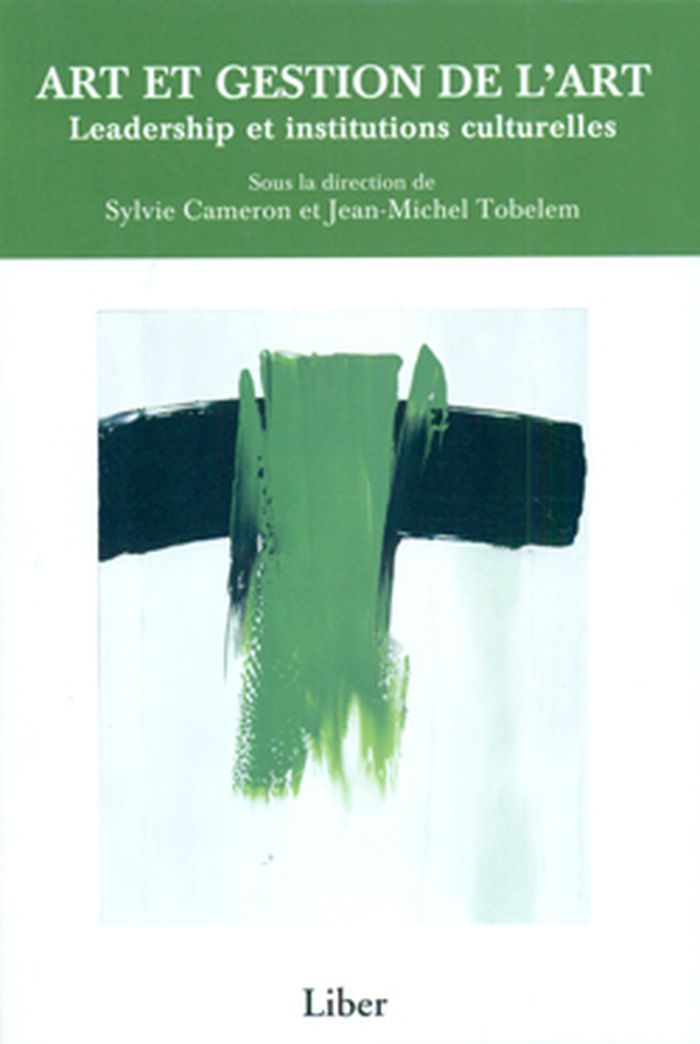
Art et gestion de l'art: leadership et institutions culturelles
Actions:
Prix:
$25.00
(disponible sur commande)
Résumé:
Cet ouvrage propose une analyse détaillée des dynamiques à l'œuvre dans les organisations artistiques et de la façon par laquelle ceux qui sont à leur tête ont choisi de répondre aux défis qui leur étaient lancés. Cette réflexion est soutenue par le témoignage d'importants leaders de la scène culturelle qui ont su garantir le succès de leur organisation : Nathalie Bondil, directrice du Musée des beaux-arts de Montréal depuis 2007 ; Philippe de Montebello, directeur du Metropolitan Muséum of Art de New York de 1977 à 2008 ; et Stéphane Lissner, directeur de la Scala de Milan depuis 2005 et jusqu'en 2015.
Art et gestion de l'art: leadership et institutions culturelles
Actions:
Prix:
$25.00
(disponible sur commande)
Résumé:
Cet ouvrage propose une analyse détaillée des dynamiques à l'œuvre dans les organisations artistiques et de la façon par laquelle ceux qui sont à leur tête ont choisi de répondre aux défis qui leur étaient lancés. Cette réflexion est soutenue par le témoignage d'importants leaders de la scène culturelle qui ont su garantir le succès de leur organisation : Nathalie Bondil, directrice du Musée des beaux-arts de Montréal depuis 2007 ; Philippe de Montebello, directeur du Metropolitan Muséum of Art de New York de 1977 à 2008 ; et Stéphane Lissner, directeur de la Scala de Milan depuis 2005 et jusqu'en 2015.
Classification:
livres
livres
Publication:
septembre 2013
septembre 2013
Classification:
livres
livres
Actions:
Prix:
$134.95
(disponible sur commande)
Résumé:
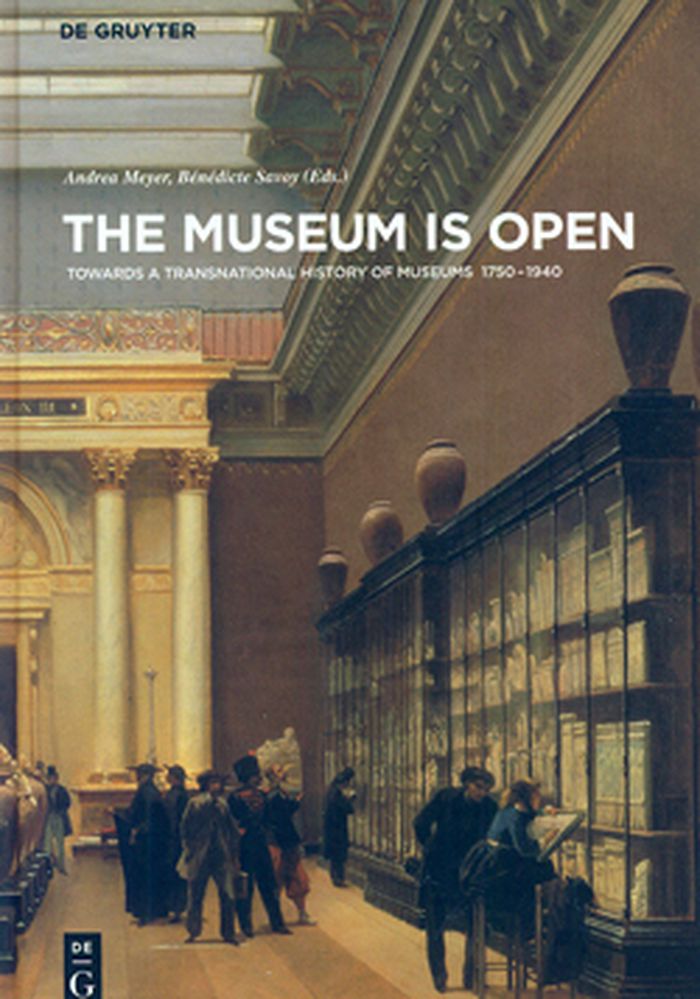
This volume highlights the museum as a product of transnational processes of exchange, focusing on the period from ca. 1750 to 1940.
$134.95
(disponible sur commande)
Résumé:
This volume highlights the museum as a product of transnational processes of exchange, focusing on the period from ca. 1750 to 1940.
Titre:
The museum is open: towards a transnational history of museums 1750-1940
Actions:
Prix:
$134.95
(disponible sur commande)
Résumé:
This volume highlights the museum as a product of transnational processes of exchange, focusing on the period from ca. 1750 to 1940.
The museum is open: towards a transnational history of museums 1750-1940
Actions:
Prix:
$134.95
(disponible sur commande)
Résumé:
This volume highlights the museum as a product of transnational processes of exchange, focusing on the period from ca. 1750 to 1940.
Classification:
livres
livres
Publication:
novembre 2013
novembre 2013
Sujet:
Muséologie
Muséologie
Classification:
livres
livres

Titre:
Self-organised
Self-organised
Actions:
Prix:
$26.00
(disponible sur commande)
Résumé:
Artists, curators and critics discuss empirical and theoretical approaches from Europe, Africa and South and North America on how self-organization today oscillates between the self and the group, self-imposed bureaucratization and flexibility, aestheticization and activism.
$26.00
(disponible sur commande)
Résumé:
Artists, curators and critics discuss empirical and theoretical approaches from Europe, Africa and South and North America on how self-organization today oscillates between the self and the group, self-imposed bureaucratization and flexibility, aestheticization and activism.
Titre:
Self-organised
Actions:
Prix:
$26.00
(disponible sur commande)
Résumé:
Artists, curators and critics discuss empirical and theoretical approaches from Europe, Africa and South and North America on how self-organization today oscillates between the self and the group, self-imposed bureaucratization and flexibility, aestheticization and activism.
Self-organised
Actions:
Prix:
$26.00
(disponible sur commande)
Résumé:
Artists, curators and critics discuss empirical and theoretical approaches from Europe, Africa and South and North America on how self-organization today oscillates between the self and the group, self-imposed bureaucratization and flexibility, aestheticization and activism.
Classification:
livres
livres
Publication:
novembre 2013
novembre 2013
Sujet:
Muséologie
Muséologie
Classification:
livres
livres

Actions:
Prix:
$32.50
(disponible sur commande)
Résumé:
In Ten Fundamental Questions of Curating ten contemporary curators pose and then propose answers to a series of key questions related to curating, art and exhibition making today: What Is a Curator? What Is the Public? What Is Art? What About Collecting? What Is an Exhibition? Why Mediate Art? What To Do with the Contemporary? What About Responsibility? What Is the(...)
$32.50
(disponible sur commande)
Résumé:
In Ten Fundamental Questions of Curating ten contemporary curators pose and then propose answers to a series of key questions related to curating, art and exhibition making today: What Is a Curator? What Is the Public? What Is Art? What About Collecting? What Is an Exhibition? Why Mediate Art? What To Do with the Contemporary? What About Responsibility? What Is the(...)
Titre:
Ten fundamental questions of curating
Actions:
Prix:
$32.50
(disponible sur commande)
Résumé:
In Ten Fundamental Questions of Curating ten contemporary curators pose and then propose answers to a series of key questions related to curating, art and exhibition making today: What Is a Curator? What Is the Public? What Is Art? What About Collecting? What Is an Exhibition? Why Mediate Art? What To Do with the Contemporary? What About Responsibility? What Is the Process? How About Pleasure?
Ten fundamental questions of curating
Actions:
Prix:
$32.50
(disponible sur commande)
Résumé:
In Ten Fundamental Questions of Curating ten contemporary curators pose and then propose answers to a series of key questions related to curating, art and exhibition making today: What Is a Curator? What Is the Public? What Is Art? What About Collecting? What Is an Exhibition? Why Mediate Art? What To Do with the Contemporary? What About Responsibility? What Is the Process? How About Pleasure?
Classification:
livres
livres
Publication:
novembre 2013
novembre 2013
Sujet:
Muséologie
Muséologie
Classification:
livres
livres
Actions:
Prix:
$84.95
(disponible sur commande)
Résumé:
This publication explores the two core functions of museums: exhibiting of the content and educational activities directed to audiences. These areas of activity - both committed to "mediating" between art and its audience - have existed since the birth of the public museum, but, as the result of professionalisation and specialisation of the museum field, they have(...)
$84.95
(disponible sur commande)
Résumé:
This publication explores the two core functions of museums: exhibiting of the content and educational activities directed to audiences. These areas of activity - both committed to "mediating" between art and its audience - have existed since the birth of the public museum, but, as the result of professionalisation and specialisation of the museum field, they have(...)
Titre:
It's all mediating: outlining and incorparating the roles of curating and education in the exhibition context
Actions:
Prix:
$84.95
(disponible sur commande)
Résumé:
This publication explores the two core functions of museums: exhibiting of the content and educational activities directed to audiences. These areas of activity - both committed to "mediating" between art and its audience - have existed since the birth of the public museum, but, as the result of professionalisation and specialisation of the museum field, they have developed into separate professions and have become the responsibility of specialised staff.
It's all mediating: outlining and incorparating the roles of curating and education in the exhibition context
Actions:
Prix:
$84.95
(disponible sur commande)
Résumé:
This publication explores the two core functions of museums: exhibiting of the content and educational activities directed to audiences. These areas of activity - both committed to "mediating" between art and its audience - have existed since the birth of the public museum, but, as the result of professionalisation and specialisation of the museum field, they have developed into separate professions and have become the responsibility of specialised staff.
Classification:
livres
livres
Publication:
janvier 2014
janvier 2014
Sujet:
Muséologie
Muséologie
Classification:
livres
livres
Actions:
Prix:
$15.00
(disponible sur commande)
Résumé:
A roster of curators, affectionately dubbed "pigeons," were invited to respond to an evolving list of questions, what the editors called a "pigeonnaire," about their approach to their work. This pigeonnaire probed such topics as influences, daily practice, artist–curator relationships and the curator’s responsibility to society. Over the course of a year, the pigeons(...)
$15.00
(disponible sur commande)
Résumé:
A roster of curators, affectionately dubbed "pigeons," were invited to respond to an evolving list of questions, what the editors called a "pigeonnaire," about their approach to their work. This pigeonnaire probed such topics as influences, daily practice, artist–curator relationships and the curator’s responsibility to society. Over the course of a year, the pigeons(...)
Titre:
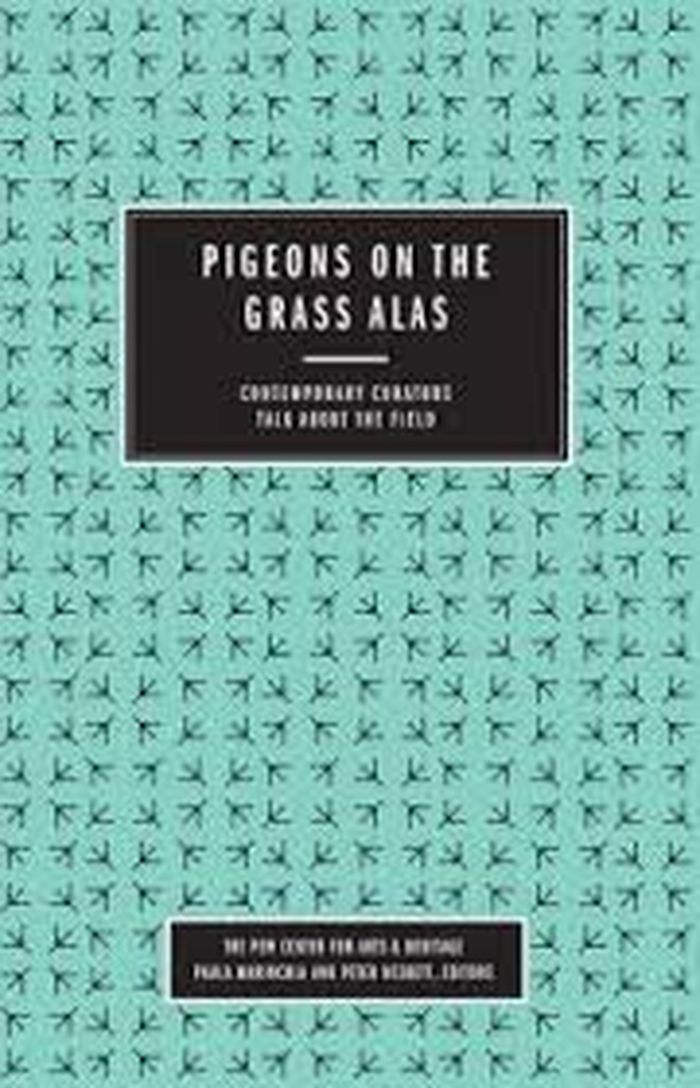
Pigeons on the grass atlas: contemporary curators talk about the field
Actions:
Prix:
$15.00
(disponible sur commande)
Résumé:
A roster of curators, affectionately dubbed "pigeons," were invited to respond to an evolving list of questions, what the editors called a "pigeonnaire," about their approach to their work. This pigeonnaire probed such topics as influences, daily practice, artist–curator relationships and the curator’s responsibility to society. Over the course of a year, the pigeons dropped by with their answers, and the editors then strung together the questions and answers in a continuous narrative that reads something like the transcript of a large meeting, providing a portrait of common ground and fissures in the field of curating now.
Pigeons on the grass atlas: contemporary curators talk about the field
Actions:
Prix:
$15.00
(disponible sur commande)
Résumé:
A roster of curators, affectionately dubbed "pigeons," were invited to respond to an evolving list of questions, what the editors called a "pigeonnaire," about their approach to their work. This pigeonnaire probed such topics as influences, daily practice, artist–curator relationships and the curator’s responsibility to society. Over the course of a year, the pigeons dropped by with their answers, and the editors then strung together the questions and answers in a continuous narrative that reads something like the transcript of a large meeting, providing a portrait of common ground and fissures in the field of curating now.
Classification:
livres
livres
Publication:
février 2014
février 2014
Sujet:
Muséologie
Muséologie
Classification:
livres
livres
Actions:
Prix:
$25.00
(disponible sur commande)
Résumé:
In Radical Museology, New York–based art historian Claire Bishop argues that the incommensurability of fiscal and cultural temporality--one fast, the other slower--points to an alternative world of values in which museums (and by extension, culture, education and democracy in general) are not subject to the banalities of a spreadsheet, but enable us to access a rich and(...)
$25.00
(disponible sur commande)
Résumé:
In Radical Museology, New York–based art historian Claire Bishop argues that the incommensurability of fiscal and cultural temporality--one fast, the other slower--points to an alternative world of values in which museums (and by extension, culture, education and democracy in general) are not subject to the banalities of a spreadsheet, but enable us to access a rich and(...)
Titre:
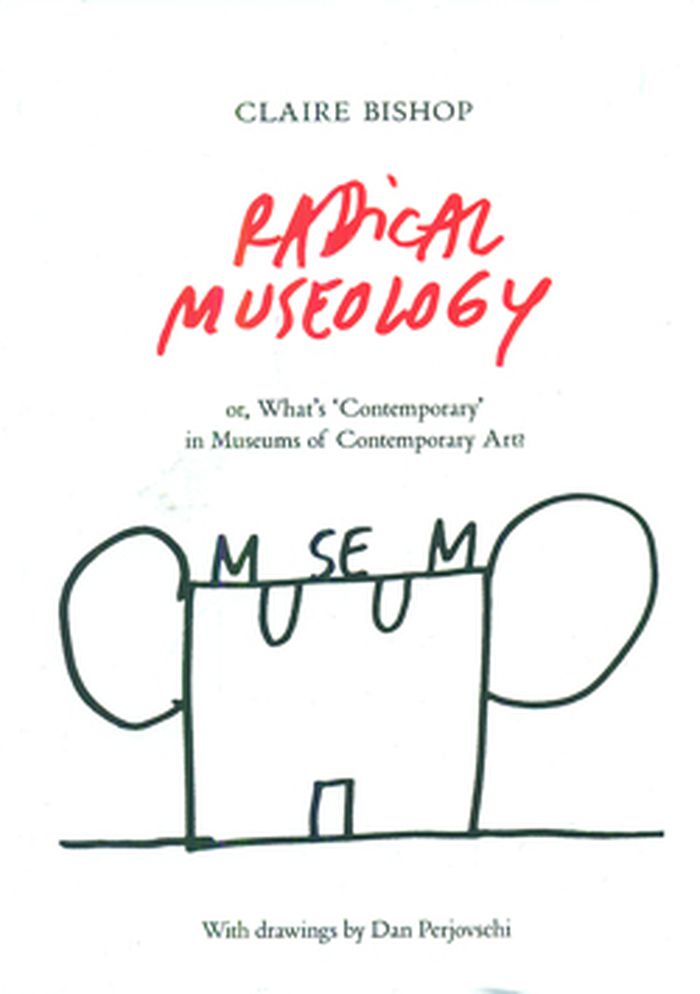
Radical museology: or what's contemporary in museums of contemporary art?
Actions:
Prix:
$25.00
(disponible sur commande)
Résumé:
In Radical Museology, New York–based art historian Claire Bishop argues that the incommensurability of fiscal and cultural temporality--one fast, the other slower--points to an alternative world of values in which museums (and by extension, culture, education and democracy in general) are not subject to the banalities of a spreadsheet, but enable us to access a rich and diverse history, to question the present and to realize a different future. She discusses creative solutions implemented at the Van Abbemuseum in Eindhoven, the Museo Nacional de Reina Sofía in Madrid and MSUM in Ljubljana. This book is a manifesto for the importance of a politicized representation of the contemporary in today’s art.
Radical museology: or what's contemporary in museums of contemporary art?
Actions:
Prix:
$25.00
(disponible sur commande)
Résumé:
In Radical Museology, New York–based art historian Claire Bishop argues that the incommensurability of fiscal and cultural temporality--one fast, the other slower--points to an alternative world of values in which museums (and by extension, culture, education and democracy in general) are not subject to the banalities of a spreadsheet, but enable us to access a rich and diverse history, to question the present and to realize a different future. She discusses creative solutions implemented at the Van Abbemuseum in Eindhoven, the Museo Nacional de Reina Sofía in Madrid and MSUM in Ljubljana. This book is a manifesto for the importance of a politicized representation of the contemporary in today’s art.
Classification:
livres
livres
Publication:
février 2014
février 2014
Sujet:
Muséologie
Muséologie
Classification:
livres
livres
Prix:
$46.00
(disponible en magasin)
Résumé:
Judy Chicago provides an autobiographical look at higher education in art. How should women—and men—be prepared for a career in today’s art world? For more than a decade, Judy Chicago has been formulating a critique of studio art education, in colleges or art schools, based upon observation, study, and, most importantly, her own teaching expériences. Founder of(...)
$46.00
(disponible en magasin)
Résumé:
Judy Chicago provides an autobiographical look at higher education in art. How should women—and men—be prepared for a career in today’s art world? For more than a decade, Judy Chicago has been formulating a critique of studio art education, in colleges or art schools, based upon observation, study, and, most importantly, her own teaching expériences. Founder of(...)
Titre:
Institutional time: a critique of studio art education
Actions:
Prix:
$46.00
(disponible en magasin)
Résumé:
Judy Chicago provides an autobiographical look at higher education in art. How should women—and men—be prepared for a career in today’s art world? For more than a decade, Judy Chicago has been formulating a critique of studio art education, in colleges or art schools, based upon observation, study, and, most importantly, her own teaching expériences. Founder of the first program dedicated to feminist art, at California State University, Fresno, in 1970, she went on to initiate the Feminist Art Program at California Institute of the Arts with artist Miriam Schapiro, the first program at a major art school to specifically address the needs of female art students. Creator of the celebrated The Dinner Party, a monumental art installation now on permanent display at the Brooklyn Museum, Chicago reviews her own art education, in the 1960s, when she overcame sexist obstacles to beginning a career as an artist and became recognized as one of the key figures in the dynamic California art scene of that decade. She reviews the present-day situation of young people aspiring to become artists and uncovers the persistence of a bias against women and other minorities in studio art education.
Institutional time: a critique of studio art education
Actions:
Prix:
$46.00
(disponible en magasin)
Résumé:
Judy Chicago provides an autobiographical look at higher education in art. How should women—and men—be prepared for a career in today’s art world? For more than a decade, Judy Chicago has been formulating a critique of studio art education, in colleges or art schools, based upon observation, study, and, most importantly, her own teaching expériences. Founder of the first program dedicated to feminist art, at California State University, Fresno, in 1970, she went on to initiate the Feminist Art Program at California Institute of the Arts with artist Miriam Schapiro, the first program at a major art school to specifically address the needs of female art students. Creator of the celebrated The Dinner Party, a monumental art installation now on permanent display at the Brooklyn Museum, Chicago reviews her own art education, in the 1960s, when she overcame sexist obstacles to beginning a career as an artist and became recognized as one of the key figures in the dynamic California art scene of that decade. She reviews the present-day situation of young people aspiring to become artists and uncovers the persistence of a bias against women and other minorities in studio art education.
Classification:
livres
livres
Publication:
mars 2014
mars 2014
Sujet:
Muséologie
Muséologie


