


226 Résultats
Classification:
livres
livres
Actions:
Prix:
$32.95
(disponible sur commande)
Résumé:
The Royal Institute of British Architects'Awards are pershaps the most rigorously judged awards in any sector in the world. The overall prize, the RIBA Stirling Prize in association with The Architects'journal, is chosen from a shortlist that has been visited by four different sets of judges. The process is shown and the winning building announced live in a Channel 4(...)
$32.95
(disponible sur commande)
Résumé:
The Royal Institute of British Architects'Awards are pershaps the most rigorously judged awards in any sector in the world. The overall prize, the RIBA Stirling Prize in association with The Architects'journal, is chosen from a shortlist that has been visited by four different sets of judges. The process is shown and the winning building announced live in a Channel 4(...)
Publication:
décembre 2006, London, New York
décembre 2006, London, New York
Titre:
Architecture 06 The Guide to the RIBA Awards
Actions:
Prix:
$32.95
(disponible sur commande)
Résumé:
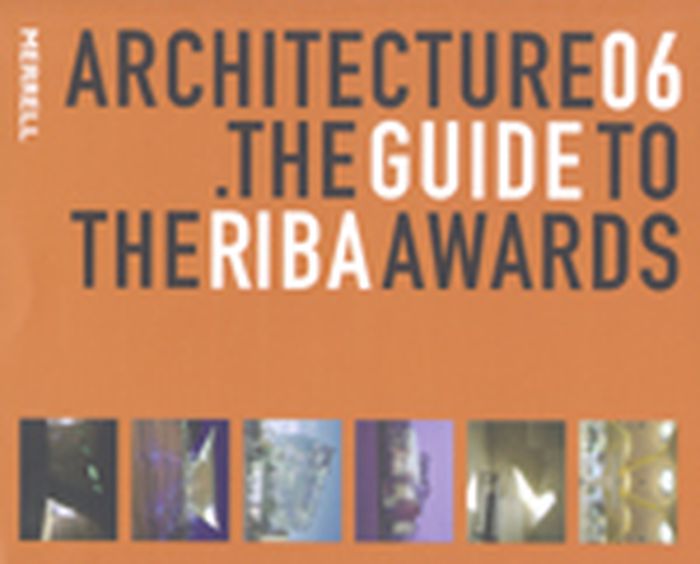
The Royal Institute of British Architects'Awards are pershaps the most rigorously judged awards in any sector in the world. The overall prize, the RIBA Stirling Prize in association with The Architects'journal, is chosen from a shortlist that has been visited by four different sets of judges. The process is shown and the winning building announced live in a Channel 4 programme made by TalkbackTHAMES and presented by Kevin McCloud.
Architecture 06 The Guide to the RIBA Awards
Actions:
Prix:
$32.95
(disponible sur commande)
Résumé:
The Royal Institute of British Architects'Awards are pershaps the most rigorously judged awards in any sector in the world. The overall prize, the RIBA Stirling Prize in association with The Architects'journal, is chosen from a shortlist that has been visited by four different sets of judges. The process is shown and the winning building announced live in a Channel 4 programme made by TalkbackTHAMES and presented by Kevin McCloud.
Classification:
livres
livres
Publication:
décembre 2006, London, New York
décembre 2006, London, New York
Classification:
livres
livres
Prix:
$38.95
(disponible en magasin)
Résumé:
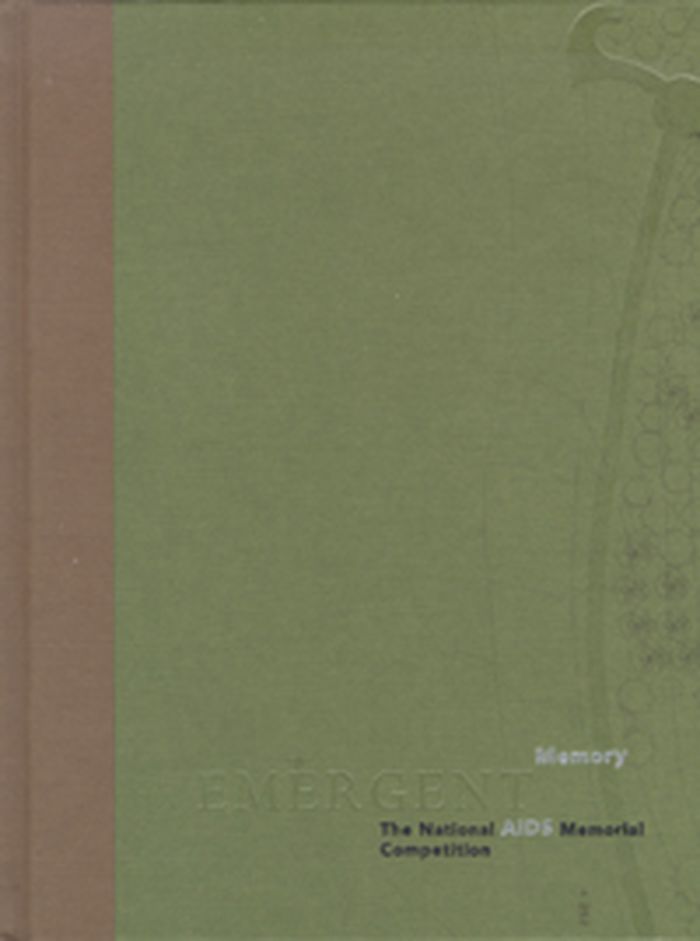
As we write this 8,000 people die from AIDS every day, more than at any other time during the epidemic. The incredible wealth of creative expression in these pages begins to articulate the sober reality of that statistic and, we hope, will galvanize all of us to continue working together to end this disease.
$38.95
(disponible en magasin)
Résumé:
As we write this 8,000 people die from AIDS every day, more than at any other time during the epidemic. The incredible wealth of creative expression in these pages begins to articulate the sober reality of that statistic and, we hope, will galvanize all of us to continue working together to end this disease.
Titre:
Emergent memory: the national AIDS memorial competition
Actions:
Prix:
$38.95
(disponible en magasin)
Résumé:
As we write this 8,000 people die from AIDS every day, more than at any other time during the epidemic. The incredible wealth of creative expression in these pages begins to articulate the sober reality of that statistic and, we hope, will galvanize all of us to continue working together to end this disease.
Emergent memory: the national AIDS memorial competition
Actions:
Prix:
$38.95
(disponible en magasin)
Résumé:
As we write this 8,000 people die from AIDS every day, more than at any other time during the epidemic. The incredible wealth of creative expression in these pages begins to articulate the sober reality of that statistic and, we hope, will galvanize all of us to continue working together to end this disease.
Classification:
livres
livres
Publication:
janvier 2005
janvier 2005
Classification:
livres
livres
Titre:
Studio works 12
Studio works 12
Actions:
Prix:
$24.95
(disponible sur commande)
Résumé:
The aim of Studio Works is to capture the essential character of the design studio experience at the Harvard University Graduate School of Design. It provides both an overview and vignettes of the life of design students at Harvard, and an archive of their speculations and deliberations. Studio Works 12 features outstanding GSD student work from school years 2005–2006(...)
$24.95
(disponible sur commande)
Résumé:
The aim of Studio Works is to capture the essential character of the design studio experience at the Harvard University Graduate School of Design. It provides both an overview and vignettes of the life of design students at Harvard, and an archive of their speculations and deliberations. Studio Works 12 features outstanding GSD student work from school years 2005–2006(...)
Publication:
mai 2008
mai 2008
Titre:
Studio works 12
Actions:
Prix:
$24.95
(disponible sur commande)
Résumé:
The aim of Studio Works is to capture the essential character of the design studio experience at the Harvard University Graduate School of Design. It provides both an overview and vignettes of the life of design students at Harvard, and an archive of their speculations and deliberations. Studio Works 12 features outstanding GSD student work from school years 2005–2006 and 2006–2007, along with material documenting exhibitions, research seminars, and thesis projects.
Studio works 12
Actions:
Prix:
$24.95
(disponible sur commande)
Résumé:
The aim of Studio Works is to capture the essential character of the design studio experience at the Harvard University Graduate School of Design. It provides both an overview and vignettes of the life of design students at Harvard, and an archive of their speculations and deliberations. Studio Works 12 features outstanding GSD student work from school years 2005–2006 and 2006–2007, along with material documenting exhibitions, research seminars, and thesis projects.
Classification:
livres
livres
Publication:
mai 2008
mai 2008
Classification:
livres
livres
Prix:
$75.00
(disponible sur commande)
Résumé:
What meanings do buildings and places convey to the people who use and visit them? Too often, design competitions and signature architecture result in costly eyesores that do not work. These studies, from those specific to the Wexner Center to those of historical significance, point towards a new method for shaping the visual form of buildings, places, and cities.
$75.00
(disponible sur commande)
Résumé:
What meanings do buildings and places convey to the people who use and visit them? Too often, design competitions and signature architecture result in costly eyesores that do not work. These studies, from those specific to the Wexner Center to those of historical significance, point towards a new method for shaping the visual form of buildings, places, and cities.
Titre:
Design by competition : making design competition work
Actions:
Prix:
$75.00
(disponible sur commande)
Résumé:
What meanings do buildings and places convey to the people who use and visit them? Too often, design competitions and signature architecture result in costly eyesores that do not work. These studies, from those specific to the Wexner Center to those of historical significance, point towards a new method for shaping the visual form of buildings, places, and cities.
Design by competition : making design competition work
Actions:
Prix:
$75.00
(disponible sur commande)
Résumé:
What meanings do buildings and places convey to the people who use and visit them? Too often, design competitions and signature architecture result in costly eyesores that do not work. These studies, from those specific to the Wexner Center to those of historical significance, point towards a new method for shaping the visual form of buildings, places, and cities.
Classification:
livres
livres
Publication:
avril 1999, Cambridge
avril 1999, Cambridge
Classification:
livres
livres
Actions:
Prix:
$46.95
(disponible sur commande)
Résumé:
The author, Gerhard Mack, explores the architecture of each individual museum in detail, and highlights current tendencies in museum building in his seminal essay "Time Rediscovered". This is complemented by an introduction by Harald Szeemann, who(...)
$46.95
(disponible sur commande)
Résumé:
The author, Gerhard Mack, explores the architecture of each individual museum in detail, and highlights current tendencies in museum building in his seminal essay "Time Rediscovered". This is complemented by an introduction by Harald Szeemann, who(...)
Titre:
Art museums into the 21st century
Actions:
Prix:
$46.95
(disponible sur commande)
Résumé:
The author, Gerhard Mack, explores the architecture of each individual museum in detail, and highlights current tendencies in museum building in his seminal essay "Time Rediscovered". This is complemented by an introduction by Harald Szeemann, who as curator of the Kunsthaus in Zürich, was appointed director for Fine Arts at the Biennale in Venice this year. The museums examined in this book are Kunsthaus in Bregenz, the Museum of the Beyeler Fondation near Basel, the Guggenheim Museum in Bilbao, the Getty Center in Los Angeles and the Moderna und Arkitektur Museet in Stockholm all opening within a year of one another. The Tate Gallery of Modern Art which is being built by Herzog & de Meuron in a former power station on the Thames in London is to be completed in May 1999. Conversations with the architects Frank O. Gehry, Jacques Herzog, Richard Meier, Rafael Moneo, Jean Nouvel, Renzo Piano and Peter Zumthor reveal the wide spectrum of design concerns in contemporary museum design and building. In the Pavilion at the Beyeler Fondation, the interaction of nature, light and the presentation of art is an impressive experience. Jean Nouvel perceives the museum as a public place, bringing the various areas of 'urban chaos' into contact with each other. A total of eight projects are presented.
Art museums into the 21st century
Actions:
Prix:
$46.95
(disponible sur commande)
Résumé:
The author, Gerhard Mack, explores the architecture of each individual museum in detail, and highlights current tendencies in museum building in his seminal essay "Time Rediscovered". This is complemented by an introduction by Harald Szeemann, who as curator of the Kunsthaus in Zürich, was appointed director for Fine Arts at the Biennale in Venice this year. The museums examined in this book are Kunsthaus in Bregenz, the Museum of the Beyeler Fondation near Basel, the Guggenheim Museum in Bilbao, the Getty Center in Los Angeles and the Moderna und Arkitektur Museet in Stockholm all opening within a year of one another. The Tate Gallery of Modern Art which is being built by Herzog & de Meuron in a former power station on the Thames in London is to be completed in May 1999. Conversations with the architects Frank O. Gehry, Jacques Herzog, Richard Meier, Rafael Moneo, Jean Nouvel, Renzo Piano and Peter Zumthor reveal the wide spectrum of design concerns in contemporary museum design and building. In the Pavilion at the Beyeler Fondation, the interaction of nature, light and the presentation of art is an impressive experience. Jean Nouvel perceives the museum as a public place, bringing the various areas of 'urban chaos' into contact with each other. A total of eight projects are presented.
Classification:
livres
livres
Publication:
janvier 1900, Basel
janvier 1900, Basel
Classification:
livres
livres
Titre:
Projects review 1995/1996
Projects review 1995/1996
Actions:
Prix:
$37.50
(disponible sur commande)
Résumé:
Presents student projects for the Architectural Association's academic year 1996-97. New enlarged format.
$37.50
(disponible sur commande)
Résumé:
Presents student projects for the Architectural Association's academic year 1996-97. New enlarged format.
Publication:
janvier 1900, London
janvier 1900, London
Titre:
Projects review 1995/1996
Actions:
Prix:
$37.50
(disponible sur commande)
Résumé:
Presents student projects for the Architectural Association's academic year 1996-97. New enlarged format.
Projects review 1995/1996
Actions:
Prix:
$37.50
(disponible sur commande)
Résumé:
Presents student projects for the Architectural Association's academic year 1996-97. New enlarged format.
Classification:
livres
livres
Publication:
janvier 1900, London
janvier 1900, London
Classification:
livres
livres
Actions:
Prix:
$98.00
(disponible sur commande)
Résumé:
With World Expo at the doorstep, Lisbon presents its architectural plans for the exposition site. With detailed ground plans, scale-models, CAD-designs, and drawings, this book gives a good idea of what the Expo will look like.
$98.00
(disponible sur commande)
Résumé:
With World Expo at the doorstep, Lisbon presents its architectural plans for the exposition site. With detailed ground plans, scale-models, CAD-designs, and drawings, this book gives a good idea of what the Expo will look like.
Titre:
Lisbon world expo 98 : projects
Actions:
Prix:
$98.00
(disponible sur commande)
Résumé:
With World Expo at the doorstep, Lisbon presents its architectural plans for the exposition site. With detailed ground plans, scale-models, CAD-designs, and drawings, this book gives a good idea of what the Expo will look like.
Lisbon world expo 98 : projects
Actions:
Prix:
$98.00
(disponible sur commande)
Résumé:
With World Expo at the doorstep, Lisbon presents its architectural plans for the exposition site. With detailed ground plans, scale-models, CAD-designs, and drawings, this book gives a good idea of what the Expo will look like.
Classification:
livres
livres
Publication:
janvier 1900, Lisbon
janvier 1900, Lisbon
Classification:
livres
livres
Titre:
Towards a new museum
Towards a new museum
Actions:
Prix:
$60.00
(disponible sur commande)
Résumé:
Divided into various themes covering the relationships between museums and collectors, trustees, artists, and the public, the book takes a critical look at innovative architecture that interacts with art and the public. The book includes Gehry's Guggenheim at Bilbao, Meier's Getty Center, Libeskind's Jewish Museum, Herzog & de Meuron's Goetz Gallery in(...)
$60.00
(disponible sur commande)
Résumé:
Divided into various themes covering the relationships between museums and collectors, trustees, artists, and the public, the book takes a critical look at innovative architecture that interacts with art and the public. The book includes Gehry's Guggenheim at Bilbao, Meier's Getty Center, Libeskind's Jewish Museum, Herzog & de Meuron's Goetz Gallery in(...)
Publication:
juin 1997, New York
juin 1997, New York
Titre:
Towards a new museum
Actions:
Prix:
$60.00
(disponible sur commande)
Résumé:
Divided into various themes covering the relationships between museums and collectors, trustees, artists, and the public, the book takes a critical look at innovative architecture that interacts with art and the public. The book includes Gehry's Guggenheim at Bilbao, Meier's Getty Center, Libeskind's Jewish Museum, Herzog & de Meuron's Goetz Gallery in Munich, and Holl's Museum of Contemporary Art in Helsinki, among others.
Towards a new museum
Actions:
Prix:
$60.00
(disponible sur commande)
Résumé:
Divided into various themes covering the relationships between museums and collectors, trustees, artists, and the public, the book takes a critical look at innovative architecture that interacts with art and the public. The book includes Gehry's Guggenheim at Bilbao, Meier's Getty Center, Libeskind's Jewish Museum, Herzog & de Meuron's Goetz Gallery in Munich, and Holl's Museum of Contemporary Art in Helsinki, among others.
Classification:
livres
livres
Publication:
juin 1997, New York
juin 1997, New York
Classification:
livres
livres

Actions:
Prix:
$21.00
(disponible sur commande)
Résumé:
Sur ces deux objets à la mode, célébrés par tout le monde, y compris par l’industrie du tourisme globalisée, la Promenade plantée de Paris et le High Line Park de Manhattan, on aura tout entendu, sauf peut-être l’essentiel : que ces dispositifs complexes sont générés par la ville elle-même et qu’elle nous communique par là quelque chose de fondamental. C’est la raison(...)
$21.00
(disponible sur commande)
Résumé:
Sur ces deux objets à la mode, célébrés par tout le monde, y compris par l’industrie du tourisme globalisée, la Promenade plantée de Paris et le High Line Park de Manhattan, on aura tout entendu, sauf peut-être l’essentiel : que ces dispositifs complexes sont générés par la ville elle-même et qu’elle nous communique par là quelque chose de fondamental. C’est la raison(...)
Titre:
Cette ville qui nous regarde: de la Promenade plantée au High Line Park
Actions:
Prix:
$21.00
(disponible sur commande)
Résumé:
Sur ces deux objets à la mode, célébrés par tout le monde, y compris par l’industrie du tourisme globalisée, la Promenade plantée de Paris et le High Line Park de Manhattan, on aura tout entendu, sauf peut-être l’essentiel : que ces dispositifs complexes sont générés par la ville elle-même et qu’elle nous communique par là quelque chose de fondamental. C’est la raison pour laquelle nous devons prêter toute notre attention et intelligence à ce qui s’est installé au tournant du siècle à New York et à Paris, convaincus comme nous le sommes, qu’il y a avec ces plateformes – outre les thèmes de la marche et de la déambulation urbaine, de la flânerie et de la dérive, de la ruine et de la rouille, de la trame verte et du spectacle – tout un monde à découvrir. Michael Jakob est professeur de théorie et histoire du paysage à la Haute école du paysage, d'ingénierie et d'architecture (Hepia), à Genève.
Cette ville qui nous regarde: de la Promenade plantée au High Line Park
Actions:
Prix:
$21.00
(disponible sur commande)
Résumé:
Sur ces deux objets à la mode, célébrés par tout le monde, y compris par l’industrie du tourisme globalisée, la Promenade plantée de Paris et le High Line Park de Manhattan, on aura tout entendu, sauf peut-être l’essentiel : que ces dispositifs complexes sont générés par la ville elle-même et qu’elle nous communique par là quelque chose de fondamental. C’est la raison pour laquelle nous devons prêter toute notre attention et intelligence à ce qui s’est installé au tournant du siècle à New York et à Paris, convaincus comme nous le sommes, qu’il y a avec ces plateformes – outre les thèmes de la marche et de la déambulation urbaine, de la flânerie et de la dérive, de la ruine et de la rouille, de la trame verte et du spectacle – tout un monde à découvrir. Michael Jakob est professeur de théorie et histoire du paysage à la Haute école du paysage, d'ingénierie et d'architecture (Hepia), à Genève.
Classification:
livres
livres
Publication:
décembre 2015
décembre 2015
Classification:
livres
livres
Actions:
Prix:
$30.00
(disponible sur commande)
Résumé:
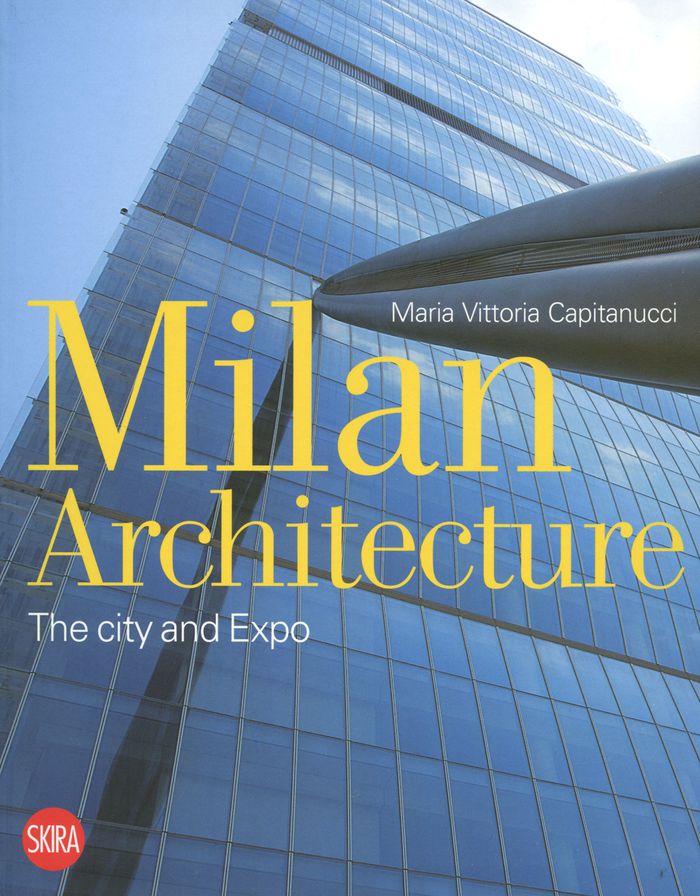
The new and remarkable season of Milanese architecture and its great protagonists. An interpretation of the recent and decisive transformations of Milan, with a focus on the Expo area, including the international pavilions and service structures.
$30.00
(disponible sur commande)
Résumé:
The new and remarkable season of Milanese architecture and its great protagonists. An interpretation of the recent and decisive transformations of Milan, with a focus on the Expo area, including the international pavilions and service structures.
Titre:
Milan architectureL the city and expo
Actions:
Prix:
$30.00
(disponible sur commande)
Résumé:
The new and remarkable season of Milanese architecture and its great protagonists. An interpretation of the recent and decisive transformations of Milan, with a focus on the Expo area, including the international pavilions and service structures.
Milan architectureL the city and expo
Actions:
Prix:
$30.00
(disponible sur commande)
Résumé:
The new and remarkable season of Milanese architecture and its great protagonists. An interpretation of the recent and decisive transformations of Milan, with a focus on the Expo area, including the international pavilions and service structures.
Classification:
livres
livres
Publication:
mars 2016
mars 2016


