


226 Résultats
Classification:
livres
livres
Actions:
Prix:
$34.95
(disponible sur commande)
Résumé:
Les musées français ont été largement renouvelés et remodelés, voire reconstruits, depuis une génération : ils suscitent aujourd’hui un attachement unanime de la part d’un public de plus en plus nombreux. Mais cette mutation spectaculaire a souvent conduit à célébrer les progrès accomplis au détriment de la mémoire des lieux et des hommes. Dans son moment fondateur, en(...)
$34.95
(disponible sur commande)
Résumé:
Les musées français ont été largement renouvelés et remodelés, voire reconstruits, depuis une génération : ils suscitent aujourd’hui un attachement unanime de la part d’un public de plus en plus nombreux. Mais cette mutation spectaculaire a souvent conduit à célébrer les progrès accomplis au détriment de la mémoire des lieux et des hommes. Dans son moment fondateur, en(...)
Titre:
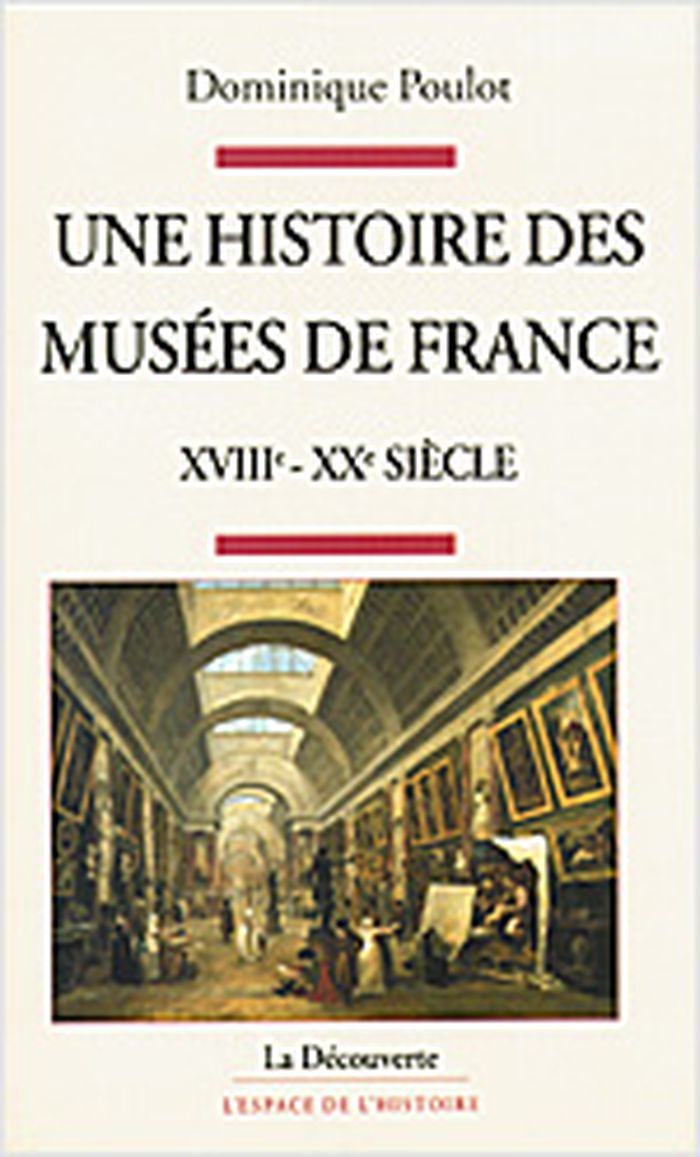
Une histoire des musées de France, XVIIIe-XXe siècle
Actions:
Prix:
$34.95
(disponible sur commande)
Résumé:
Les musées français ont été largement renouvelés et remodelés, voire reconstruits, depuis une génération : ils suscitent aujourd’hui un attachement unanime de la part d’un public de plus en plus nombreux. Mais cette mutation spectaculaire a souvent conduit à célébrer les progrès accomplis au détriment de la mémoire des lieux et des hommes. Dans son moment fondateur, en rupture avec le secret des collections particulières, le musée a voulu illustrer l’utilité publique de l’art et du savoir. Du XIXe siècle au XXe siècle, entre bureaux parisiens et conservateurs locaux, une institutionnalisation décisive s’accomplit au service, selon les cas, des propagandes républicaines ou monarchiques. Les musées attestent du goût français, mettent en scène la profondeur historique de la nation, et participent à la construction d’identités collectives. La fin du XXe siècle voit surgir un nouveau modèle d’établissement, qui place les publics au centre de ses préoccupations et contribue au développement culturel comme à la définition d’un patrimoine. Ces deux siècles ont connu de nombreux conflits de musées, la disparition de certains, la reconversion radicale d’autres, et, en guise d’innovations, quelques déménagements de collections. Loin d’une image stéréotypée de l’institution, l’auteur montre combien son histoire, dans ses rencontres plus ou moins réussies avec les visiteurs, témoigne d’engagements politiques et sociaux, autant que d’évolutions professionnelles et de configurations disciplinaires.
Une histoire des musées de France, XVIIIe-XXe siècle
Actions:
Prix:
$34.95
(disponible sur commande)
Résumé:
Les musées français ont été largement renouvelés et remodelés, voire reconstruits, depuis une génération : ils suscitent aujourd’hui un attachement unanime de la part d’un public de plus en plus nombreux. Mais cette mutation spectaculaire a souvent conduit à célébrer les progrès accomplis au détriment de la mémoire des lieux et des hommes. Dans son moment fondateur, en rupture avec le secret des collections particulières, le musée a voulu illustrer l’utilité publique de l’art et du savoir. Du XIXe siècle au XXe siècle, entre bureaux parisiens et conservateurs locaux, une institutionnalisation décisive s’accomplit au service, selon les cas, des propagandes républicaines ou monarchiques. Les musées attestent du goût français, mettent en scène la profondeur historique de la nation, et participent à la construction d’identités collectives. La fin du XXe siècle voit surgir un nouveau modèle d’établissement, qui place les publics au centre de ses préoccupations et contribue au développement culturel comme à la définition d’un patrimoine. Ces deux siècles ont connu de nombreux conflits de musées, la disparition de certains, la reconversion radicale d’autres, et, en guise d’innovations, quelques déménagements de collections. Loin d’une image stéréotypée de l’institution, l’auteur montre combien son histoire, dans ses rencontres plus ou moins réussies avec les visiteurs, témoigne d’engagements politiques et sociaux, autant que d’évolutions professionnelles et de configurations disciplinaires.
Classification:
livres
livres
Publication:
avril 2005, Paris
avril 2005, Paris
Classification:
livres
livres
Titre:
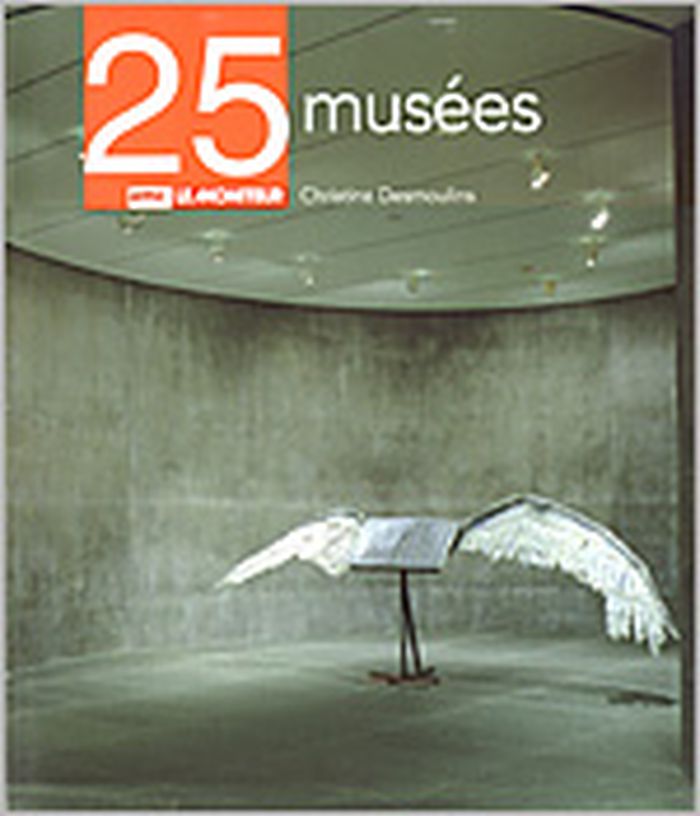
25 musées
25 musées
Actions:
Prix:
$83.95
(disponible sur commande)
Résumé:
Après un panorama des musées de l'Antiquité à nos jours, cet ouvrage propose un choix de 25 projets récents, en France et à l'étranger, très différents par leur échelle, leur propos et leur esthétique. Ils sont classés en trois thèmes : le musée dans la ville ; le musée dans son paysage ; les restructurations et les extensions.
$83.95
(disponible sur commande)
Résumé:
Après un panorama des musées de l'Antiquité à nos jours, cet ouvrage propose un choix de 25 projets récents, en France et à l'étranger, très différents par leur échelle, leur propos et leur esthétique. Ils sont classés en trois thèmes : le musée dans la ville ; le musée dans son paysage ; les restructurations et les extensions.
Publication:
avril 2005, Paris
avril 2005, Paris
Titre:
25 musées
Actions:
Prix:
$83.95
(disponible sur commande)
Résumé:
Après un panorama des musées de l'Antiquité à nos jours, cet ouvrage propose un choix de 25 projets récents, en France et à l'étranger, très différents par leur échelle, leur propos et leur esthétique. Ils sont classés en trois thèmes : le musée dans la ville ; le musée dans son paysage ; les restructurations et les extensions.
25 musées
Actions:
Prix:
$83.95
(disponible sur commande)
Résumé:
Après un panorama des musées de l'Antiquité à nos jours, cet ouvrage propose un choix de 25 projets récents, en France et à l'étranger, très différents par leur échelle, leur propos et leur esthétique. Ils sont classés en trois thèmes : le musée dans la ville ; le musée dans son paysage ; les restructurations et les extensions.
Classification:
livres
livres
Publication:
avril 2005, Paris
avril 2005, Paris
Classification:
livres
livres
Actions:
Prix:
$19.95
(disponible sur commande)
Résumé:
What is the future of the art museum? Should artists and critics have greater say in museum programming? What role can new museum technologies play in the future of the art museum? How should art museums address and correct past histories of predjudice and exclusion? Are art museums doomed to extinction? These pertinent questions and others are asked, discussed, and(...)
$19.95
(disponible sur commande)
Résumé:
What is the future of the art museum? Should artists and critics have greater say in museum programming? What role can new museum technologies play in the future of the art museum? How should art museums address and correct past histories of predjudice and exclusion? Are art museums doomed to extinction? These pertinent questions and others are asked, discussed, and(...)
Titre:
Museums of tomorrow : a virtual discussion
Actions:
Prix:
$19.95
(disponible sur commande)
Résumé:
What is the future of the art museum? Should artists and critics have greater say in museum programming? What role can new museum technologies play in the future of the art museum? How should art museums address and correct past histories of predjudice and exclusion? Are art museums doomed to extinction? These pertinent questions and others are asked, discussed, and sometimes even answered in "Museums of tomorrow" - documentation of a two-week online conference on the role and future of art museums. Thirty scholars, artists, museum directors, and curators participated in the discussion which was moderated by curator and essayist Maurice Berger for the Georgia O’Keeffe Museum’s Research Center Website.
Museums of tomorrow : a virtual discussion
Actions:
Prix:
$19.95
(disponible sur commande)
Résumé:
What is the future of the art museum? Should artists and critics have greater say in museum programming? What role can new museum technologies play in the future of the art museum? How should art museums address and correct past histories of predjudice and exclusion? Are art museums doomed to extinction? These pertinent questions and others are asked, discussed, and sometimes even answered in "Museums of tomorrow" - documentation of a two-week online conference on the role and future of art museums. Thirty scholars, artists, museum directors, and curators participated in the discussion which was moderated by curator and essayist Maurice Berger for the Georgia O’Keeffe Museum’s Research Center Website.
Classification:
livres
livres
Publication:
mai 2005, New York
mai 2005, New York
Classification:
livres
livres
Actions:
Prix:
$19.50
(disponible sur commande)
Résumé:
Ever since it opened, in 1959, Frank Lloyd Wright's Solomon R. Guggenheim Museum, in New York City, has captured the imagination of everyone who has experienced it firsthand. This book brings together five decades of cartoons and cover illustrations of the iconic museum, along with period photographs.
$19.50
(disponible sur commande)
Résumé:
Ever since it opened, in 1959, Frank Lloyd Wright's Solomon R. Guggenheim Museum, in New York City, has captured the imagination of everyone who has experienced it firsthand. This book brings together five decades of cartoons and cover illustrations of the iconic museum, along with period photographs.
Publication:
janvier 1900, New York
janvier 1900, New York
Titre:
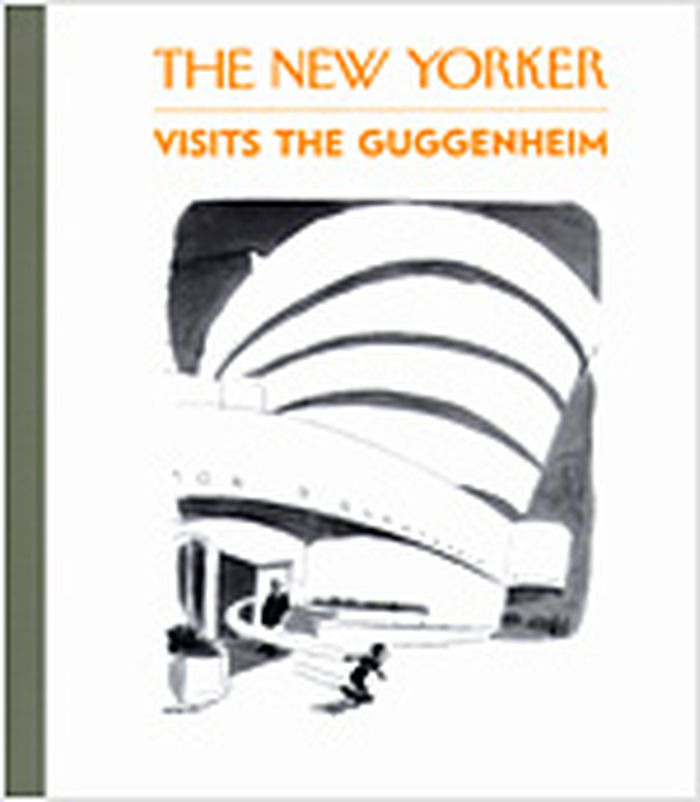
The New Yorker visits the Guggenheim
Actions:
Prix:
$19.50
(disponible sur commande)
Résumé:
Ever since it opened, in 1959, Frank Lloyd Wright's Solomon R. Guggenheim Museum, in New York City, has captured the imagination of everyone who has experienced it firsthand. This book brings together five decades of cartoons and cover illustrations of the iconic museum, along with period photographs.
The New Yorker visits the Guggenheim
Actions:
Prix:
$19.50
(disponible sur commande)
Résumé:
Ever since it opened, in 1959, Frank Lloyd Wright's Solomon R. Guggenheim Museum, in New York City, has captured the imagination of everyone who has experienced it firsthand. This book brings together five decades of cartoons and cover illustrations of the iconic museum, along with period photographs.
Classification:
livres
livres
Publication:
janvier 1900, New York
janvier 1900, New York
Classification:
livres
livres
Actions:
Prix:
$29.95
(disponible sur commande)
Résumé:
Rich in images, "Asking Questions" offers a kaleidoscopic perspective of ten years of architectural design at the Gerrit Rietveld Academy. The Gerrit Rietveld Academy works to a unique educational concept, as its students are encouraged to approach assignments in their own way. This is why its graduates cannot be called straightforward interior designers. Asking Questions(...)
$29.95
(disponible sur commande)
Résumé:
Rich in images, "Asking Questions" offers a kaleidoscopic perspective of ten years of architectural design at the Gerrit Rietveld Academy. The Gerrit Rietveld Academy works to a unique educational concept, as its students are encouraged to approach assignments in their own way. This is why its graduates cannot be called straightforward interior designers. Asking Questions(...)
Publication:
janvier 1900, Rotterdam
janvier 1900, Rotterdam
Titre:
Asking questions : 10 years of architectural design at the Gerrit Rietveld Academy
Actions:
Prix:
$29.95
(disponible sur commande)
Résumé:
Rich in images, "Asking Questions" offers a kaleidoscopic perspective of ten years of architectural design at the Gerrit Rietveld Academy. The Gerrit Rietveld Academy works to a unique educational concept, as its students are encouraged to approach assignments in their own way. This is why its graduates cannot be called straightforward interior designers. Asking Questions paints a picture of the academy's conceptual approach to architecture through a historical perspective of its education, student statistics, an inventory of outstanding study assignments and an overview of work done by graduates once they had left the academy. Since then, they have been active in all branches of the design industry.
Asking questions : 10 years of architectural design at the Gerrit Rietveld Academy
Actions:
Prix:
$29.95
(disponible sur commande)
Résumé:
Rich in images, "Asking Questions" offers a kaleidoscopic perspective of ten years of architectural design at the Gerrit Rietveld Academy. The Gerrit Rietveld Academy works to a unique educational concept, as its students are encouraged to approach assignments in their own way. This is why its graduates cannot be called straightforward interior designers. Asking Questions paints a picture of the academy's conceptual approach to architecture through a historical perspective of its education, student statistics, an inventory of outstanding study assignments and an overview of work done by graduates once they had left the academy. Since then, they have been active in all branches of the design industry.
Classification:
livres
livres
Publication:
janvier 1900, Rotterdam
janvier 1900, Rotterdam
Classification:
livres
livres
Actions:
Prix:
$64.95
(disponible sur commande)
Résumé:
Le Pavillon français à la Biennale d'architecture de Venise 2004 présente un projet inédit autour des « Métamorphoses durables » de la ville. Il est le résultat du travail de 3 équipes de 5 architectes et paysagistes qui ont chacune réfléchi de manière prospective à l'évolution d'une zone géographique d'une ville en 2014, 2034 et 2064. Cet ouvrage rend compte du(...)
$64.95
(disponible sur commande)
Résumé:
Le Pavillon français à la Biennale d'architecture de Venise 2004 présente un projet inédit autour des « Métamorphoses durables » de la ville. Il est le résultat du travail de 3 équipes de 5 architectes et paysagistes qui ont chacune réfléchi de manière prospective à l'évolution d'une zone géographique d'une ville en 2014, 2034 et 2064. Cet ouvrage rend compte du(...)
Publication:
novembre 2004, Paris
novembre 2004, Paris
Titre:
2004 Métamorphoses durables : jeu prospectif pour un projet de ville durable / prosective game for a sustainable city project
Actions:
Prix:
$64.95
(disponible sur commande)
Résumé:
Le Pavillon français à la Biennale d'architecture de Venise 2004 présente un projet inédit autour des « Métamorphoses durables » de la ville. Il est le résultat du travail de 3 équipes de 5 architectes et paysagistes qui ont chacune réfléchi de manière prospective à l'évolution d'une zone géographique d'une ville en 2014, 2034 et 2064. Cet ouvrage rend compte du processus créatif entrepris. Le DVD, qui lui est associé, présente les films réalisés au cours de ce projet original.
2004 Métamorphoses durables : jeu prospectif pour un projet de ville durable / prosective game for a sustainable city project
Actions:
Prix:
$64.95
(disponible sur commande)
Résumé:
Le Pavillon français à la Biennale d'architecture de Venise 2004 présente un projet inédit autour des « Métamorphoses durables » de la ville. Il est le résultat du travail de 3 équipes de 5 architectes et paysagistes qui ont chacune réfléchi de manière prospective à l'évolution d'une zone géographique d'une ville en 2014, 2034 et 2064. Cet ouvrage rend compte du processus créatif entrepris. Le DVD, qui lui est associé, présente les films réalisés au cours de ce projet original.
Classification:
livres
livres
Publication:
novembre 2004, Paris
novembre 2004, Paris
Classification:
livres
livres
Actions:
Prix:
$53.95
(disponible sur commande)
Résumé:
Le Centre Pompidou a la garde d’un patrimoine exceptionnel couvrant la création dans toute sa diversité depuis le début du XXe siècle jusqu’à la période la plus contemporaine. Avec la création d’un site à Metz, il fait franchir une nouvelle étape à la politique de diffusion extérieure engagée en 1997, lors de ses travaux de rénovation. Le projet messin se veut un exemple(...)
$53.95
(disponible sur commande)
Résumé:
Le Centre Pompidou a la garde d’un patrimoine exceptionnel couvrant la création dans toute sa diversité depuis le début du XXe siècle jusqu’à la période la plus contemporaine. Avec la création d’un site à Metz, il fait franchir une nouvelle étape à la politique de diffusion extérieure engagée en 1997, lors de ses travaux de rénovation. Le projet messin se veut un exemple(...)
Titre:
Concours Centre Pompidou - Metz
Actions:
Prix:
$53.95
(disponible sur commande)
Résumé:
Le Centre Pompidou a la garde d’un patrimoine exceptionnel couvrant la création dans toute sa diversité depuis le début du XXe siècle jusqu’à la période la plus contemporaine. Avec la création d’un site à Metz, il fait franchir une nouvelle étape à la politique de diffusion extérieure engagée en 1997, lors de ses travaux de rénovation. Le projet messin se veut un exemple ambitieux de décentralisation. L’institution messine va bénéficier, en 2007, d’un projet architectural choisi au terme d’un concours international d’architecture, comme l’avait été, en son temps, le bâtiment de Paris conçu par Renzo Piano et Richard Rogers. Ce projet situé dans le quartier de l’Amphithéâtre, s’inscrit dans le cadre d’un vaste programme de rénovation urbaine engagé par la Ville de Metz.
Concours Centre Pompidou - Metz
Actions:
Prix:
$53.95
(disponible sur commande)
Résumé:
Le Centre Pompidou a la garde d’un patrimoine exceptionnel couvrant la création dans toute sa diversité depuis le début du XXe siècle jusqu’à la période la plus contemporaine. Avec la création d’un site à Metz, il fait franchir une nouvelle étape à la politique de diffusion extérieure engagée en 1997, lors de ses travaux de rénovation. Le projet messin se veut un exemple ambitieux de décentralisation. L’institution messine va bénéficier, en 2007, d’un projet architectural choisi au terme d’un concours international d’architecture, comme l’avait été, en son temps, le bâtiment de Paris conçu par Renzo Piano et Richard Rogers. Ce projet situé dans le quartier de l’Amphithéâtre, s’inscrit dans le cadre d’un vaste programme de rénovation urbaine engagé par la Ville de Metz.
Classification:
livres
livres
Publication:
septembre 2004, Paris
septembre 2004, Paris
Classification:
livres
livres
Titre:
The new Museum of Modern Art
The new Museum of Modern Art
Actions:
Prix:
$16.00
(disponible sur commande)
Résumé:
Having undergone the most extensive building project in its history, The Museum of Modern Art reopened in Manhattan in November 2004, coinciding with MoMA's 75th anniversary. The 630,000-square-foot complex is nearly twice the size of the former facility, with dramatically expanded and redesigned spaces for exhibitions, public programming, educational outreach, and(...)
$16.00
(disponible sur commande)
Résumé:
Having undergone the most extensive building project in its history, The Museum of Modern Art reopened in Manhattan in November 2004, coinciding with MoMA's 75th anniversary. The 630,000-square-foot complex is nearly twice the size of the former facility, with dramatically expanded and redesigned spaces for exhibitions, public programming, educational outreach, and(...)
Publication:
novembre 2004, New York
novembre 2004, New York
Titre:
The new Museum of Modern Art
Actions:
Prix:
$16.00
(disponible sur commande)
Résumé:
Having undergone the most extensive building project in its history, The Museum of Modern Art reopened in Manhattan in November 2004, coinciding with MoMA's 75th anniversary. The 630,000-square-foot complex is nearly twice the size of the former facility, with dramatically expanded and redesigned spaces for exhibitions, public programming, educational outreach, and scholarly research. This book offers a concise overview of the new building and MoMA's intentions for its construction project by Glenn D. Lowry, Director of The Museum of Modern Art.
The new Museum of Modern Art
Actions:
Prix:
$16.00
(disponible sur commande)
Résumé:
Having undergone the most extensive building project in its history, The Museum of Modern Art reopened in Manhattan in November 2004, coinciding with MoMA's 75th anniversary. The 630,000-square-foot complex is nearly twice the size of the former facility, with dramatically expanded and redesigned spaces for exhibitions, public programming, educational outreach, and scholarly research. This book offers a concise overview of the new building and MoMA's intentions for its construction project by Glenn D. Lowry, Director of The Museum of Modern Art.
Classification:
livres
livres
Publication:
novembre 2004, New York
novembre 2004, New York
Classification:
livres
livres
Actions:
Prix:
$136.00
(disponible sur commande)
Résumé:
À l'occasion de la septième session des concours, Europan publie le catalogue des projets primées par les jurys des 15 concours nationaux organisés dans 68 villes européennes et dans 19 pays différents autour d’une problématique commune : « Challenge suburbain, intensités et diversités résidentielles ». Comment transformer la ville dispersée pour créer une ville durable,(...)
$136.00
(disponible sur commande)
Résumé:
À l'occasion de la septième session des concours, Europan publie le catalogue des projets primées par les jurys des 15 concours nationaux organisés dans 68 villes européennes et dans 19 pays différents autour d’une problématique commune : « Challenge suburbain, intensités et diversités résidentielles ». Comment transformer la ville dispersée pour créer une ville durable,(...)
Titre:
Europan 7 : résultats européens
Actions:
Prix:
$136.00
(disponible sur commande)
Résumé:
À l'occasion de la septième session des concours, Europan publie le catalogue des projets primées par les jurys des 15 concours nationaux organisés dans 68 villes européennes et dans 19 pays différents autour d’une problématique commune : « Challenge suburbain, intensités et diversités résidentielles ». Comment transformer la ville dispersée pour créer une ville durable, écologique et urbaine, en s’appuyant sur la nouvelle demande sociale et culturelle émergente ? Comment faire de la création de nouveaux quartiers résidentiels aux typologies innovantes et à la complexité programmatique un outil de stratégie de qualification des aires suburbaines ?
Europan 7 : résultats européens
Actions:
Prix:
$136.00
(disponible sur commande)
Résumé:
À l'occasion de la septième session des concours, Europan publie le catalogue des projets primées par les jurys des 15 concours nationaux organisés dans 68 villes européennes et dans 19 pays différents autour d’une problématique commune : « Challenge suburbain, intensités et diversités résidentielles ». Comment transformer la ville dispersée pour créer une ville durable, écologique et urbaine, en s’appuyant sur la nouvelle demande sociale et culturelle émergente ? Comment faire de la création de nouveaux quartiers résidentiels aux typologies innovantes et à la complexité programmatique un outil de stratégie de qualification des aires suburbaines ?
Classification:
livres
livres
Publication:
juin 2004, Paris
juin 2004, Paris
Classification:
livres
livres
Titre:
Design d'exposition : dix mises en espace d'expositions au Musée national des beaux-arts du Québec
Design d'exposition : dix mises en espace d'expositions au Musée national des beaux-arts du Québec
Actions:
Prix:
$29.95
(disponible sur commande)
Résumé:
Cette publication donne une voix aux créateurs qui travaillent habituellement dans l'ombre et dont le travail est crucial quant à la transformation d'expositions en actes de communication. Dix expositions majeures, présentées entre 1998 et 2001, sont décrites en termes d'articulation de l'espace via la lumière et les couleurs, la liberté des parcours, la fluidité et le(...)
$29.95
(disponible sur commande)
Résumé:
Cette publication donne une voix aux créateurs qui travaillent habituellement dans l'ombre et dont le travail est crucial quant à la transformation d'expositions en actes de communication. Dix expositions majeures, présentées entre 1998 et 2001, sont décrites en termes d'articulation de l'espace via la lumière et les couleurs, la liberté des parcours, la fluidité et le(...)
Publication:
mai 2004, Québec
mai 2004, Québec
Titre:
Design d'exposition : dix mises en espace d'expositions au Musée national des beaux-arts du Québec
Actions:
Prix:
$29.95
(disponible sur commande)
Résumé:
Cette publication donne une voix aux créateurs qui travaillent habituellement dans l'ombre et dont le travail est crucial quant à la transformation d'expositions en actes de communication. Dix expositions majeures, présentées entre 1998 et 2001, sont décrites en termes d'articulation de l'espace via la lumière et les couleurs, la liberté des parcours, la fluidité et le mouvement, ainsi que d'une myriade de détails définissant l'exposition et l'expérience qui en découle pour le spectateur. Parmi les expositions, on y discute celle de Rodin, du "Ludique" et de Denis Juneau.
Design d'exposition : dix mises en espace d'expositions au Musée national des beaux-arts du Québec
Actions:
Prix:
$29.95
(disponible sur commande)
Résumé:
Cette publication donne une voix aux créateurs qui travaillent habituellement dans l'ombre et dont le travail est crucial quant à la transformation d'expositions en actes de communication. Dix expositions majeures, présentées entre 1998 et 2001, sont décrites en termes d'articulation de l'espace via la lumière et les couleurs, la liberté des parcours, la fluidité et le mouvement, ainsi que d'une myriade de détails définissant l'exposition et l'expérience qui en découle pour le spectateur. Parmi les expositions, on y discute celle de Rodin, du "Ludique" et de Denis Juneau.
Classification:
livres
livres
Publication:
mai 2004, Québec
mai 2004, Québec


