


235 Résultats
Classification:
livres
livres
Titre:
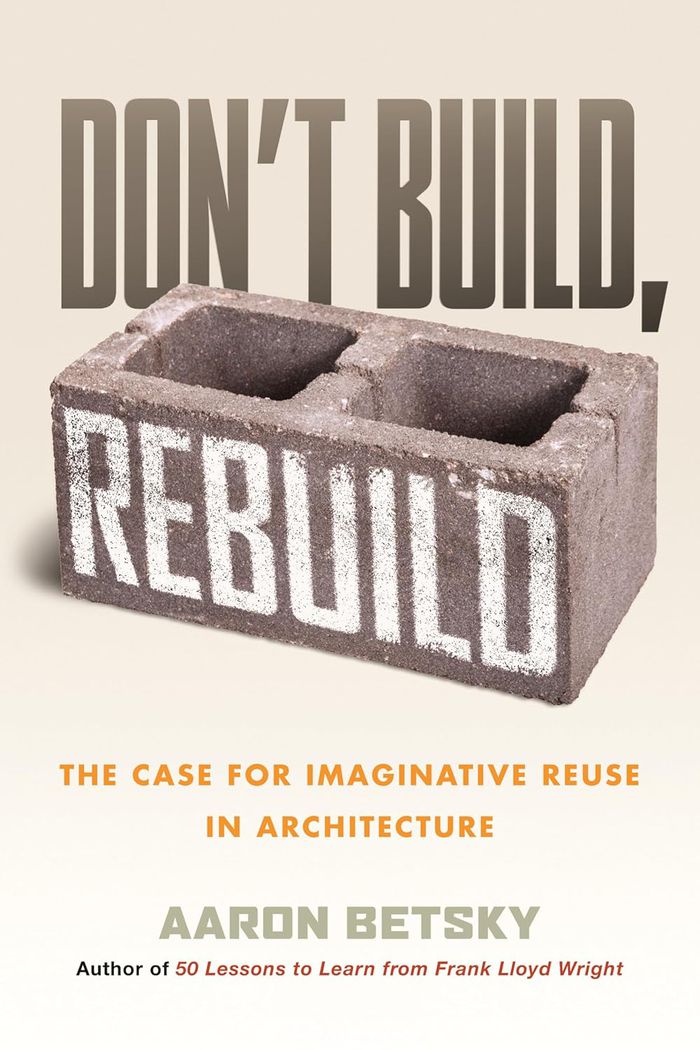
Don't build, rebuild
Don't build, rebuild
Actions:
Prix:
$25.95
(disponible sur commande)
Résumé:
As climate change has escalated into a crisis, the reuse of existing structures is the only way to even begin to preserve our wood, sand, silicon, and iron, let alone stop belching carbon monoxide into the air. Our housing crisis means that we need usable buildings now more than ever, but architect and critic Aaron Betsky shows that new construction—often seeking to(...)
$25.95
(disponible sur commande)
Résumé:
As climate change has escalated into a crisis, the reuse of existing structures is the only way to even begin to preserve our wood, sand, silicon, and iron, let alone stop belching carbon monoxide into the air. Our housing crisis means that we need usable buildings now more than ever, but architect and critic Aaron Betsky shows that new construction—often seeking to(...)
Titre:
Don't build, rebuild
Actions:
Prix:
$25.95
(disponible sur commande)
Résumé:
As climate change has escalated into a crisis, the reuse of existing structures is the only way to even begin to preserve our wood, sand, silicon, and iron, let alone stop belching carbon monoxide into the air. Our housing crisis means that we need usable buildings now more than ever, but architect and critic Aaron Betsky shows that new construction—often seeking to maximize profits rather than resources, often soulless in its feel—is not the answer. Whenever possible, it is better to repair, recycle, renovate, and reuse—not only from an environmental perspective, but culturally and artistically as well.
Don't build, rebuild
Actions:
Prix:
$25.95
(disponible sur commande)
Résumé:
As climate change has escalated into a crisis, the reuse of existing structures is the only way to even begin to preserve our wood, sand, silicon, and iron, let alone stop belching carbon monoxide into the air. Our housing crisis means that we need usable buildings now more than ever, but architect and critic Aaron Betsky shows that new construction—often seeking to maximize profits rather than resources, often soulless in its feel—is not the answer. Whenever possible, it is better to repair, recycle, renovate, and reuse—not only from an environmental perspective, but culturally and artistically as well.
Classification:
livres
livres
Publication:
novembre 2025
novembre 2025
Classification:
livres
livres
Prix:
$80.00
(disponible sur commande)
Résumé:
In "Reinventing heritage," Park Associati—a Milan-based interdisciplinary collective of architects, designers, and researchers—explores the transformative potential of adaptive reuse in architecture as a key strategy to address environmental, social, and economic challenges. Rather than demolishing and rebuilding, adaptive reuse champions the repurposing of existing(...)
$80.00
(disponible sur commande)
Résumé:
In "Reinventing heritage," Park Associati—a Milan-based interdisciplinary collective of architects, designers, and researchers—explores the transformative potential of adaptive reuse in architecture as a key strategy to address environmental, social, and economic challenges. Rather than demolishing and rebuilding, adaptive reuse champions the repurposing of existing(...)
Titre:
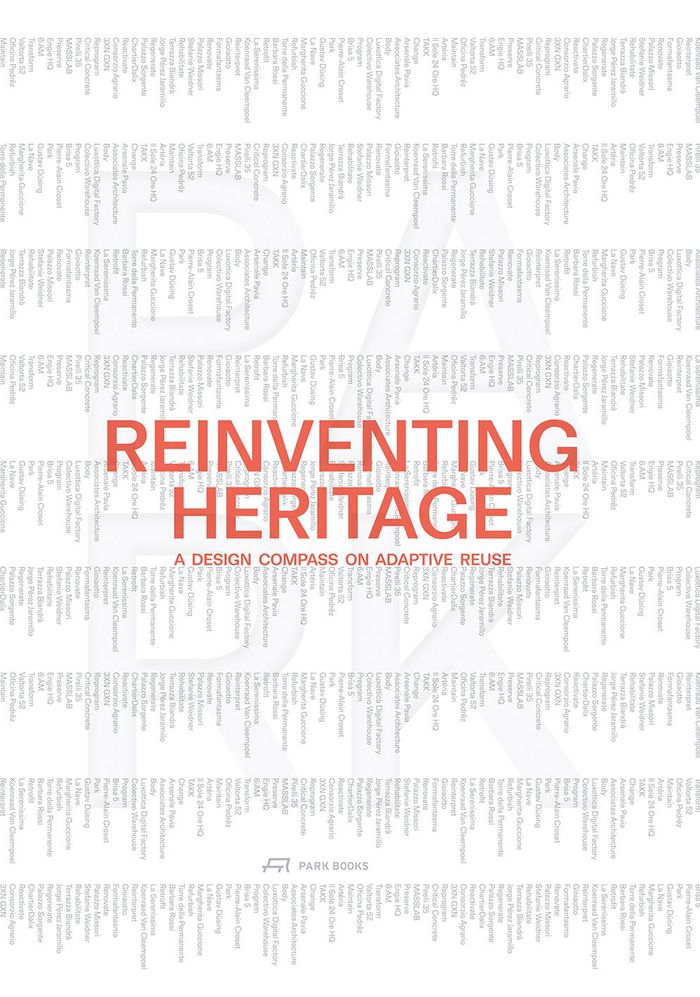
Reinventing heritage: A design compass on adaptive reuse
Actions:
Prix:
$80.00
(disponible sur commande)
Résumé:
In "Reinventing heritage," Park Associati—a Milan-based interdisciplinary collective of architects, designers, and researchers—explores the transformative potential of adaptive reuse in architecture as a key strategy to address environmental, social, and economic challenges. Rather than demolishing and rebuilding, adaptive reuse champions the repurposing of existing structures to extend their lifecycle, reduce waste, and foster sustainable urban regeneration. Through a combination of theoretical insights and practical case studies, "Reinventing heritage" highlights the diverse ways in which adaptive reuse can revitalize cities and honor cultural heritage while creating innovative spaces serving contemporary demands.
Reinventing heritage: A design compass on adaptive reuse
Actions:
Prix:
$80.00
(disponible sur commande)
Résumé:
In "Reinventing heritage," Park Associati—a Milan-based interdisciplinary collective of architects, designers, and researchers—explores the transformative potential of adaptive reuse in architecture as a key strategy to address environmental, social, and economic challenges. Rather than demolishing and rebuilding, adaptive reuse champions the repurposing of existing structures to extend their lifecycle, reduce waste, and foster sustainable urban regeneration. Through a combination of theoretical insights and practical case studies, "Reinventing heritage" highlights the diverse ways in which adaptive reuse can revitalize cities and honor cultural heritage while creating innovative spaces serving contemporary demands.
Classification:
livres
livres
Publication:
décembre 2025
décembre 2025
Classification:
livres
livres
Actions:
Prix:
$84.00
(disponible sur commande)
Résumé:
This book explores the innovative culture of reusing materials in fashion, design, and architecture and delves into creative approaches to utilizing production waste, recycled, and upcycled materials. ''Circular Materials'' is organized along chapters, each dedicated to the origin of the materials used, with one standout case study per chapter. All designers and(...)
$84.00
(disponible sur commande)
Résumé:
This book explores the innovative culture of reusing materials in fashion, design, and architecture and delves into creative approaches to utilizing production waste, recycled, and upcycled materials. ''Circular Materials'' is organized along chapters, each dedicated to the origin of the materials used, with one standout case study per chapter. All designers and(...)
Titre:
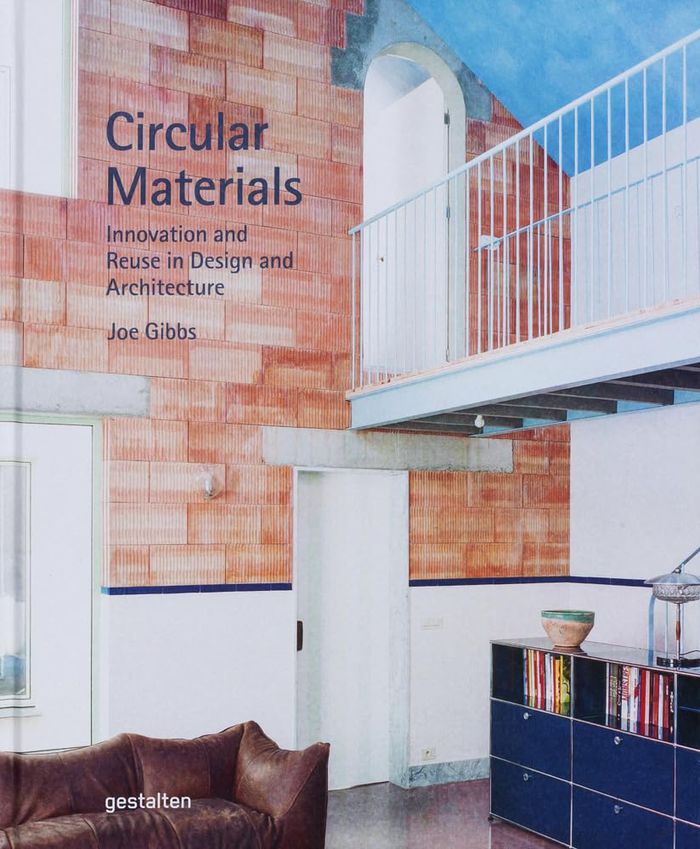
Circular materials: Innovation and reuse in design and architecture
Actions:
Prix:
$84.00
(disponible sur commande)
Résumé:
This book explores the innovative culture of reusing materials in fashion, design, and architecture and delves into creative approaches to utilizing production waste, recycled, and upcycled materials. ''Circular Materials'' is organized along chapters, each dedicated to the origin of the materials used, with one standout case study per chapter. All designers and studios presented are committed to creating impactful designs that build the future with reclaimed innovation.
Circular materials: Innovation and reuse in design and architecture
Actions:
Prix:
$84.00
(disponible sur commande)
Résumé:
This book explores the innovative culture of reusing materials in fashion, design, and architecture and delves into creative approaches to utilizing production waste, recycled, and upcycled materials. ''Circular Materials'' is organized along chapters, each dedicated to the origin of the materials used, with one standout case study per chapter. All designers and studios presented are committed to creating impactful designs that build the future with reclaimed innovation.
Classification:
livres
livres
Publication:
juin 2025
juin 2025
Classification:
livres
livres
Actions:
Prix:
$50.00
(disponible en magasin)
Résumé:
Les grands ensembles français connaissent aujourd'hui des orientations très contrastées, voire contradictoires : certains sont en voie de démolition quasi-complète depuis les Programmes nationaux de rénovation urbaine, d'autres sont considérés comme patrimoines, emblématiques de l'histoire urbaine française et à ce titre valorisés. Entre ces deux extrêmes existent par(...)
$50.00
(disponible en magasin)
Résumé:
Les grands ensembles français connaissent aujourd'hui des orientations très contrastées, voire contradictoires : certains sont en voie de démolition quasi-complète depuis les Programmes nationaux de rénovation urbaine, d'autres sont considérés comme patrimoines, emblématiques de l'histoire urbaine française et à ce titre valorisés. Entre ces deux extrêmes existent par(...)
Titre:
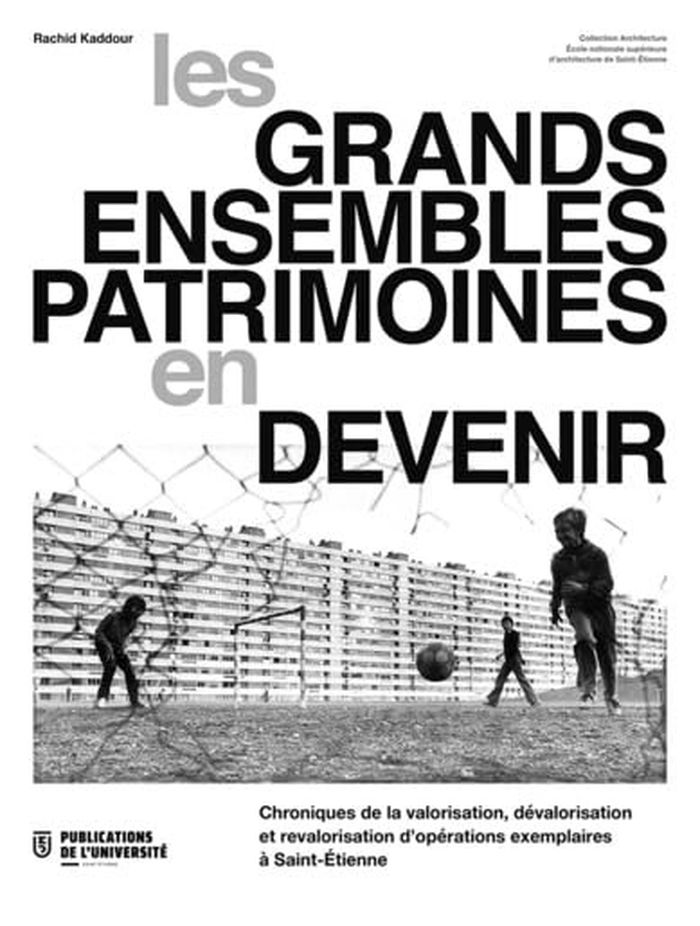
Les grands ensembles patrimoines en devenir
Actions:
Prix:
$50.00
(disponible en magasin)
Résumé:
Les grands ensembles français connaissent aujourd'hui des orientations très contrastées, voire contradictoires : certains sont en voie de démolition quasi-complète depuis les Programmes nationaux de rénovation urbaine, d'autres sont considérés comme patrimoines, emblématiques de l'histoire urbaine française et à ce titre valorisés. Entre ces deux extrêmes existent par ailleurs une multitude d'autres situations. Que peut-on alors dire du devenir des grands ensembles, à l'heure de leur soixantenaire ? Cet ouvrage prend pour objets de réflexion des grands ensembles exemplaires ceux du sud-est de Saint-Etienne. Beaulieu, comptant parmi la série de six qui en 1953 lance les grands ensembles français, est aujourd'hui labellisé Patrimoine du XXe siècle.
Les grands ensembles patrimoines en devenir
Actions:
Prix:
$50.00
(disponible en magasin)
Résumé:
Les grands ensembles français connaissent aujourd'hui des orientations très contrastées, voire contradictoires : certains sont en voie de démolition quasi-complète depuis les Programmes nationaux de rénovation urbaine, d'autres sont considérés comme patrimoines, emblématiques de l'histoire urbaine française et à ce titre valorisés. Entre ces deux extrêmes existent par ailleurs une multitude d'autres situations. Que peut-on alors dire du devenir des grands ensembles, à l'heure de leur soixantenaire ? Cet ouvrage prend pour objets de réflexion des grands ensembles exemplaires ceux du sud-est de Saint-Etienne. Beaulieu, comptant parmi la série de six qui en 1953 lance les grands ensembles français, est aujourd'hui labellisé Patrimoine du XXe siècle.
Classification:
livres
livres
Publication:
avril 2019
avril 2019
Classification:
livres
livres
Actions:
Prix:
$28.95
(disponible en magasin)
Résumé:
De la ferme briarde à la cité-jardin, des ateliers d'artistes aux gares, des maisons de villégiature aux théâtres de verdure, le label « Patrimoine d'intérêt régional », créé en 2017 par la Région Île-de-France, met en lumière un patrimoine souvent méconnu, insolite mais essentiel. Il distingue ces lieux qui façonnent la singularité et l'identité du territoire. Il invite(...)
$28.95
(disponible en magasin)
Résumé:
De la ferme briarde à la cité-jardin, des ateliers d'artistes aux gares, des maisons de villégiature aux théâtres de verdure, le label « Patrimoine d'intérêt régional », créé en 2017 par la Région Île-de-France, met en lumière un patrimoine souvent méconnu, insolite mais essentiel. Il distingue ces lieux qui façonnent la singularité et l'identité du territoire. Il invite(...)
Titre:
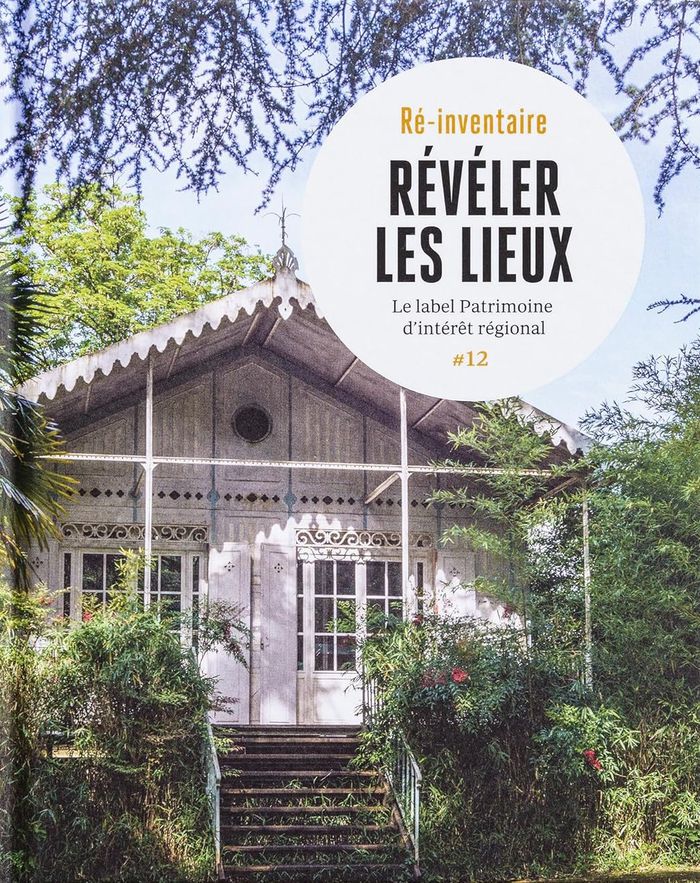
Ré-inventaire #12 : Révéler les lieux - le label Patrimoine d'intérêt régional
Actions:
Prix:
$28.95
(disponible en magasin)
Résumé:
De la ferme briarde à la cité-jardin, des ateliers d'artistes aux gares, des maisons de villégiature aux théâtres de verdure, le label « Patrimoine d'intérêt régional », créé en 2017 par la Région Île-de-France, met en lumière un patrimoine souvent méconnu, insolite mais essentiel. Il distingue ces lieux qui façonnent la singularité et l'identité du territoire. Il invite les Franciliens à redécouvrir, à quelques pas de chez eux, le paysage de leur quotidien : une mosaïque de lieux dévoilant une région d'une étonnante diversité, où la ruralité, l'industrie, la villégiature dialoguent avec la modernité architecturale. Ce nouvel opus de la collection Ré-inventaire propose un voyage photographique à travers une sélection de plus de soixante-dix sites, une invitation à la déambulation pour admirer des lieux souvent insoupçonnés.
Ré-inventaire #12 : Révéler les lieux - le label Patrimoine d'intérêt régional
Actions:
Prix:
$28.95
(disponible en magasin)
Résumé:
De la ferme briarde à la cité-jardin, des ateliers d'artistes aux gares, des maisons de villégiature aux théâtres de verdure, le label « Patrimoine d'intérêt régional », créé en 2017 par la Région Île-de-France, met en lumière un patrimoine souvent méconnu, insolite mais essentiel. Il distingue ces lieux qui façonnent la singularité et l'identité du territoire. Il invite les Franciliens à redécouvrir, à quelques pas de chez eux, le paysage de leur quotidien : une mosaïque de lieux dévoilant une région d'une étonnante diversité, où la ruralité, l'industrie, la villégiature dialoguent avec la modernité architecturale. Ce nouvel opus de la collection Ré-inventaire propose un voyage photographique à travers une sélection de plus de soixante-dix sites, une invitation à la déambulation pour admirer des lieux souvent insoupçonnés.
Classification:
livres
livres
Publication:
avril 2026
avril 2026
Classification:
livres
livres
Actions:
Prix:
$65.99
(disponible sur commande)
Résumé:
If a building could speak, what would it say? What would it sound like? Would it be worth listening to? This book treats buildings as deeply human creations - built by people for people; they come to embody the dreams, imaginings and stories that take place within them. David Littlefield and Saskia Lewis argue that buildings have voices and that it is worth listening(...)
$65.99
(disponible sur commande)
Résumé:
If a building could speak, what would it say? What would it sound like? Would it be worth listening to? This book treats buildings as deeply human creations - built by people for people; they come to embody the dreams, imaginings and stories that take place within them. David Littlefield and Saskia Lewis argue that buildings have voices and that it is worth listening(...)
Publication:
décembre 2007, Chichester
décembre 2007, Chichester
Titre:
Architectural voices : listening to old buildings
Actions:
Prix:
$65.99
(disponible sur commande)
Résumé:
If a building could speak, what would it say? What would it sound like? Would it be worth listening to? This book treats buildings as deeply human creations - built by people for people; they come to embody the dreams, imaginings and stories that take place within them. David Littlefield and Saskia Lewis argue that buildings have voices and that it is worth listening to what they have to say. By focusing on elderly structures that are the subject of reinvention, this book examines how the buildings guide architects and artists. These reinventions, or re-imaginings, are not merely examples of straightforward conservation, nor simple exercises in contrasting old and new; they represent a more sensitive, personal approach to creative reuse. The authors' accounts of more than 20 historic buildings and their interviews with the people responsible for renewing them, demonstrate that the poetic qualities of the places we inhabit are not limited to just architectural style. In this book, the voices of an abandoned cathedral, a former brothel, a stately home and a Royal Mail sorting office reveal themselves. Listening to these voices opens up a new dimension to understanding the lives and meanings of old buildings. Preface by Alain de Botton.
Architectural voices : listening to old buildings
Actions:
Prix:
$65.99
(disponible sur commande)
Résumé:
If a building could speak, what would it say? What would it sound like? Would it be worth listening to? This book treats buildings as deeply human creations - built by people for people; they come to embody the dreams, imaginings and stories that take place within them. David Littlefield and Saskia Lewis argue that buildings have voices and that it is worth listening to what they have to say. By focusing on elderly structures that are the subject of reinvention, this book examines how the buildings guide architects and artists. These reinventions, or re-imaginings, are not merely examples of straightforward conservation, nor simple exercises in contrasting old and new; they represent a more sensitive, personal approach to creative reuse. The authors' accounts of more than 20 historic buildings and their interviews with the people responsible for renewing them, demonstrate that the poetic qualities of the places we inhabit are not limited to just architectural style. In this book, the voices of an abandoned cathedral, a former brothel, a stately home and a Royal Mail sorting office reveal themselves. Listening to these voices opens up a new dimension to understanding the lives and meanings of old buildings. Preface by Alain de Botton.
Classification:
livres
livres
Publication:
décembre 2007, Chichester
décembre 2007, Chichester
Classification:
livres
livres
Actions:
Prix:
$45.95
(disponible sur commande)
Résumé:
Preserving New York: Winning the Right to Protect A Citys Landmarks is the largely unknown inspiring story of the origins of New York Citys nationally acclaimed landmarks law. The decades of struggle behind the law, its intellectual origins, the men and women who fought for it, the forces that shaped it, and the buildings lost and saved on the way to its ultimate passage,(...)
$45.95
(disponible sur commande)
Résumé:
Preserving New York: Winning the Right to Protect A Citys Landmarks is the largely unknown inspiring story of the origins of New York Citys nationally acclaimed landmarks law. The decades of struggle behind the law, its intellectual origins, the men and women who fought for it, the forces that shaped it, and the buildings lost and saved on the way to its ultimate passage,(...)
Publication:
octobre 2007, New York, London
octobre 2007, New York, London
Titre:
Preserving New York: winning the right to protect a City's landmark
Actions:
Prix:
$45.95
(disponible sur commande)
Résumé:
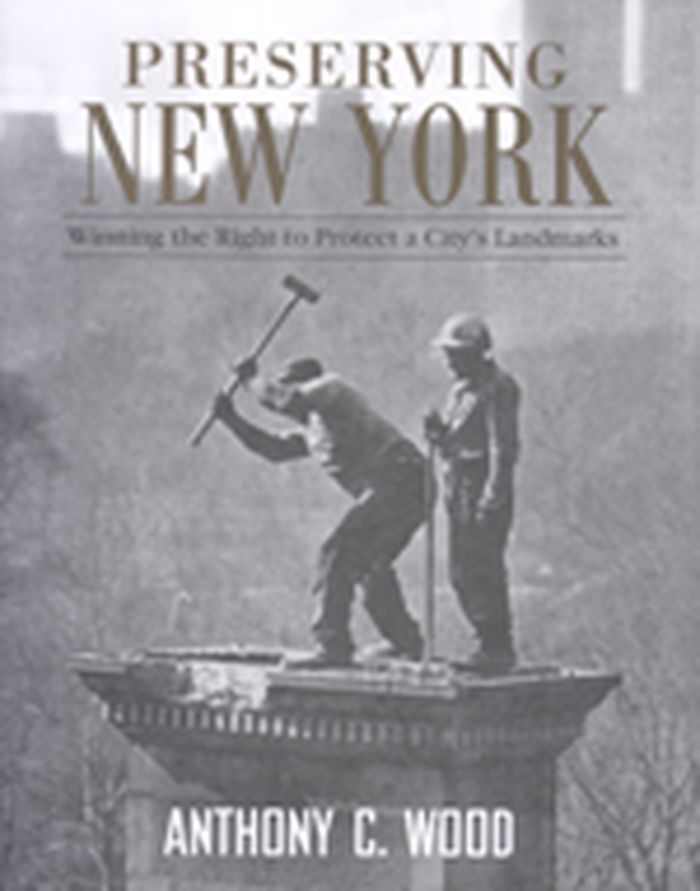
Preserving New York: Winning the Right to Protect A Citys Landmarks is the largely unknown inspiring story of the origins of New York Citys nationally acclaimed landmarks law. The decades of struggle behind the law, its intellectual origins, the men and women who fought for it, the forces that shaped it, and the buildings lost and saved on the way to its ultimate passage, span from 1913 to 1965. Intended for the interested public as well as students of New York City history, architecture, and preservation itself, over 100 illustrations help reveal a history richer and more complex than the accepted myth that the landmarks law sprang from the wreckage of the great Pennsylvania Station. Images include those by noted historic photographers as well as those from newspaper accounts of the time. Forgotten civic leaders such as Albert S. Bard and lost buildings including the Brokaw Mansions, are unveiled in an extensively researched narrative bringing this essential episode in New Yorks history to futuregenerations tasked with protecting the citys landmarks. For the first time, the story of how New York won the right to protect its treasured buildings, neighborhoods and special places is brought together to enjoy, inform, and inspire all who love New York.
Preserving New York: winning the right to protect a City's landmark
Actions:
Prix:
$45.95
(disponible sur commande)
Résumé:
Preserving New York: Winning the Right to Protect A Citys Landmarks is the largely unknown inspiring story of the origins of New York Citys nationally acclaimed landmarks law. The decades of struggle behind the law, its intellectual origins, the men and women who fought for it, the forces that shaped it, and the buildings lost and saved on the way to its ultimate passage, span from 1913 to 1965. Intended for the interested public as well as students of New York City history, architecture, and preservation itself, over 100 illustrations help reveal a history richer and more complex than the accepted myth that the landmarks law sprang from the wreckage of the great Pennsylvania Station. Images include those by noted historic photographers as well as those from newspaper accounts of the time. Forgotten civic leaders such as Albert S. Bard and lost buildings including the Brokaw Mansions, are unveiled in an extensively researched narrative bringing this essential episode in New Yorks history to futuregenerations tasked with protecting the citys landmarks. For the first time, the story of how New York won the right to protect its treasured buildings, neighborhoods and special places is brought together to enjoy, inform, and inspire all who love New York.
Classification:
livres
livres
Publication:
octobre 2007, New York, London
octobre 2007, New York, London
Classification:
livres
livres
Titre:
Theory of mouldings
Theory of mouldings
Actions:
Prix:
$27.50
(disponible sur commande)
Résumé:
With the revival of interest in traditional design, practitioners, students, and historians have begun to study and use the vocabulary of forms that so enriched our architectural heritage. None are as ubiquitous as mouldings, yet an in-depth analysis of them has been absent. This book fills an important gap in the current discourse of building. 92 illustrations.
$27.50
(disponible sur commande)
Résumé:
With the revival of interest in traditional design, practitioners, students, and historians have begun to study and use the vocabulary of forms that so enriched our architectural heritage. None are as ubiquitous as mouldings, yet an in-depth analysis of them has been absent. This book fills an important gap in the current discourse of building. 92 illustrations.
Publication:
juillet 2007, New York London
juillet 2007, New York London
Titre:
Theory of mouldings
Actions:
Prix:
$27.50
(disponible sur commande)
Résumé:
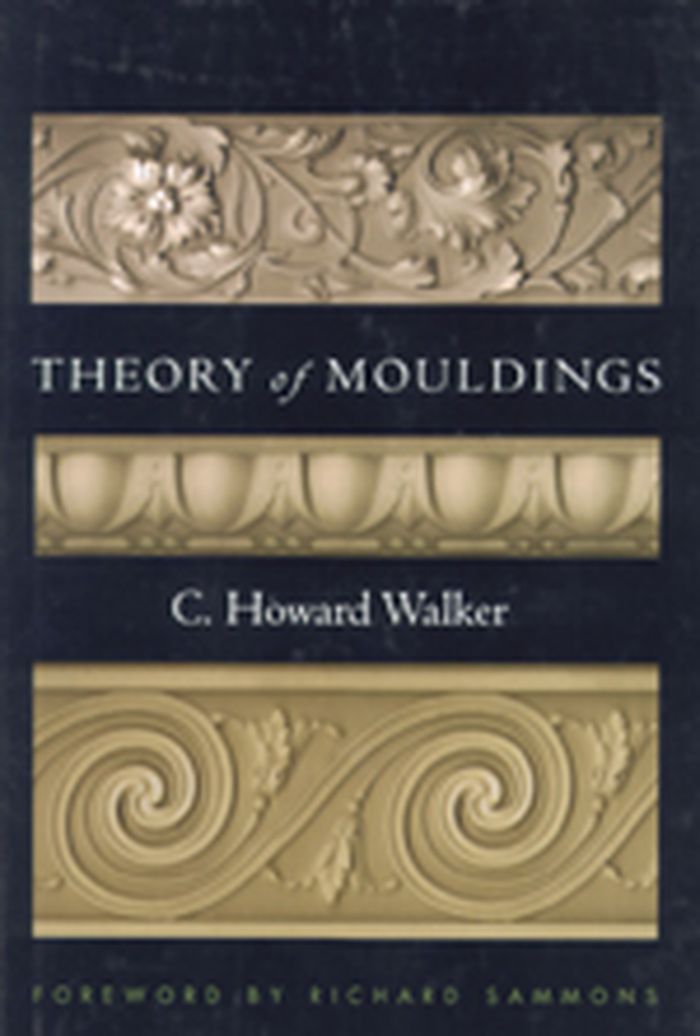
With the revival of interest in traditional design, practitioners, students, and historians have begun to study and use the vocabulary of forms that so enriched our architectural heritage. None are as ubiquitous as mouldings, yet an in-depth analysis of them has been absent. This book fills an important gap in the current discourse of building. 92 illustrations.
Theory of mouldings
Actions:
Prix:
$27.50
(disponible sur commande)
Résumé:
With the revival of interest in traditional design, practitioners, students, and historians have begun to study and use the vocabulary of forms that so enriched our architectural heritage. None are as ubiquitous as mouldings, yet an in-depth analysis of them has been absent. This book fills an important gap in the current discourse of building. 92 illustrations.
Classification:
livres
livres
Publication:
juillet 2007, New York London
juillet 2007, New York London
Classification:
livres
livres
Titre:
Portes Bruxelloises
Portes Bruxelloises
Actions:
Prix:
$24.95
(disponible sur commande)
Résumé:
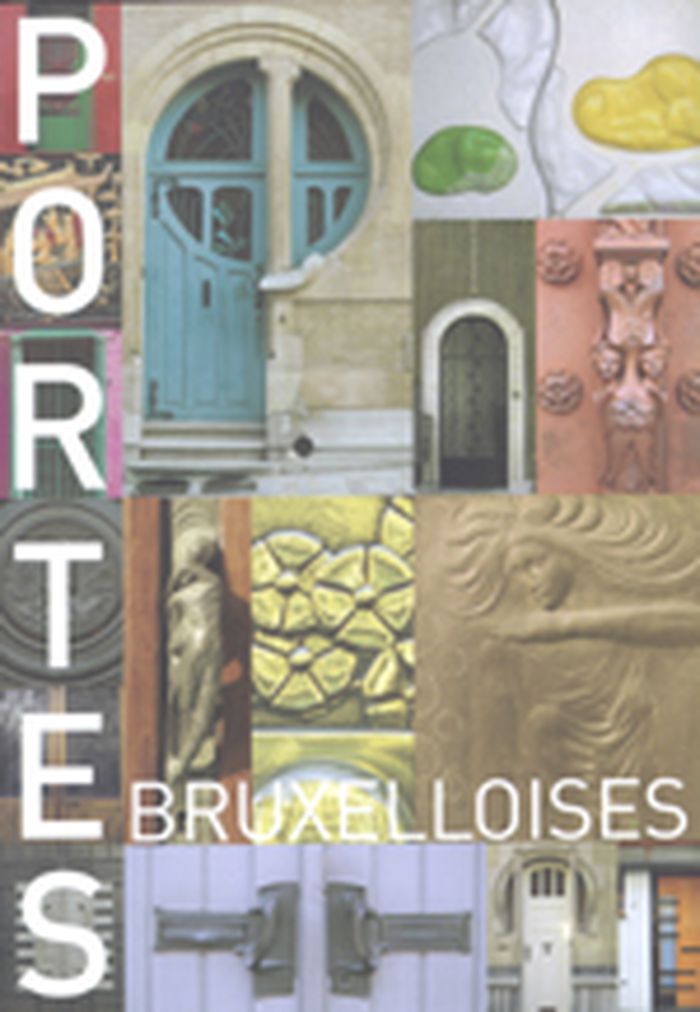
Baroque, Art Nouveau, contemporaines, quelques cent-vingt portes ou détails de portes nous emmènent dans une balade savoureause et colorée au coeur du patrimoine bruxellois.
$24.95
(disponible sur commande)
Résumé:
Baroque, Art Nouveau, contemporaines, quelques cent-vingt portes ou détails de portes nous emmènent dans une balade savoureause et colorée au coeur du patrimoine bruxellois.
Publication:
août 2007, Paris
août 2007, Paris
Titre:
Portes Bruxelloises
Actions:
Prix:
$24.95
(disponible sur commande)
Résumé:
Baroque, Art Nouveau, contemporaines, quelques cent-vingt portes ou détails de portes nous emmènent dans une balade savoureause et colorée au coeur du patrimoine bruxellois.
Portes Bruxelloises
Actions:
Prix:
$24.95
(disponible sur commande)
Résumé:
Baroque, Art Nouveau, contemporaines, quelques cent-vingt portes ou détails de portes nous emmènent dans une balade savoureause et colorée au coeur du patrimoine bruxellois.
Classification:
livres
livres
Publication:
août 2007, Paris
août 2007, Paris
Classification:
livres
livres
Actions:
Prix:
$29.95
(disponible sur commande)
Résumé:
Depuis le «monument historique» du XIXe siècle, le patrimoine a bien bien changé. L'accroissement des échanges internationaux et la multiplication des références identitaires, tout en aplanissant les vieilles frontières nationales, ont établi l'environnement immédiat de chacun comme espace privilégié de représentation ; puis, un beau matin, tout pouvait être(...)
$29.95
(disponible sur commande)
Résumé:
Depuis le «monument historique» du XIXe siècle, le patrimoine a bien bien changé. L'accroissement des échanges internationaux et la multiplication des références identitaires, tout en aplanissant les vieilles frontières nationales, ont établi l'environnement immédiat de chacun comme espace privilégié de représentation ; puis, un beau matin, tout pouvait être(...)
Publication:
novembre 2006, Québec
novembre 2006, Québec
Titre:
Patrimoines pour le XXIe siècle : regards du Québec et de la Bretagne
Actions:
Prix:
$29.95
(disponible sur commande)
Résumé:
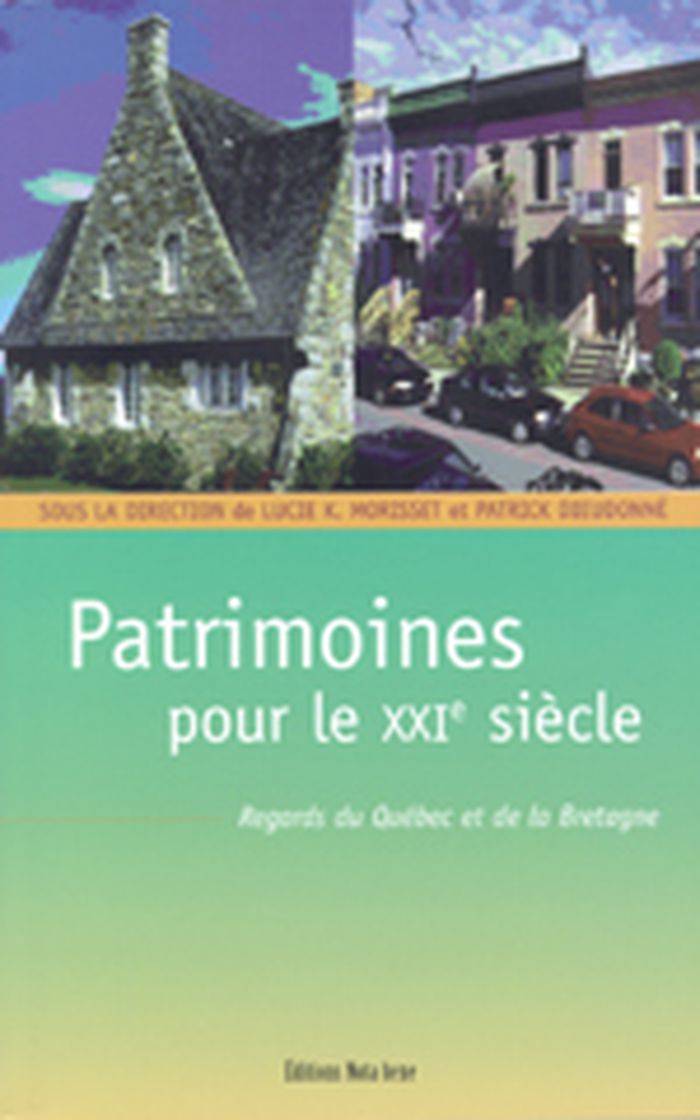
Depuis le «monument historique» du XIXe siècle, le patrimoine a bien bien changé. L'accroissement des échanges internationaux et la multiplication des références identitaires, tout en aplanissant les vieilles frontières nationales, ont établi l'environnement immédiat de chacun comme espace privilégié de représentation ; puis, un beau matin, tout pouvait être «patrimoine». «Patrimoines pour le XXIe siècle» explore ce nouvel univers de possibles, né d'un big bang référentiel qui a entremêlé les images, au point où l'on consacre maintenant des bazars, des t-shirts et des vêtements de hockey, tout en construisant fièrement des «places de Vosges» à Montréal et des maisons bretonnes près de Paris. Cependant, pour dépaysant qu'il soit, ce monde à l'envers de la patrimonialisation nous rend-t'il vraiment un reflet nouveau de nous-même?
Patrimoines pour le XXIe siècle : regards du Québec et de la Bretagne
Actions:
Prix:
$29.95
(disponible sur commande)
Résumé:
Depuis le «monument historique» du XIXe siècle, le patrimoine a bien bien changé. L'accroissement des échanges internationaux et la multiplication des références identitaires, tout en aplanissant les vieilles frontières nationales, ont établi l'environnement immédiat de chacun comme espace privilégié de représentation ; puis, un beau matin, tout pouvait être «patrimoine». «Patrimoines pour le XXIe siècle» explore ce nouvel univers de possibles, né d'un big bang référentiel qui a entremêlé les images, au point où l'on consacre maintenant des bazars, des t-shirts et des vêtements de hockey, tout en construisant fièrement des «places de Vosges» à Montréal et des maisons bretonnes près de Paris. Cependant, pour dépaysant qu'il soit, ce monde à l'envers de la patrimonialisation nous rend-t'il vraiment un reflet nouveau de nous-même?
Classification:
livres
livres
Publication:
novembre 2006, Québec
novembre 2006, Québec


