


232 Résultats
Classification:
livres
livres
Actions:
Prix:
$41.95
(disponible sur commande)
Résumé:
Si notre monde ressemble à ce qu’il est, si les choses se maintiennent les unes aux autres sans tomber, c’est grâce à des principes simples et universels. Qu’il s’agisse d’une cathédrale plusieurs fois centenaire, de votre habitation, d’un avion, d’un bateau, d’un kangourou, d’une coquille d’œuf ou de vos propres articulations, tout n’est au fond qu’histoire de(...)
$41.95
(disponible sur commande)
Résumé:
Si notre monde ressemble à ce qu’il est, si les choses se maintiennent les unes aux autres sans tomber, c’est grâce à des principes simples et universels. Qu’il s’agisse d’une cathédrale plusieurs fois centenaire, de votre habitation, d’un avion, d’un bateau, d’un kangourou, d’une coquille d’œuf ou de vos propres articulations, tout n’est au fond qu’histoire de(...)
Titre:
Structures : Pourquoi les choses tienent debout
Actions:
Prix:
$41.95
(disponible sur commande)
Résumé:
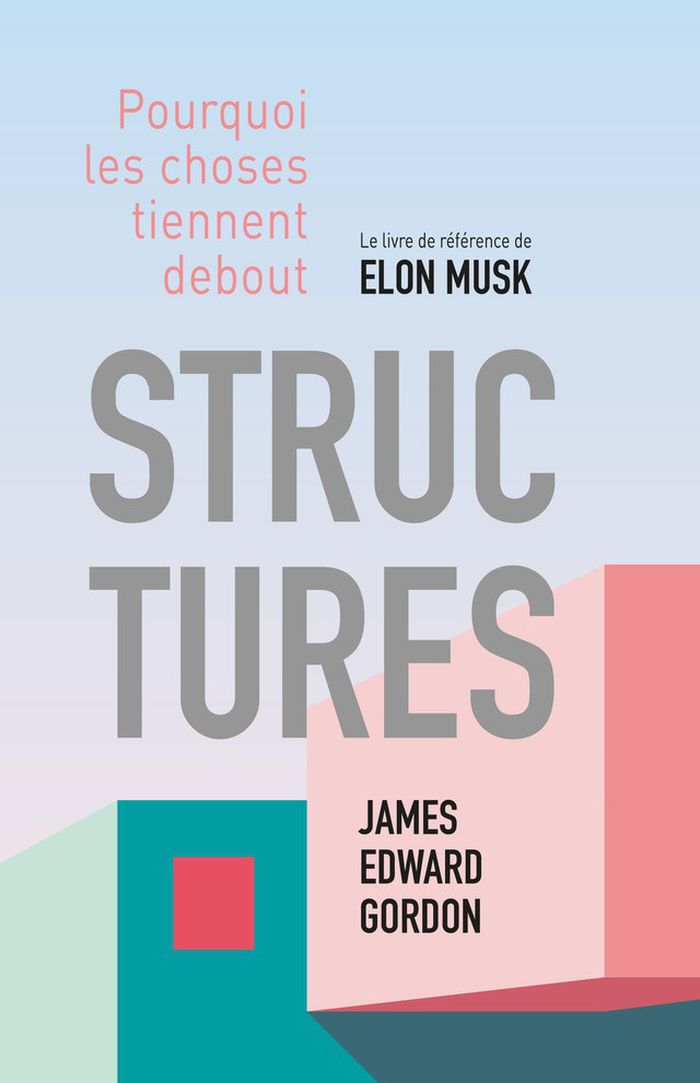
Si notre monde ressemble à ce qu’il est, si les choses se maintiennent les unes aux autres sans tomber, c’est grâce à des principes simples et universels. Qu’il s’agisse d’une cathédrale plusieurs fois centenaire, de votre habitation, d’un avion, d’un bateau, d’un kangourou, d’une coquille d’œuf ou de vos propres articulations, tout n’est au fond qu’histoire de structures. Comprendre comment elles fonctionnent, c’est comprendre l’organisation du monde, rien de moins (et construire ensuite ce que bon vous semble, comme des fusées, par exemple). Affaire de spécialistes que tout cela? Absolument pas! J.E. Gordon le démontre dans ce livre plein d’esprit, sans simplification ni jargon excessifs: comprendre une structure est un jeu d’enfant pour qui sait observer. Il est même probable qu’après avoir lu des chapitres comme «l’avantage d’être une poutre» ou «comment concevoir une vis», vous serez très tentés de vous lancer dans la construction de votre propre plancher, d’une catapulte ou d’un pont suspendu.
Structures : Pourquoi les choses tienent debout
Actions:
Prix:
$41.95
(disponible sur commande)
Résumé:
Si notre monde ressemble à ce qu’il est, si les choses se maintiennent les unes aux autres sans tomber, c’est grâce à des principes simples et universels. Qu’il s’agisse d’une cathédrale plusieurs fois centenaire, de votre habitation, d’un avion, d’un bateau, d’un kangourou, d’une coquille d’œuf ou de vos propres articulations, tout n’est au fond qu’histoire de structures. Comprendre comment elles fonctionnent, c’est comprendre l’organisation du monde, rien de moins (et construire ensuite ce que bon vous semble, comme des fusées, par exemple). Affaire de spécialistes que tout cela? Absolument pas! J.E. Gordon le démontre dans ce livre plein d’esprit, sans simplification ni jargon excessifs: comprendre une structure est un jeu d’enfant pour qui sait observer. Il est même probable qu’après avoir lu des chapitres comme «l’avantage d’être une poutre» ou «comment concevoir une vis», vous serez très tentés de vous lancer dans la construction de votre propre plancher, d’une catapulte ou d’un pont suspendu.
Classification:
livres
livres
Publication:
août 2022
août 2022
Sujet:
Structures d’ingénierie
Structures d’ingénierie
Classification:
livres
livres
Titre:
Eiffel
Eiffel
Actions:
Prix:
$14.95
(disponible sur commande)
Résumé:
L’excellence théorique, la perfection technique des lignes qu’il a appliquées suffiraient pour défendre Gustave Eiffel contre toute la tradition antérieure, mais il est plus juste de le déclarer d’accord avec le sens profond de cette tradition même. Eiffel est un classique.
$14.95
(disponible sur commande)
Résumé:
L’excellence théorique, la perfection technique des lignes qu’il a appliquées suffiraient pour défendre Gustave Eiffel contre toute la tradition antérieure, mais il est plus juste de le déclarer d’accord avec le sens profond de cette tradition même. Eiffel est un classique.
Titre:
Eiffel
Actions:
Prix:
$14.95
(disponible sur commande)
Résumé:
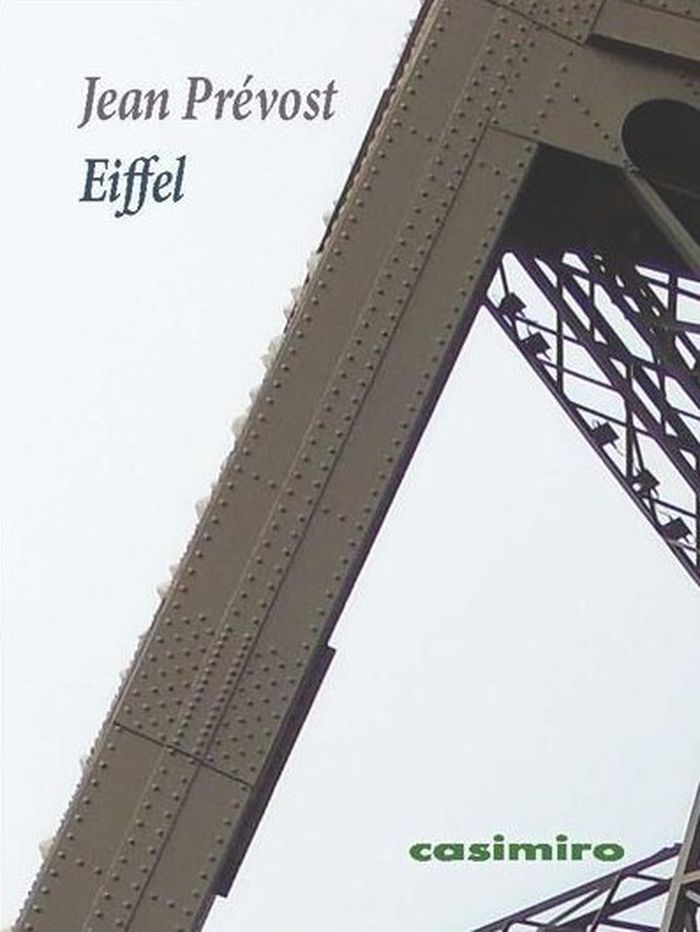
L’excellence théorique, la perfection technique des lignes qu’il a appliquées suffiraient pour défendre Gustave Eiffel contre toute la tradition antérieure, mais il est plus juste de le déclarer d’accord avec le sens profond de cette tradition même. Eiffel est un classique.
Eiffel
Actions:
Prix:
$14.95
(disponible sur commande)
Résumé:
L’excellence théorique, la perfection technique des lignes qu’il a appliquées suffiraient pour défendre Gustave Eiffel contre toute la tradition antérieure, mais il est plus juste de le déclarer d’accord avec le sens profond de cette tradition même. Eiffel est un classique.
Classification:
livres
livres
Publication:
mars 2023
mars 2023
Sujet:
Structures d’ingénierie
Structures d’ingénierie
Classification:
livres
livres
Actions:
Prix:
$80.95
(disponible sur commande)
Résumé:
In late 20th century urban Europe, a great many landmarks of industrial, merchant and military activity were abandoned and fell into disuse. No longer limited to a specific use or content, these 'available' structures could be adapted to house a wide range of cultural projects. The modular nature of the buildings enabled them to be transformed and utilized for(...)
$80.95
(disponible sur commande)
Résumé:
In late 20th century urban Europe, a great many landmarks of industrial, merchant and military activity were abandoned and fell into disuse. No longer limited to a specific use or content, these 'available' structures could be adapted to house a wide range of cultural projects. The modular nature of the buildings enabled them to be transformed and utilized for(...)
Sujet:
Structures d’ingénierie
Structures d’ingénierie
Publication:
avril 2002, Basel / Berlin / Boston
avril 2002, Basel / Berlin / Boston
Titre:
Factories : conversions for urban culture
Actions:
Prix:
$80.95
(disponible sur commande)
Résumé:
In late 20th century urban Europe, a great many landmarks of industrial, merchant and military activity were abandoned and fell into disuse. No longer limited to a specific use or content, these 'available' structures could be adapted to house a wide range of cultural projects. The modular nature of the buildings enabled them to be transformed and utilized for experimentation, artistic creation and the blending of people and cultures. An international team of photographers and authors including artists, sociologists and exhibition designers have come together to present a striking visual portrayal of industrial buildings - some typical, some extraordinary - which have all been converted into cultural buildings. Amongst the projects are Ateneu Popular in Barcelona, the City Arts Centre in Dublin, the WUK in Vienna, and the Kaapelitehdas in Helsinki. Further examples have been taken from Belgium, Denmark, Germany, France, Great Britain, Italy, the Netherlands, Sweden, and Slovenia. The wide variety of uses featured in this book clearly show that architecture has a significant role to play in an urban life beyond the monotony of commerce.
Factories : conversions for urban culture
Actions:
Prix:
$80.95
(disponible sur commande)
Résumé:
In late 20th century urban Europe, a great many landmarks of industrial, merchant and military activity were abandoned and fell into disuse. No longer limited to a specific use or content, these 'available' structures could be adapted to house a wide range of cultural projects. The modular nature of the buildings enabled them to be transformed and utilized for experimentation, artistic creation and the blending of people and cultures. An international team of photographers and authors including artists, sociologists and exhibition designers have come together to present a striking visual portrayal of industrial buildings - some typical, some extraordinary - which have all been converted into cultural buildings. Amongst the projects are Ateneu Popular in Barcelona, the City Arts Centre in Dublin, the WUK in Vienna, and the Kaapelitehdas in Helsinki. Further examples have been taken from Belgium, Denmark, Germany, France, Great Britain, Italy, the Netherlands, Sweden, and Slovenia. The wide variety of uses featured in this book clearly show that architecture has a significant role to play in an urban life beyond the monotony of commerce.
Classification:
livres
livres
Publication:
avril 2002, Basel / Berlin / Boston
avril 2002, Basel / Berlin / Boston
Sujet:
Structures d’ingénierie
Structures d’ingénierie
Classification:
livres
livres
Titre:
Audi Forum Ingolstadt
Audi Forum Ingolstadt
Actions:
Prix:
$43.95
(disponible sur commande)
Résumé:
With the creation of the Audi Forum, the Audi automobile plant in Ingolstadt--which formerly consisted largely of car production halls--has been given a new focus and become an extension of public space. For many years, the steadily expanding plant was virtually isolated from the outside world. Now, with the urban restructuring of the site, the ensemble may be seen as a(...)
$43.95
(disponible sur commande)
Résumé:
With the creation of the Audi Forum, the Audi automobile plant in Ingolstadt--which formerly consisted largely of car production halls--has been given a new focus and become an extension of public space. For many years, the steadily expanding plant was virtually isolated from the outside world. Now, with the urban restructuring of the site, the ensemble may be seen as a(...)
Titre:
Audi Forum Ingolstadt
Actions:
Prix:
$43.95
(disponible sur commande)
Résumé:
With the creation of the Audi Forum, the Audi automobile plant in Ingolstadt--which formerly consisted largely of car production halls--has been given a new focus and become an extension of public space. For many years, the steadily expanding plant was virtually isolated from the outside world. Now, with the urban restructuring of the site, the ensemble may be seen as a convincing translation into spatial form of the company's policy of opening itself to the public. The lively Forum, with its light-filled and spacious architecture, conveys a sense of urbanity.
Audi Forum Ingolstadt
Actions:
Prix:
$43.95
(disponible sur commande)
Résumé:
With the creation of the Audi Forum, the Audi automobile plant in Ingolstadt--which formerly consisted largely of car production halls--has been given a new focus and become an extension of public space. For many years, the steadily expanding plant was virtually isolated from the outside world. Now, with the urban restructuring of the site, the ensemble may be seen as a convincing translation into spatial form of the company's policy of opening itself to the public. The lively Forum, with its light-filled and spacious architecture, conveys a sense of urbanity.
Classification:
livres
livres
Publication:
décembre 2001, Munich
décembre 2001, Munich
Sujet:
Structures d’ingénierie
Structures d’ingénierie
Classification:
livres
livres
Prix:
$116.00
(disponible sur commande)
Résumé:
In today’s architecture engineers often play an important role concerning the structural design of a building. Their contribution is mostly forgotten, however, and the architects are generally recognized for their work. This book seeks set the record straight and acknowledge the important role engineers play in the development of complex architectural designs.(...)
$116.00
(disponible sur commande)
Résumé:
In today’s architecture engineers often play an important role concerning the structural design of a building. Their contribution is mostly forgotten, however, and the architects are generally recognized for their work. This book seeks set the record straight and acknowledge the important role engineers play in the development of complex architectural designs.(...)
Titre:
Remarkable structures : engineering today's innovative buildings
Actions:
Prix:
$116.00
(disponible sur commande)
Résumé:
In today’s architecture engineers often play an important role concerning the structural design of a building. Their contribution is mostly forgotten, however, and the architects are generally recognized for their work. This book seeks set the record straight and acknowledge the important role engineers play in the development of complex architectural designs. "Remarkable structures" presents a series of buildings that are representative of high engineering input including the City of Science (Santiago Calatrava), the Japanese Pavilion (Shigeru Ban/Buro Happold), the Tokyo International Forum (Rafael Vinoly/Structural Design Group), the Guggenheim Museum (Frank Gehry/SOM), and the Educatorium, Utrecht (Koolhaas/ABT).
Remarkable structures : engineering today's innovative buildings
Actions:
Prix:
$116.00
(disponible sur commande)
Résumé:
In today’s architecture engineers often play an important role concerning the structural design of a building. Their contribution is mostly forgotten, however, and the architects are generally recognized for their work. This book seeks set the record straight and acknowledge the important role engineers play in the development of complex architectural designs. "Remarkable structures" presents a series of buildings that are representative of high engineering input including the City of Science (Santiago Calatrava), the Japanese Pavilion (Shigeru Ban/Buro Happold), the Tokyo International Forum (Rafael Vinoly/Structural Design Group), the Guggenheim Museum (Frank Gehry/SOM), and the Educatorium, Utrecht (Koolhaas/ABT).
Classification:
livres
livres
Publication:
août 2002, New York
août 2002, New York
Sujet:
Structures d’ingénierie
Structures d’ingénierie
Classification:
livres
livres
Actions:
Prix:
$59.95
(disponible sur commande)
Résumé:
The author investigates the ways in which innovative and alternative technologies may be exploited to produce new design approaches, widening designers' horizons and increasing their ability to create appropriate settings for contemporary life.
$59.95
(disponible sur commande)
Résumé:
The author investigates the ways in which innovative and alternative technologies may be exploited to produce new design approaches, widening designers' horizons and increasing their ability to create appropriate settings for contemporary life.
Titre:
Spirit of the machine : technology as an inspiration in architectural design
Actions:
Prix:
$59.95
(disponible sur commande)
Résumé:
The author investigates the ways in which innovative and alternative technologies may be exploited to produce new design approaches, widening designers' horizons and increasing their ability to create appropriate settings for contemporary life.
Spirit of the machine : technology as an inspiration in architectural design
Actions:
Prix:
$59.95
(disponible sur commande)
Résumé:
The author investigates the ways in which innovative and alternative technologies may be exploited to produce new design approaches, widening designers' horizons and increasing their ability to create appropriate settings for contemporary life.
Classification:
livres
livres
Publication:
octobre 2001, West Sussex
octobre 2001, West Sussex
Sujet:
Structures d’ingénierie
Structures d’ingénierie
Classification:
livres
livres
Actions:
Prix:
$17.99
(disponible sur commande)
Résumé:
A journey through the history of New York's Pennsylvania Station. The creation of Pennsylvania Station (1902-1910) represented one of the great engineering feats of its time, and embodied a vision of grandeur for future public architecture. This illustrated book tells the story of the original building, its tragic demolition in the 1960s, and the greatly anticipated(...)
$17.99
(disponible sur commande)
Résumé:
A journey through the history of New York's Pennsylvania Station. The creation of Pennsylvania Station (1902-1910) represented one of the great engineering feats of its time, and embodied a vision of grandeur for future public architecture. This illustrated book tells the story of the original building, its tragic demolition in the 1960s, and the greatly anticipated(...)
Titre:
New York's Pennsylvania stations
Actions:
Prix:
$17.99
(disponible sur commande)
Résumé:
A journey through the history of New York's Pennsylvania Station. The creation of Pennsylvania Station (1902-1910) represented one of the great engineering feats of its time, and embodied a vision of grandeur for future public architecture. This illustrated book tells the story of the original building, its tragic demolition in the 1960s, and the greatly anticipated opening of the new station in 2003. Hilary Ballon is professor of art history at Columbia University. She lives in New Jersey.
New York's Pennsylvania stations
Actions:
Prix:
$17.99
(disponible sur commande)
Résumé:
A journey through the history of New York's Pennsylvania Station. The creation of Pennsylvania Station (1902-1910) represented one of the great engineering feats of its time, and embodied a vision of grandeur for future public architecture. This illustrated book tells the story of the original building, its tragic demolition in the 1960s, and the greatly anticipated opening of the new station in 2003. Hilary Ballon is professor of art history at Columbia University. She lives in New Jersey.
Classification:
livres
livres
Publication:
mars 2002, New York / London
mars 2002, New York / London
Sujet:
Structures d’ingénierie
Structures d’ingénierie
Classification:
livres
livres

Actions:
Prix:
$110.00
(disponible sur commande)
Résumé:
This book explores in depth how, when, where, and by whom the most important North American bridges were built. Over 185 of Plowden's photographs allow us to dwell on the most important scientific and aesthetic qualities of each bridge. In addition, Plowden has included original designs and drawings of structures - some unbuilt, gone, or dramatically altered -(...)
$110.00
(disponible sur commande)
Résumé:
This book explores in depth how, when, where, and by whom the most important North American bridges were built. Over 185 of Plowden's photographs allow us to dwell on the most important scientific and aesthetic qualities of each bridge. In addition, Plowden has included original designs and drawings of structures - some unbuilt, gone, or dramatically altered -(...)
Titre:
Bridges : the spans of North America
Actions:
Prix:
$110.00
(disponible sur commande)
Résumé:
This book explores in depth how, when, where, and by whom the most important North American bridges were built. Over 185 of Plowden's photographs allow us to dwell on the most important scientific and aesthetic qualities of each bridge. In addition, Plowden has included original designs and drawings of structures - some unbuilt, gone, or dramatically altered - illuminating less obvious aspects of these engineering marvels and introducing us to bridges we otherwise would never have seen. In his extensive text, Plowden vividly records the discoveries, misconceptions, struggles, failures, and triumphs of the men who dedicated their energies to bridge design and construction. In the more than twenty-five years since this classic book was first published, bridges have been lost, and others have been built; some of the best examples of new bridges are included in this new, revised edition. All the photographs have been reprinted to achieve the best duotone reproduction.
Bridges : the spans of North America
Actions:
Prix:
$110.00
(disponible sur commande)
Résumé:
This book explores in depth how, when, where, and by whom the most important North American bridges were built. Over 185 of Plowden's photographs allow us to dwell on the most important scientific and aesthetic qualities of each bridge. In addition, Plowden has included original designs and drawings of structures - some unbuilt, gone, or dramatically altered - illuminating less obvious aspects of these engineering marvels and introducing us to bridges we otherwise would never have seen. In his extensive text, Plowden vividly records the discoveries, misconceptions, struggles, failures, and triumphs of the men who dedicated their energies to bridge design and construction. In the more than twenty-five years since this classic book was first published, bridges have been lost, and others have been built; some of the best examples of new bridges are included in this new, revised edition. All the photographs have been reprinted to achieve the best duotone reproduction.
Classification:
livres
livres
Publication:
novembre 2001, New York
novembre 2001, New York
Sujet:
Structures d’ingénierie
Structures d’ingénierie
Classification:
livres
livres
Titre:
Phares du monde
Phares du monde
Actions:
Prix:
$39.95
(disponible sur commande)
Résumé:
Le lecteur pourra ici découvrir des édifices du Bénin, de Chine, du Pérou, d'Estonie, d'Australie... faire connaissance avec les services qui en assurent l'entretien, et mieux connaître ainsi ce patrimoine mondial remarquable.
$39.95
(disponible sur commande)
Résumé:
Le lecteur pourra ici découvrir des édifices du Bénin, de Chine, du Pérou, d'Estonie, d'Australie... faire connaissance avec les services qui en assurent l'entretien, et mieux connaître ainsi ce patrimoine mondial remarquable.
Titre:
Phares du monde
Actions:
Prix:
$39.95
(disponible sur commande)
Résumé:
Le lecteur pourra ici découvrir des édifices du Bénin, de Chine, du Pérou, d'Estonie, d'Australie... faire connaissance avec les services qui en assurent l'entretien, et mieux connaître ainsi ce patrimoine mondial remarquable.
Phares du monde
Actions:
Prix:
$39.95
(disponible sur commande)
Résumé:
Le lecteur pourra ici découvrir des édifices du Bénin, de Chine, du Pérou, d'Estonie, d'Australie... faire connaissance avec les services qui en assurent l'entretien, et mieux connaître ainsi ce patrimoine mondial remarquable.
Classification:
livres
livres
Publication:
janvier 1900, Rennes
janvier 1900, Rennes
Sujet:
Structures d’ingénierie
Structures d’ingénierie
Classification:
livres
livres
Titre:
La tour Eiffel
La tour Eiffel
Actions:
Prix:
$19.95
(disponible sur commande)
Résumé:
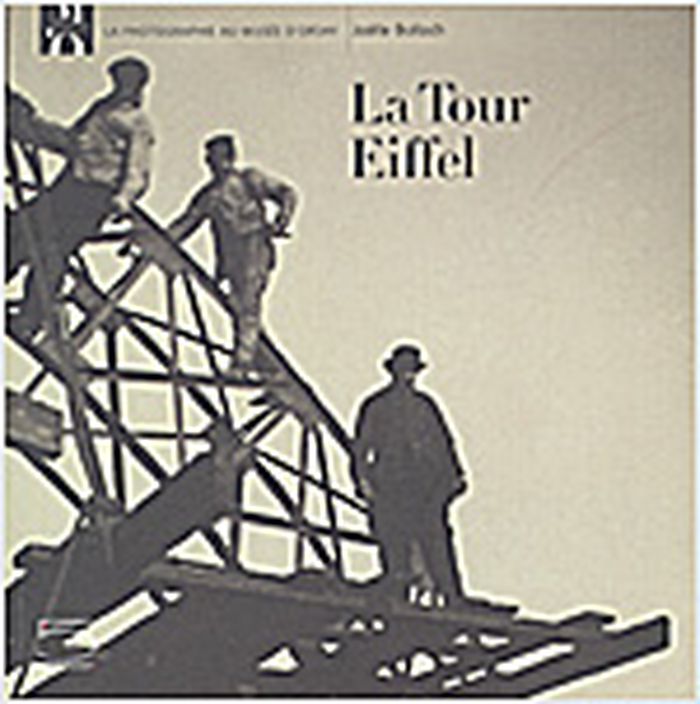
La construction de la tour Eiffel en plein coeur de Paris, à l'occasion de l'Exposition universelle de 1889, va imposer l'évidence de la photographie comme moyen privilégié pour la représentation de l'architecture métallique. Depuis le 28 janvier 1887, date à laquelle commencent les travaux de fondation, jusqu'à la fin du montage, le 31 mars 1889, le chantier fait(...)
$19.95
(disponible sur commande)
Résumé:
La construction de la tour Eiffel en plein coeur de Paris, à l'occasion de l'Exposition universelle de 1889, va imposer l'évidence de la photographie comme moyen privilégié pour la représentation de l'architecture métallique. Depuis le 28 janvier 1887, date à laquelle commencent les travaux de fondation, jusqu'à la fin du montage, le 31 mars 1889, le chantier fait(...)
Titre:
La tour Eiffel
Actions:
Prix:
$19.95
(disponible sur commande)
Résumé:
La construction de la tour Eiffel en plein coeur de Paris, à l'occasion de l'Exposition universelle de 1889, va imposer l'évidence de la photographie comme moyen privilégié pour la représentation de l'architecture métallique. Depuis le 28 janvier 1887, date à laquelle commencent les travaux de fondation, jusqu'à la fin du montage, le 31 mars 1889, le chantier fait l'objet de maints reportages photographiques, mais l'intérêt des photographes ne se tarit pas avec la fin des travaux.
La tour Eiffel
Actions:
Prix:
$19.95
(disponible sur commande)
Résumé:
La construction de la tour Eiffel en plein coeur de Paris, à l'occasion de l'Exposition universelle de 1889, va imposer l'évidence de la photographie comme moyen privilégié pour la représentation de l'architecture métallique. Depuis le 28 janvier 1887, date à laquelle commencent les travaux de fondation, jusqu'à la fin du montage, le 31 mars 1889, le chantier fait l'objet de maints reportages photographiques, mais l'intérêt des photographes ne se tarit pas avec la fin des travaux.
Classification:
livres
livres
Publication:
décembre 2005, Paris
décembre 2005, Paris
Sujet:
Structures d’ingénierie
Structures d’ingénierie


