


232 Résultats
Classification:
livres
livres
Titre:
Savoir construire
Savoir construire
Actions:
Prix:
$61.95
(disponible sur commande)
Résumé:
Nervi fut l'un des rares ingénieurs des temps modernes qui ait cherché - et réussi - à intégrer dans ses réalisations l'héritage romain et rationaliste. C'est peut-être la raison pour laquelle il sut donner au béton armé élégance et légèreté. Comme tout ingénieur, il s'efforçait d'abord «de résoudre des problèmes d'ordre technique et économique: rechercher la solution(...)
$61.95
(disponible sur commande)
Résumé:
Nervi fut l'un des rares ingénieurs des temps modernes qui ait cherché - et réussi - à intégrer dans ses réalisations l'héritage romain et rationaliste. C'est peut-être la raison pour laquelle il sut donner au béton armé élégance et légèreté. Comme tout ingénieur, il s'efforçait d'abord «de résoudre des problèmes d'ordre technique et économique: rechercher la solution(...)
Titre:
Savoir construire
Actions:
Prix:
$61.95
(disponible sur commande)
Résumé:
Nervi fut l'un des rares ingénieurs des temps modernes qui ait cherché - et réussi - à intégrer dans ses réalisations l'héritage romain et rationaliste. C'est peut-être la raison pour laquelle il sut donner au béton armé élégance et légèreté. Comme tout ingénieur, il s'efforçait d'abord «de résoudre des problèmes d'ordre technique et économique: rechercher la solution adéquate, fatale presque, parce que logique - comme l'on fait les créateurs de Concorde. Concorde n'est pas le fait de l'imagination. C'est la réponse la plus proche de la perfection aux contraintes techniques. Ce bel avion devait fatalement être ce qu'il est». Pour Nervi, la bonne réponse technique et économique était inévitablement belle. Il l'a montré en couvrant hangard, salles de sports, usines - mais aussi la salle de conférence de l'Unesco à Paris et la salle d'audience du pape à Rome -, de lignes fines, entrecroisées ou pliées... Un technicien qui fait rêver.
Savoir construire
Actions:
Prix:
$61.95
(disponible sur commande)
Résumé:
Nervi fut l'un des rares ingénieurs des temps modernes qui ait cherché - et réussi - à intégrer dans ses réalisations l'héritage romain et rationaliste. C'est peut-être la raison pour laquelle il sut donner au béton armé élégance et légèreté. Comme tout ingénieur, il s'efforçait d'abord «de résoudre des problèmes d'ordre technique et économique: rechercher la solution adéquate, fatale presque, parce que logique - comme l'on fait les créateurs de Concorde. Concorde n'est pas le fait de l'imagination. C'est la réponse la plus proche de la perfection aux contraintes techniques. Ce bel avion devait fatalement être ce qu'il est». Pour Nervi, la bonne réponse technique et économique était inévitablement belle. Il l'a montré en couvrant hangard, salles de sports, usines - mais aussi la salle de conférence de l'Unesco à Paris et la salle d'audience du pape à Rome -, de lignes fines, entrecroisées ou pliées... Un technicien qui fait rêver.
Classification:
livres
livres
Publication:
juin 1997, Paris
juin 1997, Paris
Sujet:
Structures d’ingénierie
Structures d’ingénierie
Classification:
livres
livres
Actions:
Prix:
$34.50
(disponible sur commande)
Résumé:
This book chronicles some of the world's greatest engineering wonders from ancient times to the present including the longest bridges, the highest dams, the tallest buildings, and the grandest cathedrals. With more than 400 photographs, detailed diagrams and period engravings.
$34.50
(disponible sur commande)
Résumé:
This book chronicles some of the world's greatest engineering wonders from ancient times to the present including the longest bridges, the highest dams, the tallest buildings, and the grandest cathedrals. With more than 400 photographs, detailed diagrams and period engravings.
Sujet:
Structures d’ingénierie
Structures d’ingénierie
Publication:
mai 1998, Washington, DC
mai 1998, Washington, DC
Titre:
The builders : marvels of engineering
Actions:
Prix:
$34.50
(disponible sur commande)
Résumé:
This book chronicles some of the world's greatest engineering wonders from ancient times to the present including the longest bridges, the highest dams, the tallest buildings, and the grandest cathedrals. With more than 400 photographs, detailed diagrams and period engravings.
The builders : marvels of engineering
Actions:
Prix:
$34.50
(disponible sur commande)
Résumé:
This book chronicles some of the world's greatest engineering wonders from ancient times to the present including the longest bridges, the highest dams, the tallest buildings, and the grandest cathedrals. With more than 400 photographs, detailed diagrams and period engravings.
Classification:
livres
livres
Publication:
mai 1998, Washington, DC
mai 1998, Washington, DC
Sujet:
Structures d’ingénierie
Structures d’ingénierie
Classification:
livres
livres
Actions:
Prix:
$59.00
(disponible sur commande)
Résumé:
Photographs by Colin Baxter.
$59.00
(disponible sur commande)
Résumé:
Photographs by Colin Baxter.
Sujet:
Structures d’ingénierie
Structures d’ingénierie
Publication:
octobre 1996, Stuttgart
octobre 1996, Stuttgart
Titre:
John Fowler, Benjamin Baker : Forth Bridge
Actions:
Prix:
$59.00
(disponible sur commande)
Résumé:
Photographs by Colin Baxter.
John Fowler, Benjamin Baker : Forth Bridge
Actions:
Prix:
$59.00
(disponible sur commande)
Résumé:
Photographs by Colin Baxter.
Classification:
livres
livres
Publication:
octobre 1996, Stuttgart
octobre 1996, Stuttgart
Sujet:
Structures d’ingénierie
Structures d’ingénierie
Classification:
livres
livres
Actions:
Prix:
$19.95
(disponible sur commande)
Résumé:
«Ce livre constitue une tentative d'exposer les principes de la statique dans leur simplicité originelle et de la présenter comme un exercice de logique, un raisonnement dont l'itinéraire n'a pas besoin d'emprunter le raccourci mathématique.» Le fait est que les mystères du fonctionnement des machines, de la solidité des ponts, de la puissance des presses hydrauliques, de(...)
$19.95
(disponible sur commande)
Résumé:
«Ce livre constitue une tentative d'exposer les principes de la statique dans leur simplicité originelle et de la présenter comme un exercice de logique, un raisonnement dont l'itinéraire n'a pas besoin d'emprunter le raccourci mathématique.» Le fait est que les mystères du fonctionnement des machines, de la solidité des ponts, de la puissance des presses hydrauliques, de(...)
Titre:
Petite logique des forces. Construction et machines
Actions:
Prix:
$19.95
(disponible sur commande)
Résumé:
«Ce livre constitue une tentative d'exposer les principes de la statique dans leur simplicité originelle et de la présenter comme un exercice de logique, un raisonnement dont l'itinéraire n'a pas besoin d'emprunter le raccourci mathématique.» Le fait est que les mystères du fonctionnement des machines, de la solidité des ponts, de la puissance des presses hydrauliques, de la stabilité des bâtiments laissent place à l'émerveillement devant la simplicité des principes qui les gouvernent. La science des forces en équilibre, la statique, est la plus ancienne des science modernes et reste la plus importante dans la vie quotidienne. Dans cette brillante présentation, la théorie n'est pas séparée de ses applications anciennes et modernes, ni les idées de leur histoire. Écoutons-donc Archimède, Stevin, Descartes, Galilée, Newton, Torricelli, Pascal nous expliquer la structure des gratte-ciel et des ponts, les mécanismes des grues et des vérins, la résistance des matériaux et les paradoxes de l'hydrostatique. Ce qui s'amorce ici pourrait bien être une nouvelle pédagogie des sciences.
Petite logique des forces. Construction et machines
Actions:
Prix:
$19.95
(disponible sur commande)
Résumé:
«Ce livre constitue une tentative d'exposer les principes de la statique dans leur simplicité originelle et de la présenter comme un exercice de logique, un raisonnement dont l'itinéraire n'a pas besoin d'emprunter le raccourci mathématique.» Le fait est que les mystères du fonctionnement des machines, de la solidité des ponts, de la puissance des presses hydrauliques, de la stabilité des bâtiments laissent place à l'émerveillement devant la simplicité des principes qui les gouvernent. La science des forces en équilibre, la statique, est la plus ancienne des science modernes et reste la plus importante dans la vie quotidienne. Dans cette brillante présentation, la théorie n'est pas séparée de ses applications anciennes et modernes, ni les idées de leur histoire. Écoutons-donc Archimède, Stevin, Descartes, Galilée, Newton, Torricelli, Pascal nous expliquer la structure des gratte-ciel et des ponts, les mécanismes des grues et des vérins, la résistance des matériaux et les paradoxes de l'hydrostatique. Ce qui s'amorce ici pourrait bien être une nouvelle pédagogie des sciences.
Classification:
livres
livres
Publication:
janvier 1900, Paris
janvier 1900, Paris
Sujet:
Structures d’ingénierie
Structures d’ingénierie
Classification:
livres
livres
Actions:
Prix:
$22.50
(disponible sur commande)
Résumé:
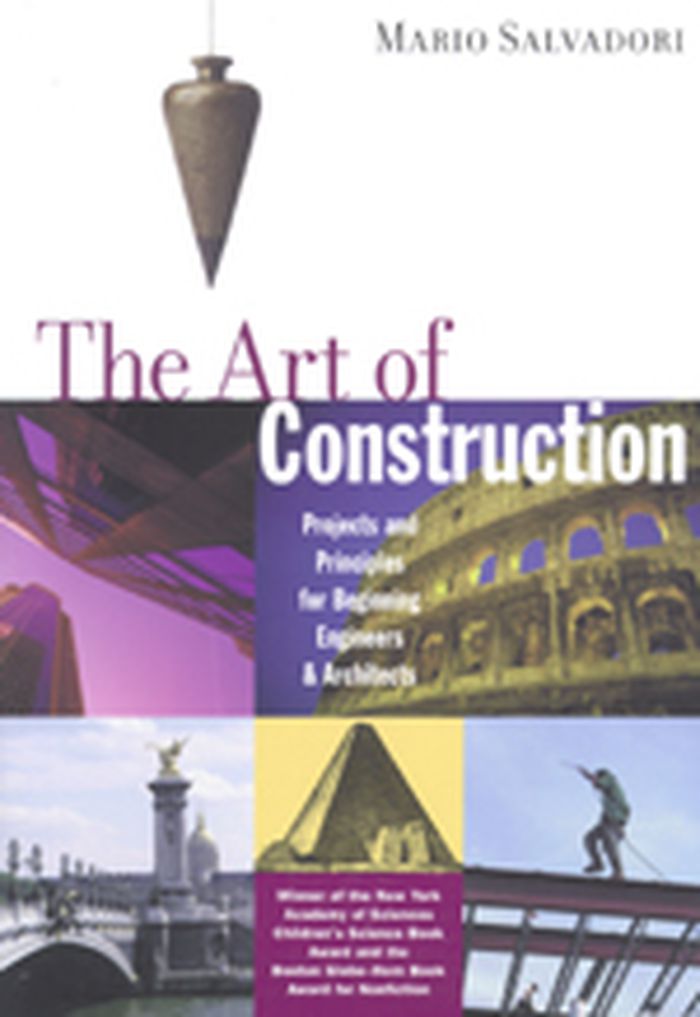
Students discover the basic principles necessary to build all types of structures used in everyday life including bridges, skyscrapers, and other architectural gems. Line art illustrations help to explain projects that demonstrate how these principles keep structures solid. Perfect for kids who wonder why, and love to figure things out! All projects are easily done with(...)
$22.50
(disponible sur commande)
Résumé:
Students discover the basic principles necessary to build all types of structures used in everyday life including bridges, skyscrapers, and other architectural gems. Line art illustrations help to explain projects that demonstrate how these principles keep structures solid. Perfect for kids who wonder why, and love to figure things out! All projects are easily done with(...)
Sujet:
Structures d’ingénierie
Structures d’ingénierie
Publication:
mars 1990, Chicago
mars 1990, Chicago
Titre:
The Art of Construction: project and principles for beginning engineers & architects
Actions:
Prix:
$22.50
(disponible sur commande)
Résumé:
Students discover the basic principles necessary to build all types of structures used in everyday life including bridges, skyscrapers, and other architectural gems. Line art illustrations help to explain projects that demonstrate how these principles keep structures solid. Perfect for kids who wonder why, and love to figure things out! All projects are easily done with materials found around-the-house.
The Art of Construction: project and principles for beginning engineers & architects
Actions:
Prix:
$22.50
(disponible sur commande)
Résumé:
Students discover the basic principles necessary to build all types of structures used in everyday life including bridges, skyscrapers, and other architectural gems. Line art illustrations help to explain projects that demonstrate how these principles keep structures solid. Perfect for kids who wonder why, and love to figure things out! All projects are easily done with materials found around-the-house.
Classification:
livres
livres
Publication:
mars 1990, Chicago
mars 1990, Chicago
Sujet:
Structures d’ingénierie
Structures d’ingénierie
Classification:
livres
livres
Titre:
Ecrits d'ingénieurs
Ecrits d'ingénieurs
Actions:
Prix:
$43.50
(disponible sur commande)
Résumé:
Parce que leur travail est collectif, leurs noms sont le plus souvent inconnus. Mais parce que leurs oeuvres sont souvent grandioses, quelque part ils fascinent. Depuis la fondation de la première école d'ingénieurs, en 1747, leur champ d'action et leurs compétences n'ont cessé de s'étendre. Les routes et autoroutes ont marqué le territoire et le paysage au XXe siècle(...)
$43.50
(disponible sur commande)
Résumé:
Parce que leur travail est collectif, leurs noms sont le plus souvent inconnus. Mais parce que leurs oeuvres sont souvent grandioses, quelque part ils fascinent. Depuis la fondation de la première école d'ingénieurs, en 1747, leur champ d'action et leurs compétences n'ont cessé de s'étendre. Les routes et autoroutes ont marqué le territoire et le paysage au XXe siècle(...)
Titre:
Ecrits d'ingénieurs
Actions:
Prix:
$43.50
(disponible sur commande)
Résumé:
Parce que leur travail est collectif, leurs noms sont le plus souvent inconnus. Mais parce que leurs oeuvres sont souvent grandioses, quelque part ils fascinent. Depuis la fondation de la première école d'ingénieurs, en 1747, leur champ d'action et leurs compétences n'ont cessé de s'étendre. Les routes et autoroutes ont marqué le territoire et le paysage au XXe siècle comme les chemins de fer au XIXe. De la réflexion aux notations anecdotiques, ces ÉCRITS permettent de mieux comprendre une profession qui - que nous le voulions ou non - transforme notre cadre de vie. De Perronet, Premier ingénieur du roi XVIIIe siècle à Freyssinet et Esquillan tout près de nous, il y a une continuité assez remarquable de pensée et d'action au service du bien public.
Ecrits d'ingénieurs
Actions:
Prix:
$43.50
(disponible sur commande)
Résumé:
Parce que leur travail est collectif, leurs noms sont le plus souvent inconnus. Mais parce que leurs oeuvres sont souvent grandioses, quelque part ils fascinent. Depuis la fondation de la première école d'ingénieurs, en 1747, leur champ d'action et leurs compétences n'ont cessé de s'étendre. Les routes et autoroutes ont marqué le territoire et le paysage au XXe siècle comme les chemins de fer au XIXe. De la réflexion aux notations anecdotiques, ces ÉCRITS permettent de mieux comprendre une profession qui - que nous le voulions ou non - transforme notre cadre de vie. De Perronet, Premier ingénieur du roi XVIIIe siècle à Freyssinet et Esquillan tout près de nous, il y a une continuité assez remarquable de pensée et d'action au service du bien public.
Classification:
livres
livres
Publication:
juin 1998, Paris
juin 1998, Paris
Sujet:
Structures d’ingénierie
Structures d’ingénierie
Classification:
livres
livres
Prix:
$128.00
(disponible sur commande)
Résumé:
This book is intended as a source of inspiration and guiding principles for those who design, commission, or manage airport buildings.
$128.00
(disponible sur commande)
Résumé:
This book is intended as a source of inspiration and guiding principles for those who design, commission, or manage airport buildings.
Titre:
The modern terminal : new approaches to airport architecture
Actions:
Prix:
$128.00
(disponible sur commande)
Résumé:
This book is intended as a source of inspiration and guiding principles for those who design, commission, or manage airport buildings.
The modern terminal : new approaches to airport architecture
Actions:
Prix:
$128.00
(disponible sur commande)
Résumé:
This book is intended as a source of inspiration and guiding principles for those who design, commission, or manage airport buildings.
Classification:
livres
livres
Publication:
février 1998, London
février 1998, London
Sujet:
Structures d’ingénierie
Structures d’ingénierie
Classification:
livres
livres
Titre:
Alte Völklinger Hütte
Alte Völklinger Hütte
Actions:
Prix:
$63.00
(disponible sur commande)
Résumé:
UNESCO has made the Völklinger Hütte, an industrial plant of the late 19th century, a World Cultural Heritage Monument. Photographs by Hans Meyer-Veden.
$63.00
(disponible sur commande)
Résumé:
UNESCO has made the Völklinger Hütte, an industrial plant of the late 19th century, a World Cultural Heritage Monument. Photographs by Hans Meyer-Veden.
Sujet:
Structures d’ingénierie
Structures d’ingénierie
Publication:
janvier 1900, Stuttgart
janvier 1900, Stuttgart
Titre:
Alte Völklinger Hütte
Actions:
Prix:
$63.00
(disponible sur commande)
Résumé:
UNESCO has made the Völklinger Hütte, an industrial plant of the late 19th century, a World Cultural Heritage Monument. Photographs by Hans Meyer-Veden.
Alte Völklinger Hütte
Actions:
Prix:
$63.00
(disponible sur commande)
Résumé:
UNESCO has made the Völklinger Hütte, an industrial plant of the late 19th century, a World Cultural Heritage Monument. Photographs by Hans Meyer-Veden.
Classification:
livres
livres
Publication:
janvier 1900, Stuttgart
janvier 1900, Stuttgart
Sujet:
Structures d’ingénierie
Structures d’ingénierie
Classification:
livres
livres
Titre:
La naissance des gares
La naissance des gares
Actions:
Prix:
$15.95
(disponible sur commande)
Résumé:
Paris a pris son visage actuel au cours de la période 1848-1914 à laquelle est consacré le Musée d'Orsay. Établir des passerelles entre le musée et la ville, rapprocher les oeuvres exposées et celles qui continuent à vivre dans le paysage urbain tel est le but de cette nouvelle collection de guides illustrés. Chaque titre propose, hors des sentiers battus, des promenades(...)
$15.95
(disponible sur commande)
Résumé:
Paris a pris son visage actuel au cours de la période 1848-1914 à laquelle est consacré le Musée d'Orsay. Établir des passerelles entre le musée et la ville, rapprocher les oeuvres exposées et celles qui continuent à vivre dans le paysage urbain tel est le but de cette nouvelle collection de guides illustrés. Chaque titre propose, hors des sentiers battus, des promenades(...)
Sujet:
Structures d’ingénierie
Structures d’ingénierie
Publication:
janvier 1900, Paris
janvier 1900, Paris
Titre:
La naissance des gares
Actions:
Prix:
$15.95
(disponible sur commande)
Résumé:
Paris a pris son visage actuel au cours de la période 1848-1914 à laquelle est consacré le Musée d'Orsay. Établir des passerelles entre le musée et la ville, rapprocher les oeuvres exposées et celles qui continuent à vivre dans le paysage urbain tel est le but de cette nouvelle collection de guides illustrés. Chaque titre propose, hors des sentiers battus, des promenades autour d'un thème commun pour prolonger la visite du Musée d'Orsay dans les rues de Paris.
La naissance des gares
Actions:
Prix:
$15.95
(disponible sur commande)
Résumé:
Paris a pris son visage actuel au cours de la période 1848-1914 à laquelle est consacré le Musée d'Orsay. Établir des passerelles entre le musée et la ville, rapprocher les oeuvres exposées et celles qui continuent à vivre dans le paysage urbain tel est le but de cette nouvelle collection de guides illustrés. Chaque titre propose, hors des sentiers battus, des promenades autour d'un thème commun pour prolonger la visite du Musée d'Orsay dans les rues de Paris.
Classification:
livres
livres
Publication:
janvier 1900, Paris
janvier 1900, Paris
Sujet:
Structures d’ingénierie
Structures d’ingénierie
Classification:
livres
livres
Titre:
Manhattan skyscrapers
Manhattan skyscrapers
Actions:
Prix:
$70.00
(disponible sur commande)
Résumé:
From Louis Sullivan's Bayard-Condict Building of 1898 on Bleeker Street to the Conde Nast tower currently rising above Times Square, "Manhattan Skyscrapers" lavishly presents over a hundred years of New York's most interesting and important tall (...)
$70.00
(disponible sur commande)
Résumé:
From Louis Sullivan's Bayard-Condict Building of 1898 on Bleeker Street to the Conde Nast tower currently rising above Times Square, "Manhattan Skyscrapers" lavishly presents over a hundred years of New York's most interesting and important tall (...)
Sujet:
Structures d’ingénierie
Structures d’ingénierie
Publication:
août 1999, New York
août 1999, New York
Titre:
Manhattan skyscrapers
Actions:
Prix:
$70.00
(disponible sur commande)
Résumé:
From Louis Sullivan's Bayard-Condict Building of 1898 on Bleeker Street to the Conde Nast tower currently rising above Times Square, "Manhattan Skyscrapers" lavishly presents over a hundred years of New York's most interesting and important tall buildings. Author Eric P. Nash profiles familiar skyscrapers such as the Woolworth Building, the Empire State Building, the Chrysler Building, the World Trade Towers, the AT (now Sony) Building, and the Seagram Building, while also championing several often-overlooked yet significant structures, such as the McGraw- Hill, the Metropolitan Life Insurance, and the Fred F. French Buildings.
Manhattan skyscrapers
Actions:
Prix:
$70.00
(disponible sur commande)
Résumé:
From Louis Sullivan's Bayard-Condict Building of 1898 on Bleeker Street to the Conde Nast tower currently rising above Times Square, "Manhattan Skyscrapers" lavishly presents over a hundred years of New York's most interesting and important tall buildings. Author Eric P. Nash profiles familiar skyscrapers such as the Woolworth Building, the Empire State Building, the Chrysler Building, the World Trade Towers, the AT (now Sony) Building, and the Seagram Building, while also championing several often-overlooked yet significant structures, such as the McGraw- Hill, the Metropolitan Life Insurance, and the Fred F. French Buildings.
Classification:
livres
livres
Publication:
août 1999, New York
août 1999, New York
Sujet:
Structures d’ingénierie
Structures d’ingénierie


