


2221 Résultats
Classification:
livres
livres
Actions:
Prix:
$54.95
(disponible sur commande)
Résumé:
"Architecture, un art nécessaire" s'efforce de répondre à la question : " l'architecture, c'est quoi ? " Jean Jenger ne part pas de considérations historiques ou esthétiques. Il appréhende l'architecture dans sa réalité immédiate, matérielle et objective. En considérant que tout espace construit par l'homme pour l'homme est architecture, il offre un nouveau regard sur cet(...)
$54.95
(disponible sur commande)
Résumé:
"Architecture, un art nécessaire" s'efforce de répondre à la question : " l'architecture, c'est quoi ? " Jean Jenger ne part pas de considérations historiques ou esthétiques. Il appréhende l'architecture dans sa réalité immédiate, matérielle et objective. En considérant que tout espace construit par l'homme pour l'homme est architecture, il offre un nouveau regard sur cet(...)
Titre:
Architecture, un art nécessaire
Actions:
Prix:
$54.95
(disponible sur commande)
Résumé:
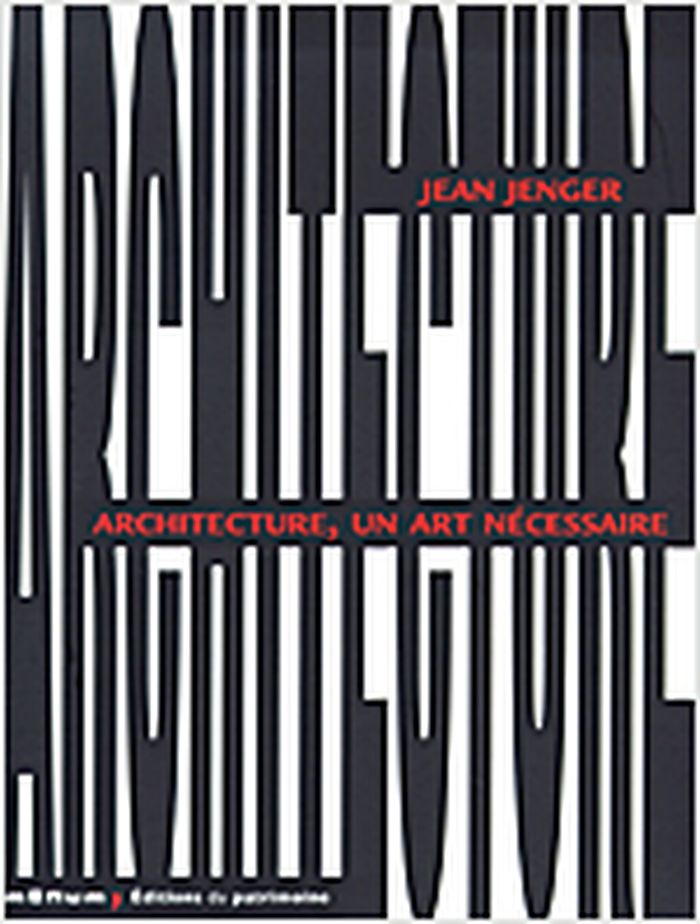
"Architecture, un art nécessaire" s'efforce de répondre à la question : " l'architecture, c'est quoi ? " Jean Jenger ne part pas de considérations historiques ou esthétiques. Il appréhende l'architecture dans sa réalité immédiate, matérielle et objective. En considérant que tout espace construit par l'homme pour l'homme est architecture, il offre un nouveau regard sur cet art omniprésent. L'architecture n'est pas le produit de l'architecte seul. Intimement enracinée dans la société, elle en retranscrit les forces et les faiblesses, les ambitions et les doutes. Art nécessaire et incontournable plus qu'aucun autre, elle peut rendre la vie des hommes plus facile ou plus malaisée. Elle est donc politique. Pourtant, le politique, qui lui porte généralement peu d'intérêt, en connaît mal l'importance et les enjeux. Le texte de l'auteur est étayé par de nombreux écrits puisés, depuis Vitruve, chez les historiens, architectes, ingénieurs, philosophes, hommes politiques... et par une iconographie abondante au service des idées. Préface de Paul Chemetov.
Architecture, un art nécessaire
Actions:
Prix:
$54.95
(disponible sur commande)
Résumé:
"Architecture, un art nécessaire" s'efforce de répondre à la question : " l'architecture, c'est quoi ? " Jean Jenger ne part pas de considérations historiques ou esthétiques. Il appréhende l'architecture dans sa réalité immédiate, matérielle et objective. En considérant que tout espace construit par l'homme pour l'homme est architecture, il offre un nouveau regard sur cet art omniprésent. L'architecture n'est pas le produit de l'architecte seul. Intimement enracinée dans la société, elle en retranscrit les forces et les faiblesses, les ambitions et les doutes. Art nécessaire et incontournable plus qu'aucun autre, elle peut rendre la vie des hommes plus facile ou plus malaisée. Elle est donc politique. Pourtant, le politique, qui lui porte généralement peu d'intérêt, en connaît mal l'importance et les enjeux. Le texte de l'auteur est étayé par de nombreux écrits puisés, depuis Vitruve, chez les historiens, architectes, ingénieurs, philosophes, hommes politiques... et par une iconographie abondante au service des idées. Préface de Paul Chemetov.
Classification:
livres
livres
Publication:
mai 2006, Paris
mai 2006, Paris
Sujet:
Théorie de l’architecture
Théorie de l’architecture
Classification:
livres
livres
Prix:
$62.00
(disponible sur commande)
Résumé:
Through a series of close readings of two major figures of the modern movement, Adolf Loos and Le Corbusier, Beatriz Colomina argues that architecture only becomes modern in its engagement with the mass media, and that in so doing it radically displaces the(...)
$62.00
(disponible sur commande)
Résumé:
Through a series of close readings of two major figures of the modern movement, Adolf Loos and Le Corbusier, Beatriz Colomina argues that architecture only becomes modern in its engagement with the mass media, and that in so doing it radically displaces the(...)
Titre:
Privacy and publicity : modern architecture as mass media
Actions:
Prix:
$62.00
(disponible sur commande)
Résumé:
Through a series of close readings of two major figures of the modern movement, Adolf Loos and Le Corbusier, Beatriz Colomina argues that architecture only becomes modern in its engagement with the mass media, and that in so doing it radically displaces the traditional sense of space and subjectivity. "Privacy and Publicity" questions certain ideological assumptions underlying the received view of modern architecture and reconsiders the methodology of architectural criticism itself. Where conventional criticism portrays modern architecture as a high artistic practice in opposition to mass culture, Colomina sees the emerging systems of communication that have come to define twentieth-century culture -- the mass media -- as the true site within which modern architecture was produced. She considers architectural discourse as the intersection of a number of systems of representation such as drawings, models, photographs, books, films, and advertisements. This does not mean abandoning the architectural object, the building, but rather looking at it in a different way. The building is understood here in the same way as all the media that frame it, as a mechanism of representation in its own right.
Privacy and publicity : modern architecture as mass media
Actions:
Prix:
$62.00
(disponible sur commande)
Résumé:
Through a series of close readings of two major figures of the modern movement, Adolf Loos and Le Corbusier, Beatriz Colomina argues that architecture only becomes modern in its engagement with the mass media, and that in so doing it radically displaces the traditional sense of space and subjectivity. "Privacy and Publicity" questions certain ideological assumptions underlying the received view of modern architecture and reconsiders the methodology of architectural criticism itself. Where conventional criticism portrays modern architecture as a high artistic practice in opposition to mass culture, Colomina sees the emerging systems of communication that have come to define twentieth-century culture -- the mass media -- as the true site within which modern architecture was produced. She considers architectural discourse as the intersection of a number of systems of representation such as drawings, models, photographs, books, films, and advertisements. This does not mean abandoning the architectural object, the building, but rather looking at it in a different way. The building is understood here in the same way as all the media that frame it, as a mechanism of representation in its own right.
Classification:
livres
livres
Publication:
avril 1996, Cambridge
avril 1996, Cambridge
Sujet:
Théorie de l’architecture
Théorie de l’architecture
Classification:
livres
livres
Prix:
$41.25
(disponible sur commande)
Résumé:
Examines various architectural and urban issues raised by time increasingly spent in cyberspace. Includes CD-ROM.
$41.25
(disponible sur commande)
Résumé:
Examines various architectural and urban issues raised by time increasingly spent in cyberspace. Includes CD-ROM.
Titre:
Realspace in quicktimes: architecture and digitalization
Actions:
Prix:
$41.25
(disponible sur commande)
Résumé:
Examines various architectural and urban issues raised by time increasingly spent in cyberspace. Includes CD-ROM.
Realspace in quicktimes: architecture and digitalization
Actions:
Prix:
$41.25
(disponible sur commande)
Résumé:
Examines various architectural and urban issues raised by time increasingly spent in cyberspace. Includes CD-ROM.
Classification:
livres
livres
Publication:
juillet 1996, Rotterdam
juillet 1996, Rotterdam
Sujet:
Théorie de l’architecture
Théorie de l’architecture
Classification:
livres
livres
Actions:
Prix:
$72.50
(disponible sur commande)
Résumé:
The list of authors in "Theorizing a New Agenda" reads like a "Who's Who" of contemporary architectural thought: Tadao Ando, Giulio Carlo Argan, Alan Colquhoun, Jacques Derrida, Peter Eisenman, Marco Frascari,(...)
$72.50
(disponible sur commande)
Résumé:
The list of authors in "Theorizing a New Agenda" reads like a "Who's Who" of contemporary architectural thought: Tadao Ando, Giulio Carlo Argan, Alan Colquhoun, Jacques Derrida, Peter Eisenman, Marco Frascari,(...)
Titre:
Theorizing a new agenda for architecture : an anthology of architectural theory 1965-1995
Actions:
Prix:
$72.50
(disponible sur commande)
Résumé:
The list of authors in "Theorizing a New Agenda" reads like a "Who's Who" of contemporary architectural thought: Tadao Ando, Giulio Carlo Argan, Alan Colquhoun, Jacques Derrida, Peter Eisenman, Marco Frascari, Kenneth Frampton, Diane Ghirardo, Vittorio Gregotti, Karsten Harries, Rem Koolhaas, Christian Norberg-Schulz, Aldo Rossi, Colin Rowe, Thomas Schumacher, Ignasi de Solá-Morales Rubió, Bernard Tschumi, Robert Venturi and Denise Scott Brown, and Anthony Vidler. A bibliography and notes on all the contributors are also included.
Theorizing a new agenda for architecture : an anthology of architectural theory 1965-1995
Actions:
Prix:
$72.50
(disponible sur commande)
Résumé:
The list of authors in "Theorizing a New Agenda" reads like a "Who's Who" of contemporary architectural thought: Tadao Ando, Giulio Carlo Argan, Alan Colquhoun, Jacques Derrida, Peter Eisenman, Marco Frascari, Kenneth Frampton, Diane Ghirardo, Vittorio Gregotti, Karsten Harries, Rem Koolhaas, Christian Norberg-Schulz, Aldo Rossi, Colin Rowe, Thomas Schumacher, Ignasi de Solá-Morales Rubió, Bernard Tschumi, Robert Venturi and Denise Scott Brown, and Anthony Vidler. A bibliography and notes on all the contributors are also included.
Classification:
livres
livres
Publication:
novembre 1995, New York
novembre 1995, New York
Sujet:
Théorie de l’architecture
Théorie de l’architecture
Classification:
livres
livres
Titre:
The production of space
The production of space
Actions:
Prix:
$65.99
(disponible sur commande)
Résumé:
This classic text is a search for reconciliation between mental space (the space of the philosophers) and real space (the physical and social spheres in which we all live). Translated by Donald Nicholson-Smith.
$65.99
(disponible sur commande)
Résumé:
This classic text is a search for reconciliation between mental space (the space of the philosophers) and real space (the physical and social spheres in which we all live). Translated by Donald Nicholson-Smith.
Titre:
The production of space
Actions:
Prix:
$65.99
(disponible sur commande)
Résumé:
This classic text is a search for reconciliation between mental space (the space of the philosophers) and real space (the physical and social spheres in which we all live). Translated by Donald Nicholson-Smith.
The production of space
Actions:
Prix:
$65.99
(disponible sur commande)
Résumé:
This classic text is a search for reconciliation between mental space (the space of the philosophers) and real space (the physical and social spheres in which we all live). Translated by Donald Nicholson-Smith.
Classification:
livres
livres
Publication:
août 1991, Oxford
août 1991, Oxford
Sujet:
Théorie de l’architecture
Théorie de l’architecture
Classification:
livres
livres
Actions:
Prix:
$61.95
(disponible sur commande)
Résumé:
Nowhere, Mark Wigley asserts, are the stakes higher for deconstruction than in architecture - architecture is the Achilles' heel of deconstructive discourse, the point of vulnerability upon which all of its arguments depend. By locating the architecture already hidden within deconstructive discourse, Wigley opens up more radical possibilities for both architecture and(...)
$61.95
(disponible sur commande)
Résumé:
Nowhere, Mark Wigley asserts, are the stakes higher for deconstruction than in architecture - architecture is the Achilles' heel of deconstructive discourse, the point of vulnerability upon which all of its arguments depend. By locating the architecture already hidden within deconstructive discourse, Wigley opens up more radical possibilities for both architecture and(...)
Titre:
The architecture of deconstruction : Derrida's haunt
Actions:
Prix:
$61.95
(disponible sur commande)
Résumé:
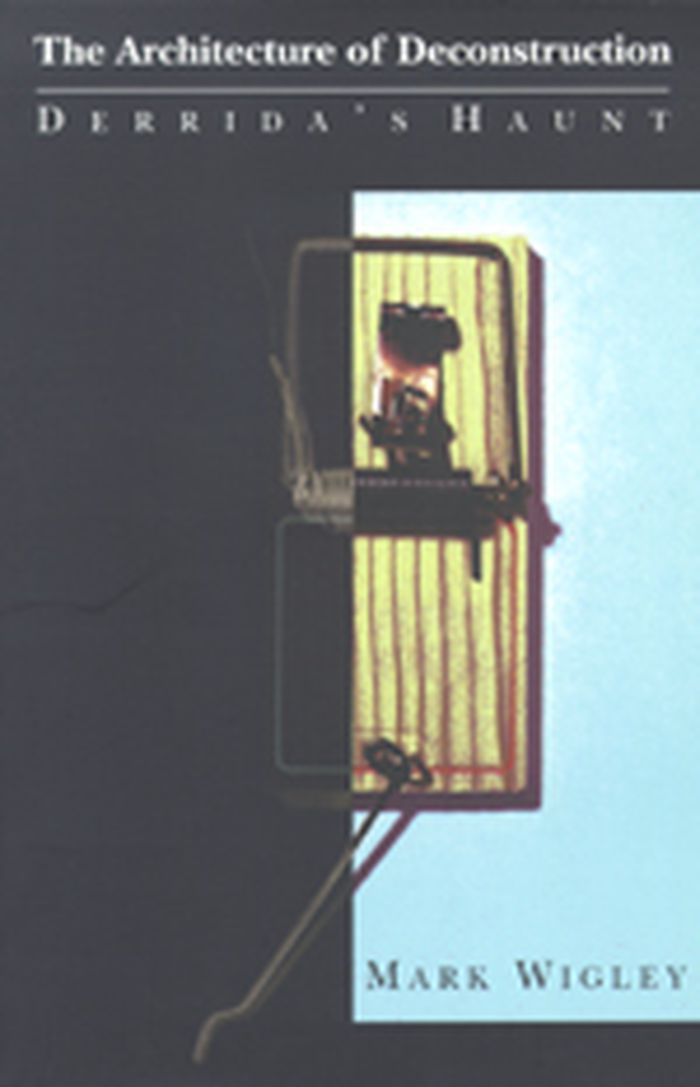
Nowhere, Mark Wigley asserts, are the stakes higher for deconstruction than in architecture - architecture is the Achilles' heel of deconstructive discourse, the point of vulnerability upon which all of its arguments depend. By locating the architecture already hidden within deconstructive discourse, Wigley opens up more radical possibilities for both architecture and deconstruction. He tracks the tacit argument about architecture embedded within Jacques Derrida's discourse, a curious line of argument that passes through each of the philosopher's texts, provocatively turning Derrida's reading strategy back on his texts to expose the architectural dimension of their central notions like law, economy, writing, place, domestication, translation, spacing, laughter, and dance.
The architecture of deconstruction : Derrida's haunt
Actions:
Prix:
$61.95
(disponible sur commande)
Résumé:
Nowhere, Mark Wigley asserts, are the stakes higher for deconstruction than in architecture - architecture is the Achilles' heel of deconstructive discourse, the point of vulnerability upon which all of its arguments depend. By locating the architecture already hidden within deconstructive discourse, Wigley opens up more radical possibilities for both architecture and deconstruction. He tracks the tacit argument about architecture embedded within Jacques Derrida's discourse, a curious line of argument that passes through each of the philosopher's texts, provocatively turning Derrida's reading strategy back on his texts to expose the architectural dimension of their central notions like law, economy, writing, place, domestication, translation, spacing, laughter, and dance.
Classification:
livres
livres
Publication:
septembre 1995, Cambridge (MA)
septembre 1995, Cambridge (MA)
Sujet:
Théorie de l’architecture
Théorie de l’architecture
Classification:
livres
livres
Titre:
Design thinking
Design thinking
Actions:
Prix:
$33.95
(disponible sur commande)
Résumé:
In this classic book on the theory of design, Peter Rowe provides a systematic account of the process of designing in architecture and urban planning.
$33.95
(disponible sur commande)
Résumé:
In this classic book on the theory of design, Peter Rowe provides a systematic account of the process of designing in architecture and urban planning.
Titre:
Design thinking
Actions:
Prix:
$33.95
(disponible sur commande)
Résumé:
In this classic book on the theory of design, Peter Rowe provides a systematic account of the process of designing in architecture and urban planning.
Design thinking
Actions:
Prix:
$33.95
(disponible sur commande)
Résumé:
In this classic book on the theory of design, Peter Rowe provides a systematic account of the process of designing in architecture and urban planning.
Classification:
livres
livres
Publication:
mai 1991, Cambridge, Mass.
mai 1991, Cambridge, Mass.
Sujet:
Théorie de l’architecture
Théorie de l’architecture
Classification:
livres
livres
Prix:
$25.99
(disponible sur commande)
Résumé:
This volume contains essays by Julia Kristeva, Rosalind Krauss, Candida Hofer, Louis Martin, Timothy Martin, Beatriz Colomina, Howard Caygill and Hal Foster.
$25.99
(disponible sur commande)
Résumé:
This volume contains essays by Julia Kristeva, Rosalind Krauss, Candida Hofer, Louis Martin, Timothy Martin, Beatriz Colomina, Howard Caygill and Hal Foster.
Titre:
de-, dis-, ex-. volume 2 - the anxiety of interdisciplinarity
Actions:
Prix:
$25.99
(disponible sur commande)
Résumé:
This volume contains essays by Julia Kristeva, Rosalind Krauss, Candida Hofer, Louis Martin, Timothy Martin, Beatriz Colomina, Howard Caygill and Hal Foster.
de-, dis-, ex-. volume 2 - the anxiety of interdisciplinarity
Actions:
Prix:
$25.99
(disponible sur commande)
Résumé:
This volume contains essays by Julia Kristeva, Rosalind Krauss, Candida Hofer, Louis Martin, Timothy Martin, Beatriz Colomina, Howard Caygill and Hal Foster.
Classification:
livres
livres
Publication:
janvier 1900, London
janvier 1900, London
Sujet:
Théorie de l’architecture
Théorie de l’architecture
Classification:
livres
livres
Actions:
Prix:
$71.95
(disponible sur commande)
Résumé:
One of the most profound thinkers of the modern age, Friedrich Wilhelm Nietzsche (1844-1900) has been the subject of volumes of literature that document his life and work. Until now there has been no in-depth study devoted to Nietzsche's thoughts and impact on architecture, (...)
$71.95
(disponible sur commande)
Résumé:
One of the most profound thinkers of the modern age, Friedrich Wilhelm Nietzsche (1844-1900) has been the subject of volumes of literature that document his life and work. Until now there has been no in-depth study devoted to Nietzsche's thoughts and impact on architecture, (...)
Titre:
Nietzsche and an architecture of our minds
Actions:
Prix:
$71.95
(disponible sur commande)
Résumé:
One of the most profound thinkers of the modern age, Friedrich Wilhelm Nietzsche (1844-1900) has been the subject of volumes of literature that document his life and work. Until now there has been no in-depth study devoted to Nietzsche's thoughts and impact on architecture, specifically his far-reaching notion of an architecture commensurate with the modern mind. In the essays that comprise this book, thirteen contributors from a wide variety of disciplines (including art history, architecture and architectural theory, literature, philosophy, and city planning) assess the relationship of Nietzschean philosophy to art and architecture, elucidate frequent misunderstandings, and determine patterns of influence. The book is divided into three parts: "The Metaphors of Architecture," "Between Art, Literature, and Architecture," and "Nietzsche and the Architects." Contributors include Paolo Baldacci, the Giorgio and Isa de Chirico Foundation, Rome; Hanne Bergius, Hochschule fur Kunst und Design Burg Giebichenstein, Halle, Germany; Rolf Bothe, Kunstsammlungen zu Weimar, Germany; Claudia Brodsky Lacour, Princeton University; Tilmann Buddensieg, Humbolt-Universität Berlin; Jean-Louis Cohen, Université de Paris and Institute of Fine Arts, New York University; Karsten Harries, Yale University; Werner Hofmann, Germany; Fritz Neumeyer, Technische Universität Berlin; Léon Ploegaerts, University of Ottawa, Canada; and Anthony Vidler, University of California at Los Angeles. Edited by Alexandre Kostka and Irving Wohlfarth.
Nietzsche and an architecture of our minds
Actions:
Prix:
$71.95
(disponible sur commande)
Résumé:
One of the most profound thinkers of the modern age, Friedrich Wilhelm Nietzsche (1844-1900) has been the subject of volumes of literature that document his life and work. Until now there has been no in-depth study devoted to Nietzsche's thoughts and impact on architecture, specifically his far-reaching notion of an architecture commensurate with the modern mind. In the essays that comprise this book, thirteen contributors from a wide variety of disciplines (including art history, architecture and architectural theory, literature, philosophy, and city planning) assess the relationship of Nietzschean philosophy to art and architecture, elucidate frequent misunderstandings, and determine patterns of influence. The book is divided into three parts: "The Metaphors of Architecture," "Between Art, Literature, and Architecture," and "Nietzsche and the Architects." Contributors include Paolo Baldacci, the Giorgio and Isa de Chirico Foundation, Rome; Hanne Bergius, Hochschule fur Kunst und Design Burg Giebichenstein, Halle, Germany; Rolf Bothe, Kunstsammlungen zu Weimar, Germany; Claudia Brodsky Lacour, Princeton University; Tilmann Buddensieg, Humbolt-Universität Berlin; Jean-Louis Cohen, Université de Paris and Institute of Fine Arts, New York University; Karsten Harries, Yale University; Werner Hofmann, Germany; Fritz Neumeyer, Technische Universität Berlin; Léon Ploegaerts, University of Ottawa, Canada; and Anthony Vidler, University of California at Los Angeles. Edited by Alexandre Kostka and Irving Wohlfarth.
Classification:
livres
livres
Publication:
juillet 1999, Los Angeles
juillet 1999, Los Angeles
Sujet:
Théorie de l’architecture
Théorie de l’architecture
Classification:
livres
livres
Actions:
Prix:
$52.50
(disponible sur commande)
Résumé:
In this engaging study Grant Hildebrand discusses ways in which architectural forms emulate some archetypal settings that humans have found appealing from ancient times to the present. Speculating that nature has "designed" us to prefer certain conditions and (...)
$52.50
(disponible sur commande)
Résumé:
In this engaging study Grant Hildebrand discusses ways in which architectural forms emulate some archetypal settings that humans have found appealing from ancient times to the present. Speculating that nature has "designed" us to prefer certain conditions and (...)
Titre:
Origins of architectural pleasure
Actions:
Prix:
$52.50
(disponible sur commande)
Résumé:
In this engaging study Grant Hildebrand discusses ways in which architectural forms emulate some archetypal settings that humans have found appealing from ancient times to the present. Speculating that nature has "designed" us to prefer certain conditions and experiences, Hildebrand is interested in how the characteristics of our most satisfying built environments mesh with Darwinian selection. In examining the appeal of such survival-based characteristics he cites architectural examples spanning five continents and five millennia. Among those included are the Palace of Minos, the Alhambra, Wells Cathedral, the Shinto shrine at Ise, the Piazza San Marco, Brunelleschi's Pazzi Chapel, Frank Lloyd Wright's Fallingwater, a Seattle condominium, and recent houses by Eric Owen Moss and Arne Bystrom.
Origins of architectural pleasure
Actions:
Prix:
$52.50
(disponible sur commande)
Résumé:
In this engaging study Grant Hildebrand discusses ways in which architectural forms emulate some archetypal settings that humans have found appealing from ancient times to the present. Speculating that nature has "designed" us to prefer certain conditions and experiences, Hildebrand is interested in how the characteristics of our most satisfying built environments mesh with Darwinian selection. In examining the appeal of such survival-based characteristics he cites architectural examples spanning five continents and five millennia. Among those included are the Palace of Minos, the Alhambra, Wells Cathedral, the Shinto shrine at Ise, the Piazza San Marco, Brunelleschi's Pazzi Chapel, Frank Lloyd Wright's Fallingwater, a Seattle condominium, and recent houses by Eric Owen Moss and Arne Bystrom.
Classification:
livres
livres
Publication:
juin 1999, Berkeley
juin 1999, Berkeley
Sujet:
Théorie de l’architecture
Théorie de l’architecture


