


2221 Résultats
Classification:
livres
livres
Prix:
$55.95
(disponible en magasin)
Résumé:
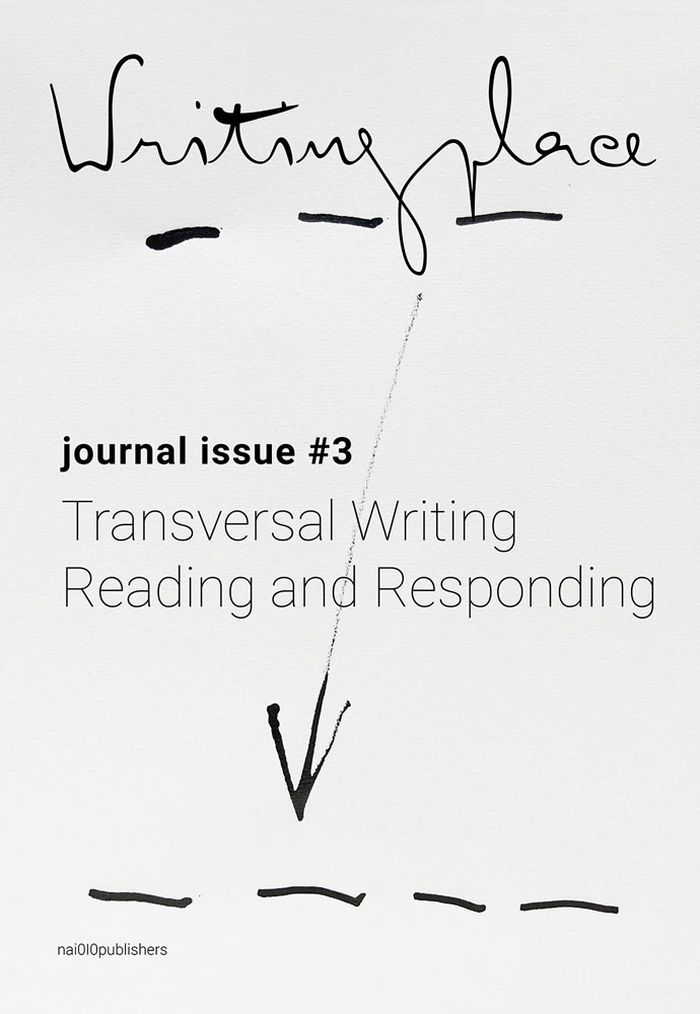
Interdisciplinary authors, architectural theorists and historians, critics and professors reflect on the process of architectural writing Since 2016, "Writingplace" has served as a platform for discussing the relationship between literature and architecture. The third issue focuses on reading and reviewing works in progress.
$55.95
(disponible en magasin)
Résumé:
Interdisciplinary authors, architectural theorists and historians, critics and professors reflect on the process of architectural writing Since 2016, "Writingplace" has served as a platform for discussing the relationship between literature and architecture. The third issue focuses on reading and reviewing works in progress.
Titre:
Writingplace Journal for Architecture and Literature 3
Actions:
Prix:
$55.95
(disponible en magasin)
Résumé:
Interdisciplinary authors, architectural theorists and historians, critics and professors reflect on the process of architectural writing Since 2016, "Writingplace" has served as a platform for discussing the relationship between literature and architecture. The third issue focuses on reading and reviewing works in progress.
Writingplace Journal for Architecture and Literature 3
Actions:
Prix:
$55.95
(disponible en magasin)
Résumé:
Interdisciplinary authors, architectural theorists and historians, critics and professors reflect on the process of architectural writing Since 2016, "Writingplace" has served as a platform for discussing the relationship between literature and architecture. The third issue focuses on reading and reviewing works in progress.
Classification:
livres
livres
Publication:
juin 2020
juin 2020
Sujet:
Théorie de l’architecture
Théorie de l’architecture
Classification:
livres
livres
Actions:
Prix:
$56.95
(disponible en magasin)
Résumé:
With its emphasis on permanence and stability, architecture at first resists an easy pairing with live performance, usually considered ephemeral and elusive. But architecture and performance share a core concern: the interplay of bodies and space. 'Bodybuilding' examines the use of live performance by architects. Looking past the unbuilt, utopian projects of the early(...)
$56.95
(disponible en magasin)
Résumé:
With its emphasis on permanence and stability, architecture at first resists an easy pairing with live performance, usually considered ephemeral and elusive. But architecture and performance share a core concern: the interplay of bodies and space. 'Bodybuilding' examines the use of live performance by architects. Looking past the unbuilt, utopian projects of the early(...)
Sujet:
Théorie de l’architecture
Théorie de l’architecture
Publication:
janvier 2019
janvier 2019
Titre:
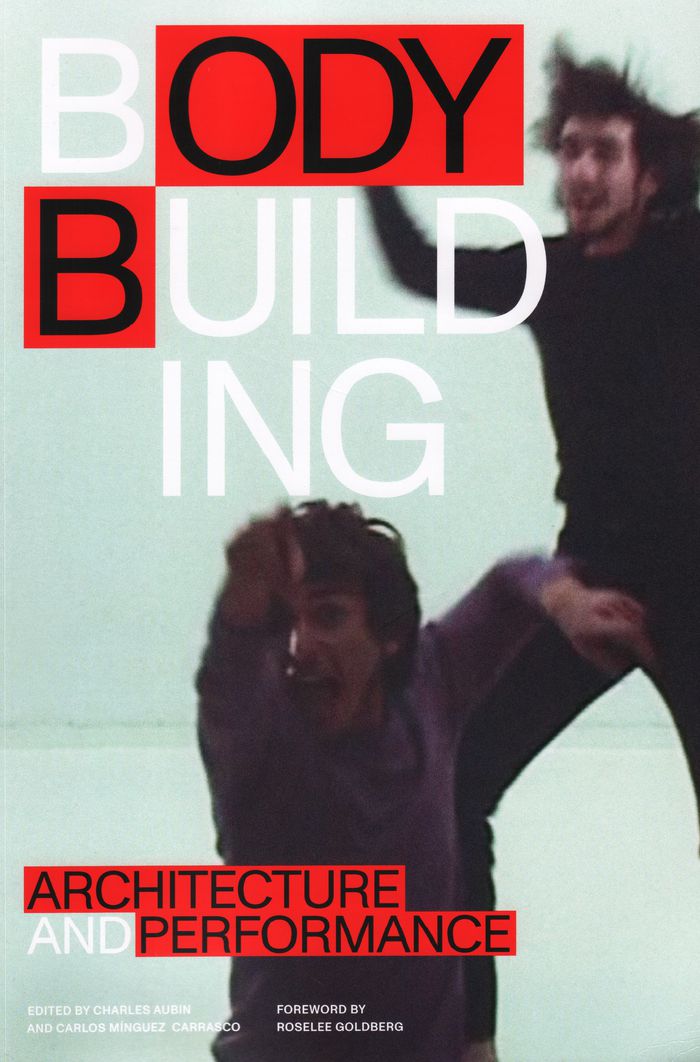
Bodybuilding: architecture and performance
Actions:
Prix:
$56.95
(disponible en magasin)
Résumé:
With its emphasis on permanence and stability, architecture at first resists an easy pairing with live performance, usually considered ephemeral and elusive. But architecture and performance share a core concern: the interplay of bodies and space. 'Bodybuilding' examines the use of live performance by architects. Looking past the unbuilt, utopian projects of the early modernists or the postwar avant-garde, the authors unearth an alternative canon of architects who actually employ performance to fortify the process of building, or else to explore architecture’s enmeshment with labor, security, race, migration, the environment, gentrification, and public assembly. For these architects, performance can be a tool, a method, or a heuristic device; in every case, performance is a blade that cuts into the matter of architecture. With rates of construction plummeting after the financial crisis of 2007–08, newly minted architects have had to find alternative ways to continue working within the field. 'Bodybuilding' grounds these new practices within a century of precedents, and insists that performance is a critical tool to rethink architecture’s agency, goals, and aesthetics.
Bodybuilding: architecture and performance
Actions:
Prix:
$56.95
(disponible en magasin)
Résumé:
With its emphasis on permanence and stability, architecture at first resists an easy pairing with live performance, usually considered ephemeral and elusive. But architecture and performance share a core concern: the interplay of bodies and space. 'Bodybuilding' examines the use of live performance by architects. Looking past the unbuilt, utopian projects of the early modernists or the postwar avant-garde, the authors unearth an alternative canon of architects who actually employ performance to fortify the process of building, or else to explore architecture’s enmeshment with labor, security, race, migration, the environment, gentrification, and public assembly. For these architects, performance can be a tool, a method, or a heuristic device; in every case, performance is a blade that cuts into the matter of architecture. With rates of construction plummeting after the financial crisis of 2007–08, newly minted architects have had to find alternative ways to continue working within the field. 'Bodybuilding' grounds these new practices within a century of precedents, and insists that performance is a critical tool to rethink architecture’s agency, goals, and aesthetics.
Classification:
livres
livres
Publication:
janvier 2019
janvier 2019
Sujet:
Théorie de l’architecture
Théorie de l’architecture
Classification:
livres
livres
Actions:
Prix:
$45.00
(disponible sur commande)
Résumé:
In this publication, Pamela Lee traces the complex encounters between Cold War think tanks and the art of that era. Lee shows how the approaches and methods of think tanks—including systems theory, operations research, and cybernetics—paved the way for a peculiar genre of midcentury modernism and set the terms for contemporary neoliberalism. Lee casts these shadowy(...)
$45.00
(disponible sur commande)
Résumé:
In this publication, Pamela Lee traces the complex encounters between Cold War think tanks and the art of that era. Lee shows how the approaches and methods of think tanks—including systems theory, operations research, and cybernetics—paved the way for a peculiar genre of midcentury modernism and set the terms for contemporary neoliberalism. Lee casts these shadowy(...)
Titre:
Think tank aesthetics: mid-century modernism, the cold war, and the neoliberal present
Actions:
Prix:
$45.00
(disponible sur commande)
Résumé:
In this publication, Pamela Lee traces the complex encounters between Cold War think tanks and the art of that era. Lee shows how the approaches and methods of think tanks—including systems theory, operations research, and cybernetics—paved the way for a peculiar genre of midcentury modernism and set the terms for contemporary neoliberalism. Lee casts these shadowy institutions as sites of radical creativity and interdisciplinary practice in the service of defense strategy. Describing the distinctive aesthetics that emerged from such institutions as the RAND Corporation, she maps the multiple and overlapping networks that connected nuclear strategists, mathematicians, economists, anthropologists, artists, designers, and art historians.
Think tank aesthetics: mid-century modernism, the cold war, and the neoliberal present
Actions:
Prix:
$45.00
(disponible sur commande)
Résumé:
In this publication, Pamela Lee traces the complex encounters between Cold War think tanks and the art of that era. Lee shows how the approaches and methods of think tanks—including systems theory, operations research, and cybernetics—paved the way for a peculiar genre of midcentury modernism and set the terms for contemporary neoliberalism. Lee casts these shadowy institutions as sites of radical creativity and interdisciplinary practice in the service of defense strategy. Describing the distinctive aesthetics that emerged from such institutions as the RAND Corporation, she maps the multiple and overlapping networks that connected nuclear strategists, mathematicians, economists, anthropologists, artists, designers, and art historians.
Classification:
livres
livres
Publication:
avril 2020
avril 2020
Sujet:
Théorie de l’architecture
Théorie de l’architecture
Classification:
livres
livres

Actions:
Prix:
$27.00
(disponible en magasin)
Résumé:
New spatial notational systems for protecting and regaining Indigenous lands in the United States. Nina Valerie Kolowratnik challenges the conditions under which Indigenous rights to protect and regain traditional lands are currently negotiated in United States legal frameworks. This tenth volume in the Critical Spatial Practice series responds to the urgent need for(...)
$27.00
(disponible en magasin)
Résumé:
New spatial notational systems for protecting and regaining Indigenous lands in the United States. Nina Valerie Kolowratnik challenges the conditions under which Indigenous rights to protect and regain traditional lands are currently negotiated in United States legal frameworks. This tenth volume in the Critical Spatial Practice series responds to the urgent need for(...)
Titre:
The language of secret proof: indigenous truth and representation. Critical spatial practice
Actions:
Prix:
$27.00
(disponible en magasin)
Résumé:
New spatial notational systems for protecting and regaining Indigenous lands in the United States. Nina Valerie Kolowratnik challenges the conditions under which Indigenous rights to protect and regain traditional lands are currently negotiated in United States legal frameworks. This tenth volume in the Critical Spatial Practice series responds to the urgent need for alternative modes of evidentiary production by introducing an innovative system of architectural drawing and notation. Kolowratnik focuses on the double bind in which Native Pueblo communities in the United States find themselves when they become involved in a legal effort to reclaim and protect ancestral lands; the process of producing evidence runs counter to their structural organization around oral history and cultural secrecy. The spatial notational systems developed by Kolowratnik with Hemish tribal members from northern New Mexico and presented in this volume are an attempt to produce evidentiary documentation that speaks Native truths while respecting demands on secrecy. These systems also attempt to instigate a dialogue where there currently is none, working to deconstruct the fixed opposition between secrecy and disclosure within Western legal systems.
The language of secret proof: indigenous truth and representation. Critical spatial practice
Actions:
Prix:
$27.00
(disponible en magasin)
Résumé:
New spatial notational systems for protecting and regaining Indigenous lands in the United States. Nina Valerie Kolowratnik challenges the conditions under which Indigenous rights to protect and regain traditional lands are currently negotiated in United States legal frameworks. This tenth volume in the Critical Spatial Practice series responds to the urgent need for alternative modes of evidentiary production by introducing an innovative system of architectural drawing and notation. Kolowratnik focuses on the double bind in which Native Pueblo communities in the United States find themselves when they become involved in a legal effort to reclaim and protect ancestral lands; the process of producing evidence runs counter to their structural organization around oral history and cultural secrecy. The spatial notational systems developed by Kolowratnik with Hemish tribal members from northern New Mexico and presented in this volume are an attempt to produce evidentiary documentation that speaks Native truths while respecting demands on secrecy. These systems also attempt to instigate a dialogue where there currently is none, working to deconstruct the fixed opposition between secrecy and disclosure within Western legal systems.
Classification:
livres
livres
Publication:
mars 2020
mars 2020
Sujet:
Théorie de l’architecture
Théorie de l’architecture
Classification:
livres
livres
Prix:
$61.95
(disponible sur commande)
Résumé:
A cultural history of gigantism in architecture and digital culture, from the Eiffel Tower to the World Trade Center. The gigantic is everywhere, and gigantism is manifest in everything from excessively tall skyscrapers to globe-spanning digital networks. In this book, Henriette Steiner and Kristin Veel map and critique the trajectory of gigantism in architecture and(...)
$61.95
(disponible sur commande)
Résumé:
A cultural history of gigantism in architecture and digital culture, from the Eiffel Tower to the World Trade Center. The gigantic is everywhere, and gigantism is manifest in everything from excessively tall skyscrapers to globe-spanning digital networks. In this book, Henriette Steiner and Kristin Veel map and critique the trajectory of gigantism in architecture and(...)
Titre:
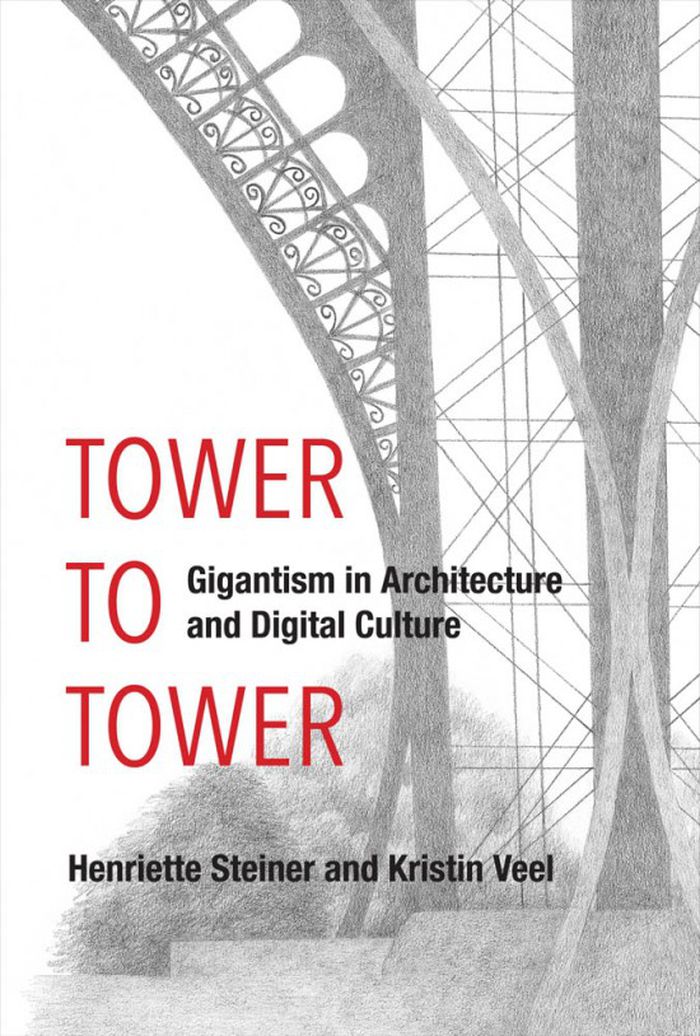
Tower to tower: gigantism in architecture and digital culture
Actions:
Prix:
$61.95
(disponible sur commande)
Résumé:
A cultural history of gigantism in architecture and digital culture, from the Eiffel Tower to the World Trade Center. The gigantic is everywhere, and gigantism is manifest in everything from excessively tall skyscrapers to globe-spanning digital networks. In this book, Henriette Steiner and Kristin Veel map and critique the trajectory of gigantism in architecture and digital culture-the convergence of tall buildings and networked infrastructures-from the Eiffel Tower to One World Trade Center. They show how these two forms of gigantism intersect in the figure of the skyscraper with a transmitting antenna on its roof, a gigantic building that is also a nodal point in a gigantic digital infrastructure.
Tower to tower: gigantism in architecture and digital culture
Actions:
Prix:
$61.95
(disponible sur commande)
Résumé:
A cultural history of gigantism in architecture and digital culture, from the Eiffel Tower to the World Trade Center. The gigantic is everywhere, and gigantism is manifest in everything from excessively tall skyscrapers to globe-spanning digital networks. In this book, Henriette Steiner and Kristin Veel map and critique the trajectory of gigantism in architecture and digital culture-the convergence of tall buildings and networked infrastructures-from the Eiffel Tower to One World Trade Center. They show how these two forms of gigantism intersect in the figure of the skyscraper with a transmitting antenna on its roof, a gigantic building that is also a nodal point in a gigantic digital infrastructure.
Classification:
livres
livres
Publication:
mai 2020
mai 2020
Sujet:
Théorie de l’architecture
Théorie de l’architecture
Classification:
livres
livres
Actions:
Prix:
$75.00
(disponible en magasin)
Résumé:
Presenting a range of original perspectives on the theoretical work of Canadian architect George Baird, this publication constructs for the first time a critical framework of his contribution to architectural discourse over a period of more than 50 years. The influence of his writing on more recent scholarly work is also addressed. The book includes previously unpublished(...)
$75.00
(disponible en magasin)
Résumé:
Presenting a range of original perspectives on the theoretical work of Canadian architect George Baird, this publication constructs for the first time a critical framework of his contribution to architectural discourse over a period of more than 50 years. The influence of his writing on more recent scholarly work is also addressed. The book includes previously unpublished(...)
Titre:
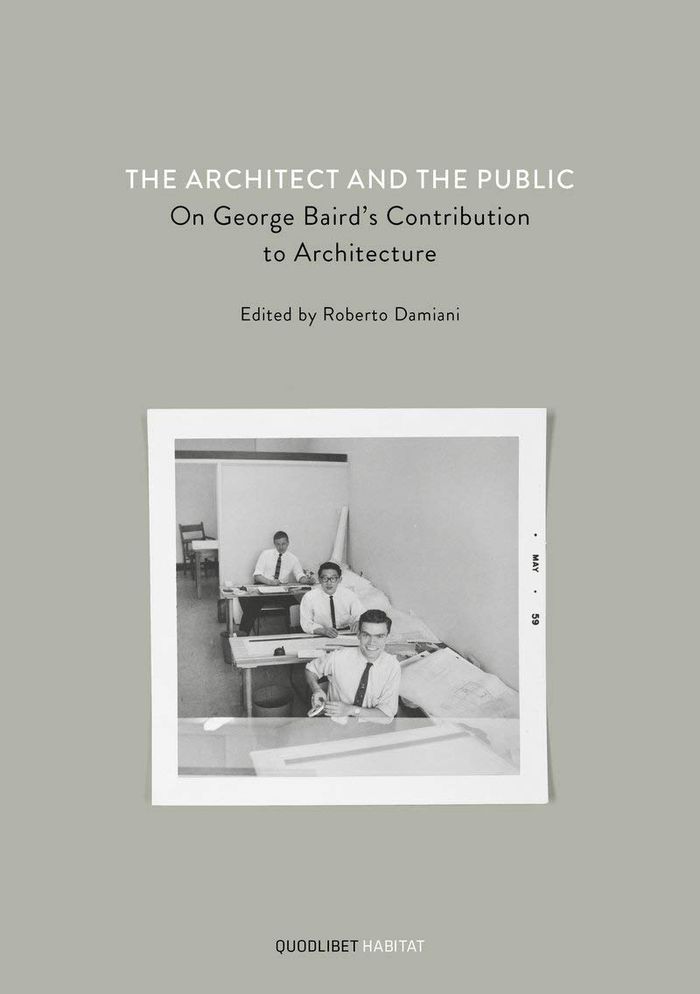
The Architect and the public: On George Baird's contribution to architecture
Actions:
Prix:
$75.00
(disponible en magasin)
Résumé:
Presenting a range of original perspectives on the theoretical work of Canadian architect George Baird, this publication constructs for the first time a critical framework of his contribution to architectural discourse over a period of more than 50 years. The influence of his writing on more recent scholarly work is also addressed. The book includes previously unpublished essays and interviews with key protagonists, among them Peter Eisenman and Kenneth Frampton, who have enjoyed intellectual exchanges with Baird. In total, eighteen contributors converge on Baird’s complex career as an example of the architect’s public engagement in contemporary society.
The Architect and the public: On George Baird's contribution to architecture
Actions:
Prix:
$75.00
(disponible en magasin)
Résumé:
Presenting a range of original perspectives on the theoretical work of Canadian architect George Baird, this publication constructs for the first time a critical framework of his contribution to architectural discourse over a period of more than 50 years. The influence of his writing on more recent scholarly work is also addressed. The book includes previously unpublished essays and interviews with key protagonists, among them Peter Eisenman and Kenneth Frampton, who have enjoyed intellectual exchanges with Baird. In total, eighteen contributors converge on Baird’s complex career as an example of the architect’s public engagement in contemporary society.
Classification:
livres
livres
Publication:
juillet 2020
juillet 2020
Sujet:
Théorie de l’architecture
Théorie de l’architecture
Classification:
livres
livres
Actions:
Prix:
$39.95
(disponible sur commande)
Résumé:
The preservation enterprise helps fashion the physical contours of memory in public space, and thus has the power to curate a multidimensional and inclusive representation of societal values and narratives. Increasingly, the field of preservation is being challenged to consider questions of social inclusion, of how multiple publics are—or are not—represented in heritage(...)
$39.95
(disponible sur commande)
Résumé:
The preservation enterprise helps fashion the physical contours of memory in public space, and thus has the power to curate a multidimensional and inclusive representation of societal values and narratives. Increasingly, the field of preservation is being challenged to consider questions of social inclusion, of how multiple publics are—or are not—represented in heritage(...)
Titre:
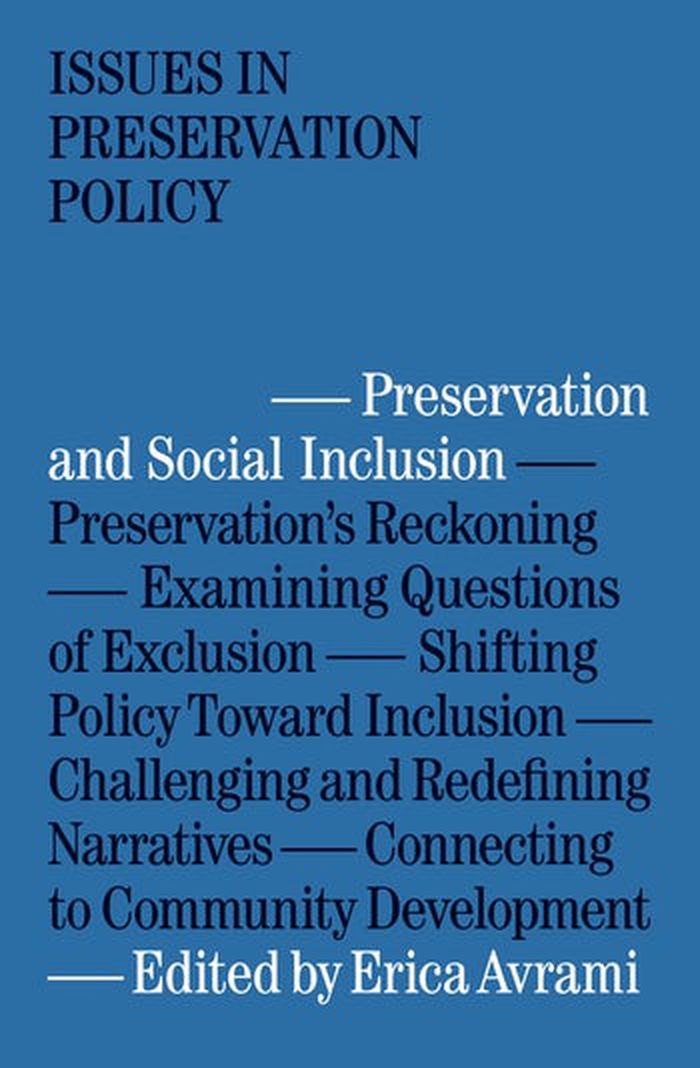
Preservation and social exclusion
Actions:
Prix:
$39.95
(disponible sur commande)
Résumé:
The preservation enterprise helps fashion the physical contours of memory in public space, and thus has the power to curate a multidimensional and inclusive representation of societal values and narratives. Increasingly, the field of preservation is being challenged to consider questions of social inclusion, of how multiple publics are—or are not—represented in heritage decision-making, geographies, and governance structures. Community engagement is increasingly being integrated into project-based preservation practice, but the policy toolbox has been slower to evolve. Recognizing how preservation and other land use decisions can both empower and marginalize publics compels greater reflection on preservation’s past and future and collective action beyond the project level. This requires professionals and institutions to consider systemic policy change with integrity, sensitivity, and intentionality. Bringing together a broad range of academics, historians, and practitioners, this second volume in the Issues in Preservation Policy series documents historic preservation’s progress toward inclusivity and explores further steps to be taken.
Preservation and social exclusion
Actions:
Prix:
$39.95
(disponible sur commande)
Résumé:
The preservation enterprise helps fashion the physical contours of memory in public space, and thus has the power to curate a multidimensional and inclusive representation of societal values and narratives. Increasingly, the field of preservation is being challenged to consider questions of social inclusion, of how multiple publics are—or are not—represented in heritage decision-making, geographies, and governance structures. Community engagement is increasingly being integrated into project-based preservation practice, but the policy toolbox has been slower to evolve. Recognizing how preservation and other land use decisions can both empower and marginalize publics compels greater reflection on preservation’s past and future and collective action beyond the project level. This requires professionals and institutions to consider systemic policy change with integrity, sensitivity, and intentionality. Bringing together a broad range of academics, historians, and practitioners, this second volume in the Issues in Preservation Policy series documents historic preservation’s progress toward inclusivity and explores further steps to be taken.
Classification:
livres
livres
Publication:
mars 2020
mars 2020
Sujet:
Théorie de l’architecture
Théorie de l’architecture
Classification:
livres
livres
Titre:
Lateness
Lateness
Actions:
Prix:
$38.95
(disponible sur commande)
Résumé:
Conceptions of modernity in architecture are often expressed in the idea of the zeitgeist, or “spirit of the age,” an attitude toward architectural form that is embedded in a belief in progressive time. 'Lateness' explores how architecture can work against these linear currents in startling and compelling ways. In this incisive book, internationally renowned architect(...)
$38.95
(disponible sur commande)
Résumé:
Conceptions of modernity in architecture are often expressed in the idea of the zeitgeist, or “spirit of the age,” an attitude toward architectural form that is embedded in a belief in progressive time. 'Lateness' explores how architecture can work against these linear currents in startling and compelling ways. In this incisive book, internationally renowned architect(...)
Titre:
Lateness
Actions:
Prix:
$38.95
(disponible sur commande)
Résumé:
Conceptions of modernity in architecture are often expressed in the idea of the zeitgeist, or “spirit of the age,” an attitude toward architectural form that is embedded in a belief in progressive time. 'Lateness' explores how architecture can work against these linear currents in startling and compelling ways. In this incisive book, internationally renowned architect Peter Eisenman, with Elisa Iturbe, proposes a different perspective on form and time in architecture, one that circumvents the temporal constraints on style that require it to be “of the times”—lateness. He focuses on three twentieth-century architects who exhibited the qualities of lateness in their designs: Adolf Loos, Aldo Rossi, and John Hejduk. Drawing on the critical theory of Theodor Adorno and his study of Beethoven’s final works, Eisenman shows how the architecture of these canonical figures was temporally out of sync with conventions and expectations, and how lateness can serve as a form of release from the restraints of the moment.
Lateness
Actions:
Prix:
$38.95
(disponible sur commande)
Résumé:
Conceptions of modernity in architecture are often expressed in the idea of the zeitgeist, or “spirit of the age,” an attitude toward architectural form that is embedded in a belief in progressive time. 'Lateness' explores how architecture can work against these linear currents in startling and compelling ways. In this incisive book, internationally renowned architect Peter Eisenman, with Elisa Iturbe, proposes a different perspective on form and time in architecture, one that circumvents the temporal constraints on style that require it to be “of the times”—lateness. He focuses on three twentieth-century architects who exhibited the qualities of lateness in their designs: Adolf Loos, Aldo Rossi, and John Hejduk. Drawing on the critical theory of Theodor Adorno and his study of Beethoven’s final works, Eisenman shows how the architecture of these canonical figures was temporally out of sync with conventions and expectations, and how lateness can serve as a form of release from the restraints of the moment.
Classification:
livres
livres
Publication:
mai 2020
mai 2020
Sujet:
Théorie de l’architecture
Théorie de l’architecture
Classification:
livres
livres
Prix:
$77.00
(disponible sur commande)
Résumé:
explores how leading architects of the twentieth century incorporated climate-mediating strategies into their designs, and shows how regional approaches to climate adaptability were essential to the development of modern architecture. Focusing on the period surrounding World War II—before fossil-fuel powered air-conditioning became widely available—Daniel Barber brings to(...)
$77.00
(disponible sur commande)
Résumé:
explores how leading architects of the twentieth century incorporated climate-mediating strategies into their designs, and shows how regional approaches to climate adaptability were essential to the development of modern architecture. Focusing on the period surrounding World War II—before fossil-fuel powered air-conditioning became widely available—Daniel Barber brings to(...)
Titre:
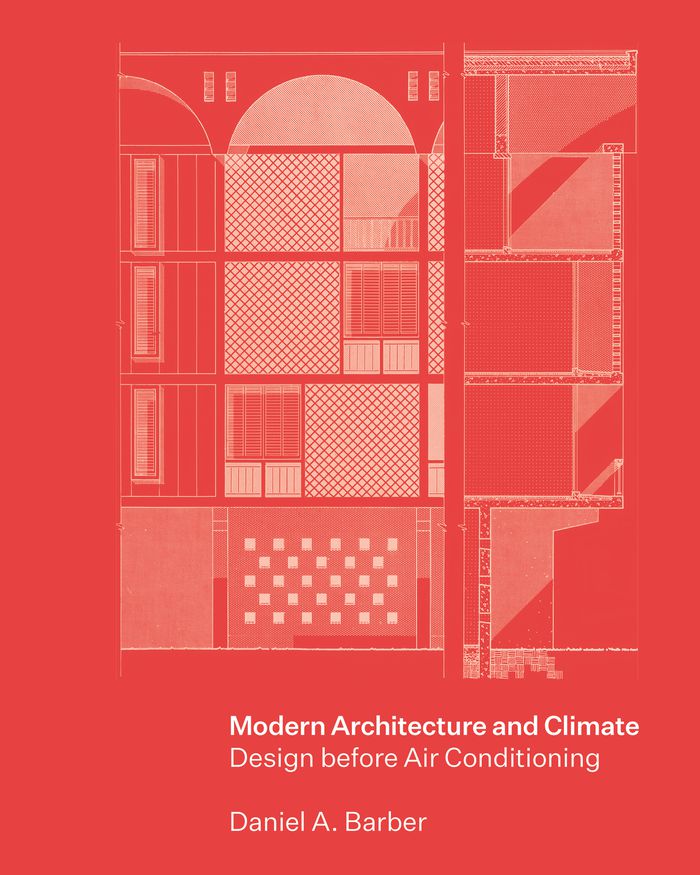
Modern architecture and climate: design before air conditioning
Actions:
Prix:
$77.00
(disponible sur commande)
Résumé:
explores how leading architects of the twentieth century incorporated climate-mediating strategies into their designs, and shows how regional approaches to climate adaptability were essential to the development of modern architecture. Focusing on the period surrounding World War II—before fossil-fuel powered air-conditioning became widely available—Daniel Barber brings to light a vibrant and dynamic architectural discussion involving design, materials, and shading systems as means of interior climate control. He looks at projects by well-known architects such as Richard Neutra, Le Corbusier, Lúcio Costa, Mies van der Rohe, and Skidmore, Owings, and Merrill, and the work of climate-focused architects such as MMM Roberto, Olgyay and Olgyay, and Cliff May. Drawing on the editorial projects of James Marston Fitch, Elizabeth Gordon, and others, he demonstrates how images and diagrams produced by architects helped conceptualize climate knowledge, alongside the work of meteorologists, physicists, engineers, and social scientists. Barber describes how this novel type of environmental media catalyzed new ways of thinking about climate and architectural design.
Modern architecture and climate: design before air conditioning
Actions:
Prix:
$77.00
(disponible sur commande)
Résumé:
explores how leading architects of the twentieth century incorporated climate-mediating strategies into their designs, and shows how regional approaches to climate adaptability were essential to the development of modern architecture. Focusing on the period surrounding World War II—before fossil-fuel powered air-conditioning became widely available—Daniel Barber brings to light a vibrant and dynamic architectural discussion involving design, materials, and shading systems as means of interior climate control. He looks at projects by well-known architects such as Richard Neutra, Le Corbusier, Lúcio Costa, Mies van der Rohe, and Skidmore, Owings, and Merrill, and the work of climate-focused architects such as MMM Roberto, Olgyay and Olgyay, and Cliff May. Drawing on the editorial projects of James Marston Fitch, Elizabeth Gordon, and others, he demonstrates how images and diagrams produced by architects helped conceptualize climate knowledge, alongside the work of meteorologists, physicists, engineers, and social scientists. Barber describes how this novel type of environmental media catalyzed new ways of thinking about climate and architectural design.
Classification:
livres
livres
Publication:
avril 2020
avril 2020
Sujet:
Théorie de l’architecture
Théorie de l’architecture
Classification:
livres
livres

Prix:
$64.95
(disponible sur commande)
Résumé:
A literary and cultural history of the intimate space of the eighteenth-century closet?and how it fired the imaginations of Pepys, Sterne, Swift, and so many other writers Long before it was a hidden storage space or a metaphor for queer and trans shame, the closet was one of the most charged settings in English architecture. This private room provided seclusion for(...)
$64.95
(disponible sur commande)
Résumé:
A literary and cultural history of the intimate space of the eighteenth-century closet?and how it fired the imaginations of Pepys, Sterne, Swift, and so many other writers Long before it was a hidden storage space or a metaphor for queer and trans shame, the closet was one of the most charged settings in English architecture. This private room provided seclusion for(...)
Titre:
The closet: the eighteenth-century architecture of intimacy
Actions:
Prix:
$64.95
(disponible sur commande)
Résumé:
A literary and cultural history of the intimate space of the eighteenth-century closet?and how it fired the imaginations of Pepys, Sterne, Swift, and so many other writers Long before it was a hidden storage space or a metaphor for queer and trans shame, the closet was one of the most charged settings in English architecture. This private room provided seclusion for reading, writing, praying, dressing, and collecting?and for talking in select company. In their closets, kings and duchesses shared secrets with favorites, midwives and apothecaries dispensed remedies, and newly wealthy men and women expanded their social networks. In 'The Closet', Danielle Bobker presents a literary and cultural history of these sites of extrafamilial intimacy, revealing how, as they proliferated both in buildings and in books, closets also became powerful symbols of the unstable virtual intimacy of the first mass-medium of print.
The closet: the eighteenth-century architecture of intimacy
Actions:
Prix:
$64.95
(disponible sur commande)
Résumé:
A literary and cultural history of the intimate space of the eighteenth-century closet?and how it fired the imaginations of Pepys, Sterne, Swift, and so many other writers Long before it was a hidden storage space or a metaphor for queer and trans shame, the closet was one of the most charged settings in English architecture. This private room provided seclusion for reading, writing, praying, dressing, and collecting?and for talking in select company. In their closets, kings and duchesses shared secrets with favorites, midwives and apothecaries dispensed remedies, and newly wealthy men and women expanded their social networks. In 'The Closet', Danielle Bobker presents a literary and cultural history of these sites of extrafamilial intimacy, revealing how, as they proliferated both in buildings and in books, closets also became powerful symbols of the unstable virtual intimacy of the first mass-medium of print.
Classification:
livres
livres
Publication:
mai 2020
mai 2020
Sujet:
Théorie de l’architecture
Théorie de l’architecture


