


2221 Résultats
Classification:
livres
livres
Titre:
The ruins lesson
The ruins lesson
Actions:
Prix:
$48.95
(disponible en magasin)
Résumé:
How have ruins become so valued in Western culture and so central to our art and literature? Covering a vast chronological and geographical range, from ancient Egyptian inscriptions to twentieth-century memorials, Susan Stewart seeks to answer this question as she traces the appeal of ruins and ruins images, and the lessons that writers and artists have drawn from their(...)
$48.95
(disponible en magasin)
Résumé:
How have ruins become so valued in Western culture and so central to our art and literature? Covering a vast chronological and geographical range, from ancient Egyptian inscriptions to twentieth-century memorials, Susan Stewart seeks to answer this question as she traces the appeal of ruins and ruins images, and the lessons that writers and artists have drawn from their(...)
Titre:
The ruins lesson
Actions:
Prix:
$48.95
(disponible en magasin)
Résumé:
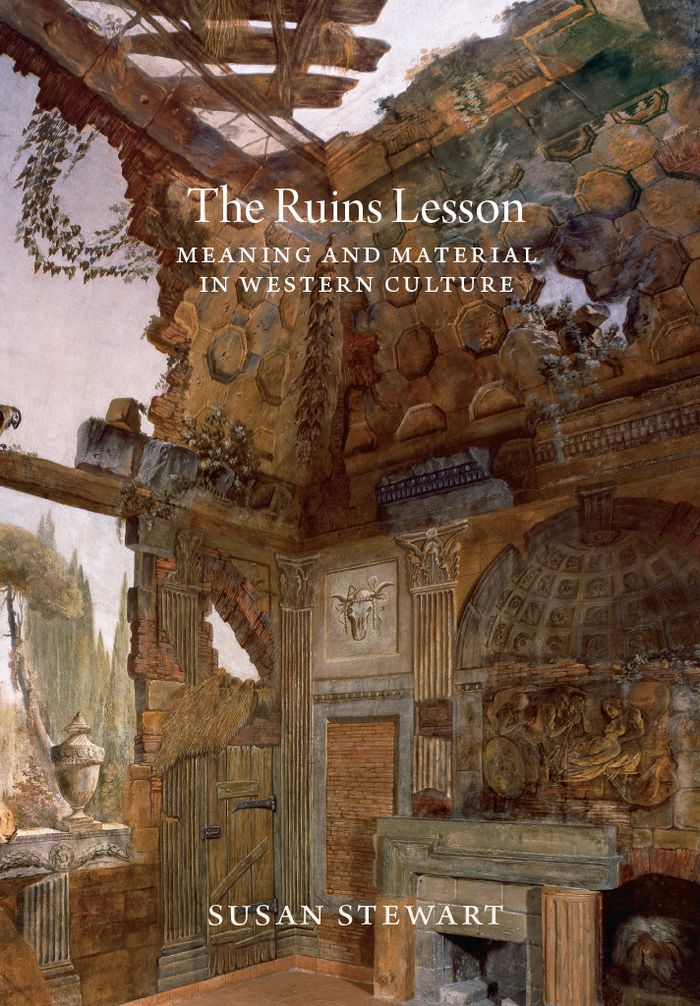
How have ruins become so valued in Western culture and so central to our art and literature? Covering a vast chronological and geographical range, from ancient Egyptian inscriptions to twentieth-century memorials, Susan Stewart seeks to answer this question as she traces the appeal of ruins and ruins images, and the lessons that writers and artists have drawn from their haunting forms. Stewart takes us on a sweeping journey through founding legends of broken covenants and original sin, the Christian appropriation of the classical past, and images of decay in early modern allegory. Stewart looks in depth at the works of Goethe, Piranesi, Blake, and Wordsworth, each of whom found in ruins a means of reinventing his art. "The ruins lesson" ultimately asks what can resist ruination—and finds in the self-transforming, ever-fleeting practices of language and thought a clue to what might truly endure.
The ruins lesson
Actions:
Prix:
$48.95
(disponible en magasin)
Résumé:
How have ruins become so valued in Western culture and so central to our art and literature? Covering a vast chronological and geographical range, from ancient Egyptian inscriptions to twentieth-century memorials, Susan Stewart seeks to answer this question as she traces the appeal of ruins and ruins images, and the lessons that writers and artists have drawn from their haunting forms. Stewart takes us on a sweeping journey through founding legends of broken covenants and original sin, the Christian appropriation of the classical past, and images of decay in early modern allegory. Stewart looks in depth at the works of Goethe, Piranesi, Blake, and Wordsworth, each of whom found in ruins a means of reinventing his art. "The ruins lesson" ultimately asks what can resist ruination—and finds in the self-transforming, ever-fleeting practices of language and thought a clue to what might truly endure.
Classification:
livres
livres
Publication:
juin 2021
juin 2021
Sujet:
Théorie de l’architecture
Théorie de l’architecture
Classification:
livres
livres
Actions:
Prix:
$65.95
(disponible sur commande)
Résumé:
Anthony Fontenot’s book uncovers the surprisingly libertarian heart of the most influential British and American architectural and urbanist discourses of the postwar period, expressed as a critique of central design and a support of spontaneous order. "Non-design" illuminates the unexpected philosophical common ground between enemies of state support, most prominently(...)
$65.95
(disponible sur commande)
Résumé:
Anthony Fontenot’s book uncovers the surprisingly libertarian heart of the most influential British and American architectural and urbanist discourses of the postwar period, expressed as a critique of central design and a support of spontaneous order. "Non-design" illuminates the unexpected philosophical common ground between enemies of state support, most prominently(...)
Titre:
Non-design: Architecture, liberalism, and the market
Actions:
Prix:
$65.95
(disponible sur commande)
Résumé:
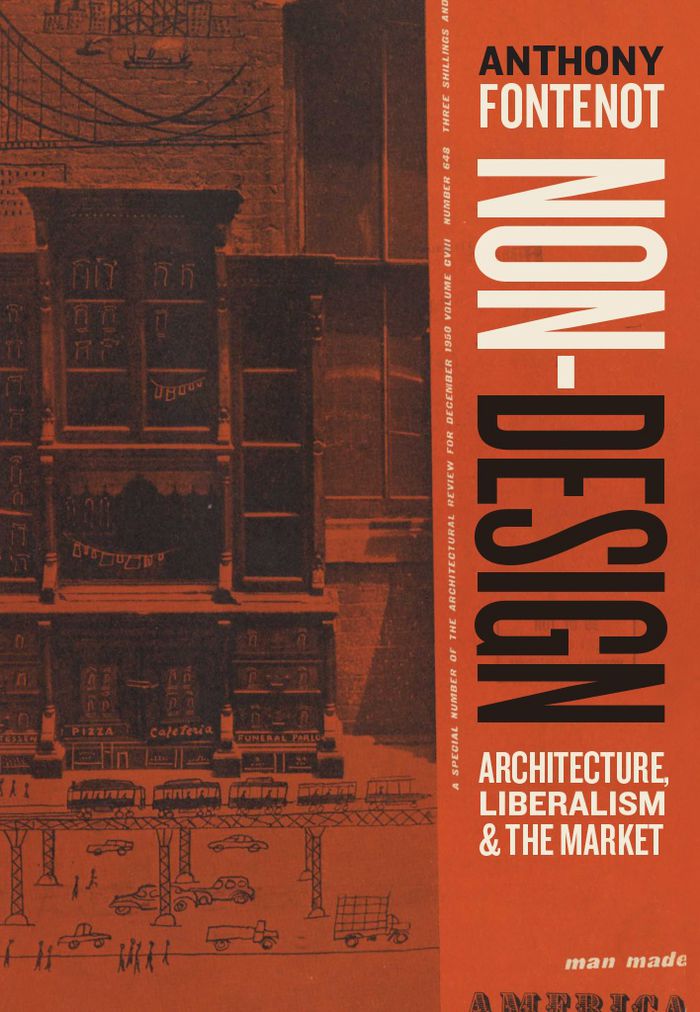
Anthony Fontenot’s book uncovers the surprisingly libertarian heart of the most influential British and American architectural and urbanist discourses of the postwar period, expressed as a critique of central design and a support of spontaneous order. "Non-design" illuminates the unexpected philosophical common ground between enemies of state support, most prominently the economist Friedrich Hayek, and numerous notable postwar architects and urbanists like Robert Venturi, Denise Scott Brown, Reyner Banham, and Jane Jacobs. These thinkers espoused a distinctive concept of 'non-design,' characterized by a rejection of conscious design and an embrace of various phenomenon that emerge without intention or deliberate human guidance. This diffuse and complex body of theories discarded many of the cultural presuppositions of the time, shunning the traditions of modern design in favor of the wisdom, freedom, and self-organizing capacity of the market. Fontenot reveals the little-known commonalities between the aesthetic deregulation sought by ostensibly liberal thinkers and Hayek’s more controversial conception of state power, detailing what this unexplored affinity means for our conceptions of political liberalism. "Non-design" thoroughly recasts conventional views of postwar architecture and urbanism, as well as liberal and libertarian philosophies.
Non-design: Architecture, liberalism, and the market
Actions:
Prix:
$65.95
(disponible sur commande)
Résumé:
Anthony Fontenot’s book uncovers the surprisingly libertarian heart of the most influential British and American architectural and urbanist discourses of the postwar period, expressed as a critique of central design and a support of spontaneous order. "Non-design" illuminates the unexpected philosophical common ground between enemies of state support, most prominently the economist Friedrich Hayek, and numerous notable postwar architects and urbanists like Robert Venturi, Denise Scott Brown, Reyner Banham, and Jane Jacobs. These thinkers espoused a distinctive concept of 'non-design,' characterized by a rejection of conscious design and an embrace of various phenomenon that emerge without intention or deliberate human guidance. This diffuse and complex body of theories discarded many of the cultural presuppositions of the time, shunning the traditions of modern design in favor of the wisdom, freedom, and self-organizing capacity of the market. Fontenot reveals the little-known commonalities between the aesthetic deregulation sought by ostensibly liberal thinkers and Hayek’s more controversial conception of state power, detailing what this unexplored affinity means for our conceptions of political liberalism. "Non-design" thoroughly recasts conventional views of postwar architecture and urbanism, as well as liberal and libertarian philosophies.
Classification:
livres
livres
Publication:
juillet 2021
juillet 2021
Sujet:
Théorie de l’architecture
Théorie de l’architecture
Classification:
livres
livres
Titre:
Reyner Banham revisited
Reyner Banham revisited
Actions:
Prix:
$50.00
(disponible sur commande)
Résumé:
Reyner Banham (1922–88) was a prolific, iconoclastic critic of modern architecture, cities, and mass culture in Britain and the United States, and his provocative writings are inescapable in these areas. His 1971 book on Los Angeles was groundbreaking in what it told Californians about their own metropolis, and architects about what cities might be if freed from(...)
$50.00
(disponible sur commande)
Résumé:
Reyner Banham (1922–88) was a prolific, iconoclastic critic of modern architecture, cities, and mass culture in Britain and the United States, and his provocative writings are inescapable in these areas. His 1971 book on Los Angeles was groundbreaking in what it told Californians about their own metropolis, and architects about what cities might be if freed from(...)
Titre:
Reyner Banham revisited
Actions:
Prix:
$50.00
(disponible sur commande)
Résumé:
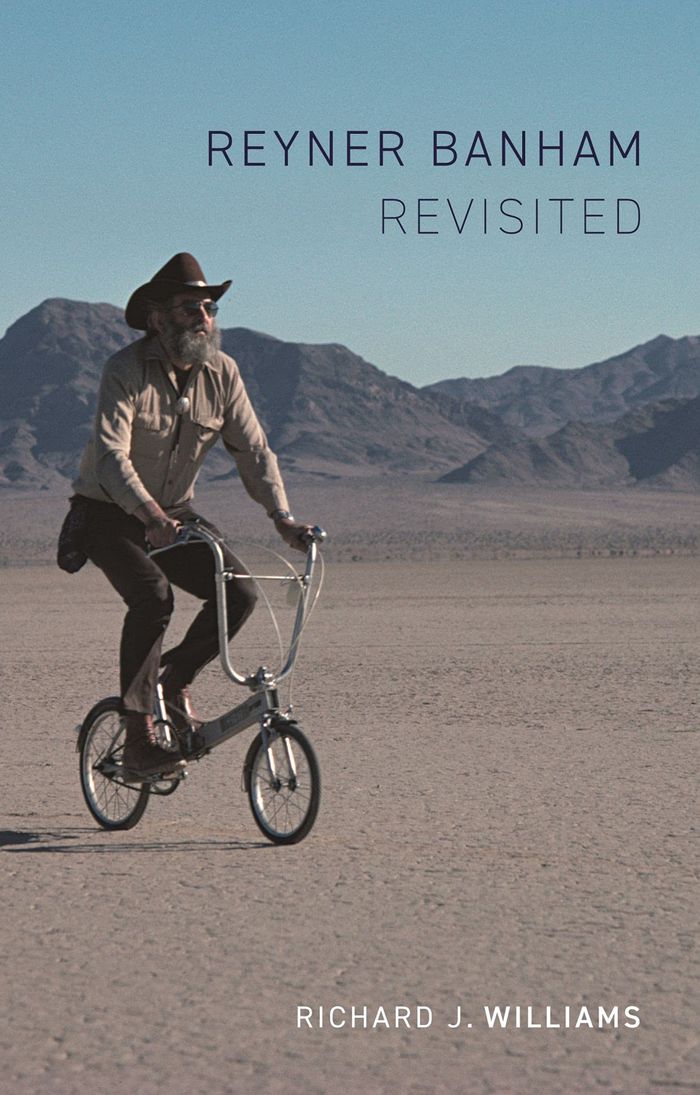
Reyner Banham (1922–88) was a prolific, iconoclastic critic of modern architecture, cities, and mass culture in Britain and the United States, and his provocative writings are inescapable in these areas. His 1971 book on Los Angeles was groundbreaking in what it told Californians about their own metropolis, and architects about what cities might be if freed from tradition. Banham’s obsession with technology, and his talent for thinking the unthinkable, mean his work still resonates now, more than thirty years after his death. This book explores the full breadth of his career and his legacy, dealing not only with his major books, but a wide range of his journalism and media outputs, as well as the singular character of Banham himself.
Reyner Banham revisited
Actions:
Prix:
$50.00
(disponible sur commande)
Résumé:
Reyner Banham (1922–88) was a prolific, iconoclastic critic of modern architecture, cities, and mass culture in Britain and the United States, and his provocative writings are inescapable in these areas. His 1971 book on Los Angeles was groundbreaking in what it told Californians about their own metropolis, and architects about what cities might be if freed from tradition. Banham’s obsession with technology, and his talent for thinking the unthinkable, mean his work still resonates now, more than thirty years after his death. This book explores the full breadth of his career and his legacy, dealing not only with his major books, but a wide range of his journalism and media outputs, as well as the singular character of Banham himself.
Classification:
livres
livres
Publication:
juillet 2021
juillet 2021
Sujet:
Théorie de l’architecture
Théorie de l’architecture
Classification:
livres
livres
Actions:
Prix:
$45.00
(disponible sur commande)
Résumé:
Josep Lluís Mateo is one of Spain’s leading architects and one of Europe’s most influential architectural intellectuals. He runs a firm called mateoarquitectura in Barcelona, which has designed buildings in many countries across Europe. Alongside his work as guest lecturer, Mateo was professor of design at the Federal Institute of Technology (ETH) Zürich from 2002 to(...)
$45.00
(disponible sur commande)
Résumé:
Josep Lluís Mateo is one of Spain’s leading architects and one of Europe’s most influential architectural intellectuals. He runs a firm called mateoarquitectura in Barcelona, which has designed buildings in many countries across Europe. Alongside his work as guest lecturer, Mateo was professor of design at the Federal Institute of Technology (ETH) Zürich from 2002 to(...)
Titre:
Footprints: Writings 2005-2020
Actions:
Prix:
$45.00
(disponible sur commande)
Résumé:
Josep Lluís Mateo is one of Spain’s leading architects and one of Europe’s most influential architectural intellectuals. He runs a firm called mateoarquitectura in Barcelona, which has designed buildings in many countries across Europe. Alongside his work as guest lecturer, Mateo was professor of design at the Federal Institute of Technology (ETH) Zürich from 2002 to 2014. Mateo’s standing as a pacesetter in the international intellectual discourse about the future of architecture is closely tied to the journal "Quaderns d’Arquitectura i Urbanisme," which has appeared in Catalan, Spanish, and English since 1985 and of which he was editor in chief from 2002 to 2014. Under Mateo, it developed into the leading platform for discussions on architectural issues, urban design, and aesthetic concepts. "Footprints" collects Mateo’s most important writings from the last fifteen years—short and longer essays and vignettes, along with interviews touching on core questions of contemporary architecture as well as on Mateo’s own designs. The pieces are illustrated and arranged thematically to allow juxtapositions and inspire new connections.
Footprints: Writings 2005-2020
Actions:
Prix:
$45.00
(disponible sur commande)
Résumé:
Josep Lluís Mateo is one of Spain’s leading architects and one of Europe’s most influential architectural intellectuals. He runs a firm called mateoarquitectura in Barcelona, which has designed buildings in many countries across Europe. Alongside his work as guest lecturer, Mateo was professor of design at the Federal Institute of Technology (ETH) Zürich from 2002 to 2014. Mateo’s standing as a pacesetter in the international intellectual discourse about the future of architecture is closely tied to the journal "Quaderns d’Arquitectura i Urbanisme," which has appeared in Catalan, Spanish, and English since 1985 and of which he was editor in chief from 2002 to 2014. Under Mateo, it developed into the leading platform for discussions on architectural issues, urban design, and aesthetic concepts. "Footprints" collects Mateo’s most important writings from the last fifteen years—short and longer essays and vignettes, along with interviews touching on core questions of contemporary architecture as well as on Mateo’s own designs. The pieces are illustrated and arranged thematically to allow juxtapositions and inspire new connections.
Classification:
livres
livres
Publication:
avril 2021
avril 2021
Sujet:
Théorie de l’architecture
Théorie de l’architecture
Classification:
livres
livres
Titre:
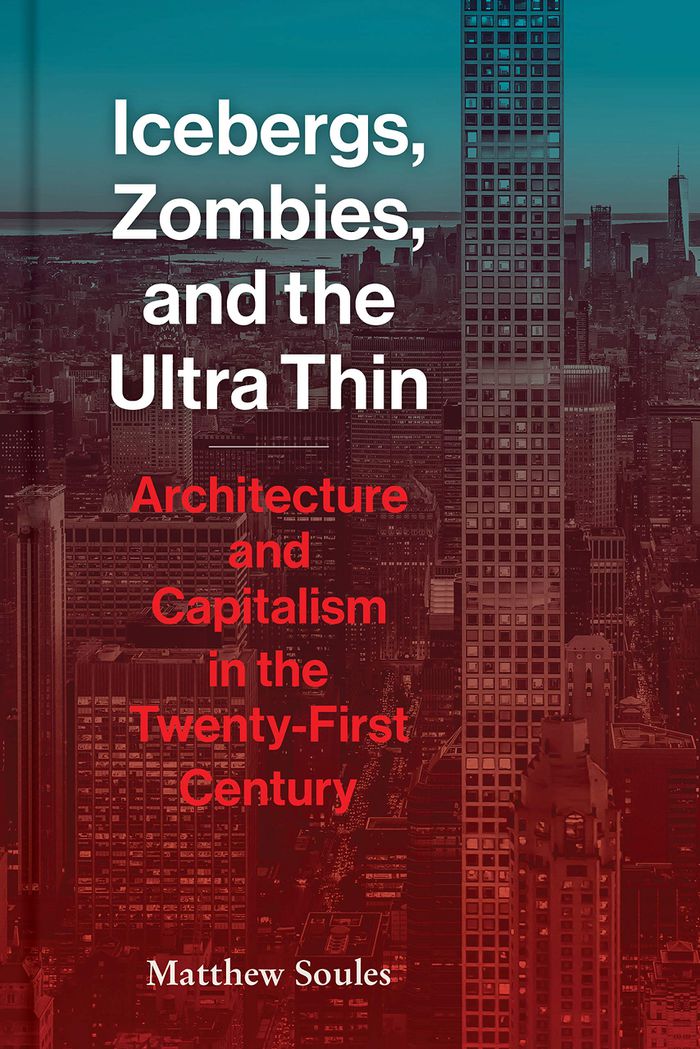
Icebergs, zombies, and the ultra thin: architecture and capitalism in the twenty-first century
Icebergs, zombies, and the ultra thin: architecture and capitalism in the twenty-first century
Actions:
Prix:
$38.95
(disponible sur commande)
Résumé:
In "Icebergs, zombies, and the ultra thin," Matthew Soules issues an indictment of how finance capitalism dramatically alters not only architectural forms but also the very nature of our cities and societies. We rarely consider architecture to be an important factor in contemporary economic and political debates, yet sparsely occupied ultra-thin "pencil towers" develop in(...)
$38.95
(disponible sur commande)
Résumé:
In "Icebergs, zombies, and the ultra thin," Matthew Soules issues an indictment of how finance capitalism dramatically alters not only architectural forms but also the very nature of our cities and societies. We rarely consider architecture to be an important factor in contemporary economic and political debates, yet sparsely occupied ultra-thin "pencil towers" develop in(...)
Titre:
Icebergs, zombies, and the ultra thin: architecture and capitalism in the twenty-first century
Actions:
Prix:
$38.95
(disponible sur commande)
Résumé:
In "Icebergs, zombies, and the ultra thin," Matthew Soules issues an indictment of how finance capitalism dramatically alters not only architectural forms but also the very nature of our cities and societies. We rarely consider architecture to be an important factor in contemporary economic and political debates, yet sparsely occupied ultra-thin "pencil towers" develop in our cities, functioning as speculative wealth storage for the superrich, and cavernous "iceberg" homes extend architectural assets many stories below street level. Meanwhile, communities around the globe are blighted by zombie and ghost urbanism, marked by unoccupied neighborhoods and abandoned housing developments.
Icebergs, zombies, and the ultra thin: architecture and capitalism in the twenty-first century
Actions:
Prix:
$38.95
(disponible sur commande)
Résumé:
In "Icebergs, zombies, and the ultra thin," Matthew Soules issues an indictment of how finance capitalism dramatically alters not only architectural forms but also the very nature of our cities and societies. We rarely consider architecture to be an important factor in contemporary economic and political debates, yet sparsely occupied ultra-thin "pencil towers" develop in our cities, functioning as speculative wealth storage for the superrich, and cavernous "iceberg" homes extend architectural assets many stories below street level. Meanwhile, communities around the globe are blighted by zombie and ghost urbanism, marked by unoccupied neighborhoods and abandoned housing developments.
Classification:
livres
livres
Publication:
mai 2021
mai 2021
Sujet:
Théorie de l’architecture
Théorie de l’architecture
Classification:
livres
livres
Actions:
Prix:
$47.00
(disponible en magasin)
Résumé:
In this compilation of essays, Dutch Belgian architect Kersten Geers writes on diverse architects in history, from Bramante, Scamozzi and Mies van der Rohe to Aldo Rossi, James Stirling, Álvaro Siza and Robert Venturi, in a theory of contemporary architecture.
$47.00
(disponible en magasin)
Résumé:
In this compilation of essays, Dutch Belgian architect Kersten Geers writes on diverse architects in history, from Bramante, Scamozzi and Mies van der Rohe to Aldo Rossi, James Stirling, Álvaro Siza and Robert Venturi, in a theory of contemporary architecture.
Titre:
2G essays, Kersten Geers: Without content
Actions:
Prix:
$47.00
(disponible en magasin)
Résumé:
In this compilation of essays, Dutch Belgian architect Kersten Geers writes on diverse architects in history, from Bramante, Scamozzi and Mies van der Rohe to Aldo Rossi, James Stirling, Álvaro Siza and Robert Venturi, in a theory of contemporary architecture.
2G essays, Kersten Geers: Without content
Actions:
Prix:
$47.00
(disponible en magasin)
Résumé:
In this compilation of essays, Dutch Belgian architect Kersten Geers writes on diverse architects in history, from Bramante, Scamozzi and Mies van der Rohe to Aldo Rossi, James Stirling, Álvaro Siza and Robert Venturi, in a theory of contemporary architecture.
Classification:
livres
livres
Publication:
juillet 2021
juillet 2021
Sujet:
Théorie de l’architecture
Théorie de l’architecture
Classification:
livres
livres
Actions:
Prix:
$43.50
(disponible sur commande)
Résumé:
While most books on architecture concentrate on spatial themes, this book explores architecture's temporal dimensions. Through a series of close readings of buildings, both contemporary and classic, it demonstrates the centrality of time in modern architecture, and shows why an understanding of time is critical to understanding good architecture. 'Building time' presents(...)
$43.50
(disponible sur commande)
Résumé:
While most books on architecture concentrate on spatial themes, this book explores architecture's temporal dimensions. Through a series of close readings of buildings, both contemporary and classic, it demonstrates the centrality of time in modern architecture, and shows why an understanding of time is critical to understanding good architecture. 'Building time' presents(...)
Titre:
Building time: architecture, event and experience
Actions:
Prix:
$43.50
(disponible sur commande)
Résumé:
While most books on architecture concentrate on spatial themes, this book explores architecture's temporal dimensions. Through a series of close readings of buildings, both contemporary and classic, it demonstrates the centrality of time in modern architecture, and shows why an understanding of time is critical to understanding good architecture. 'Building time' presents twelve close readings of buildings and artworks which explore this idea. Examining works by distinctive modern architects – from Eileen Gray to Álvaro Siza and Wang Shu – it takes the reader, in some cases literally step-by-step, through a built work, and provides insightful reflections on the importance of 'making space for time' in architectural design.
Building time: architecture, event and experience
Actions:
Prix:
$43.50
(disponible sur commande)
Résumé:
While most books on architecture concentrate on spatial themes, this book explores architecture's temporal dimensions. Through a series of close readings of buildings, both contemporary and classic, it demonstrates the centrality of time in modern architecture, and shows why an understanding of time is critical to understanding good architecture. 'Building time' presents twelve close readings of buildings and artworks which explore this idea. Examining works by distinctive modern architects – from Eileen Gray to Álvaro Siza and Wang Shu – it takes the reader, in some cases literally step-by-step, through a built work, and provides insightful reflections on the importance of 'making space for time' in architectural design.
Classification:
livres
livres
Publication:
novembre 2020
novembre 2020
Sujet:
Théorie de l’architecture
Théorie de l’architecture
Classification:
livres
livres
Titre:
Architecture is a verb
Architecture is a verb
Actions:
Prix:
$61.95
(disponible sur commande)
Résumé:
This publication outlines an approach that shifts the fundamental premises of architectural design and practice in several important ways. First, it acknowledges the centrality of the human organism as an active participant interdependent in its environment. Second, it understands human action in terms of radical embodiment — grounding the range of human activities(...)
$61.95
(disponible sur commande)
Résumé:
This publication outlines an approach that shifts the fundamental premises of architectural design and practice in several important ways. First, it acknowledges the centrality of the human organism as an active participant interdependent in its environment. Second, it understands human action in terms of radical embodiment — grounding the range of human activities(...)
Titre:
Architecture is a verb
Actions:
Prix:
$61.95
(disponible sur commande)
Résumé:
This publication outlines an approach that shifts the fundamental premises of architectural design and practice in several important ways. First, it acknowledges the centrality of the human organism as an active participant interdependent in its environment. Second, it understands human action in terms of radical embodiment — grounding the range of human activities traditionally attributed to mind and cognition: imagining, thinking, remembering — in the body. Third, it asks what a building does—that is, extends the performative functional interpretation of design to interrogate how buildings move and in turn move us, how they shape thought and action. Finally, it is committed to articulating concrete situations by developing a taxonomy of human/building interactions.
Architecture is a verb
Actions:
Prix:
$61.95
(disponible sur commande)
Résumé:
This publication outlines an approach that shifts the fundamental premises of architectural design and practice in several important ways. First, it acknowledges the centrality of the human organism as an active participant interdependent in its environment. Second, it understands human action in terms of radical embodiment — grounding the range of human activities traditionally attributed to mind and cognition: imagining, thinking, remembering — in the body. Third, it asks what a building does—that is, extends the performative functional interpretation of design to interrogate how buildings move and in turn move us, how they shape thought and action. Finally, it is committed to articulating concrete situations by developing a taxonomy of human/building interactions.
Classification:
livres
livres
Publication:
mars 2021
mars 2021
Sujet:
Théorie de l’architecture
Théorie de l’architecture
Classification:
livres
livres
Titre:
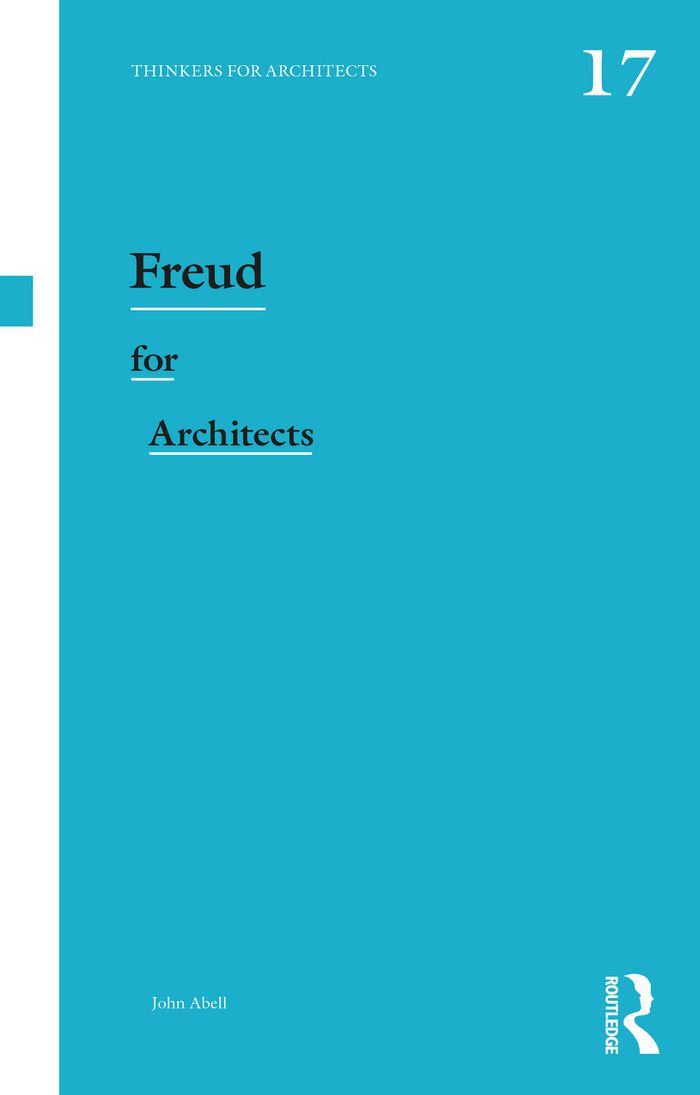
Freud for architects
Freud for architects
Actions:
Prix:
$35.95
(disponible sur commande)
Résumé:
''Freud for architects'' explains what Freud offers to the understanding of architectural creativity and architectural experience, with case examples from early modern architecture to the present. Freud’s observations on the human psyche and its influence on culture and social behavior have generated a great deal of discussion since the 19th century. Yet, what Freud’s(...)
$35.95
(disponible sur commande)
Résumé:
''Freud for architects'' explains what Freud offers to the understanding of architectural creativity and architectural experience, with case examples from early modern architecture to the present. Freud’s observations on the human psyche and its influence on culture and social behavior have generated a great deal of discussion since the 19th century. Yet, what Freud’s(...)
Titre:
Freud for architects
Actions:
Prix:
$35.95
(disponible sur commande)
Résumé:
''Freud for architects'' explains what Freud offers to the understanding of architectural creativity and architectural experience, with case examples from early modern architecture to the present. Freud’s observations on the human psyche and its influence on culture and social behavior have generated a great deal of discussion since the 19th century. Yet, what Freud’s key ideas offer to the understanding of architectural creativity and experience has received little direct attention. That is partly because Freud opened the door to a place where conventional research in architecture has little traction, the unconscious. Adding to the difficulties, Freud’s collection of work is vast and daunting. ''Freud for architects'' navigates Freud’s key ideas and bridges a chasm between architecture and psychoanalytic theory. The book highlights Freud’s ideas on the foundational developments of childhood, developments on which the adult psyche is based. It explains why and how the developmental stages could influence adult architectural preferences and preoccupations, spatial intuition, and beliefs about what is proper and right for architectural design. As such, ''Freud for architects'' will be of great interest to students, practitioners, and scholars in a range of disciplines including architecture, psychoanalysis, and philosophy.
Freud for architects
Actions:
Prix:
$35.95
(disponible sur commande)
Résumé:
''Freud for architects'' explains what Freud offers to the understanding of architectural creativity and architectural experience, with case examples from early modern architecture to the present. Freud’s observations on the human psyche and its influence on culture and social behavior have generated a great deal of discussion since the 19th century. Yet, what Freud’s key ideas offer to the understanding of architectural creativity and experience has received little direct attention. That is partly because Freud opened the door to a place where conventional research in architecture has little traction, the unconscious. Adding to the difficulties, Freud’s collection of work is vast and daunting. ''Freud for architects'' navigates Freud’s key ideas and bridges a chasm between architecture and psychoanalytic theory. The book highlights Freud’s ideas on the foundational developments of childhood, developments on which the adult psyche is based. It explains why and how the developmental stages could influence adult architectural preferences and preoccupations, spatial intuition, and beliefs about what is proper and right for architectural design. As such, ''Freud for architects'' will be of great interest to students, practitioners, and scholars in a range of disciplines including architecture, psychoanalysis, and philosophy.
Classification:
livres
livres
Publication:
novembre 2020
novembre 2020
Sujet:
Théorie de l’architecture
Théorie de l’architecture
Classification:
livres
livres
Actions:
Prix:
$45.00
(disponible sur commande)
Résumé:
This publication offers a renewed and radical theorization of the relations between capital and architecture. It explicates the theoretical gymnastics through which architecture legitimates its services to neoliberalism, examines the discipline’s production of platforms for happily compliant consumers, and challenges its entrepreneurial self-image. 'Critique of(...)
$45.00
(disponible sur commande)
Résumé:
This publication offers a renewed and radical theorization of the relations between capital and architecture. It explicates the theoretical gymnastics through which architecture legitimates its services to neoliberalism, examines the discipline’s production of platforms for happily compliant consumers, and challenges its entrepreneurial self-image. 'Critique of(...)
Titre:
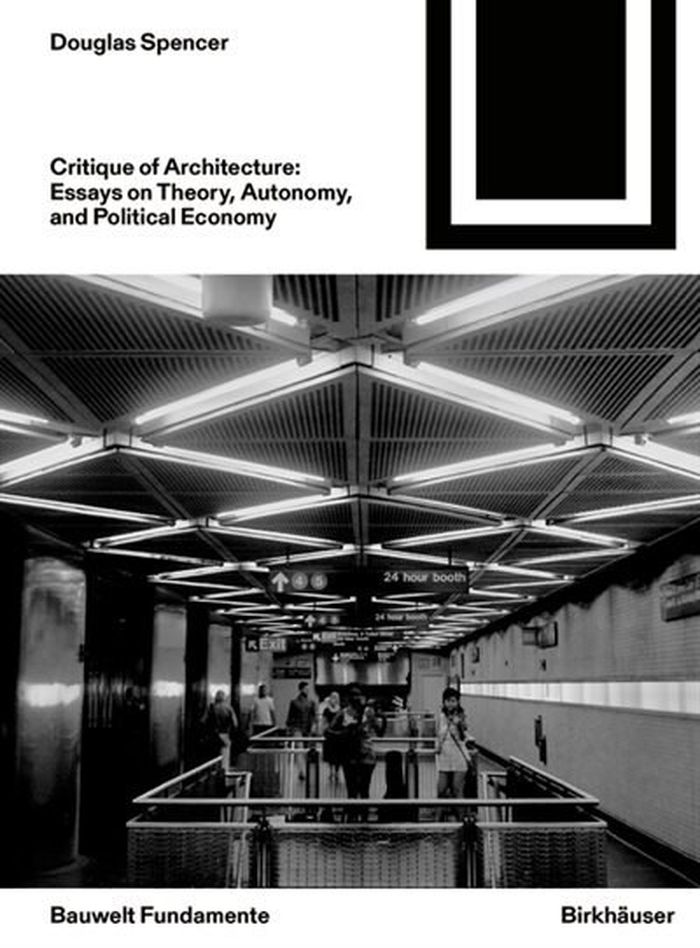
Critique of architecture: essays on theory, autonomy, and political economy
Actions:
Prix:
$45.00
(disponible sur commande)
Résumé:
This publication offers a renewed and radical theorization of the relations between capital and architecture. It explicates the theoretical gymnastics through which architecture legitimates its services to neoliberalism, examines the discipline’s production of platforms for happily compliant consumers, and challenges its entrepreneurial self-image. 'Critique of Architecture' also addresses the discourse of autonomy, questioning its capacity to engage effectively with the terms and conditions of capitalism today, analyses the post-political turns of contemporary architecture theory, and reckons with the legacies and limitations of critical theory.
Critique of architecture: essays on theory, autonomy, and political economy
Actions:
Prix:
$45.00
(disponible sur commande)
Résumé:
This publication offers a renewed and radical theorization of the relations between capital and architecture. It explicates the theoretical gymnastics through which architecture legitimates its services to neoliberalism, examines the discipline’s production of platforms for happily compliant consumers, and challenges its entrepreneurial self-image. 'Critique of Architecture' also addresses the discourse of autonomy, questioning its capacity to engage effectively with the terms and conditions of capitalism today, analyses the post-political turns of contemporary architecture theory, and reckons with the legacies and limitations of critical theory.
Classification:
livres
livres
Publication:
janvier 2021
janvier 2021
Sujet:
Théorie de l’architecture
Théorie de l’architecture


