


2221 Résultats
Classification:
livres
livres
Titre:
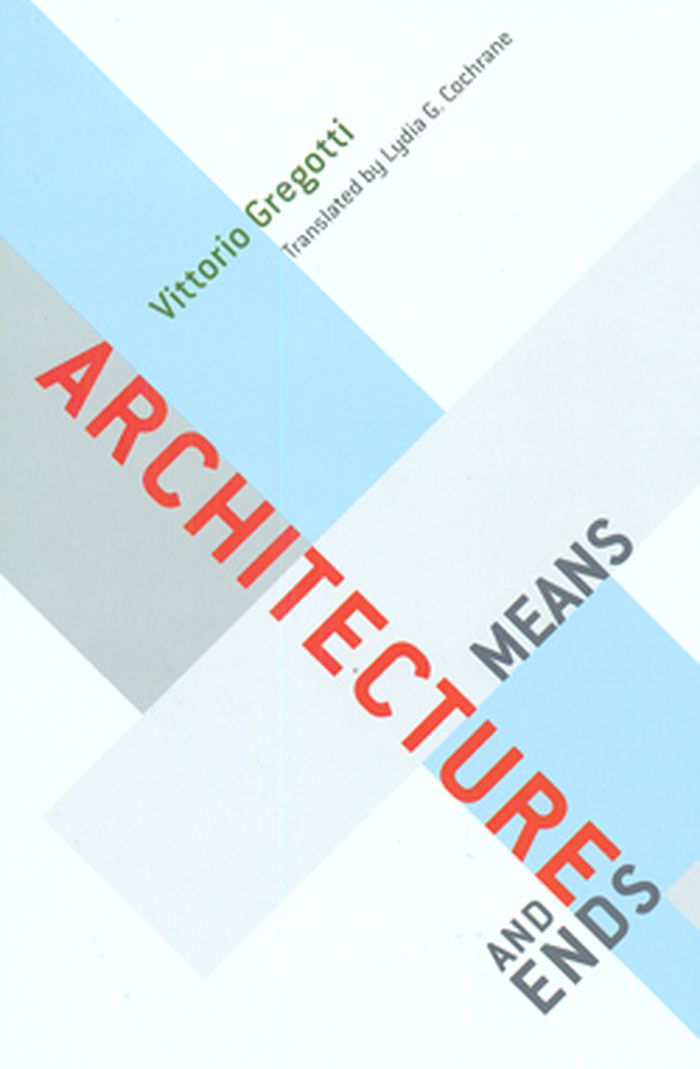
Architecture, means and ends
Architecture, means and ends
Actions:
Prix:
$39.95
(disponible sur commande)
Résumé:
In this book, Vittorio Gregotti argues that by making symbolic expression a primary objective in the design of a project, the designer will produce a practical aesthetic as well as an ethical solution.
$39.95
(disponible sur commande)
Résumé:
In this book, Vittorio Gregotti argues that by making symbolic expression a primary objective in the design of a project, the designer will produce a practical aesthetic as well as an ethical solution.
Titre:
Architecture, means and ends
Actions:
Prix:
$39.95
(disponible sur commande)
Résumé:
In this book, Vittorio Gregotti argues that by making symbolic expression a primary objective in the design of a project, the designer will produce a practical aesthetic as well as an ethical solution.
Architecture, means and ends
Actions:
Prix:
$39.95
(disponible sur commande)
Résumé:
In this book, Vittorio Gregotti argues that by making symbolic expression a primary objective in the design of a project, the designer will produce a practical aesthetic as well as an ethical solution.
Classification:
livres
livres
Publication:
novembre 2010
novembre 2010
Sujet:
Théorie de l’architecture
Théorie de l’architecture
Classification:
livres
livres
Actions:
Prix:
$29.95
(disponible sur commande)
Résumé:
Architecture’s Evil Empire, looks at how today’s trademark architectural individualism stretches beyond the well-known works and ultimately extends to the entire built environment. Glendinning examines how the global empire of the current modernism emerged—particularly in relation to the excesses of global capitalism—and explains its key organizational and architectural(...)
$29.95
(disponible sur commande)
Résumé:
Architecture’s Evil Empire, looks at how today’s trademark architectural individualism stretches beyond the well-known works and ultimately extends to the entire built environment. Glendinning examines how the global empire of the current modernism emerged—particularly in relation to the excesses of global capitalism—and explains its key organizational and architectural(...)
Titre:
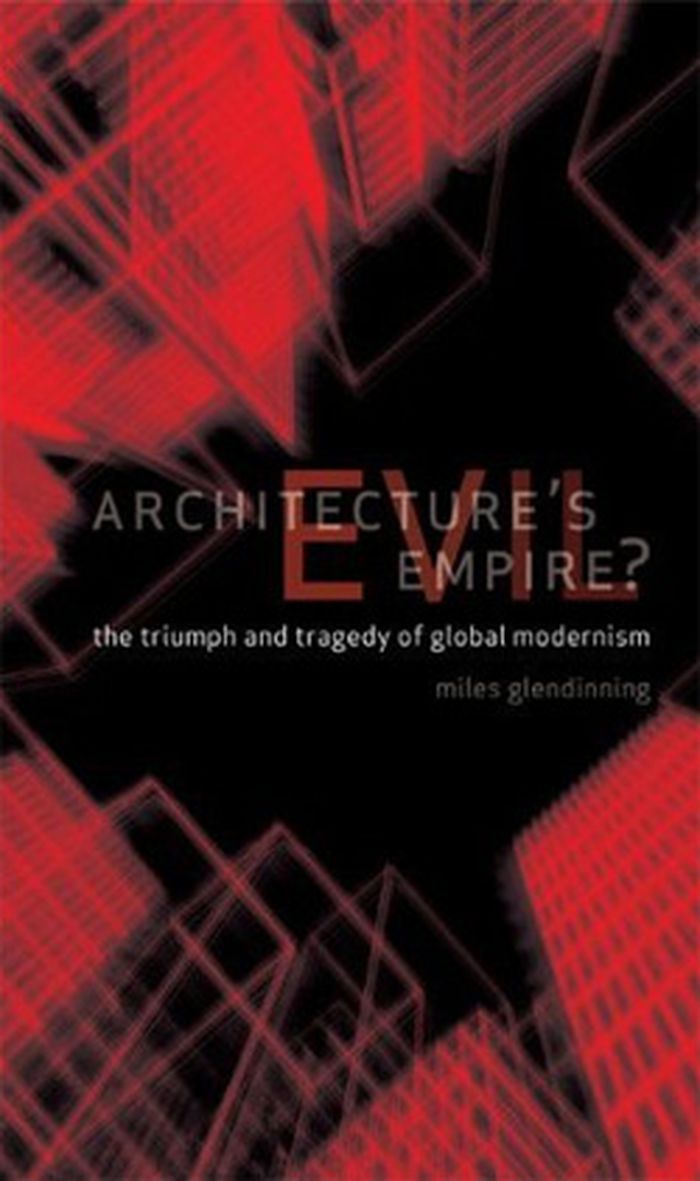
Architecture's evil empire: The triumph and tragedy of global modernism
Actions:
Prix:
$29.95
(disponible sur commande)
Résumé:
Architecture’s Evil Empire, looks at how today’s trademark architectural individualism stretches beyond the well-known works and ultimately extends to the entire built environment. Glendinning examines how the global empire of the current modernism emerged—particularly in relation to the excesses of global capitalism—and explains its key organizational and architectural features, placing its most influential theorists and designers in a broader context of history and artistic movements.
Architecture's evil empire: The triumph and tragedy of global modernism
Actions:
Prix:
$29.95
(disponible sur commande)
Résumé:
Architecture’s Evil Empire, looks at how today’s trademark architectural individualism stretches beyond the well-known works and ultimately extends to the entire built environment. Glendinning examines how the global empire of the current modernism emerged—particularly in relation to the excesses of global capitalism—and explains its key organizational and architectural features, placing its most influential theorists and designers in a broader context of history and artistic movements.
Classification:
livres
livres
Publication:
octobre 2010
octobre 2010
Sujet:
Théorie de l’architecture
Théorie de l’architecture
Classification:
livres
livres
Titre:
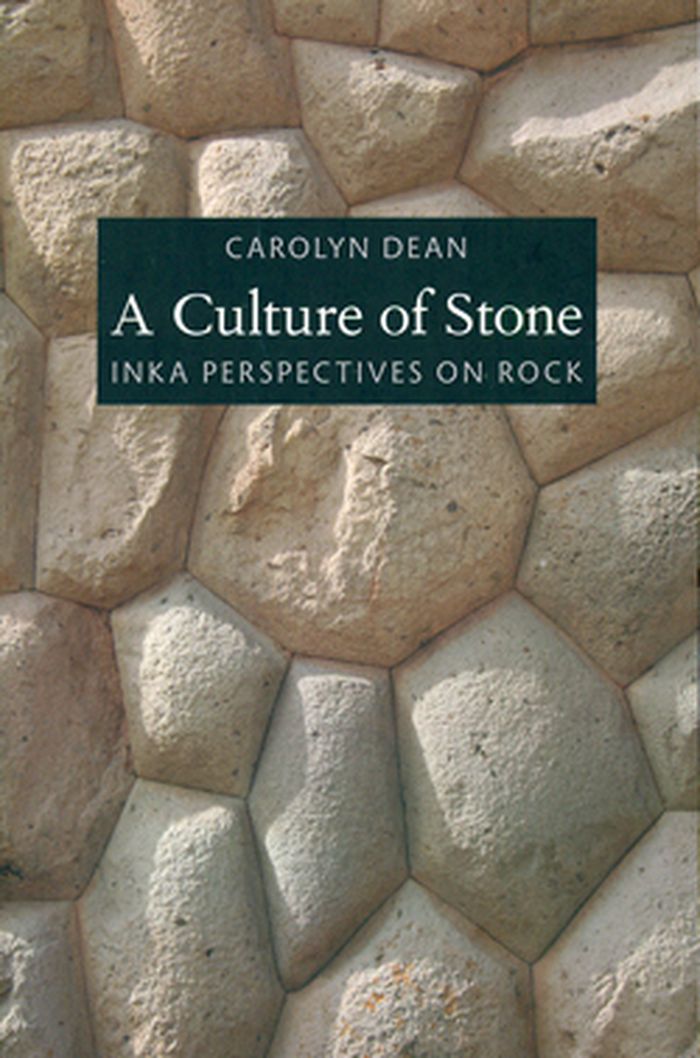
A culture of stone
A culture of stone
Actions:
Prix:
$27.95
(disponible sur commande)
Résumé:
A major contribution to both art history and Latin American studies, A Culture of Stone offers new insights into Inka culture and the interpretation of non-Western art. Carolyn Dean focuses on rock outcrops masterfully integrated into Inka architecture, exquisitely worked masonry, and freestanding sacred rocks, explaining how certain stones took on lives of their own and(...)
$27.95
(disponible sur commande)
Résumé:
A major contribution to both art history and Latin American studies, A Culture of Stone offers new insights into Inka culture and the interpretation of non-Western art. Carolyn Dean focuses on rock outcrops masterfully integrated into Inka architecture, exquisitely worked masonry, and freestanding sacred rocks, explaining how certain stones took on lives of their own and(...)
Titre:
A culture of stone
Actions:
Prix:
$27.95
(disponible sur commande)
Résumé:
A major contribution to both art history and Latin American studies, A Culture of Stone offers new insights into Inka culture and the interpretation of non-Western art. Carolyn Dean focuses on rock outcrops masterfully integrated into Inka architecture, exquisitely worked masonry, and freestanding sacred rocks, explaining how certain stones took on lives of their own and played a vital role in the unfolding of Inka history. Examining the multiple uses of stone, she argues that the Inka understood building in stone as a way of ordering the chaos of unordered nature, converting untamed spaces into domesticated places, and laying claim to new territories. Dean contends that understanding what the rocks signified requires seeing them as the Inka saw them: as potentially animate, sentient, and sacred. Through careful analysis of Inka stonework, colonial-period accounts of the Inka, and contemporary ethnographic and folkloric studies of indigenous Andean culture, Dean reconstructs the relationships between stonework and other aspects of Inka life, including imperial expansion, worship, and agriculture. She also scrutinizes meanings imposed on Inka stone by the colonial Spanish and, later, by tourism and the tourist industry.
A culture of stone
Actions:
Prix:
$27.95
(disponible sur commande)
Résumé:
A major contribution to both art history and Latin American studies, A Culture of Stone offers new insights into Inka culture and the interpretation of non-Western art. Carolyn Dean focuses on rock outcrops masterfully integrated into Inka architecture, exquisitely worked masonry, and freestanding sacred rocks, explaining how certain stones took on lives of their own and played a vital role in the unfolding of Inka history. Examining the multiple uses of stone, she argues that the Inka understood building in stone as a way of ordering the chaos of unordered nature, converting untamed spaces into domesticated places, and laying claim to new territories. Dean contends that understanding what the rocks signified requires seeing them as the Inka saw them: as potentially animate, sentient, and sacred. Through careful analysis of Inka stonework, colonial-period accounts of the Inka, and contemporary ethnographic and folkloric studies of indigenous Andean culture, Dean reconstructs the relationships between stonework and other aspects of Inka life, including imperial expansion, worship, and agriculture. She also scrutinizes meanings imposed on Inka stone by the colonial Spanish and, later, by tourism and the tourist industry.
Classification:
livres
livres
Publication:
novembre 2010
novembre 2010
Classification:
livres
livres
Prix:
$43.95
(disponible sur commande)
Résumé:
In this publication, Daniel Purdy surveys the volatile state of architectural theory in the Enlightenment, brought on by the newly emerged scientific critiques of Renaissance cosmology, then shows how German writers redeployed Renaissance terminology so that "harmony," "unity," "synthesis," "foundation," and "orderliness" became states of consciousness, rather than(...)
$43.95
(disponible sur commande)
Résumé:
In this publication, Daniel Purdy surveys the volatile state of architectural theory in the Enlightenment, brought on by the newly emerged scientific critiques of Renaissance cosmology, then shows how German writers redeployed Renaissance terminology so that "harmony," "unity," "synthesis," "foundation," and "orderliness" became states of consciousness, rather than(...)
Titre:
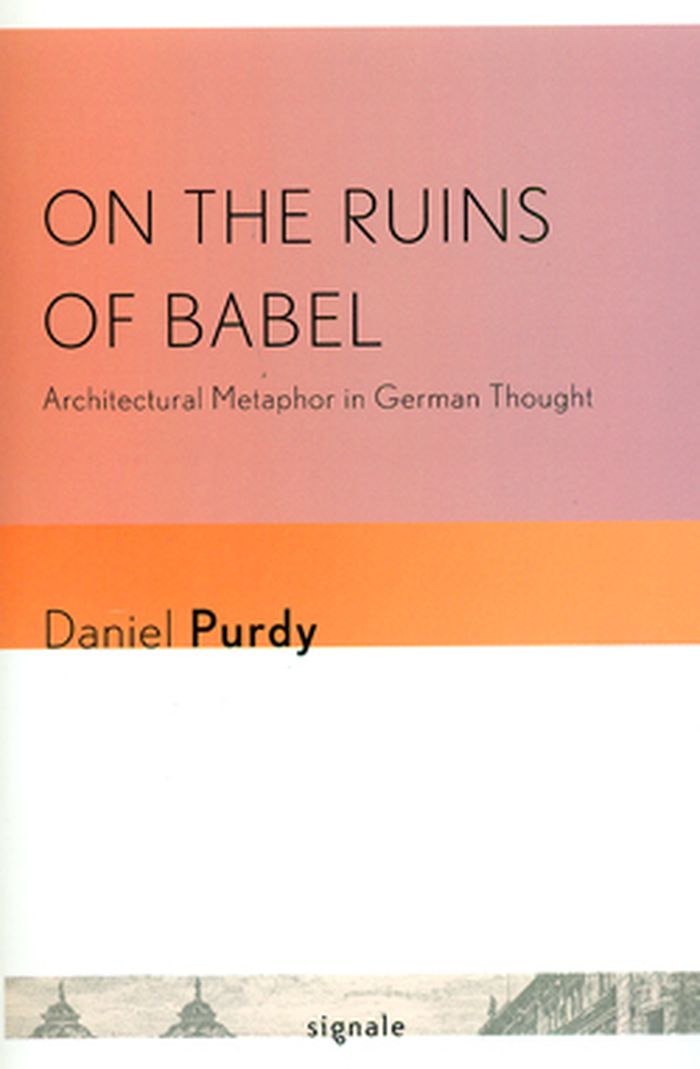
On the ruins of Babel : architectural metaphor in German thought
Actions:
Prix:
$43.95
(disponible sur commande)
Résumé:
In this publication, Daniel Purdy surveys the volatile state of architectural theory in the Enlightenment, brought on by the newly emerged scientific critiques of Renaissance cosmology, then shows how German writers redeployed Renaissance terminology so that "harmony," "unity," "synthesis," "foundation," and "orderliness" became states of consciousness, rather than terms used to describe the built world. Purdy's distinctly new interpretation of German theory reveals how metaphors constitute interior life as an architectural space to be designed, constructed, renovated, or demolished. He elucidates the close affinity between Hegel's Romantic aesthetic of space and Daniel Libeskind's deconstruction of monumental architecture in Berlin's Jewish Museum. Through a careful reading of Walter Benjamin's writing on architecture as myth, Purdy details how classical architecture shaped Benjamin's modernist interpretations of urban life, particularly his elaboration on Freud's archaeology of the unconscious. Benjamin's essays on dreams and architecture turn the individualist sensibility of the Enlightenment into a collective and mythic identification between humans and buildings.
On the ruins of Babel : architectural metaphor in German thought
Actions:
Prix:
$43.95
(disponible sur commande)
Résumé:
In this publication, Daniel Purdy surveys the volatile state of architectural theory in the Enlightenment, brought on by the newly emerged scientific critiques of Renaissance cosmology, then shows how German writers redeployed Renaissance terminology so that "harmony," "unity," "synthesis," "foundation," and "orderliness" became states of consciousness, rather than terms used to describe the built world. Purdy's distinctly new interpretation of German theory reveals how metaphors constitute interior life as an architectural space to be designed, constructed, renovated, or demolished. He elucidates the close affinity between Hegel's Romantic aesthetic of space and Daniel Libeskind's deconstruction of monumental architecture in Berlin's Jewish Museum. Through a careful reading of Walter Benjamin's writing on architecture as myth, Purdy details how classical architecture shaped Benjamin's modernist interpretations of urban life, particularly his elaboration on Freud's archaeology of the unconscious. Benjamin's essays on dreams and architecture turn the individualist sensibility of the Enlightenment into a collective and mythic identification between humans and buildings.
Classification:
livres
livres
Publication:
décembre 2010
décembre 2010
Sujet:
Théorie de l’architecture
Théorie de l’architecture
Classification:
livres
livres
Actions:
Prix:
$56.95
(disponible sur commande)
Résumé:
Si on comprend aisément que les concepteurs de formes et d’espaces aient quotidiennement recours aux figures de l’analogie pour imaginer leurs projets, on sait moins que de nombreuses théories et doctrines de l’architecture lui sont tout autant redevables. Sorte de secret mal gardé, l’analogie serait de fait une des grandes matrices de l’architecture. Examinant(...)
$56.95
(disponible sur commande)
Résumé:
Si on comprend aisément que les concepteurs de formes et d’espaces aient quotidiennement recours aux figures de l’analogie pour imaginer leurs projets, on sait moins que de nombreuses théories et doctrines de l’architecture lui sont tout autant redevables. Sorte de secret mal gardé, l’analogie serait de fait une des grandes matrices de l’architecture. Examinant(...)
Titre:
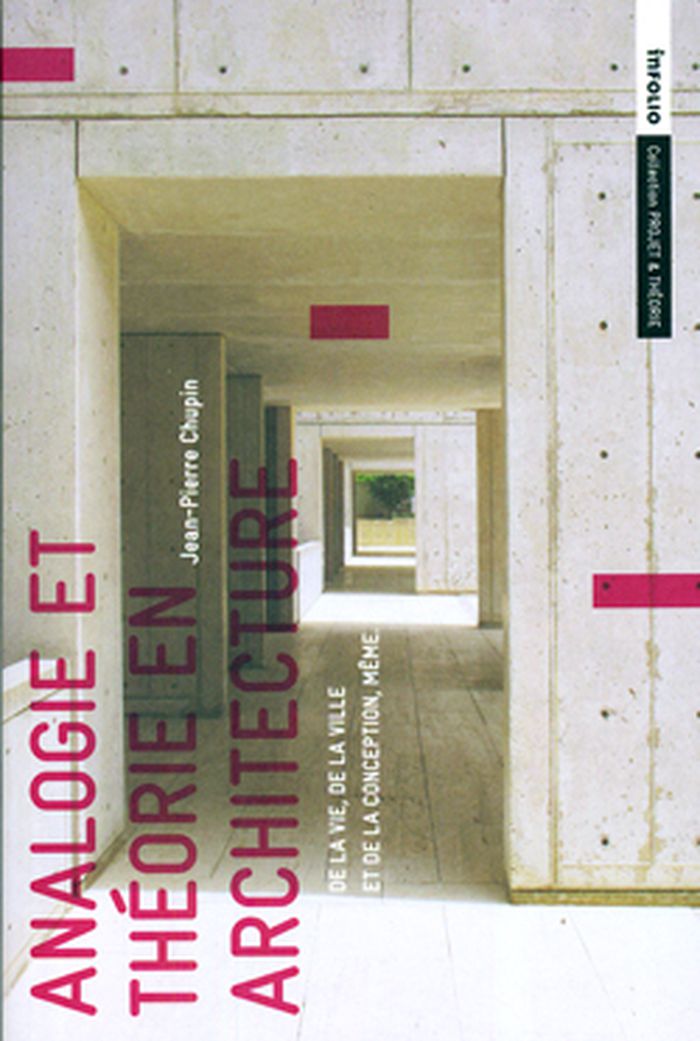
Analogie et théorie en architecture : de la vie, de la ville et de la conception, même
Actions:
Prix:
$56.95
(disponible sur commande)
Résumé:
Si on comprend aisément que les concepteurs de formes et d’espaces aient quotidiennement recours aux figures de l’analogie pour imaginer leurs projets, on sait moins que de nombreuses théories et doctrines de l’architecture lui sont tout autant redevables. Sorte de secret mal gardé, l’analogie serait de fait une des grandes matrices de l’architecture. Examinant rigoureusement la portée pratique et théorique de cette hypothèse, les études d’histoire critique rassemblées dans ce premier ouvrage se consacrent à trois registres de la modernité qui éclairent l’architecture contemporaine : les conceptions de la vie et de la biologie (des images du corps aux principes de la génétique),les conceptions de la ville (en reconstituant les contours et les enjeux de ce que l’architecte Aldo Rossi appelait une « ville analogue »), et les conceptions mêmes de la conception (dont les modèles analogiques permettent de rendre compte des circonvolutions de l’imagination et de la réflexion architecturale).
Analogie et théorie en architecture : de la vie, de la ville et de la conception, même
Actions:
Prix:
$56.95
(disponible sur commande)
Résumé:
Si on comprend aisément que les concepteurs de formes et d’espaces aient quotidiennement recours aux figures de l’analogie pour imaginer leurs projets, on sait moins que de nombreuses théories et doctrines de l’architecture lui sont tout autant redevables. Sorte de secret mal gardé, l’analogie serait de fait une des grandes matrices de l’architecture. Examinant rigoureusement la portée pratique et théorique de cette hypothèse, les études d’histoire critique rassemblées dans ce premier ouvrage se consacrent à trois registres de la modernité qui éclairent l’architecture contemporaine : les conceptions de la vie et de la biologie (des images du corps aux principes de la génétique),les conceptions de la ville (en reconstituant les contours et les enjeux de ce que l’architecte Aldo Rossi appelait une « ville analogue »), et les conceptions mêmes de la conception (dont les modèles analogiques permettent de rendre compte des circonvolutions de l’imagination et de la réflexion architecturale).
Classification:
livres
livres
Publication:
août 2010
août 2010
Sujet:
Théorie de l’architecture
Théorie de l’architecture
Classification:
livres
livres
Titre:
Technics & civilization
Technics & civilization
Actions:
Prix:
$45.95
(disponible sur commande)
Résumé:
Technics and Civilization first presented its compelling history of the machine and critical study of its effects on civilization in 1934 —before television, the personal computer, and the Internet even appeared on our periphery. Drawing upon art, science, philosophy, and the history of culture, Lewis Mumford explained the origin of the machine age and traced its(...)
$45.95
(disponible sur commande)
Résumé:
Technics and Civilization first presented its compelling history of the machine and critical study of its effects on civilization in 1934 —before television, the personal computer, and the Internet even appeared on our periphery. Drawing upon art, science, philosophy, and the history of culture, Lewis Mumford explained the origin of the machine age and traced its(...)
Titre:
Technics & civilization
Actions:
Prix:
$45.95
(disponible sur commande)
Résumé:
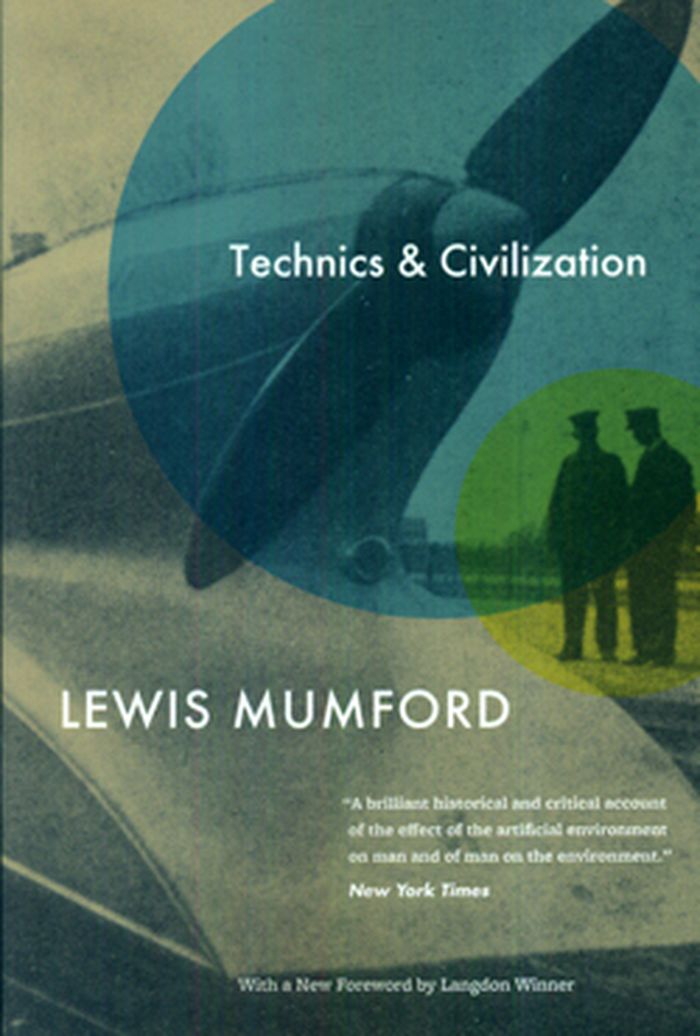
Technics and Civilization first presented its compelling history of the machine and critical study of its effects on civilization in 1934 —before television, the personal computer, and the Internet even appeared on our periphery. Drawing upon art, science, philosophy, and the history of culture, Lewis Mumford explained the origin of the machine age and traced its social results, asserting that the development of modern technology had its roots in the Middle Ages rather than the Industrial Revolution. Mumford sagely argued that it was the moral, economic, and political choices we made, not the machines that we used, that determined our then industrially driven economy. Equal parts powerful history and polemic criticism, this book was the first comprehensive attempt in English to portray the development of the machine age over the last thousand years — and to predict the pull the technological still holds over us today.
Technics & civilization
Actions:
Prix:
$45.95
(disponible sur commande)
Résumé:
Technics and Civilization first presented its compelling history of the machine and critical study of its effects on civilization in 1934 —before television, the personal computer, and the Internet even appeared on our periphery. Drawing upon art, science, philosophy, and the history of culture, Lewis Mumford explained the origin of the machine age and traced its social results, asserting that the development of modern technology had its roots in the Middle Ages rather than the Industrial Revolution. Mumford sagely argued that it was the moral, economic, and political choices we made, not the machines that we used, that determined our then industrially driven economy. Equal parts powerful history and polemic criticism, this book was the first comprehensive attempt in English to portray the development of the machine age over the last thousand years — and to predict the pull the technological still holds over us today.
Classification:
livres
livres
Publication:
octobre 2010
octobre 2010
Sujet:
Théorie de l’architecture
Théorie de l’architecture
Classification:
livres
livres
Titre:
The first six books of the elements of Euclid : facsimile of the famous first edition of 1847
The first six books of the elements of Euclid : facsimile of the famous first edition of 1847
Actions:
Prix:
$64.99
(disponible sur commande)
Résumé:
Red, yellow, blue – and of course black – are the colours that Oliver Byrne employs for the figures and diagrams in his most unusual 1847 edition of Euclid, published by William Pickering and printed by Chiswick Press, and which prompt the surprised reader to think of Mondrian. The author makes it clear in his subtitle that this is a didactic measure intended to(...)
$64.99
(disponible sur commande)
Résumé:
Red, yellow, blue – and of course black – are the colours that Oliver Byrne employs for the figures and diagrams in his most unusual 1847 edition of Euclid, published by William Pickering and printed by Chiswick Press, and which prompt the surprised reader to think of Mondrian. The author makes it clear in his subtitle that this is a didactic measure intended to(...)
Titre:
The first six books of the elements of Euclid : facsimile of the famous first edition of 1847
Actions:
Prix:
$64.99
(disponible sur commande)
Résumé:
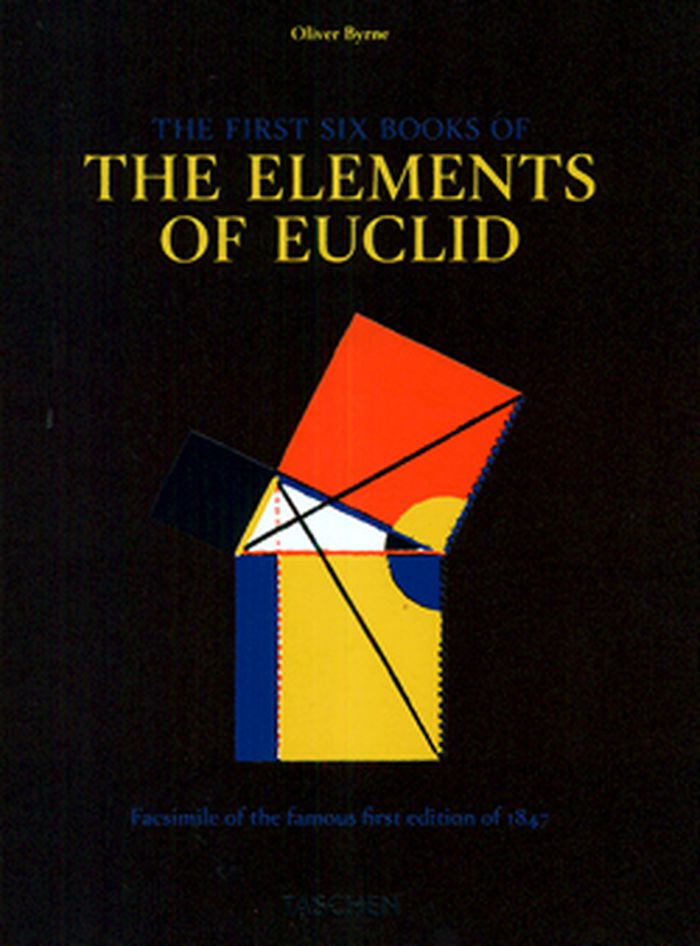
Red, yellow, blue – and of course black – are the colours that Oliver Byrne employs for the figures and diagrams in his most unusual 1847 edition of Euclid, published by William Pickering and printed by Chiswick Press, and which prompt the surprised reader to think of Mondrian. The author makes it clear in his subtitle that this is a didactic measure intended to distinguish his edition from all others: "The Elements of Euclid in which coloured diagrams and symbols are used instead of letters for the greater ease of learners." Byrne is not content to trust solely in the supposed intuitive "logical" structure of Euclid's axioms and theorems – who doesn't know the first famous sentences of Euclid's Elements: "I. A point is that which has no parts. II. A line is length without breadth"? –, but translates them into colourful diagrams and symbols. He thereby thinks in terms of the school classroom : he compares his colours to the dyed chalks in which figures are drawn on the blackboard.
The first six books of the elements of Euclid : facsimile of the famous first edition of 1847
Actions:
Prix:
$64.99
(disponible sur commande)
Résumé:
Red, yellow, blue – and of course black – are the colours that Oliver Byrne employs for the figures and diagrams in his most unusual 1847 edition of Euclid, published by William Pickering and printed by Chiswick Press, and which prompt the surprised reader to think of Mondrian. The author makes it clear in his subtitle that this is a didactic measure intended to distinguish his edition from all others: "The Elements of Euclid in which coloured diagrams and symbols are used instead of letters for the greater ease of learners." Byrne is not content to trust solely in the supposed intuitive "logical" structure of Euclid's axioms and theorems – who doesn't know the first famous sentences of Euclid's Elements: "I. A point is that which has no parts. II. A line is length without breadth"? –, but translates them into colourful diagrams and symbols. He thereby thinks in terms of the school classroom : he compares his colours to the dyed chalks in which figures are drawn on the blackboard.
Classification:
livres
livres
Publication:
juillet 2010
juillet 2010
Sujet:
Théorie de l’architecture
Théorie de l’architecture
Classification:
livres
livres
Titre:
The politics of the impure
The politics of the impure
Actions:
Prix:
$39.00
(disponible en magasin)
Résumé:
This publication explores how the desire for "the pure" ultimately manifested as an economic process, advocating a need for technology to become an agent for the impure and the imperfect.
$39.00
(disponible en magasin)
Résumé:
This publication explores how the desire for "the pure" ultimately manifested as an economic process, advocating a need for technology to become an agent for the impure and the imperfect.
Titre:
The politics of the impure
Actions:
Prix:
$39.00
(disponible en magasin)
Résumé:
This publication explores how the desire for "the pure" ultimately manifested as an economic process, advocating a need for technology to become an agent for the impure and the imperfect.
The politics of the impure
Actions:
Prix:
$39.00
(disponible en magasin)
Résumé:
This publication explores how the desire for "the pure" ultimately manifested as an economic process, advocating a need for technology to become an agent for the impure and the imperfect.
Classification:
livres
livres
Publication:
septembre 2010
septembre 2010
Sujet:
Théorie de l’architecture
Théorie de l’architecture
Classification:
livres
livres
Titre:
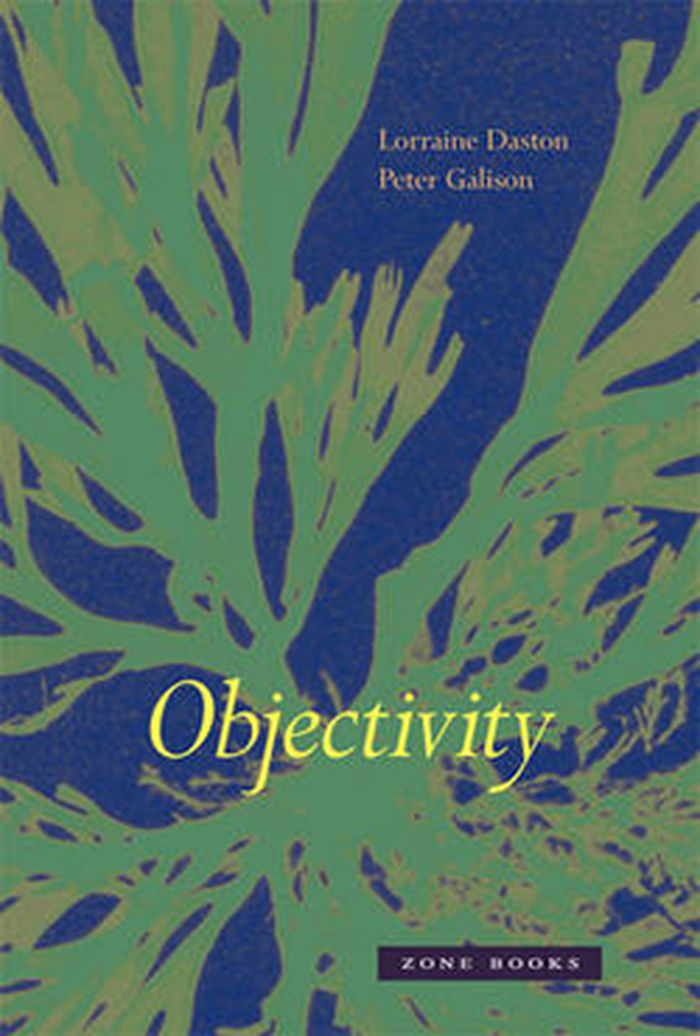
Objectivity
Objectivity
Actions:
Prix:
$38.00
(disponible sur commande)
Résumé:
Objectivity has a history, and it is full of surprises. In Objectivity, Lorraine Daston and Peter Galison chart the emergence of objectivity in the mid-nineteenth-century sciences—and show how the concept differs from its alternatives, truth-to-nature and trained judgment. This is a story of lofty epistemic ideals fused with workaday practices in the making of scientific(...)
$38.00
(disponible sur commande)
Résumé:
Objectivity has a history, and it is full of surprises. In Objectivity, Lorraine Daston and Peter Galison chart the emergence of objectivity in the mid-nineteenth-century sciences—and show how the concept differs from its alternatives, truth-to-nature and trained judgment. This is a story of lofty epistemic ideals fused with workaday practices in the making of scientific(...)
Publication:
octobre 2010
octobre 2010
Titre:
Objectivity
Actions:
Prix:
$38.00
(disponible sur commande)
Résumé:
Objectivity has a history, and it is full of surprises. In Objectivity, Lorraine Daston and Peter Galison chart the emergence of objectivity in the mid-nineteenth-century sciences—and show how the concept differs from its alternatives, truth-to-nature and trained judgment. This is a story of lofty epistemic ideals fused with workaday practices in the making of scientific images. From the eighteenth through the early twenty-first centuries, the images that reveal the deepest commitments of the empirical sciences—from anatomy to crystallography—are those featured in scientific atlases, the compendia that teach practitioners what is worth looking at and how to look at it. Galison and Daston use atlas images to uncover a hidden history of scientific objectivity and its rivals. Whether an atlas maker idealizes an image to capture the essentials in the name of truth-to-nature or refuses to erase even the most incidental detail in the name of objectivity or highlights patterns in the name of trained judgment is a decision enforced by an ethos as well as by an epistemology.
Objectivity
Actions:
Prix:
$38.00
(disponible sur commande)
Résumé:
Objectivity has a history, and it is full of surprises. In Objectivity, Lorraine Daston and Peter Galison chart the emergence of objectivity in the mid-nineteenth-century sciences—and show how the concept differs from its alternatives, truth-to-nature and trained judgment. This is a story of lofty epistemic ideals fused with workaday practices in the making of scientific images. From the eighteenth through the early twenty-first centuries, the images that reveal the deepest commitments of the empirical sciences—from anatomy to crystallography—are those featured in scientific atlases, the compendia that teach practitioners what is worth looking at and how to look at it. Galison and Daston use atlas images to uncover a hidden history of scientific objectivity and its rivals. Whether an atlas maker idealizes an image to capture the essentials in the name of truth-to-nature or refuses to erase even the most incidental detail in the name of objectivity or highlights patterns in the name of trained judgment is a decision enforced by an ethos as well as by an epistemology.
Classification:
livres
livres
Publication:
octobre 2010
octobre 2010
Classification:
livres
livres

Prix:
$51.95
(disponible en magasin)
Résumé:
This compilation of texts written since 1986 reveals a parallel activity to Alejandro Zaera-Polo's professional life. The book is like a sniper's log, a register of events for the purpose of accumulating experience for future missions, be it academic or professional, trying to identify tendencies and to assess performances, rather than to establish truth. Written for(...)
$51.95
(disponible en magasin)
Résumé:
This compilation of texts written since 1986 reveals a parallel activity to Alejandro Zaera-Polo's professional life. The book is like a sniper's log, a register of events for the purpose of accumulating experience for future missions, be it academic or professional, trying to identify tendencies and to assess performances, rather than to establish truth. Written for(...)
Publication:
juillet 2012
juillet 2012
Titre:
The sniper's log : architectural chronicles of Generation X
Actions:
Prix:
$51.95
(disponible en magasin)
Résumé:
This compilation of texts written since 1986 reveals a parallel activity to Alejandro Zaera-Polo's professional life. The book is like a sniper's log, a register of events for the purpose of accumulating experience for future missions, be it academic or professional, trying to identify tendencies and to assess performances, rather than to establish truth. Written for different media and formats (professional magazines, speaking engagements, and academic presentations), the texts are thread together as part of a biographical experience that reveals that theory is here primarily instrumental and seeks efficiency rather than truth. We do not theorise because we want to understand the deep truths of the world, but because we need to organise the realm where we operate, understand how reality works and find an effective way to perform within it.
The sniper's log : architectural chronicles of Generation X
Actions:
Prix:
$51.95
(disponible en magasin)
Résumé:
This compilation of texts written since 1986 reveals a parallel activity to Alejandro Zaera-Polo's professional life. The book is like a sniper's log, a register of events for the purpose of accumulating experience for future missions, be it academic or professional, trying to identify tendencies and to assess performances, rather than to establish truth. Written for different media and formats (professional magazines, speaking engagements, and academic presentations), the texts are thread together as part of a biographical experience that reveals that theory is here primarily instrumental and seeks efficiency rather than truth. We do not theorise because we want to understand the deep truths of the world, but because we need to organise the realm where we operate, understand how reality works and find an effective way to perform within it.
Classification:
livres
livres
Publication:
juillet 2012
juillet 2012


