


2221 Résultats
Classification:
livres
livres
Prix:
$56.95
(disponible en magasin)
Résumé:
De quoi dépend l'architecture ? Des gens, de l'époque, de la politique, de l'économie, de l'éthique, du désordre... Bref, du réel dans son imprévisible complexité et son irréductible incertitude. Jeremy Till invite les architectes à prendre davantage en considération ces contingences, qui excèdent leur sphère de contrôle mais finissent toujours par s'imposer à leurs(...)
$56.95
(disponible en magasin)
Résumé:
De quoi dépend l'architecture ? Des gens, de l'époque, de la politique, de l'économie, de l'éthique, du désordre... Bref, du réel dans son imprévisible complexité et son irréductible incertitude. Jeremy Till invite les architectes à prendre davantage en considération ces contingences, qui excèdent leur sphère de contrôle mais finissent toujours par s'imposer à leurs(...)
Titre:
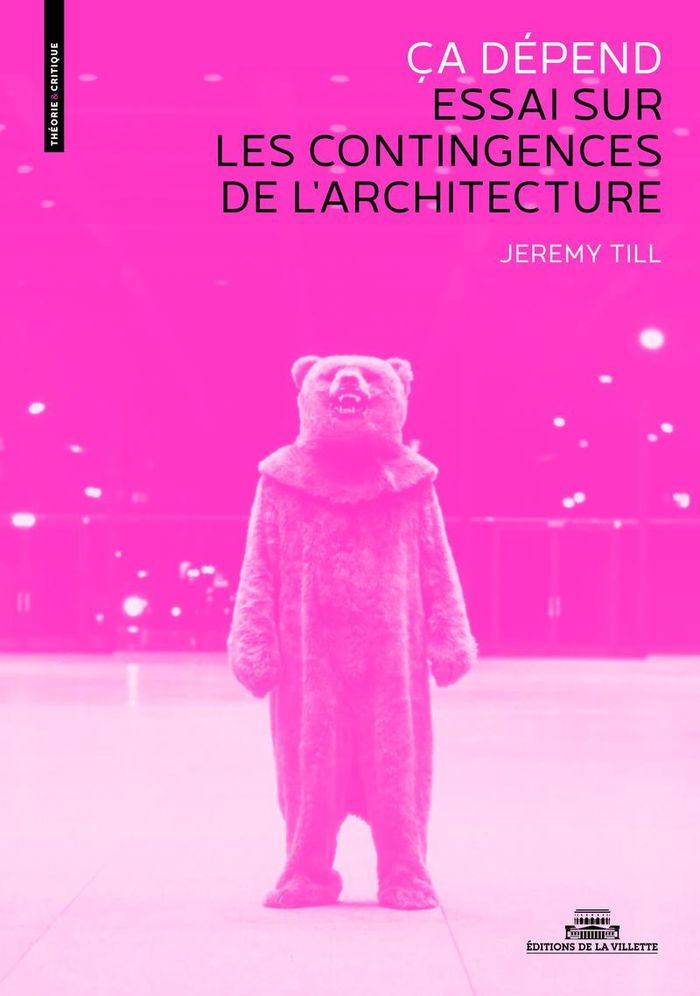
Ça dépend : essai sur les contigences de l'architecture
Actions:
Prix:
$56.95
(disponible en magasin)
Résumé:
De quoi dépend l'architecture ? Des gens, de l'époque, de la politique, de l'économie, de l'éthique, du désordre... Bref, du réel dans son imprévisible complexité et son irréductible incertitude. Jeremy Till invite les architectes à prendre davantage en considération ces contingences, qui excèdent leur sphère de contrôle mais finissent toujours par s'imposer à leurs oeuvres. Avec rigueur et ironie, l'auteur déconstruit pas à pas l'autonomie que les architectes confèrent à leur discipline et qui les maintient dans une vision pure et idéale des objets qu'ils conçoivent. Les circonstances contrarient pourtant les plans les mieux tracés, à tout moment du processus, de la conception jusqu'à la construction et à l'utilisation d'un bâtiment. Le « Less is more » de Mies fait invariablement place au « Mess is the law » de Till.
Ça dépend : essai sur les contigences de l'architecture
Actions:
Prix:
$56.95
(disponible en magasin)
Résumé:
De quoi dépend l'architecture ? Des gens, de l'époque, de la politique, de l'économie, de l'éthique, du désordre... Bref, du réel dans son imprévisible complexité et son irréductible incertitude. Jeremy Till invite les architectes à prendre davantage en considération ces contingences, qui excèdent leur sphère de contrôle mais finissent toujours par s'imposer à leurs oeuvres. Avec rigueur et ironie, l'auteur déconstruit pas à pas l'autonomie que les architectes confèrent à leur discipline et qui les maintient dans une vision pure et idéale des objets qu'ils conçoivent. Les circonstances contrarient pourtant les plans les mieux tracés, à tout moment du processus, de la conception jusqu'à la construction et à l'utilisation d'un bâtiment. Le « Less is more » de Mies fait invariablement place au « Mess is the law » de Till.
Classification:
livres
livres
Publication:
septembre 2025
septembre 2025
Sujet:
Théorie de l’architecture
Théorie de l’architecture
Classification:
livres
livres
Prix:
$38.00
(disponible en magasin)
Résumé:
''Common Treasures'' is a new series of books about the challenges faced by rural communities, written by people who are working on the ground and in the fields. Each volume gathers the very best essays about climate adaptation, food production and land use, and presents them as alternatives to the prevailing political discourse. This anthology, the second in the(...)
$38.00
(disponible en magasin)
Résumé:
''Common Treasures'' is a new series of books about the challenges faced by rural communities, written by people who are working on the ground and in the fields. Each volume gathers the very best essays about climate adaptation, food production and land use, and presents them as alternatives to the prevailing political discourse. This anthology, the second in the(...)
Sujet:
Théorie de l’architecture
Théorie de l’architecture
Publication:
février 2026
février 2026
Titre:
Common treasures. Vol.2: Housing, planning & construction
Actions:
Prix:
$38.00
(disponible en magasin)
Résumé:
''Common Treasures'' is a new series of books about the challenges faced by rural communities, written by people who are working on the ground and in the fields. Each volume gathers the very best essays about climate adaptation, food production and land use, and presents them as alternatives to the prevailing political discourse. This anthology, the second in the ''Common Treasures'' project, developed from a series of conversations between the architecture collective Assemble and the arts organisation Common Ground. It takes as its premise the idea that approaches to housing that are grounded in greater levels of community ownership, management and maintenance have the potential to empower communities, overcome the opposition to local development and create conditions in which skilled rural workers are part of stronger local networks of industry and agriculture. Housing built by, for and with the people who live in it makes characterful neighbourhoods that last well, are able to be maintained by their residents and facilitate investment in local labour, materials and skilled workmanship. The contributors to this anthology share their work to overcome the many obstacles to this way of working, and offer a vision which is grounded, imaginative and hopeful.
Common treasures. Vol.2: Housing, planning & construction
Actions:
Prix:
$38.00
(disponible en magasin)
Résumé:
''Common Treasures'' is a new series of books about the challenges faced by rural communities, written by people who are working on the ground and in the fields. Each volume gathers the very best essays about climate adaptation, food production and land use, and presents them as alternatives to the prevailing political discourse. This anthology, the second in the ''Common Treasures'' project, developed from a series of conversations between the architecture collective Assemble and the arts organisation Common Ground. It takes as its premise the idea that approaches to housing that are grounded in greater levels of community ownership, management and maintenance have the potential to empower communities, overcome the opposition to local development and create conditions in which skilled rural workers are part of stronger local networks of industry and agriculture. Housing built by, for and with the people who live in it makes characterful neighbourhoods that last well, are able to be maintained by their residents and facilitate investment in local labour, materials and skilled workmanship. The contributors to this anthology share their work to overcome the many obstacles to this way of working, and offer a vision which is grounded, imaginative and hopeful.
Classification:
livres
livres
Publication:
février 2026
février 2026
Sujet:
Théorie de l’architecture
Théorie de l’architecture
Classification:
livres
livres
Actions:
Prix:
$38.00
(disponible en magasin)
Résumé:
''Common Treasures'' is a new series of books about the challenges faced by rural communities, written by people who are working on the ground and in the fields. Each volume gathers the very best essays about climate adaptation, food production and land use, and presents them as alternatives to the prevailing political discourse. Ambitious thinking about the future of(...)
$38.00
(disponible en magasin)
Résumé:
''Common Treasures'' is a new series of books about the challenges faced by rural communities, written by people who are working on the ground and in the fields. Each volume gathers the very best essays about climate adaptation, food production and land use, and presents them as alternatives to the prevailing political discourse. Ambitious thinking about the future of(...)
Sujet:
Théorie de l’architecture
Théorie de l’architecture
Publication:
février 2026
février 2026
Titre:
Common treasures. Vol. I: Food, farming & land
Actions:
Prix:
$38.00
(disponible en magasin)
Résumé:
''Common Treasures'' is a new series of books about the challenges faced by rural communities, written by people who are working on the ground and in the fields. Each volume gathers the very best essays about climate adaptation, food production and land use, and presents them as alternatives to the prevailing political discourse. Ambitious thinking about the future of rural places requires connecting traditionally separate disciplines: architecture with agriculture; planning law with land workers’ livelihoods; food systems with local economies; community resilience with land ownership; and housing development with regenerative land use. From essays considering the reintroduction of British wool and flax, more sustainable ways to produce food, to the issues caused by second home ownership and the setting up of community land trusts, these books are a practical and inspirational blueprint created by those whose lives and work is engaged with the countryside every day.
Common treasures. Vol. I: Food, farming & land
Actions:
Prix:
$38.00
(disponible en magasin)
Résumé:
''Common Treasures'' is a new series of books about the challenges faced by rural communities, written by people who are working on the ground and in the fields. Each volume gathers the very best essays about climate adaptation, food production and land use, and presents them as alternatives to the prevailing political discourse. Ambitious thinking about the future of rural places requires connecting traditionally separate disciplines: architecture with agriculture; planning law with land workers’ livelihoods; food systems with local economies; community resilience with land ownership; and housing development with regenerative land use. From essays considering the reintroduction of British wool and flax, more sustainable ways to produce food, to the issues caused by second home ownership and the setting up of community land trusts, these books are a practical and inspirational blueprint created by those whose lives and work is engaged with the countryside every day.
Classification:
livres
livres
Publication:
février 2026
février 2026
Sujet:
Théorie de l’architecture
Théorie de l’architecture
Classification:
livres
livres
Actions:
Prix:
$120.00
(disponible sur commande)
Résumé:
What is architecture when computers redefine it? Two books explore the nature and potential of architecture in the age of artificial intelligence. Inspired by architect Fritz Haller (1924-2012), a virtual persona asks him about the architecture of the future. The first book uses artificial intelligence to network the Internet of Things into a new architecture. The second(...)
$120.00
(disponible sur commande)
Résumé:
What is architecture when computers redefine it? Two books explore the nature and potential of architecture in the age of artificial intelligence. Inspired by architect Fritz Haller (1924-2012), a virtual persona asks him about the architecture of the future. The first book uses artificial intelligence to network the Internet of Things into a new architecture. The second(...)
Titre:
Jointing things... on Fritz Haller volume 1 & 2
Actions:
Prix:
$120.00
(disponible sur commande)
Résumé:
What is architecture when computers redefine it? Two books explore the nature and potential of architecture in the age of artificial intelligence. Inspired by architect Fritz Haller (1924-2012), a virtual persona asks him about the architecture of the future. The first book uses artificial intelligence to network the Internet of Things into a new architecture. The second presents six works by Fritz Haller in the multidisciplinary light of the 2020s and shows them like icons that already contain what was only thought of later. The two volumes are neither historical nor analytical - they are visionary and projective and, in some respects, represent an experiment in themselves. They show an architecture that does rethink and does not evaluate.
Jointing things... on Fritz Haller volume 1 & 2
Actions:
Prix:
$120.00
(disponible sur commande)
Résumé:
What is architecture when computers redefine it? Two books explore the nature and potential of architecture in the age of artificial intelligence. Inspired by architect Fritz Haller (1924-2012), a virtual persona asks him about the architecture of the future. The first book uses artificial intelligence to network the Internet of Things into a new architecture. The second presents six works by Fritz Haller in the multidisciplinary light of the 2020s and shows them like icons that already contain what was only thought of later. The two volumes are neither historical nor analytical - they are visionary and projective and, in some respects, represent an experiment in themselves. They show an architecture that does rethink and does not evaluate.
Classification:
livres
livres
Publication:
mai 2026
mai 2026
Sujet:
Théorie de l’architecture
Théorie de l’architecture
Classification:
périodiques
périodiques
Titre:
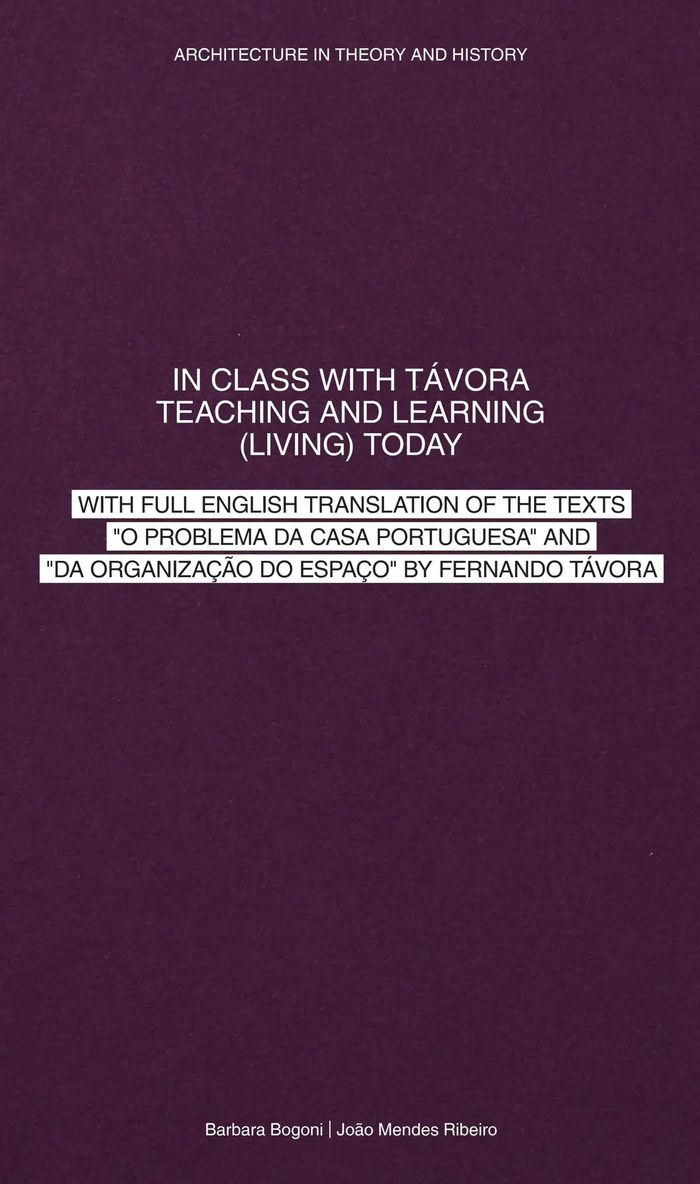
PB 06 In Class with Tavora
PB 06 In Class with Tavora
Actions:
Prix:
$45.00
(disponible en magasin)
Résumé:
The 6th title in the AMAG Pocket Books Collection explores the enduring pedagogical legacy of Fernando Távora, a pivotal figure in Portuguese architecture and a key influence on the Porto School. Celebrating the continued relevance of his teachings, the authors delve into his philosophy of making architecture for living, emphasizing the interplay between modernity and(...)
$45.00
(disponible en magasin)
Résumé:
The 6th title in the AMAG Pocket Books Collection explores the enduring pedagogical legacy of Fernando Távora, a pivotal figure in Portuguese architecture and a key influence on the Porto School. Celebrating the continued relevance of his teachings, the authors delve into his philosophy of making architecture for living, emphasizing the interplay between modernity and(...)
Titre:
PB 06 In Class with Tavora
Actions:
Prix:
$45.00
(disponible en magasin)
Résumé:
The 6th title in the AMAG Pocket Books Collection explores the enduring pedagogical legacy of Fernando Távora, a pivotal figure in Portuguese architecture and a key influence on the Porto School. Celebrating the continued relevance of his teachings, the authors delve into his philosophy of making architecture for living, emphasizing the interplay between modernity and tradition, the humanity of space, and the essence of spatial composition. While numerous studies on Távora exist, most remain within Portugal; this volume seeks to bring his insights to a broader audience, reaffirming his influence on new generations of architects.
PB 06 In Class with Tavora
Actions:
Prix:
$45.00
(disponible en magasin)
Résumé:
The 6th title in the AMAG Pocket Books Collection explores the enduring pedagogical legacy of Fernando Távora, a pivotal figure in Portuguese architecture and a key influence on the Porto School. Celebrating the continued relevance of his teachings, the authors delve into his philosophy of making architecture for living, emphasizing the interplay between modernity and tradition, the humanity of space, and the essence of spatial composition. While numerous studies on Távora exist, most remain within Portugal; this volume seeks to bring his insights to a broader audience, reaffirming his influence on new generations of architects.
Classification:
périodiques
périodiques
Publication:
novembre 2025
novembre 2025
Sujet:
Théorie de l’architecture
Théorie de l’architecture
Classification:
livres
livres
Actions:
Prix:
$45.00
(disponible en magasin)
Résumé:
Eyal Weizman is one of the world’s leading experts on the relationship between violence, conflict, and the environment, both built and natural. As director of the organization Forensic Architecture, he and his team of interdisciplinary researchers have spent decades documenting state crimes and human rights violations around the world, including in Israel and Palestine.(...)
$45.00
(disponible en magasin)
Résumé:
Eyal Weizman is one of the world’s leading experts on the relationship between violence, conflict, and the environment, both built and natural. As director of the organization Forensic Architecture, he and his team of interdisciplinary researchers have spent decades documenting state crimes and human rights violations around the world, including in Israel and Palestine.(...)
Titre:
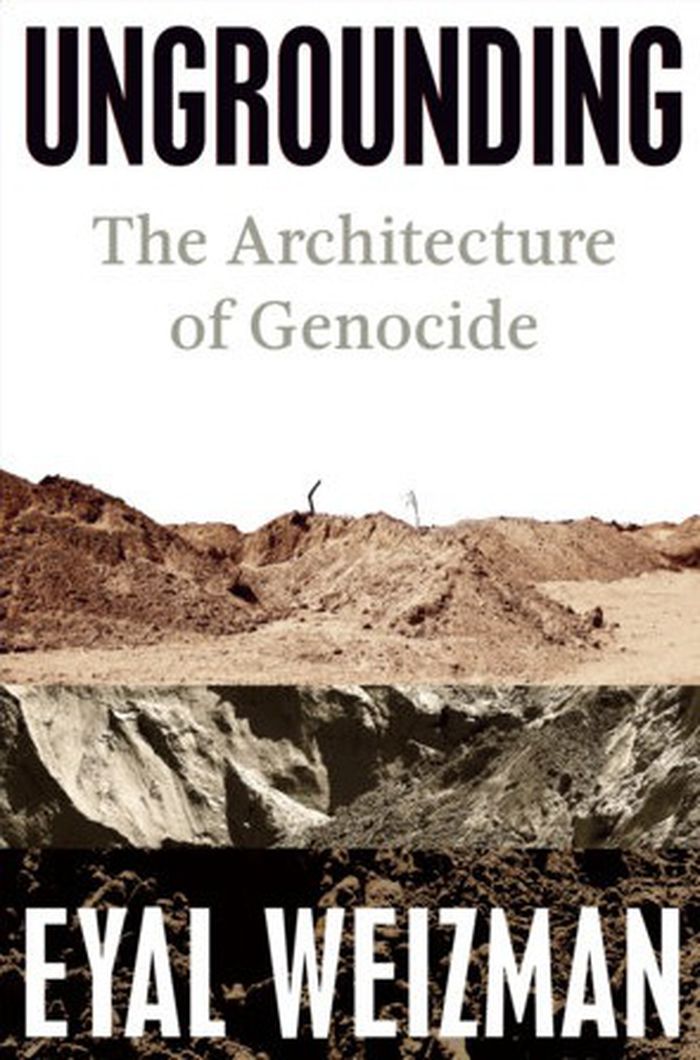
Ungrounding: The architecture of genocide
Actions:
Prix:
$45.00
(disponible en magasin)
Résumé:
Eyal Weizman is one of the world’s leading experts on the relationship between violence, conflict, and the environment, both built and natural. As director of the organization Forensic Architecture, he and his team of interdisciplinary researchers have spent decades documenting state crimes and human rights violations around the world, including in Israel and Palestine. Since 2023, the group has worked to produce evidence for the International Court of Justice’s case against Israel. In this revelatory new project, Weizman draws on that research to bring us on an eye-opening journey through the "deep cartography" of the area, from Gaza’s subterranean tunnels up to its militarized topography, settlements, and barriers.
Ungrounding: The architecture of genocide
Actions:
Prix:
$45.00
(disponible en magasin)
Résumé:
Eyal Weizman is one of the world’s leading experts on the relationship between violence, conflict, and the environment, both built and natural. As director of the organization Forensic Architecture, he and his team of interdisciplinary researchers have spent decades documenting state crimes and human rights violations around the world, including in Israel and Palestine. Since 2023, the group has worked to produce evidence for the International Court of Justice’s case against Israel. In this revelatory new project, Weizman draws on that research to bring us on an eye-opening journey through the "deep cartography" of the area, from Gaza’s subterranean tunnels up to its militarized topography, settlements, and barriers.
Classification:
livres
livres
Publication:
juillet 2026
juillet 2026
Sujet:
Théorie de l’architecture
Théorie de l’architecture
Classification:
livres
livres
Prix:
$64.95
(disponible en magasin)
Résumé:
Dans cet essai sur Livio Vacchini, Paolo Amaldi revisite le sens de son œuvre en s'appuyant d'un côté sur la genèse des projets au travers des documents d'archives et, de l'autre, sur de nombreux témoignages de collaborateurs et collègues qui l'ont croisé. L'auteur dégage le portrait intellectuel d'un protagoniste majeur de l'architecture du XXè siècle en l'inscrivant(...)
$64.95
(disponible en magasin)
Résumé:
Dans cet essai sur Livio Vacchini, Paolo Amaldi revisite le sens de son œuvre en s'appuyant d'un côté sur la genèse des projets au travers des documents d'archives et, de l'autre, sur de nombreux témoignages de collaborateurs et collègues qui l'ont croisé. L'auteur dégage le portrait intellectuel d'un protagoniste majeur de l'architecture du XXè siècle en l'inscrivant(...)
Sujet:
Théorie de l’architecture
Théorie de l’architecture
Publication:
avril 2026
avril 2026
Titre:
Livio Vacchini : La construction paradoxale de la forme
Actions:
Prix:
$64.95
(disponible en magasin)
Résumé:
Dans cet essai sur Livio Vacchini, Paolo Amaldi revisite le sens de son œuvre en s'appuyant d'un côté sur la genèse des projets au travers des documents d'archives et, de l'autre, sur de nombreux témoignages de collaborateurs et collègues qui l'ont croisé. L'auteur dégage le portrait intellectuel d'un protagoniste majeur de l'architecture du XXè siècle en l'inscrivant dans l'environnement culturel et architectural du Tessin à partir des années 1970. L'ambition est de renverser l'image monolithique de Vacchini en contrant l'idée selon laquelle ses édifices seraient, par leur aspect essentiel, voire schématique, la transcription ou la traduction d'idées ou de notions claires, ou le résultat de logiques constructives cohérentes. Les bâtiments de Vacchini apparaissent, bien au contraire, au fil des pages, comme des objets problématiques et paradoxaux dont l'évidence de la forme, telle qu'elle apparaît initialement, se dissout dès que commence l'expérience que nous en faisons.
Livio Vacchini : La construction paradoxale de la forme
Actions:
Prix:
$64.95
(disponible en magasin)
Résumé:
Dans cet essai sur Livio Vacchini, Paolo Amaldi revisite le sens de son œuvre en s'appuyant d'un côté sur la genèse des projets au travers des documents d'archives et, de l'autre, sur de nombreux témoignages de collaborateurs et collègues qui l'ont croisé. L'auteur dégage le portrait intellectuel d'un protagoniste majeur de l'architecture du XXè siècle en l'inscrivant dans l'environnement culturel et architectural du Tessin à partir des années 1970. L'ambition est de renverser l'image monolithique de Vacchini en contrant l'idée selon laquelle ses édifices seraient, par leur aspect essentiel, voire schématique, la transcription ou la traduction d'idées ou de notions claires, ou le résultat de logiques constructives cohérentes. Les bâtiments de Vacchini apparaissent, bien au contraire, au fil des pages, comme des objets problématiques et paradoxaux dont l'évidence de la forme, telle qu'elle apparaît initialement, se dissout dès que commence l'expérience que nous en faisons.
Classification:
livres
livres
Publication:
avril 2026
avril 2026
Sujet:
Théorie de l’architecture
Théorie de l’architecture
Classification:
livres
livres
Prix:
$39.95
(disponible sur commande)
Résumé:
À travers un ensemble de projets, de démarches et de pratiques situées, cet ouvrage explore les capacités de l’architecture à répondre aux enjeux climatiques, sociaux et démocratiques. Il met en lumière des réponses concrètes, ancrées dans des contextes territoriaux variés, et donne à voir l’architecture en action, attentive aux lieux et aux usages. À l’automne 2024,(...)
$39.95
(disponible sur commande)
Résumé:
À travers un ensemble de projets, de démarches et de pratiques situées, cet ouvrage explore les capacités de l’architecture à répondre aux enjeux climatiques, sociaux et démocratiques. Il met en lumière des réponses concrètes, ancrées dans des contextes territoriaux variés, et donne à voir l’architecture en action, attentive aux lieux et aux usages. À l’automne 2024,(...)
Titre:
Faire avec les territoires: Panorama d'architectures vivantes
Actions:
Prix:
$39.95
(disponible sur commande)
Résumé:
À travers un ensemble de projets, de démarches et de pratiques situées, cet ouvrage explore les capacités de l’architecture à répondre aux enjeux climatiques, sociaux et démocratiques. Il met en lumière des réponses concrètes, ancrées dans des contextes territoriaux variés, et donne à voir l’architecture en action, attentive aux lieux et aux usages. À l’automne 2024, le Conseil national de l’Ordre des architectes et les dix-sept conseils régionaux ont organisé une trentaine de rencontres territoriales dans l’Hexagone et en outre-mer : les événements Architectures et Territoires comprenant visites, débats, conférences...Les architectes et les acteurs locaux ont montré que l’architecture propose des réponses concrètes aux défis contemporains.
Faire avec les territoires: Panorama d'architectures vivantes
Actions:
Prix:
$39.95
(disponible sur commande)
Résumé:
À travers un ensemble de projets, de démarches et de pratiques situées, cet ouvrage explore les capacités de l’architecture à répondre aux enjeux climatiques, sociaux et démocratiques. Il met en lumière des réponses concrètes, ancrées dans des contextes territoriaux variés, et donne à voir l’architecture en action, attentive aux lieux et aux usages. À l’automne 2024, le Conseil national de l’Ordre des architectes et les dix-sept conseils régionaux ont organisé une trentaine de rencontres territoriales dans l’Hexagone et en outre-mer : les événements Architectures et Territoires comprenant visites, débats, conférences...Les architectes et les acteurs locaux ont montré que l’architecture propose des réponses concrètes aux défis contemporains.
Classification:
livres
livres
Publication:
juin 2026
juin 2026
Sujet:
Théorie de l’architecture
Théorie de l’architecture
Classification:
livres
livres
Actions:
Prix:
$29.95
(disponible en magasin)
Résumé:
Gumshoe is a new series of architectural books that introduces an original approach to the writing of architectural history. Emulating the detective novel, the focus is on actual buildings rather than on speculative designs and theories. The style and form are fresh and scholarly but also easy and enjoyable to read. In Mysteries of a Communist Cave, the second book in the(...)
$29.95
(disponible en magasin)
Résumé:
Gumshoe is a new series of architectural books that introduces an original approach to the writing of architectural history. Emulating the detective novel, the focus is on actual buildings rather than on speculative designs and theories. The style and form are fresh and scholarly but also easy and enjoyable to read. In Mysteries of a Communist Cave, the second book in the(...)
Titre:
Mysteries of a Communist Cave, Gumshoe #2
Actions:
Prix:
$29.95
(disponible en magasin)
Résumé:
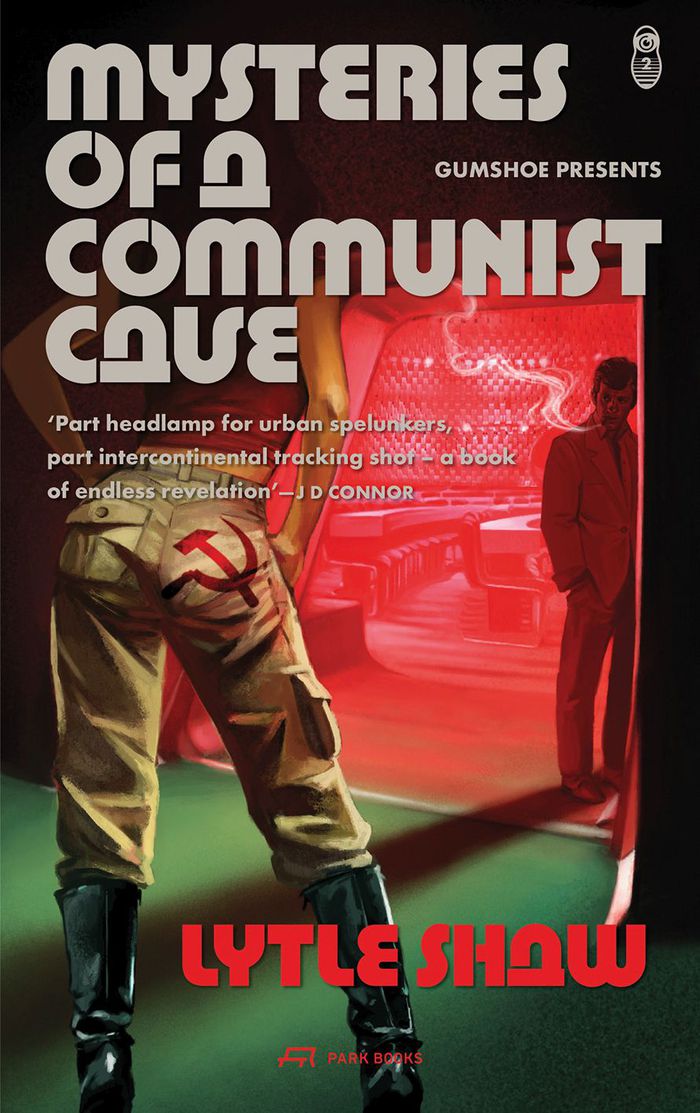
Gumshoe is a new series of architectural books that introduces an original approach to the writing of architectural history. Emulating the detective novel, the focus is on actual buildings rather than on speculative designs and theories. The style and form are fresh and scholarly but also easy and enjoyable to read. In Mysteries of a Communist Cave, the second book in the Gumshoe series, Lytle Shaw conducts an investigation of Oscar Niemeyer’s building for the French Communist Party’s (PCF) central committee in Paris. Designed in 1965, just as party theorists began to rethink many bedrock assumptions about representation, Oscar Niemeyer’s PCF building is a microcosm of the shifting political and architectural landscape of the 1960s. It is also a literal Marxist structure that can thus help us concretely picture just exactly what Structuralist Marxism might have been. Shaw draws out the PCF’s language and context one element at a time and puts the elegant curtain-wall building, with its cave-like assembly hall, into revelatory dialogue with interlocutors in film, philosophy, anthropology, and politics.
Mysteries of a Communist Cave, Gumshoe #2
Actions:
Prix:
$29.95
(disponible en magasin)
Résumé:
Gumshoe is a new series of architectural books that introduces an original approach to the writing of architectural history. Emulating the detective novel, the focus is on actual buildings rather than on speculative designs and theories. The style and form are fresh and scholarly but also easy and enjoyable to read. In Mysteries of a Communist Cave, the second book in the Gumshoe series, Lytle Shaw conducts an investigation of Oscar Niemeyer’s building for the French Communist Party’s (PCF) central committee in Paris. Designed in 1965, just as party theorists began to rethink many bedrock assumptions about representation, Oscar Niemeyer’s PCF building is a microcosm of the shifting political and architectural landscape of the 1960s. It is also a literal Marxist structure that can thus help us concretely picture just exactly what Structuralist Marxism might have been. Shaw draws out the PCF’s language and context one element at a time and puts the elegant curtain-wall building, with its cave-like assembly hall, into revelatory dialogue with interlocutors in film, philosophy, anthropology, and politics.
Classification:
livres
livres
Publication:
juillet 2026
juillet 2026
Sujet:
Théorie de l’architecture
Théorie de l’architecture
Classification:
livres
livres
Prix:
$73.00
(disponible sur commande)
Résumé:
"Architecture of invention" explores the experimental side of architecture through an architecture of books. It brings together ten experimental bibliographies conceived as a dialogue between expanded, spatial art and a critical, relational architecture that reflects on its own status. An intertextual and generative framework structures the project, producing narratives(...)
$73.00
(disponible sur commande)
Résumé:
"Architecture of invention" explores the experimental side of architecture through an architecture of books. It brings together ten experimental bibliographies conceived as a dialogue between expanded, spatial art and a critical, relational architecture that reflects on its own status. An intertextual and generative framework structures the project, producing narratives(...)
Titre:
Architecture of invention: 10 experimental biographies
Actions:
Prix:
$73.00
(disponible sur commande)
Résumé:
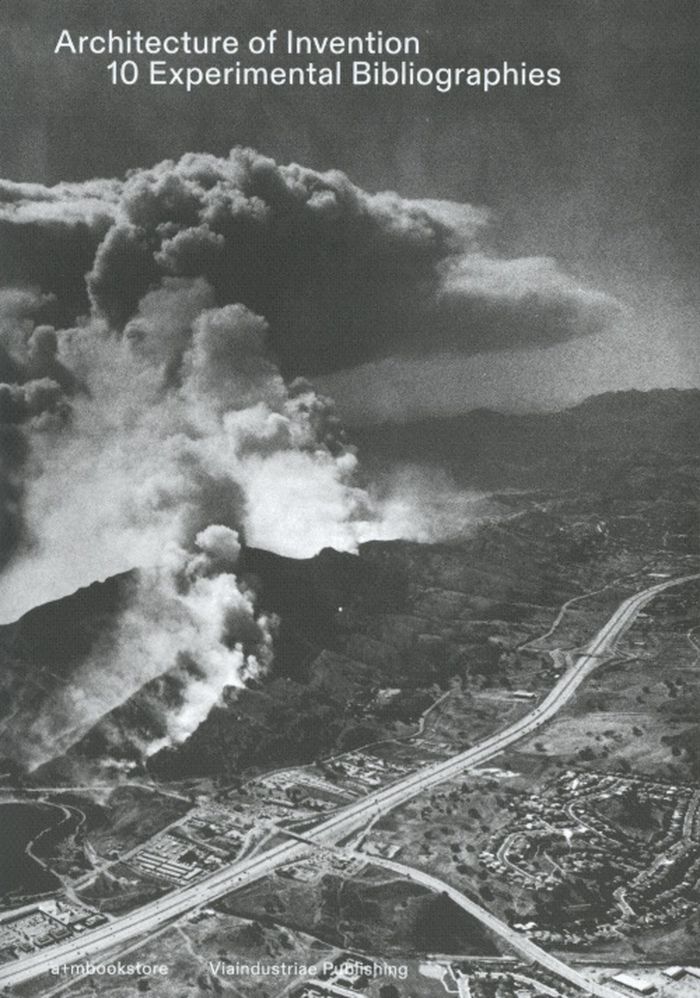
"Architecture of invention" explores the experimental side of architecture through an architecture of books. It brings together ten experimental bibliographies conceived as a dialogue between expanded, spatial art and a critical, relational architecture that reflects on its own status. An intertextual and generative framework structures the project, producing narratives and cross-references among books and publications that are not necessarily contemporaneous or disciplinary. The ordering maps multiple cultural trajectories along a non-linear timeline marked by epochal leaps, ranging from avant-garde architecture to conceptual, radical, experimental and hardcore architecture. These constellations address themes such as construction and deconstruction, image and media, the body, the city, crisis, and critical practice.
Architecture of invention: 10 experimental biographies
Actions:
Prix:
$73.00
(disponible sur commande)
Résumé:
"Architecture of invention" explores the experimental side of architecture through an architecture of books. It brings together ten experimental bibliographies conceived as a dialogue between expanded, spatial art and a critical, relational architecture that reflects on its own status. An intertextual and generative framework structures the project, producing narratives and cross-references among books and publications that are not necessarily contemporaneous or disciplinary. The ordering maps multiple cultural trajectories along a non-linear timeline marked by epochal leaps, ranging from avant-garde architecture to conceptual, radical, experimental and hardcore architecture. These constellations address themes such as construction and deconstruction, image and media, the body, the city, crisis, and critical practice.
Classification:
livres
livres
Publication:
juin 2026
juin 2026
Sujet:
Théorie de l’architecture
Théorie de l’architecture


