


2244 Résultats
Classification:
livres
livres
Titre:
CARTHA on the form of form
CARTHA on the form of form
Actions:
Prix:
$42.95
(disponible sur commande)
Résumé:
Since 2014, CARTHA has provided a platform for critical thinking on architecture and society. Each year, CARTHA initiates research and publishes issues on a topic in its online magazine, which are then brought together in an annual book. In 2016, CARTHA was invited to participate in the Lisbon Architecture Triennale. Adopting the Triennale’s topic, ''The Form of Form,''(...)
Titre:
CARTHA on the form of form
Actions:
Prix:
$42.95
(disponible sur commande)
Résumé:
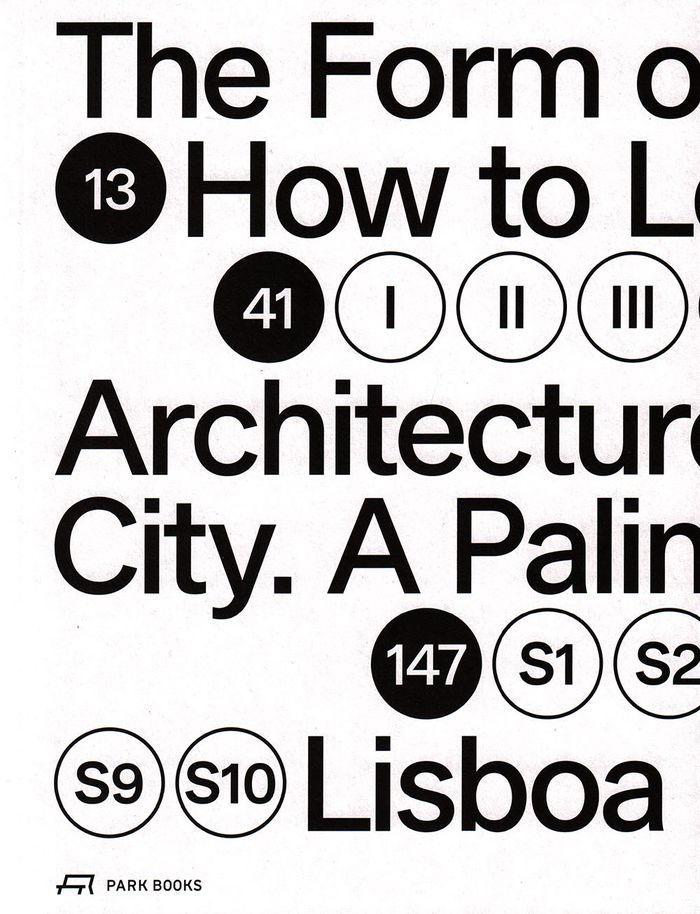
Since 2014, CARTHA has provided a platform for critical thinking on architecture and society. Each year, CARTHA initiates research and publishes issues on a topic in its online magazine, which are then brought together in an annual book. In 2016, CARTHA was invited to participate in the Lisbon Architecture Triennale. Adopting the Triennale’s topic, ''The Form of Form,'' the three issues that comprise ''CARTHA on the form of form'' explore the topic of form through different, yet complementary, lenses.
Classification:
livres
livres
Publication:
juillet 2019
juillet 2019
Sujet:
Théorie de l’architecture
Théorie de l’architecture
Classification:
livres
livres
Prix:
$39.95
(disponible sur commande)
Résumé:
"Not Interesting" proposes another set of terms and structures to talk about architecture, without requiring that it be interesting. This book explores a set of alternatives to the interesting and imagines how architecture might be positioned more broadly in the world using other terms: boring, confusing, and comforting. Along with interesting, these three terms make up(...)
Titre:
Not interesting: on the limits of criticism in architecture
Actions:
Prix:
$39.95
(disponible sur commande)
Résumé:
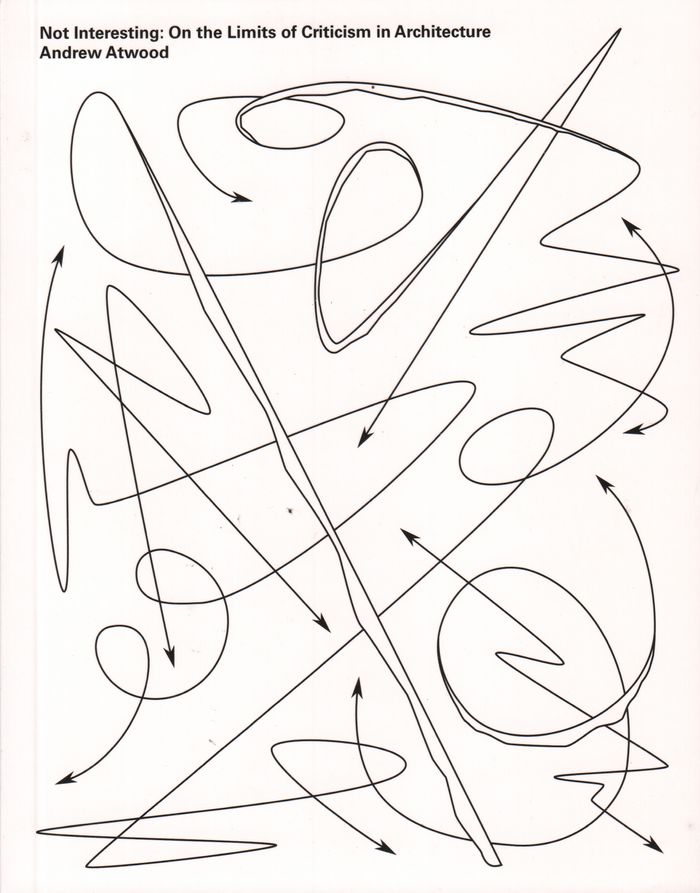
"Not Interesting" proposes another set of terms and structures to talk about architecture, without requiring that it be interesting. This book explores a set of alternatives to the interesting and imagines how architecture might be positioned more broadly in the world using other terms: boring, confusing, and comforting. Along with interesting, these three terms make up the four chapters of the book. Each chapter introduces its topic through an analysis of a different image, which serves to unpack the specific character of each term and its relationship to architecture. In addition to text, the book contains over 50 case studies using 100 drawings and images. These are presented in parallel to the text and show what architecture may look like through the lens of these other terms.
Classification:
livres
livres
Publication:
octobre 2018
octobre 2018
Sujet:
Théorie de l’architecture
Théorie de l’architecture
Classification:
livres
livres
Actions:
Prix:
$47.50
(disponible sur commande)
Résumé:
The Greek island sequence montaged by László Moholy-Nagy into his legendary documentary Architects' Congress can be interpreted, like his provocative Photoplastiks, as a "message in a bottle" thrown into the sea that "might take decades for someone to find and read." Capturing the incomparable Greek light, it presents a compelling glimpse of the four days and nights in(...)
Titre:
Moholy's edit: CIAM 1933, the avant-garde at sea
Actions:
Prix:
$47.50
(disponible sur commande)
Résumé:
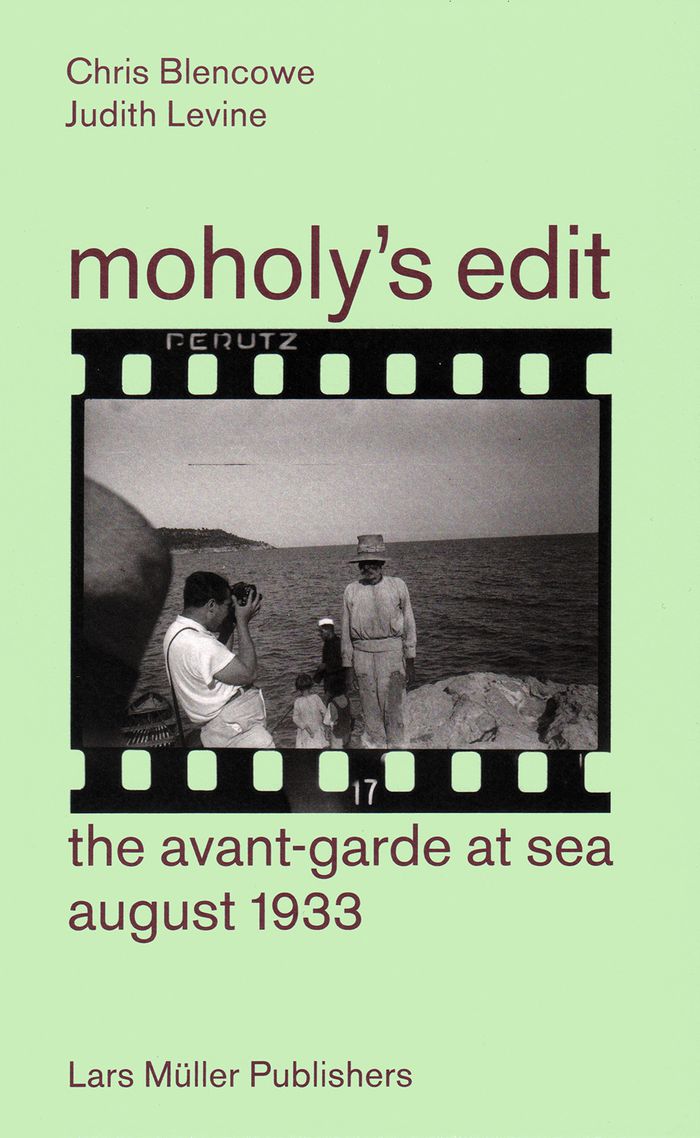
The Greek island sequence montaged by László Moholy-Nagy into his legendary documentary Architects' Congress can be interpreted, like his provocative Photoplastiks, as a "message in a bottle" thrown into the sea that "might take decades for someone to find and read." Capturing the incomparable Greek light, it presents a compelling glimpse of the four days and nights in August 1933 when the elite of the European architectural and artistic avant-garde—in Greece for the 4th International Congress of Modern Architecture (CIAM)—took to the Aegean in a barely seaworthy "nut shell" that would bring them close to the brink of disaster. The "motley crew" included Le Corbusier, Fernand Léger, Amédée Ozenfant, Sigfried Giedion, Cor van Eesteren and Otto Neurath. Crucial to the success of the surreal odyssey were various members of the Greek avant-garde.
Classification:
livres
livres
Publication:
novembre 2018
novembre 2018
Sujet:
Théorie de l’architecture
Théorie de l’architecture
Classification:
livres
livres
Actions:
Prix:
$47.50
(disponible sur commande)
Résumé:
First published in 2006 (and now rare), and originally written as a dissertation in 1963, "The Formal Basis of Modern Architecture" is the acclaimed American architect Peter Eisenman's masterly formal analysis of architecture. "I wanted to write an analytic work that related what I had learned to see, from Palladio to Terragni, from Raphael to Guido Reni, into some(...)
Titre:
The formal basis of modern architecture
Actions:
Prix:
$47.50
(disponible sur commande)
Résumé:
First published in 2006 (and now rare), and originally written as a dissertation in 1963, "The Formal Basis of Modern Architecture" is the acclaimed American architect Peter Eisenman's masterly formal analysis of architecture. "I wanted to write an analytic work that related what I had learned to see, from Palladio to Terragni, from Raphael to Guido Reni, into some theoretical construct that would bear on modern architecture, but from the point of view of a certain autonomy of form." Here, Eisenman—world famous for his Holocaust Memorial in Berlin (2005)—confronts historicism with theory and the analysis of form, illustrating his observations with numerous precisely executed drawings. "The Formal Basis of Modern Architecture" was Eisenman's dissertation at the University of Cambridge, and was first published as a facsimile edition by Lars Müller Publishers in 2006; that edition is now reprinted in a smaller format.
Classification:
livres
livres
Publication:
août 2018
août 2018
Sujet:
Théorie de l’architecture
Théorie de l’architecture
Classification:
livres
livres
Actions:
Prix:
$50.00
(disponible sur commande)
Résumé:
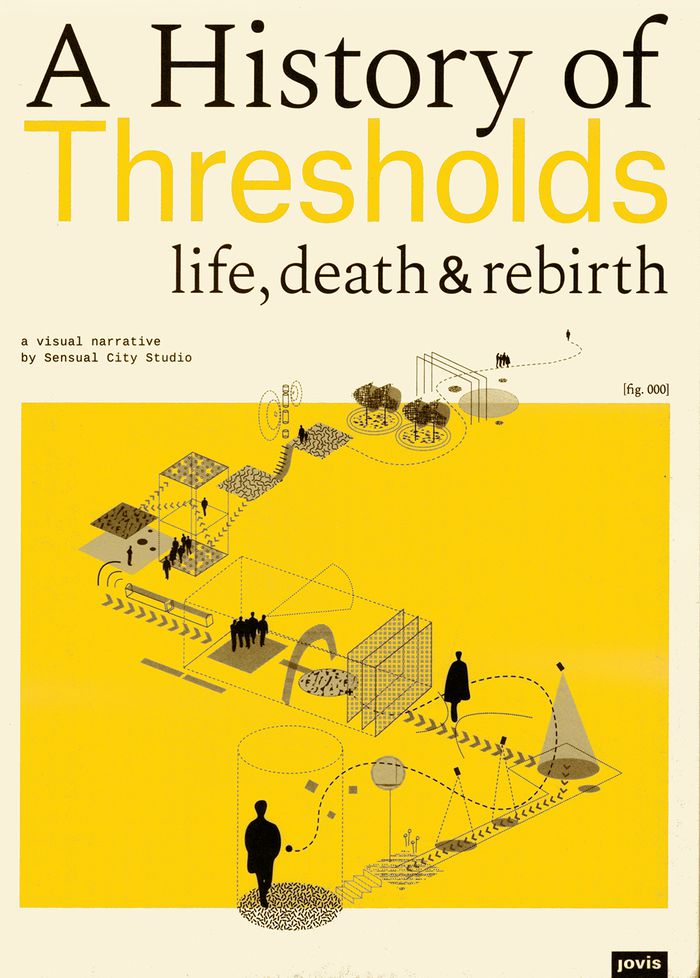
Thresholds are anthropological constants: they can be found in every culture and every era. Like limits and borders, they express one of humanity's fundamental relations to space. Places where spaces are separated and connected, thresholds are also metaphorically potent across cultures, as passageways where subjectivity is transformed. "A History of Thresholds: Life,(...)
Sujet:
Théorie de l’architecture
Théorie de l’architecture
Publication:
octobre 2018
octobre 2018
Titre:
A history of thresholds: life, death and rebirth
Actions:
Prix:
$50.00
(disponible sur commande)
Résumé:
Thresholds are anthropological constants: they can be found in every culture and every era. Like limits and borders, they express one of humanity's fundamental relations to space. Places where spaces are separated and connected, thresholds are also metaphorically potent across cultures, as passageways where subjectivity is transformed. "A History of Thresholds: Life, Death and Rebirth" uses the threshold as a guiding thread to explore the meaning and importance that humans have invested in built spaces.
Classification:
livres
livres
Publication:
octobre 2018
octobre 2018
Sujet:
Théorie de l’architecture
Théorie de l’architecture
Classification:
livres
livres
Prix:
$45.50
(disponible sur commande)
Résumé:
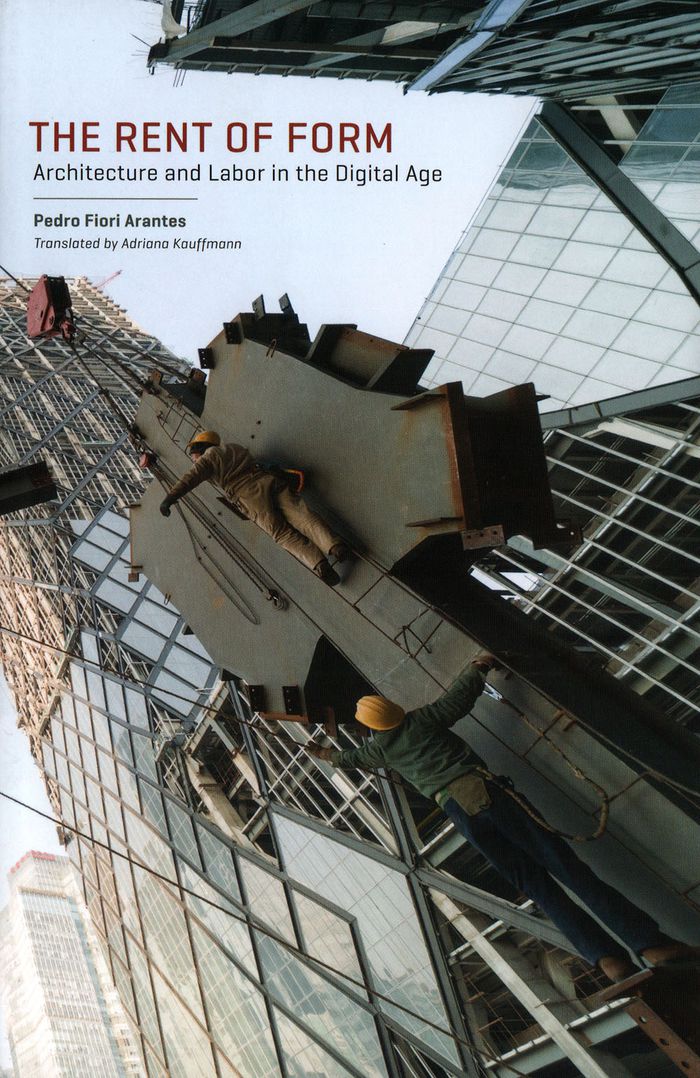
With the advent of revolutionary digital design and production technologies, contemporary architects and their clients developed a taste for dramatic, unconventional forms. Seeking to amaze their audiences and promote their global brands, “starchitects” like Herzog & de Meuron and Frank Gehry have reaped substantial rewards through the pursuit of spectacle enabled by(...)
Titre:
The rent of form: architecture and labor in the digital age
Actions:
Prix:
$45.50
(disponible sur commande)
Résumé:
With the advent of revolutionary digital design and production technologies, contemporary architects and their clients developed a taste for dramatic, unconventional forms. Seeking to amaze their audiences and promote their global brands, “starchitects” like Herzog & de Meuron and Frank Gehry have reaped substantial rewards through the pursuit of spectacle enabled by these new technologies. This process reached a climax in projects like Gehry’s Guggenheim Bilbao and the “Bilbao effect,” in which spectacular architectural designs became increasingly sought by municipal and institutional clients for their perceived capacity to enhance property values, which author Pedro Fiori Arantes calls the “rent of form.” Analyzing many major international architectural projects of the past twenty years, Arantes provides an in-depth account of how this “architecture of exception” has come to dominate today’s industry
Classification:
livres
livres
Publication:
juin 2019
juin 2019
Sujet:
Théorie de l’architecture
Théorie de l’architecture
Classification:
livres
livres
Actions:
Prix:
$50.95
(disponible sur commande)
Résumé:
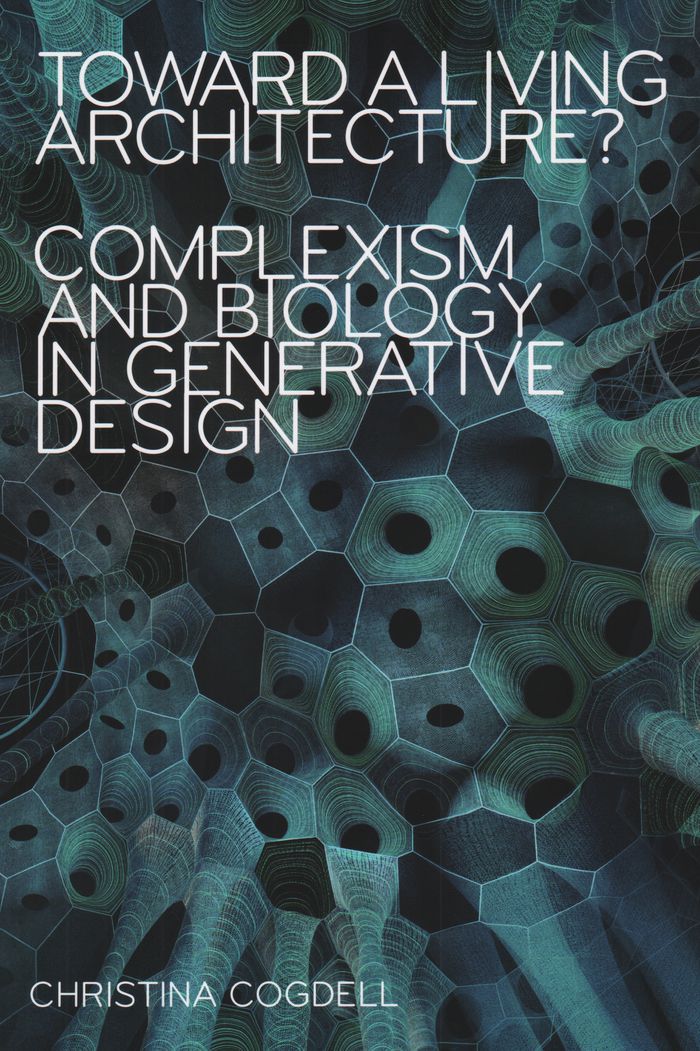
''Toward a Living Architecture?'' is the first book-length critique of the emerging field of generative architecture and its nexus with computation, biology, and complexity. Starting from the assertion that we should take generative architects' rhetoric of biology and sustainability seriously, Christina Cogdell examines their claims from the standpoints of the sciences(...)
Titre:
Toward a living architecture? Complexism and biology in generative design
Actions:
Prix:
$50.95
(disponible sur commande)
Résumé:
''Toward a Living Architecture?'' is the first book-length critique of the emerging field of generative architecture and its nexus with computation, biology, and complexity. Starting from the assertion that we should take generative architects' rhetoric of biology and sustainability seriously, Christina Cogdell examines their claims from the standpoints of the sciences they draw on—complex systems theory, evolutionary theory, genetics and epigenetics, and synthetic biology. She reveals significant disconnects while also pointing to approaches and projects with significant potential for further development. Arguing that architectural design today often only masquerades as sustainable, Cogdell demonstrates how the language of some cutting-edge practitioners and educators can mislead students and clients into thinking they are getting something biological when they are not.
Classification:
livres
livres
Publication:
janvier 2019
janvier 2019
Sujet:
Théorie de l’architecture
Théorie de l’architecture
Classification:
livres
livres

Titre:
Defining criteria
Defining criteria
Actions:
Prix:
$74.00
(disponible sur commande)
Résumé:
Together, images and conversations portray the underlying motivation, orientation and stances of some of the most prominent young architects, photographers, artists and filmmakers whose body of work gravitates around the world of architecture. Interviews with: Kersten Geers (Office KGDVS, architect), François Charbonnet (Made In, architect), Ila Bêka & Louise Lemoine(...)
Titre:
Defining criteria
Actions:
Prix:
$74.00
(disponible sur commande)
Résumé:
Together, images and conversations portray the underlying motivation, orientation and stances of some of the most prominent young architects, photographers, artists and filmmakers whose body of work gravitates around the world of architecture. Interviews with: Kersten Geers (Office KGDVS, architect), François Charbonnet (Made In, architect), Ila Bêka & Louise Lemoine (filmmakers), Junya Ishigami (architect), Pier Vittorio Aureli and Martino Tattara (DOGMA, architects), Philipp Schaerer (visual artist), Go Hasegawa (architect), Bas Princen (photographer), Yuri Ancarani (visual artist) and Anne Holtrop (architect).
Classification:
livres
livres
Publication:
août 2018
août 2018
Sujet:
Théorie de l’architecture
Théorie de l’architecture
Classification:
livres
livres
Prix:
$29.95
(disponible sur commande)
Résumé:
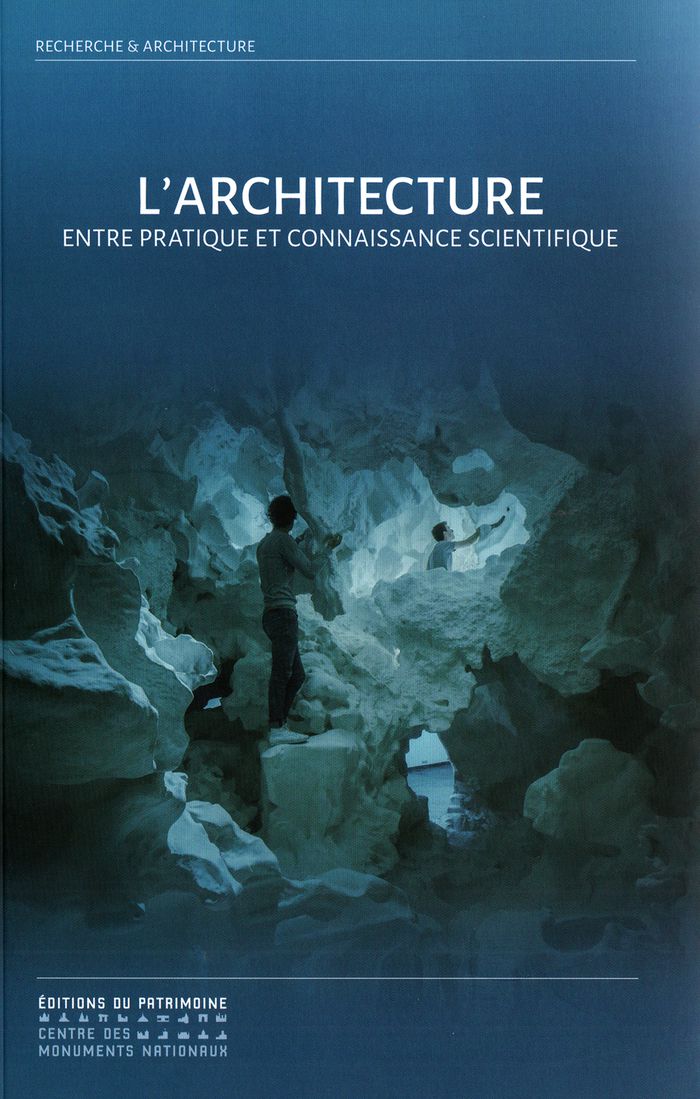
Publié sous la direction de Jean-Louis Cohen, cet ouvrage est le premier de la nouvelle collection « Recherche & architecture », éditée par le Bureau de la recherche architecturale, urbaine et paysagère (Braup), du ministère de la Culture. La politique du Braup vise à soutenir les publications scientifiques issues des unités de recherche des Écoles nationales supérieures(...)
Titre:
L'architecture entre pratique et connaissance scientifique
Actions:
Prix:
$29.95
(disponible sur commande)
Résumé:
Publié sous la direction de Jean-Louis Cohen, cet ouvrage est le premier de la nouvelle collection « Recherche & architecture », éditée par le Bureau de la recherche architecturale, urbaine et paysagère (Braup), du ministère de la Culture. La politique du Braup vise à soutenir les publications scientifiques issues des unités de recherche des Écoles nationales supérieures en architecture. Ces publications proviennent de rapports de recherche, de thèses de doctorat ou de colloques organisés par les écoles et sont destinées à la communauté scientifique, aux étudiants, aux professionnels ou à un public plus large encore. L’objectif étant d’assurer une visibilité aux recherches menées dans les écoles et de participer à la reconnaissance de l’architecture en tant que discipline.
Classification:
livres
livres
Publication:
septembre 2018
septembre 2018
Sujet:
Théorie de l’architecture
Théorie de l’architecture
Classification:
livres
livres
Titre:
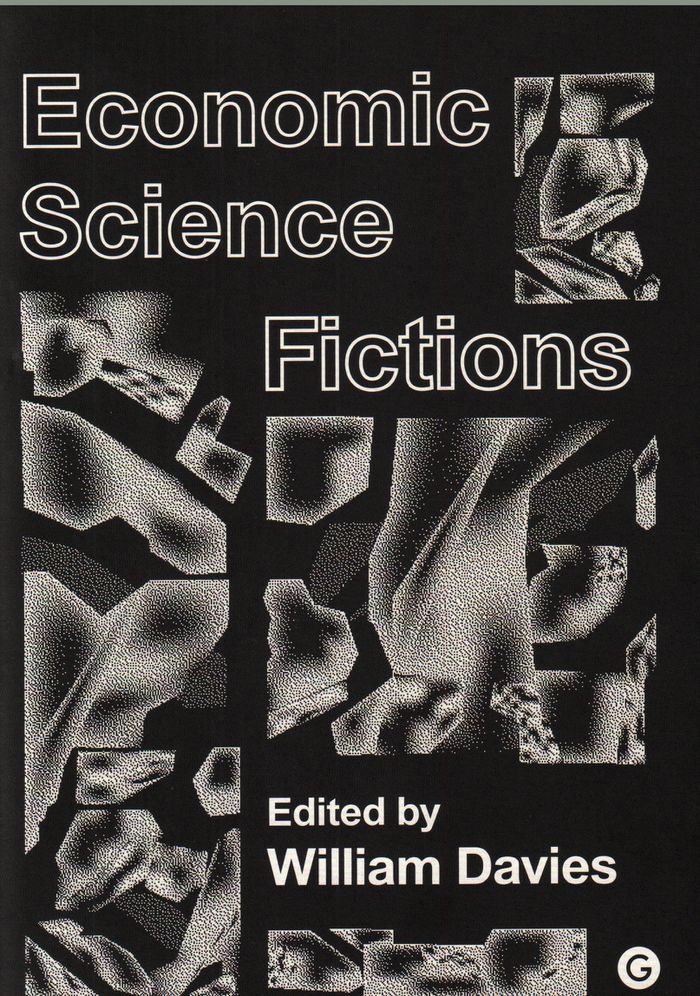
Economic science fictions
Economic science fictions
Actions:
Prix:
$42.95
(disponible sur commande)
Résumé:
From the libertarian economics of Ayn Rand to Aldous Huxley's consumerist dystopias, economics and science fiction have often orbited each other. In ''Economic Science Fictions'', editor William Davies has deliberately merged the two worlds, asking how we might harness the power of the utopian imagination to revitalize economic thinking.
Titre:
Economic science fictions
Actions:
Prix:
$42.95
(disponible sur commande)
Résumé:
From the libertarian economics of Ayn Rand to Aldous Huxley's consumerist dystopias, economics and science fiction have often orbited each other. In ''Economic Science Fictions'', editor William Davies has deliberately merged the two worlds, asking how we might harness the power of the utopian imagination to revitalize economic thinking.
Classification:
livres
livres
Publication:
mai 2018
mai 2018


