


2221 Résultats
Classification:
livres
livres
Actions:
Prix:
$42.95
(disponible sur commande)
Résumé:
The technological innovation and unprecedented physical growth of the cold war era permeated American life in every aspect and at every scale. From the creation of the military-industrial complex and the beginnings of suburban sprawl to the production of the ballpoint pen and the TV dinner, the artifacts of the period are as numerous and diverse as they are familiar. Over(...)
$42.95
(disponible sur commande)
Résumé:
The technological innovation and unprecedented physical growth of the cold war era permeated American life in every aspect and at every scale. From the creation of the military-industrial complex and the beginnings of suburban sprawl to the production of the ballpoint pen and the TV dinner, the artifacts of the period are as numerous and diverse as they are familiar. Over(...)
Sujet:
Théorie de l’architecture
Théorie de l’architecture
Publication:
avril 2004, New York
avril 2004, New York
Titre:
Cold war hothouses : inventing postwar culture, from cockpit to Playboy
Actions:
Prix:
$42.95
(disponible sur commande)
Résumé:
The technological innovation and unprecedented physical growth of the cold war era permeated American life in every aspect and at every scale. From the creation of the military-industrial complex and the beginnings of suburban sprawl to the production of the ballpoint pen and the TV dinner, the artifacts of the period are as numerous and diverse as they are familiar. Over the past half-century, our awe at the advances of postwar society has softened to nostalgia, and our affection for its material culture has clouded our memories of the enormous spatial reorganizations and infrastructural transformations that changed American life forever. "Cold War Hot Houses" casts a clear, even playful, eye on this pivotal time in history, examining topics as diverse as the creation of the interstate highway system and the shopping centre, and the domestication of the national parks as well as the production of such seemingly mundane products as the drive-in theater, aluminum foil, and the king-size bed. The result is a vivid snapshot of American culture that still resonates today.
Cold war hothouses : inventing postwar culture, from cockpit to Playboy
Actions:
Prix:
$42.95
(disponible sur commande)
Résumé:
The technological innovation and unprecedented physical growth of the cold war era permeated American life in every aspect and at every scale. From the creation of the military-industrial complex and the beginnings of suburban sprawl to the production of the ballpoint pen and the TV dinner, the artifacts of the period are as numerous and diverse as they are familiar. Over the past half-century, our awe at the advances of postwar society has softened to nostalgia, and our affection for its material culture has clouded our memories of the enormous spatial reorganizations and infrastructural transformations that changed American life forever. "Cold War Hot Houses" casts a clear, even playful, eye on this pivotal time in history, examining topics as diverse as the creation of the interstate highway system and the shopping centre, and the domestication of the national parks as well as the production of such seemingly mundane products as the drive-in theater, aluminum foil, and the king-size bed. The result is a vivid snapshot of American culture that still resonates today.
Classification:
livres
livres
Publication:
avril 2004, New York
avril 2004, New York
Sujet:
Théorie de l’architecture
Théorie de l’architecture
Classification:
livres
livres
Prix:
$41.95
(disponible sur commande)
Résumé:
It may come as no surprise that only two percent of new homebuyers work directly with an architect to design the space in which they will live—indeed, architects are usually seen as a luxury most of us, the other ninety-eight percent, can't afford. Yet, why shouldn't more people call on the services of architects? With fierce competition for few commissions, why do(...)
$41.95
(disponible sur commande)
Résumé:
It may come as no surprise that only two percent of new homebuyers work directly with an architect to design the space in which they will live—indeed, architects are usually seen as a luxury most of us, the other ninety-eight percent, can't afford. Yet, why shouldn't more people call on the services of architects? With fierce competition for few commissions, why do(...)
Titre:
Good deeds, good design : community service through architecture
Actions:
Prix:
$41.95
(disponible sur commande)
Résumé:
It may come as no surprise that only two percent of new homebuyers work directly with an architect to design the space in which they will live—indeed, architects are usually seen as a luxury most of us, the other ninety-eight percent, can't afford. Yet, why shouldn't more people call on the services of architects? With fierce competition for few commissions, why do architects not seek out other sources of work and income? Now, acting within larger institutions or on their own, many architects are taking local initiatives to address the underserved, particularly the poor. "Good Deeds, Good Design" presents the best new thoughts and practices in this emerging movement toward an architecture that serves a broader population. In this book, architecture firms, community design centers, design/build programs, and service-based organizations offer their plans for buildings for the other ninety-eight percent. Twenty-eight essays and case studies illustrate successes and failures and raise both design and social issues.
Good deeds, good design : community service through architecture
Actions:
Prix:
$41.95
(disponible sur commande)
Résumé:
It may come as no surprise that only two percent of new homebuyers work directly with an architect to design the space in which they will live—indeed, architects are usually seen as a luxury most of us, the other ninety-eight percent, can't afford. Yet, why shouldn't more people call on the services of architects? With fierce competition for few commissions, why do architects not seek out other sources of work and income? Now, acting within larger institutions or on their own, many architects are taking local initiatives to address the underserved, particularly the poor. "Good Deeds, Good Design" presents the best new thoughts and practices in this emerging movement toward an architecture that serves a broader population. In this book, architecture firms, community design centers, design/build programs, and service-based organizations offer their plans for buildings for the other ninety-eight percent. Twenty-eight essays and case studies illustrate successes and failures and raise both design and social issues.
Classification:
livres
livres
Publication:
mai 2003, New York
mai 2003, New York
Sujet:
Théorie de l’architecture
Théorie de l’architecture
Classification:
livres
livres
Actions:
Prix:
$49.95
(disponible sur commande)
Résumé:
" Du confort au bien-être " est un essai sur l'urgence élémentaire d'abriter notre corps nous pousse à habiter : c'est à dire à l'entourer d'un refuge solide qui le garde des intempéries et nous permette de subsister. S'y ajoutent les deux exigences d'un logis qui nous valorise aux yeux des autres et préserve aussi notre moi. Notre dimension intérieure est la forme que(...)
$49.95
(disponible sur commande)
Résumé:
" Du confort au bien-être " est un essai sur l'urgence élémentaire d'abriter notre corps nous pousse à habiter : c'est à dire à l'entourer d'un refuge solide qui le garde des intempéries et nous permette de subsister. S'y ajoutent les deux exigences d'un logis qui nous valorise aux yeux des autres et préserve aussi notre moi. Notre dimension intérieure est la forme que(...)
Titre:
Du confort au bien-être : la dimension intérieure
Actions:
Prix:
$49.95
(disponible sur commande)
Résumé:
" Du confort au bien-être " est un essai sur l'urgence élémentaire d'abriter notre corps nous pousse à habiter : c'est à dire à l'entourer d'un refuge solide qui le garde des intempéries et nous permette de subsister. S'y ajoutent les deux exigences d'un logis qui nous valorise aux yeux des autres et préserve aussi notre moi. Notre dimension intérieure est la forme que prend en chacun de nous cette triple attente qui, une fois satisfaite, deviendrait notre confort. Ce n'est qu'en interprétant librement les signes de notre culture et en intégrant une part inévitable d'inconfort à notre image du chez-soi qu'on fera quand même de celui-ci le lieu du bien-être.
Du confort au bien-être : la dimension intérieure
Actions:
Prix:
$49.95
(disponible sur commande)
Résumé:
" Du confort au bien-être " est un essai sur l'urgence élémentaire d'abriter notre corps nous pousse à habiter : c'est à dire à l'entourer d'un refuge solide qui le garde des intempéries et nous permette de subsister. S'y ajoutent les deux exigences d'un logis qui nous valorise aux yeux des autres et préserve aussi notre moi. Notre dimension intérieure est la forme que prend en chacun de nous cette triple attente qui, une fois satisfaite, deviendrait notre confort. Ce n'est qu'en interprétant librement les signes de notre culture et en intégrant une part inévitable d'inconfort à notre image du chez-soi qu'on fera quand même de celui-ci le lieu du bien-être.
Classification:
livres
livres
Publication:
juin 2002, Paris
juin 2002, Paris
Sujet:
Théorie de l’architecture
Théorie de l’architecture
Classification:
livres
livres
Actions:
Prix:
$33.95
(disponible sur commande)
Résumé:
Les études ici rassemblées ont pour idée directrice d'exploiter l'activité mentale de l'architecte en train de concevoir. A ce titre, elles poursuivent l'analyse du rôle des représentations et des scèmes dans le travail de conception des formes. Un ensemble de réflexions placées sous le signe d'une hybridation des connaissances entre architecture et anthropologie.
$33.95
(disponible sur commande)
Résumé:
Les études ici rassemblées ont pour idée directrice d'exploiter l'activité mentale de l'architecte en train de concevoir. A ce titre, elles poursuivent l'analyse du rôle des représentations et des scèmes dans le travail de conception des formes. Un ensemble de réflexions placées sous le signe d'une hybridation des connaissances entre architecture et anthropologie.
Titre:
Cinq essais sur l'architecture : études sur la conception de projets de l'atelier Zô, Scarpa, Le Corbusier, Pei
Actions:
Prix:
$33.95
(disponible sur commande)
Résumé:
Les études ici rassemblées ont pour idée directrice d'exploiter l'activité mentale de l'architecte en train de concevoir. A ce titre, elles poursuivent l'analyse du rôle des représentations et des scèmes dans le travail de conception des formes. Un ensemble de réflexions placées sous le signe d'une hybridation des connaissances entre architecture et anthropologie.
Cinq essais sur l'architecture : études sur la conception de projets de l'atelier Zô, Scarpa, Le Corbusier, Pei
Actions:
Prix:
$33.95
(disponible sur commande)
Résumé:
Les études ici rassemblées ont pour idée directrice d'exploiter l'activité mentale de l'architecte en train de concevoir. A ce titre, elles poursuivent l'analyse du rôle des représentations et des scèmes dans le travail de conception des formes. Un ensemble de réflexions placées sous le signe d'une hybridation des connaissances entre architecture et anthropologie.
Classification:
livres
livres
Publication:
septembre 2002, Paris
septembre 2002, Paris
Sujet:
Théorie de l’architecture
Théorie de l’architecture
Classification:
livres
livres
Titre:
Transmettre en architecture : de l'héritage de Le Corbusier à l'enseignement de Henri Ciriani
Transmettre en architecture : de l'héritage de Le Corbusier à l'enseignement de Henri Ciriani
Actions:
Prix:
$58.95
(disponible sur commande)
Résumé:
Autour du cas d’école que représente la chaîne allant de Le Corbusier à Ciriani et de Ciriani à ses anciens élèves, les entretiens réunis dans cet ouvrage permettent d’analyser la façon dont s’opère la transmission du savoir architectural et des valeurs qui le fondent. Issu du film Je ne suis pas un homme pressé, réalisé par les mêmes auteurs en 2001, le livre utilise(...)
$58.95
(disponible sur commande)
Résumé:
Autour du cas d’école que représente la chaîne allant de Le Corbusier à Ciriani et de Ciriani à ses anciens élèves, les entretiens réunis dans cet ouvrage permettent d’analyser la façon dont s’opère la transmission du savoir architectural et des valeurs qui le fondent. Issu du film Je ne suis pas un homme pressé, réalisé par les mêmes auteurs en 2001, le livre utilise(...)
Sujet:
Théorie de l’architecture
Théorie de l’architecture
Publication:
juillet 2002, Paris
juillet 2002, Paris
Titre:
Transmettre en architecture : de l'héritage de Le Corbusier à l'enseignement de Henri Ciriani
Actions:
Prix:
$58.95
(disponible sur commande)
Résumé:
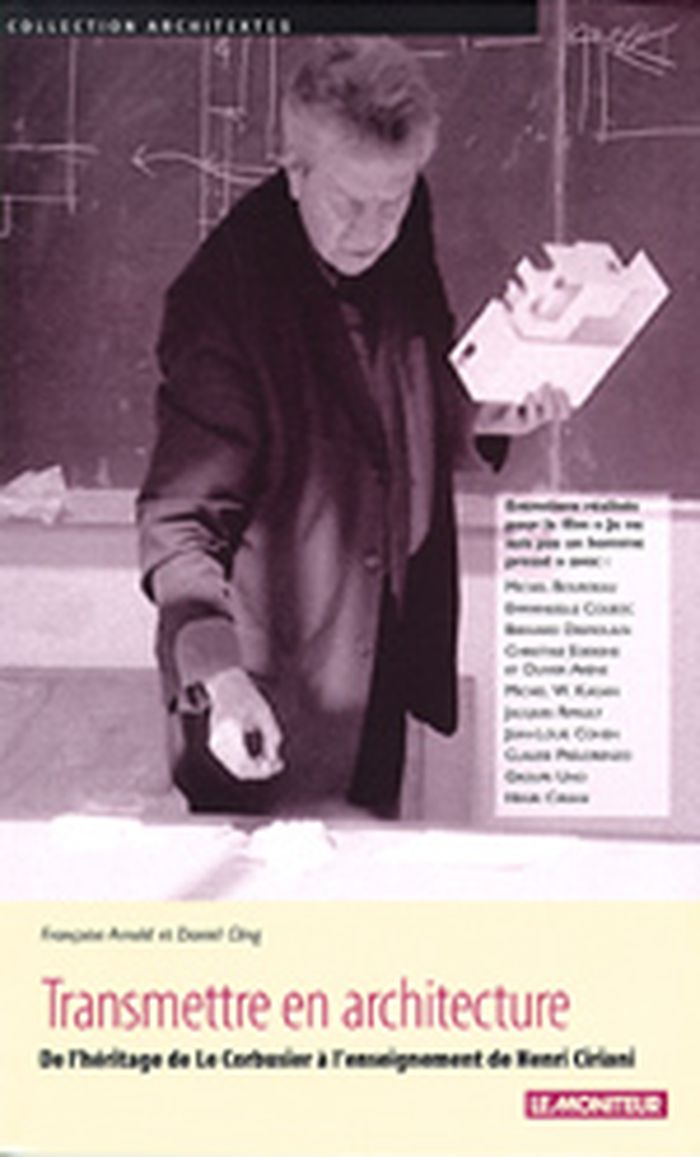
Autour du cas d’école que représente la chaîne allant de Le Corbusier à Ciriani et de Ciriani à ses anciens élèves, les entretiens réunis dans cet ouvrage permettent d’analyser la façon dont s’opère la transmission du savoir architectural et des valeurs qui le fondent. Issu du film Je ne suis pas un homme pressé, réalisé par les mêmes auteurs en 2001, le livre utilise l’abondant matériel qui servit pour le documentaire, 43 heures d’entretiens avec des architectes (dont les membres du groupe Uno, exprimant ici pour la première fois les convictions qui les unissent), mais aussi avec un historien et un sociologue. Il retrace ainsi l’ensemble des propos tenus sur l’héritage de Le Corbusier et du Mouvement moderne, le rôle social de l’architecte et sa construction identitaire et, enfin, sur la figure de Ciriani enseignant, qui apparaît ici en véritable passeur, comme celui « qui donne envie de changer le monde ».
Transmettre en architecture : de l'héritage de Le Corbusier à l'enseignement de Henri Ciriani
Actions:
Prix:
$58.95
(disponible sur commande)
Résumé:
Autour du cas d’école que représente la chaîne allant de Le Corbusier à Ciriani et de Ciriani à ses anciens élèves, les entretiens réunis dans cet ouvrage permettent d’analyser la façon dont s’opère la transmission du savoir architectural et des valeurs qui le fondent. Issu du film Je ne suis pas un homme pressé, réalisé par les mêmes auteurs en 2001, le livre utilise l’abondant matériel qui servit pour le documentaire, 43 heures d’entretiens avec des architectes (dont les membres du groupe Uno, exprimant ici pour la première fois les convictions qui les unissent), mais aussi avec un historien et un sociologue. Il retrace ainsi l’ensemble des propos tenus sur l’héritage de Le Corbusier et du Mouvement moderne, le rôle social de l’architecte et sa construction identitaire et, enfin, sur la figure de Ciriani enseignant, qui apparaît ici en véritable passeur, comme celui « qui donne envie de changer le monde ».
Classification:
livres
livres
Publication:
juillet 2002, Paris
juillet 2002, Paris
Sujet:
Théorie de l’architecture
Théorie de l’architecture
Classification:
livres
livres
Actions:
Prix:
$35.95
(disponible sur commande)
Résumé:
«L'architecture est une science» avai écrit Vitruve. Pourtant, la pensée architecturale ne s'exprime jamais comme telle, s'obligeant à faire appel à des domaines extérieurs comme la sociologie, la sémiologie ou l'économie. L'architecture doit donc définir ses propres axiomes et ses propres concepts en recherchant les bases scientifiques d'une véritable «archéologie». La(...)
$35.95
(disponible sur commande)
Résumé:
«L'architecture est une science» avai écrit Vitruve. Pourtant, la pensée architecturale ne s'exprime jamais comme telle, s'obligeant à faire appel à des domaines extérieurs comme la sociologie, la sémiologie ou l'économie. L'architecture doit donc définir ses propres axiomes et ses propres concepts en recherchant les bases scientifiques d'une véritable «archéologie». La(...)
Titre:
Sur l'espace architectural : essai d'épistémologie de l'architecture - nouvelle édition revue et corrigée
Actions:
Prix:
$35.95
(disponible sur commande)
Résumé:
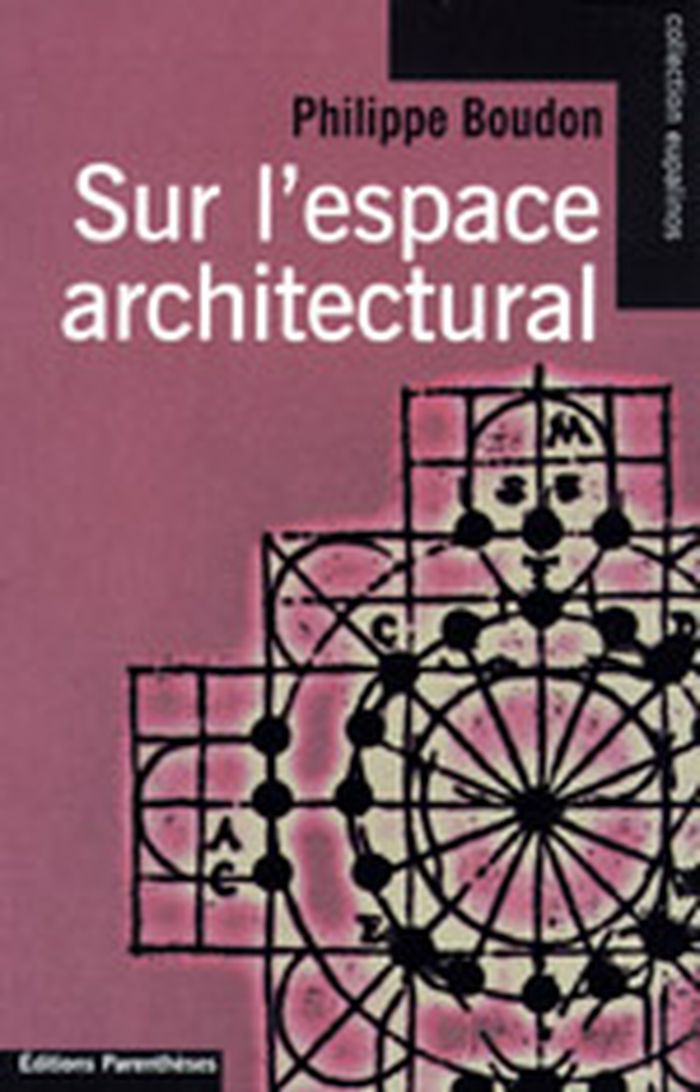
«L'architecture est une science» avai écrit Vitruve. Pourtant, la pensée architecturale ne s'exprime jamais comme telle, s'obligeant à faire appel à des domaines extérieurs comme la sociologie, la sémiologie ou l'économie. L'architecture doit donc définir ses propres axiomes et ses propres concepts en recherchant les bases scientifiques d'une véritable «archéologie». La construction théorique de cette discipline contribue ainsi à la définition de l'architecture comme «pensée de l'espace». Ce texte fondateur de Philippe Boudon est devenu un classique de la littérature architecturale. Dans cette nouvelle édition entièrement refondue, l'auteur donne l'intégralité de son texte d'origine en y ajoutant, pour chacune des parties, un commentaire critique et réactualisé.
Sur l'espace architectural : essai d'épistémologie de l'architecture - nouvelle édition revue et corrigée
Actions:
Prix:
$35.95
(disponible sur commande)
Résumé:
«L'architecture est une science» avai écrit Vitruve. Pourtant, la pensée architecturale ne s'exprime jamais comme telle, s'obligeant à faire appel à des domaines extérieurs comme la sociologie, la sémiologie ou l'économie. L'architecture doit donc définir ses propres axiomes et ses propres concepts en recherchant les bases scientifiques d'une véritable «archéologie». La construction théorique de cette discipline contribue ainsi à la définition de l'architecture comme «pensée de l'espace». Ce texte fondateur de Philippe Boudon est devenu un classique de la littérature architecturale. Dans cette nouvelle édition entièrement refondue, l'auteur donne l'intégralité de son texte d'origine en y ajoutant, pour chacune des parties, un commentaire critique et réactualisé.
Classification:
livres
livres
Publication:
septembre 2002, Marseille
septembre 2002, Marseille
Sujet:
Théorie de l’architecture
Théorie de l’architecture
Classification:
livres
livres

Actions:
Prix:
$68.95
(disponible sur commande)
Résumé:
This volume brings together some of the world's leading voices from digital theory, technology, and design and provides a discussion ranging from broad cultural concerns to new techniques of construction, "Designing for a Digital World" offers an overview of informed opinion at a crucial juncture in the history of the discipline.
$68.95
(disponible sur commande)
Résumé:
This volume brings together some of the world's leading voices from digital theory, technology, and design and provides a discussion ranging from broad cultural concerns to new techniques of construction, "Designing for a Digital World" offers an overview of informed opinion at a crucial juncture in the history of the discipline.
Titre:
Designing for a digital world
Actions:
Prix:
$68.95
(disponible sur commande)
Résumé:
This volume brings together some of the world's leading voices from digital theory, technology, and design and provides a discussion ranging from broad cultural concerns to new techniques of construction, "Designing for a Digital World" offers an overview of informed opinion at a crucial juncture in the history of the discipline.
Designing for a digital world
Actions:
Prix:
$68.95
(disponible sur commande)
Résumé:
This volume brings together some of the world's leading voices from digital theory, technology, and design and provides a discussion ranging from broad cultural concerns to new techniques of construction, "Designing for a Digital World" offers an overview of informed opinion at a crucial juncture in the history of the discipline.
Classification:
livres
livres
Publication:
janvier 2002, Chichester
janvier 2002, Chichester
Sujet:
Théorie de l’architecture
Théorie de l’architecture
Classification:
livres
livres
Prix:
$68.95
(disponible sur commande)
Résumé:
Confessions offers an insight into the mind of Future Systems architect Jan Kaplicky - his ideas, opinions and sources of inspiration. It is a book about an architectural life, private and professional. Written and selected by the architect himself, it is a highly personal account that avoids the speculations and intellectualisations of critical theory. This is a(...)
$68.95
(disponible sur commande)
Résumé:
Confessions offers an insight into the mind of Future Systems architect Jan Kaplicky - his ideas, opinions and sources of inspiration. It is a book about an architectural life, private and professional. Written and selected by the architect himself, it is a highly personal account that avoids the speculations and intellectualisations of critical theory. This is a(...)
Titre:
Confessions : principles, architecture, process, life
Actions:
Prix:
$68.95
(disponible sur commande)
Résumé:
Confessions offers an insight into the mind of Future Systems architect Jan Kaplicky - his ideas, opinions and sources of inspiration. It is a book about an architectural life, private and professional. Written and selected by the architect himself, it is a highly personal account that avoids the speculations and intellectualisations of critical theory. This is a collection of comments on architects, architecture, design, politics, beauty, people and the future and will give architects stimulus about workings of practice, building and design.
Confessions : principles, architecture, process, life
Actions:
Prix:
$68.95
(disponible sur commande)
Résumé:
Confessions offers an insight into the mind of Future Systems architect Jan Kaplicky - his ideas, opinions and sources of inspiration. It is a book about an architectural life, private and professional. Written and selected by the architect himself, it is a highly personal account that avoids the speculations and intellectualisations of critical theory. This is a collection of comments on architects, architecture, design, politics, beauty, people and the future and will give architects stimulus about workings of practice, building and design.
Classification:
livres
livres
Publication:
juillet 2002, Chichester
juillet 2002, Chichester
Sujet:
Théorie de l’architecture
Théorie de l’architecture
Classification:
livres
livres
Actions:
Prix:
$39.95
(disponible sur commande)
Résumé:
This book consists of twelve chapters written by leading scholars, each spotlighting ideas emanating from a particular field which helped to shape Modernism, including eugenics, primitivism, Freudianism, and Nietzscheanism. Each contributor goes into their topic in some depth, but also pays attention to the impact it had on overarching issues. At the same time, the(...)
$39.95
(disponible sur commande)
Résumé:
This book consists of twelve chapters written by leading scholars, each spotlighting ideas emanating from a particular field which helped to shape Modernism, including eugenics, primitivism, Freudianism, and Nietzscheanism. Each contributor goes into their topic in some depth, but also pays attention to the impact it had on overarching issues. At the same time, the(...)
Titre:
A concise companion to modernism
Actions:
Prix:
$39.95
(disponible sur commande)
Résumé:
This book consists of twelve chapters written by leading scholars, each spotlighting ideas emanating from a particular field which helped to shape Modernism, including eugenics, primitivism, Freudianism, and Nietzscheanism. Each contributor goes into their topic in some depth, but also pays attention to the impact it had on overarching issues. At the same time, the contributors identify contemporary developments in other disciplines, especially art, architecture, music, film and philosophy, which paralleled developments in poetry, fiction and drama. Each chapter concludes with a brief guide to further reading.
A concise companion to modernism
Actions:
Prix:
$39.95
(disponible sur commande)
Résumé:
This book consists of twelve chapters written by leading scholars, each spotlighting ideas emanating from a particular field which helped to shape Modernism, including eugenics, primitivism, Freudianism, and Nietzscheanism. Each contributor goes into their topic in some depth, but also pays attention to the impact it had on overarching issues. At the same time, the contributors identify contemporary developments in other disciplines, especially art, architecture, music, film and philosophy, which paralleled developments in poetry, fiction and drama. Each chapter concludes with a brief guide to further reading.
Classification:
livres
livres
Publication:
mars 2002, Oxford
mars 2002, Oxford
Sujet:
Théorie de l’architecture
Théorie de l’architecture
Classification:
livres
livres
Prix:
$52.50
(disponible sur commande)
Résumé:
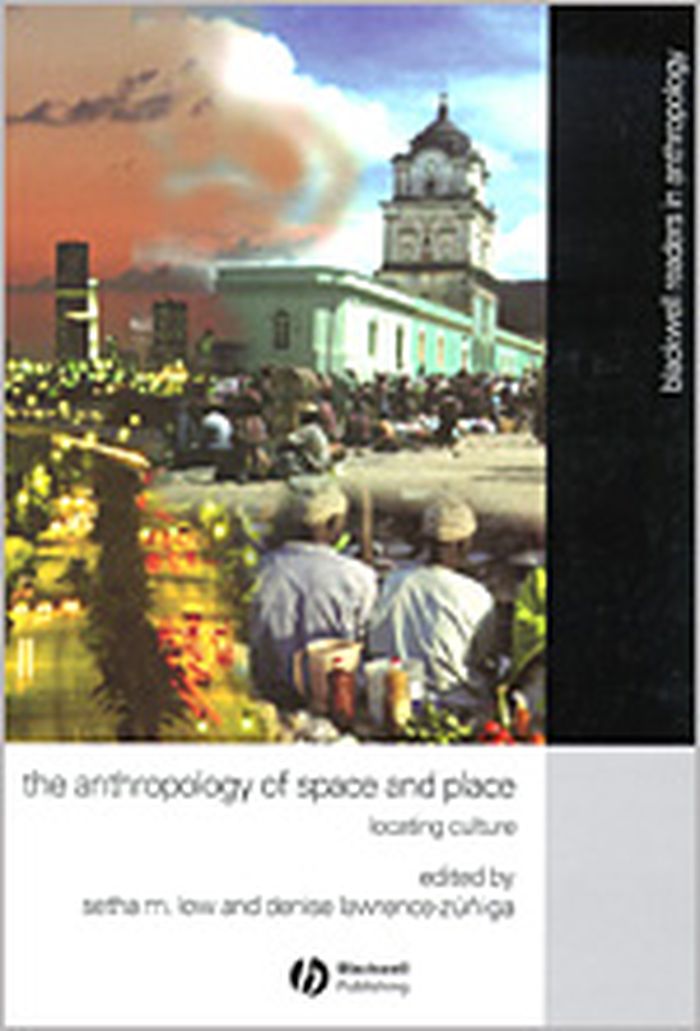
«The anthropology of space and place: locating Culture» is an unprecedented collection of key anthropological articles that illustrate how the conceptual and material dimensions of space are central to the production of social life. Assembles key anthropological articles that challenge accepted definitions and ideas of space and place. Reveals how both the(...)
$52.50
(disponible sur commande)
Résumé:
«The anthropology of space and place: locating Culture» is an unprecedented collection of key anthropological articles that illustrate how the conceptual and material dimensions of space are central to the production of social life. Assembles key anthropological articles that challenge accepted definitions and ideas of space and place. Reveals how both the(...)
Sujet:
Théorie de l’architecture
Théorie de l’architecture
Publication:
mars 2002, Oxford
mars 2002, Oxford
Titre:
The anthropology of space and place : locating culture
Actions:
Prix:
$52.50
(disponible sur commande)
Résumé:
«The anthropology of space and place: locating Culture» is an unprecedented collection of key anthropological articles that illustrate how the conceptual and material dimensions of space are central to the production of social life. Assembles key anthropological articles that challenge accepted definitions and ideas of space and place. Reveals how both the conceptual and material dimensions of space as well as of built forms and landscape characteristics are central to the production of social life. Includes introduction that synthesizes existing literature, highlights core issues, and maps potential directions for future research. Brings classics in cultural anthropology together with new theoretical approaches.
The anthropology of space and place : locating culture
Actions:
Prix:
$52.50
(disponible sur commande)
Résumé:
«The anthropology of space and place: locating Culture» is an unprecedented collection of key anthropological articles that illustrate how the conceptual and material dimensions of space are central to the production of social life. Assembles key anthropological articles that challenge accepted definitions and ideas of space and place. Reveals how both the conceptual and material dimensions of space as well as of built forms and landscape characteristics are central to the production of social life. Includes introduction that synthesizes existing literature, highlights core issues, and maps potential directions for future research. Brings classics in cultural anthropology together with new theoretical approaches.
Classification:
livres
livres
Publication:
mars 2002, Oxford
mars 2002, Oxford
Sujet:
Théorie de l’architecture
Théorie de l’architecture


