


1928 Résultats
Classification:
livres
livres
Titre:
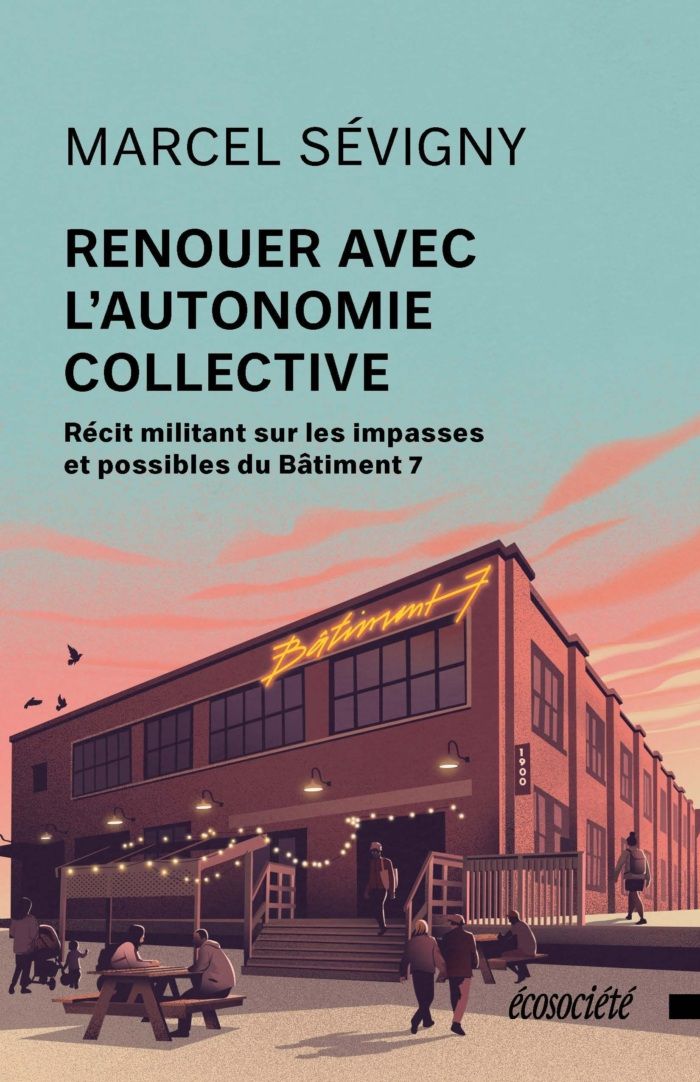
Renouer avec l'autonomie collective : Récit militant sur les impasses et possibles du Bâtiment 7
Renouer avec l'autonomie collective : Récit militant sur les impasses et possibles du Bâtiment 7
Actions:
Prix:
$29.00
(disponible en magasin)
Résumé:
Depuis son ouverture dans le quartier Pointe-Saint-Charles, à Montréal, en 2018, le Bâtiment 7 est devenu une référence dans le paysage militant québécois. Présenté comme une « fabrique d’autonomie collective », le B7 est systématiquement cité dans les discussions autour des communs et des expériences d’«?alternatives » anticapitalistes. Mais jusqu’ici, aucun bilan(...)
Titre:
Renouer avec l'autonomie collective : Récit militant sur les impasses et possibles du Bâtiment 7
Actions:
Prix:
$29.00
(disponible en magasin)
Résumé:
Depuis son ouverture dans le quartier Pointe-Saint-Charles, à Montréal, en 2018, le Bâtiment 7 est devenu une référence dans le paysage militant québécois. Présenté comme une « fabrique d’autonomie collective », le B7 est systématiquement cité dans les discussions autour des communs et des expériences d’«?alternatives » anticapitalistes. Mais jusqu’ici, aucun bilan significatif et critique de ce projet autogéré n’avait été produit. C’est à cet exercice délicat que se livre ici Marcel Sévigny. Ayant été au cœur de la lutte qui a mené à l’obtention du bâtiment industriel désaffecté, il a constaté au fil des ans une déconnexion grandissante entre le projet B7, né de cette expropriation populaire, et l’héritage de 60 ans de luttes populaires locales. Revenant sur plus de quinze ans d’engagement et d’expérimentations collectives, son récit militant relate à la fois les réussites et les principales embûches auxquelles le projet a dû faire face, notamment la difficulté de discuter ouvertement des enjeux de pouvoir et des clivages politiques.
Classification:
livres
livres
Publication:
octobre 2026
octobre 2026
Sujet:
Théorie de l’urbanisme
Théorie de l’urbanisme
Classification:
livres
livres
Titre:
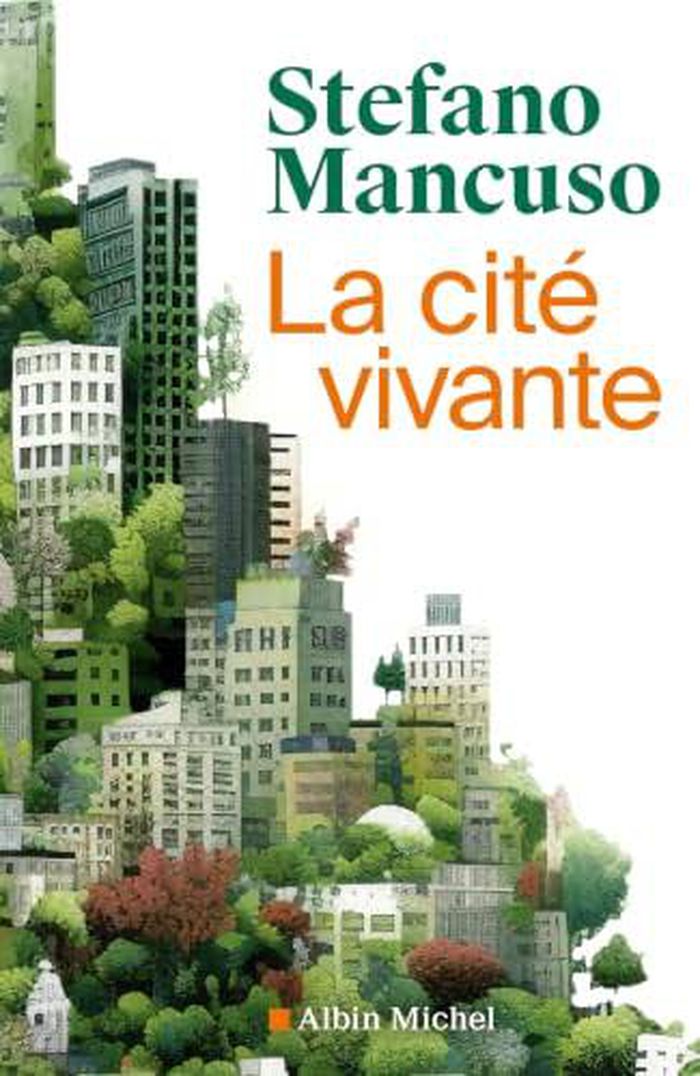
La cité vivante
La cité vivante
Actions:
Prix:
$32.95
(disponible en magasin)
Résumé:
Et si les plantes détenaient les clés des villes de demain ? Dans cet essai aussi visionnaire qu'essentiel, Stefano Mancuso nous invite à repenser profondément nos villes. Pollution, canicules, crises sanitaires : nos métropoles, conçues selon un schéma centralisé et fragile, ne sont pas prêtes à surmonter les défis de notre siècle. S'appuyant sur les découvertes les plus(...)
Titre:
La cité vivante
Actions:
Prix:
$32.95
(disponible en magasin)
Résumé:
Et si les plantes détenaient les clés des villes de demain ? Dans cet essai aussi visionnaire qu'essentiel, Stefano Mancuso nous invite à repenser profondément nos villes. Pollution, canicules, crises sanitaires : nos métropoles, conçues selon un schéma centralisé et fragile, ne sont pas prêtes à surmonter les défis de notre siècle. S'appuyant sur les découvertes les plus récentes en biologie, en écologie et en urbanisme, Stefano Mancuso démontre que les plantes offrent un modèle unique de résilience, de coopération et d'adaptation. A travers des exemples venus du monde entier et des réflexions mêlant sciences, philosophie et architecture, il imagine une "phytopolis" : une ville qui, redevenue un écosystème, est capable de rafraîchir, protéger et régénérer nos milieux de vie.
Classification:
livres
livres
Publication:
octobre 2026
octobre 2026
Sujet:
Théorie de l’urbanisme
Théorie de l’urbanisme
Classification:
livres
livres
Actions:
Prix:
$41.50
(disponible sur commande)
Résumé:
Historian Max Page argues that New York City, at the early part of the 20th century, was dominated by the politics of destruction and rebuilding. He examines the dichotomies inherent in the label "creative destruction", itself an oxymoron of sorts. The book is well illustrated with vintage photographs, drawings, and paintings.
Titre:
The creative destruction of Manhattan 1900-1940
Actions:
Prix:
$41.50
(disponible sur commande)
Résumé:
Historian Max Page argues that New York City, at the early part of the 20th century, was dominated by the politics of destruction and rebuilding. He examines the dichotomies inherent in the label "creative destruction", itself an oxymoron of sorts. The book is well illustrated with vintage photographs, drawings, and paintings.
Classification:
livres
livres
Publication:
novembre 1999, Chicago
novembre 1999, Chicago
Sujet:
Théorie de l’urbanisme
Théorie de l’urbanisme
Classification:
livres
livres
Actions:
Prix:
$33.95
(disponible sur commande)
Résumé:
Picking up where his best-selling City of Bits left off, Mitchell argues that we must extend the definitions of architecture and urban design to encompass virtual places as well as physical ones, and interconnection by means of telecommunication links as well as by pedestrian (...)
Titre:
E-topia : "Urban life, Jim -- but not as we know it"
Actions:
Prix:
$33.95
(disponible sur commande)
Résumé:
Picking up where his best-selling City of Bits left off, Mitchell argues that we must extend the definitions of architecture and urban design to encompass virtual places as well as physical ones, and interconnection by means of telecommunication links as well as by pedestrian circulation and mechanized transportation systems. He proposes strategies for the creation of cities that not only will be sustainable but will make economic, social, and cultural sense in an electronically interconnected and global world. The new settlement patterns of the twenty-first century will be characterized by live/work dwellings, 24-hour pedestrian-scale neighborhoods rich in social relationships, and vigorous local community life, complemented by far-flung configurations of electronic meeting places and decentralized production, marketing, and distribution systems. Neither digiphile nor digiphobe, Mitchell advocates the creation of e-topias--cities that work smarter, not harder.
Classification:
livres
livres
Publication:
octobre 1999, Cambridge
octobre 1999, Cambridge
Sujet:
Théorie de l’urbanisme
Théorie de l’urbanisme
Classification:
livres
livres
Actions:
Prix:
$47.00
(disponible sur commande)
Résumé:
Founders of the Congress for the New Urbanism, Andres Duany and Elizabeth Plater-Zyberk are at the forefront of this movement, and in Suburban Nation they assess sprawl's costs to society, be they ecological, economic, aesthetic, or social. It is a lively, thorough, critical lament, and an entertaining lesson on(...)
Sujet:
Théorie de l’urbanisme
Théorie de l’urbanisme
Publication:
janvier 2000, New York
janvier 2000, New York
Titre:
Suburban nation : the rise of sprawl and the decline of the American dream
Actions:
Prix:
$47.00
(disponible sur commande)
Résumé:
Founders of the Congress for the New Urbanism, Andres Duany and Elizabeth Plater-Zyberk are at the forefront of this movement, and in Suburban Nation they assess sprawl's costs to society, be they ecological, economic, aesthetic, or social. It is a lively, thorough, critical lament, and an entertaining lesson on the distinctions between postwar suburbia-characterized by housing clusters, strip malls, office parks, and parking lots-and the traditional neighborhoods that were built as a matter of course until mid-century. It is an indictment of the entire development community, including governments, for the fact that America no longer builds towns.
Classification:
livres
livres
Publication:
janvier 2000, New York
janvier 2000, New York
Sujet:
Théorie de l’urbanisme
Théorie de l’urbanisme
Classification:
livres
livres
Actions:
Prix:
$26.95
(disponible sur commande)
Résumé:
"The Promise of the City" proposes a new theoretical framework for the study of cities and urban life. Finding the contemporary urban scene too complex to be captured by radical or conventional approaches, Kian Tajbakhsh offers a threefold, interdisciplinary (...)
Titre:
The promise of the city : space, identity, and politics in contemporary social thought
Actions:
Prix:
$26.95
(disponible sur commande)
Résumé:
"The Promise of the City" proposes a new theoretical framework for the study of cities and urban life. Finding the contemporary urban scene too complex to be captured by radical or conventional approaches, Kian Tajbakhsh offers a threefold, interdisciplinary approach linking agency, space, and structure. First, he says, urban identities cannot be understood through individualistic, communitarian, or class perspectives but rather through the shifting spectrum of cultural, political, and economic influences. Second, the layered, unfinished city spaces we inhabit and within which we create meaning are best represented not by the image of bounded physical spaces but rather by overlapping and shifting boundaries. And third, the macro forces shaping urban society include bureaucratic and governmental interventions not captured by a purely economic paradigm. Tajbakhsh examines these dimensions in the work of three major critical urban theorists of recent decades: Manuel Castells, David Harvey, and Ira Katznelson. He shows why the answers offered by Marxian urban theory to the questions of identity, space, and structure are unsatisfactory and why the perspectives of other intellectual traditions such as poststructuralism, feminism, Habermasian Critical Theory, and pragmatism can help us better understand the challenges facing contemporary cities.
Classification:
livres
livres
Publication:
décembre 2000, Los Angeles
décembre 2000, Los Angeles
Sujet:
Théorie de l’urbanisme
Théorie de l’urbanisme
Classification:
livres
livres
Prix:
$64.25
(disponible sur commande)
Résumé:
Le processus planétaire d'urbanisation accélérée sur tous les continents, et en particulier au Sud, s'inscrit dans une globalisation économique et technologique uniformisante dominée par la "pensée unique". Un monde viable et vivable ne peut plus s'accommoder de paysages urbains tels que ceux de l'âge haussmanien, ou ceux de la ville-chantier ou de la(...)
Sujet:
Théorie de l’urbanisme
Théorie de l’urbanisme
Publication:
mars 1999, Namur
mars 1999, Namur
Titre:
Urbanisation et développement pour une planète viable et vivable
Actions:
Prix:
$64.25
(disponible sur commande)
Résumé:
Le processus planétaire d'urbanisation accélérée sur tous les continents, et en particulier au Sud, s'inscrit dans une globalisation économique et technologique uniformisante dominée par la "pensée unique". Un monde viable et vivable ne peut plus s'accommoder de paysages urbains tels que ceux de l'âge haussmanien, ou ceux de la ville-chantier ou de la ville-machine cassée d'un bout à l'autre. Cette publication fait suite au troisième Sommet des gouverneurs et des maires des grandes villes du monde sur "Le développement urbain durable" tenu à Montréal.
Classification:
livres
livres
Publication:
mars 1999, Namur
mars 1999, Namur
Sujet:
Théorie de l’urbanisme
Théorie de l’urbanisme
Classification:
livres
livres
Actions:
Prix:
$32.95
(disponible sur commande)
Résumé:
This book examines how the automobile has ravaged America's cities and landscape over the past 100 years together with a compelling strategy for reversing our automobile dependency. Jane Holtz Kay provides a history of the rapid spread of the automobile and documents the huge subsidies commanded by the highway lobby, to the detriment of once-efficient forms of mass(...)
Sujet:
Théorie de l’urbanisme
Théorie de l’urbanisme
Publication:
novembre 1998, Berkeley, Los Angeles, London
novembre 1998, Berkeley, Los Angeles, London
Titre:
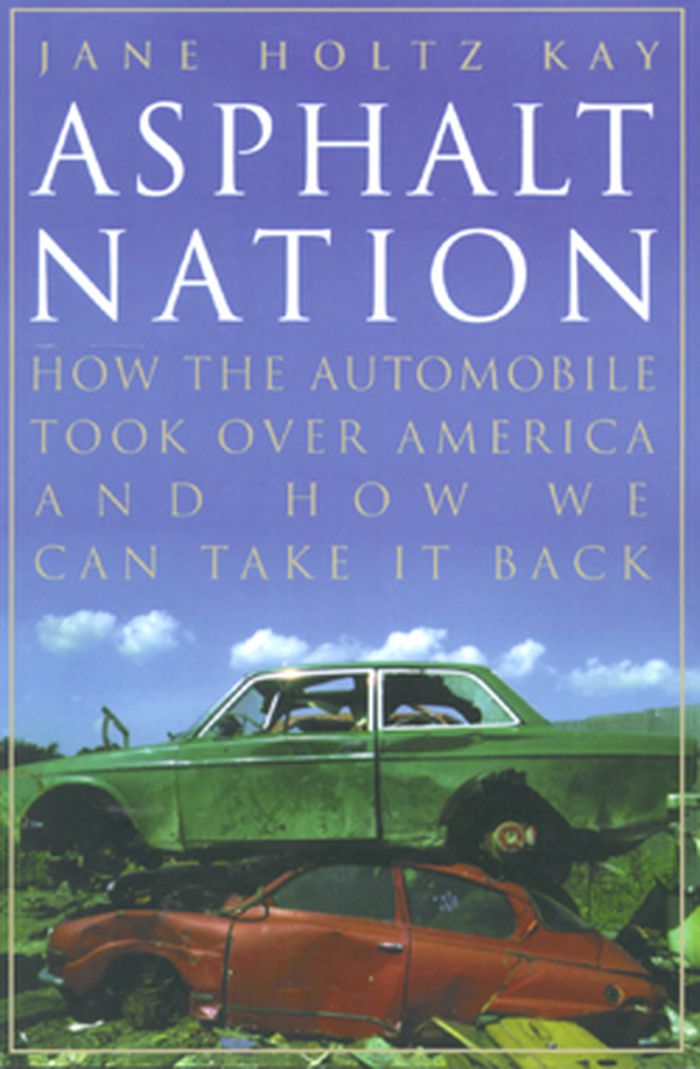
Asphalt nation : how the automobile took over America and how we can take it back
Actions:
Prix:
$32.95
(disponible sur commande)
Résumé:
This book examines how the automobile has ravaged America's cities and landscape over the past 100 years together with a compelling strategy for reversing our automobile dependency. Jane Holtz Kay provides a history of the rapid spread of the automobile and documents the huge subsidies commanded by the highway lobby, to the detriment of once-efficient forms of mass transportation. Demonstrating that there are economic, political, architectural, and personal solutions to the problem, she shows that radical change is entirely possible.
Classification:
livres
livres
Publication:
novembre 1998, Berkeley, Los Angeles, London
novembre 1998, Berkeley, Los Angeles, London
Sujet:
Théorie de l’urbanisme
Théorie de l’urbanisme
Classification:
livres
livres
Actions:
Prix:
$33.50
(disponible sur commande)
Résumé:
À propos de la ville contemporaine, le constat de crise s'impose. Des artistes, des philosophes, des sociologues, des historiens de l'art s'interrogent sur ce qu'est la rue, sur ce qu'elle pourrait être : élément déterminant de sociabilité de la cité, lieu de plaisir esthétique et d'imagination politique, oeuvre d'art polysensorielle. Textes de Marc(...)
Sujet:
Théorie de l’urbanisme
Théorie de l’urbanisme
Publication:
mai 1998, Paris
mai 1998, Paris
Titre:
L'esthétique de la rue : colloque d'Amiens
Actions:
Prix:
$33.50
(disponible sur commande)
Résumé:
À propos de la ville contemporaine, le constat de crise s'impose. Des artistes, des philosophes, des sociologues, des historiens de l'art s'interrogent sur ce qu'est la rue, sur ce qu'elle pourrait être : élément déterminant de sociabilité de la cité, lieu de plaisir esthétique et d'imagination politique, oeuvre d'art polysensorielle. Textes de Marc Angenot, Daniel Buren, Anne Cauquelin, Annie Honnorat et Pierre Sansot, Henri Gaudin et plusieurs autres.
Classification:
livres
livres
Publication:
mai 1998, Paris
mai 1998, Paris
Sujet:
Théorie de l’urbanisme
Théorie de l’urbanisme
Classification:
livres
livres
Titre:
Postmodern urbanism
Postmodern urbanism
Actions:
Prix:
$35.50
(disponible sur commande)
Résumé:
Since the 1960s, many architects and urban planners have reacted against the drab universalism and inhuman scale of modern architecture and urbanism, seeking instead to recover a sense of community and place. It is apparent to these architects and planners, as well as (...)
Titre:
Postmodern urbanism
Actions:
Prix:
$35.50
(disponible sur commande)
Résumé:
Since the 1960s, many architects and urban planners have reacted against the drab universalism and inhuman scale of modern architecture and urbanism, seeking instead to recover a sense of community and place. It is apparent to these architects and planners, as well as segments of the general public, that something needs to be done to improve the physical landscape and the sense of desolation it arouses. Efforts to do so have been grouped under the rubric "postmodern urbanism." While this late- twentieth-century quest for meaning has elicited nostalgia for cities of the past, it has not been accompanied by a desire to relinquish technological innovations that raise the standard of living, or the pursuit of progress and modernity. "Postmodern Urbanism" examines these important and complex issues that directly affect our cities and neighborhoods.
Classification:
livres
livres
Publication:
février 1999, New York
février 1999, New York
Sujet:
Théorie de l’urbanisme
Théorie de l’urbanisme


