


452 Résultats
Classification:
livres
livres

Prix:
$75.00
(disponible sur commande)
Résumé:
Dutchman Jan Dibbets (b. 1941) is one of the principal artists to have introduced photography into the plastic arts. Beginning in 1967, he embarked on a long-range project that, as we advance into the twenty-first century, he seems not to have abandoned: the "pictorializing" of photography. At a time when photography has massively invaded contemporary art institutionsnot(...)
Titre:
Jan Dibbets: the photographic work, revised and updated edition
Actions:
Prix:
$75.00
(disponible sur commande)
Résumé:
Dutchman Jan Dibbets (b. 1941) is one of the principal artists to have introduced photography into the plastic arts. Beginning in 1967, he embarked on a long-range project that, as we advance into the twenty-first century, he seems not to have abandoned: the "pictorializing" of photography. At a time when photography has massively invaded contemporary art institutionsnot without generating confusion and excessit is possible to lose track of how radical Dibbets's approach was.
Classification:
livres
livres
Publication:
janvier 2015
janvier 2015
Sujet:
Théorie de la photographie
Théorie de la photographie
Classification:
livres
livres

Actions:
Prix:
$129.00
(disponible sur commande)
Résumé:
The Thames & Hudson Dictionary of Photography is a landmark publication that encompasses the history, art, and science of photography in a single volume. At a time when information is instantly accessible on the Internet but is often unreliable or uncited, this ambitious project both reasserts the veracity, reliability, and accuracy of scholarly research in reference(...)
Titre:
The Thames & Hudson dictionary of photography
Actions:
Prix:
$129.00
(disponible sur commande)
Résumé:
The Thames & Hudson Dictionary of Photography is a landmark publication that encompasses the history, art, and science of photography in a single volume. At a time when information is instantly accessible on the Internet but is often unreliable or uncited, this ambitious project both reasserts the veracity, reliability, and accuracy of scholarly research in reference publishing and offers an immersive, usable, beautifully designed reading experience.
Classification:
livres
livres
Publication:
novembre 2015
novembre 2015
Sujet:
Théorie de la photographie
Théorie de la photographie
Classification:
livres
livres

Prix:
$30.95
(disponible sur commande)
Résumé:
Through photography, Civil Imagination seeks out relations of partnership, solidarity, and sharing that come into being at the expense of sovereign powers that threaten to destroy them. Azoulay argues that the 'civil' must be distinguished from the 'political' as the interest that citizens have in themselves, in others, in their shared forms of coexistence, as well as in(...)
Titre:
Civil imagination: a political ontology of photograph
Actions:
Prix:
$30.95
(disponible sur commande)
Résumé:
Through photography, Civil Imagination seeks out relations of partnership, solidarity, and sharing that come into being at the expense of sovereign powers that threaten to destroy them. Azoulay argues that the 'civil' must be distinguished from the 'political' as the interest that citizens have in themselves, in others, in their shared forms of coexistence, as well as in the world they create and transform.
Classification:
livres
livres
Publication:
octobre 2015
octobre 2015
Sujet:
Théorie de la photographie
Théorie de la photographie
Classification:
livres
livres
Titre:
When I was a photographer
When I was a photographer
Actions:
Prix:
$32.95
(disponible sur commande)
Résumé:
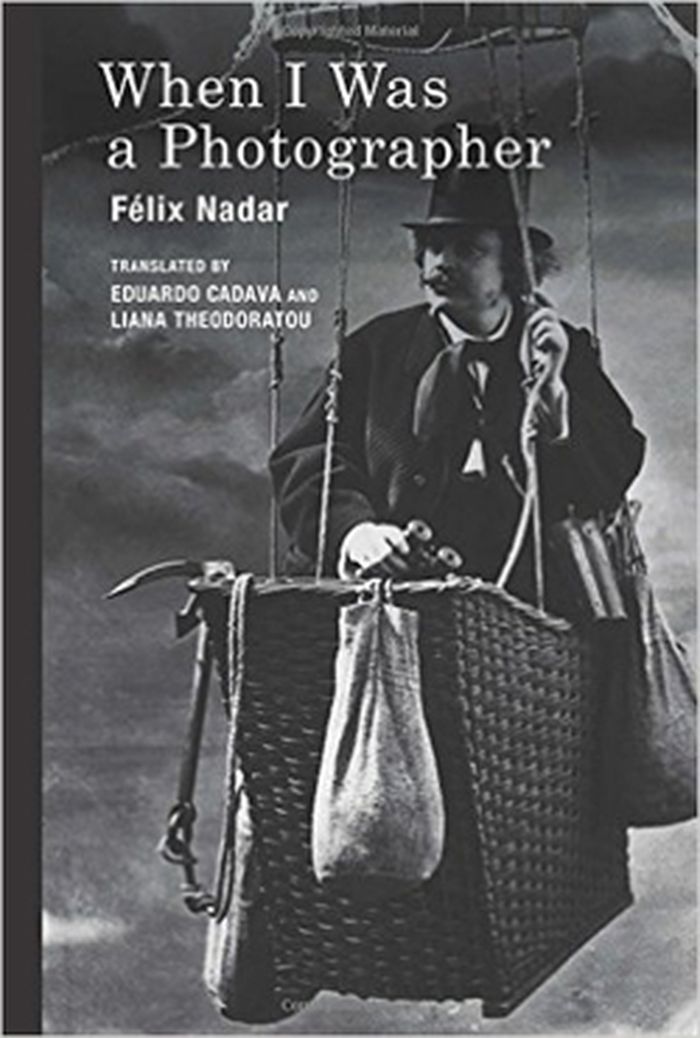
Celebrated nineteenth-century photographer—and writer, actor, caricaturist, inventor, and balloonist—Félix Nadar published this memoir of his photographic life in 1900 at the age of eighty. Composed as a series of vignettes (we might view them as a series of “written photographs”), this intelligent and witty book offers stories of Nadar’s experiences in the early years of(...)
Titre:
When I was a photographer
Actions:
Prix:
$32.95
(disponible sur commande)
Résumé:
Celebrated nineteenth-century photographer—and writer, actor, caricaturist, inventor, and balloonist—Félix Nadar published this memoir of his photographic life in 1900 at the age of eighty. Composed as a series of vignettes (we might view them as a series of “written photographs”), this intelligent and witty book offers stories of Nadar’s experiences in the early years of photography, memorable character sketches, and meditations on history. It is a classic work, cited by writers from Walter Benjamin to Rosalind Krauss. This is its first and only complete English translation. In When I Was a Photographer, Nadar tells us about his descent into the sewers and catacombs of Paris, where he experimented with the use of artificial lighting, and his ascent into the skies over Paris in a hot air balloon, from which he took the first aerial photographs. He recounts his “postal photography” during the 1870-1871 Siege of Paris—an amazing scheme involving micrographic images and carrier pigeons. He describes technical innovations and important figures in photography, and offers a thoughtful consideration of society and culture; but he also writes entertainingly about such matters as Balzac’s terror of being photographed, the impact of a photograph on a celebrated murder case, and the difference between male and female clients. Nadar’s memoir captures, as surely as his photographs, traces of a vanished era.
Classification:
livres
livres
Publication:
août 2015
août 2015
Sujet:
Théorie de la photographie
Théorie de la photographie
Classification:
livres
livres
Actions:
Prix:
$22.00
(disponible sur commande)
Résumé:
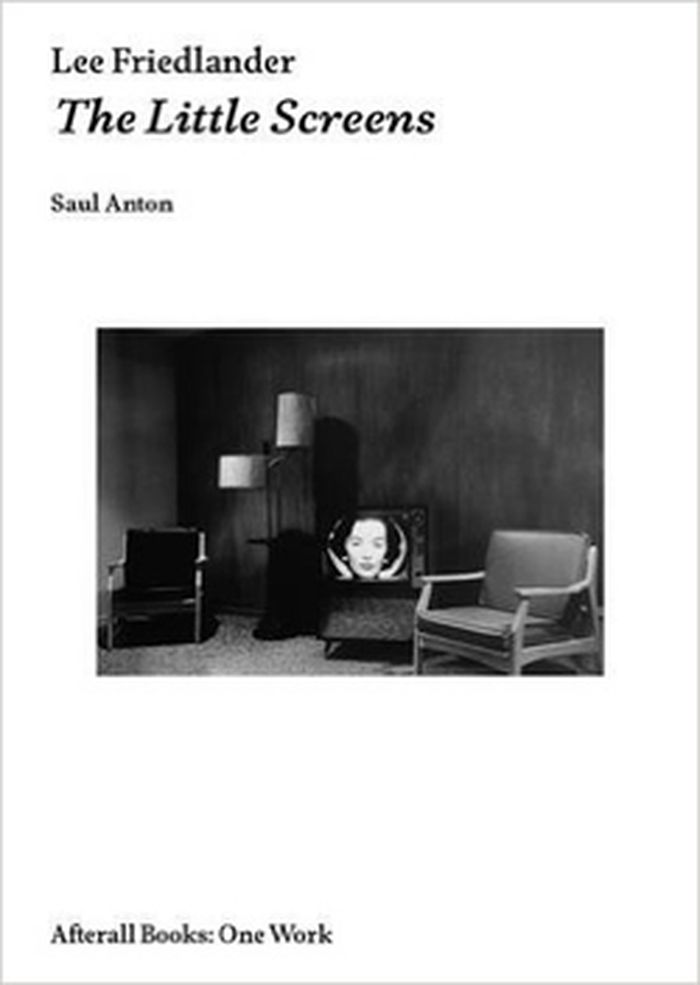
In this book, Saul Anton argues that The Little Screens ‘operate both as a collection and much like a single photographic work conceived as open-ended, potentially infinite’. Marking the historical intersection of modern art and photography at the moment when television came into its own, Friedlander’s images reflect the competing logics of the museum, print and(...)
Titre:
Lee Friedlander : the little screens
Actions:
Prix:
$22.00
(disponible sur commande)
Résumé:
In this book, Saul Anton argues that The Little Screens ‘operate both as a collection and much like a single photographic work conceived as open-ended, potentially infinite’. Marking the historical intersection of modern art and photography at the moment when television came into its own, Friedlander’s images reflect the competing logics of the museum, print and electronic media, and anticipate the issues that have emerged in a world of ubiquitous ‘little screens’.
Classification:
livres
livres
Publication:
août 2015
août 2015
Sujet:
Théorie de la photographie
Théorie de la photographie
Classification:
livres
livres
Titre:
The power of pictures
The power of pictures
Actions:
Prix:
$58.00
(disponible sur commande)
Résumé:
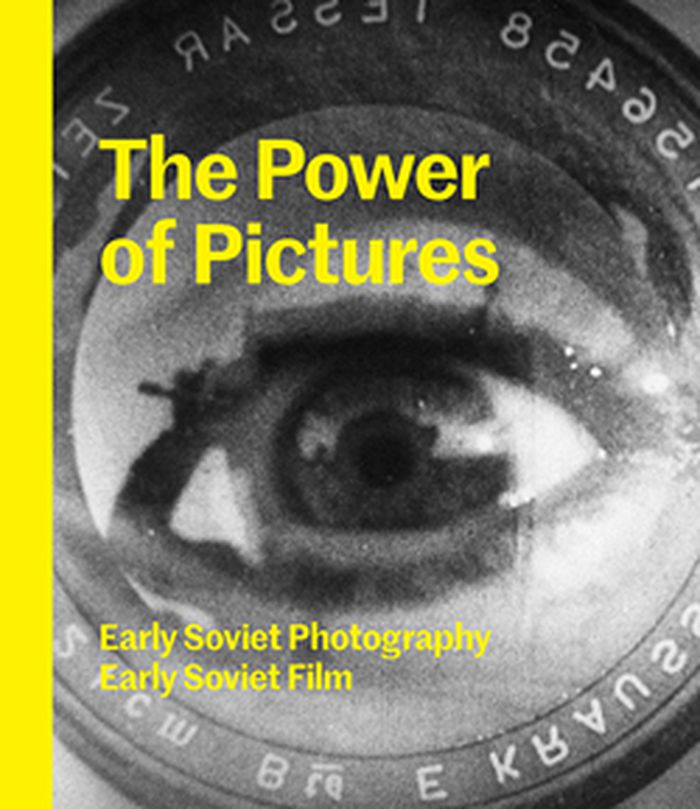
Following the 1917 Russian Revolution, photography, film, and posters played an essential role in the campaign to disseminate modernity and Communist ideology. From early experimental works by Alexander Rodchenko and El Lissitzky to the modernist photojournalism of Arkady Shaikhet and Max Penson, Soviet photographers were not only in the vanguard of style and(...)
Sujet:
Théorie de la photographie
Théorie de la photographie
Publication:
août 2015
août 2015
Titre:
The power of pictures
Actions:
Prix:
$58.00
(disponible sur commande)
Résumé:
Following the 1917 Russian Revolution, photography, film, and posters played an essential role in the campaign to disseminate modernity and Communist ideology. From early experimental works by Alexander Rodchenko and El Lissitzky to the modernist photojournalism of Arkady Shaikhet and Max Penson, Soviet photographers were not only in the vanguard of style and technological innovation but also radical in their integration of art and politics. Filmmakers such as Dziga Vertov, Sergei Eisenstein, and Esfir Shub pioneered cinematic techniques for works intended to mobilize viewers.
Classification:
livres
livres
Publication:
août 2015
août 2015
Sujet:
Théorie de la photographie
Théorie de la photographie
Classification:
livres
livres

Actions:
Prix:
$35.00
(disponible sur commande)
Résumé:
This memoir by American photographer Sally Mann presents a unique interplay of narrative and image. Mann's writing and revealing photographs, craft an original form of personal history, one preoccupied with family, race, mortality, and the storied landscape of the American South.
Titre:
Hold still: a memoir with photographs
Actions:
Prix:
$35.00
(disponible sur commande)
Résumé:
This memoir by American photographer Sally Mann presents a unique interplay of narrative and image. Mann's writing and revealing photographs, craft an original form of personal history, one preoccupied with family, race, mortality, and the storied landscape of the American South.
Classification:
livres
livres
Publication:
juin 2015
juin 2015
Sujet:
Théorie de la photographie
Théorie de la photographie
Classification:
livres
livres
Actions:
Prix:
$50.95
(disponible sur commande)
Résumé:
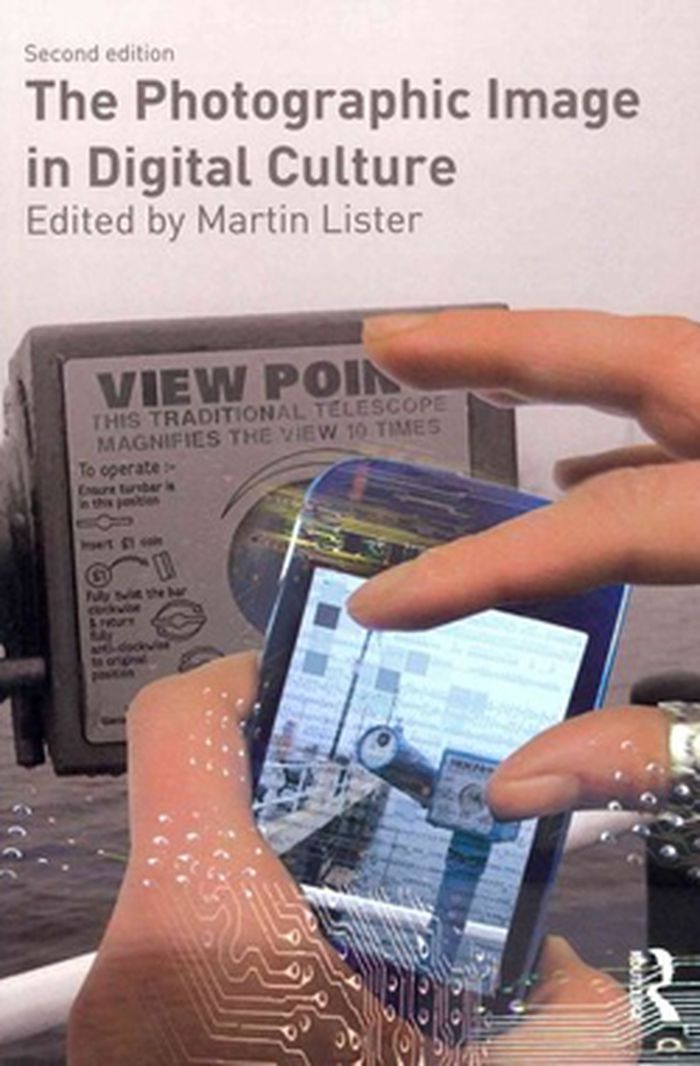
This new edition of The Photographic Image in Digital Culture explores the condition of photography after some 20 years of remediation and transformation by digital technology. Through ten especially commissioned essays, by some of the leading scholars in the field of contemporary photography studies, a range of key topics are discussed including: the meaning of(...)
Titre:
The photographic image in digital culture
Actions:
Prix:
$50.95
(disponible sur commande)
Résumé:
This new edition of The Photographic Image in Digital Culture explores the condition of photography after some 20 years of remediation and transformation by digital technology. Through ten especially commissioned essays, by some of the leading scholars in the field of contemporary photography studies, a range of key topics are discussed including: the meaning of software in the production of photograph; the nature of networked photographs; the screen as the site of photographic display; the simulation of photography in the videogame; photography, ubiquitous computing and technologies of ambient intelligence; developments in vernacular photography and social media; the photograph and the digital archive; the curation and exhibition of the networked photograph; the dominance of the image bank in commercial and advertising photography; the complexities of citizen photojournalism.
Classification:
livres
livres
Publication:
octobre 2013
octobre 2013
Sujet:
Théorie de la photographie
Théorie de la photographie
Classification:
livres
livres

Titre:
The human snapshot
The human snapshot
Actions:
Prix:
$56.95
(disponible sur commande)
Résumé:
The Human Snapshot draws upon a conference of the same name organized by the LUMA Foundation and Center for Curatorial Studies at Bard College. The look toward art and photography stems from theorist Ariella Azoulay’s research on the seminal exhibition “The Family of Man,” first installed at the Museum of Modern Art in New York in 1955, which she frames as a lens through(...)
Titre:
The human snapshot
Actions:
Prix:
$56.95
(disponible sur commande)
Résumé:
The Human Snapshot draws upon a conference of the same name organized by the LUMA Foundation and Center for Curatorial Studies at Bard College. The look toward art and photography stems from theorist Ariella Azoulay’s research on the seminal exhibition “The Family of Man,” first installed at the Museum of Modern Art in New York in 1955, which she frames as a lens through which to view universalism at play. These values have been under conceptual assault in recent years, yet they continue to proliferate—even through the visual arts, where humanism and universalism are customarily dismissed. The Human Snapshot takes these themes and wrestles with their application in the use of photography, the exhibition format, contemporary democracy, human rights discourse, and the power of the image at large.
Classification:
livres
livres
Publication:
août 2013
août 2013
Sujet:
Théorie de la photographie
Théorie de la photographie
Classification:
livres
livres

Prix:
$40.00
(disponible sur commande)
Résumé:
Bien plus qu’un catalogue d’exposition, cet ouvrage de référence abondamment illustré présente les œuvres des vingt-cinq expositions de l’événement, et comprend des essais rédigés par des experts en art contemporain et en technologie. L’appareil photo n’est pas seulement un outil en attente d’être saisi et utilisé, mais aussi un instrument sophistiqué possédant ses(...)
Titre:
Drone : l'image automatisée. Le Mois de la Photo à Montréal 2013
Actions:
Prix:
$40.00
(disponible sur commande)
Résumé:
Bien plus qu’un catalogue d’exposition, cet ouvrage de référence abondamment illustré présente les œuvres des vingt-cinq expositions de l’événement, et comprend des essais rédigés par des experts en art contemporain et en technologie. L’appareil photo n’est pas seulement un outil en attente d’être saisi et utilisé, mais aussi un instrument sophistiqué possédant ses propres lois, son propre fonctionnement, voire sa propre vie. Grâce à l’automatisation de ses mécanismes – et, plus récemment, l’intégration de l’ordinateur –, l’appareil photo est désormais capable d’intention et d’action. Il peut voir ce qui est invisible à l’oeil nu, fonctionner sans relâche, atteindre des endroits inaccessibles ou dangereux, et il peut aussi bien pénétrer le corps que voyager dans l’espace. On a longtemps considéré l’image comme étant l’aspect le plus important du processus photographique. Cependant, les artistes et les auteurs de Drone : l’image automatisée présentent une tout autre conception. Au centre de leurs préoccupations se trouve la relation en pleine mutation entre le corps et l’appareil photo, et la manière dont celui-ci peut opérer avec un minimum d’intervention. Tandis que l’humain s’appuie de plus en plus sur la technologie pour prolonger sa vision, l’appareil photo devient une extension du corps. De la télévision en circuit fermé à Google Street View, des contrôles à distance aux robots, des photomatons aux drones, l’appareil photo est en voie de redéfinir les conditions de l’existence humaine.
Classification:
livres
livres
Publication:
septembre 2013
septembre 2013
Sujet:
Théorie de la photographie
Théorie de la photographie


