


1923 Résultats
Classification:
livres
livres
Prix:
$45.50
(disponible sur commande)
Résumé:
All too often, no one—neither the public, city officials, nor developers—is happy with the course of new development. But growing support for urban design and successful examples of redesigned cities are signs of positive change. In this book, Jonathan Barnett explains how design can reshape suburban growth patterns, revitalize older cities, and retrofit metropolitan(...)
$45.50
(disponible sur commande)
Résumé:
All too often, no one—neither the public, city officials, nor developers—is happy with the course of new development. But growing support for urban design and successful examples of redesigned cities are signs of positive change. In this book, Jonathan Barnett explains how design can reshape suburban growth patterns, revitalize older cities, and retrofit metropolitan(...)
Titre:
Redesigning cities: principles, practice, implementation
Actions:
Prix:
$45.50
(disponible sur commande)
Résumé:
All too often, no one—neither the public, city officials, nor developers—is happy with the course of new development. But growing support for urban design and successful examples of redesigned cities are signs of positive change. In this book, Jonathan Barnett explains how design can reshape suburban growth patterns, revitalize older cities, and retrofit metropolitan areas where earlier development went wrong. He describes, in detail, specific techniques, materials, and technologies that should be known (but often aren't) by planners, public officials, and citizens—and, in the process, makes a valuable contribution to the development initiatives of the future.
Redesigning cities: principles, practice, implementation
Actions:
Prix:
$45.50
(disponible sur commande)
Résumé:
All too often, no one—neither the public, city officials, nor developers—is happy with the course of new development. But growing support for urban design and successful examples of redesigned cities are signs of positive change. In this book, Jonathan Barnett explains how design can reshape suburban growth patterns, revitalize older cities, and retrofit metropolitan areas where earlier development went wrong. He describes, in detail, specific techniques, materials, and technologies that should be known (but often aren't) by planners, public officials, and citizens—and, in the process, makes a valuable contribution to the development initiatives of the future.
Classification:
livres
livres
Publication:
octobre 2008
octobre 2008
Sujet:
Théorie de l’urbanisme
Théorie de l’urbanisme
Classification:
livres
livres
Prix:
$24.95
(disponible sur commande)
Résumé:
In New York for Sale, Tom Angotti tells some of the stories of community planning in New York City: how activists moved beyond simple protests and began to formulate community plans to protect neighborhoods against urban renewal, real estate mega-projects, gentrification, and environmental hazards. Angotti, both observer of and longtime participant in New York community(...)
$24.95
(disponible sur commande)
Résumé:
In New York for Sale, Tom Angotti tells some of the stories of community planning in New York City: how activists moved beyond simple protests and began to formulate community plans to protect neighborhoods against urban renewal, real estate mega-projects, gentrification, and environmental hazards. Angotti, both observer of and longtime participant in New York community(...)
Titre:
New York for sale: community planning confronts global real estate
Actions:
Prix:
$24.95
(disponible sur commande)
Résumé:
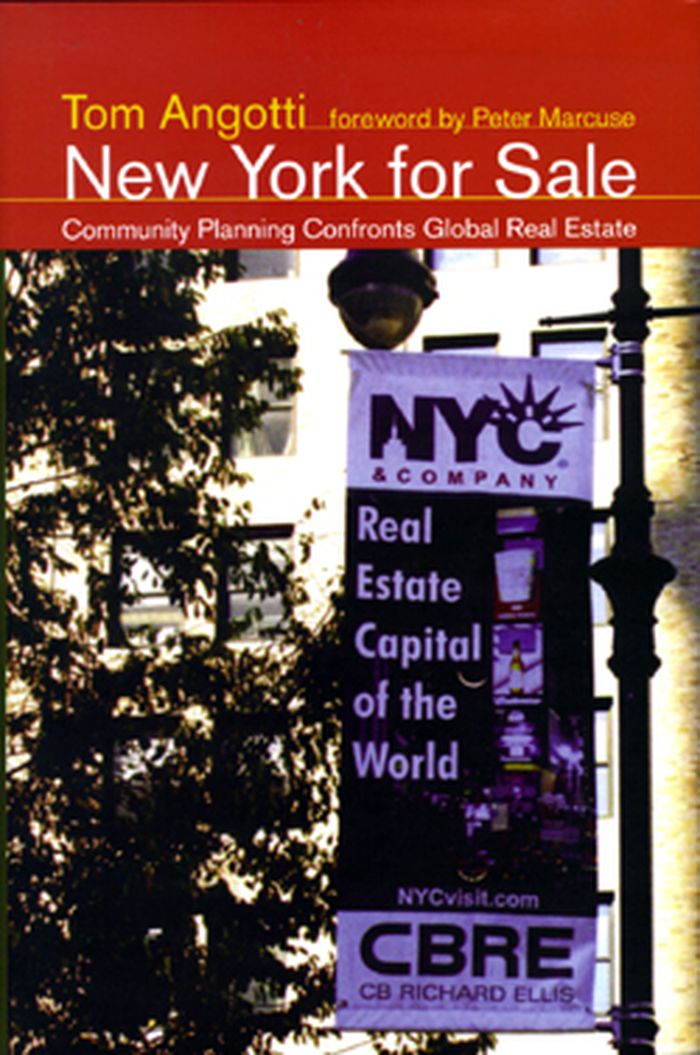
In New York for Sale, Tom Angotti tells some of the stories of community planning in New York City: how activists moved beyond simple protests and began to formulate community plans to protect neighborhoods against urban renewal, real estate mega-projects, gentrification, and environmental hazards. Angotti, both observer of and longtime participant in New York community planning, focuses on the close relationships among community planning, political strategy, and control over land. After describing the political economy of New York City real estate, its close ties to global financial capital, and the roots of community planning in social movements and community organizing, Angotti turns to specifics. He tells of two pioneering plans forged in reaction to urban renewal plans (including the first community plan in the city, the 1961 Cooper Square Alternate Plan—a response to a Robert Moses urban renewal scheme); struggles for environmental justice, including battles over incinerators, sludge, and garbage; plans officially adopted by the city; and plans dominated by powerful real estate interests. Finally, Angotti proposes strategies for progressive, inclusive community planning not only for New York City but for anywhere that neighborhoods want to protect themselves and their land. New York for Sale teaches the empowering lesson that community plans can challenge market-driven development even in global cities with powerful real estate industries.
New York for sale: community planning confronts global real estate
Actions:
Prix:
$24.95
(disponible sur commande)
Résumé:
In New York for Sale, Tom Angotti tells some of the stories of community planning in New York City: how activists moved beyond simple protests and began to formulate community plans to protect neighborhoods against urban renewal, real estate mega-projects, gentrification, and environmental hazards. Angotti, both observer of and longtime participant in New York community planning, focuses on the close relationships among community planning, political strategy, and control over land. After describing the political economy of New York City real estate, its close ties to global financial capital, and the roots of community planning in social movements and community organizing, Angotti turns to specifics. He tells of two pioneering plans forged in reaction to urban renewal plans (including the first community plan in the city, the 1961 Cooper Square Alternate Plan—a response to a Robert Moses urban renewal scheme); struggles for environmental justice, including battles over incinerators, sludge, and garbage; plans officially adopted by the city; and plans dominated by powerful real estate interests. Finally, Angotti proposes strategies for progressive, inclusive community planning not only for New York City but for anywhere that neighborhoods want to protect themselves and their land. New York for Sale teaches the empowering lesson that community plans can challenge market-driven development even in global cities with powerful real estate industries.
Classification:
livres
livres
Publication:
novembre 2008, Cambridge, London
novembre 2008, Cambridge, London
Sujet:
Théorie de l’urbanisme
Théorie de l’urbanisme
Classification:
livres
livres
Actions:
Prix:
$17.95
(disponible sur commande)
Résumé:
This ambitious book describes the many ways in which invention affects the environment (here defined broadly to include all forms of interaction between humans and nature). The book starts with nature itself and then leads readers to examine the built environment and then specific technologies in areas such as public health and energy. Each part focuses on a single(...)
$17.95
(disponible sur commande)
Résumé:
This ambitious book describes the many ways in which invention affects the environment (here defined broadly to include all forms of interaction between humans and nature). The book starts with nature itself and then leads readers to examine the built environment and then specific technologies in areas such as public health and energy. Each part focuses on a single(...)
Sujet:
Théorie de l’urbanisme
Théorie de l’urbanisme
Publication:
septembre 2008, Cambridge, London, Washinton
septembre 2008, Cambridge, London, Washinton
Titre:
Inventing for the environment
Actions:
Prix:
$17.95
(disponible sur commande)
Résumé:
This ambitious book describes the many ways in which invention affects the environment (here defined broadly to include all forms of interaction between humans and nature). The book starts with nature itself and then leads readers to examine the built environment and then specific technologies in areas such as public health and energy. Each part focuses on a single environmental issue. Topics range widely, from the role of innovation in urban landscapes to the relationship among technological innovation, public health, and the environment. Each part features an essay by a historian, an essay by a practitioner, and a "portrait of innovation" describing an individual whose work has made a difference. The mixture of historians and practitioners is critical because statements about the environment inevitably measure present and future conditions against those of the past. Early in the industrial revolution, smoke stacks were symbols of prosperity; at its end they were regarded as signs of pollution. Historical examples can also lead to the rediscovery of an old technology, as in the revival of straw bale construction. As it explores the history of invention for the environment, the book suggests many new ways to put the past to use for the common good.
Inventing for the environment
Actions:
Prix:
$17.95
(disponible sur commande)
Résumé:
This ambitious book describes the many ways in which invention affects the environment (here defined broadly to include all forms of interaction between humans and nature). The book starts with nature itself and then leads readers to examine the built environment and then specific technologies in areas such as public health and energy. Each part focuses on a single environmental issue. Topics range widely, from the role of innovation in urban landscapes to the relationship among technological innovation, public health, and the environment. Each part features an essay by a historian, an essay by a practitioner, and a "portrait of innovation" describing an individual whose work has made a difference. The mixture of historians and practitioners is critical because statements about the environment inevitably measure present and future conditions against those of the past. Early in the industrial revolution, smoke stacks were symbols of prosperity; at its end they were regarded as signs of pollution. Historical examples can also lead to the rediscovery of an old technology, as in the revival of straw bale construction. As it explores the history of invention for the environment, the book suggests many new ways to put the past to use for the common good.
Classification:
livres
livres
Publication:
septembre 2008, Cambridge, London, Washinton
septembre 2008, Cambridge, London, Washinton
Sujet:
Théorie de l’urbanisme
Théorie de l’urbanisme
Classification:
livres
livres

Actions:
Prix:
$22.95
(disponible sur commande)
Résumé:
Berlin, mémoire pendant les travaux pourrait avoir la forme d'un guide imaginaire de Berlin pour ceux qui voudraient s'y perdre. Il raconte l'errance méticuleuse d'une femme dans quelques rues de la ville au cours de l'été 2003..A sa mémoire incertaine d'événements rêvés ou vécus, se mêle la mémoire de la ville, bouleversée par les transformations continues des tracés de(...)
$22.95
(disponible sur commande)
Résumé:
Berlin, mémoire pendant les travaux pourrait avoir la forme d'un guide imaginaire de Berlin pour ceux qui voudraient s'y perdre. Il raconte l'errance méticuleuse d'une femme dans quelques rues de la ville au cours de l'été 2003..A sa mémoire incertaine d'événements rêvés ou vécus, se mêle la mémoire de la ville, bouleversée par les transformations continues des tracés de(...)
Titre:
Berlin, mémoire pendant les travaux
Actions:
Prix:
$22.95
(disponible sur commande)
Résumé:
Berlin, mémoire pendant les travaux pourrait avoir la forme d'un guide imaginaire de Berlin pour ceux qui voudraient s'y perdre. Il raconte l'errance méticuleuse d'une femme dans quelques rues de la ville au cours de l'été 2003..A sa mémoire incertaine d'événements rêvés ou vécus, se mêle la mémoire de la ville, bouleversée par les transformations continues des tracés de rues et des bâtiments depuis la chute du Mur en 1989, et dont la mosaïque des sols garde l'empreinte. Aux images de ce Berlin-là viennent se superposer des visions du Berlin de Moses Mendelssohn, à partir des traces infimes ou reconstituées de cette époque, ou du Berlin des années brunes, dont témoignent, dans la ville, les pavés de cuivre jaune portant les noms des déportés, plantés dans le sol devant leurs anciennes demeures. Hélène Bezençon est née en 1960 à Lausanne. Elle a notamment publié : Les Confessions d'une mangeuse de lune (Vents d'Ouest, 1995), qui a obtenu le prix Canada-Suisse, et : Arrête de rêver, l'Etrangère (L'Age d'Homme, 2000), une pièce de théâtre consacrée à Annemarie Schwarzenbach. Elle vit et travaille à Berlin depuis 1993.
Berlin, mémoire pendant les travaux
Actions:
Prix:
$22.95
(disponible sur commande)
Résumé:
Berlin, mémoire pendant les travaux pourrait avoir la forme d'un guide imaginaire de Berlin pour ceux qui voudraient s'y perdre. Il raconte l'errance méticuleuse d'une femme dans quelques rues de la ville au cours de l'été 2003..A sa mémoire incertaine d'événements rêvés ou vécus, se mêle la mémoire de la ville, bouleversée par les transformations continues des tracés de rues et des bâtiments depuis la chute du Mur en 1989, et dont la mosaïque des sols garde l'empreinte. Aux images de ce Berlin-là viennent se superposer des visions du Berlin de Moses Mendelssohn, à partir des traces infimes ou reconstituées de cette époque, ou du Berlin des années brunes, dont témoignent, dans la ville, les pavés de cuivre jaune portant les noms des déportés, plantés dans le sol devant leurs anciennes demeures. Hélène Bezençon est née en 1960 à Lausanne. Elle a notamment publié : Les Confessions d'une mangeuse de lune (Vents d'Ouest, 1995), qui a obtenu le prix Canada-Suisse, et : Arrête de rêver, l'Etrangère (L'Age d'Homme, 2000), une pièce de théâtre consacrée à Annemarie Schwarzenbach. Elle vit et travaille à Berlin depuis 1993.
Classification:
livres
livres
Publication:
janvier 1900, Paris, Tel Aviv
janvier 1900, Paris, Tel Aviv
Sujet:
Théorie de l’urbanisme
Théorie de l’urbanisme
Classification:
livres
livres
Prix:
$54.95
(disponible sur commande)
Résumé:
This international and illustrated work challenges current writings focussing on the problems of urban public space to present a more nuanced and dialectical conception of urban life. Detailed and extensive international urban case studies show how urban open spaces are used for play, which is defined and discussed using Caillois' four-part definition – competition,(...)
$54.95
(disponible sur commande)
Résumé:
This international and illustrated work challenges current writings focussing on the problems of urban public space to present a more nuanced and dialectical conception of urban life. Detailed and extensive international urban case studies show how urban open spaces are used for play, which is defined and discussed using Caillois' four-part definition – competition,(...)
Titre:
The ludic city: exploring the potential of public spaces
Actions:
Prix:
$54.95
(disponible sur commande)
Résumé:
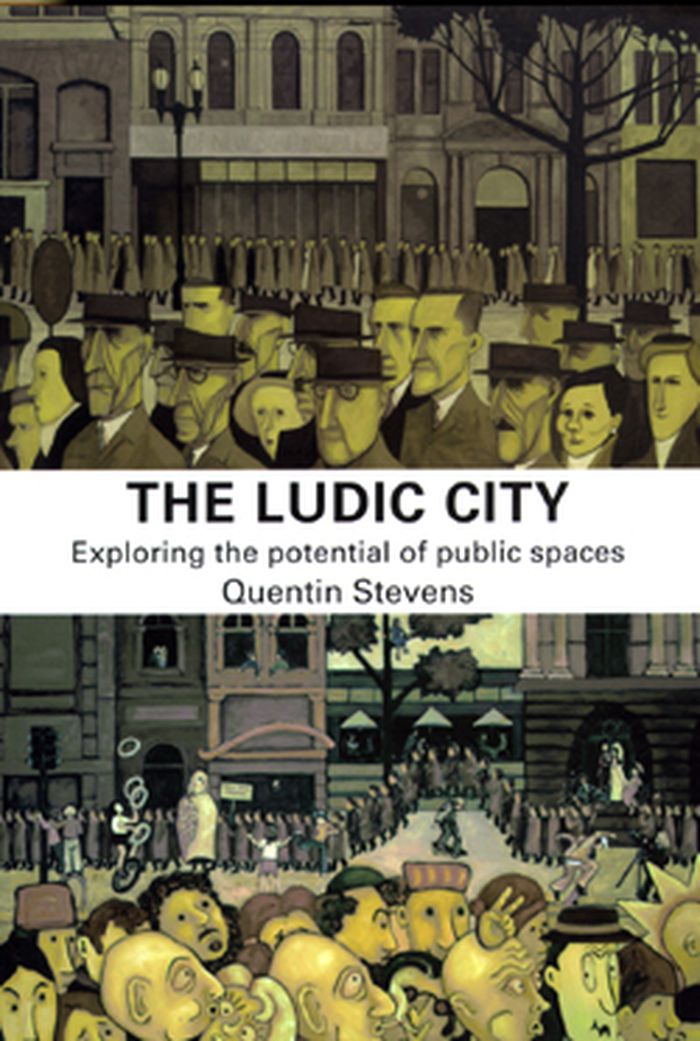
This international and illustrated work challenges current writings focussing on the problems of urban public space to present a more nuanced and dialectical conception of urban life. Detailed and extensive international urban case studies show how urban open spaces are used for play, which is defined and discussed using Caillois' four-part definition – competition, chance, simulation and vertigo. Stevens explores and analyses these case studies according to locations where play has been observed: paths, intersections, thresholds, boundaries and props. Applicable to a wide-range of countries and city forms, The Ludic City is a fascinating and stimulating read for all who are involved or interested in the design of urban spaces.
The ludic city: exploring the potential of public spaces
Actions:
Prix:
$54.95
(disponible sur commande)
Résumé:
This international and illustrated work challenges current writings focussing on the problems of urban public space to present a more nuanced and dialectical conception of urban life. Detailed and extensive international urban case studies show how urban open spaces are used for play, which is defined and discussed using Caillois' four-part definition – competition, chance, simulation and vertigo. Stevens explores and analyses these case studies according to locations where play has been observed: paths, intersections, thresholds, boundaries and props. Applicable to a wide-range of countries and city forms, The Ludic City is a fascinating and stimulating read for all who are involved or interested in the design of urban spaces.
Classification:
livres
livres
Publication:
avril 2007, New York
avril 2007, New York
Sujet:
Théorie de l’urbanisme
Théorie de l’urbanisme
Classification:
livres
livres
Titre:
Relearning from Las Vegas
Relearning from Las Vegas
Actions:
Prix:
$28.95
(disponible en magasin)
Résumé:
Immediately on its publication in 1972, "Learning from Las Vegas", by Robert Venturi, Denise Scott Brown, and Steven Izenour, was hailed as a transformative work in the history and theory of architecture, liberating those in architecture who were trying to find a way out of the straitjacket of architectural orthodoxies. Resonating far beyond the professional and(...)
$28.95
(disponible en magasin)
Résumé:
Immediately on its publication in 1972, "Learning from Las Vegas", by Robert Venturi, Denise Scott Brown, and Steven Izenour, was hailed as a transformative work in the history and theory of architecture, liberating those in architecture who were trying to find a way out of the straitjacket of architectural orthodoxies. Resonating far beyond the professional and(...)
Sujet:
Théorie de l’urbanisme
Théorie de l’urbanisme
Publication:
janvier 2009, Minneapolis
janvier 2009, Minneapolis
Titre:
Relearning from Las Vegas
Actions:
Prix:
$28.95
(disponible en magasin)
Résumé:
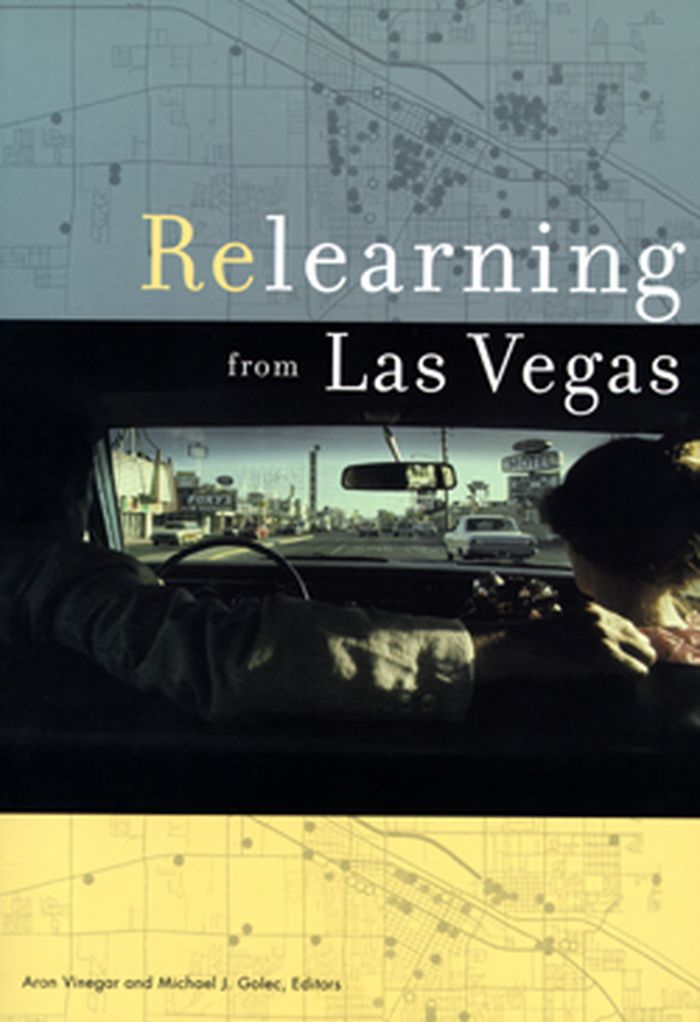
Immediately on its publication in 1972, "Learning from Las Vegas", by Robert Venturi, Denise Scott Brown, and Steven Izenour, was hailed as a transformative work in the history and theory of architecture, liberating those in architecture who were trying to find a way out of the straitjacket of architectural orthodoxies. Resonating far beyond the professional and institutional boundaries of the field, the book contributed to a thorough rethinking of modernism and was subsequently taken up as an early manifestation and progenitor of postmodernism.
Relearning from Las Vegas
Actions:
Prix:
$28.95
(disponible en magasin)
Résumé:
Immediately on its publication in 1972, "Learning from Las Vegas", by Robert Venturi, Denise Scott Brown, and Steven Izenour, was hailed as a transformative work in the history and theory of architecture, liberating those in architecture who were trying to find a way out of the straitjacket of architectural orthodoxies. Resonating far beyond the professional and institutional boundaries of the field, the book contributed to a thorough rethinking of modernism and was subsequently taken up as an early manifestation and progenitor of postmodernism.
Classification:
livres
livres
Publication:
janvier 2009, Minneapolis
janvier 2009, Minneapolis
Sujet:
Théorie de l’urbanisme
Théorie de l’urbanisme
Classification:
livres
livres
Titre:
Theme park
Theme park
Actions:
Prix:
$41.95
(disponible sur commande)
Résumé:
This book takes the primitive amusements of pleasure gardens as its starting point and launches from there into a rich, in-depth investigation of the evolution of the theme park over the twentieth century. Lukas examines theme parks in countries around the world – including the United States, UK, Europe, Japan, China, South Africa and Australia – and how themed fairs and(...)
$41.95
(disponible sur commande)
Résumé:
This book takes the primitive amusements of pleasure gardens as its starting point and launches from there into a rich, in-depth investigation of the evolution of the theme park over the twentieth century. Lukas examines theme parks in countries around the world – including the United States, UK, Europe, Japan, China, South Africa and Australia – and how themed fairs and(...)
Titre:
Theme park
Actions:
Prix:
$41.95
(disponible sur commande)
Résumé:
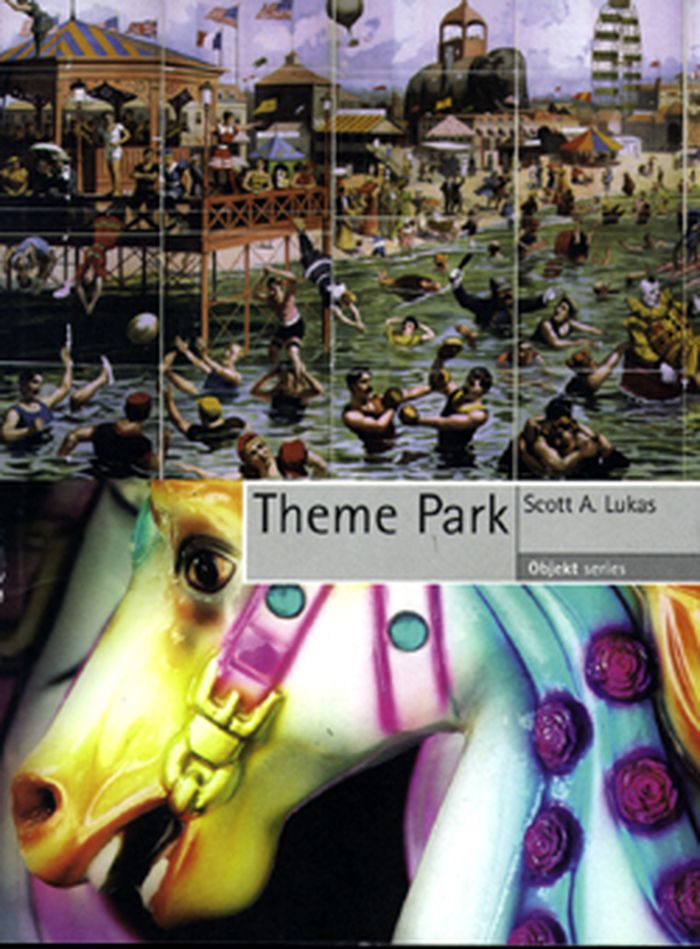
This book takes the primitive amusements of pleasure gardens as its starting point and launches from there into a rich, in-depth investigation of the evolution of the theme park over the twentieth century. Lukas examines theme parks in countries around the world – including the United States, UK, Europe, Japan, China, South Africa and Australia – and how themed fairs and parks developed through diverse means and in a variety of settings. The book examines world-famous and lesser-known parks, including the early parks of Coney Island, a series of World Fairs and their luxurious exhibition halls, Six Flags parks and virtual theme parks today, and, of course, Disneyland and Walt Disney World. Lukas analyses the theme park as a living entity that unexpectedly shapes people, their relationships and the world around them.
Theme park
Actions:
Prix:
$41.95
(disponible sur commande)
Résumé:
This book takes the primitive amusements of pleasure gardens as its starting point and launches from there into a rich, in-depth investigation of the evolution of the theme park over the twentieth century. Lukas examines theme parks in countries around the world – including the United States, UK, Europe, Japan, China, South Africa and Australia – and how themed fairs and parks developed through diverse means and in a variety of settings. The book examines world-famous and lesser-known parks, including the early parks of Coney Island, a series of World Fairs and their luxurious exhibition halls, Six Flags parks and virtual theme parks today, and, of course, Disneyland and Walt Disney World. Lukas analyses the theme park as a living entity that unexpectedly shapes people, their relationships and the world around them.
Classification:
livres
livres
Publication:
novembre 2008, London
novembre 2008, London
Sujet:
Théorie de l’urbanisme
Théorie de l’urbanisme
Classification:
livres
livres
Actions:
Prix:
$34.50
(disponible sur commande)
Résumé:
From the destruction of Sodom to the selling of Gay Street and from Tales of the City to The L Word, urban life and homosexuality have been made inseparable in Western culture. In this sweeping work, Julie Abraham investigates the evolution of this symbiotic relationship over the past two centuries, tracing how homosexuals have simultaneously become model citizens of the(...)
$34.50
(disponible sur commande)
Résumé:
From the destruction of Sodom to the selling of Gay Street and from Tales of the City to The L Word, urban life and homosexuality have been made inseparable in Western culture. In this sweeping work, Julie Abraham investigates the evolution of this symbiotic relationship over the past two centuries, tracing how homosexuals have simultaneously become model citizens of the(...)
Titre:
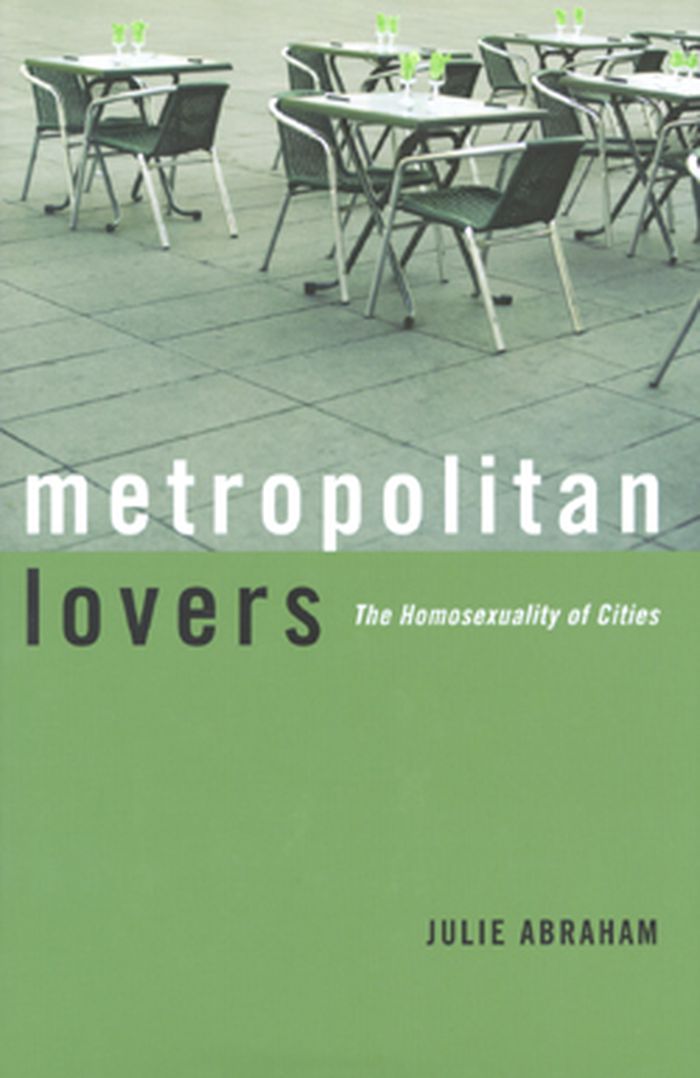
Metropolitan lovers: the homosexuality of cities
Actions:
Prix:
$34.50
(disponible sur commande)
Résumé:
From the destruction of Sodom to the selling of Gay Street and from Tales of the City to The L Word, urban life and homosexuality have been made inseparable in Western culture. In this sweeping work, Julie Abraham investigates the evolution of this symbiotic relationship over the past two centuries, tracing how homosexuals have simultaneously become model citizens of the modern city and avatars of the urban.
Metropolitan lovers: the homosexuality of cities
Actions:
Prix:
$34.50
(disponible sur commande)
Résumé:
From the destruction of Sodom to the selling of Gay Street and from Tales of the City to The L Word, urban life and homosexuality have been made inseparable in Western culture. In this sweeping work, Julie Abraham investigates the evolution of this symbiotic relationship over the past two centuries, tracing how homosexuals have simultaneously become model citizens of the modern city and avatars of the urban.
Classification:
livres
livres
Publication:
décembre 2008, Minneapolis, London
décembre 2008, Minneapolis, London
Sujet:
Théorie de l’urbanisme
Théorie de l’urbanisme
Classification:
livres
livres
Titre:
Names on the Land
Names on the Land
Actions:
Prix:
$21.95
(disponible sur commande)
Résumé:
George R. Stewarts classic study of place-naming in the United States was written during World War II as a tribute to the varied heritage of the nations peoples. More than half a century later, Names on the Land remains the authoritative source on its subject, while Stewarts intimate knowledge of America and love of anecdote make his book a unique and delightful window on(...)
$21.95
(disponible sur commande)
Résumé:
George R. Stewarts classic study of place-naming in the United States was written during World War II as a tribute to the varied heritage of the nations peoples. More than half a century later, Names on the Land remains the authoritative source on its subject, while Stewarts intimate knowledge of America and love of anecdote make his book a unique and delightful window on(...)
Titre:
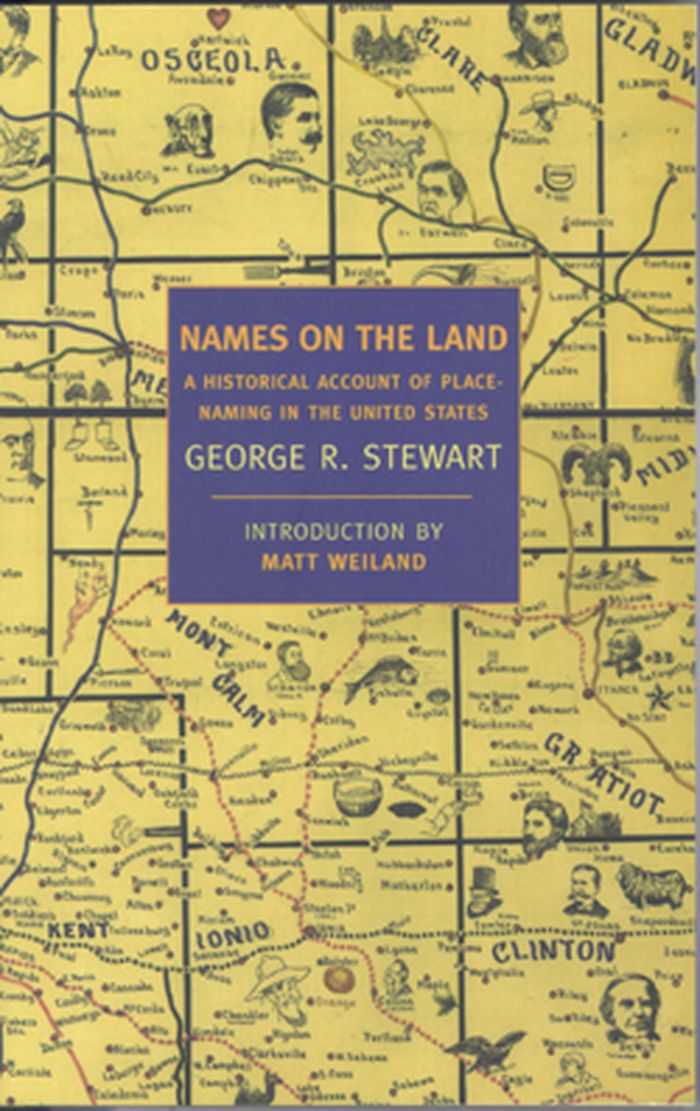
Names on the Land
Actions:
Prix:
$21.95
(disponible sur commande)
Résumé:
George R. Stewarts classic study of place-naming in the United States was written during World War II as a tribute to the varied heritage of the nations peoples. More than half a century later, Names on the Land remains the authoritative source on its subject, while Stewarts intimate knowledge of America and love of anecdote make his book a unique and delightful window on American history and social life.
Names on the Land
Actions:
Prix:
$21.95
(disponible sur commande)
Résumé:
George R. Stewarts classic study of place-naming in the United States was written during World War II as a tribute to the varied heritage of the nations peoples. More than half a century later, Names on the Land remains the authoritative source on its subject, while Stewarts intimate knowledge of America and love of anecdote make his book a unique and delightful window on American history and social life.
Classification:
livres
livres
Publication:
juillet 2008, New York
juillet 2008, New York
Sujet:
Théorie de l’urbanisme
Théorie de l’urbanisme
Classification:
livres
livres

Titre:
Parallel strokes
Parallel strokes
Actions:
Prix:
$26.50
(disponible sur commande)
Résumé:
Parallel strokes is a collection of interviews with 19 contemporary typeface designers, graffiti writers, and lettering artists around the world (Akira Kobayashi, Barry McGee, Daim and Seak, Ed Fella, among others). The book is introduced with a comprehensive essay charting the history of graffiti, its relation to type design, and how the two practices relate in the wider(...)
$26.50
(disponible sur commande)
Résumé:
Parallel strokes is a collection of interviews with 19 contemporary typeface designers, graffiti writers, and lettering artists around the world (Akira Kobayashi, Barry McGee, Daim and Seak, Ed Fella, among others). The book is introduced with a comprehensive essay charting the history of graffiti, its relation to type design, and how the two practices relate in the wider(...)
Titre:
Parallel strokes
Actions:
Prix:
$26.50
(disponible sur commande)
Résumé:
Parallel strokes is a collection of interviews with 19 contemporary typeface designers, graffiti writers, and lettering artists around the world (Akira Kobayashi, Barry McGee, Daim and Seak, Ed Fella, among others). The book is introduced with a comprehensive essay charting the history of graffiti, its relation to type design, and how the two practices relate in the wider context of lettering.
Parallel strokes
Actions:
Prix:
$26.50
(disponible sur commande)
Résumé:
Parallel strokes is a collection of interviews with 19 contemporary typeface designers, graffiti writers, and lettering artists around the world (Akira Kobayashi, Barry McGee, Daim and Seak, Ed Fella, among others). The book is introduced with a comprehensive essay charting the history of graffiti, its relation to type design, and how the two practices relate in the wider context of lettering.
Classification:
livres
livres
Publication:
juin 2008, Tokyo
juin 2008, Tokyo


