


64 Résultats
Classification:
livres
livres
Actions:
Prix:
$34.99
(disponible sur commande)
Résumé:
Originally published in 1974, this book is a critical work of Indigenous political activism that has long been out of print. George Manuel, a leader in the North American Indian movement at that time, with coauthor journalist Michael Posluns, presents a rich historical document that traces the struggle for Indigenous survival as a nation, a culture, and a reality. The(...)
$34.99
(disponible sur commande)
Résumé:
Originally published in 1974, this book is a critical work of Indigenous political activism that has long been out of print. George Manuel, a leader in the North American Indian movement at that time, with coauthor journalist Michael Posluns, presents a rich historical document that traces the struggle for Indigenous survival as a nation, a culture, and a reality. The(...)
Titre:
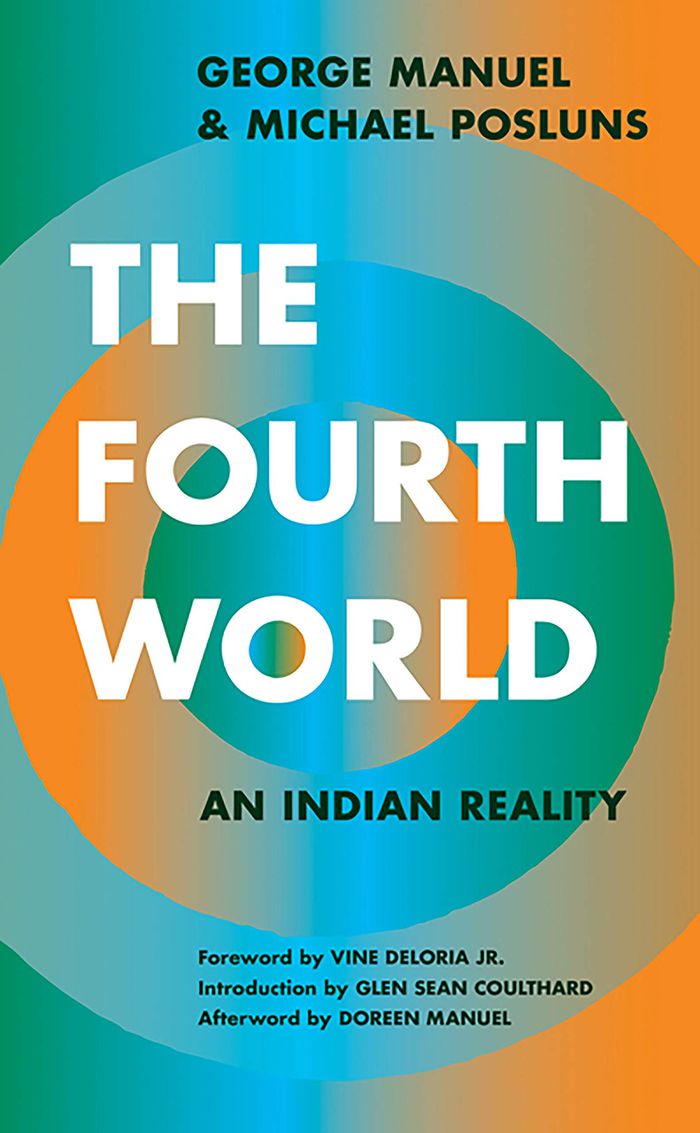
The Fourth World: An Indian reality
Actions:
Prix:
$34.99
(disponible sur commande)
Résumé:
Originally published in 1974, this book is a critical work of Indigenous political activism that has long been out of print. George Manuel, a leader in the North American Indian movement at that time, with coauthor journalist Michael Posluns, presents a rich historical document that traces the struggle for Indigenous survival as a nation, a culture, and a reality. The authors shed light on alternatives for coexistence that would take place in the Fourth World—an alternative to the new world, the old world, and the Third World. Manuel was the first to develop this concept of the “fourth world” to describe the place occupied by Indigenous nations within colonial nation-states. Accompanied by a new introduction and afterword, this book is as poignant and provocative today as it was when first published.
The Fourth World: An Indian reality
Actions:
Prix:
$34.99
(disponible sur commande)
Résumé:
Originally published in 1974, this book is a critical work of Indigenous political activism that has long been out of print. George Manuel, a leader in the North American Indian movement at that time, with coauthor journalist Michael Posluns, presents a rich historical document that traces the struggle for Indigenous survival as a nation, a culture, and a reality. The authors shed light on alternatives for coexistence that would take place in the Fourth World—an alternative to the new world, the old world, and the Third World. Manuel was the first to develop this concept of the “fourth world” to describe the place occupied by Indigenous nations within colonial nation-states. Accompanied by a new introduction and afterword, this book is as poignant and provocative today as it was when first published.
Classification:
livres
livres
Publication:
février 2019
février 2019
Classification:
livres
livres
Prix:
$34.95
(disponible sur commande)
Résumé:
This anthology by members of the Mohawk Warrior Society uncovers a hidden history and paints a bold portrait of the spectacular experience of Kanien'kehá:ka survival and self-defense. Providing extensive documentation, context, and analysis, the book features foundational writings by prolific visual artist and polemicist Louis Karoniaktajeh Hall (1918–1993)—such as his(...)
$34.95
(disponible sur commande)
Résumé:
This anthology by members of the Mohawk Warrior Society uncovers a hidden history and paints a bold portrait of the spectacular experience of Kanien'kehá:ka survival and self-defense. Providing extensive documentation, context, and analysis, the book features foundational writings by prolific visual artist and polemicist Louis Karoniaktajeh Hall (1918–1993)—such as his(...)
Titre:
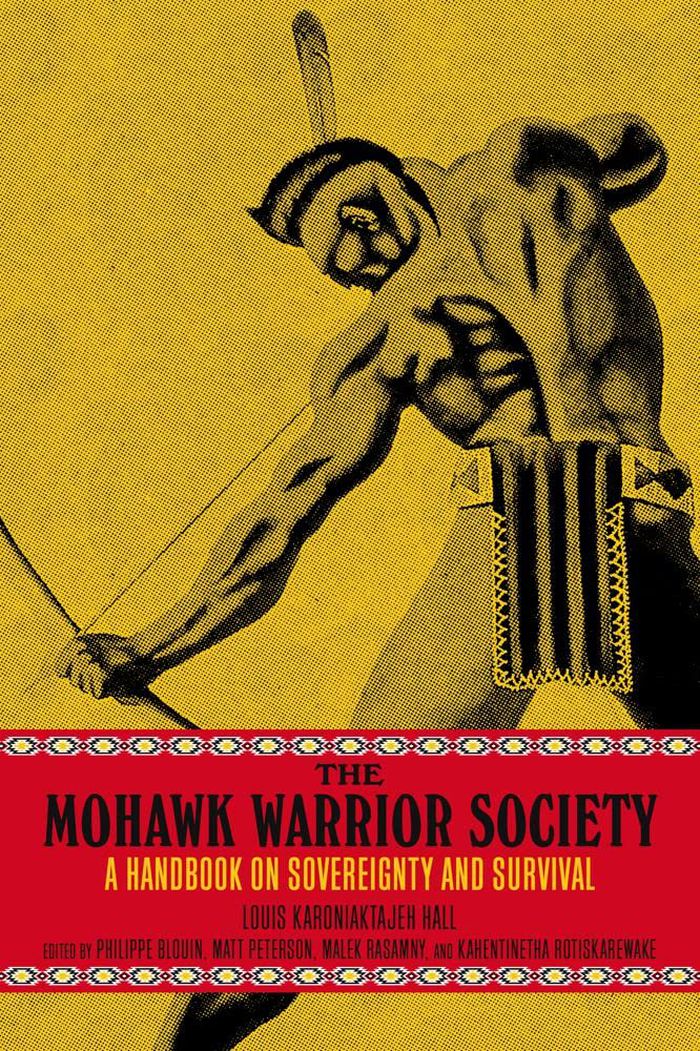
The Mohawk Warrior Society: auto-history of the Rotisken'rhakéhte
Actions:
Prix:
$34.95
(disponible sur commande)
Résumé:
This anthology by members of the Mohawk Warrior Society uncovers a hidden history and paints a bold portrait of the spectacular experience of Kanien'kehá:ka survival and self-defense. Providing extensive documentation, context, and analysis, the book features foundational writings by prolific visual artist and polemicist Louis Karoniaktajeh Hall (1918–1993)—such as his landmark 1979 pamphlet, The Warrior’s Handbook, as well as selections of his pioneering artwork. This book contains new oral history by key figures of the Rotisken'rhakéhte's revival in the 1970s, and tells the story of the Warriors’ famous flag, their armed occupation of Ganienkeh in 1974, and the role of their constitution, the Great Peace, in guiding their commitment to freedom and independence. We hear directly the story of how the Kanien'kehá:ka Longhouse became one the most militant resistance groups in North America, gaining international attention with the Oka Crisis of 1990. This auto-history of the Rotisken'rhakéhte is complemented by a Mohawk history timeline from colonization to the present, a glossary of Mohawk political philosophy, and a new map of Iroquoia in Mohawk language. At last, the Mohawk Warriors can tell their own story with their own voices, and to serve as an example and inspiration for future generations struggling against the environmental, cultural, and social devastation cast upon the modern world.
The Mohawk Warrior Society: auto-history of the Rotisken'rhakéhte
Actions:
Prix:
$34.95
(disponible sur commande)
Résumé:
This anthology by members of the Mohawk Warrior Society uncovers a hidden history and paints a bold portrait of the spectacular experience of Kanien'kehá:ka survival and self-defense. Providing extensive documentation, context, and analysis, the book features foundational writings by prolific visual artist and polemicist Louis Karoniaktajeh Hall (1918–1993)—such as his landmark 1979 pamphlet, The Warrior’s Handbook, as well as selections of his pioneering artwork. This book contains new oral history by key figures of the Rotisken'rhakéhte's revival in the 1970s, and tells the story of the Warriors’ famous flag, their armed occupation of Ganienkeh in 1974, and the role of their constitution, the Great Peace, in guiding their commitment to freedom and independence. We hear directly the story of how the Kanien'kehá:ka Longhouse became one the most militant resistance groups in North America, gaining international attention with the Oka Crisis of 1990. This auto-history of the Rotisken'rhakéhte is complemented by a Mohawk history timeline from colonization to the present, a glossary of Mohawk political philosophy, and a new map of Iroquoia in Mohawk language. At last, the Mohawk Warriors can tell their own story with their own voices, and to serve as an example and inspiration for future generations struggling against the environmental, cultural, and social devastation cast upon the modern world.
Classification:
livres
livres
Publication:
janvier 2023
janvier 2023
Classification:
livres
livres
Actions:
Prix:
$30.00
(disponible en magasin)
Résumé:
Les changements climatiques menacent la survie culturelle de nos peuples. Suivant le parcours personnel et militant de l’auteure, « Le droit au froid » analyse les liens entre la sauvegarde de l’Arctique, la survie de la culture inuit – et ultimement du monde – et la dégradation environnementale passée, présente et future. Sheila Watt-Cloutier soutient avec passion que(...)
$30.00
(disponible en magasin)
Résumé:
Les changements climatiques menacent la survie culturelle de nos peuples. Suivant le parcours personnel et militant de l’auteure, « Le droit au froid » analyse les liens entre la sauvegarde de l’Arctique, la survie de la culture inuit – et ultimement du monde – et la dégradation environnementale passée, présente et future. Sheila Watt-Cloutier soutient avec passion que(...)
Titre:
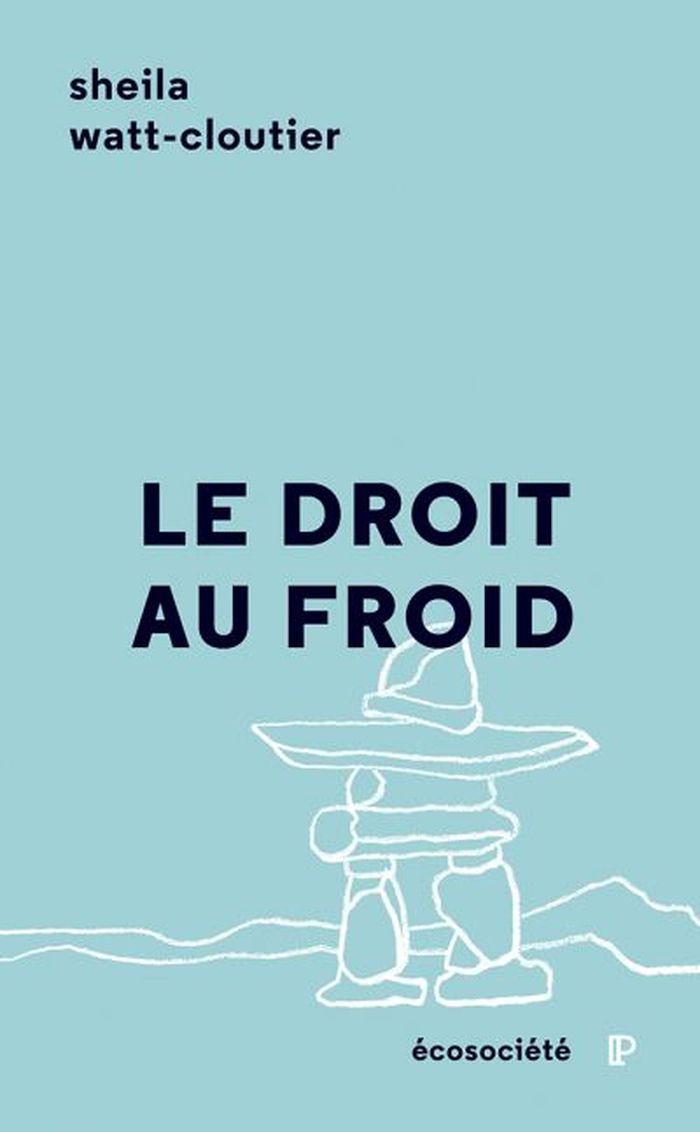
Le droit au froid : combat d'une femme pour protéger sa culture, l'Arctique et la planète
Actions:
Prix:
$30.00
(disponible en magasin)
Résumé:
Les changements climatiques menacent la survie culturelle de nos peuples. Suivant le parcours personnel et militant de l’auteure, « Le droit au froid » analyse les liens entre la sauvegarde de l’Arctique, la survie de la culture inuit – et ultimement du monde – et la dégradation environnementale passée, présente et future. Sheila Watt-Cloutier soutient avec passion que les changements climatiques sont non seulement un enjeu de justice climatique, mais aussi de droits humains qui touche l’ensemble du globe. Car la culture et l’autonomie économique des Inuit, tout comme la faune de l’Arctique, sont tributaires du froid, de la glace et du pergélisol. Les graves perturbations de la température et des événements météorologiques causent la dégradation d’un mode de vie et signifient la négation de leurs droits sociaux, culturels et sanitaires. D’où ce « droit au froid », qui est au cœur de son plaidoyer.
Le droit au froid : combat d'une femme pour protéger sa culture, l'Arctique et la planète
Actions:
Prix:
$30.00
(disponible en magasin)
Résumé:
Les changements climatiques menacent la survie culturelle de nos peuples. Suivant le parcours personnel et militant de l’auteure, « Le droit au froid » analyse les liens entre la sauvegarde de l’Arctique, la survie de la culture inuit – et ultimement du monde – et la dégradation environnementale passée, présente et future. Sheila Watt-Cloutier soutient avec passion que les changements climatiques sont non seulement un enjeu de justice climatique, mais aussi de droits humains qui touche l’ensemble du globe. Car la culture et l’autonomie économique des Inuit, tout comme la faune de l’Arctique, sont tributaires du froid, de la glace et du pergélisol. Les graves perturbations de la température et des événements météorologiques causent la dégradation d’un mode de vie et signifient la négation de leurs droits sociaux, culturels et sanitaires. D’où ce « droit au froid », qui est au cœur de son plaidoyer.
Classification:
livres
livres
Publication:
janvier 2019
janvier 2019
Sujet:
Autochtone
Autochtone
Classification:
livres
livres

Titre:
An indigenous present
An indigenous present
Actions:
Prix:
$108.50
(disponible sur commande)
Résumé:
This volume is a gathering of Native North American contemporary artists, musicians, filmmakers, choreographers, architects, writers, photographers, designers and more. Conceived by Jeffrey Gibson, a renowned artist of Mississippi Choctaw and Cherokee descent, ''An Indigenous present'' presents an increasingly visible and expanding field of Indigenous creative(...)
$108.50
(disponible sur commande)
Résumé:
This volume is a gathering of Native North American contemporary artists, musicians, filmmakers, choreographers, architects, writers, photographers, designers and more. Conceived by Jeffrey Gibson, a renowned artist of Mississippi Choctaw and Cherokee descent, ''An Indigenous present'' presents an increasingly visible and expanding field of Indigenous creative(...)
Publication:
septembre 2023
septembre 2023
Titre:
An indigenous present
Actions:
Prix:
$108.50
(disponible sur commande)
Résumé:
This volume is a gathering of Native North American contemporary artists, musicians, filmmakers, choreographers, architects, writers, photographers, designers and more. Conceived by Jeffrey Gibson, a renowned artist of Mississippi Choctaw and Cherokee descent, ''An Indigenous present'' presents an increasingly visible and expanding field of Indigenous creative practice. It centers individual practices, while acknowledging shared histories, to create a visual experience that foregrounds diverse approaches to concept, form and medium as well as connection, influence, conversation and collaboration. ''An Indigenous present'' foregrounds transculturalism over affiliation and contemporaneity over outmoded categories.
An indigenous present
Actions:
Prix:
$108.50
(disponible sur commande)
Résumé:
This volume is a gathering of Native North American contemporary artists, musicians, filmmakers, choreographers, architects, writers, photographers, designers and more. Conceived by Jeffrey Gibson, a renowned artist of Mississippi Choctaw and Cherokee descent, ''An Indigenous present'' presents an increasingly visible and expanding field of Indigenous creative practice. It centers individual practices, while acknowledging shared histories, to create a visual experience that foregrounds diverse approaches to concept, form and medium as well as connection, influence, conversation and collaboration. ''An Indigenous present'' foregrounds transculturalism over affiliation and contemporaneity over outmoded categories.
Classification:
livres
livres
Publication:
septembre 2023
septembre 2023
Classification:
livres
livres
Actions:
Prix:
$34.95
(disponible en magasin)
Résumé:
Illuminating the First Nations struggles against the Canadian state, ''It’s all about the land'' exposes how racism underpins and shapes Indigenous-settler relationships. Renowned Kahnawà:ke Mohawk activist and scholar Taiaiake Alfred explains how the Canadian government’s reconciliation agenda is a new form of colonization that is guaranteed to fail. Bringing together(...)
$34.95
(disponible en magasin)
Résumé:
Illuminating the First Nations struggles against the Canadian state, ''It’s all about the land'' exposes how racism underpins and shapes Indigenous-settler relationships. Renowned Kahnawà:ke Mohawk activist and scholar Taiaiake Alfred explains how the Canadian government’s reconciliation agenda is a new form of colonization that is guaranteed to fail. Bringing together(...)
Titre:
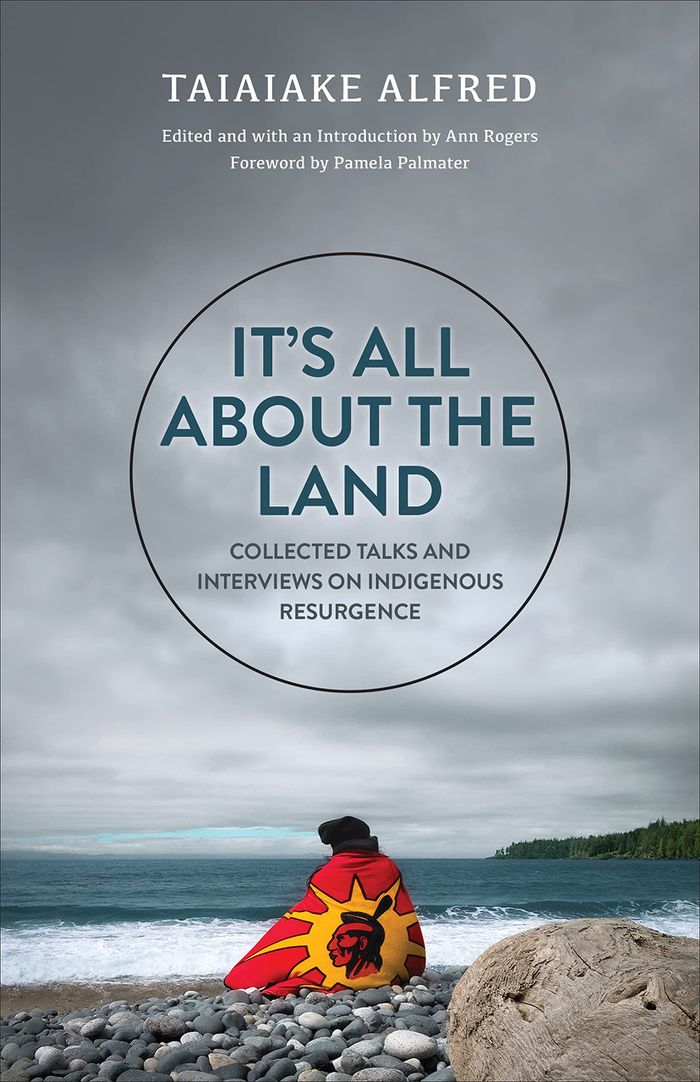
It's all about the land: Collected talks and interviews on Indigenous resurgence
Actions:
Prix:
$34.95
(disponible en magasin)
Résumé:
Illuminating the First Nations struggles against the Canadian state, ''It’s all about the land'' exposes how racism underpins and shapes Indigenous-settler relationships. Renowned Kahnawà:ke Mohawk activist and scholar Taiaiake Alfred explains how the Canadian government’s reconciliation agenda is a new form of colonization that is guaranteed to fail. Bringing together Alfred’s speeches and interviews from over the past two decades, the book shows that Indigenous peoples across the world face a stark choice: reconnect with their authentic cultures and values or continue following a slow road to annihilation. Rooted in ancestral spirit, knowledge, and law, ''It’s all about the land'' presents a passionate argument for Indigenous Resurgence as the pathway toward justice for Indigenous peoples.
It's all about the land: Collected talks and interviews on Indigenous resurgence
Actions:
Prix:
$34.95
(disponible en magasin)
Résumé:
Illuminating the First Nations struggles against the Canadian state, ''It’s all about the land'' exposes how racism underpins and shapes Indigenous-settler relationships. Renowned Kahnawà:ke Mohawk activist and scholar Taiaiake Alfred explains how the Canadian government’s reconciliation agenda is a new form of colonization that is guaranteed to fail. Bringing together Alfred’s speeches and interviews from over the past two decades, the book shows that Indigenous peoples across the world face a stark choice: reconnect with their authentic cultures and values or continue following a slow road to annihilation. Rooted in ancestral spirit, knowledge, and law, ''It’s all about the land'' presents a passionate argument for Indigenous Resurgence as the pathway toward justice for Indigenous peoples.
Classification:
livres
livres
Publication:
septembre 2023
septembre 2023
Sujet:
Autochtone
Autochtone
Classification:
livres
livres
Actions:
Prix:
$35.95
(disponible sur commande)
Résumé:
In 2016, a small protest encampment at the Standing Rock reservation in North Dakota, initially established to block construction of the Dakota Access oil pipeline, grew to be the largest Indigenous protest movement in the twenty-first century, attracting tens of thousands of Indigenous and non-Native allies from around the world. Its slogan ''Mni Wiconi''—Water is(...)
$35.95
(disponible sur commande)
Résumé:
In 2016, a small protest encampment at the Standing Rock reservation in North Dakota, initially established to block construction of the Dakota Access oil pipeline, grew to be the largest Indigenous protest movement in the twenty-first century, attracting tens of thousands of Indigenous and non-Native allies from around the world. Its slogan ''Mni Wiconi''—Water is(...)
Titre:
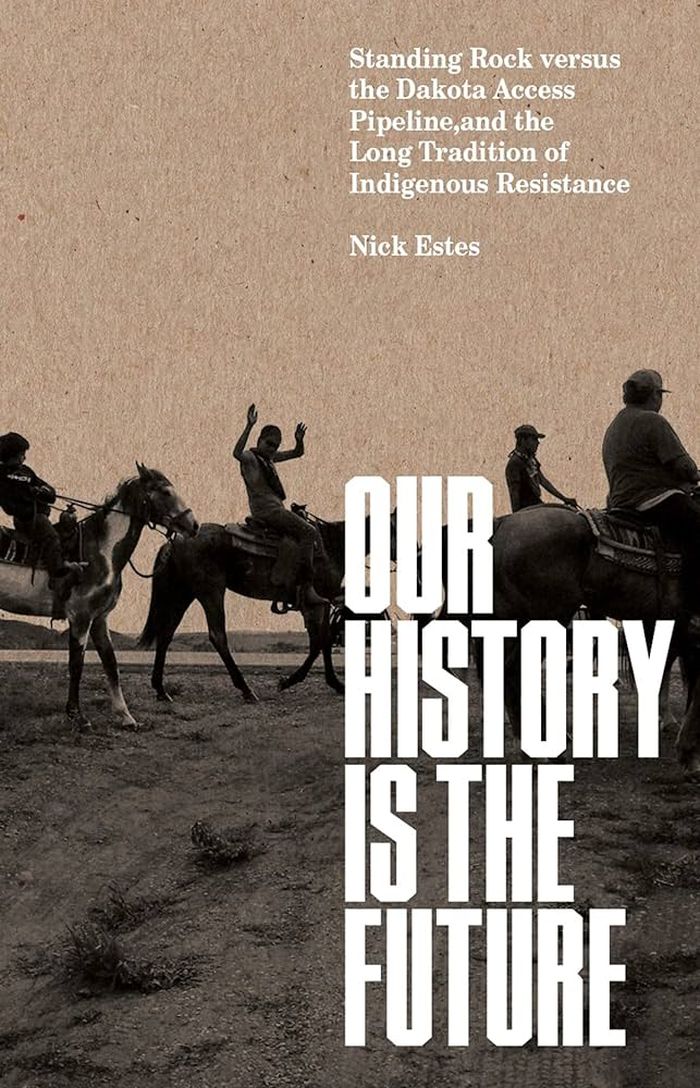
Our history is the future: Standing Rock versus the Dakota Access Pipeline, and the long tradition of indigenous resistance
Actions:
Prix:
$35.95
(disponible sur commande)
Résumé:
In 2016, a small protest encampment at the Standing Rock reservation in North Dakota, initially established to block construction of the Dakota Access oil pipeline, grew to be the largest Indigenous protest movement in the twenty-first century, attracting tens of thousands of Indigenous and non-Native allies from around the world. Its slogan ''Mni Wiconi''—Water is Life—was about more than just a pipeline. Water Protectors knew this battle for Native sovereignty had already been fought many times before, and that, even after the encampment was gone, their anti-colonial struggle would continue. In ''Our history is the future'', Nick Estes traces traditions of Indigenous resistance leading to the #NoDAPL movement from the days of the Missouri River trading forts through the Indian Wars, the Pick-Sloan dams, the American Indian Movement, and the campaign for Indigenous rights at the United Nations. While a historian by trade, Estes also draws on observations from the encampments and from growing up as a citizen of the Oceti Sakowin (the Nation of the Seven Council Fires), making Our History is the Future at once a work of history, a personal story, and a manifesto.
Our history is the future: Standing Rock versus the Dakota Access Pipeline, and the long tradition of indigenous resistance
Actions:
Prix:
$35.95
(disponible sur commande)
Résumé:
In 2016, a small protest encampment at the Standing Rock reservation in North Dakota, initially established to block construction of the Dakota Access oil pipeline, grew to be the largest Indigenous protest movement in the twenty-first century, attracting tens of thousands of Indigenous and non-Native allies from around the world. Its slogan ''Mni Wiconi''—Water is Life—was about more than just a pipeline. Water Protectors knew this battle for Native sovereignty had already been fought many times before, and that, even after the encampment was gone, their anti-colonial struggle would continue. In ''Our history is the future'', Nick Estes traces traditions of Indigenous resistance leading to the #NoDAPL movement from the days of the Missouri River trading forts through the Indian Wars, the Pick-Sloan dams, the American Indian Movement, and the campaign for Indigenous rights at the United Nations. While a historian by trade, Estes also draws on observations from the encampments and from growing up as a citizen of the Oceti Sakowin (the Nation of the Seven Council Fires), making Our History is the Future at once a work of history, a personal story, and a manifesto.
Classification:
livres
livres
Publication:
octobre 2023
octobre 2023
Sujet:
Autochtone
Autochtone
Classification:
livres
livres

Actions:
Prix:
$31.99
(disponible sur commande)
Résumé:
More than a hundred years have passed since the Sámi were forcibly displaced from their homes in northern Norway and Sweden, a hundred years since Elin Anna Labba’s ancestors and relations drove their reindeer over the strait to the mainland for the last time. The place where they lived has remained empty ever since. "We carry our homes in our hearts," Labba shares,(...)
$31.99
(disponible sur commande)
Résumé:
More than a hundred years have passed since the Sámi were forcibly displaced from their homes in northern Norway and Sweden, a hundred years since Elin Anna Labba’s ancestors and relations drove their reindeer over the strait to the mainland for the last time. The place where they lived has remained empty ever since. "We carry our homes in our hearts," Labba shares,(...)
Titre:
The rocks will echo our sorrow: The forced displacement of the northern Sami
Actions:
Prix:
$31.99
(disponible sur commande)
Résumé:
More than a hundred years have passed since the Sámi were forcibly displaced from their homes in northern Norway and Sweden, a hundred years since Elin Anna Labba’s ancestors and relations drove their reindeer over the strait to the mainland for the last time. The place where they lived has remained empty ever since. "We carry our homes in our hearts," Labba shares, citing the Sámi poet Áillohaš. How do you bear that weight if you were forced to leave? In a remarkable blend of historical reportage, memoir, and lyrical reimagining, Labba travels to the lost homeland of her ancestors to tell of the forced removal of the Sámi in the early twentieth century and to reclaim a place in history, and in today’s world, for these Indigenous people of northern Scandinavia.
The rocks will echo our sorrow: The forced displacement of the northern Sami
Actions:
Prix:
$31.99
(disponible sur commande)
Résumé:
More than a hundred years have passed since the Sámi were forcibly displaced from their homes in northern Norway and Sweden, a hundred years since Elin Anna Labba’s ancestors and relations drove their reindeer over the strait to the mainland for the last time. The place where they lived has remained empty ever since. "We carry our homes in our hearts," Labba shares, citing the Sámi poet Áillohaš. How do you bear that weight if you were forced to leave? In a remarkable blend of historical reportage, memoir, and lyrical reimagining, Labba travels to the lost homeland of her ancestors to tell of the forced removal of the Sámi in the early twentieth century and to reclaim a place in history, and in today’s world, for these Indigenous people of northern Scandinavia.
Classification:
livres
livres
Publication:
avril 2024
avril 2024
Sujet:
Autochtone
Autochtone
Classification:
livres
livres
Prix:
$34.95
(disponible en magasin)
Résumé:
What is the relationship between economic progress in the land now called Canada and the exploitation of Indigenous peoples? And what gifts embedded within Indigenous world views speak to miyo-pimâtisiwin, the good life, and specifically to good economic relations? ''Upholding indigenous economic relationships'' draws on the knowledge systems of the nehiyawak (Plains(...)
$34.95
(disponible en magasin)
Résumé:
What is the relationship between economic progress in the land now called Canada and the exploitation of Indigenous peoples? And what gifts embedded within Indigenous world views speak to miyo-pimâtisiwin, the good life, and specifically to good economic relations? ''Upholding indigenous economic relationships'' draws on the knowledge systems of the nehiyawak (Plains(...)
Titre:
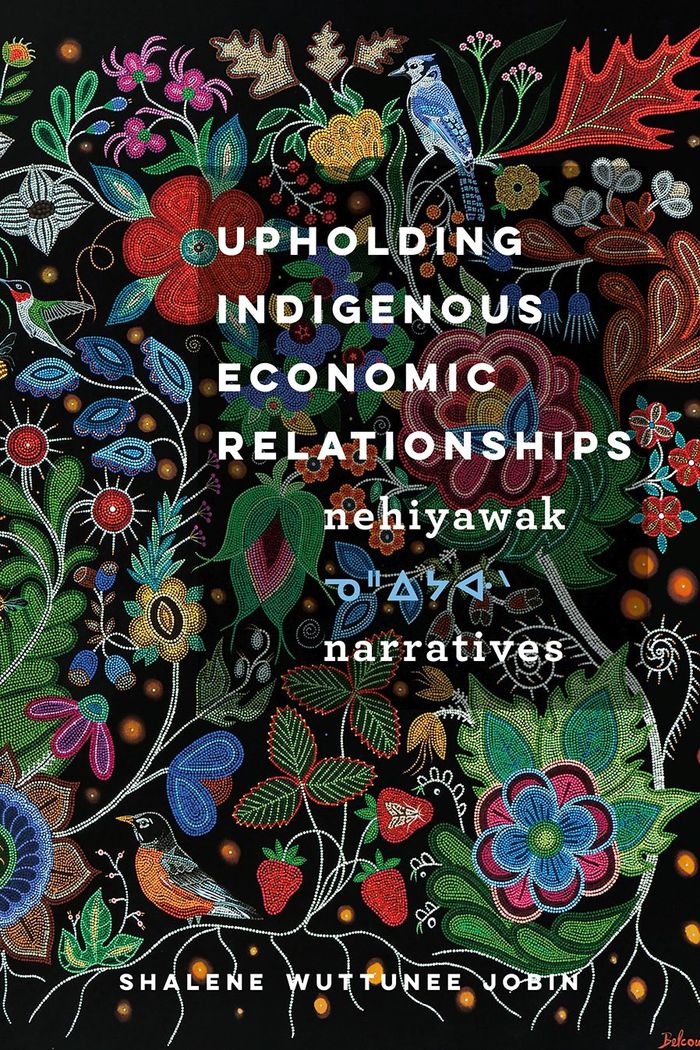
Upholding indigenous economic relationships: Nehiyawak narratives
Actions:
Prix:
$34.95
(disponible en magasin)
Résumé:
What is the relationship between economic progress in the land now called Canada and the exploitation of Indigenous peoples? And what gifts embedded within Indigenous world views speak to miyo-pimâtisiwin, the good life, and specifically to good economic relations? ''Upholding indigenous economic relationships'' draws on the knowledge systems of the nehiyawak (Plains Cree) to argue that economic exploitation was the initial and most enduring relationship between newcomers and Indigenous peoples and that Indigenous economic relationships are constitutive: connections to the land, water, and other human and nonhuman beings form us as individuals and as peoples. This groundbreaking study employs previously overlooked Indigenous economic theories and relationships and provides contemporary examples of nehiyawak renewing these relationships in resurgent ways. ''Upholding indigenous economic relationships'' offers tools that enable us to reimagine how we can aspire to the good life with all our relations.
Upholding indigenous economic relationships: Nehiyawak narratives
Actions:
Prix:
$34.95
(disponible en magasin)
Résumé:
What is the relationship between economic progress in the land now called Canada and the exploitation of Indigenous peoples? And what gifts embedded within Indigenous world views speak to miyo-pimâtisiwin, the good life, and specifically to good economic relations? ''Upholding indigenous economic relationships'' draws on the knowledge systems of the nehiyawak (Plains Cree) to argue that economic exploitation was the initial and most enduring relationship between newcomers and Indigenous peoples and that Indigenous economic relationships are constitutive: connections to the land, water, and other human and nonhuman beings form us as individuals and as peoples. This groundbreaking study employs previously overlooked Indigenous economic theories and relationships and provides contemporary examples of nehiyawak renewing these relationships in resurgent ways. ''Upholding indigenous economic relationships'' offers tools that enable us to reimagine how we can aspire to the good life with all our relations.
Classification:
livres
livres
Publication:
juin 2023
juin 2023
Sujet:
Autochtone
Autochtone
Classification:
livres
livres
Titre:
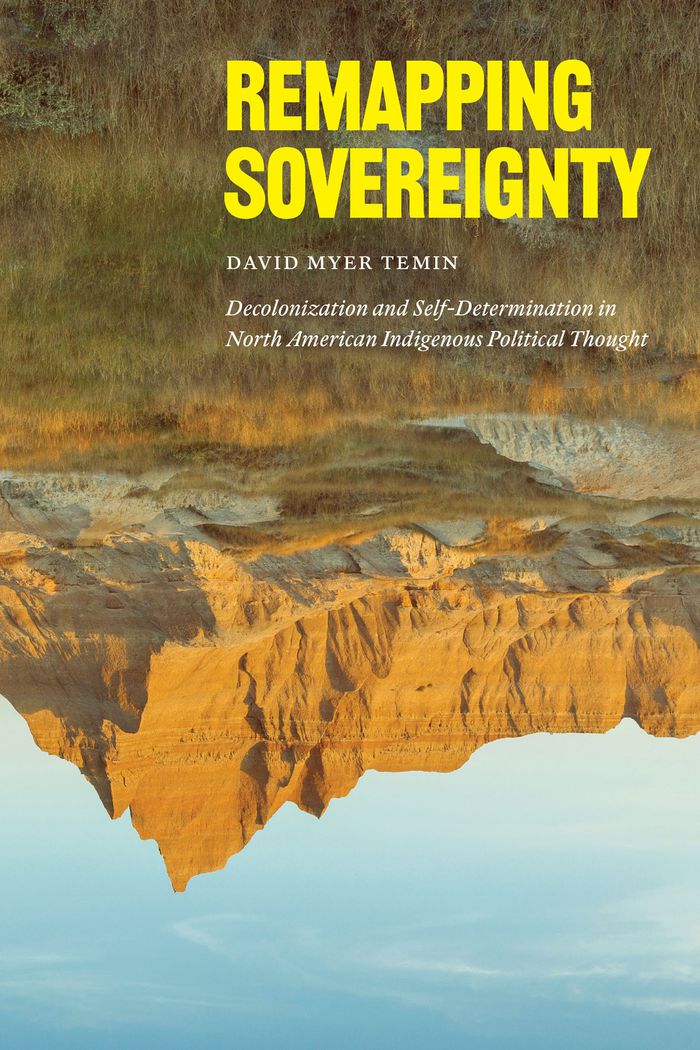
Remapping sovereignty: Decolonization and selfdetermination in NA indigenous political thought
Remapping sovereignty: Decolonization and selfdetermination in NA indigenous political thought
Actions:
Prix:
$48.00
(disponible sur commande)
Résumé:
Accounts of decolonization routinely neglect Indigenous societies, yet Native communities have made unique contributions to anticolonial thought and activism. ''Remapping sovereignty'' examines how twentieth-century Indigenous activists in North America debated questions of decolonization and self-determination, developing distinctive conceptual approaches that both(...)
$48.00
(disponible sur commande)
Résumé:
Accounts of decolonization routinely neglect Indigenous societies, yet Native communities have made unique contributions to anticolonial thought and activism. ''Remapping sovereignty'' examines how twentieth-century Indigenous activists in North America debated questions of decolonization and self-determination, developing distinctive conceptual approaches that both(...)
Titre:
Remapping sovereignty: Decolonization and selfdetermination in NA indigenous political thought
Actions:
Prix:
$48.00
(disponible sur commande)
Résumé:
Accounts of decolonization routinely neglect Indigenous societies, yet Native communities have made unique contributions to anticolonial thought and activism. ''Remapping sovereignty'' examines how twentieth-century Indigenous activists in North America debated questions of decolonization and self-determination, developing distinctive conceptual approaches that both resonate with and reformulate key strands in other civil rights and global decolonization movements. In contrast to decolonization projects that envisioned liberation through state sovereignty, Indigenous theorists emphasized the self-determination of peoples against sovereign state supremacy and articulated a visionary politics of decolonization as earthmaking. Temin traces the interplay between anticolonial thought and practice across key thinkers, interweaving history and textual analysis. He shows how these insights broaden the political and intellectual horizons open to us today.
Remapping sovereignty: Decolonization and selfdetermination in NA indigenous political thought
Actions:
Prix:
$48.00
(disponible sur commande)
Résumé:
Accounts of decolonization routinely neglect Indigenous societies, yet Native communities have made unique contributions to anticolonial thought and activism. ''Remapping sovereignty'' examines how twentieth-century Indigenous activists in North America debated questions of decolonization and self-determination, developing distinctive conceptual approaches that both resonate with and reformulate key strands in other civil rights and global decolonization movements. In contrast to decolonization projects that envisioned liberation through state sovereignty, Indigenous theorists emphasized the self-determination of peoples against sovereign state supremacy and articulated a visionary politics of decolonization as earthmaking. Temin traces the interplay between anticolonial thought and practice across key thinkers, interweaving history and textual analysis. He shows how these insights broaden the political and intellectual horizons open to us today.
Classification:
livres
livres
Publication:
août 2023
août 2023
Sujet:
Autochtone
Autochtone
Classification:
livres
livres
Actions:
Prix:
$42.00
(disponible sur commande)
Résumé:
Dans cet essai historique en éducation, le premier sur ce sujet, Véronique Paul, en collaboration avec Elisapi Uitangak Tukalak et Siaja Mark Mangiuk, raconte les étapes et les défis de la prise en charge de la scolarisation des communautés inuites du Nunavik (Québec) de 1950 à 1990. Elle démontre la résistance dont ont fait preuve les Inuits face à des institutions(...)
$42.00
(disponible sur commande)
Résumé:
Dans cet essai historique en éducation, le premier sur ce sujet, Véronique Paul, en collaboration avec Elisapi Uitangak Tukalak et Siaja Mark Mangiuk, raconte les étapes et les défis de la prise en charge de la scolarisation des communautés inuites du Nunavik (Québec) de 1950 à 1990. Elle démontre la résistance dont ont fait preuve les Inuits face à des institutions(...)
Titre:
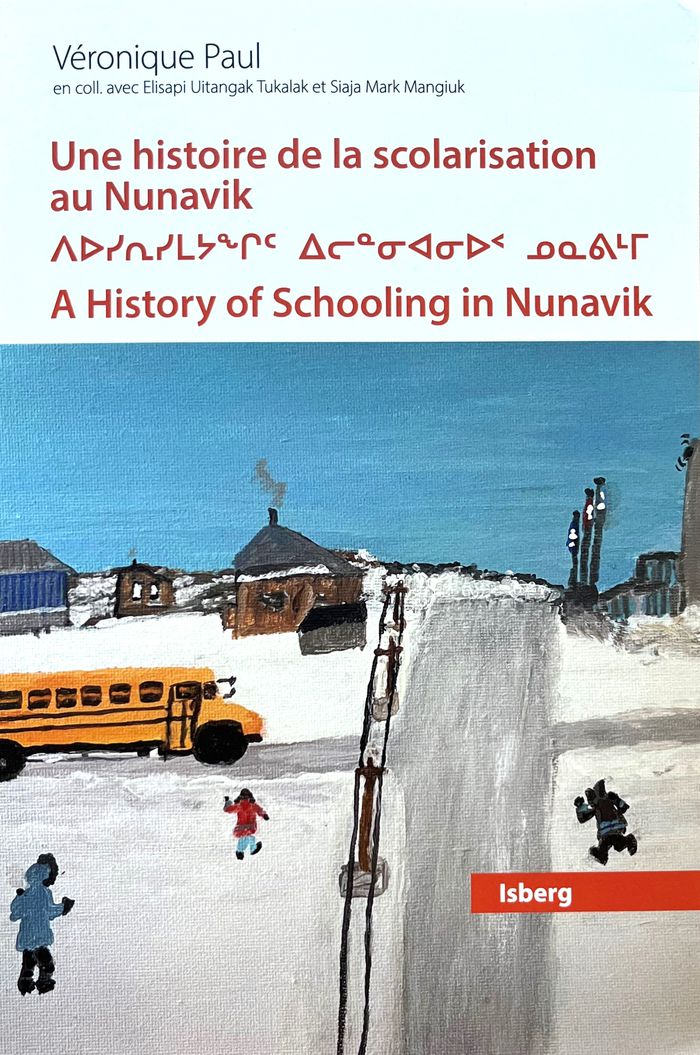
Une histoire de la scolarisation au Nunavik
Actions:
Prix:
$42.00
(disponible sur commande)
Résumé:
Dans cet essai historique en éducation, le premier sur ce sujet, Véronique Paul, en collaboration avec Elisapi Uitangak Tukalak et Siaja Mark Mangiuk, raconte les étapes et les défis de la prise en charge de la scolarisation des communautés inuites du Nunavik (Québec) de 1950 à 1990. Elle démontre la résistance dont ont fait preuve les Inuits face à des institutions venues de l’extérieur et les méthodes qu’ils ont développées afin d’intégrer leur langue et leurs cultures dans leurs écoles. Elle s’intéresse particulièrement à deux communautés dissidentes, celles d’Ivujivik et de Puvirnituq, qui ont entrepris de construire et d’administrer leur propre projet d’école pour et par les populations locales. L’étude permet de mieux comprendre le chemin parcouru par ceux et celles qui ont vécu ces changements et rend compte, par conséquent, de la situation au Nunavik vis-à-vis de l’institution scolaire.
Une histoire de la scolarisation au Nunavik
Actions:
Prix:
$42.00
(disponible sur commande)
Résumé:
Dans cet essai historique en éducation, le premier sur ce sujet, Véronique Paul, en collaboration avec Elisapi Uitangak Tukalak et Siaja Mark Mangiuk, raconte les étapes et les défis de la prise en charge de la scolarisation des communautés inuites du Nunavik (Québec) de 1950 à 1990. Elle démontre la résistance dont ont fait preuve les Inuits face à des institutions venues de l’extérieur et les méthodes qu’ils ont développées afin d’intégrer leur langue et leurs cultures dans leurs écoles. Elle s’intéresse particulièrement à deux communautés dissidentes, celles d’Ivujivik et de Puvirnituq, qui ont entrepris de construire et d’administrer leur propre projet d’école pour et par les populations locales. L’étude permet de mieux comprendre le chemin parcouru par ceux et celles qui ont vécu ces changements et rend compte, par conséquent, de la situation au Nunavik vis-à-vis de l’institution scolaire.
Classification:
livres
livres
Publication:
novembre 2023
novembre 2023
Sujet:
Autochtone
Autochtone


