


16 Résultats
Classification:
livres
livres
Actions:
Exemplaires:
Description:
256 pages : illustrations (chiefly color), color maps ; 23 cm
Description:
256 pages : illustrations (chiefly color), color maps ; 23 cm
Auteur:
Sujet:
Publication:
New York, NY : Princeton Architectural Press, a division of Chronicle Books LLC, [2025]
New York, NY : Princeton Architectural Press, a division of Chronicle Books LLC, [2025]
Titre:
Design against racism : creating work that transforms communities / Omari Souza.
Actions:
Exemplaires:
Description:
256 pages : illustrations (chiefly color), color maps ; 23 cm
Design against racism : creating work that transforms communities / Omari Souza.
Actions:
Exemplaires:
Description:
256 pages : illustrations (chiefly color), color maps ; 23 cm
Classification:
livres
livres
Publication:
New York, NY : Princeton Architectural Press, a division of Chronicle Books LLC, [2025]
New York, NY : Princeton Architectural Press, a division of Chronicle Books LLC, [2025]
Auteur:
Sujet:
Classification:
livres
livres
Actions:
Exemplaires:
Description:
464 pages : illustrations ; 24 cm
Description:
464 pages : illustrations ; 24 cm
Auteur:
Sujet:
Publication:
New York : Princeton Architectural Press, ©2006.
New York : Princeton Architectural Press, ©2006.
Titre:
Design studies : theory and research in graphic design / Audrey Bennett, editor ; foreword by Steven Heller.
Actions:
Exemplaires:
Description:
464 pages : illustrations ; 24 cm
Design studies : theory and research in graphic design / Audrey Bennett, editor ; foreword by Steven Heller.
Actions:
Exemplaires:
Description:
464 pages : illustrations ; 24 cm
Classification:
livres
livres
Publication:
New York : Princeton Architectural Press, ©2006.
New York : Princeton Architectural Press, ©2006.
Auteur:
Sujet:
Classification:
livres
livres

Titre:
Hip-hop Architecture
Hip-hop Architecture
Actions:
Prix:
$52.50
(disponible en magasin)
Résumé:
"This book is not for you. It is not for architectural academic elites. It is not for those who have gentrified our neighborhoods, overly intellectualized the profession, and ignored all contemporary Black theory within the discipline. You have made architecture a symbol of exclusion, oppression, and domination rather than expression, aspiration, and inspiration. This(...)
$52.50
(disponible en magasin)
Résumé:
"This book is not for you. It is not for architectural academic elites. It is not for those who have gentrified our neighborhoods, overly intellectualized the profession, and ignored all contemporary Black theory within the discipline. You have made architecture a symbol of exclusion, oppression, and domination rather than expression, aspiration, and inspiration. This(...)
Titre:
Hip-hop Architecture
Actions:
Prix:
$52.50
(disponible en magasin)
Résumé:
"This book is not for you. It is not for architectural academic elites. It is not for those who have gentrified our neighborhoods, overly intellectualized the profession, and ignored all contemporary Black theory within the discipline. You have made architecture a symbol of exclusion, oppression, and domination rather than expression, aspiration, and inspiration. This book is not for conformists-Black, White, or other." As architecture grapples with its own racist legacy, "Hip-Hop architecture" outlines a powerful new manifesto- the voice of the underrepresented, marginalized, and voiceless within the discipline. Exploring the production of spaces, buildings, and urban environments that embody the creative energies in hip-hop, it is a newly expanding design philosophy which sees architecture as a distinct part of hip-hop's cultural expression, and which uses hip-hop as a lens through which to provoke new architectural ideas. Examining the present and the future of "Hip-Hop architecture," the book also explores its historical antecedents and its theory, placing it in a wider context both within architecture and within Black and African American movements. Throughout, the work is illustrated with inspirational case studies of architectural projects and creative practices, and interspersed with interludes and interviews with key architects, designers, and academics in the field. This is a vital and provocative work that will appeal to architects, designers, students, theorists, and anyone interested in a fresh view of architecture, design, race and culture.
Hip-hop Architecture
Actions:
Prix:
$52.50
(disponible en magasin)
Résumé:
"This book is not for you. It is not for architectural academic elites. It is not for those who have gentrified our neighborhoods, overly intellectualized the profession, and ignored all contemporary Black theory within the discipline. You have made architecture a symbol of exclusion, oppression, and domination rather than expression, aspiration, and inspiration. This book is not for conformists-Black, White, or other." As architecture grapples with its own racist legacy, "Hip-Hop architecture" outlines a powerful new manifesto- the voice of the underrepresented, marginalized, and voiceless within the discipline. Exploring the production of spaces, buildings, and urban environments that embody the creative energies in hip-hop, it is a newly expanding design philosophy which sees architecture as a distinct part of hip-hop's cultural expression, and which uses hip-hop as a lens through which to provoke new architectural ideas. Examining the present and the future of "Hip-Hop architecture," the book also explores its historical antecedents and its theory, placing it in a wider context both within architecture and within Black and African American movements. Throughout, the work is illustrated with inspirational case studies of architectural projects and creative practices, and interspersed with interludes and interviews with key architects, designers, and academics in the field. This is a vital and provocative work that will appeal to architects, designers, students, theorists, and anyone interested in a fresh view of architecture, design, race and culture.
Classification:
livres
livres
Publication:
avril 2021
avril 2021
Sujet:
Théorie de l’architecture
Théorie de l’architecture
Classification:
livres
livres
Actions:
Prix:
$30.00
(disponible en magasin)
Résumé:
Architecture is often thought to be a diary of a society, filled with symbolic representations of specific cultural moments. However, as Craig L. Wilkins observes, that diary includes far too few narratives of the diverse cultures in U.S. society. Wilkins states that the discipline of architecture has a resistance to African Americans at every level, from the startlingly(...)
$30.00
(disponible en magasin)
Résumé:
Architecture is often thought to be a diary of a society, filled with symbolic representations of specific cultural moments. However, as Craig L. Wilkins observes, that diary includes far too few narratives of the diverse cultures in U.S. society. Wilkins states that the discipline of architecture has a resistance to African Americans at every level, from the startlingly(...)
Titre:
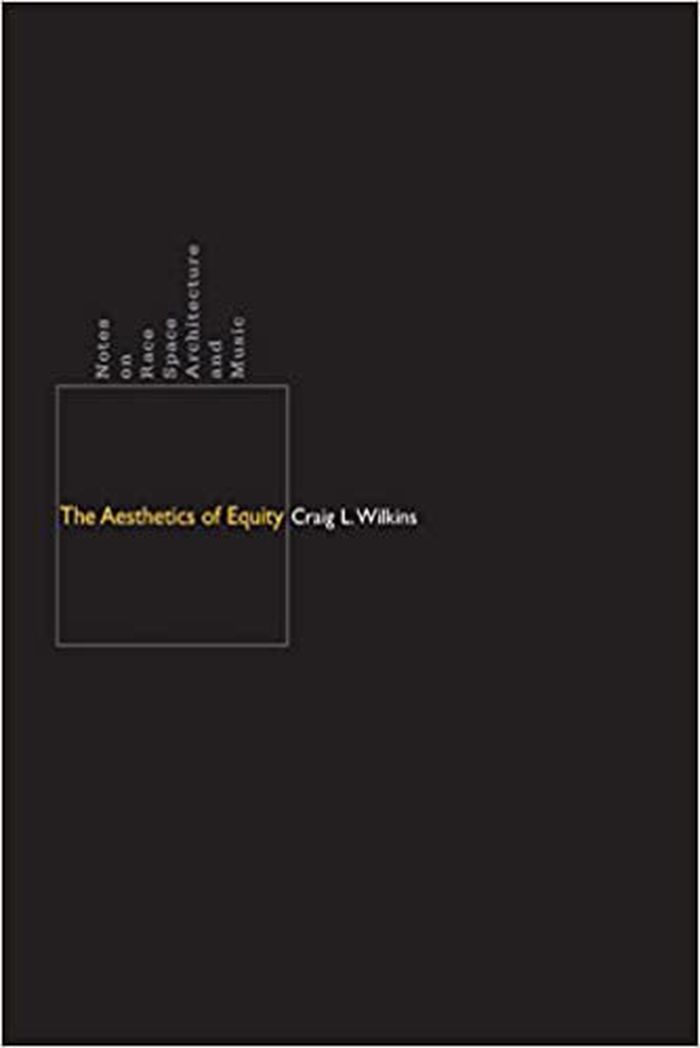
The Aesthetics of equity: notes on race, space, architecture, and music
Actions:
Prix:
$30.00
(disponible en magasin)
Résumé:
Architecture is often thought to be a diary of a society, filled with symbolic representations of specific cultural moments. However, as Craig L. Wilkins observes, that diary includes far too few narratives of the diverse cultures in U.S. society. Wilkins states that the discipline of architecture has a resistance to African Americans at every level, from the startlingly small number of architecture students to the paltry number of registered architects in the United States today. Working to understand how ideologies are formed, transmitted, and embedded in the built environment, Wilkins deconstructs how the marginalization of African Americans is authorized within the field of architecture. He then outlines how activist forms of expression shape and sustain communities, fashioning an architectural theory around the site of environmental conflict constructed by hip-hop culture. Wilkins places his concerns in a historical context, and also offers practical solutions to address them. In doing so, he reveals new possibilities for an architecture that acknowledges its current shortcomings and replies to the needs of multicultural constituencies.
The Aesthetics of equity: notes on race, space, architecture, and music
Actions:
Prix:
$30.00
(disponible en magasin)
Résumé:
Architecture is often thought to be a diary of a society, filled with symbolic representations of specific cultural moments. However, as Craig L. Wilkins observes, that diary includes far too few narratives of the diverse cultures in U.S. society. Wilkins states that the discipline of architecture has a resistance to African Americans at every level, from the startlingly small number of architecture students to the paltry number of registered architects in the United States today. Working to understand how ideologies are formed, transmitted, and embedded in the built environment, Wilkins deconstructs how the marginalization of African Americans is authorized within the field of architecture. He then outlines how activist forms of expression shape and sustain communities, fashioning an architectural theory around the site of environmental conflict constructed by hip-hop culture. Wilkins places his concerns in a historical context, and also offers practical solutions to address them. In doing so, he reveals new possibilities for an architecture that acknowledges its current shortcomings and replies to the needs of multicultural constituencies.
Classification:
livres
livres
Publication:
octobre 2007
octobre 2007
Sujet:
Théorie de l’architecture
Théorie de l’architecture
Classification:
livres
livres
Actions:
Prix:
$38.95
(disponible sur commande)
Résumé:
''Nonstop Metropolis'', the culminating volume in a trilogy of atlases, conveys innumerable unbound experiences of New York City through twenty-six imaginative maps and informative essays. Bringing together the insights of dozens of experts—from linguists to music historians, ethnographers, urbanists, and environmental journalists—amplified by cartographers, artists, and(...)
$38.95
(disponible sur commande)
Résumé:
''Nonstop Metropolis'', the culminating volume in a trilogy of atlases, conveys innumerable unbound experiences of New York City through twenty-six imaginative maps and informative essays. Bringing together the insights of dozens of experts—from linguists to music historians, ethnographers, urbanists, and environmental journalists—amplified by cartographers, artists, and(...)
Publication:
octobre 2016
octobre 2016
Titre:
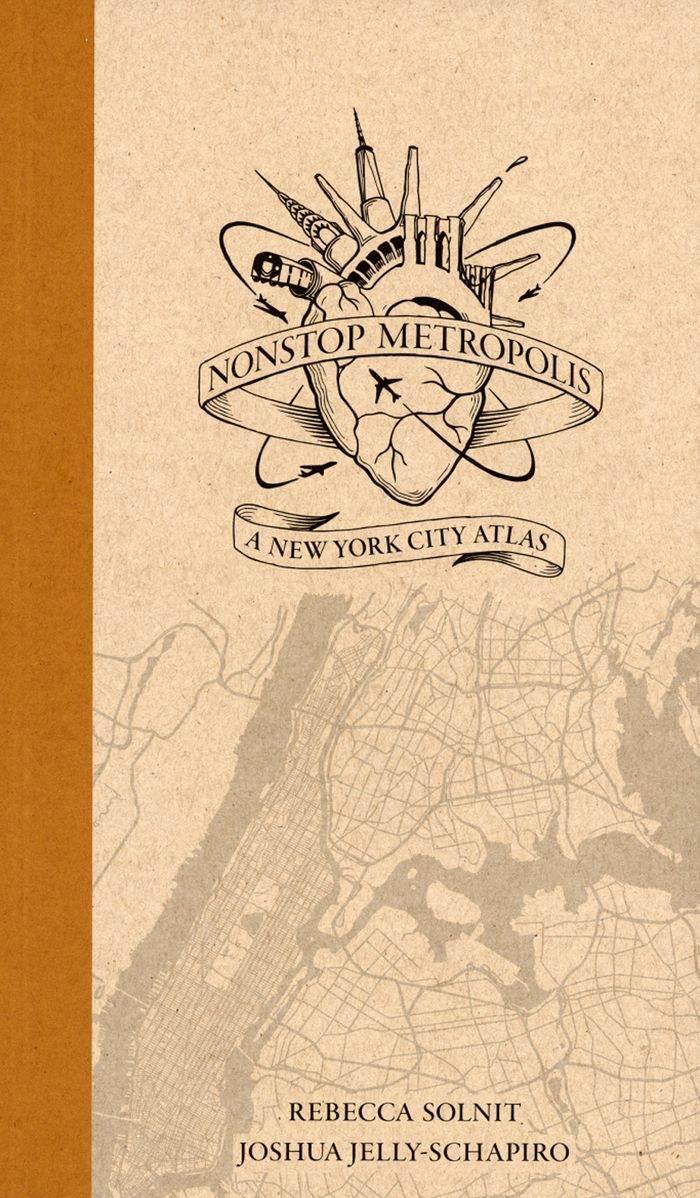
Nonstop metropolis: a New York City atlas
Actions:
Prix:
$38.95
(disponible sur commande)
Résumé:
''Nonstop Metropolis'', the culminating volume in a trilogy of atlases, conveys innumerable unbound experiences of New York City through twenty-six imaginative maps and informative essays. Bringing together the insights of dozens of experts—from linguists to music historians, ethnographers, urbanists, and environmental journalists—amplified by cartographers, artists, and photographers, it explores all five boroughs of New York City and parts of nearby New Jersey. We are invited to travel through Manhattan’s playgrounds, from polyglot Queens to many-faceted Brooklyn, and from the resilient Bronx to the mystical kung fu hip-hop mecca of Staten Island.
Nonstop metropolis: a New York City atlas
Actions:
Prix:
$38.95
(disponible sur commande)
Résumé:
''Nonstop Metropolis'', the culminating volume in a trilogy of atlases, conveys innumerable unbound experiences of New York City through twenty-six imaginative maps and informative essays. Bringing together the insights of dozens of experts—from linguists to music historians, ethnographers, urbanists, and environmental journalists—amplified by cartographers, artists, and photographers, it explores all five boroughs of New York City and parts of nearby New Jersey. We are invited to travel through Manhattan’s playgrounds, from polyglot Queens to many-faceted Brooklyn, and from the resilient Bronx to the mystical kung fu hip-hop mecca of Staten Island.
Classification:
livres
livres
Publication:
octobre 2016
octobre 2016
Classification:
livres
livres
Prix:
$24.95
(disponible sur commande)
Résumé:
Freakier rich people. More suburban art. A venue for new music. Better staplers. An infrastructure for hip-hop. Laneway art. More wi-fi. A more understanding marriage between art and business. Affordable live-work spaces. What would make Toronto a better place for the arts? City Hall proclaimed 2006 the Year of Creativity. ‘Live With Culture’ banners flap over the city.(...)
$24.95
(disponible sur commande)
Résumé:
Freakier rich people. More suburban art. A venue for new music. Better staplers. An infrastructure for hip-hop. Laneway art. More wi-fi. A more understanding marriage between art and business. Affordable live-work spaces. What would make Toronto a better place for the arts? City Hall proclaimed 2006 the Year of Creativity. ‘Live With Culture’ banners flap over the city.(...)
Sujet:
Architecture du Canada
Architecture du Canada
Publication:
novembre 2006, Toronto
novembre 2006, Toronto
Titre:
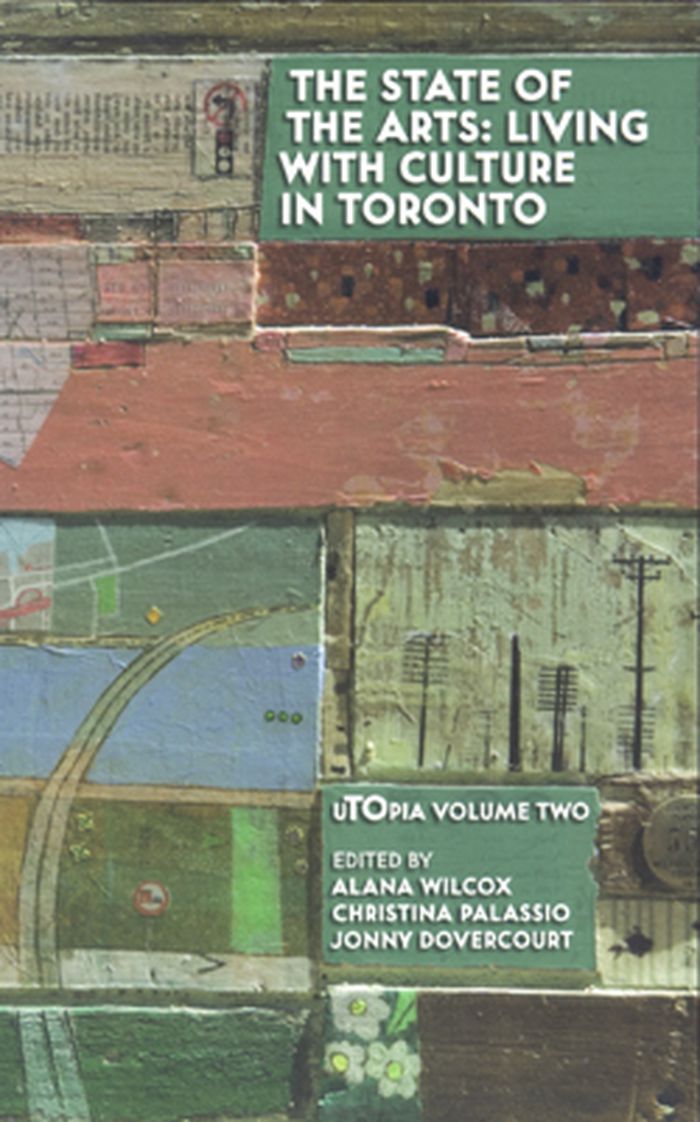
The state of the arts: living with culture in Toronto
Actions:
Prix:
$24.95
(disponible sur commande)
Résumé:
Freakier rich people. More suburban art. A venue for new music. Better staplers. An infrastructure for hip-hop. Laneway art. More wi-fi. A more understanding marriage between art and business. Affordable live-work spaces. What would make Toronto a better place for the arts? City Hall proclaimed 2006 the Year of Creativity. ‘Live With Culture’ banners flap over the city. And across the city, donors are ponying up millions for the ROM and the AGO. Culture’s never had it so good. Right? The State of the Arts explores the Toronto culture scene from every angle, applauding, assailing and arguing about art in our fair burg. The essays consider the big-ticket and the ticket-free, from the CNE to unintentional art. In between, you'll find thoughts on the ’creative city’ and photobloggers, Toronto on film and the fine line between part and art. Taken together the thoughts of these writers, artists and city-builders create a snapshot of culture in T.O. as it grows from ’Toronto the Good’ to ’Toronto the Could’ to ’Toronto the Can-Do.’ Includes sixteen colour pages of eye-level Toronto, and cover art by Susan Szenes. With essays by Sandra Alland, Jason Anderson, Anna Bowness, Stephen Cain, Kate Carraway, Hanna Cho, Brendan Cormier, Natalie De Vito, Liz Forsberg, Mark Fram, Marc Glassman, Katarina Gligorijevic-Collins, Brenda Goldstein, Amy Lavender Harris, Karen Hines, Sarah B. Hood, Christopher Hume, Sam Javanrouh, Dory Kornfeld, Adam Krawesky, More Or Les, John Lorinc, James MacNevin, Claudia McKoy, Brian McLachlan, Ryan McLaren, Shawn Micallef, Jill Murray, Matt O'Sullivan, Christopher Pandolfi, Michael Redhill, Dylan Reid, Damian Rogers, Stuart Ross, Lisa Rundle, Dana Samuel, Nadja Sayej, Susan Szenes, Kevin Temple, Pablo Torres, Gayla Trail, Rannie Turingan, Jason van Eyk, Adam Vaughan, RM Vaughan, Stéphanie Verge, Lisa Whittington-Hill and Carl Wilson.
The state of the arts: living with culture in Toronto
Actions:
Prix:
$24.95
(disponible sur commande)
Résumé:
Freakier rich people. More suburban art. A venue for new music. Better staplers. An infrastructure for hip-hop. Laneway art. More wi-fi. A more understanding marriage between art and business. Affordable live-work spaces. What would make Toronto a better place for the arts? City Hall proclaimed 2006 the Year of Creativity. ‘Live With Culture’ banners flap over the city. And across the city, donors are ponying up millions for the ROM and the AGO. Culture’s never had it so good. Right? The State of the Arts explores the Toronto culture scene from every angle, applauding, assailing and arguing about art in our fair burg. The essays consider the big-ticket and the ticket-free, from the CNE to unintentional art. In between, you'll find thoughts on the ’creative city’ and photobloggers, Toronto on film and the fine line between part and art. Taken together the thoughts of these writers, artists and city-builders create a snapshot of culture in T.O. as it grows from ’Toronto the Good’ to ’Toronto the Could’ to ’Toronto the Can-Do.’ Includes sixteen colour pages of eye-level Toronto, and cover art by Susan Szenes. With essays by Sandra Alland, Jason Anderson, Anna Bowness, Stephen Cain, Kate Carraway, Hanna Cho, Brendan Cormier, Natalie De Vito, Liz Forsberg, Mark Fram, Marc Glassman, Katarina Gligorijevic-Collins, Brenda Goldstein, Amy Lavender Harris, Karen Hines, Sarah B. Hood, Christopher Hume, Sam Javanrouh, Dory Kornfeld, Adam Krawesky, More Or Les, John Lorinc, James MacNevin, Claudia McKoy, Brian McLachlan, Ryan McLaren, Shawn Micallef, Jill Murray, Matt O'Sullivan, Christopher Pandolfi, Michael Redhill, Dylan Reid, Damian Rogers, Stuart Ross, Lisa Rundle, Dana Samuel, Nadja Sayej, Susan Szenes, Kevin Temple, Pablo Torres, Gayla Trail, Rannie Turingan, Jason van Eyk, Adam Vaughan, RM Vaughan, Stéphanie Verge, Lisa Whittington-Hill and Carl Wilson.
Classification:
livres
livres
Publication:
novembre 2006, Toronto
novembre 2006, Toronto
Sujet:
Architecture du Canada
Architecture du Canada


