


106 Résultats
Classification:
livres
livres
Exemplaires:
Description:
312 pages : illustrations (some color) ; 25 cm
Description:
312 pages : illustrations (some color) ; 25 cm
Auteur:
Sujet:
Publication:
New York : Thames & Hudson, 2012.
New York : Thames & Hudson, 2012.
Titre:
Medieval modern : art out of time / Alexander Nagel.
Actions:
Exemplaires:
Description:
312 pages : illustrations (some color) ; 25 cm
Medieval modern : art out of time / Alexander Nagel.
Actions:
Exemplaires:
Description:
312 pages : illustrations (some color) ; 25 cm
Classification:
livres
livres
Publication:
New York : Thames & Hudson, 2012.
New York : Thames & Hudson, 2012.
Auteur:
Sujet:
Classification:
livres
livres
Actions:
Exemplaires:
Description:
xii, 532 pages : illustrations (chiefly color) ; 30 cm
Description:
xii, 532 pages : illustrations (chiefly color) ; 30 cm
Auteur:
Sujet:
Publication:
Edinburgh : Edinburgh University Press, ©2013.
Edinburgh : Edinburgh University Press, ©2013.
Titre:
Calligraphy and architecture in the Muslim world / edited by Mohammad Gharipour and İrvin Cemil Schick.
Actions:
Exemplaires:
Description:
xii, 532 pages : illustrations (chiefly color) ; 30 cm
Calligraphy and architecture in the Muslim world / edited by Mohammad Gharipour and İrvin Cemil Schick.
Actions:
Exemplaires:
Description:
xii, 532 pages : illustrations (chiefly color) ; 30 cm
Classification:
livres
livres
Publication:
Edinburgh : Edinburgh University Press, ©2013.
Edinburgh : Edinburgh University Press, ©2013.
Auteur:
Sujet:
Classification:
livres
livres
Actions:
Prix:
$54.00
(disponible en magasin)
Résumé:
Moving beyond reductive notions of identity, myths of authenticity, fetishized traditionalism, or the constructed opposition of tradition and modernity, The Arab City: Architectural and Representation critically engages contemporary architectural and urban production in the Middle East. Taking the "Arab City" and "Islamic Architecture" as sites of investigation rather(...)
$54.00
(disponible en magasin)
Résumé:
Moving beyond reductive notions of identity, myths of authenticity, fetishized traditionalism, or the constructed opposition of tradition and modernity, The Arab City: Architectural and Representation critically engages contemporary architectural and urban production in the Middle East. Taking the "Arab City" and "Islamic Architecture" as sites of investigation rather(...)
Titre:
The Arab City: architecture and representation
Actions:
Prix:
$54.00
(disponible en magasin)
Résumé:
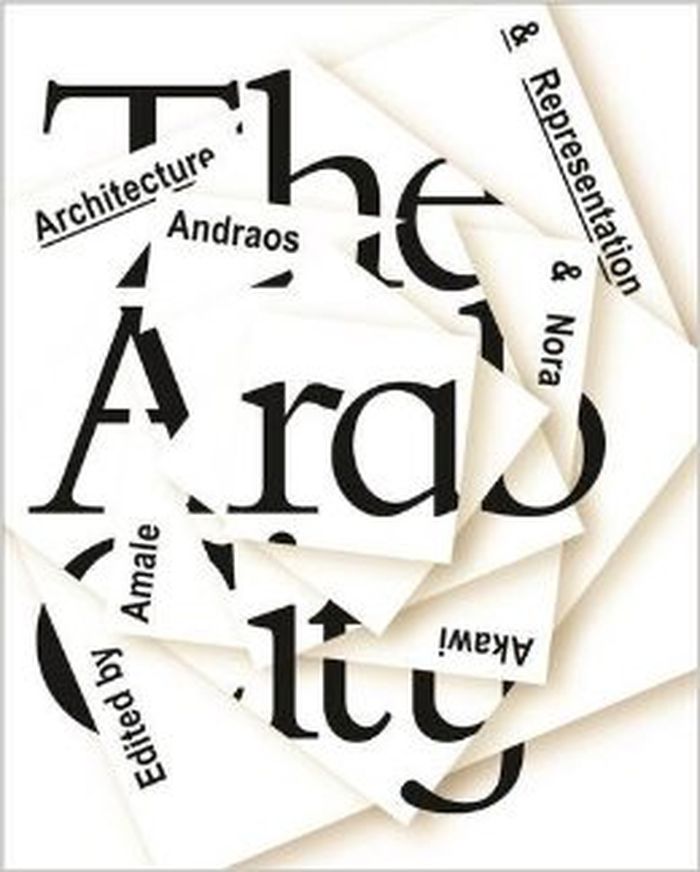
Moving beyond reductive notions of identity, myths of authenticity, fetishized traditionalism, or the constructed opposition of tradition and modernity, The Arab City: Architectural and Representation critically engages contemporary architectural and urban production in the Middle East. Taking the "Arab City" and "Islamic Architecture" as sites of investigation rather than given categories, this book reframes the region's buildings, cities, and landscapes and broadens its architectural and urban canons.
The Arab City: architecture and representation
Actions:
Prix:
$54.00
(disponible en magasin)
Résumé:
Moving beyond reductive notions of identity, myths of authenticity, fetishized traditionalism, or the constructed opposition of tradition and modernity, The Arab City: Architectural and Representation critically engages contemporary architectural and urban production in the Middle East. Taking the "Arab City" and "Islamic Architecture" as sites of investigation rather than given categories, this book reframes the region's buildings, cities, and landscapes and broadens its architectural and urban canons.
Classification:
livres
livres
Publication:
juin 2016
juin 2016
Classification:
livres
livres
Titre:
Beirut
Beirut
Actions:
Prix:
$45.00
(disponible sur commande)
Résumé:
This publication is the story of a city that has stood at the crossroads of Mediterranean civilization for more than four thousand years. It takes the reader from the ancient to the modern world, offering a dazzling panorama of the city's Seleucid, Roman, Arab, Ottoman, and French incarnations. This book describes Beirut's growth in the nineteenth and twentieth centuries,(...)
$45.00
(disponible sur commande)
Résumé:
This publication is the story of a city that has stood at the crossroads of Mediterranean civilization for more than four thousand years. It takes the reader from the ancient to the modern world, offering a dazzling panorama of the city's Seleucid, Roman, Arab, Ottoman, and French incarnations. This book describes Beirut's growth in the nineteenth and twentieth centuries,(...)
Titre:
Beirut
Actions:
Prix:
$45.00
(disponible sur commande)
Résumé:
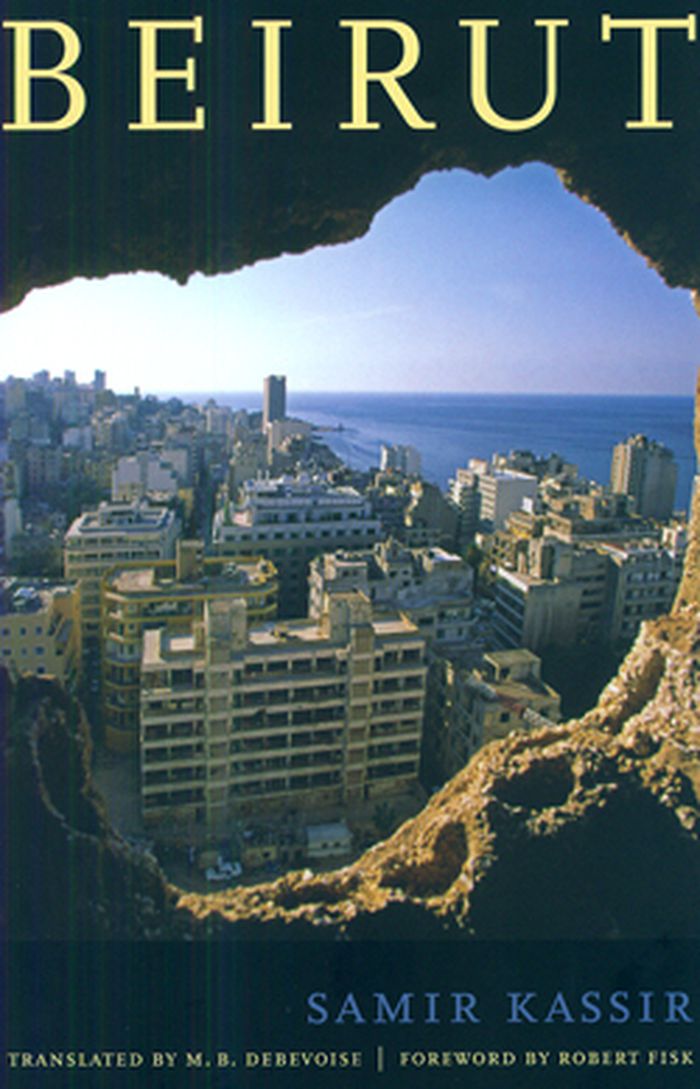
This publication is the story of a city that has stood at the crossroads of Mediterranean civilization for more than four thousand years. It takes the reader from the ancient to the modern world, offering a dazzling panorama of the city's Seleucid, Roman, Arab, Ottoman, and French incarnations. This book describes Beirut's growth in the nineteenth and twentieth centuries, concentrating on its emergence after the Second World War as a cosmopolitan capital until its near destruction during the devastating Lebanese civil war of 1975-1990. Generously illustrated, Beirut illuminates contemporary issues of modernity and democracy while at the same time memorably recreating the atmosphere of one of the world's most picturesque, dynamic, and resilient cities.
Beirut
Actions:
Prix:
$45.00
(disponible sur commande)
Résumé:
This publication is the story of a city that has stood at the crossroads of Mediterranean civilization for more than four thousand years. It takes the reader from the ancient to the modern world, offering a dazzling panorama of the city's Seleucid, Roman, Arab, Ottoman, and French incarnations. This book describes Beirut's growth in the nineteenth and twentieth centuries, concentrating on its emergence after the Second World War as a cosmopolitan capital until its near destruction during the devastating Lebanese civil war of 1975-1990. Generously illustrated, Beirut illuminates contemporary issues of modernity and democracy while at the same time memorably recreating the atmosphere of one of the world's most picturesque, dynamic, and resilient cities.
Classification:
livres
livres
Publication:
novembre 2010
novembre 2010
Classification:
livres
livres
Prix:
$48.00
(disponible sur commande)
Résumé:
"Africas: The Artist and the City" contains a double affirmation. It corroborates the existence of an "other" urban and artistic reality in Africa, and it asserts that these realities do not correspond with what stereotypes would have us see as Africa's sole reality. In the words of Pep Subiros, we should talk not of Africa but of Africas. Yet until now, there has been(...)
$48.00
(disponible sur commande)
Résumé:
"Africas: The Artist and the City" contains a double affirmation. It corroborates the existence of an "other" urban and artistic reality in Africa, and it asserts that these realities do not correspond with what stereotypes would have us see as Africa's sole reality. In the words of Pep Subiros, we should talk not of Africa but of Africas. Yet until now, there has been(...)
Publication:
janvier 1900, Barcelona
janvier 1900, Barcelona
Titre:
Africas : The artist and the city -a journey and an exhibition
Actions:
Prix:
$48.00
(disponible sur commande)
Résumé:
"Africas: The Artist and the City" contains a double affirmation. It corroborates the existence of an "other" urban and artistic reality in Africa, and it asserts that these realities do not correspond with what stereotypes would have us see as Africa's sole reality. In the words of Pep Subiros, we should talk not of Africa but of Africas. Yet until now, there has been little said about the Africas depicted here, about urban centers like Dakar, Cape Town, and Abidjan that are undergoing urbanization and growth at breakneck speed. And what of the work of artists based in these cities? "Africas: The Artist and the City" aims to illustrate a moment in which a fertile collision is taking place between tradition and modernity, between the local and the global--and to introduce the settings where this confluence is taking place.
Africas : The artist and the city -a journey and an exhibition
Actions:
Prix:
$48.00
(disponible sur commande)
Résumé:
"Africas: The Artist and the City" contains a double affirmation. It corroborates the existence of an "other" urban and artistic reality in Africa, and it asserts that these realities do not correspond with what stereotypes would have us see as Africa's sole reality. In the words of Pep Subiros, we should talk not of Africa but of Africas. Yet until now, there has been little said about the Africas depicted here, about urban centers like Dakar, Cape Town, and Abidjan that are undergoing urbanization and growth at breakneck speed. And what of the work of artists based in these cities? "Africas: The Artist and the City" aims to illustrate a moment in which a fertile collision is taking place between tradition and modernity, between the local and the global--and to introduce the settings where this confluence is taking place.
Classification:
livres
livres
Publication:
janvier 1900, Barcelona
janvier 1900, Barcelona
Classification:
livres
livres
Prix:
$58.50
(disponible en magasin)
Résumé:
This book examines the ways in which a historic, and so-called 'traditional' city quietly mutated into one that was modern in its own terms not only in form but also in its use and meaning. Through a study of Delhi, the author challenges some prevalent dichotomies and myths in architecture and urbanism and identifies an interpretation of modernism that expands upon(...)
$58.50
(disponible en magasin)
Résumé:
This book examines the ways in which a historic, and so-called 'traditional' city quietly mutated into one that was modern in its own terms not only in form but also in its use and meaning. Through a study of Delhi, the author challenges some prevalent dichotomies and myths in architecture and urbanism and identifies an interpretation of modernism that expands upon(...)
Publication:
avril 2005, London
avril 2005, London
Titre:
Indigenous modernities : negotiating architecture and urbanism
Actions:
Prix:
$58.50
(disponible en magasin)
Résumé:
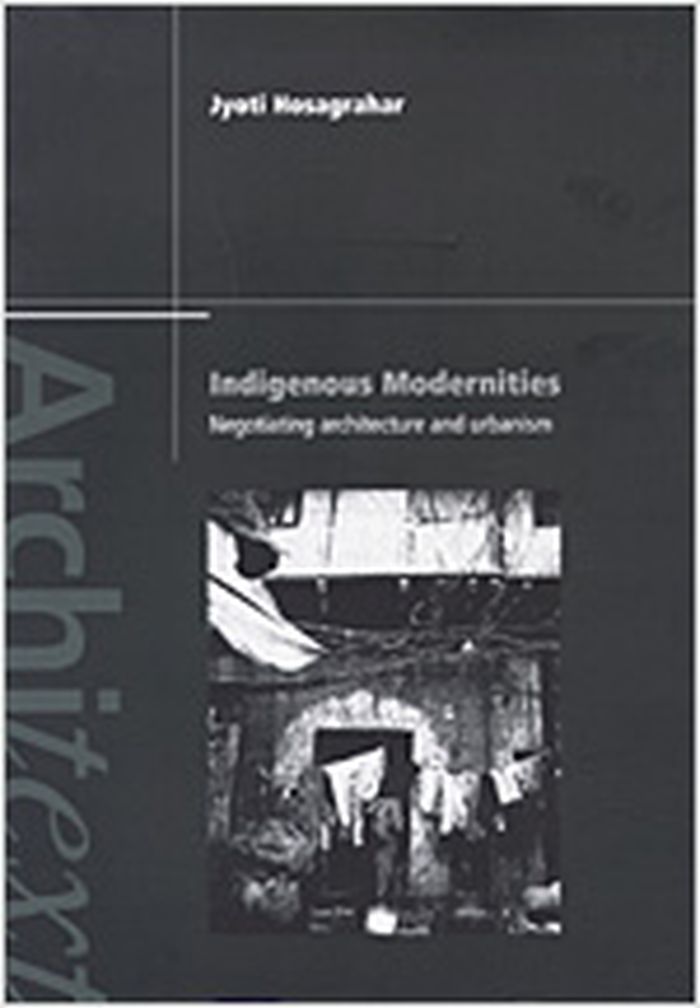
This book examines the ways in which a historic, and so-called 'traditional' city quietly mutated into one that was modern in its own terms not only in form but also in its use and meaning. Through a study of Delhi, the author challenges some prevalent dichotomies and myths in architecture and urbanism and identifies an interpretation of modernism that expands upon conventional understandings of it. Conventional discourse in the West defines modern as the antithesis of that which is 'not-modern' or is 'traditional.' Many scholars have debated the significance of the words and most agree that the very word 'tradition' was a modernist creation that variously implied backwardness, threatened by change, resistance to innovation. The first part of this book reflects on the transformations and discontinuities in built form and spatial culture and calls into question accepted notions of the static nature of what is normally referred to as 'traditional' and 'non-Western' architecture. The second part is a critical discussion of Delhi in the nineteenth and early twentieth centuries. It expands upon conventional understandings of modernity in a way that wrenches free the city's architecture and the society from the objectified realm of the exotic while also acknowledging cultural conditions of modernity and modern architecture outside the West. Stepping outside Western canons, this project looks at late nineteenth and early twentieth century architecture to include them in a conversation on architecture that has typically focused on Western Europe and North America. Finally, the author seeks out the 'indigenous modernities': the irregular, the uneven, and the unexpected in what uncritical observers might label a perfectly coherent 'traditional' built environment; or in the influence of local society and institutions on forms that appear modern by conventional standards in the West.
Indigenous modernities : negotiating architecture and urbanism
Actions:
Prix:
$58.50
(disponible en magasin)
Résumé:
This book examines the ways in which a historic, and so-called 'traditional' city quietly mutated into one that was modern in its own terms not only in form but also in its use and meaning. Through a study of Delhi, the author challenges some prevalent dichotomies and myths in architecture and urbanism and identifies an interpretation of modernism that expands upon conventional understandings of it. Conventional discourse in the West defines modern as the antithesis of that which is 'not-modern' or is 'traditional.' Many scholars have debated the significance of the words and most agree that the very word 'tradition' was a modernist creation that variously implied backwardness, threatened by change, resistance to innovation. The first part of this book reflects on the transformations and discontinuities in built form and spatial culture and calls into question accepted notions of the static nature of what is normally referred to as 'traditional' and 'non-Western' architecture. The second part is a critical discussion of Delhi in the nineteenth and early twentieth centuries. It expands upon conventional understandings of modernity in a way that wrenches free the city's architecture and the society from the objectified realm of the exotic while also acknowledging cultural conditions of modernity and modern architecture outside the West. Stepping outside Western canons, this project looks at late nineteenth and early twentieth century architecture to include them in a conversation on architecture that has typically focused on Western Europe and North America. Finally, the author seeks out the 'indigenous modernities': the irregular, the uneven, and the unexpected in what uncritical observers might label a perfectly coherent 'traditional' built environment; or in the influence of local society and institutions on forms that appear modern by conventional standards in the West.
Classification:
livres
livres
Publication:
avril 2005, London
avril 2005, London


